Fishing License Discount for Native Americans
It can be confusing to figure out the ins and outs of fishing regulations in New York, especially when questions arise about specific circumstances like Native American fishing rights. Many anglers wonder if there are special discounts or exemptions for Native Americans when it comes to purchasing a New York fishing license. This guide will clarify the nuances, helping you understand who qualifies for exemptions and how to ensure you're always fishing legally and respectfully in New York waters.
Understanding Native American Fishing Rights in New York
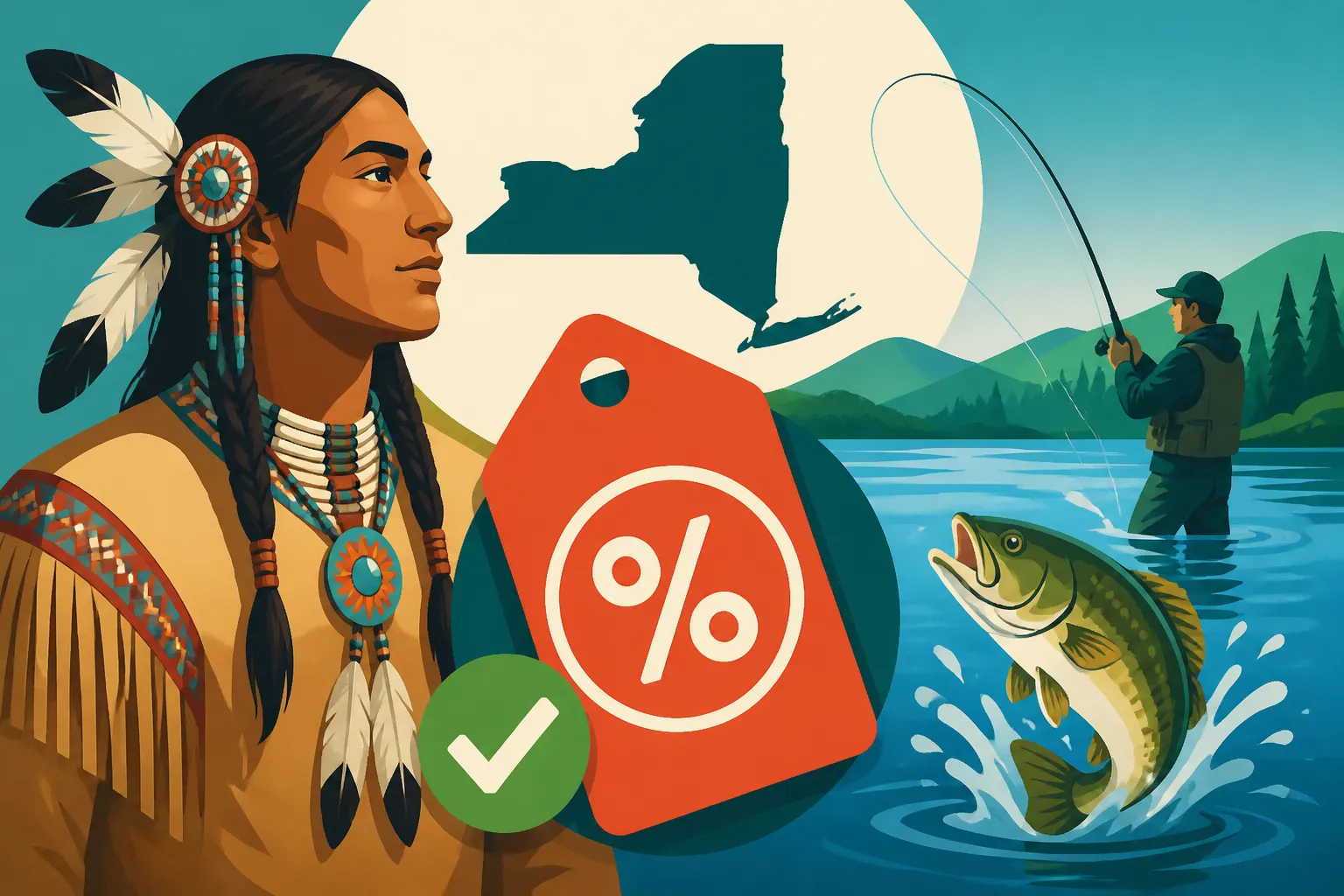
When we talk about fishing licenses for Native Americans in New York, it's not typically about a "discount" in the traditional sense, but rather about exemptions based on long-standing sovereign rights and treaties. This distinction is crucial, as it fundamentally changes how one approaches the topic. These exemptions are deeply rooted in the history and inherent sovereignty of recognized Native American nations within New York State.
Distinguishing Between State and Tribal Lands
The general rule of thumb is that New York State fishing license requirements apply to everyone fishing within the state's jurisdiction. However, this rule has significant exceptions for members of federally or state-recognized Native American nations. These nations, such as the Seneca Nation of Indians, the Oneida Indian Nation, the Mohawk, Onondaga, and Shinnecock Nations, possess inherent sovereign rights over their traditional territories and lands.
When an enrolled member of one of these recognized nations is fishing on their own traditional or treaty lands, they may be exempt from needing a New York State fishing license. This isn't a blanket exemption across the entire state; it's specifically tied to the jurisdictional boundaries of their respective nations. For instance, an enrolled member of the Seneca Nation fishing on Seneca territory would generally not need a state license, but if they were to fish on Lake Placid, which is outside their territorial jurisdiction, they would need a standard New York State fishing license. This geographical and jurisdictional specificity is paramount to understanding these rights.
Who Qualifies for Exemption
For those wondering if they qualify, the primary criterion is enrollment as a member of a federally or state-recognized Native American nation. Simply having Native American ancestry or heritage is not enough; one must be an officially enrolled member of a tribe with recognized fishing rights within New York State. These rights are often tied to specific treaties, historical agreements, or inherent tribal sovereignty that predates state law.
It’s important to reiterate that this exemption is not a typical discount that reduces the price of a state license. Instead, it means that under certain conditions, primarily related to location within tribal lands, the state license requirement does not apply to the enrolled tribal member. For individuals who are not enrolled members of a recognized tribe, or if an enrolled tribal member is fishing outside their nation's specific treaty or traditional territories, the standard New York State fishing license rules and costs apply fully. This includes a vast majority of the public, who will need to understand the comprehensive requirements outlined in the New York Fishing License Guide.
Navigating the Specifics of Tribal Fishing Exemptions
Understanding that these are exemptions rather than discounts is the first step. The next is to grasp the practicalities of how these rights are exercised and respected on the water. It’s not just about knowing you might be exempt; it's about being able to demonstrate it legally and understanding the boundaries.
Requirements for Documenting Your Tribal Affiliation
If you are an enrolled member of a recognized Native American nation and are fishing within your nation's designated territories or treaty lands, you are generally expected to carry proof of your tribal enrollment. This typically comes in the form of an official tribal identification card issued by your nation. This ID serves the same function as a state fishing license would for other anglers – it provides evidence of your legal right to fish in that specific area under those specific circumstances.
Law enforcement or DEC officers may request this identification, and it's your responsibility to provide it. The absence of proper tribal identification, or attempting to claim an exemption without being an enrolled member or while fishing outside designated areas, can lead to serious legal consequences, just like fishing without a state license. Therefore, while the state doesn't issue a "Native American discount license," it recognizes the legal standing of tribal identification within appropriate contexts. It's always wise to consult official sources for the latest on New York Fishing Regulations Explained.
Variations Across Different Nations
It’s crucial to understand that fishing rights and specific agreements can vary significantly from one Native American nation to another. There isn't a single, uniform set of rules that applies to all tribal members across all of New York. Each nation has its own history, treaties, and agreements with federal and state governments, which dictate the scope and specifics of their sovereign rights.
For example, the Seneca Nation of Indians, with territories spanning parts of Western New York, exercises significant authority over fishing within its lands. Enrolled Seneca members typically fish without state licenses within these areas. Similarly, the Shinnecock Nation on Long Island also possesses distinct fishing rights, particularly concerning marine resources in their traditional coastal zones.
To ensure compliance and understanding, any enrolled tribal member should directly consult their tribal government or council regarding the precise details of their fishing rights, recognized territories, and any specific documentation requirements. It's also a good practice to cross-reference with the New York State Department of Environmental Conservation (DEC) for any updated joint agreements or clarity. The complex interplay means that what applies to one nation's members might not apply to another's, especially in different geographical regions.
Here's a brief overview of key considerations for Native American fishing exemptions in New York:
| Criterion | Applicability | Documentation Required | Scope |
|---|---|---|---|
| Status | Enrolled member of a federally/state-recognized NY Native American nation | Official Tribal ID Card | Fishing within nation's traditional/treaty territories |
| Location | Within tribal sovereign lands or treaty areas | Tribal ID Card (on person) | Varies by nation; specific geographic boundaries |
| Activity | Recreational fishing | Tribal ID Card | Subject to tribal regulations and conservation rules |
| Non-Tribal Member | Requires standard NYS fishing license | State Fishing License | All New York State waters (unless otherwise specified) |
| Tribal Member Off-Territory | Requires standard NYS fishing license | State Fishing License | All New York State waters outside tribal jurisdiction |
What to Do if You Don't Qualify for a Direct Exemption
If you are not an enrolled member of a recognized Native American nation or if you plan to fish outside of designated tribal territories, the path to legal angling in New York is straightforward: you'll need a standard New York State fishing license. This applies to the vast majority of anglers, regardless of heritage, when they are fishing in state-regulated waters.
Standard License Requirements for All Other Anglers
For everyone else, including those of Native American descent who are not enrolled members of a recognized tribe, or enrolled members fishing off their sovereign lands, obtaining a New York fishing license is a mandatory step before casting a line. The state offers various license options designed to suit different needs and durations. You can opt for an annual license, which is valid for a full year from the date of purchase, or consider shorter-term options like a 7-day or 1-day license if you're only visiting or planning a quick trip.
These licenses come in different price points for residents and non-residents. For example, a New York Resident Annual Fishing License Cost 2026 will differ from that for an out-of-state visitor. Age also plays a factor, as there are specific rules about How Old Do You Have to Be to Need a Fishing License?. Understanding these options is key to choosing the right license for your fishing adventures.
Finding Information and Purchasing Your License
The process of obtaining your New York fishing license is fairly simple and accessible. The primary and most convenient method is usually through the New York State Department of Environmental Conservation (DEC) website. Their online portal allows you to purchase and often print your license from the comfort of your home. This digital convenience means you can secure your license even last minute before heading out to your favorite fishing spot.
In addition to online purchases, you can also acquire licenses in person. Many authorized vendors across the state sell fishing licenses, including most sporting goods stores, local town and county clerk offices, and even some bait and tackle shops. While you won't be able to buy your actual fishing license through a massive online retailer, platforms like Amazon are an excellent resource once you have your license. You can find everything from high-quality fishing rods and reels to a wide array of lures, tackle boxes, and even specialized apparel. It's a great place to stock up on gear for your next trip, but remember that the license itself needs to come from an official DEC-authorized channel. Always check the official DEC website or call a local vendor for the most up-to-date information on where to buy your New York Fishing License at Walmart or other locations.
Importance of Compliance and Respecting Regulations
Whether you're fishing under a tribal exemption or with a state-issued license, adhering to all fishing regulations is not just a legal obligation; it's a critical component of responsible angling and environmental stewardship. The rules are in place to protect fish populations, maintain healthy ecosystems, and ensure sustainable fishing opportunities for generations to come.
Avoiding Penalties and Conservation
The consequences of fishing without proper authorization can be severe. If you are caught fishing without a valid New York State fishing license when one is required, or without proper tribal identification within recognized tribal territories, you could face significant fines, confiscation of your fishing equipment, and even potential legal action. The Fine for Fishing Without a License in New York can be substantial, making it far more cost-effective and stress-free to simply ensure you're compliant before heading out.
Beyond the legal ramifications, respecting fishing regulations is fundamentally about conservation. Bag limits, size restrictions, and season dates are all designed by fisheries biologists and environmental experts to prevent overfishing and protect vulnerable species. These efforts align strongly with the traditional Native American values of respect for the land and its resources, ensuring that natural bounty is preserved. Every angler, regardless of their background, shares a responsibility to uphold these principles.
Utilizing Available Resources
The best way to stay informed and compliant is to utilize official resources. For state-specific regulations, the New York State Department of Environmental Conservation (DEC) website is your go-to. They provide detailed guides on everything from New York Freshwater Fishing Rules to specific species regulations. This site is updated regularly and is the definitive source for New York State fishing laws.
For enrolled members of Native American nations, the most authoritative source of information on their specific fishing rights and regulations will always be their own tribal government or council. Direct communication with tribal authorities ensures that you have the most accurate and current information regarding fishing within their sovereign territories. Additionally, for supplemental learning about fish species, conservation, or local fishing techniques, resources can sometimes be found on platforms like Amazon, where you can purchase books or guides to enhance your understanding and skills, complementing the official regulatory information provided by the DEC and tribal governments. Always remember to prioritize official governmental sources for legal requirements.
Disclaimer
Please note that while this guide provides comprehensive information based on current public knowledge and regulations, fishing laws and tribal agreements can change. It is always the angler's responsibility to verify the most current regulations with the New York State Department of Environmental Conservation (DEC) and, for tribal members, with their respective tribal governments, before engaging in any fishing activity. This article is for informational purposes only and does not constitute legal advice.