Late Renewal Grace Period for Fishing Licenses
It’s a scenario we’ve all dreaded: you’re geared up, fishing rod in hand, standing by your favorite New York stream or lake, only to have that sudden, sickening thought hit you – "Is my fishing license still valid?" The worry of accidentally fishing with an expired license, even for a day or two, can cast a shadow over an otherwise perfect outing. This comprehensive guide will clear up all the confusion about grace periods for fishing license renewals in New York State, what happens if yours lapses, and how to stay on the right side of the law.
Understanding New York's Fishing License Expiration Dates
Navigating the world of fishing licenses can sometimes feel like trying to untangle a particularly stubborn fishing knot. Many anglers, especially those new to the sport or new to New York, often wonder if there's a little wiggle room, a brief "grace period" after their license's official expiration date. Unfortunately, when it comes to New York fishing licenses, the reality is quite stark: there is no grace period. Once your license expires, it's expired, and you're no longer legally permitted to fish in the state's waters.
Annual Licenses Versus Short-Term Options
Most resident and non-resident anglers opt for an annual fishing license, which typically runs for a full 365 days from the date of purchase, not a calendar year. This is a crucial distinction that often trips people up. For instance, if you bought your license on June 15th, 2023, it would expire on June 14th, 2024. It’s not a "January 1st to December 31st" kind of deal, which is common in some other recreational permits. This 365-day validity period aims to give you a full year of fishing no matter when you decide to purchase it.
However, New York also offers several short-term options, such as the New York 7-Day Fishing License or the New York 1-Day Fishing License. These licenses are valid for a specific number of consecutive days, starting from a date you choose at the time of purchase. For example, a 7-day license purchased on a Monday might be valid through the following Sunday. Once that final day is over, so is your fishing privilege. There's no expectation of an extra day or two tacked on at the end, regardless of whether you fished every single day of its validity. It’s important to understand these specific validity periods, which are clearly printed on your license, to avoid any misunderstandings.
The DEC Licensing System and Your Account
The New York State Department of Environmental Conservation (DEC) manages all hunting and fishing licenses through a robust online system. When you first get a license, you create an account, and this account becomes your personal hub for all things licensing. It holds your purchase history, current licenses, and their expiration dates. This is an incredibly useful tool, acting as your digital wallet for all your outdoor permits.
Many anglers find it helpful to regularly log into their DEC account to check the status of their licenses. This proactive approach can prevent the unpleasant surprise of an expired license at the water's edge. The system is designed to be user-friendly, allowing you to easily view when your current license will expire and even providing the option to How to Renew Your New York Fishing License Online. You won't receive a physical card in the mail unless specifically requested, and even then, your digital license is just as valid. For those who prefer a tangible copy, you can often Can I Print My Fishing License at Home? right after renewing.
The "No Grace Period" Reality and What It Means for Anglers
The concept of a "grace period" for official documents, like a driver's license or vehicle registration, is common in many areas of our lives. It gives us a small window to rectify an oversight without immediate penalty. However, when it comes to fishing licenses in New York, it's crucial to understand that this convenience does not exist. The moment your license expires, you are no longer legally permitted to fish in New York's waters. This can be a hard pill to swallow for many, especially if they're caught unaware, but it's a fundamental rule of responsible angling in the state.
Why New York Doesn't Offer a Grace Period
The primary reason New York State, like many other states, doesn't offer a grace period for fishing licenses is rooted in conservation and enforcement. Fishing licenses are not just permits; they are a vital tool for managing fish populations, funding conservation efforts, and ensuring sustainable recreational opportunities. The revenue generated from license sales directly supports fish stocking programs, habitat restoration, and the salaries of the environmental conservation officers (ECOs) who protect our natural resources. A grace period, while convenient for anglers, would complicate enforcement and potentially lead to a loss of essential revenue if people delayed renewing indefinitely.
Moreover, the DEC's regulations are designed to be clear-cut to prevent ambiguity in the field. An ECO needs to be able to determine immediately whether an angler is legally fishing or not. A grace period would introduce a layer of complexity, requiring officers to verify not only the expiration date but also the start and end of any grace period, which could vary. By maintaining a strict "no grace period" policy, the DEC ensures consistent and straightforward application of the law, protecting both the fish and the integrity of the licensing system. This direct approach contributes to why the state has such comprehensive fishing regulations explained for anglers to follow.
Immediate Validity Upon Purchase
The flip side of the "no grace period" rule is the immediate validity of a newly purchased or renewed license. The moment you complete your purchase, whether online, at a licensed vendor like a Walmart, or a DEC office, your new license is active and ready to use. There's no waiting period, no processing time before you can hit the water. This instantaneous activation is a significant benefit, especially for those spur-of-the-moment fishing trips or when you realize your license has just expired and you want to continue fishing that day.
You can often print your license right from home if you renew online, or you'll receive a digital copy on your phone. This means that even if you're standing by the water and suddenly remember your license expired, you can pull out your smartphone, complete the renewal process, and be legally fishing within minutes. This immediate validity simplifies things tremendously, allowing you to get back to enjoying the tranquility of the water without unnecessary delays, provided you have access to the internet and payment. For details on how simple it is, check out How to Buy a Fishing License Online in New York.
Consequences of Fishing with an Expired License
It's easy to think, "What's the big deal? I just forgot to renew." But fishing with an expired license in New York isn't just a minor oversight; it's a violation of state law. And like any legal infraction, it comes with a range of potential consequences that can quickly turn a peaceful day on the water into a stressful and costly experience. It's truly not worth the risk, and understanding these repercussions can be a strong motivator to always keep your license up to date.
Fines and Penalties
The most immediate and common consequence of being caught fishing without a valid license, including an expired one, is a fine. Environmental Conservation Officers (ECOs) in New York State have the authority to issue tickets for such violations. The specific fine amount can vary depending on the exact circumstances, but it's generally a pretty hefty sum that far outweighs the cost of an annual license. For instance, the Fine for Fishing Without a License in New York can range from a couple of hundred dollars to even more, depending on factors like whether it's your first offense or if other violations are involved.
In addition to the base fine, you might also face surcharges and court fees, which can add significantly to the overall cost. Think about it: a New York Resident Annual Fishing License Cost 2026 is typically around $25 for most adults. A single fine for fishing without one could easily be ten times that amount or more. It's a stark reminder that staying compliant is not just about following the rules, but also about protecting your wallet from unnecessary expenses. It’s always cheaper and less stressful to just renew your license on time.
Loss of Fishing Privileges and Equipment
Beyond monetary fines, another severe consequence of fishing with an expired license can be the temporary or even permanent loss of fishing privileges. Depending on the gravity of the violation or if you're a repeat offender, the DEC has the power to suspend your fishing (and even hunting) license privileges for a period. This means you wouldn't be able to legally purchase a new license for months or even years, putting a significant damper on your passion for angling.
In some cases, an ECO might also have the authority to confiscate your fishing equipment, including your rods, reels, and tackle. Imagine having your prized fishing gear taken away, not just temporarily, but potentially permanently. This adds insult to injury and highlights how seriously the state takes its conservation laws. The thought of losing a cherished fishing rod that’s been with you on countless adventures is enough to make any angler double-check their license expiration date. For a full breakdown of potential outcomes, you can consult resources like Fishing Without a License in New York: What Happens or Penalties for Fishing Without a License in New York.
The Impact on Your Fishing Record
Just like a driving record affects your insurance rates and eligibility, a fishing violation goes on your record with the DEC. A conviction for fishing without a license isn't something that just disappears. It can be factored into future interactions with law enforcement and the DEC. If you're ever found in violation of other fishing or hunting regulations down the line, a prior offense of fishing without a license could lead to harsher penalties. This might include higher fines, longer suspensions of privileges, or more severe legal repercussions.
This record can also impact your standing in the broader fishing community. While not publicly broadcasted, repeat offenders are generally viewed negatively by fellow anglers and conservationists who respect the regulations designed to protect our natural resources. A clean record ensures that you can continue to enjoy the sport responsibly and without unnecessary complications. It's a small but significant part of being a good steward of New York's beautiful waterways and their aquatic inhabitants.
Proactive Steps to Avoid an Expired License
The best defense against fishing with an expired license is a good offense. Being proactive and having a system in place to remember renewal dates can save you a lot of headache, heartache, and potential fines. In today's digital age, there are more tools than ever to help you stay on top of your responsibilities as an angler.
Setting Reminders and Calendar Alerts
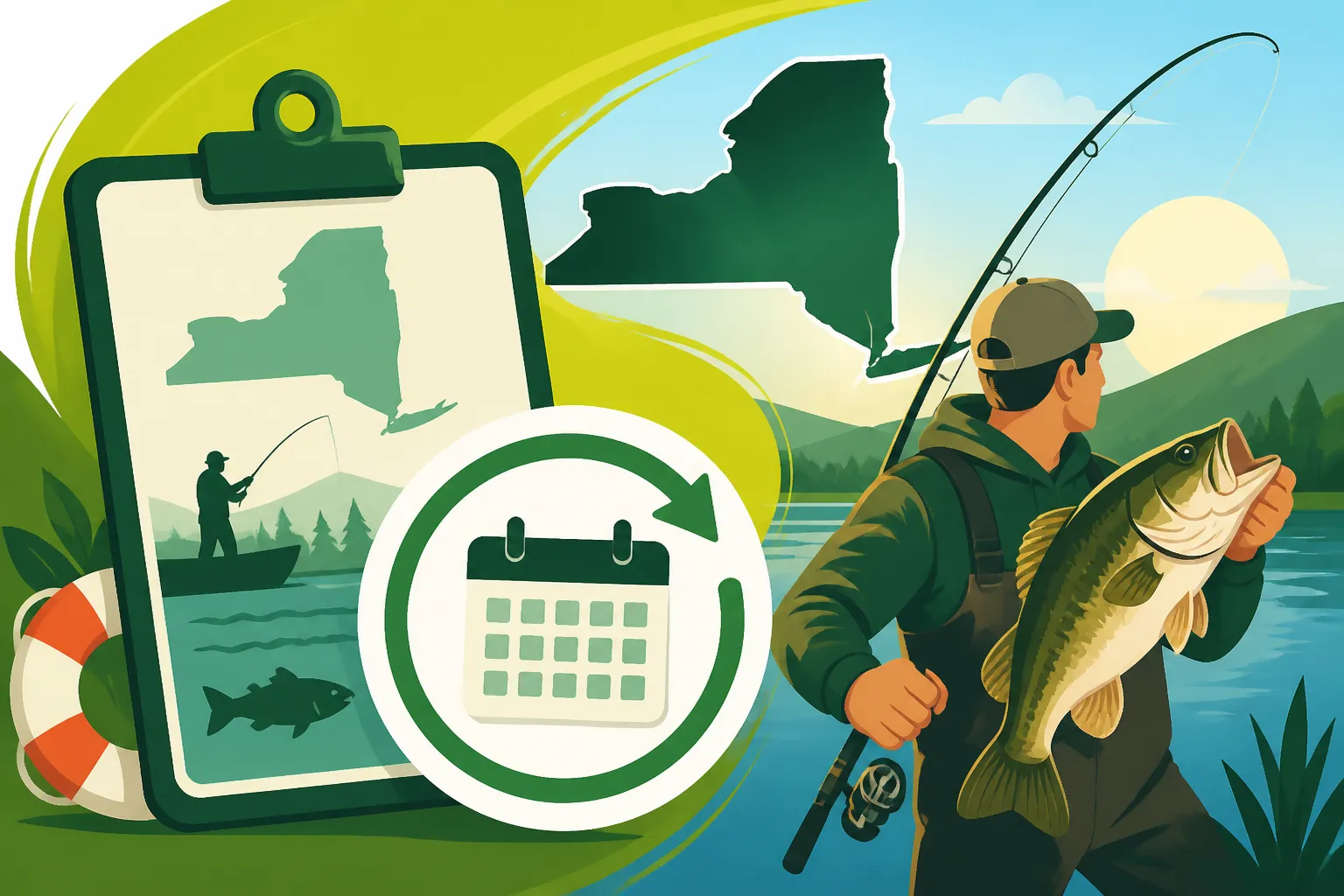
One of the simplest yet most effective ways to avoid an expired license is to set up multiple reminders. Since New York fishing licenses often expire 365 days from the purchase date (not necessarily a calendar year-end), it's easy to forget if your renewal date isn't January 1st. As soon as you purchase or renew your license, take a moment to add a reminder to your digital calendar – Google Calendar, Outlook Calendar, Apple Calendar, whatever you use. Set it for about a month before the actual expiration date.
Consider setting a second reminder a week before, just in case you missed the first one. You can even create an annual recurring event that prompts you to check your license status around the same time each year. If you're a pen-and-paper person, jot down the expiration date on your physical calendar, in your fishing logbook, or even on a sticky note placed prominently where you'll see it regularly, like on your tackle box or refrigerator.
Online Renewal Options and Convenience
The New York DEC's online licensing system is incredibly user-friendly and designed for convenience. Renewing your license online takes just a few minutes, provided you have your DEC customer ID and a credit card. You can access it 24/7 from the comfort of your home, or even from your phone while on the go. This is by far the easiest way to ensure you're always covered. The process is straightforward: log into your account, select the license you wish to renew, confirm your details, and make the payment.
After renewing, you'll immediately receive an email confirmation with a digital copy of your new license. You can then save this to your phone or print it out. This immediate access means there's virtually no excuse for not having a valid license, even if you realize it's expired at the last minute. This convenience is a huge benefit compared to the days when you had to physically go to an agent during business hours. For more details on the simplicity, look up How to Renew Your New York Fishing License Online.
Understanding Renewal Deadlines
While there’s no grace period after your license expires, there's also no strict "renewal deadline" in the sense that you must renew by a certain date or lose eligibility. You can renew your annual license at any time once it’s expired, and it will simply be valid for 365 days from that new purchase date. However, the true deadline is the day before you plan to fish. You absolutely cannot fish legally even one day after your license expires.
It’s always a good practice to aim to renew a few weeks before your current license expires. This gives you ample time to address any potential issues with the online system, payment, or to contact DEC customer service if you encounter any problems. Planning ahead ensures a seamless transition between licenses and keeps you fishing without interruption. For a broader perspective on different options, consider reading up on New York Fishing License Costs and Options and New York Fishing License Types Explained. You might even want to consider some fishing-specific planners or journals available on Amazon to help track these dates along with your fishing spots and catches!
Table: New York Fishing License Types and Validity Periods
To make things even clearer, here's a quick overview of common New York fishing license types and their typical validity:
| License Type | Validity Period | Renewal Information |
|---|---|---|
| Annual Resident | 365 days from purchase date | Can be renewed online, at a licensed vendor, or DEC office. Becomes active immediately upon purchase. |
| Annual Non-Resident | 365 days from purchase date | Same renewal process as resident annual license. Cost is higher than resident rates. |
| 7-Day Resident/Non-Res | 7 consecutive days from selected start date | Must be purchased for a specific 7-day period. Cannot be extended or renewed once expired. |
| 1-Day Resident/Non-Res | 1 single day from selected start date | Must be purchased for a specific day. No extension or renewal once the day ends. Ideal for short trips or trying out fishing. |
| Lifetime | Valid for the lifetime of the license holder | Purchased once, no annual renewal needed. This covers all future fishing needs and can be a significant cost-saver over many years. |
| Marine Registry | Valid for one calendar year (Jan 1 – Dec 31) | Must be renewed annually, even though it's free. This is different from the 365-day freshwater license. Required for saltwater fishing. |
This table emphasizes the distinct validity rules, especially for the Marine Fishing Registry, which operates on a calendar year. This is one detail many freshwater anglers forget when venturing into saltwater.
Disclaimer
The information provided in this guide is for general informational purposes only and is not intended as legal advice. Fishing regulations, license requirements, and penalties in New York State can change. It is always the responsibility of the individual angler to consult the most current regulations published by the New York State Department of Environmental Conservation (DEC) before engaging in any fishing activities. The official DEC website and their annual fishing regulations guide are the definitive sources for all legal requirements.