Best Surf Fishing Beaches on Long Island
Trying to figure out where to cast your line along the seemingly endless stretches of sand on Long Island can feel like searching for a needle in a haystack, especially when you're dreaming of that trophy striped bass or a feisty bluefish. It’s tough to know which beaches offer the best access, the right structure, or even just a peaceful spot to enjoy the sunrise with a rod in hand. This guide cuts through the guesswork, helping you pinpoint the absolute best surf fishing beaches on Long Island so you can spend less time wondering and more time reeling in your next great catch.
Why Long Island is a Surf Fishing Mecca
Long Island, a geographic marvel stretching east from New York Harbor, is truly a jewel for any angler who loves the thrill of casting into the surf. Its unique position, flanked by the Atlantic Ocean to the south and the sheltered waters of Long Island Sound to the north, creates an incredibly diverse marine environment. This diversity isn't just scenic; it's a haven for a multitude of fish species that migrate through, feed along, and even spawn in these productive waters. The constant ebb and flow of tides, the shifting sandbars, the rocky jetties, and the deep channels all contribute to an intricate underwater landscape that holds fish close to shore.
The fishing here isn't just good; it's legendary. Anglers come from all over, chasing the famed striped bass, known locally as "stripers," especially during their spring and fall migrations. But it's not just about the bass. Bluefish, with their razor-sharp teeth and aggressive strikes, provide exhilarating action. Fluke, porgies, weakfish, and even some resident species like blackfish can be caught right from the beach, depending on the season and location. It's a truly dynamic fishery, offering something for everyone, whether you're a seasoned surfcasting veteran or just getting started with a spinning rod and a bucket of bait. The sheer variety of opportunities, coupled with the stunning natural beauty, makes Long Island an unparalleled destination for surf fishing.
The Influence of the Atlantic and Long Island Sound
The duality of Long Island's coastline — the raw power of the open Atlantic on its south shore and the more protected, often shallower, waters of Long Island Sound to the north — profoundly influences the type of surf fishing you'll encounter. On the south shore, you're dealing with larger waves, stronger currents, and often more dramatic changes in bottom structure like deep troughs and outer bars. This environment is perfect for migratory species like large striped bass and bluefish that cruise the open coast, feeding on baitfish pushed by the surf. Think big rods, heavy tackle, and long casts into the crashing waves.
The north shore, bordering Long Island Sound, offers a different experience entirely. While still tidal, the waters are generally calmer, shallower, and often characterized by rocky shorelines, mussel beds, and marshy estuaries. This environment is excellent for smaller striped bass, porgies, and fluke, especially in areas with good current flow around points and structure. It's a more nuanced fishery, often favoring lighter tackle and different techniques. Understanding this geographical split is key to choosing your spot and preparing your gear. For instance, you might find yourself needing a New York Saltwater Fishing Registration Guide before hitting the north shore, while the south shore might demand different legal considerations depending on specific park rules.
Seasonal Migrations and Target Species
One of the most exciting aspects of surf fishing on Long Island is the distinct seasonality of the fishing, driven largely by the migrations of various species. Spring brings a surge of activity as baitfish, followed closely by hungry striped bass and bluefish, move north along the coast after wintering in warmer waters. This is when the beaches can really light up, offering consistent action for anglers ready to intercept these migrating schools.
As summer progresses, the larger migratory fish might move into deeper, cooler waters, but the inshore bite for species like fluke, porgies, and smaller bass often remains strong. You'll find anglers targeting fluke in sandy channels and porgies around rocky structures. Fall is arguably the most celebrated season for surfcasters, as the "fall run" sees an incredible southward migration of baitfish, attracting massive schools of trophy striped bass and aggressive bluefish. This is the time when anglers pull out all the stops, fishing day and night in pursuit of their biggest catches. Knowing these patterns, and what species like Striped Bass in New York or Bluefish in Long Island Sound prefer during different times of year, is crucial for success. You can often find detailed seasonal forecasts and reports from local tackle shops or online fishing forums, helping you plan your trips.
Top Surf Fishing Beaches on Long Island
Long Island boasts an incredible array of surf fishing locations, each with its own character, challenges, and rewards. From the wild, untamed eastern tip to the more accessible central and western beaches, there's a spot for every angler and every preference. Here, we'll dive into some of the most iconic and productive surf fishing beaches that Long Island has to offer, detailing what makes them special and what you can expect to catch.
Montauk Point State Park: The "End of the World"
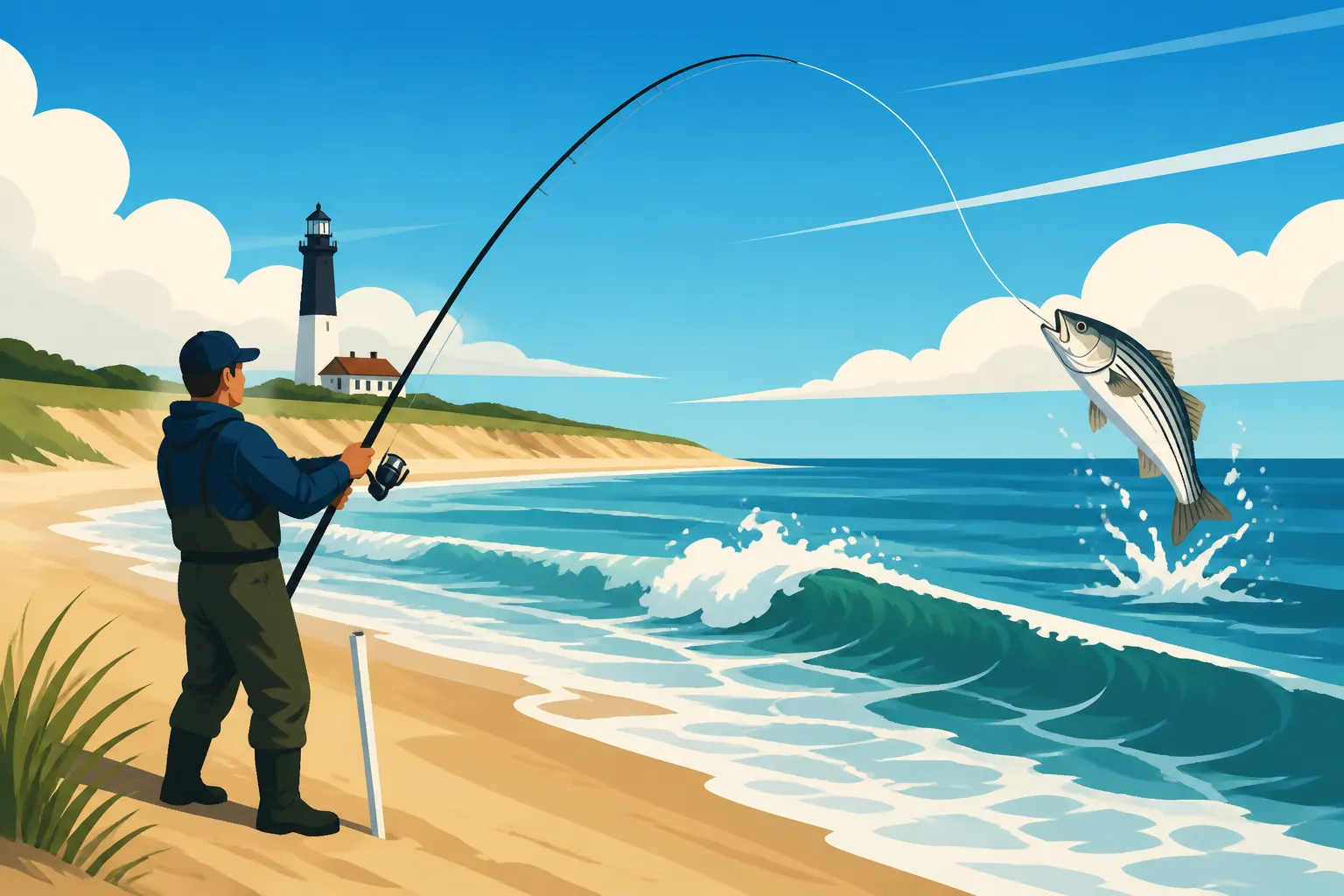
When serious surfcasters talk about Long Island, Montauk Point State Park, often called the "End of the World," invariably comes up. Located at the very eastern tip of Long Island, where the Atlantic Ocean meets Block Island Sound, Montauk is legendary for its rugged, rocky shoreline and powerful currents. This unique geography creates a funnel effect for migrating baitfish and, consequently, for the predatory fish that feed on them. It’s a place of wild beauty and equally wild fishing.
Anglers here often target trophy striped bass, especially during the fall run. The "rips" and currents around the iconic Montauk Lighthouse are prime territory for big fish. While the fishing can be incredible, it's also physically demanding. You'll often be navigating slippery rocks, casting heavy lures into strong winds, and dealing with intense currents. This is not a place for the faint of heart, but the rewards can be truly epic. Beyond striped bass, you can also encounter bluefish, false albacore, and even some offshore species pushed in by strong tides. For a truly immersive experience, many anglers spend days camping nearby, fishing from dawn till dusk. If you're looking for more details on this iconic spot, check out Fishing at Montauk Point, New York.
Robert Moses State Park (Fire Island)
Stretching along the south shore, Fire Island National Seashore offers miles of pristine, undeveloped beach accessible via Robert Moses State Park. This is a classic open-beach surf fishery, characterized by shifting sandbars, deep troughs, and expansive stretches of uncrowded coastline. The accessibility here is relatively easy compared to Montauk, making it a popular choice for anglers looking for a more relaxed, yet still productive, surf fishing experience.
Striped bass and bluefish are the primary targets, particularly during the spring and fall migrations. Anglers often employ long surf rods to cast bait such as bunker, clams, or eels, or throw a variety of artificial lures like poppers, darters, and swimming plugs. The presence of multiple sandbars creates excellent feeding lanes and ambush points for predatory fish. Beyond the big two, you can also pick up fluke in the calmer stretches, especially during the summer months. The park offers plenty of amenities, making it a great choice for a day trip or even a weekend camping adventure. Fishing at Fire Island, New York offers more insights into this incredible area.
Jones Beach State Park
Further west along the south shore, Jones Beach State Park is one of New York's most famous and accessible beaches. With six miles of oceanfront, numerous parking fields, and extensive facilities, it's an incredibly popular spot for both recreational beachgoers and surf anglers. Despite its popularity, the sheer length of the beach means you can usually find a productive stretch of sand to call your own.
Jones Beach offers excellent opportunities for striped bass and bluefish, especially in the deeper sloughs and cuts that form between the sandbars. It's a fantastic spot for throwing metal jigs, bucktails, and plugs. During the summer, you might also find good numbers of fluke, kingfish, and even some croaker in the surf. The jetties at Field 10 and the West End are particularly popular for anglers seeking structure-holding fish. Because of its ease of access, Jones Beach can get crowded, especially on weekends, so arriving early is often a good strategy. If you're looking for an accessible, family-friendly surf fishing experience, Fishing at Jones Beach, New York is a must-read.
Gilgo Beach to Cedar Beach
This stretch of barrier island coastline, running from Gilgo Beach east to Cedar Beach, offers a less crowded alternative to some of the more famous spots, while still providing excellent surf fishing. These beaches maintain that classic Long Island south shore feel: wide, sandy, and exposed to the full force of the Atlantic. They are particularly known for their productive fall runs.
Anglers often find success here with traditional surfcasting methods, using bait on fish-finder rigs or casting a variety of artificial lures. The dynamic nature of the sandbars means that hot spots can shift from season to season, but patient observation and a willingness to explore different stretches of beach usually pay off. Striped bass and bluefish are the main attractions, with some false albacore and bonito making appearances during late summer and early fall. Access points are available through Suffolk County Parks, and while parking might require a permit, the effort is often rewarded with solitude and strong fishing.
Shinnecock Inlet
While not strictly a "beach" in the traditional sense, Shinnecock Inlet on the south shore is an absolutely vital surf fishing location. This man-made cut connecting Shinnecock Bay to the Atlantic Ocean acts as a superhighway for migrating fish and bait. The powerful currents, deep channels, and rocky jetties make it a prime ambush point for large predatory fish.
Shinnecock Inlet is renowned for its consistent action for striped bass and bluefish, often producing larger specimens than adjacent open beaches. Anglers here use heavy tackle to combat the strong currents, casting large plugs, bucktails, or live eels. It's also an excellent spot for blackfish (tautog) and sometimes even weakfish, especially around the jetties and calmer eddy areas. Fishing the inlet requires careful attention to tides and safety due to the swift currents, but the potential for a monster fish is always present. For charter fishing options or more structured trips in this area, you might find resources like FishingBooker helpful in connecting with local captains who know the inlet's nuances.
Table: Long Island Surf Fishing Hotspots at a Glance
| Location | Primary Species Targeted | Best Season(s) | Key Features / Terrain | Access & Crowd Level |
|---|---|---|---|---|
| Montauk Point State Park | Striped Bass, Bluefish, False Albacore | Spring, Fall | Rugged rocks, strong currents, deep rips | Moderate access, can be crowded, physically demanding |
| Robert Moses State Park | Striped Bass, Bluefish, Fluke | Spring, Summer, Fall | Wide sandy beaches, shifting sandbars, deep troughs | Easy access, moderate crowds, long stretches of beach |
| Jones Beach State Park | Striped Bass, Bluefish, Fluke | Spring, Summer, Fall | Sandy beaches, jetties, sloughs | Very easy access, can be crowded, extensive facilities |
| Gilgo to Cedar Beach | Striped Bass, Bluefish | Spring, Fall | Open sandy beaches, less developed, varying sandbars | Moderate access, generally less crowded, county permits may be needed |
| Shinnecock Inlet | Striped Bass, Bluefish, Tautog, Weakfish | Spring, Summer, Fall | Deep channels, strong currents, rocky jetties | Moderate access, can be crowded, challenging conditions |
Essential Gear and Techniques for Long Island Surf Fishing
Stepping onto a Long Island beach with your rod and tackle box, you want to feel prepared, not overwhelmed. The right gear and a solid understanding of basic techniques can make all the difference between a frustrating day and a memorable one. You don't need to break the bank to get started, but investing in a few key items tailored to surf fishing will pay dividends.
Rods, Reels, and Line: Building Your Setup
For most Long Island surf fishing, you'll want a rod that can handle the heavier lures and baits required to cast into the surf and battle strong currents and powerful fish. A good starting point is a surf rod between 9 and 11 feet long, with a medium-heavy to heavy action. This length provides the leverage needed for long casts and the backbone to fight fish in rough conditions. Coupled with this, a durable spinning reel in the 5000 to 8000 series (or a conventional reel if you prefer) is essential. Look for reels with a good drag system and corrosion resistance, as saltwater is unforgiving.
When it comes to line, braided line in the 30-50 lb test range is a popular choice for its strength, thin diameter (allowing for longer casts), and lack of stretch, which provides excellent sensitivity. You'll want to add a fluorocarbon or monofilament leader of 40-80 lb test, typically 3-5 feet long, to provide abrasion resistance against sharp rocks, fish teeth, and tough scales, and to absorb some shock during a fight. Remember, strong leaders are crucial when you're targeting species like the Striped Bass in New York, which can put up a serious fight. Always check your leader for nicks and abrasions after landing a fish or getting snagged.
Lures and Baits: Matching the Hatch
The choice of lure or bait depends heavily on what you're targeting and the conditions. For striped bass and bluefish, artificial lures are incredibly effective, especially when baitfish like bunker (Atlantic menhaden), spearing, or silversides are present. Common artificials include:
- Plugs: Wooden or plastic lures designed to imitate baitfish. Poppers create surface commotion, while swimming plugs dive and wiggle.
- Metal Jigs/Spoons: Excellent for long casts and mimicking fleeing baitfish. Good for bluefish and false albacore.
- Bucktails: Versatile lures that can be jigged, retrieved steadily, or tipped with a soft plastic or pork rind for added appeal.
- Soft Plastics: Often rigged on jig heads or as trailers, these imitate various baitfish and worms.
When using natural bait, fresh is always best. Common choices include:
- Clams: A universal bait, especially effective for striped bass and sometimes porgies.
- Bunker (Menhaden): Live or fresh cut bunker is irresistible to big striped bass and bluefish.
- Eels: Live eels are a top choice for large striped bass, particularly at night.
- Worms: Bloodworms or sandworms can be effective for smaller species and sometimes bass in the spring.
It's always a good idea to check with local tackle shops on Long Island, as they can provide up-to-the-minute information on what baitfish are running and what lures are currently producing catches. They often have the freshest bait too!
Casting and Retrieval Techniques
Mastering your casting technique is fundamental for surf fishing. You'll often need to cast a significant distance to reach productive sandbars or rips. The "pendulum cast" or "overhead cast" are common techniques that allow for maximum distance with heavy rigs. Practice in an open field to get a feel for your rod and reel.
Once your lure or bait is in the water, your retrieval technique will vary. For plugs, a steady retrieve with occasional twitches can imitate a swimming baitfish. For bucktails, a lift-and-drop jigging motion is often effective. When bait fishing, allow your bait to sit on the bottom, but be ready for a bite. Understanding the current is key; cast slightly upcurrent and let your bait or lure drift naturally into the strike zone. Many of these techniques are covered in detail when learning How to Fish for Striped Bass in New York. Also, make sure you're up to date on your New York Recreational Marine Fishing Registry requirements before heading out.
Navigating Regulations and Timing Your Trip
Before you even step foot on a Long Island beach with your fishing gear, understanding the local regulations and the best times to fish is paramount. New York State has specific rules for saltwater fishing, and adhering to them ensures both your safety and the sustainability of the fishery.
Understanding New York Saltwater Fishing Regulations
First and foremost, virtually all saltwater anglers over the age of 16 need to register with the New York State Department of Environmental Conservation (DEC) for marine recreational fishing. This is typically free for New York residents. This registration is critical for tracking catch data and managing fish populations. You can find detailed information on how to register and what it entails in the New York Saltwater Fishing Registration Guide. Remember, ignoring this simple step can lead to fines, so it’s always best to be compliant.
Beyond registration, you need to be acutely aware of specific regulations for each species you might encounter. This includes minimum size limits, daily creel limits (how many fish you can keep), and open seasons. For example, striped bass have specific slot limits that change periodically, and there's a strict requirement for using a Striped Bass Circle Hook Requirement when fishing with bait. Bluefish and fluke also have their own sets of rules that vary by season and location. These regulations are designed to protect fish stocks and ensure healthy populations for future generations of anglers. It's a good habit to download or pick up the current DEC marine fishing regulations guide before each season. You can usually find these guides at local tackle shops or on the DEC website.
Best Times and Tides for Surf Fishing Success
Timing is everything in surf fishing. While you can catch fish at any time, certain periods offer significantly better chances of success. The general consensus among seasoned surfcasters is that the "edges" of the day – dawn and dusk – are prime feeding times for many predatory fish. The lower light conditions provide an advantage for predators, making them more active closer to shore. Night fishing, especially for striped bass, can also be incredibly productive, as big bass often move into the shallows under the cover of darkness.
Tides also play a crucial role. For most locations on Long Island, the incoming and outgoing tides (the hours leading up to and immediately after high or low tide) are the most productive. Moving water concentrates baitfish, creates current seams, and washes food off the bottom, all of which attract hungry fish. Understanding Best Tides for Striped Bass Fishing on New York's Long Island Sound is a skill developed over time, but generally, fishing around a moving tide will yield better results than during slack tide. Different beaches and inlets will fish differently on various tides, so observing local patterns and asking experienced anglers can provide valuable insight. Factors like moon phase, barometric pressure, and even wind direction can also influence the bite, adding another layer of complexity and excitement to the pursuit.
For those looking to gain an edge, perhaps by trying a guided trip or charter, fishing resources like FishingBooker can help you find local experts who understand these intricate timing elements and can put you on the fish. They list experienced captains and guides who specialize in the local waters and can maximize your chances of success during specific tidal windows or seasonal runs.
Disclaimer
The information provided in this guide is for general informational purposes only and is subject to change. Fishing regulations, seasons, and limits are determined by the New York State Department of Environmental Conservation (DEC) and can be updated at any time. It is the responsibility of every angler to consult the most current official New York Fishing Regulations Explained and obtain any necessary licenses or registrations before engaging in fishing activities. Always prioritize safety and practice responsible angling.