What Muskellunge Eat
There's a reason muskellunge are often called "the fish of 10,000 casts" – they're notoriously elusive, often ignoring even the most perfectly presented lure. But one of the biggest secrets to cracking the code on these magnificent predators in New York waters lies in truly understanding what they eat. It's not just about throwing the biggest bait; it's about understanding their ever-changing menu and how their predatory nature drives every decision they make in the water. This guide is going to break down the muskie's diet, helping you think like one of New York's most formidable fish.
The Muskie: New York's Apex Predator and Its Dinner Plate
Muskellunge, or "muskies" as they're affectionately known, aren't just big fish; they're perfectly designed eating machines. They sit at the top of the freshwater food chain in many New York lakes and rivers, and their entire existence revolves around finding and consuming sustenance. Understanding this fundamental role helps us appreciate their dietary habits.
Nature's Elite Freshwater Hunter
When we talk about an "apex predator," we mean a creature at the very top of its food chain, with no natural predators of its own once it reaches a certain size. In New York's freshwater systems, the muskie fits this description to a T. From the moment they hatch, muskie are built for hunting. Their torpedo-shaped bodies, large mouths full of razor-sharp teeth, and incredible burst speed make them perfectly adapted to ambushing prey. They don't just graze or nibble; they strike with intent, often consuming a meal that can be a significant percentage of their own body weight. This relentless pursuit of food is what drives them, and it's why they can grow to such immense sizes, sometimes pushing the boundaries of what seems possible for a freshwater fish. Many anglers spend a lifetime chasing these giants, hoping to land a New York State Muskellunge Record: 69 Pounds, 15 Ounces.
Opportunistic Feeders with a Preference for Protein
While muskies are highly effective hunters, they're also incredibly opportunistic. This means they'll take advantage of whatever easy meal presents itself, given the chance. They don't discriminate much when hunger strikes; if it moves, fits in their mouth, and offers a good caloric payoff, it's fair game. This opportunistic nature is why you hear tales of muskies hitting everything from small panfish to much larger trout or even unsuspecting waterfowl. They're constantly assessing their environment for potential meals, and anything that appears vulnerable or an easy target becomes a prime candidate for a lightning-fast strike. They need to consume a lot of protein to maintain their large frames and fuel their powerful muscles, which is why their diet is almost exclusively other animals.
The Role of Size and Metabolism in Muskie Hunger
The sheer size of a muskellunge is a huge factor in what and how much it eats. A fish that can reach lengths of over 50 inches and weights into the 40-50 pound range (or even more, like the truly legendary specimens) simply requires a massive amount of energy. Their metabolism, while not always running at full throttle, demands substantial meals. Unlike smaller fish that might feed constantly on tiny insects or invertebrates, a muskie often hunts for larger prey, consuming a meal that might sustain it for a day or two. This is why when they do decide to eat, it's usually a full commitment. They're not just taking a bite; they're engulfing a substantial target. This metabolic need for large, protein-rich meals is a key consideration for anglers trying to understand Muskellunge Lifespan Explained and their growth patterns.
What Influences a Muskie's Menu in New York Waters
A muskie's diet isn't static; it's a dynamic affair that shifts based on a variety of environmental factors. Just like us, what they crave or can easily find changes with the seasons, their surroundings, and the availability of their favorite snacks.
Seasonal Shifts and Water Conditions
The time of year dramatically impacts what a muskie will eat and how actively it hunts. In the warmer months of late spring and summer, when their metabolism is higher and baitfish are abundant and active, muskies are often aggressive feeders. They'll chase down faster-moving prey, and their range of target species expands. As the water cools in the fall, their feeding often intensifies in what's known as the "fall feed." They're stocking up on calories for the lean winter months. During this period, they might target even larger, fattier prey to build up energy reserves. Come winter, especially under the ice, their metabolism slows considerably. While they still need to eat, their activity decreases, and they become much more lethargic, often preferring a slow-moving, easy meal rather than an energetic chase. Knowing the Best Season for Muskellunge Fishing in New York often comes down to understanding these seasonal dietary changes.
Habitat and Water Body Differences
New York is a state of incredible diversity when it comes to fishing environments, and this diversity directly influences local muskie diets. A muskie living in the vast, open waters of the St. Lawrence River, home to ample populations of cisco and whitefish, will likely have a different primary diet than one residing in a weed-choked inland lake where yellow perch and panfish dominate. Fishing New York's St. Lawrence River and Thousand Islands offers opportunities for muskies to chase larger schooling fish. River muskies might also encounter different prey species, such as various suckers or even migratory fish, that aren't present in still-water lakes. The structure of the habitat – whether it's rocky points, deep weed beds, open water, or current seams – also dictates where certain prey species are found, and therefore, where muskies will hunt for them.
Prey Abundance and Availability
Ultimately, the most significant factor determining a muskie's diet is simply what's available in abundance. If a lake has a booming population of golden shiners, you can bet those shiners will be a staple on the muskie menu. Conversely, if a particular baitfish population is low, muskies will quickly adapt to target other species that are more plentiful. This concept, often called "matching the hatch" in fly fishing, applies equally to muskie fishing, though on a much larger scale. It's about paying attention to the forage base in the specific water you're fishing. Local knowledge from bait shops or other anglers can be invaluable here, as they often know which baitfish are thriving in any given year.
Unpacking the Muskie's Typical New York Diet
So, what exactly ends up on the muskie's dinner plate here in New York? It's a surprisingly varied menu, but some items are definitely more common than others.
Primary Fish Targets
Overwhelmingly, fish make up the bulk of a muskie's diet. These are often the largest, most abundant, and easiest-to-catch fish species in their environment.
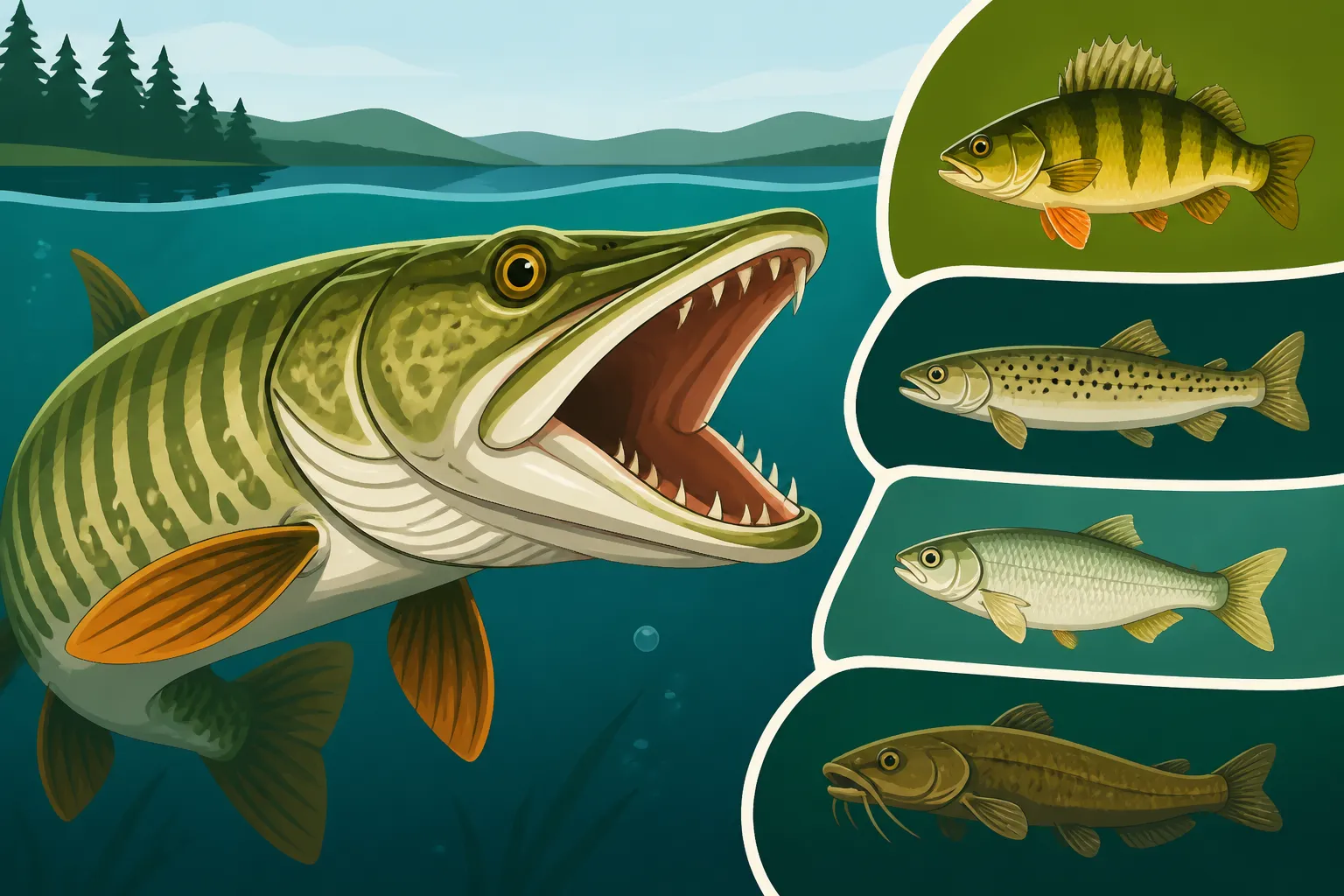
- Suckers: These slow-moving, often large-bodied bottom feeders are a muskie favorite. They provide a substantial meal without too much effort from the muskie, especially species like white suckers.
- Yellow Perch: Found in nearly every muskie water, perch are a ubiquitous and readily available food source. Their elongated bodies and schooling behavior make them easy targets.
- Walleye: In waters where both species coexist, like parts of Lake Erie and the St. Lawrence River, walleye are definitely on the menu. They are a high-protein meal, though often more challenging for a muskie to catch.
- Cisco (Lake Herring) and Alewives: These open-water schooling fish are crucial forage in deeper, larger lakes, providing a rich, fatty food source for muskies.
- Panfish (Bluegill, Crappie): While smaller, these fish are so abundant that muskies will readily consume them, particularly younger muskies or larger ones when bigger prey is scarce.
- Smallmouth and Largemouth Bass: Muskies don't discriminate against other game fish. Smaller bass, or even larger ones when vulnerable, can certainly become a muskie's meal.
- Trout and Salmon (especially stocked fish): In waters where trout or landlocked salmon are present, muskies will absolutely key in on them. Stocked trout, in particular, can be easy pickings as they adjust to a new environment.
Beyond the Fin: Secondary Prey Items
While fish are the primary diet, muskies are not exclusively piscivorous (fish-eating). Their opportunistic nature means they'll sometimes expand their palate to include other creatures.
- Frogs: During warmer months, especially in weedy shallows, frogs are an easy, high-protein snack. A muskie lurking in lily pads won't hesitate to snatch a frog passing by.
- Ducklings and Small Birds: It's rare, but muskies have been known to grab unwary ducklings or other small birds that venture too close to the water's surface, particularly in areas with dense vegetation.
- Muskrats and Other Small Mammals: Again, these are not common occurrences, but a small rodent or muskrat swimming across a muskie's territory can become a meal if the opportunity arises. Muskies are not shy about attacking something larger if they sense an easy meal.
- Snakes: Certain water snakes can also fall prey to a muskie's voracious appetite. Anything that breaks the surface tension and presents a silhouette could be seen as food.
- Cannibalism: Yes, it happens. Larger muskies will, on occasion, prey on smaller muskies. This reinforces their position as the ultimate predator in their ecosystem. Understanding the Muskellunge Minimum Size Limit is crucial for conservation, ensuring enough smaller fish survive to grow into trophy specimens.
How a Muskie's Appetite Informs Your Angling Strategy
Knowing what a muskie eats is more than just trivia; it's foundational to becoming a successful muskie angler. Every lure choice, every retrieve speed, and every location you target should ideally be influenced by this knowledge.
Matching the Hatch (or the Meal) with Lures
The old adage "match the hatch" is just as relevant for muskie fishing as it is for trout. If the muskies in your chosen New York water are primarily feeding on yellow perch, then throwing a perch-colored crankbait or soft plastic that mimics a perch is a smart move. If cisco are the dominant forage, a longer, slender bait with a silver or white profile might be more effective. This isn't just about color; it's about size, shape, and action. A massive muskie that just gorged on a 15-inch sucker might not be interested in a small spinnerbait, but it might still strike a giant, slow-moving glide bait that resembles another substantial meal if it feels it needs to top off. Many anglers spend hours researching and buying the perfect lures, often stocking up from their favorite local shops or even online retailers like Amazon.
| Prey Species | Common Lure Types That Mimic Them | Key Characteristics to Imitate |
|---|---|---|
| Suckers | Large jointed or non-jointed crankbaits, glide baits, soft plastics | Fat body, slow wobble, natural colors (browns, golds) |
| Yellow Perch | Crankbaits, jerkbaits, spinnerbaits, bucktails | Mottled patterns, green/yellow/orange colors, elongated profile |
| Walleye | Large jerkbaits, deep-diving crankbaits | Silver/gold sides, dark back, subtle flash, slender profile |
| Cisco/Alewives | Long, slender jerkbaits, spoons, large soft plastics | Silver/white flash, shimmering action, open-water presentation |
| Panfish (Bluegill) | Small bucktails, smaller crankbaits, swimbait soft plastics | Compact profile, bright blue/green/orange, tight wiggle |
| Frogs | Topwater baits (poppers, frogs), shallow swimbaits | Surface disturbance, lifelike profile, green/brown colors |
| Small Mammals/Birds | Large topwater "walk-the-dog" baits, oversized soft plastics | Significant surface commotion, large profile, erratic movement |
Understanding Feeding Windows and Patterns
Muskies don't feed all the time. They typically have "feeding windows" when they are most active. These windows can be influenced by time of day (dawn and dusk are often prime), weather conditions (cloudy, choppy days can be excellent), or even lunar phases. By understanding their diet and metabolic needs, we can better predict when these windows might occur. For example, during a hot summer day, muskies might retreat to deeper, cooler water and become less active. However, as evening approaches and baitfish move into shallower areas, the muskie's predatory instincts kick in, leading to a burst of activity. If you're wondering How to Fish for Muskellunge, patience and timing are often more important than endless casting.
Adapting Lure Choices Throughout the Season
Just as their diet changes with the seasons, so should your lure choices. In the spring and early summer, when water temperatures are rising and muskies are recovering from spawning, they might be more receptive to smaller, easier meals or baits with erratic actions that trigger reaction strikes. As summer progresses and water temperatures peak, they might prefer fast-moving baits or topwaters that mimic prey trying to escape the heat. Come fall, when muskies are putting on weight for winter, "big baits equal big fish" often holds true. Giant bucktails, large crankbaits, and heavy swimbaits that represent a substantial meal become incredibly effective. It's about being versatile and knowing when to switch up your presentation to match what the muskie is most likely to be looking for. Remember to check New York Fishing Regulations Explained for any specific seasonal rules or gear requirements.
By truly internalizing what muskies eat and the factors that drive their dietary choices, you move beyond simply casting and hoping. You begin to fish with a purpose, increasing your odds of connecting with one of New York's most magnificent and challenging freshwater game fish.
Disclaimer
This article is for general informational purposes only and does not constitute professional advice. Laws, prices and regulations vary by location and change over time. Consult a qualified professional for guidance on your specific situation.