Fine for Fishing Without a License in New York
We've all been there: standing by the water, the sun warm on our face, rod in hand, when that nagging thought creeps in. "Did I remember to get my fishing license this year?" Or maybe you're new to fishing in New York, and the whole idea of licenses and regulations feels like a bureaucratic headache. It’s a common frustration, but skipping that crucial step can lead to a far bigger headache: a significant fine and a potential damper on your fishing future. This guide will walk you through exactly what happens if you're caught fishing without a license in New York, helping you understand the penalties and, more importantly, how to avoid them entirely so you can enjoy the peace of the water without worry.
The Immediate Sting: Understanding the Fine for Fishing Without a License
Let's cut right to it, because this is often the first thing on an angler's mind when they think about being caught without the proper paperwork. In New York, fishing without a valid license is a violation of the Environmental Conservation Law (ECL), specifically ECL 11-1301. It’s not just a polite reminder; it’s a legal infraction, and the fines can definitely make a dent in your wallet. The exact amount isn't always a simple, fixed number, and it can vary based on several factors, including the discretion of the Environmental Conservation Officer (ECO) and the specific court jurisdiction.
Typically, for a first offense of fishing without a license, you're looking at a base fine that can range anywhere from $50 to $250. But here's the kicker: that's often just the base fine. On top of that, you'll almost always be assessed mandatory court surcharges, which can add another $50 to $100 or even more, depending on where the ticket is issued. So, while you might see a $75 fine on the ticket, the actual amount you pay out of pocket after surcharges could easily be $150 or more. It’s a costly oversight, especially when you consider that an annual resident fishing license is often less than the minimum fine itself. Think about it: a small investment upfront saves you a big headache and a bigger bill down the line. To understand the different options available, check out our comprehensive guide on New York Fishing License Costs and Options.
Beyond the Ticket: Other Penalties You Could Face
While the monetary fine is certainly unpleasant, it’s not the only consequence of fishing without a license. New York takes its conservation laws seriously, and the penalties can extend to other aspects of your recreational activities. It's not just about the state missing out on a few dollars; it's about protecting the state's natural resources and ensuring everyone contributes their fair share to conservation efforts.
Potential Loss of Fishing Privileges
One of the most impactful penalties for an avid angler is the potential loss of fishing privileges. If you’re caught without a license, especially if it’s a repeat offense or if other violations accompany it (like keeping undersized fish or exceeding catch limits), the DEC can suspend your hunting, fishing, and trapping privileges for a period of time. This isn’t just a slap on the wrist; it means you’re legally barred from participating in these activities, even if you try to purchase a license. Trying to fish during a suspension would lead to even more severe penalties. Imagine looking forward to the prime trout season or the fall salmon run, only to realize you can’t cast a line because of a past infraction. It’s a tough pill to swallow and certainly makes you appreciate the importance of compliance.
Confiscation of Gear and Catch
In certain situations, an ECO might confiscate your fishing gear and even your catch. While not always the case for a simple "no license" violation, it's certainly within their rights, particularly if they suspect other serious violations, or if the gear itself is illegal. Losing a favorite rod and reel, or the fish you worked hard to catch, adds insult to injury on top of the financial penalty. It’s a stark reminder that ignorance of the law is not an excuse. Furthermore, any fish caught illegally (without a license, out of season, undersized, or over the limit) will almost certainly be confiscated. This isn't just a loss for you; it's a measure to prevent poaching and ensure sustainable fisheries for everyone.
Court Appearances and Criminal Charges
While a first-time "no license" violation is often handled with a ticket and a fine, more serious infractions, repeat offenses, or situations involving other illegal activities (like possessing illegal fishing devices, significant poaching, or resisting an ECO) can lead to mandatory court appearances and even criminal misdemeanor charges. A misdemeanor goes on your criminal record and carries far more significant consequences than a simple violation, including potentially higher fines, community service, or even jail time in extreme cases. It's rare for a simple lack of license to escalate to this level, but it highlights the potential severity if you repeatedly disregard the law or commit other offenses. Always be respectful and cooperative with ECOs; they are doing their job to protect New York's beautiful natural resources.
Here's a quick overview of potential penalties:
| Violation Type | Typical Fine Range (First Offense) | Surcharges (Approx.) | Other Potential Consequences |
|---|---|---|---|
| Fishing Without a License | $50 – $250 | $50 – $100+ | Loss of privileges, gear/catch confiscation |
| Repeat Offense (No License) | $250 – $1000 | $50 – $100+ | Extended loss of privileges, misdemeanor charges |
| Fishing During Suspension | $500 – $2000 | $50 – $100+ | Significant loss of privileges, misdemeanor charges |
| Exceeding Bag Limit / Undersized Fish | $50 – $250+ per fish | $50 – $100+ | Loss of privileges, gear/catch confiscation |
| Using Illegal Gear | $100 – $500+ | $50 – $100+ | Gear confiscation, loss of privileges |
Note: These are typical ranges; actual penalties can vary based on specific circumstances and court discretion.
Staying on the Right Side of the Law: How to Avoid Penalties
Nobody wants to face fines or lose their fishing privileges. The good news is that avoiding these penalties is incredibly easy. A little bit of preparation goes a long way, ensuring your time on the water is relaxing and completely stress-free.
Always Purchase and Carry Your License
This might seem obvious, but it's the absolute foundation. Before you even think about heading to your favorite fishing spot, make sure you have a valid New York fishing license. You can easily purchase one online through the DEC's website, over the phone, or in person at various vendors like sporting goods stores, town clerk offices, or even some Amazon Outdoors retail partners that sell licenses directly. For a full breakdown of where to get yours, check out our guide on Where to Buy a New York Fishing License.
Once you've bought it, carry it with you! This is crucial. While you can often display it digitally on your phone these days, having a printed copy is always a good backup, especially in areas with spotty cell service. You can even get a small, waterproof holder for your physical license from Amazon to keep it protected while out on the water. Remember, an ECO needs to verify your license, and if you can't produce it, even if you legitimately bought one, it could still lead to delays or potential citation until verified. Our post Do I Need to Carry My Physical Fishing License on the Water? dives deeper into this topic.
Understand New York Fishing Regulations
Beyond just having a license, it's vital to understand the specific rules for the waters you're fishing. New York has diverse ecosystems, and regulations can change dramatically from one body of water to another, or even for different species within the same lake or river. These regulations cover everything from season dates and catch limits to minimum size requirements and specific tackle restrictions. For example, the rules for catching walleye in Lake Erie are different from trout fishing in a Catskill stream.
The New York State Department of Environmental Conservation (DEC) publishes a comprehensive fishing regulations guide every year, available both online and at license vendors. Take the time to read it, or at least familiarize yourself with the rules for your target species and location. Being prepared not only helps you avoid fines but also ensures you're practicing responsible angling. You can find detailed information in our article New York Fishing Regulations Explained.
Know When a License Isn't Required
While the general rule is "always have a license," there are a few specific exceptions. Knowing these can save you unnecessary purchases or help you understand if you genuinely fall outside the requirement.
- Children Under 16: In New York, children under the age of 16 do not need a fishing license to fish. This is fantastic news for families and encourages younger generations to get involved in the sport. However, they must still adhere to all other fishing regulations regarding catch limits, seasons, and size restrictions. Learn more in our article Do Kids Need a Fishing License to Fish in New York?.
- Free Fishing Days: The DEC designates several "Free Fishing Days" each year, during which anyone can fish New York's freshwaters without a fishing license. These days are usually set a few times throughout the year and are a great opportunity for beginners or those visiting to try out fishing without the upfront cost of a license. You can find the schedule in our New York Free Fishing Days Calendar. Keep in mind, all other fishing regulations remain in effect on these days.
- Private Ponds (Under Specific Conditions): If you're fishing on a completely private pond that is not connected to any other public waters and is located entirely on your own property, you generally do not need a state fishing license. However, the nuances here are critical: it must be truly isolated from public waterways, and the fish must either be stocked by you or naturally occurring without migrating from public sources. This is a very specific exception, and if there's any doubt, it's always safer to have a license.
Digital vs. Physical License: Be Prepared
The convenience of carrying your fishing license on your smartphone is undeniable. The New York DEC allows anglers to display their license digitally, which is fantastic for those times you forget your physical copy. However, relying solely on your phone comes with its own set of potential problems. What if your phone battery dies? What if you drop it in the water? What if you're in an area with no cell service and the digital license can't load?
It’s always a good idea to have a backup. Printing a physical copy of your license at home is a simple, effective solution. Our article Can I Print My Fishing License at Home? can guide you through the process. Once printed, consider laminating it or keeping it in a waterproof bag. Small, durable waterproof pouches are readily available on Amazon and are a smart investment for any angler. This way, you're covered no matter what unexpected situation arises on the water.
What to Do If You're Stopped by an ECO
Even if you have your license and are following all regulations, an Environmental Conservation Officer might still approach you. This is a routine part of their job to ensure compliance and protect our natural resources. Knowing how to react calmly and cooperatively can make the encounter smooth and quick.
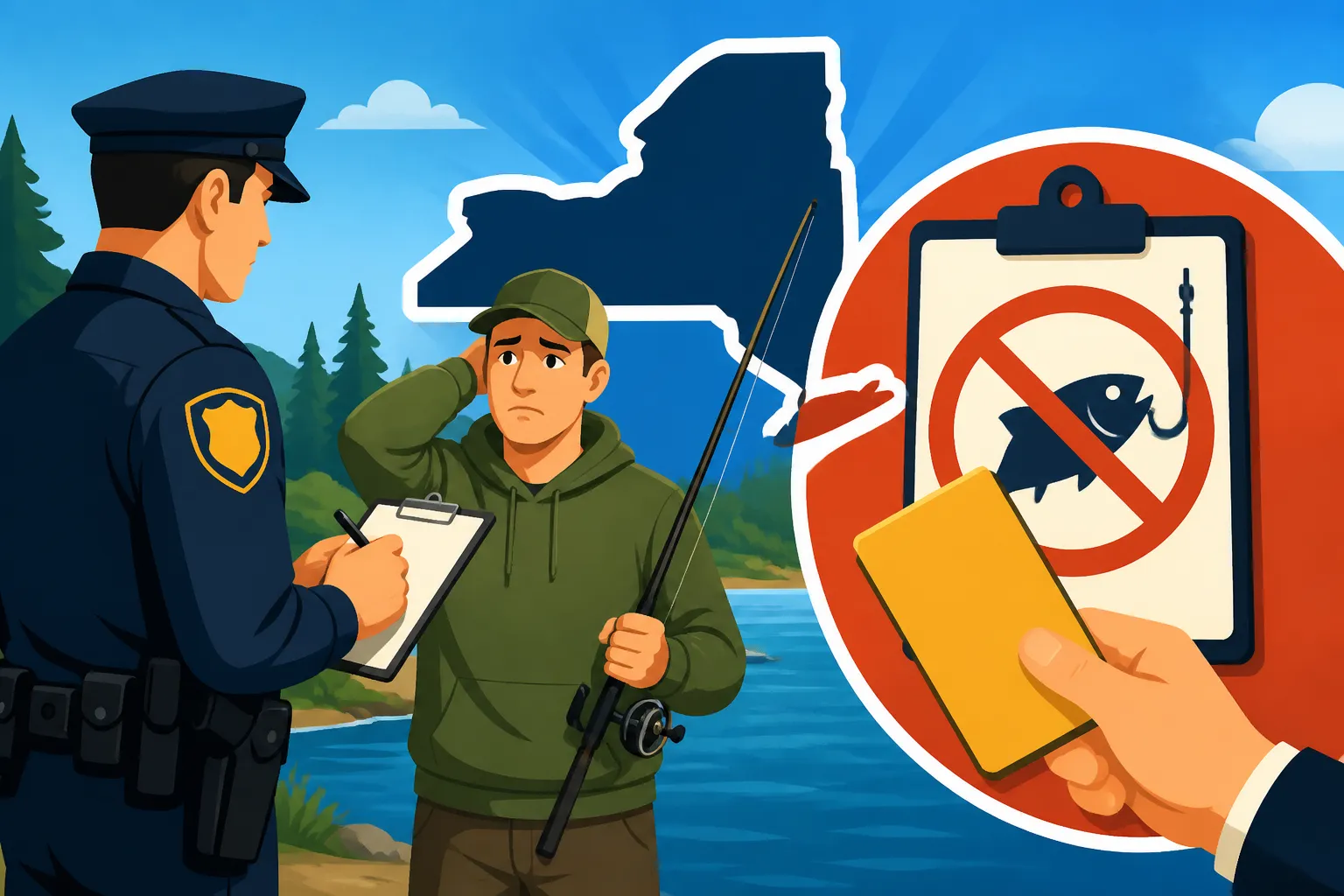
First and foremost, remain calm and polite. ECOs are law enforcement officers. Have your fishing license (and any required permits like a marine registry or trout stamp) readily accessible. If asked, present your license and answer their questions honestly. They may also ask to inspect your catch or your fishing equipment. Cooperate with these requests. A respectful attitude goes a long way. If you have any questions about specific regulations or need clarification, this is also an opportunity to ask. They are a valuable source of information.
If you are issued a ticket, understand the charges, and note the court date if one is provided. You have the right to contest a ticket in court, but it's often advisable to pay the fine if you know you were in violation. Ignoring a ticket can lead to much more serious legal troubles, including warrants for your arrest. Being informed and prepared is your best defense against any legal fishing woes.
Disclaimer
The information provided in this guide is for general informational purposes only and does not constitute legal advice. Fishing regulations in New York are subject to change. Always refer to the most current New York State Department of Environmental Conservation (DEC) fishing regulations guide and consult with legal counsel or the DEC directly for specific legal questions or interpretations.