Muskellunge Minimum Length to Keep
Figuring out the exact rules for fishing in New York can sometimes feel like trying to untangle a particularly stubborn fishing knot, especially when you're targeting a magnificent species like the muskellunge. You're out on the water, you hook into a monster, and then that familiar question pops into your head: "Is this fish legal to keep?" It’s a frustrating moment when you’re unsure, and it’s critical to get it right not just for the law, but for the health of the fishery. This guide is here to untangle those specific regulations, focusing on the minimum length for keeping muskies in New York, so you can fish with confidence and respect for these incredible fish.
Understanding New York's Muskellunge Size Regulations
New York State takes its muskellunge management very seriously, and for good reason. These "fish of 10,000 casts" are not only powerful predators but also a prized catch, drawing anglers from all over. To ensure their populations remain healthy and continue to provide thrilling opportunities, specific size limits are enforced. It’s not just a random number; these regulations are based on scientific data about their growth, maturity, and reproductive cycles.
The Statewide Standard for Muskies
Generally, when you're out fishing in most waters across New York, the statewide regulation for muskellunge dictates a minimum length. This standard is designed to protect juvenile fish and allow them to grow to a size where they've had a chance to spawn at least once, contributing to the next generation of muskies. Knowing this baseline is your first step to legal and responsible angling.
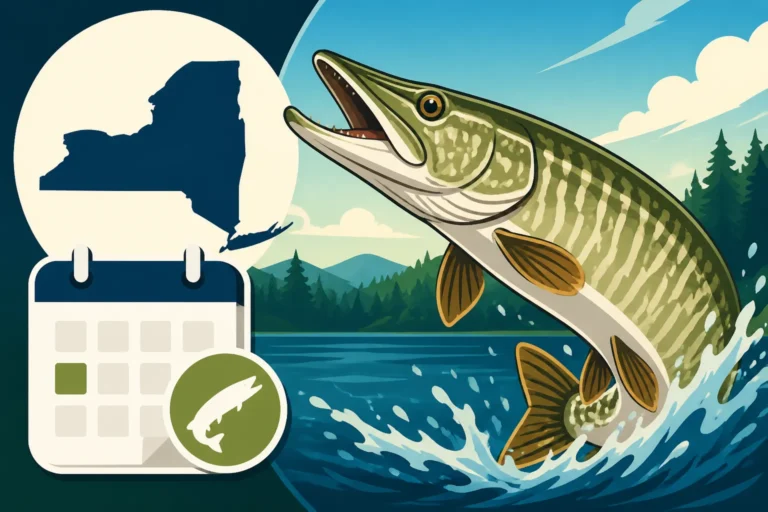
For the vast majority of New York's waters, the minimum length to keep a muskellunge is 40 inches. This means if you land a muskie shorter than this, it must be immediately and carefully released. This 40-inch rule applies to many of New York’s prime muskie waters, including many inland lakes and rivers. Always carry a reliable tape measure with you on the boat or shore to ensure you can accurately gauge your catch. You can find robust, easy-to-read measuring tapes, often with adhesive options for your boat, on platforms like Amazon.
Navigating Special Regulations Waters
Now, here's where things can get a little tricky, and it’s why checking the New York DEC Fishing Regulations Guide every season is absolutely paramount. While 40 inches is the statewide minimum, certain waters have their own specific rules that supersede the general regulation. These "special regulations waters" often include large, well-known fisheries that require tailored management plans due to unique biological factors or fishing pressure.
A prime example is the St. Lawrence River and its tributaries, where the minimum length for muskellunge is significantly higher, often set at 54 inches. The Great Lakes, including Lake Erie and Lake Ontario, and their tributaries also often have different size limits for muskies. These increased size limits in certain areas are typically put in place to cultivate truly trophy-sized fish and to manage very specific, often cross-border, fisheries. Always double-check the current rules for the specific body of water you're fishing. Failing to do so can lead to an unfortunate interaction with law enforcement, even if you thought you were following the general rules. Make sure you understand the nuances, as fishing without consulting the precise regulations for your spot could mean a hefty fine. For more detailed information on specific locations, you might want to read our guide on New York Special Regulations Waters List.
Why Size Limits Matter for Muskies and Anglers
It's easy to see a regulation like a minimum length limit as just another hurdle to enjoying your time on the water, but these rules are actually cornerstones of effective fisheries management. They're designed with a long-term vision, benefiting both the fish populations and the anglers who pursue them. Understanding the "why" behind the rules can help foster a greater appreciation for conservation efforts.
Protecting a Prized Predator
Muskellunge are apex predators in many of New York's aquatic ecosystems. They grow slowly, mature later in life compared to many other fish species, and don't reproduce in huge numbers. If anglers were allowed to keep smaller, immature fish, it would severely impact the population's ability to sustain itself. Imagine if every young muskie was harvested before it had a chance to spawn – soon, there'd be very few large muskies left.
The minimum length limit ensures that most muskies have the opportunity to reproduce at least once, if not multiple times, before they reach legal harvest size. This contributes to the genetic diversity and overall health of the species, ensuring that future generations of anglers will also have the chance to experience the thrill of a muskie on the line. These regulations are a commitment to sustainability, recognizing the unique biology of a species that is often described as the king of freshwater fishing. The long lifespan of muskellunge, which can exceed 20 years in some cases, makes these protective measures even more critical; you can learn more about this in our article on Muskellunge Lifespan Explained.
Fostering Trophy Opportunities
Beyond mere population sustainability, size limits, especially higher ones like the 54-inch rule on the St. Lawrence River, are directly linked to fostering trophy fishing opportunities. Anglers often dream of catching a truly massive muskie, one that might even approach the New York's Biggest Muskellunge Ever Caught or even the World Record Catch-and-Release Muskie Caught on the St. Lawrence River. These giants don't happen overnight; they are the result of years, sometimes decades, of growth.
By implementing minimum length requirements, the DEC encourages the release of smaller fish, allowing them to continue growing into the behemoths that make muskie fishing such a legendary pursuit. This management strategy creates a healthy population structure with a good proportion of large, mature individuals. It also inherently promotes catch-and-release practices for these magnificent fish, which further contributes to their growth potential and trophy status. When you understand that releasing a 45-inch muskie today might mean catching it again as a 50-inch fish in a few years, the rationale behind these limits becomes much clearer and more appealing to the dedicated angler.
Practical Tips for Catching, Measuring, and Releasing Muskies Responsibly
Targeting muskellunge is a commitment, often requiring specific gear and techniques. Beyond simply knowing the Muskellunge Minimum Length to Keep, practicing responsible angling is crucial, especially for a species that is so highly valued and often caught-and-released. Proper handling significantly increases a muskie's chances of survival and ensures these magnificent fish can continue to thrive in New York's waters.
Accurate Measurement Techniques
When you land a muskie, the first step, after the initial excitement, is to determine if it meets the legal size limit. An accurate measurement is non-negotiable. Don't rely on guesswork or a quick estimate; always use a reliable measuring device.
A bump board or a flexible, fabric tape measure designed for fish are excellent tools. Lay the fish flat, with its mouth against a fixed point on the board or at the start of the tape, and stretch it along the body to the tip of the tail. Ensure the fish is not bent or curved, as this can lead to an inaccurate measurement. Many anglers prefer to measure to the tip of the pinched tail for the most consistent reading. Remember, a fish that is even a quarter-inch under the limit is still considered undersized and must be released. Having a good quality measuring device, perhaps one you picked up from Amazon with clear markings, can save you a lot of hassle and potential legal issues.
Gentle Handling for Release
Muskies are incredibly tough, but they are still fish, and improper handling can cause significant harm, even leading to delayed mortality. If your muskie is undersized or you've decided to release a legal fish, doing so gently and quickly is paramount.
- Minimize Time Out of Water: The golden rule for muskie handling is to keep the fish in the water as much as possible. If you need to bring it aboard for a quick photo and measurement, have everything ready beforehand.
- Use Proper Tools: Long-nosed pliers or jaw spreaders are essential for safely removing hooks. A large, rubberized landing net is also a muskie angler's best friend, as it cradles the fish, prevents scale damage, and helps keep it calm. Avoid using gaffs unless you intend to harvest the fish and it's legal.
- Support the Fish's Body: If you must lift the muskie, support its entire body horizontally, ideally with one hand under the gill plate (but never in the gills) and the other under the belly or tail. Avoid holding it vertically by the jaw alone, as this can severely damage its spine and internal organs.
- Revive If Necessary: Once hooks are removed, hold the fish gently in the water, facing into the current, until it regains its strength and can swim away on its own. You'll feel it kick strongly when it's ready.
Practicing these techniques not only benefits the muskie but also enhances your reputation as a responsible angler.
Essential Gear for Responsible Muskie Angling
Responsible muskie fishing goes beyond just understanding the rules; it also involves having the right tools to minimize stress on these powerful fish. Equipping yourself properly ensures that whether you're releasing a small muskie or a giant, you can do so effectively and safely.
A large, knotless, rubberized landing net is arguably the most important piece of gear for muskie anglers. These nets are designed to protect the fish's slime coat and fins, unlike traditional knotted nets which can strip scales and cause injury. They also make it much easier to control a thrashing muskie boat-side, reducing the time it spends out of the water. Another crucial tool is a robust pair of jaw spreaders and long-nosed pliers or bolt cutters. These allow for quick and safe hook removal, especially with the large, often treble hooks used for muskie lures. Trying to unhook a muskie with bare hands is a recipe for injury to both you and the fish. Many anglers also carry a sturdy, reliable measuring tape or a specialized bump board. These aren't just for legal compliance; they're essential for accurately documenting your catch if you're participating in a catch-and-release league or just want to remember the size of your trophy. All these items are readily available and can be conveniently purchased online from retailers like Amazon, ensuring you're well-prepared before your next muskie adventure.
Consequences of Violating Muskellunge Regulations
It might seem obvious, but it bears repeating: ignoring fishing regulations, particularly those concerning size limits for prized species like muskellunge, comes with serious repercussions. The New York State Department of Environmental Conservation (DEC) enforces these rules diligently, and getting caught on the wrong side of them can quickly turn a fun day of fishing into a very expensive and frustrating experience. It’s not just about a momentary lapse in judgment; these violations undermine the very conservation efforts designed to protect the fisheries for everyone.
Fines and Penalties
The most immediate and tangible consequence of violating muskellunge size limits is facing fines and penalties. The exact amount can vary depending on the severity of the offense, whether it’s a first-time violation, and the specific regulations broken. However, unlawfully possessing an undersized muskie can lead to significant financial penalties. These fines are often several hundred dollars, and that's just for the primary offense.
Beyond a simple monetary fine, you might also face additional penalties. For example, your fishing gear could be confiscated, including rods, reels, and even your boat in egregious cases. Furthermore, you could be charged for the market value of the fish itself, especially if it's considered a valuable species. Environmental Conservation Officers (ECOs) are well-versed in New York fishing regulations and have the authority to issue summonses and impose these penalties. It’s not worth the risk, especially when the regulations are clearly laid out in the New York DEC Fishing Regulations Guide. For a broader understanding of legal repercussions, you can also check out our article on Fishing Without a License in New York: What Happens.
Long-Term Impacts on Fishing Privileges
The repercussions of violating fishing regulations extend far beyond immediate fines. A serious or repeated offense can lead to the suspension or revocation of your New York State fishing license. This means you could be legally prohibited from fishing in New York waters for a specified period, or even permanently in extreme cases. Imagine having your favorite pastime taken away simply because you failed to adhere to a size limit.
Such violations also become part of your public record, which could impact future license applications or even legal situations. Moreover, these incidents cast a shadow on the angling community as a whole, making it harder for conservation efforts to gain public support. The DEC works hard to manage these fisheries, and compliance with regulations is a fundamental part of that partnership between anglers and conservationists. By understanding and respecting the Muskellunge Season Dates and size limits, you're not just avoiding penalties; you're actively participating in the preservation of New York's incredible muskie fishing for generations to come.
Disclaimer
The information provided in this guide is for general informational purposes only and does not constitute legal advice. Fishing regulations in New York are subject to change, and specific rules can vary by water body and season. Always consult the most current official New York State Department of Environmental Conservation (DEC) fishing regulations guide before heading out on the water. Failure to comply with regulations can result in fines and penalties.