Fishing License Rules for Out-of-State College Students
It can be incredibly confusing for out-of-state college students in New York State to figure out what kind of fishing license they need. Are you a resident? A non-resident? Can you get the cheaper resident rate? This guide is here to untangle those complicated rules and make sure you're properly licensed before you cast your line into New York's fantastic waters.
Understanding Residency for New York Fishing Licenses
One of the biggest hurdles for out-of-state college students when it comes to fishing licenses in New York is understanding how residency is defined. It’s not as simple as just living in a dorm for nine months out of the year, and getting it wrong can lead to some pretty hefty fines. The New York State Department of Environmental Conservation (DEC) has specific criteria, and they don't always align with how a university might define your "residency" for tuition purposes. You might pay resident tuition because you've met certain academic requirements, but that doesn't automatically make you a resident for hunting and fishing licenses.
The "Domicile" Rule
At the heart of New York's fishing license regulations is the concept of "domicile." Your domicile is essentially your true, fixed, and permanent home, the place where you intend to return whenever you are absent. For most college students, especially those from out of state, their domicile remains with their parents in their home state. Even if you rent an apartment near campus, vote in local elections, or get a New York State driver's license, these actions alone might not be enough to establish New York as your permanent domicile in the eyes of the DEC. It's about demonstrating a clear intent to reside permanently in New York, not just temporarily for educational purposes. This is a subtle but critical distinction that often trips up students. For a full breakdown, check out our guide on the New York Fishing License Guide.
The DEC will look at a combination of factors to determine your domicile. This could include where you pay income taxes, where your vehicle is registered, where you're registered to vote, and even where your primary bank accounts are located. While attending a university in New York gives you a temporary address, it doesn't necessarily shift your legal "home" unless you've taken definitive steps to sever ties with your home state and establish New York as your long-term, permanent residence. Many students find this frustrating, as they feel like a part of the local community, but the law requires more than just physical presence.
When an Out-of-State Student Qualifies as a Resident
So, when can an out-of-state student qualify for a resident fishing license in New York? It's not impossible, but it requires more than just being enrolled in classes. To be considered a resident for fishing license purposes, an individual must have resided in New York State for at least 30 days immediately prior to applying for the license, and they must intend to make New York their permanent domicile. This means you would need to show a clear intent to remain in New York permanently after your studies are complete, or at least for an indefinite period.
For example, if you moved to New York for college, but also got a full-time job off-campus, changed your driver's license, registered your car, and updated your voter registration to New York, and had no intention of returning to your previous state after graduation, you might be able to qualify. However, simply living in a dorm or campus apartment while still claiming your home state for things like taxes or car registration typically won't cut it. The DEC wants to see concrete evidence of a permanent move, not just a temporary relocation for school. Our article on New York Resident Fishing License Cost can give you more insights into the requirements.
It's a high bar, and for many out-of-state students, trying to prove New York residency for a fishing license isn't worth the hassle or the potential legal ramifications if challenged. The risk of being caught misrepresenting your residency and facing penalties often outweighs the cost savings of a resident license. When in doubt, it’s always better to assume you are a non-resident, or contact the DEC directly for clarification specific to your situation. You certainly don't want to find yourself dealing with the Penalties for Fishing Without a License in New York.
Non-Resident Fishing License Options for College Students
For the vast majority of out-of-state college students attending school in New York, a non-resident fishing license will be the appropriate and legally safest option. While it might be a bit more expensive than the resident version, it ensures you're complying with the law and can enjoy New York's incredible fisheries without worrying about potential issues with law enforcement. The good news is that New York offers a few different non-resident options, giving you flexibility depending on how often you plan to fish.
Annual Non-Resident Licenses
If you're an out-of-state student who plans to fish regularly throughout the academic year, or even during longer breaks if you stay in New York, the annual non-resident fishing license is likely your best bet. This license is valid for a full year from the date of purchase, providing continuous coverage. While the New York Nonresident Fishing License Cost is higher than for residents, it offers the most convenience, as you won't need to re-purchase licenses for each outing.
Think about it: if you're attending a school like Cornell University in Ithaca and want to fish the Finger Lakes year-round, or if you're at SUNY Oswego and want to take advantage of Lake Ontario's salmon and steelhead runs in both fall and spring, an annual license makes the most sense. You can grab your gear, head out to the water, and know you're good to go without scrambling for a temporary license. This is especially true if you plan to get serious about fishing, perhaps even buying some new tackle or a fishing vest from a retailer like Amazon, which often sells great fishing accessories to new and experienced anglers alike.
Short-Term Non-Resident Licenses
For students who only plan to fish occasionally, perhaps during a weekend trip with friends or a specific angling event, New York offers convenient short-term non-resident licenses. These are perfect if you're not sure how much time you'll have to dedicate to fishing amidst your studies, or if you only visit specific fishing spots a few times a year.
- 7-Day Non-Resident Fishing License: This option, covered in detail in our New York 7-Day Fishing License article, is valid for seven consecutive days. It's ideal for students who might be home for a weekend but want to spend a full week exploring local waters around their campus or a specific destination in New York. If you’re planning a spring break fishing trip to the Adirondacks or a summer adventure before heading back home, this offers great value and flexibility without committing to a full year.
- 1-Day Non-Resident Fishing License: The most flexible and budget-friendly option for infrequent anglers is the 1-day non-resident fishing license. Our guide on the New York 1-Day Fishing License provides all the details. This is perfect for that spur-of-the-moment decision to hit a local stream for a few hours, or to join a friend for a single day of fishing without the commitment of a longer-term license. It’s also a fantastic way to try out fishing in New York to see if it’s a hobby you want to pursue more seriously. For a lot of students on a tight budget, these short-term options are often the most practical, allowing them to participate in the sport without breaking the bank.
| License Type | Residency Requirement | Typical Cost (Approx.) | Best For |
|---|---|---|---|
| Annual Resident | NY Domicile for 30+ days | $25 | Permanent NY residents, dedicated anglers |
| Annual Non-Resident | Not a NY Domicile | $50 | Out-of-state students fishing regularly |
| 7-Day Non-Resident | Not a NY Domicile | $28 | Out-of-state students fishing for a week |
| 1-Day Non-Resident | Not a NY Domicile | $10 | Out-of-state students fishing occasionally |
| Recreational Marine Registry | Any residency (if required) | Free | Saltwater fishing, even without a license |
Costs are approximate and subject to change by the DEC. Always check the official DEC website for the most current pricing.
Essential Considerations for Out-of-State Student Anglers
Beyond simply figuring out which license to buy, there are several other critical aspects that out-of-state college students need to keep in mind when fishing in New York. Ignorance of the law is never an excuse, and getting caught unprepared can quickly turn a relaxing day on the water into a stressful and expensive experience.
Proof of Residency and Student Status
If you do believe you qualify for a resident license, you will need to provide substantial proof of your New York residency to the DEC. Simply having a student ID or a letter from your university won't cut it. The DEC requires documentation that clearly establishes your permanent domicile in the state. This typically includes a New York State driver's license or non-driver ID issued at least 30 days prior, voter registration in New York, vehicle registration, and possibly utility bills or property tax statements in your name, showing your New York address.
For out-of-state students, this can be challenging because many of these documents are still tied to their home state. Attempting to claim residency without sufficient proof can lead to your application being denied, or worse, facing legal repercussions if you're found to have misrepresented your status. It’s always best to be overly prepared with documentation or, as mentioned, simply opt for the non-resident license to avoid any ambiguity. Remember that showing your digital fishing license on your phone is usually acceptable, but having photo ID to back it up is crucial.
Where to Purchase a License
Convenience is key for busy college students, and thankfully, New York has made it relatively easy to purchase fishing licenses. The most straightforward method for many is to buy their license online directly through the New York DEC's website. Our guide on How to Buy a Fishing License Online in New York walks you through the process step-by-step. You can usually print your license right from home, or keep a digital copy on your phone, which is generally accepted by law enforcement.
Beyond online purchases, you can also buy licenses in person at various vendor locations throughout the state. Many sporting goods stores, bait and tackle shops, and even some town clerk offices are authorized DEC license vendors. This can be a great option if you have questions or prefer a physical license card. Places like your local Walmart often have sporting goods departments where you can purchase licenses, and it’s a common stop for anglers to pick up bait and tackle anyway. Just make sure to bring your identification, and if you're trying to claim residency, be prepared with all your supporting documents.
Consequences of Misrepresenting Residency
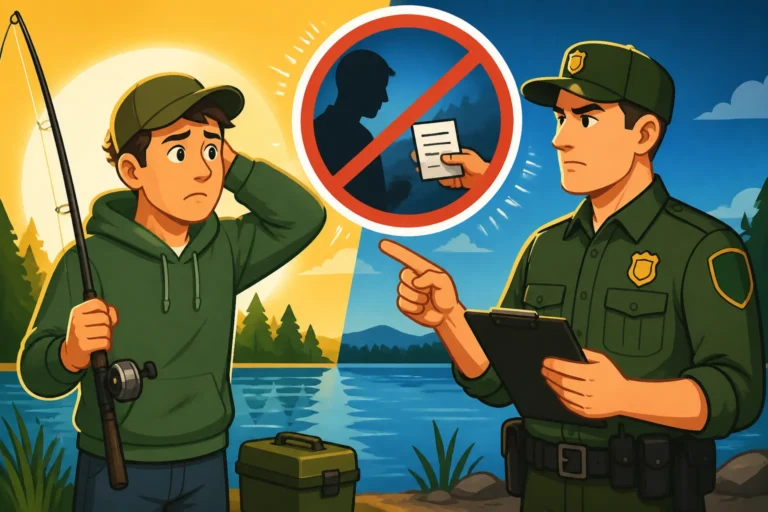
This is a serious point that often gets overlooked by students trying to save a few dollars. Misrepresenting your residency to obtain a New York fishing license is a violation of environmental conservation law. The consequences are not trivial. If you are caught, you could face significant fines, confiscation of your fishing gear, and even a temporary or permanent revocation of your fishing privileges in New York State.
Imagine getting caught after a fantastic day of fishing on Lake Champlain or the Hudson River, only to have your catch confiscated, a hefty fine issued, and your fishing license revoked. It’s simply not worth the risk. Law enforcement officers, whether it's an Environmental Conservation Officer (ECO) or local police, are trained to spot discrepancies and will not hesitate to enforce the rules. Our article Fine for Fishing Without a License in New York details the potential financial penalties, which can be far more costly than the difference between a resident and non-resident license. Play it safe, understand the rules, and make sure you're properly licensed for a stress-free fishing experience.
Specific Scenarios and Common Questions
The world of fishing regulations can sometimes feel like a maze, especially for college students whose living situations can be somewhat transient. Let's delve into a few common scenarios and questions that frequently pop up.
Summer Breaks and Residency Changes
So, you're an out-of-state student, you’ve been living in New York for nine months for school, and you bought a non-resident annual license. What happens when summer break rolls around, and you go back to your parents' home in, say, Pennsylvania or New Jersey? Do you still need a New York license if you come back for a weekend trip? The answer is yes, you do. Your New York non-resident annual license remains valid for 365 days from its purchase date, regardless of where you spend your summer.
The key here is that your residency for licensing purposes doesn't necessarily change with your temporary physical location during breaks. Unless you formally establish New York as your new, permanent domicile, you remain an out-of-state resident. This is important for students who might take summer classes, work internships in New York, or simply visit friends. If you plan to fish during these periods, your existing non-resident New York license is your ticket. If you let it expire while home for the summer and then decide to fish, you'll need to purchase a new one.
Marine Fishing Registry for Saltwater
New York isn't just about incredible freshwater fishing; its coastal waters, including Long Island Sound and the Atlantic Ocean, offer fantastic saltwater opportunities. If you're an out-of-state college student looking to try your hand at striped bass, bluefish, or fluke, you'll need to be aware of the New York State Recreational Marine Fishing Registry.
The good news is that this registry is generally free for both residents and non-residents, including out-of-state college students. However, it is mandatory for anyone age 16 or older fishing in the marine and coastal district waters, or for migratory fish in the Hudson River. You don't need a separate fishing license for saltwater, but you absolutely must be enrolled in this free registry. You can sign up online through the DEC website. Our New York Recreational Marine Fishing Registry article has all the details on how to register and why it's so important. Don't overlook this! It's an easy step to ensure you're compliant when targeting those exciting saltwater species.
Special Permits and Stamps
Beyond the general freshwater fishing license and the marine registry, New York sometimes requires additional permits or "stamps" for specific species or types of fishing. The most common one that might apply to freshwater anglers is the Trout Stamp.
If you plan to actively target trout or salmon in New York's freshwater streams, rivers, and lakes, you will need to purchase a New York State Trout and Salmon Stamp in addition to your regular freshwater fishing license. This stamp supports trout and salmon conservation and stocking efforts. Our guide, Do I Need a Trout Stamp to Fish for Trout in New York?, clarifies exactly when this additional stamp is necessary. The cost is typically very low, and it's an easy add-on when you purchase your main fishing license, whether online or at a vendor. Other specialized regulations might exist for particular waters or species, so always consult the latest New York Fishing Regulations Explained from the DEC before you head out. These guides are often available digitally or can be picked up at your local sporting goods store. Sometimes you can even find physical copies, or related fishing resources, through online retailers like Amazon.
For example, if you're attending college near the famed Salmon River in Pulaski and plan to fish for steelhead, you'll definitely need that trout stamp. Knowing these nuances will save you from potential headaches and ensure your fishing experience is always within legal bounds. It's all part of being a responsible angler, and something every college student, resident or non-resident, should take seriously. After all, the goal is to enjoy the outdoors, not worry about breaking the law!
Disclaimer
Please note: The information provided in this guide is for general informational purposes only and is subject to change. Fishing regulations, license requirements, and costs are determined by the New York State Department of Environmental Conservation (DEC) and can be updated at any time. It is always the angler's responsibility to consult the most current official New York State fishing regulations and license requirements directly from the DEC website or official publications before engaging in any fishing activities.