Life Jacket Requirements While Fishing
Navigating the myriad of rules and regulations surrounding fishing in New York can feel like trying to untangle a particularly stubborn snarl in your fishing line, and life jacket requirements are no exception. Many anglers assume that if they’re just on a small boat or kayak, or even fishing from shore, a life jacket is optional or only for children. This guide is here to cut through that confusion, clearly outlining exactly when, where, and by whom life jackets must be worn or carried to ensure your safety and keep you compliant with New York State law.
Understanding New York's Core Life Jacket Regulations
The New York State Office of Parks, Recreation and and Historic Preservation (OPRHP), in conjunction with the Department of Environmental Conservation (DEC), sets forth specific guidelines concerning personal flotation devices (PFDs), more commonly known as life jackets. These rules aren't just suggestions; they are legally binding requirements designed to prevent tragic accidents on New York's vast and diverse waterways. Getting caught without the proper PFDs, or not having them worn when required, can result in hefty fines and put your life, or the lives of your loved ones, at serious risk.
Seasonal Wear Requirements for Anglers
One of the most crucial, yet often overlooked, aspects of life jacket regulations in New York is the seasonal wear period. This isn't just about how cold the water feels; it's a hard-and-fast rule designed to protect against cold water immersion, which can quickly lead to hypothermia even on a sunny day.
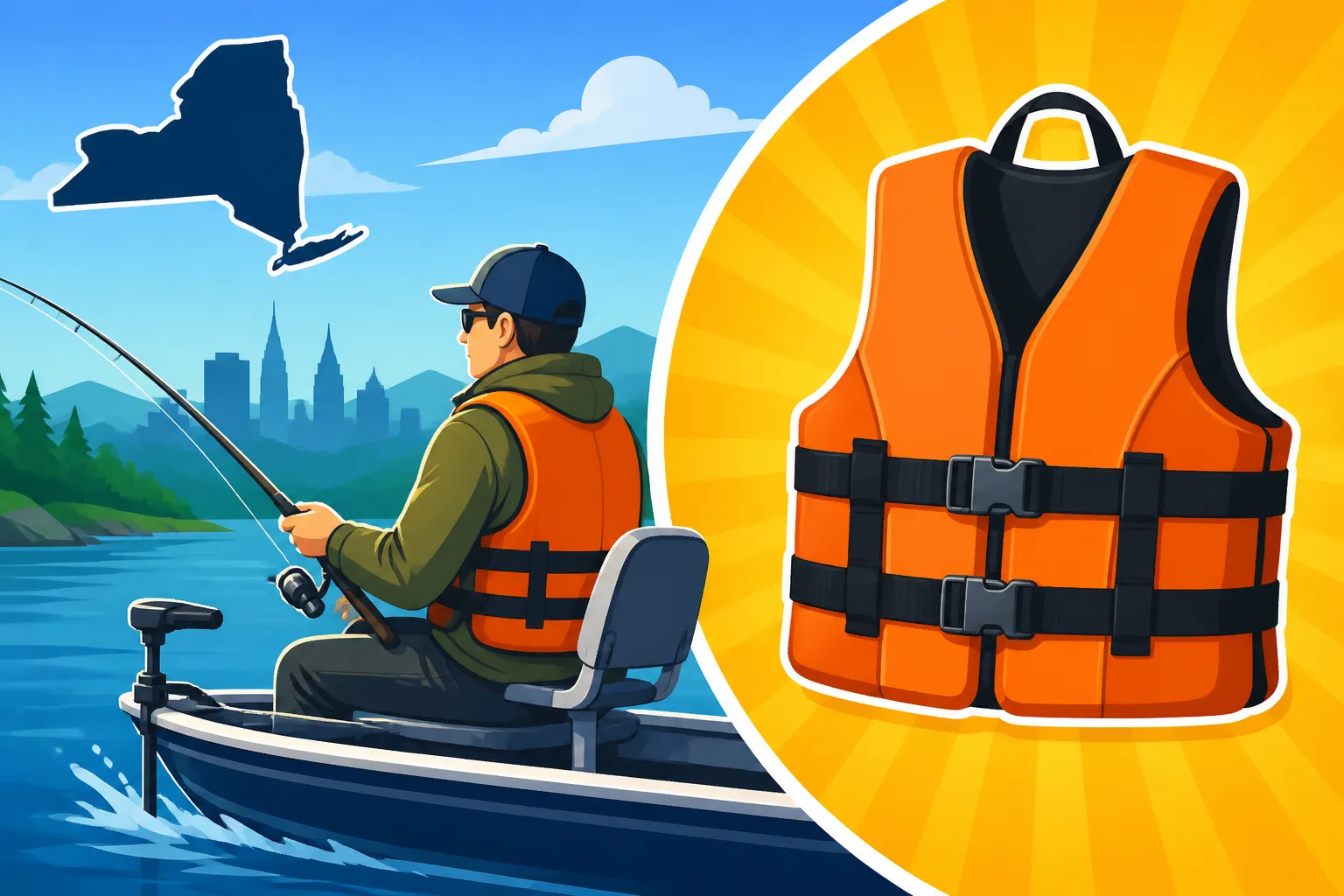
From November 1st through May 1st each year, everyone on board any pleasure vessel less than 21 feet in length (including kayaks, canoes, rowboats, and even stand-up paddleboards) must wear a Coast Guard-approved life jacket while on the water. This is non-negotiable. It doesn't matter if you're fishing a quiet backwater creek or out on the vast expanse of Lake Ontario; if your boat is under 21 feet, and it's between these dates, that life jacket needs to be on your body. This seasonal requirement is particularly important for early spring trout anglers hitting the streams or those brave souls trying their luck ice fishing, as water temperatures can be dangerously low. For those venturing out onto the hard water, understanding the specific New York Ice Fishing Rules becomes paramount, including ice thickness and safety gear.
Even outside of these dates, having readily accessible PFDs on board is still required. But during the November to May window, the expectation shifts from having it to wearing it. This is where many people get into trouble, underestimating the danger of cold water. A sudden capsize in 40-degree water can incapacitate an adult in minutes, making it impossible to swim or even call for help.
Child Life Jacket Requirements in New York
New York takes the safety of its youngest anglers very seriously, and for good reason. Children often have less swimming ability, are more susceptible to cold, and can panic more easily in an emergency. The rules for children are strict and apply regardless of the time of year or the length of the vessel.
Any child 12 years of age or younger must wear a properly fitted, Coast Guard-approved life jacket at all times while on any vessel, regardless of its length, unless they are in a fully enclosed cabin. This means if your 10-year-old is casting from the bow of your 25-foot pontoon boat, or if your 7-year-old is helping you row a canoe, that life jacket needs to be securely fastened. There are no exceptions for calm waters, short trips, or good swimmers. This rule extends to charter boats as well; while the captain is responsible for having the correct size PFDs on board, parents are ultimately responsible for ensuring their children wear them. This also connects to general age requirements for fishing, such as "Do Kids Need a Fishing License to Fish in New York?".
It's also crucial that the life jacket fits properly. A PFD that is too big will ride up around a child's ears, offering no real protection. One that's too small won't provide adequate buoyancy. When looking for kid's life jackets, many reputable outdoor retailers and online stores like Amazon offer a wide range of sizes, often categorized by weight, making it easier to find the perfect fit for your little angler.
Vessel-Specific Life Jacket Rules
Beyond the seasonal and age-related requirements, the type of vessel you're fishing from also dictates PFD rules. While all vessels must carry a Coast Guard-approved PFD for each person on board, some vessels have additional wear requirements.
For example, on kayaks, canoes, and stand-up paddleboards (SUPs), even if you're over 12 and it's outside the November 1st – May 1st cold weather period, you still must have a life jacket on board. While wearing it might not be legally mandated during the warmer months, it's highly recommended, especially when fishing. These smaller, often less stable vessels are prone to capsizing, and having a PFD on your body greatly increases your chances of survival and rescue. Many anglers choose comfortable, fishing-specific inflatable PFDs for these types of craft that offer full range of motion. Understanding Boat Registration Requirements for Anglers is also key, as registration status might impact certain aspects of vessel compliance, though PFD rules are generally universal.
On larger vessels (21 feet and over), the seasonal wear requirement for adults doesn't apply, but you still must have one approved PFD for every person on board, and they must be easily accessible. For example, if you're fishing for striped bass on a large charter boat on the Hudson River, you won't be required to wear your PFD unless conditions become hazardous or the captain deems it necessary. However, if that same boat then carries a child 12 or under, that child must still wear their PFD. These regulations are part of a broader set of guidelines covered in the New York DEC Fishing Regulations Guide.
Choosing the Right Life Jacket for Your Fishing Adventures
Just like there are countless types of fishing rods and reels, there are various types of life jackets, each designed for different activities and levels of protection. Understanding these differences is key to staying safe and comfortable on the water. All life jackets sold in the United States must be approved by the U.S. Coast Guard, so always look for that label.
US Coast Guard PFD Types
The U.S. Coast Guard classifies PFDs into different "Types" (I, II, III, IV, and V), each with specific characteristics:
- Type I: Offshore Life Jackets. These offer the most buoyancy and are designed for rough, remote waters where rescue might be delayed. They're bulky but will turn most unconscious wearers face-up in the water. Not practical for active fishing due to their size.
- Type II: Near-Shore Buoyant Vests. Good for calm, inland waters or where a quick rescue is likely. They offer less buoyancy than Type I but are still designed to turn an unconscious person face-up. More comfortable than Type I, but still can be cumbersome for casting.
- Type III: Flotation Aids. These are the most common and popular for recreational activities like fishing, waterskiing, and kayaking. They offer comfort and freedom of movement, and they're designed for conscious wearers who can assist in their own rescue. They may not turn an unconscious person face-up. Many fishing vests are Type III, with pockets and features specifically for anglers.
- Type IV: Throwable Devices. These are not meant to be worn. They include ring buoys and boat cushions and are for throwing to a conscious person in the water. Every boat 16 feet or longer (except canoes and kayaks) must carry at least one Type IV device in addition to wearable PFDs.
- Type V: Special Use Devices. These are approved for specific activities and often combine the features of other types, like inflatable PFDs, work vests, or whitewater vests. They are only approved for the specific activity printed on the label and must be worn to be counted as a legal PFD. Many modern inflatable fishing PFDs fall into this category.
For most fishing scenarios, a Type III or Type V inflatable is going to be your best bet for comfort and utility.
Comfort and Fit: The Angler's Dilemma
Let's be honest, traditional, bulky life jackets aren't exactly conducive to a smooth casting motion or reaching into your tackle box. This is a common frustration for anglers. The good news is that PFD technology has come a long, long way. Modern fishing-specific life jackets are designed with features that make them far more comfortable and functional for anglers.
When choosing a PFD for fishing, consider:
- Range of Motion: Look for vests with sculpted armholes and thinner backs (especially useful for kayak fishing chairs) that don't restrict your casting or paddling.
- Pockets and Attachments: Many fishing PFDs come with integrated tackle pockets, D-rings for attaching tools, and even rod holders. These can be incredibly handy, turning your life jacket into a wearable tackle system.
- Ventilation: Fishing often happens on hot days, so breathability is a major factor. Mesh panels and open sides can make a huge difference in comfort.
- Visibility: Bright colors are always a good idea, especially if you're on busy waters or fishing alone.
You can find a fantastic selection of these specialized PFDs online through retailers like Amazon, often with customer reviews that can help you gauge real-world comfort and utility. Brands like Mustang Survival, Onyx, and Stohlquist are well-regarded for their angler-friendly designs. Remember, the most effective life jacket is the one you actually wear.
Inflatable vs. Inherently Buoyant Life Jackets
This is often where anglers face a choice, especially for adult PFDs.
Inherently Buoyant PFDs are the traditional foam-filled vests. They provide constant flotation, require no inflation, and are generally durable and low-maintenance. They are always ready to go. The downside is their bulk, which can impede movement and feel hot on warm days. For children, inherently buoyant PFDs are almost always the recommended choice as they are foolproof.
Inflatable PFDs are a game-changer for many adult anglers. These are typically much less bulky than foam vests and are worn like a small collar or belt pack. They inflate automatically upon water immersion (hydrostatic or water-activated models) or manually by pulling a cord. Their primary advantage is unparalleled comfort and freedom of movement, which is why they are so popular among fishermen. However, they do require maintenance (checking the CO2 cartridge, re-arming kits) and may not be suitable for non-swimmers or children under 16, as they require an active role in their deployment or a reliance on the automatic mechanism. Many fishing guides, especially on rivers like the Salmon River or the St. Lawrence, will swear by their inflatable PFDs for all-day comfort while casting for steelhead or muskellunge.
| Feature | Inherently Buoyant PFD (Foam) | Inflatable PFD (CO2 Cartridge) |
|---|---|---|
| Buoyancy | Always present, no action needed | Requires inflation (auto or manual) |
| Comfort | Can be bulky, restricts movement, warmer | Low profile, excellent range of motion, cooler |
| Maintenance | Low (check for rips/tears) | Higher (check CO2, re-arm kits, air bladder) |
| Cost | Generally less expensive | Generally more expensive, re-arm kits add cost |
| User Suitability | All ages, non-swimmers, children | Adults (16+), strong swimmers, active anglers |
| Deployment | Instant | Automatic (water-activated) or Manual |
| Approval Type | Type I, II, III, IV | Primarily Type V (must be worn to be legal) |
| Best For | General boating, children, cold weather, non-swimmers | Active fishing, warm weather, experienced adults |
Ultimately, the best choice depends on your specific fishing style, the type of water you'll be on, and your personal comfort preferences. Just ensure whichever you pick is U.S. Coast Guard approved for your weight and activity.
Where Life Jacket Rules Apply and Common Misconceptions
It's easy to get confused about when and where these regulations kick in. Let's clarify some common scenarios and clear up a few misconceptions.
Bank Fishing and Wading: Do I Need a PFD?
If your feet are firmly planted on the shore or if you are wading in a stream or river, the legal requirement for wearing a life jacket generally does not apply. New York State's PFD regulations primarily pertain to vessels. So, if you're casting for trout from the bank of the Beaverkill River or surf fishing on Long Island, you are not legally required to wear a life jacket.
However, just because it's not legally mandated doesn't mean it's not a good idea. Wading in swift currents, particularly in colder months or unfamiliar waters, carries inherent risks. A slip or a stumble can quickly put you in a dangerous situation. Some experienced waders choose to wear a lightweight, fishing-specific PFD for an added layer of safety, especially when alone or in fast-moving water. This is a personal choice that prioritizes safety over strict legal compliance. For those specifically targeting trout, understanding New York Freshwater Fishing Rules provides additional context on safe practices.
Kayak, Canoe, and Paddleboard Specifics
As mentioned earlier, during the designated cold-water months (November 1st – May 1st), anyone on a vessel less than 21 feet, including kayaks, canoes, and stand-up paddleboards, must wear a life jacket. Outside of these months, adults over 12 years old on these vessels are not legally required to wear a PFD, but they must have one on board and readily accessible.
This distinction is important. "Readily accessible" means it's not stowed away in a dry bag buried under gear. It should be easily retrievable within seconds. For a kayak, this often means strapped to the deck or secured in a bungee system. For a SUP, it could be a waist-pack inflatable PFD that you're technically "wearing" but not inflated. The critical takeaway is that if you're on a paddle craft in New York, a life jacket is always required to be present, and seasonally, it must be worn. This often ties into the broader question of Do I Need to Register My Kayak to Fish in New York? which also has specific rules for paddlecraft.
When You Might Be Exempt from Wearing a PFD (But Still Need to Carry One)
Outside of the cold-weather season and for adults over 12 on larger boats (21 feet or more), you are generally not legally required to wear a life jacket. However, the rule that an approved PFD must be on board for every person, and easily accessible, remains.
Think of it this way: the law acknowledges that for a competent adult on a stable boat during warm weather, the immediate risk of needing a PFD might be lower. But emergencies can happen in an instant – an unexpected wave, a sudden mechanical failure, or another boat's wake can all lead to someone going overboard. Having a life jacket on board means you have the means to protect yourself or others if an unforeseen event occurs. This distinction between "wearing" and "carrying" is a frequent source of confusion, so always err on the side of caution.
Enforcement and the Importance of Compliance
Ignoring life jacket requirements isn't just a minor oversight; it's a serious safety violation that carries legal consequences. New York State authorities are diligent in enforcing these regulations to protect lives.
Who Enforces These Rules?
On New York's waters, you might encounter several different agencies responsible for enforcing boating and fishing regulations. This primarily includes the New York State Environmental Conservation Police Officers (ECOs) from the DEC, who also enforce New York Fishing Regulations Explained and game laws. You might also encounter officers from the New York State Park Police, local Sheriff's Departments, and other marine patrol units, especially on larger lakes and coastal waters. All of these officers have the authority to stop your vessel and check for compliance with safety equipment, including life jackets.
They conduct routine patrols, but they also respond to calls and investigate incidents. Their focus is always on safety, and proper PFD use is at the top of their list.
Penalties for Non-Compliance
Getting caught without the proper life jackets, or failing to wear them when required, can result in fines. While the exact amount can vary, a typical first offense for a PFD violation might be in the range of $100 to $250, plus court fees and surcharges. Repeated offenses can lead to higher fines and even other penalties, such as points on your boating record or mandatory safety courses.
While the financial penalty is certainly a deterrent, the true cost of non-compliance can be far greater. The most severe consequence of not wearing a life jacket is, tragically, drowning. New York's waters, while beautiful, can be unforgiving. Many boating and fishing fatalities could have been prevented if the victims had been wearing a properly fitted life jacket. This mirrors the seriousness of other regulations, such as the Penalties for Fishing Without a License in New York, where fines are imposed to uphold the integrity of the state's resource management and safety systems.
Beyond the Law: Why Safety Matters
Ultimately, life jacket requirements are not just about following the rules to avoid a ticket; they are about personal responsibility and valuing life. Fishing is a wonderful, relaxing pastime, but it takes place in an environment that demands respect.
Consider these scenarios:
- Sudden Capsize: A hidden submerged log, a rogue wake from another boat, or a sudden shift in weight can quickly overturn a small fishing boat or kayak. If you're not wearing a PFD, you're now in the water, potentially disoriented, and struggling to stay afloat while trying to retrieve your vessel.
- Cold Shock: Falling into cold water (anything below 70°F, but especially below 60°F) can trigger an involuntary gasp reflex and hyperventilation, making it nearly impossible to control your breathing or swim effectively. A life jacket provides immediate buoyancy, keeping your head above water and allowing you to regain control.
- Injury: A fall into the water could result in hitting your head or another injury that renders you unconscious. An inherently buoyant life jacket can keep you afloat and face-up until help arrives.
- Hypothermia: Even if you can stay afloat, prolonged exposure to cold water leads to hypothermia, rapidly draining your strength and mental clarity. A PFD reduces the energy expended to stay afloat, buying you precious time.
Taking a few seconds to put on a life jacket, especially when the law requires it or when conditions warrant it, is a small inconvenience that can make all the difference. It's an investment in your safety and peace of mind, allowing you to focus on the joy of fishing rather than the constant worry of "what if." So, whether you're planning to explore New York's Best Lakes for Fishing or casting a line in a quiet stream, make sure you're prepared.
Disclaimer
The information provided in this guide is intended for general informational purposes only and does not constitute legal advice. Fishing and boating regulations can change, and specific rules may vary depending on local ordinances or special waterbody regulations. Always consult the most current New York State Office of Parks, Recreation and Historic Preservation (OPRHP) and Department of Environmental Conservation (DEC) publications and official websites for the most accurate and up-to-date information before heading out on the water.