Where to Fish for Salmon on Lake Ontario Tributaries
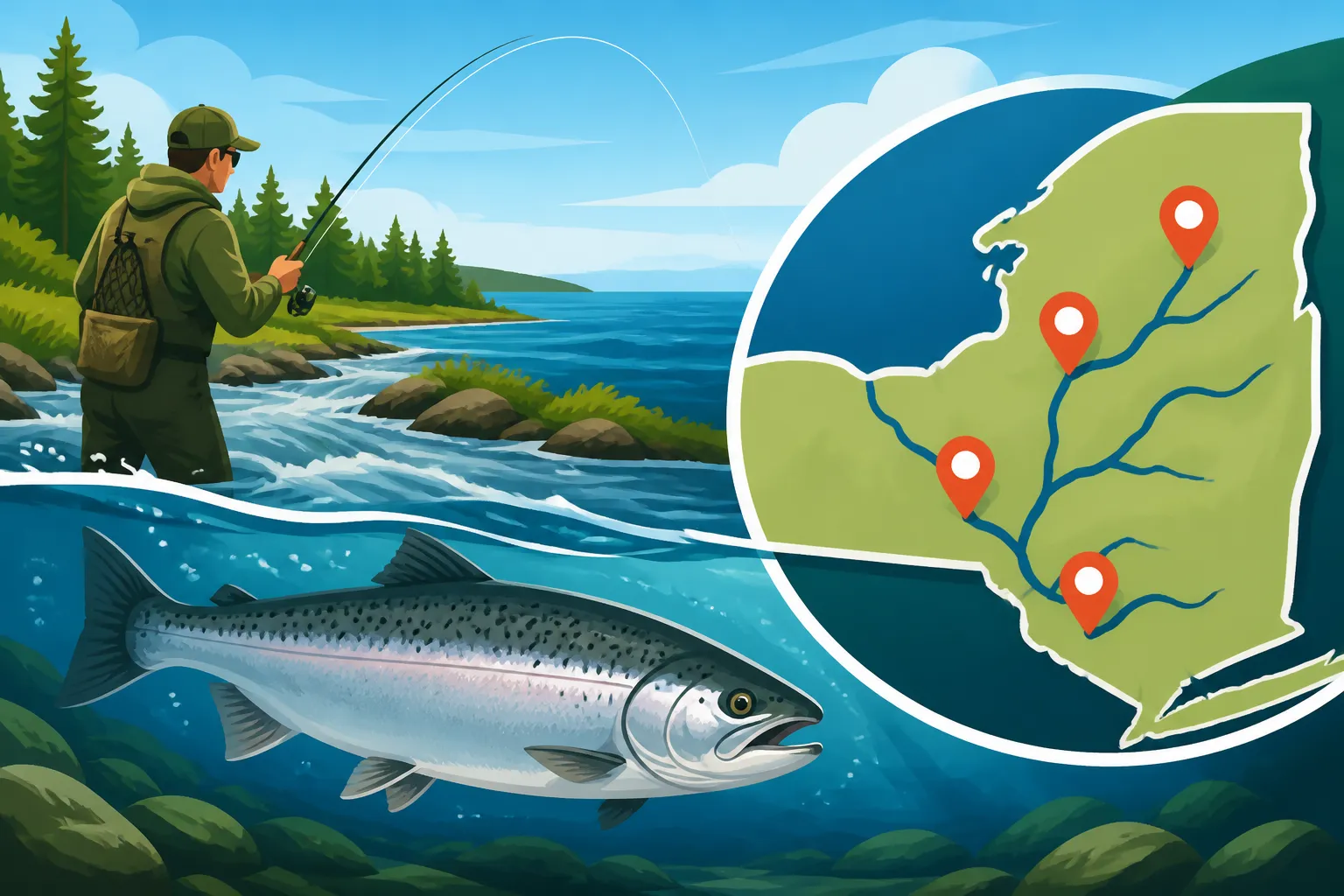
Finding those epic salmon runs on Lake Ontario's tributaries can feel like searching for a needle in a haystack, especially if you're not familiar with the local waters. It’s frustrating to drive hours, only to find the river either blown out, too low, or devoid of fish. This guide is dedicated to cutting through that confusion, helping you pinpoint the best spots on New York's Lake Ontario tributaries where you can reliably target salmon during their incredible annual migrations.
The Premier Salmon Rivers of New York's Lake Ontario Tributaries
When the leaves start to turn and the air gets that crisp autumn bite, it's a sure sign that the annual salmon migration is on in full force. New York's Lake Ontario tributaries are world-renowned for their incredible runs of Chinook and Coho salmon, and later, the powerful steelhead. But knowing where to concentrate your efforts is key to success. You want to be on the water where the fish are, and these rivers consistently deliver.
The Mighty Salmon River: Pulaski's Crown Jewel
Without a doubt, the Salmon River, flowing through Pulaski, New York, is the undisputed king of Lake Ontario's salmon tributaries. This river is practically synonymous with fall salmon fishing in the Northeast, drawing anglers from all corners of the country. It's not just hype; the sheer volume of fish that push into this system is staggering. From late August through November, the river transforms into a vibrant, bustling fishery.
The Salmon River offers a variety of experiences across its different sections. Downstream, closer to Lake Ontario, you’ll find sections that are often wider and deeper, where fish first enter the system in large numbers. As you move upstream towards Pulaski, Pineville, and even further up to Altmar, the river becomes more intimate, with classic runs, riffles, and deep pools that hold migrating salmon. One particular stretch, the Douglaston Salmon Run, is a privately managed section known for its exceptional fishing and stricter regulations, offering a more controlled experience. For those looking to understand the full scope, our comprehensive guide, "New York's Salmon River Fishing Guide", delves into these areas in much greater detail. The river's incredible productivity is due to its size, consistent flow, and excellent spawning habitat, making it a reliable bet year after year.
The Accessible Oswego River: Urban Angling for Anadromous Fish
Just west of the Salmon River lies the Oswego River, another significant tributary that hosts impressive salmon and steelhead runs. What sets the Oswego apart is its more urban setting, flowing directly through the city of Oswego before emptying into Lake Ontario. This accessibility means it’s a fantastic option for anglers who might not want to trek into more remote areas, or those looking for shore-fishing opportunities right in town.
The Oswego River benefits from a series of dams, particularly the Varick Dam, which concentrates migrating fish as they attempt to move upstream. Below these dams, especially in the stretch near Breitbeck Park and the city's waterfront, you'll often find a high concentration of salmon, especially Chinook, holding in the deeper pools and runs. Access is generally good, with public parks, fishing platforms, and boat launches readily available. While it might lack the wild feel of some other rivers, the Oswego makes up for it in sheer convenience and the consistent presence of fish. It's a prime example of how urban waterways can still provide incredible angling opportunities, a testament to New York's diverse fisheries.
Other Notable Tributaries: Black River and Genesee River
While the Salmon and Oswego rivers often steal the spotlight, several other Lake Ontario tributaries offer excellent salmon fishing for those willing to explore. These rivers can sometimes provide a more solitary experience, or simply offer alternative options depending on local conditions and fish movements.
The Black River, flowing into Black River Bay near Watertown, is a substantial system with strong runs of Chinook and Coho salmon. Its character can vary greatly from its lower, wider sections to its more intimate upper stretches. Access here can be a bit more dispersed, often requiring some local knowledge or exploration to find prime spots, but the rewards can be substantial, especially during peak migration.
Further west, the Genesee River, which flows through Rochester, is another vital pathway for Lake Ontario salmon. Similar to the Oswego, it's an urban river with several dams that can hold fish. The lower river, particularly around the Genesee River Gorge and near the lake, sees good numbers of salmon. Public access in Rochester's parks, like High Falls or Turning Point Park, can offer good vantage points and fishing opportunities. Both the Black and Genesee rivers tend to fish well after significant rain events, which draw fish in from the lake and provide the necessary water levels for them to migrate upstream. These rivers are excellent choices for anglers seeking diverse environments and potentially less crowded conditions than the famed Salmon River.
Understanding Salmon Run Dynamics and Timing
Catching salmon in Lake Ontario tributaries isn't just about showing up; it's about understanding the rhythm of the fish and the river. The timing of the runs, and how water levels influence them, are absolutely critical factors that separate successful anglers from those who leave disappointed.
When Do Chinook Salmon Start Running in Lake Ontario Tributaries?
The million-dollar question for many anglers is, "When do Chinook salmon start running in Lake Ontario tributaries?" The answer isn't a single date, but a window that typically opens in late summer and intensifies into fall. Generally, the first significant push of adult Chinook salmon into the lower reaches of the major tributaries begins in late August to early September. These initial waves are often triggered by cooler lake temperatures, shorter days, and the first significant rain events that raise river levels slightly.
However, the real excitement, the peak of the migration, usually occurs from mid-September through mid-October. This is when the largest numbers of fish are present in the rivers, actively migrating upstream to their spawning grounds. Our article, "Chinook Salmon Run Peaks in Early October on Lake Ontario Tributaries", offers a deeper dive into these peak periods. Coho salmon often precede or run concurrently with the Chinooks, providing a fantastic mixed-bag fishery. As you move into late October and November, while some straggler salmon might still be present, the focus often shifts to the arriving steelhead trout, which enter the rivers to feed on salmon eggs. Knowing these general timelines, which are also detailed in "New York Fishing Season Dates and Catch Limits", is your first step to being in the right place at the right time.
The Critical Role of Water Levels and Temperature
Salmon are incredibly sensitive to their environment, and water levels and temperature are paramount. A successful run hinges on a delicate balance.
- Water Levels: Low water conditions, often seen during dry summers, can delay or significantly hinder the salmon run. Fish will stage at the river mouths, hesitant to enter shallow tributaries where they might get stranded or become easy prey. A good rain event, causing a bump in river flow, acts like a floodgate, signaling to the salmon that it's safe to push upstream. Conversely, excessively high and muddy water, often after torrential downpours, can also make fishing challenging, as fish become dispersed and visibility drops. The "sweet spot" is often falling or stable water levels after a significant rain, when the river is still slightly elevated but clearing.
- Water Temperature: Salmon prefer cooler water temperatures for migration and spawning. As Lake Ontario's inshore waters and the tributary waters begin to cool in late summer and fall, it cues the fish to start their journey. Temperatures typically in the 50s Fahrenheit are ideal. If there's an unusually warm fall, it can delay the peak of the run, keeping fish in the cooler lake waters longer. Conversely, a sudden cold snap can sometimes trigger a surge, though extreme cold will eventually slow their metabolism and activity. Experienced anglers are always checking stream gauges and water temperature reports, understanding that these environmental cues dictate fish behavior more than any calendar date.
Essential Access and Regulation Information
Heading out to the tributaries without understanding access points or the rules of engagement can quickly turn a hopeful fishing trip into a frustrating one. New York has specific guidelines and widely recognized access points you need to be aware of.
Navigating Public and Private Access Points
One of the biggest frustrations for anglers new to tributary fishing is figuring out where you can actually fish. Many prime stretches of river flow through private land, and respecting these boundaries is paramount. Trespassing is not only illegal but can also lead to strained relationships between anglers and landowners, potentially resulting in further restricted access for everyone.
Fortunately, the New York State Department of Environmental Conservation (DEC) has established numerous Public Fishing Rights (PFR) access points along many of the popular salmon rivers, including the Salmon River, Oswego River, and others. These PFR sections are typically marked with distinctive green and white signs, indicating where anglers can legally access the riverbank. Maps outlining these PFR sections are often available online through the DEC website or at local bait and tackle shops. When planning your trip, always consult these maps and look for the signs. In areas without PFR, you'll need to seek out public parks or other designated access areas. For example, in Pulaski, the "Staircase" or the "Town Pool" are well-known public access points. In Oswego, as mentioned, Breitbeck Park offers good shore access. Planning your trip with resources like FishingBooker can sometimes help, as local guides listed on the platform often know the legal, safe, and productive access points to these challenging rivers.
Understanding New York Fishing Regulations for Salmon
Beyond where you can stand, knowing what you can do is equally important. New York's fishing regulations, especially for Lake Ontario tributaries, can be complex and are subject to change annually. It's not enough to just have a license; you need to understand the specific rules for salmon. For a complete overview, check out our guide on "New York Fishing Regulations Explained".
Key regulations often include:
- Seasons: While salmon are present in the rivers for an extended period, specific seasons for harvest or catch-and-release can apply. For instance, there might be a closed season for Chinook and Coho salmon in certain parts of the tributaries outside of the primary run.
- Daily Limits and Minimum Size: There are strict limits on how many salmon you can keep per day and often minimum size requirements. These are designed to protect the fishery and ensure sustainable populations.
- Terminal Tackle Restrictions: In some tributary sections, particularly during peak salmon runs, specific restrictions on hooks (e.g., single-hook, unweighted flies only, or specific hook gap limits) or bait (e.g., no live bait) may be in place. These "special regulations waters" are often implemented to reduce snagging and promote fair-hooked fish.
- Angling Methods: Snagging is generally illegal and heavily enforced. Anglers must target fish in a "fair hook" manner, meaning the fish is hooked in the mouth.
Before you ever cast a line, make sure your "New York Fishing License Guide" is up to date and you have thoroughly reviewed the most current DEC Freshwater Fishing Regulations Guide for the specific waters you intend to fish. Ignorance of the law is not an excuse, and DEC officers are diligent in protecting these valuable resources.
Effective Strategies and Gear for Tributary Salmon
Once you've identified your target tributary and familiarized yourself with the rules, it's time to talk strategy. Fishing for salmon in these rivers requires specific tackle, techniques, and a keen understanding of fish behavior.
Selecting the Right Tackle and Techniques
Fishing for powerful Pacific salmon in moving water demands robust gear. These are not your average panfish!
- Rods and Reels: For Chinook salmon, a heavy-action spinning rod (8'6" to 10'6") paired with a robust spinning reel spooled with 20-30 lb braided line and a fluorocarbon leader (15-20 lb) is a common setup. If you prefer fly fishing, a 9-10 weight, 10-11 foot fly rod with a large arbor reel and appropriate sinking or specialized indicator lines is essential. The longer rods help with line control and fighting large fish in current.
- Lures and Bait: When fish are actively migrating and not yet on their spawning beds, spoons, spinners, and crankbaits can be effective, especially in the lower river sections and during periods of active feeding. As they move upstream and begin to stage, their focus shifts, and they become less interested in traditional feeding. This is when imitation eggs (beads), egg sacs (roe bags), and various fly patterns (woolly buggers, glo-bugs, stoneflies, estaz flies) become extremely productive. The key is often to drift these offerings naturally through the fish's strike zone, mimicking dislodged salmon eggs or aquatic insects. Remember to check local regulations for specific bait and tackle restrictions.
- Techniques:
- Drift Fishing: This is perhaps the most popular method. Using a float or simply adjusting your weight to achieve a natural drift of your bait or lure along the bottom, presenting it right in front of holding salmon.
- Bottom Bouncing: For deeper, faster water, a "slinky" weight or pencil lead can be used to bounce your offering along the riverbed, where salmon are often holding.
- Fly Fishing (Indicator Nymphing): For fly anglers, using an indicator to suspend an egg or nymph pattern at the correct depth and drifting it through current seams and pools.
- Casting and Retrieving: In wider, deeper pools or river mouths, casting spoons or spinners and retrieving them can trigger aggressive strikes from freshly-entered fish.
You'll find more in-depth advice on methods like "How to Fish for Salmon in New York" to fine-tune your approach.
Reading the Water and Identifying Holding Lies
Knowing where the fish are likely to be is half the battle. Salmon, particularly when migrating and staging, seek out specific types of water.
- Deep Pools: These are classic holding areas, offering fish a place to rest, conserve energy, and find refuge from strong currents. Look for the deepest parts of the river, especially those with structure like submerged logs or boulders.
- Current Seams: The boundary between fast-moving and slower-moving water. Salmon will often sit in the slower water, waiting for food to be swept past them in the faster current, or simply resting out of the main flow.
- Spawning Beds (Redds): These are oval-shaped depressions on the river bottom, typically in gravelly areas, created by female salmon to lay their eggs. While it's tempting to target fish on redds, it's generally considered poor etiquette and is often illegal to fish directly for spawning fish in some areas. It’s best to avoid disturbing these areas and target fish in holding lies upstream or downstream of active spawning.
- Shelter and Structure: Any obstruction that breaks the current, such as large rocks, fallen trees, or undercut banks, provides excellent cover and holding spots for salmon. These features offer a break from the current and a sense of security.
Learning to "read the water" takes practice, but by actively observing the current, depth changes, and bottom structure, you'll start to develop an intuition for where the fish will be.
| Tributary Name | Primary Salmon Species | Peak Run Timing (Chinook) | Key Access Points (Examples) | Special Considerations |
|---|---|---|---|---|
| Salmon River | Chinook, Coho | Mid-September to Mid-October | Pulaski, Altmar, Pineville, Douglaston Salmon Run | World-class fishery, can be very crowded. Diverse sections. |
| Oswego River | Chinook, Coho | Late September to Late October | Oswego City Parks, Breitbeck Park, below Varick Dam | Urban setting, easily accessible, concentrated fish below dams. |
| Black River | Chinook, Coho | Late September to Mid-October | Various state lands, localized access points | Good alternative, less pressure, requires more exploration. |
| Genesee River | Chinook, Coho | Late September to Mid-October | Rochester city parks (High Falls, Turning Point) | Urban river, multiple dams, good shore fishing opportunities. |
Remember that conditions can change rapidly on these rivers. What was a hot spot yesterday might be quiet today due to a change in water levels, temperature, or fish movement. Be adaptable, and don't be afraid to move around to find active fish. For those new to the game, consider booking a trip with a local guide through platforms like FishingBooker, especially if you're targeting specific species like Chinook Salmon in New York or seeking to explore "New York's Most Popular Freshwater Fish". These professionals not only know the prime locations but also the subtle nuances of the current regulations and fish behavior in these unique environments. Also, understanding "How to Tell a Steelhead From a Brown Trout" can be helpful, as both species inhabit these waters during the fall and winter. For even more detailed information on specific locations and fish behavior, consult guides like "Lake Ontario Fishing in New York: Where to Go" and "Fish Species You Can Catch in New York".
Disclaimer
The information provided in this guide is for general informational purposes only and is subject to change. Fishing regulations, seasons, and access points can be updated by the New York State Department of Environmental Conservation (DEC) at any time. Always consult the most current official DEC fishing regulations guide before engaging in any fishing activity. It is the angler's responsibility to know and follow all applicable laws and regulations.