Where to Fish for Steelhead in New York
For any angler chasing the elusive, hard-fighting steelhead in New York, the biggest hurdle often isn't the fish itself, but simply knowing where to find these incredible chrome beauties. Many of us have spent countless hours poring over maps and online forums, trying to pinpoint those prime stretches of river where a true trophy might be lurking. This guide is dedicated to cutting through that confusion, helping you understand exactly where these migratory rainbow trout stage their annual runs across the Empire State.
Understanding New York's Steelhead Runs
Steelhead are essentially rainbow trout that migrate from lakes (like Ontario and Erie, or even some of the deeper Finger Lakes) into tributary rivers to spawn. This anadromous behavior is what gives them their incredible fighting power and distinct silvery coloration, earning them the nickname "chrome." Their movements are heavily dictated by water temperature, flow, and instinct, making timing a critical factor in finding them. Understanding the different runs throughout the year is key to successful steelhead fishing in New York.
The Fall Run Phenomenon
As autumn colors begin to explode across the landscape, so too does the first major push of steelhead into New York's tributary streams. This fall run is a highly anticipated event, driven by dropping water temperatures and increased flows from seasonal rains, which signal to the fish that it's time to leave the vastness of the Great Lakes and head upstream. While their primary motivation isn't spawning at this time (that usually happens in spring), they enter the rivers to stage, feed on salmon eggs, and acclimate to freshwater conditions. The sheer number of fish can be astounding, and the vibrancy of the fall foliage makes for an unforgettable backdrop to your fishing adventure.
The initial push typically starts in mid-September, with peak activity often observed through October and into November. Early in the fall, fish might be found closer to the lake mouths, gradually moving upstream as water levels allow. They'll hold in deeper pools, behind structure, and in any areas offering a break from the current. You'll often find them feeding aggressively on the abundant salmon eggs laid by Chinook and Coho salmon, which are also making their fall migrations. This makes egg imitations, like egg sacs or bead patterns, particularly effective. Knowing the nuances of the Fall Steelhead Run Timing in New York can dramatically increase your success.
Winter Steelhead Challenges and Rewards
Once the frigid grip of winter settles over New York, many fair-weather anglers pack away their gear, but this can be a huge mistake for steelhead enthusiasts. Winter steelhead fishing presents its own unique challenges, primarily cold weather and often slower fish, but the rewards can be immense. The fish that entered the rivers in the fall will remain there, often holding in the deepest, slowest pools where they can conserve energy. Ice formation can sometimes limit access, but open water can still produce incredible fishing, especially during thaws or mild spells.
During deep winter, steelhead become less active and more lethargic dueening to the cold water temperatures. They're still present, but you need to present your baits and flies much slower and closer to the bottom. Sometimes, an ice-out or a significant warm-up in January or February can trigger a surge of new fish from the lakes, offering a fantastic opportunity when river conditions become fishable. You might find success fishing deeper nymph rigs or even small, slowly drifted egg patterns in these deep, slow pockets. Patience is paramount, and being prepared for the elements with proper cold-weather gear is non-negotiable. For those brave enough to face the cold, understanding Best Winter Fishing Techniques in New York can yield spectacular results.
Spring Frenzy and Post-Spawn Opportunities
Spring is arguably the pinnacle of steelhead fishing in New York, as this is when the fish actively spawn. As daylight hours lengthen and water temperatures gradually rise, the instinct to reproduce kicks in, leading to a frantic period of activity. Fish that have overwintered in the rivers are joined by a fresh wave of aggressive "chromers" pushing in from the lakes, creating incredible fishing opportunities. You'll find them actively staging in gravelly runs and riffles, preparing to lay their eggs.
The spring run usually kicks off in March and can last well into May, depending on the specific river and weather patterns. During this peak spawning period, you'll often encounter some of the largest, most vibrant steelhead of the year. After the spawn, as water temperatures continue to climb and flows start to drop, many of these fish begin their journey back to the lakes. This "drop-back" bite can be another exceptional opportunity, as these fish are often hungry and aggressive, trying to regain energy lost during spawning. They'll readily hit a variety of offerings as they move downstream. If you're wondering about the exact timing, our guide on Spring Steelhead Run Timing in New York has all the details.
Premier Steelhead Destinations in New York
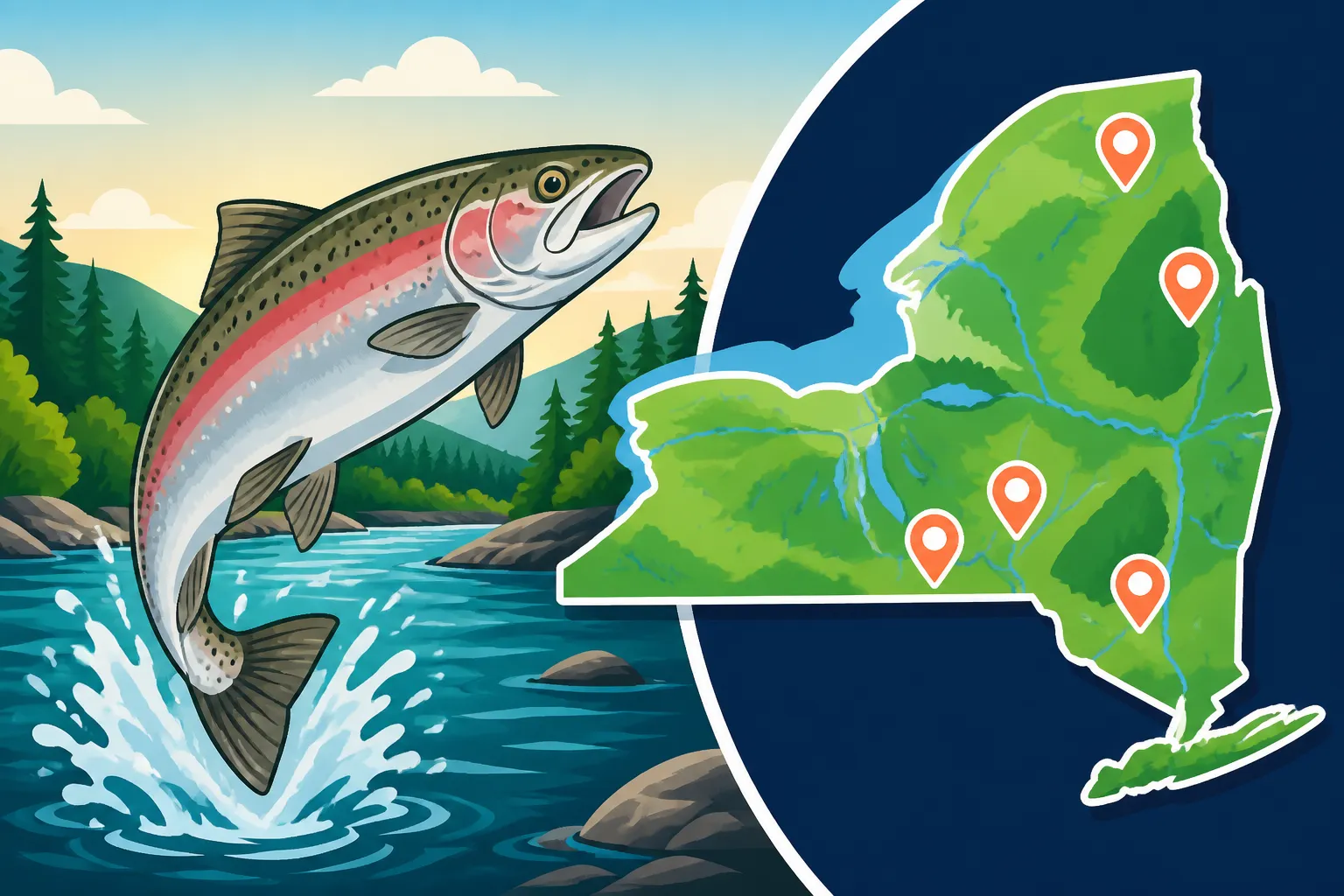
New York is blessed with an abundance of waters that host robust steelhead runs, primarily concentrated in the tributaries flowing into the Great Lakes and, to a lesser extent, some of the larger Finger Lakes. Each region offers a slightly different experience, from vast, powerful rivers to smaller, more intimate streams. Knowing where to focus your efforts is crucial for a successful trip.
Lake Ontario Tributaries: The Steelhead Mecca
Without a doubt, the Lake Ontario tributaries are New York's most famous and productive steelhead destinations. These rivers, fed by the massive, cold waters of Lake Ontario, offer consistent runs of large, powerful steelhead throughout the fall, winter, and spring. The sheer volume of fish and public access points make this region a prime target for any steelhead enthusiast. Many anglers consider these waters to be among the best in the nation for trophy-sized fish.
The Salmon River in Pulaski is the undisputed king of New York's steelhead rivers. While famous for its salmon runs, it also boasts an incredible steelhead fishery. From the Douglaston Salmon Run (a private section with managed access) down to the lower stretches near Pulaski and Altmar, the river offers diverse fishing opportunities. Its sheer size and consistent flow mean it holds fish even when other rivers are low. Anglers will find fish throughout its length, from the deep pools to the gravelly spawning beds. Navigating its complex currents and structure can be challenging, but highly rewarding. For those looking to explore this renowned waterway, researching Steelhead Guides on Lake Ontario Tributaries can provide invaluable local expertise.
Further west, the Oswego River is another significant Lake Ontario tributary. Flowing through the city of Oswego, it benefits from a large watershed and consistent water levels, often remaining fishable even when smaller streams are blown out. The dam in Oswego can create a bottleneck for migrating fish, concentrating them below. Public access is available along city parks and designated fishing areas. Other notable Lake Ontario tributaries include Oak Orchard Creek, Genesee River, Irondequoit Creek, and Sandy Creek. These smaller rivers often run clearer and can be incredibly productive, though their flows can fluctuate more dramatically with rainfall. Each river has its own character, from the wide-open spaces of the Genesee to the more intimate, brush-lined banks of Oak Orchard.
Lake Erie Tributaries: Western New York Gems
On the western side of the state, the tributaries flowing into Lake Erie offer another fantastic, though often less crowded, steelhead experience. These streams tend to be smaller and more freestone in nature than their Lake Ontario counterparts, meaning they're more susceptible to rapid changes in water levels and clarity. However, when conditions are right, they can produce incredible fishing, with some rivers holding truly enormous steelhead. The fishing here often feels more intimate, requiring a stealthy approach and good water-reading skills.
Cattaraugus Creek is the largest and most famous of the Lake Erie tribs. Its powerful flows and diverse habitat, from deep gorges to wide gravel runs, make it a premier destination. The "Catt" sees excellent runs of both steelhead and smallmouth bass, offering a dual-species opportunity. While public access exists, private land ownership requires careful attention to postings. Just like the Salmon River, the "Catt" can be a challenging river to learn, but it consistently produces big fish.
Other productive Lake Erie tributaries include Chautauqua Creek, Eighteenmile Creek, and Walnut Creek. These smaller streams are often highly productive after a rain event, drawing in fresh steelhead from Lake Erie. Anglers should pay close attention to recent weather and flow conditions when planning a trip to these waters, as they can go from prime to unfishable very quickly. Many of these streams offer a more classic "stream fishing" experience, with tight bends, fallen trees, and rocky bottoms, making them ideal for a stealthy approach.
Finger Lakes Tributaries: Hidden Opportunities
While not as widely known for steelhead as the Great Lakes tributaries, some of the deeper, colder Finger Lakes also support populations of "landlocked" steelhead (often referred to as rainbow trout in this context) that make spawning runs into their feeder streams. These fish might not reach the monumental sizes of their Great Lakes cousins, but they offer exciting fishing opportunities closer to the heart of New York for anglers who prefer a more localized experience.
Lakes like Cayuga Lake, Seneca Lake, and Keuka Lake all have tributaries that receive good runs of rainbow trout, especially in the spring. These streams are often smaller and require more delicate tackle and techniques. Examples include Fall Creek and Salmon Creek flowing into Cayuga Lake, or the numerous small streams entering Seneca Lake. These fisheries are often characterized by clearer water and can be a fantastic place to practice your nymphing or dry fly skills when conditions are right. They are less about the sheer numbers of fish you might find in a major Lake Ontario tributary and more about the challenge of stalking and presenting to individual fish in a more intimate setting. Remember that fishing these areas also requires understanding the specific New York Fishing Regulations Explained for inland waters.
Navigating Access and Planning Your Steelhead Trip
Once you've identified a promising river, the next step is figuring out how to access it and what you'll need. New York State has made significant efforts to provide public access to many of its prime fishing spots, but understanding the rules and being prepared is key to a smooth and enjoyable trip.
Public Access Points and FishingBooker Resources
The New York State Department of Environmental Conservation (DEC) provides numerous Public Fishing Rights (PFR) easements along many of the popular steelhead rivers. These easements guarantee public access for fishing, often marked by brown and yellow "Public Fishing Rights" signs. Parking areas are usually designated, but it's crucial to pay attention to private property boundaries and not trespass. The DEC website is an excellent resource for maps and detailed information on these access points, helping you plan your exact entry and exit points.
For anglers new to a specific river system, or those traveling from out of state, leveraging the knowledge of local guides can be a game-changer. Services like FishingBooker can connect you with experienced, licensed fishing guides who specialize in steelhead. These guides often have intimate knowledge of current river conditions, fish movements, and the most productive spots, ensuring you make the most of your limited time on the water. They can provide insights into specific runs, like the Best Time to Fish for Steelhead on New York's Lake Ontario Tributaries, and often supply all the necessary gear, taking the guesswork out of your trip. This can be especially helpful on complex rivers like the Salmon River or Cattaraugus Creek, where local knowledge is invaluable.
Essential Gear and Techniques for New York Steelhead
While a comprehensive guide to steelhead techniques is a topic for another day (and indeed, we have dedicated articles like How to Fish for Steelhead in New York), it's important to have a general idea of what you'll need. Steelhead are powerful fish, so a medium-heavy spinning rod or a switch/spey rod for fly fishing is typically recommended. Reels should have a smooth drag and be spooled with strong line, often 8-12 lb test fluorocarbon or monofilament for spinning, or appropriate fly lines for fly anglers.
Common techniques include float fishing (often with an indicator and split shot, presenting egg sacs, beads, or nymphs), bottom bouncing (a variation of float fishing often used in faster, deeper water), and fly fishing (using nymphing rigs, streamers, or sometimes even dry flies during hatches). Egg sacs, whether tied with cured salmon eggs or artificial options, are often a go-to choice, especially during the fall salmon runs. Our guide on How to Fish Egg Sacs for Steelhead dives into more detail on this effective method. Whatever your preferred method, always come prepared with a variety of offerings and be willing to adapt to changing river conditions.
Respecting Regulations and Conservation
Before heading out, always consult the most current New York Fishing Regulations Explained issued by the DEC. Regulations can vary by waterbody, including specific season dates, catch limits, and tackle restrictions (e.g., single-hook only, no bait zones). Many steelhead fisheries, especially on Lake Ontario tributaries, have special regulations in place to protect these valuable fish. Familiarize yourself with the Statewide Trout Bag Limit and any river-specific rules.
Practicing ethical angling is paramount to preserving these incredible fisheries for future generations. This includes proper Catch-and-Release Handling Rules, minimizing stress on the fish, and never high-grading your catch. If you plan to keep a fish, ensure it meets all size and bag limits. Consider the Steelhead Average Weight in New York's Lake Ontario Tributaries to understand the typical size of fish you might encounter. Using knotless rubber nets can also help protect a fish's slime coat and fins. Remember, we are all stewards of these resources, and responsible angling ensures healthy populations of steelhead for years to come.
New York Steelhead River Snapshot
Here’s a quick overview of some key steelhead rivers in New York, their primary seasons, and notable characteristics:
| River System | Primary Season for Steelhead | Key Characteristics | Access Notes |
|---|---|---|---|
| Salmon River | Fall, Winter, Spring | Large, powerful river, deep pools, fast runs, world-class fishery, major salmon runs draw steelhead. | Extensive public access (DEC Public Fishing Rights), private water options (Douglaston Salmon Run), parking lots, often crowded during peak runs. |
| Oswego River | Fall, Winter, Spring | Large, consistent flow, urban fishing, dam concentrates fish, good for boat and shore anglers. | City parks, designated fishing areas, boat launches. Easily accessible. |
| Oak Orchard Creek | Fall, Winter, Spring | Smaller, scenic, runs clear, good for wading, diverse habitat. | Multiple DEC access points, some private land. Popular during salmon and steelhead runs. |
| Genesee River | Fall, Winter, Spring | Large, often stained, flows through Rochester, good for boat and shore, significant watershed. | Public parks and access points around Rochester, some challenges with clarity after heavy rains. |
| Cattaraugus Creek | Fall, Winter, Spring | Largest Lake Erie trib, powerful currents, deep gorge sections, excellent steelhead and smallmouth fishery. | Public access points (including some Native American land with specific rules), good wading, can be challenging due to high flows. |
| Chautauqua Creek | Fall, Winter, Spring | Smaller Lake Erie trib, clear water, good for stealthy wading, very scenic. | Multiple DEC access points, sensitive to water levels. |
| Fall Creek (Cayuga) | Spring | Smaller Finger Lakes tributary, clear water, good for nymphing, targets landlocked rainbows. | Primarily public access around Ithaca, often fished by college students. |
| Seneca Lake Tributaries | Spring | Various small streams, clear water, stealth required, focus on landlocked rainbows. | Scattered public access, often require exploring. Good for anglers seeking solitude. |
Disclaimer
Fishing conditions and regulations in New York can change frequently. Always consult the official New York State Department of Environmental Conservation (DEC) website or their current fishing regulations guide before planning any fishing trip. This information is provided for general guidance only and should not replace official sources. It is your responsibility to know and follow all applicable laws and regulations.