Cayuga Lake Trout Fishing Spots in New York
Anyone who has ever gazed across the impressive expanse of Cayuga Lake knows that its sheer size can be incredibly intimidating when you're trying to figure out where the fish are hiding. It’s a common frustration to feel lost on such vast waters, especially when you’re targeting specific species like the wily trout. This guide is here to cut through that confusion, giving you the insider scoop on the best trout fishing spots on Cayuga Lake and the strategies you’ll need to make your next angling adventure a resounding success.
Understanding Cayuga Lake's Unique Trout Fishery
Cayuga Lake isn't just another body of water; it's a magnificent glacier-carved Finger Lake, the longest of them all in New York State. This unique geological history has created a habitat perfectly suited for a thriving trout population, but it also presents specific challenges and opportunities for anglers. Understanding the lake's physical characteristics and the behavior of its trout species is your first step to success.
The Depths and Thermocline's Influence
At over 400 feet deep in places, Cayuga Lake boasts incredible depths that hold cold, oxygen-rich water year-round, which is crucial for trout survival. However, these depths also mean that trout often aren't just sitting in obvious spots; they're usually suspended, following their preferred temperature zones and food sources. During the warmer months, a distinct thermocline forms—a layer where the water temperature rapidly changes with depth. This thermocline acts like an invisible floor or ceiling for fish, concentrating them at specific depths.
For instance, in summer, you'll find lake trout often hugging the bottom in deeper sections or patrolling just above or below the thermocline where the water is coldest and oxygen levels are optimal. Brown trout and rainbow trout, while tolerant of slightly warmer water, will also seek out cooler depths during hot spells, but they might be found shallower in spring and fall. Knowing the typical depths of the thermocline (which can vary by year and exact location but is generally 30-60 feet down) is paramount for effective trout fishing on Cayuga.
Target Species: Lake Trout, Browns, and Rainbows
Cayuga Lake is a multi-species trout haven, primarily offering fantastic opportunities for three distinct trout species, each with its own habits and preferences. The undisputed king of the deep here is the lake trout, often referred to as "lakers." These native fish are robust, long-lived, and can grow to impressive sizes, frequently topping 10-20 pounds, with the state record even higher. They are generally found in the colder, deeper parts of the lake and are a favorite target for trollers.
Then there are brown trout, known for their aggressive strikes and beautiful golden-brown flanks. These stocked fish are strong fighters and often patrol the shallower, nearshore areas, especially during cooler seasons or low light conditions. You'll find them lurking around structure, drop-offs, and tributary mouths. Finally, rainbow trout, with their iconic iridescent stripe, also call Cayuga home. Like browns, rainbows are often stocked and provide exhilarating fights, particularly when they make their acrobatic leaps. They share similar habitats with browns but can also be found in the open water, cruising for baitfish. It's a truly diverse fishery, offering something for every type of angler.
Forage Base and Its Impact
The health and abundance of Cayuga Lake's trout population are intrinsically linked to its forage base – what the trout eat. The primary food sources in Cayuga are alewives and smelt, both small, oily baitfish that thrive in the lake's cool, deep waters. These baitfish are schooling species, and where the baitfish are, the trout will follow. This means that successful trout fishing often involves locating these schools rather than just random casting.
Alewives, in particular, are a staple in the diet of all three trout species, providing a rich, high-energy food source that allows them to grow large. Trolling techniques often aim to mimic these baitfish in appearance and action. Understanding the seasonal movements of alewives and smelt – for example, their tendency to move shallower during certain times of the year or to gather in specific areas – can give you a significant advantage. Keeping an eye on your fish finder for bait balls is often more important than blindly fishing a "spot" because the bait, and therefore the trout, are constantly on the move.
Top Cayuga Lake Trout Fishing Hotspots
While trout roam the entire lake, certain areas consistently produce better results due to their unique underwater features, proximity to tributaries, or consistent baitfish concentrations. Knowing these key Cayuga Lake trout fishing spots can dramatically improve your chances of a successful outing.
Northern End: Shallow Flats and Drop-offs
The northern end of Cayuga Lake, particularly around towns like Union Springs and the broader area near the city of Cayuga, offers a distinct set of fishing opportunities. While much of Cayuga is deep, this end features more extensive shallow flats that gradually transition into deeper water via well-defined drop-offs. These shallower sections tend to warm up faster in the spring, attracting baitfish and, consequently, brown and rainbow trout seeking easy meals.
Anglers often find success trolling or casting along the edges of these flats, especially where they meet the deeper channels. Look for submerged weed lines or subtle changes in bottom contour using your electronics. Public access points and launch sites are plentiful in this area, making it convenient for those trailering smaller boats. During the early season, when the water temperature is still on the cooler side, you might even find lake trout cruising these shallower depths before they retreat to the deeper basins for summer. This area is also popular for ice fishing when conditions allow, offering opportunities for all three trout species through the ice.
Mid-Lake Structure: Submerged Islands and Points
As you move south into the middle sections of Cayuga Lake, the dynamics shift towards deeper water with prominent underwater structures that act as magnets for trout. Key areas like Frontenac Point, Long Point, and various unnamed submerged humps and ledges are prime examples. These points and submerged features disrupt the current and provide ambush points for predatory trout, as well as holding areas for baitfish.
Trolling across and around these structures, especially on the deep-water side of points, can be highly effective. The depth changes rapidly here, from relatively shallow shelves to hundreds of feet deep in a short distance. Your sonar will be invaluable for identifying these transitions and locating schools of baitfish holding tight to the structure. Many anglers looking for a challenging deep-water fight will gravitate towards these mid-lake areas, often employing advanced techniques to present their lures precisely at the depths where trophy lake trout are lurking. If you're looking for an experienced hand to guide you to these precise locations, platforms like FishingBooker can help you find local charters specializing in Cayuga Lake's deepwater trolling.
Southern End: Deep Water Basins and Tributary Mouths
The southern end of Cayuga Lake, especially around Ithaca, is characterized by its dramatic depths and the influence of numerous tributaries. This area includes some of the deepest parts of the lake, making it a year-round stronghold for lake trout. These deep basins provide a stable, cold environment that lakers adore, and they'll often be found suspended anywhere from 50 to 200 feet down, depending on the season and baitfish location.
Crucially, the southern end is also where major tributaries like Taughannock Creek and Salmon Creek enter the lake. These creeks are vital arteries for brown trout and rainbow trout, especially during their spring and fall spawning runs. Anglers targeting these species will often focus on the areas just off the mouths of these creeks, casting spoons, stickbaits, or even using live bait. When the fish are running, these tributary mouths become incredibly active, offering fantastic shore fishing opportunities as well as boat fishing. Just be sure to check the specific regulations for fishing near tributary mouths, as rules can vary. For those planning a trip, exploring New York Fishing Seasons Explained can offer a broader perspective on when these runs typically occur.
Seasonal Strategies for Cayuga Lake Trout
Trout fishing on Cayuga Lake is a year-round pursuit, but success hinges on adapting your tactics to the changing seasons. The behavior of trout and their prey changes dramatically with water temperature, light levels, and spawning instincts.
Spring: Post-Spawn and Nearshore Opportunities
As the ice retreats (if it formed) and water temperatures begin to climb in early spring, Cayuga Lake truly awakens. This is a prime time for brown trout and rainbow trout, which have often spent the winter in deeper waters but now move shallower to feed aggressively, recovering from the colder months. You’ll find them cruising near shorelines, especially around the northern flats and the mouths of tributaries. The warming water energizes baitfish, drawing the trout in.
Anglers often have great success trolling shallower crankbaits, stickbaits, or spoons from 10 to 30 feet deep, targeting areas where baitfish are congregating. Shore anglers can also do well casting spoons or small minnow-imitating lures near creek mouths and public access points. For lake trout, while many are still deeper, some will push into shallower areas to feed on newly available baitfish, making them accessible to different trolling depths. This is often one of the most comfortable times to fish, before the summer heat settles in, and the fish are generally very active.
Summer: Deep Water Trolling and Downrigging
When the summer sun heats up, Cayuga Lake’s trout, especially the lakers, retreat to the cooler, deeper parts of the lake. This is when the term "deep water trolling" truly comes into its own. Lake trout will primarily be found from 50 to 150 feet deep, often suspended above or below the thermocline, as we discussed earlier. Brown trout and rainbows will also be deeper than in spring, but might still be shallower than the lakers, perhaps in the 30-70 foot range, especially during dawn and dusk.
To consistently reach these depths, specialized equipment becomes essential. Downriggers are king for maintaining precise lure depths, allowing you to run spoons, flashers, and flies directly through schools of suspended trout. Dipsy Divers and lead core line are also effective tools for getting lures down without the need for a full downrigger setup. The key is to find the baitfish schools on your sonar and present your lures at the same depth. This is a patience game, covering vast stretches of water and constantly monitoring your electronics. If you're new to the game, consider booking a guide through a service like FishingBooker to learn the ropes of deepwater trolling on Cayuga. Detailed information on Trolling Techniques for New York's Lakes can also greatly enhance your summer fishing strategy.
Fall: Spawning Runs and Aggressive Feeding
Fall is arguably one of the most exciting times to fish for trout on Cayuga Lake. As water temperatures begin to drop, all three trout species become incredibly active. Lake trout undertake their spawning rituals in various deepwater areas, but they also feed heavily in preparation. Brown trout and rainbow trout stage aggressive feeding frenzies and initiate their spawning runs into the tributaries.
The mouths of the southern tributaries, in particular, become hotspots for brown and rainbow trout as they migrate upstream to spawn. Anglers targeting these fish will have success casting or drifting egg sacs, minnows, or bright, aggressive spoons and stickbaits. For lake trout, they can be found shallower than in summer, often in the 30-80 foot range, as they move towards spawning grounds. Trolling spoons and large minnow plugs becomes highly effective. This period offers some of the best opportunities for catching truly large fish across all species. Remember to check local regulations carefully regarding fishing during spawning seasons and catch limits. Delving into New York Fishing Regulations Explained is always a good idea before heading out.
Winter: Ice Fishing and Open Water Opportunities
While Cayuga Lake rarely freezes over entirely due to its sheer depth and thermal mass, its shallower northern end often provides excellent ice fishing opportunities when conditions permit. Safe ice thickness is paramount, so always prioritize safety first. When the ice is safe, anglers can target yellow perch, northern pike, and even trout (primarily browns and rainbows, with some shallower lake trout) through the ice. Jigging small spoons, Rapalas, or live minnows are popular techniques.
In the deeper, unfrozen sections of the lake, open water fishing can still be productive, especially for lake trout. These lakers remain in their deepwater haunts, and while they might be less active, they can still be caught by those willing to brave the cold. Vertical jigging large spoons or soft plastic baits directly over deepwater structures can entice a strike. This season requires robust cold-weather gear and careful monitoring of weather conditions. For those interested, a full Ice Fishing in New York: A Complete Guide can provide extensive safety and technique details.
Essential Gear and Techniques for Cayuga Lake Trout
To truly master trout fishing on Cayuga Lake, having the right gear and knowing how to use it is as crucial as finding the right spot. This large, deep lake demands specific approaches, especially for the formidable lake trout.
Trolling Setups: Downriggers, Dipsy Divers, and Lead Core
For consistently targeting trout at specific depths across vast areas of Cayuga Lake, trolling is the most effective method, and a few key setups dominate.
Downriggers are the gold standard for precision. These devices use a heavy ball and a wire cable to send your lure down to an exact depth. Your fishing line is temporarily clipped to the downrigger cable, and when a fish strikes, the line pops free, allowing you to fight the fish directly without the weight of the downrigger ball. This precise depth control is invaluable when trout are suspended in a narrow thermocline band.
Dipsy Divers offer a more portable, non-motorized way to get your lures deep. These disc-shaped devices clip onto your main line and dive when pulled through the water. They come in various sizes and can be adjusted to run straight back or off to the side, creating a wider trolling spread. While not as precise as downriggers, they are excellent for covering varying depths and adding another line to your spread without much hassle.
Lead core line is another popular option, especially for covering a range of depths without complex gear. This line has a lead center woven into a braided sheath, which causes it to sink. The general rule of thumb is that one color (usually 10 yards) of lead core will get your lure down about 5 feet at typical trolling speeds. By letting out different amounts of lead core, you can target multiple depths simultaneously. Combining these techniques allows you to present a variety of lures at different depths, increasing your chances of finding where the trout are feeding.
Lures and Baits: Spoons, Plugs, and Live Bait
The choice of lure or bait is critical on Cayuga Lake, and often, matching the predominant baitfish – alewives and smelt – is key.
Spoons are perennial favorites for trout. Brands like Michigan Stinger, Dreamweaver, and Sutton spoons are highly regarded. Silver, blue, green, and chartreuse patterns that mimic injured baitfish are consistently effective. Size varies, but spoons from 3 to 5 inches are common. Trolling spoons behind flashers or dodgers adds extra attraction and vibration, especially for lake trout.
Plugs and stickbaits, such as Rapala, Renosky, or Challenger lures, are excellent for brown and rainbow trout, particularly in shallower waters or near tributaries. Colors that imitate alewives (silver/blue) or perch (firetiger) can be very productive. When trolling, these lures create a swimming action that resembles a fleeing baitfish.
Live bait, primarily shiners or smelt, can be incredibly effective, especially for lake trout and larger brown trout. These are often fished on a quick-strike rig or simply on a single hook, either still-fished or slow-trolled. When using live bait, remember to check current New York Fishing Regulations Explained on baitfish use and sources to prevent the spread of invasive species. A useful table to help you decide on lures can be found below.
| Lure Type | Target Species | Best Season | Typical Depths (feet) | Key Colors | Notes |
|---|---|---|---|---|---|
| Spoons | Lake Trout, Brown Trout, Rainbow Trout | All Seasons | 20-150+ | Silver, Blue, Green, Chartreuse | Mimics injured baitfish, often used with flashers. |
| Plugs/Stickbaits | Brown Trout, Rainbow Trout, Smaller Lake Trout | Spring, Fall, Summer (early/late) | 10-50 | Alewife, Perch, Firetiger | Mimics minnows, good for active fish. |
| Flies (Streamers) | Brown Trout, Rainbow Trout | Spring, Fall | 0-20 | White, Olive, Black | Effective near tributaries and shorelines. |
| Live Minnows | All Trout Species | All Seasons | Variable | Natural | Highly effective, check bait regulations. |
| Jigs (Heavy) | Lake Trout | Winter, Summer (vertical) | 50-200+ | White, Glow, Silver | Best for vertical jigging deep structure or ice fishing. |
Electronics and Mapping: Finding the Fish
In a lake as vast and deep as Cayuga, fishing without good electronics is like trying to navigate a dense forest without a compass. A quality fish finder/sonar unit is indispensable. Look for models with high-resolution screens and CHIRP sonar capabilities, which provide clearer, more detailed images of the bottom, structure, and most importantly, baitfish schools and individual fish arches. Side imaging or down imaging can also be incredibly helpful for identifying submerged structures and bait schools off to the sides of your boat.
Coupled with sonar, a reliable GPS mapping unit (often integrated into the same display) is crucial. Pre-loaded high-definition contour maps of Cayuga Lake allow you to pinpoint subtle changes in depth, submerged humps, drop-offs, and points – all prime trout habitat. You can also mark waypoints where you've caught fish, observed bait, or found interesting structure, building a personal library of productive spots. Constantly monitoring your electronics will give you a real-time understanding of what’s beneath your boat, allowing you to adjust your trolling depth, speed, or direction to put your lure right in front of feeding trout. It transforms a guessing game into a strategic hunt.
Fighting and Landing Techniques
Once you get a strike from a Cayuga Lake trout, the fight can be exhilarating, especially with larger lake trout or acrobatic rainbows. Proper fighting and landing techniques are essential to successfully bring the fish to the boat and ensure its health if you plan to release it.
When a fish hits, particularly a powerful lake trout on a downrigger, it often feels like a solid thud. React quickly by setting the hook firmly. Lake trout tend to make deep, powerful runs, so a smooth drag setting on your reel is vital to prevent line breaks. Avoid "horsing" the fish in; let the rod and reel do the work, pumping and reeling to gain line steadily.
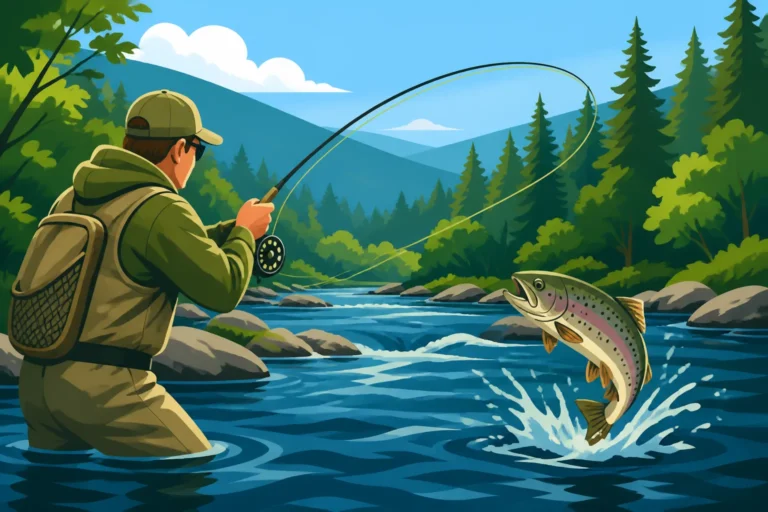
Brown and rainbow trout often make spectacular jumps, so be prepared to lower your rod tip slightly when they breach the surface to avoid giving them slack that could throw the hook. Keep constant pressure on the fish throughout the fight. When the fish is nearing the boat, have a large, deep-hooped net ready. Scoop the fish headfirst to avoid injury and ensure a clean landing. If you're practicing catch-and-release, handle the fish minimally, keep it in the water as much as possible, and use de-barbed hooks for easier removal. Understanding species like Lake Trout in New York can help you appreciate the fight even more.
Disclaimer
Fishing regulations can change frequently. Always consult the latest New York State Department of Environmental Conservation (NYS DEC) regulations guide before you go fishing. This article is for informational purposes only and should not be considered a substitute for official regulations or professional guidance. Tight lines and stay safe out there!