Trolling Techniques for New York’s Lakes
Have you ever gazed out across a vast New York lake, knowing there are incredible fish lurking below, but feeling overwhelmed by how much water you need to cover to find them? It's a common dilemma, but there's a tried-and-true method that lets you systematically explore these expansive waters and consistently put fish in the boat: trolling. This comprehensive guide will break down everything you need to know about mastering trolling techniques, helping you unlock the secrets of New York's incredible lakes.
Understanding the Fundamentals of Trolling in New York Waters
Trolling isn't just about dragging a lure behind a boat; it's a dynamic and strategic approach to fishing that allows you to present baits over large areas, mimic natural prey movements, and effectively target fish that are actively foraging. In the diverse aquatic landscapes of New York, from the massive Great Lakes to the deep Finger Lakes, mastering this technique can significantly increase your catch rates and open up new possibilities for landing trophy fish. It's about efficiency, understanding fish behavior, and precise lure presentation.
Why Trolling is So Effective in Large Lakes
Large lakes, like Lake Ontario or Lake Champlain, can be incredibly intimidating. Fish aren't confined to small pockets; they roam vast expanses, often following baitfish schools or temperature gradients. Trolling allows you to cover miles of water in a single outing, systematically searching for active fish. Instead of waiting for fish to come to your stationary bait, you're actively seeking them out. This mobile approach is particularly effective for pelagic species that spend their lives cruising open water, such as salmon, lake trout, and even suspended walleye. By moving, you increase the chances of intercepting fish that might otherwise never encounter your presentation. Think of it as painting broad strokes across a canvas, constantly improving your chances of hitting a masterpiece.
Moreover, trolling allows you to present multiple lures at varying depths and distances behind the boat simultaneously. This "spread" increases your chances of finding what the fish are keying in on regarding color, action, and depth. It also provides a natural, enticing movement that static baits often lack, mimicking a wounded baitfish struggling to escape or a school of forage moving through the water column. The subtle vibrations and flash from trolled lures can call fish in from a distance, triggering aggressive strikes, especially when fish are scattered or not actively chasing.
Essential Gear for Beginning Trollers
Getting started with trolling doesn't require an arsenal of highly specialized equipment, but a few key items will make a world of difference. First and foremost, you'll need a reliable boat capable of maintaining slow, consistent speeds. Even a small jon boat with an electric trolling motor can get you started on smaller lakes. Next, strong rods and reels are crucial. Look for medium-heavy to heavy action trolling rods, typically 7-10 feet long, designed to handle the drag of heavy lures, planer boards, or downriggers. Reels should have a good line capacity, often conventional reels with a line counter feature, which are invaluable for replicating successful depths.
Line choice is also critical. Monofilament is forgiving and offers stretch, which can be good for violent strikes, but braided line offers superior strength, sensitivity, and a thinner diameter for less water resistance, allowing lures to run deeper. Many anglers use a braided main line with a fluorocarbon leader for stealth and abrasion resistance. Don't forget a selection of appropriate lures: spoons, stickbaits, and crankbaits are staples. And, of course, a good net capable of handling the size of fish you expect to catch is essential. You can find a wide range of these essentials, from robust rod holders to specialized trolling lures, on platforms like Amazon, making it convenient to gear up.
Reading Your Electronics: Sonar and GPS
Your boat's electronics are your eyes and memory on the water when trolling. A good fish finder (sonar) allows you to see the lake bottom, identify structure like drop-offs and humps, and most importantly, mark fish and baitfish schools. Understanding how to interpret your sonar screen – distinguishing between individual fish, bait balls, and bottom features – is paramount. You'll be looking for arches (fish), dense clouds (bait), and sudden depth changes. If you want to learn more, our guide on How to Read a Fish Finder for New York Lakes offers a deep dive.
GPS is equally vital. It allows you to mark waypoints of productive areas, follow specific contour lines, and repeat successful trolling passes with precision. Many modern fish finders integrate GPS, providing a comprehensive mapping and sonar display. Using GPS, you can log your trolling speed, direction, and even the exact path you took when you hooked a fish. This data becomes invaluable for pattern recognition, helping you refine your strategy over time. Without these tools, trolling becomes a blind game of chance; with them, it transforms into a highly calculated and efficient hunt.
Types of Fish Targeted with Trolling in New York
New York's diverse aquatic ecosystems support an incredible array of fish species, many of which are prime targets for trolling. From the cold, deep waters of the Finger Lakes to the vast expanses of Lake Erie, different species require nuanced approaches to trolling, including specific depths, speeds, and lure presentations. Understanding your target species' behavior and preferred habitat is key to a successful trolling adventure. Our general guide on Fish Species You Can Catch in New York can help you identify local populations.
Trolling for Lake Trout and Landlocked Salmon
Lake trout and landlocked salmon are cold-water species that thrive in the deep, clear lakes of New York, such as Seneca Lake, Cayuga Lake, and Lake George. During the warmer months, these fish typically retreat to deeper, cooler water, often suspending over deep basins or relating to deep structure like underwater points and ledges. Trolling is exceptionally effective for these fish because it allows you to consistently present lures at their preferred depths.
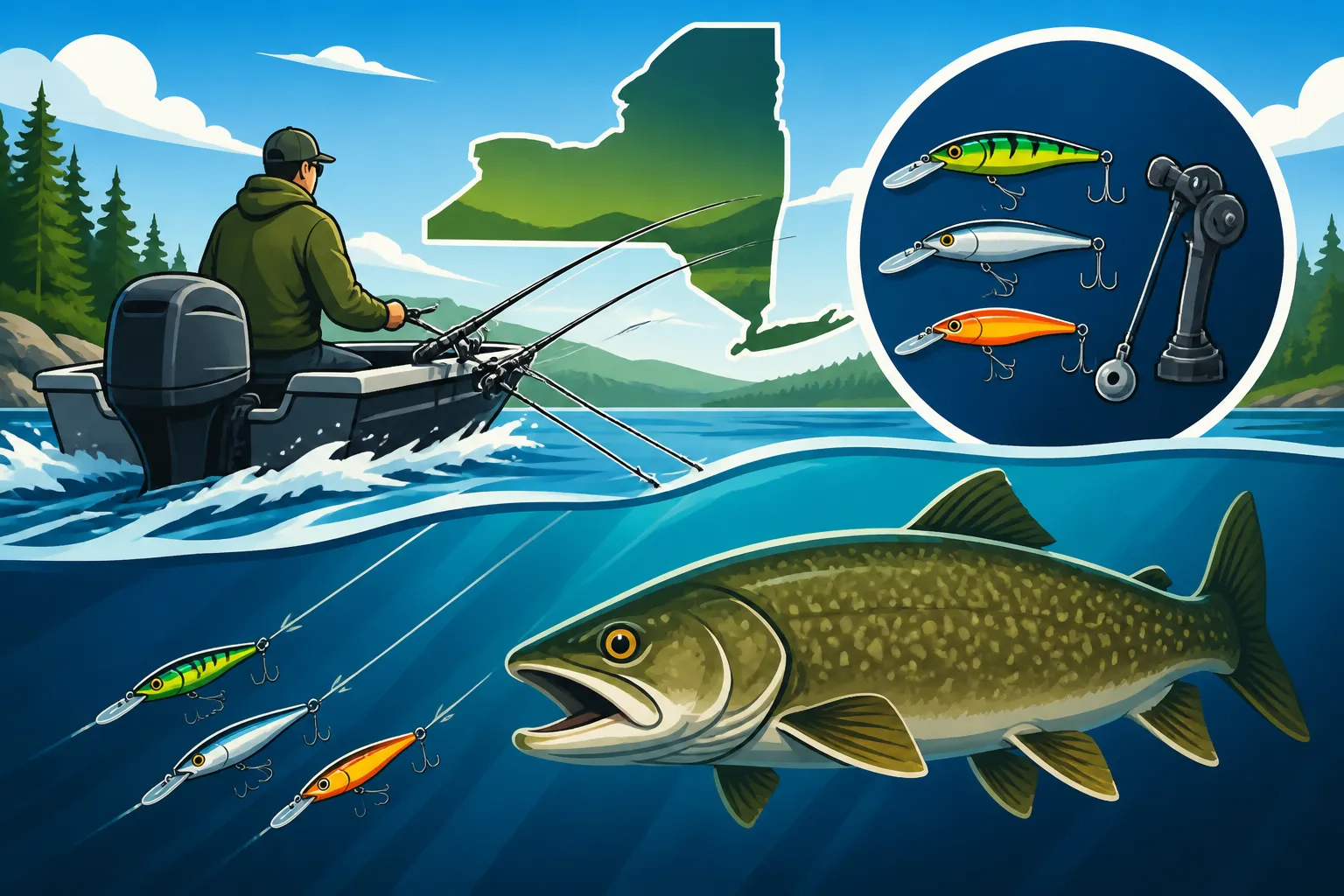
For lake trout, target depths can range from 40 to over 100 feet, especially in summer. Landlocked salmon often roam a bit shallower, in the 20-60 foot range, following schools of baitfish like alewives or smelt. Downriggers are almost a necessity for these species, allowing precise depth control. Common lures include large spoons (like Northern King or Sutton spoons), stickbaits, and even whole or cut bait presented on a flasher or dodger. Trolling speeds typically range from 1.8 to 2.5 mph, though experimenting is always advised. If you're looking for advanced tips, check out How to Fish Deep Water Lake Trout in Summer on New York's Finger Lakes. The state record lake trout, a true monster, was caught in the deep waters of Lake Erie, highlighting the trophy potential. You can read more about it in New York State Record Lake Trout Weight.
Trolling for Walleye
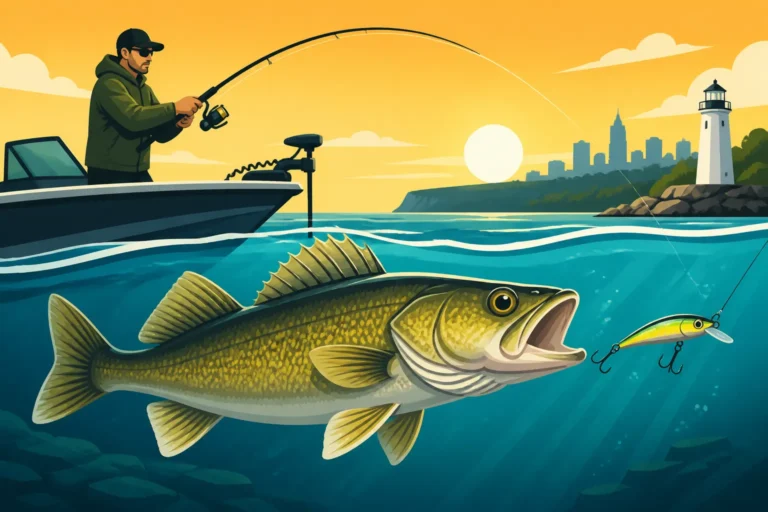
Walleye, with their keen eyesight and preference for low light, are another excellent trolling target, particularly in lakes like Oneida Lake, Lake Erie, and the larger reservoirs. While walleye can be caught jigging or casting, trolling allows you to cover vast flats, weed edges, and open water basins where they often cruise in search of prey. Walleye can be found at various depths depending on the season, time of day, and light conditions.
In spring and fall, they might be shallower, relating to spawning grounds or feeding near shore. During summer, they often move to deeper structures, thermoclines, or suspend over open water following bait. Crankbaits are king for walleye trolling, with popular choices including Rapala Shad Raps, Berkley Flicker Shads, and Reef Runner Deep Divers. Color can be critical, so carrying a variety is a good idea. Trolling speeds for walleye are generally slower than for salmon and trout, often in the 1.0 to 2.0 mph range, allowing the crankbait to achieve its intended action. Using planer boards can be incredibly effective to spread out lines and cover a wider swath, particularly when targeting scattered fish over large flats. Be sure to consult New York Walleye Season and Limits to stay compliant with regulations.
Trolling for Bass and Northern Pike
While often associated with casting or jigging, both largemouth and smallmouth bass, as well as northern pike, can be effectively caught by trolling in New York's lakes. This technique is particularly useful for finding active fish on large bodies of water or when they are scattered over expansive flats or weed beds.
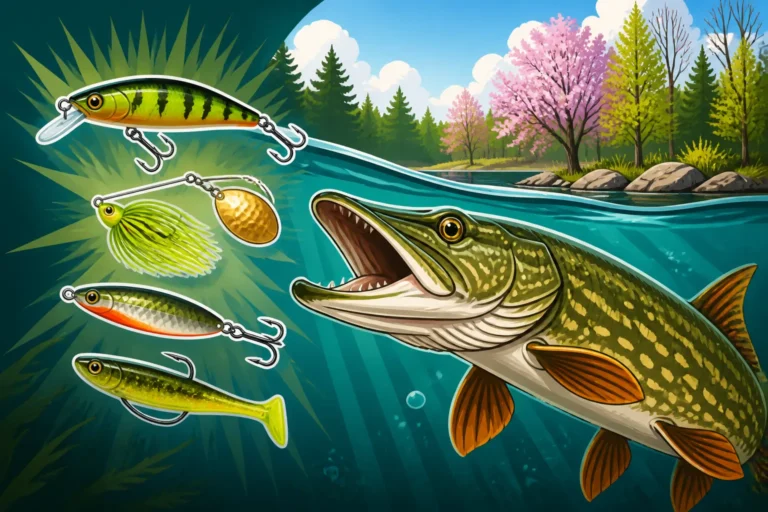
For largemouth bass, trolling shallow-diving crankbaits or even spinnerbaits along weed lines, over submerged timber, or near docks can be productive, especially in lakes like Lake Champlain or the Hudson River backwaters. Smallmouth bass, known for inhabiting clearer, rockier waters, can be targeted by trolling deeper diving crankbaits or tube jigs near rocky points, shoals, and offshore humps. Lakes like the St. Lawrence River and Lake Erie are renowned for their smallmouth populations. Northern pike, being aggressive ambush predators, will readily strike trolled spoons, large crankbaits, or even larger bucktails presented along weed edges, sudden drop-offs, or near submerged structure. Speeds will vary, but generally 2.0-3.5 mph works well for pike and actively feeding bass. Always double-check New York Bass Season Dates to ensure you're fishing within legal parameters.
Advanced Trolling Gear and Rigging
Once you've got the basics down, stepping into more advanced trolling gear can dramatically enhance your control, precision, and ultimately, your success on New York's lakes. These tools are designed to help you precisely target specific depths, spread your lures over wider areas, and adapt to varying conditions, giving you a significant edge over traditional methods.
Downriggers: Precision Depth Control
Downriggers are perhaps the most essential piece of advanced trolling equipment, especially when targeting deep-water species like lake trout, salmon, or suspended walleye. They allow you to present your lure at an exact, predetermined depth, regardless of trolling speed or line type. A downrigger consists of a heavy ball (typically 6-15 lbs) attached to a cable, which is lowered into the water by an electric or manual crank. Your fishing line, with its lure, is clipped to the downrigger cable using a release clip. When a fish strikes, the line pops free from the clip, allowing you to fight the fish directly without the weight of the downrigger ball.
The precision offered by downriggers is unparalleled. You can monitor your lure's depth on your fish finder, ensuring it's right in the strike zone—whether that's just above a thermocline, a specific structure, or a school of baitfish. Many anglers use multiple downriggers to target different depths simultaneously, creating a "stack" of lures. Companies like Cannon and Scotty are well-known for their durable and reliable downriggers, which you can often find readily available on sites like Amazon. Proper maintenance, like regularly checking cables and release clips, is crucial for their longevity and performance.
Planer Boards: Spreading Your Spread
Planer boards are ingenious devices designed to take your lures away from the boat's prop wash and spread them out horizontally, covering a much wider swath of water. This is incredibly effective when fish are spooky, scattered, or when you want to run many lines without tangles. There are two main types: in-line boards and mast systems with large offshore boards.
In-line planer boards, like those made by Off Shore Tackle, clip directly onto your fishing line and run out to the side, then release or slide down the line when a fish strikes. They are popular for smaller boats and when targeting walleye or bass over shallow to moderate depths. Mast systems use larger, heavier boards attached to a main line that runs from a mast on the boat, with multiple fishing lines clipped to this main line at intervals. This allows for an even wider spread and easier management of multiple rods. Planer boards are particularly useful in clear water where fish might be wary of the boat, presenting lures in an undisturbed zone. They are a game-changer for covering open water efficiently and can significantly increase your effective fishing area.
Dipsy Divers and Lead Core Line: Alternative Depth Tools
While downriggers offer ultimate precision, Dipsy Divers and lead core line provide excellent alternatives for reaching depth without the bulk and expense of a full downrigger setup. These tools are fantastic for anglers looking to add depth capabilities without extensive boat modifications.
Dipsy Divers, often produced by companies like Luhr-Jensen, are disc-shaped diving devices that attach directly to your main fishing line. They use water pressure and an adjustable fin to dive to specific depths and, depending on their settings, can also track out to the side, acting as a mini-planer board. When a fish strikes, the Dipsy Diver "trips" or releases, reducing drag and making the fight more manageable. Different sizes and settings allow for various dive depths and spread patterns.
Lead core line is another effective depth-achieving method. It's a special fishing line with a lead core wrapped in a braided sheath, designed to sink. The beauty of lead core is that its depth is primarily controlled by the amount of line let out and your trolling speed. It's often "color-coded," meaning every 10 yards or so, the line changes color, helping you keep track of how much line is deployed. A rule of thumb is that each "color" (10 yards) will get your lure down approximately 5 feet at typical trolling speeds. This method is excellent for targeting depths from 10 to 60 feet and is often used in combination with spoons or crankbaits. Both Dipsy Divers and lead core lines offer versatile ways to present lures in the mid-depth range, complementing or substituting downriggers depending on the situation.
Mastering Your Trolling Speed and Direction
Trolling speed and direction are far more critical than many anglers realize. They dictate your lure's action, depth, and how it presents itself to a fish. Even slight variations can be the difference between a barren day and a banner day on New York's lakes. It's not just about a constant straight line; it's about dynamic control and understanding how your boat's movement influences your entire spread.
Finding the "Magic" Speed for Different Species
There's no single "magic" trolling speed that works for all species or all conditions. Each lure has an optimal speed range where it exhibits its most enticing action. Furthermore, different fish species prefer different speeds. For example, aggressive predators like northern pike or actively feeding salmon might prefer a faster troll (2.5-3.5 mph) that triggers a reaction strike. Conversely, wary walleye or sluggish lake trout in cold water might prefer a slower presentation (1.0-2.0 mph) that gives them more time to inspect the lure.
The key is to experiment. Start with a recommended speed for your target species and lure, then vary it slightly. Observe how your lure is running, either by watching the rod tip action or, if possible, by retrieving it periodically to see its swimming motion. Fish can be incredibly particular about presentation, and finding that sweet spot is crucial. Wind and current will also affect your actual lure speed through the water, so always monitor your GPS ground speed and your speed over water (if your boat has a paddlewheel sensor) to understand the true presentation. The table below provides a general guideline for common New York species:
| Fish Species | Typical Trolling Speed (MPH) | Preferred Lure Types | Key Considerations |
|---|---|---|---|
| Lake Trout / Salmon | 1.8 – 2.8 | Spoons, stickbaits, flasher/dodger combos with bait | Often deep; use downriggers; target thermocline |
| Walleye | 1.0 – 2.0 | Crankbaits (Shad Raps, Flicker Shads), worm harnesses | Slower speeds for crankbait action; target structure/weed edges |
| Northern Pike / Muskie | 2.5 – 4.0+ | Large spoons, crankbaits, bucktails | Aggressive strikes; often near weeds or sharp drops; faster speeds |
| Largemouth / Smallmouth Bass | 1.5 – 3.0 | Shallow/deep diving crankbaits, spinnerbaits (fast retrieve) | Relate to structure; vary speed to find active fish |
The Importance of Turns and S-Curves
Trolling in a perfectly straight line might seem logical, but incorporating turns and S-curves into your path can often trigger more strikes. Here's why: as your boat turns, the lures on the inside of the turn slow down and drop, while the lures on the outside speed up and rise. This sudden change in speed and depth causes the lures to alter their action in a way that often mimics an injured or darting baitfish, making them irresistible to nearby predators.
Many experienced trollers will intentionally make subtle S-curves as they follow contour lines or traverse open water. It’s a natural way to test different speeds and actions without constantly adjusting the throttle. Pay close attention to when and where strikes occur during a turn. Did the fish hit the slowing lure on the inside, or the accelerating lure on the outside? This information can provide valuable clues about what the fish are looking for on that particular day. Don't be afraid to deviate from a straight path; controlled turns are a powerful trolling tactic.
Wind, Current, and Their Impact on Your Trolling Presentation
New York's lakes can be notoriously tricky with shifting winds and currents, and these factors significantly affect your lure presentation. If you're trolling directly into or with a strong wind or current, your boat's speed relative to the water (which determines lure action) will be different from your speed over ground (measured by GPS). For instance, trolling into a strong headwind at 2 mph over ground might mean your lures are only moving at 1 mph through the water, dulling their action. Conversely, trolling with a strong tailwind could make your lures move too fast, causing them to wash out or run unnaturally.
The key is to understand this differential and adjust your boat speed accordingly to maintain the desired lure action. Sometimes, it's better to troll across the wind or current, using the boat's drift to your advantage or to create a more natural presentation. Strong currents, particularly in connecting rivers or narrows, can also make it difficult to achieve consistent depth with certain lures. Always be aware of environmental factors, and use your boat's electronics to monitor your true speed through the water. Adapting to these conditions is a mark of an experienced troller.
Selecting the Right Lures and Baits for Trolling
The vast world of fishing lures offers an overwhelming number of choices, but for trolling in New York's lakes, certain categories consistently outperform others. Matching your lure selection to your target species, the prevailing water conditions, and the forage base in a specific lake is crucial for success.
Trolling Spoons and Plugs for Salmon and Trout
When it comes to trolling for salmon and trout, especially on the Great Lakes like Ontario and Erie, or the deep Finger Lakes, spoons and plugs are your bread and butter.
Trolling Spoons are metal lures designed to flutter, wobble, and flash like wounded baitfish. Their action and profile can be incredibly effective at mimicking alewives, smelt, or other forage. Spoons come in a huge variety of sizes, shapes, and colors. Popular brands like Michigan Stinger, Dreamweaver, and Sutton have a dedicated following among salmon and trout anglers. The action of a spoon can be subtle or aggressive depending on its shape and thickness. Longer, thinner spoons often have a faster, wider kick, while shorter, fatter spoons have a tighter wobble. Color choice is often a daily decision, influenced by water clarity, light conditions, and the predominant baitfish. "Green and silver," "blue and silver," and "UV patterns" are perennial favorites. You can find excellent selections of these from various sellers on Amazon, making it easy to stock up on different patterns.
Plugs, also known as stickbaits or crankbaits, are hard-bodied lures that dive to specific depths and have a distinct swimming action. For salmon and trout, these often imitate larger baitfish. Brands like Rapala, Yo-Zuri, and Bomber produce effective plugs. Some plugs have a tight, subtle wiggle, while others have a wider, more aggressive swagger. The depth they achieve is determined by the size of their lip, the amount of line out, and trolling speed. For these deep-water predators, often a combination of spoons and plugs in your spread proves most effective. Learning How to Fish for Salmon in New York will certainly require a good selection of these.
Crankbaits and Stickbaits for Walleye and Bass
For walleye and bass, crankbaits and stickbaits are the backbone of many trolling spreads. These lures are designed to dive and swim with a very specific action, making them irresistible to these freshwater favorites.
Crankbaits come in a myriad of shapes, sizes, and diving depths. For walleye, medium-diving and deep-diving crankbaits are essential, such as the Berkley Flicker Shad, Rapala Shad Rap, or Reef Runner Deep Diver. The key is to match the crankbait's profile and color to the local forage, like perch, shiners, or alewives. The wobble and vibration of a crankbait are critical; some have a tight, high-frequency wiggle, while others have a wider, more pronounced roll. Trolling speed directly impacts their action and depth, so fine-tuning is necessary. For bass, both largemouth and smallmouth, shallower-diving crankbaits are effective when trolling near cover, while deeper models work well on offshore humps and points.
Stickbaits, a subset of plugs, are generally longer and thinner with a more subtle, darting action. They are excellent for bass and often perform well for walleye, especially in cooler water or when fish are lethargic. Examples include Rapala Original Floaters or Husky Jerks. The beauty of these lures lies in their versatility: they can be trolled, cast, or twitched. When trolling, ensure they're running true at your chosen speed. Both crankbaits and stickbaits are crucial for anglers targeting bass or walleye, and their varied diving depths allow you to explore different parts of the water column.
Flasher/Dodger Combinations and Live Bait Rigs
Beyond just lures, flasher/dodger combinations and live bait rigs add another dimension to trolling, particularly for salmon and trout.
Flasher/Dodger Combinations are attraction devices. A flasher is a rotating blade or series of blades that creates flash and vibration, while a dodger has a wide, sweeping side-to-side motion. Neither is meant to be eaten; instead, they attract fish to the trailing bait or lure, which is typically a short distance (1-3 feet) behind the flasher/dodger. For salmon, these are incredibly effective, especially when paired with a small spoon, an artificial fly (like an "A-Tom-Mik fly"), or a cut bait rig. The flash and thumping action mimic a school of baitfish or a struggling injured fish, drawing in predators. Different sizes and colors can be more effective depending on water clarity and conditions.
Live Bait Rigs can be deadly for many species when trolled, though New York's New York Freshwater Fishing Rules have specific regulations on baitfish use. For lake trout, slow-trolling live or dead smelt, alewives, or shiners on a weighted rig or behind a downrigger can be incredibly effective, particularly when fish are finicky. For walleye, a crawler harness (a series of hooks adorned with beads and a spinner blade, tipped with a live nightcrawler) trolled slowly behind a bottom bouncer or a small in-line weight is a classic and highly productive method. The natural scent and movement of live bait can entice strikes when artificial lures fail. Always check current regulations regarding bait acquisition and use in specific New York waters.
Location, Location, Location: Where to Troll in New York's Lakes
Knowing how to troll is only half the battle; knowing where to troll is just as important. New York's lakes offer diverse underwater topography, and successful trolling often hinges on understanding how fish relate to these features and how different seasons influence their movements. This requires a combination of electronic navigation and an understanding of fish biology.
Targeting Structure: Drop-offs, Humps, and Points
Fish are inherently drawn to structure because it provides cover, ambush points, and often congregates baitfish. When trolling, focusing on these underwater features can dramatically increase your success.
Drop-offs are sudden changes in bottom depth, essentially underwater cliffs or ledges. Fish will often hold along these breaks, moving up and down the face to feed. Trolling parallel to a drop-off, keeping your lures just above or along the edge, is a highly effective strategy for species like walleye, lake trout, and even bass. Your fish finder is crucial here to precisely follow these contours.
Humps and Shoals are elevated areas on the lake bottom, sometimes rising significantly from the surrounding depths. These can be magnets for baitfish, which in turn attract predators. Trolling over and around these features, paying close attention to the windward side where bait might be pushed, can be incredibly productive. Start by making passes over the top, then expand your passes around the edges at varying depths.
Points extending out into the lake, whether on the shoreline or underwater, act as natural funnels for cruising fish and bait. Fish will often stage on the sides of points or use them as navigation markers. Trolling around the tip of a point, or along its sides where it drops into deeper water, is a classic and effective tactic. In a lake like New York's Cayuga Lake Fishing Guide, you'll find numerous points and drop-offs that hold fish. Mastering how to navigate these structures while trolling takes practice, but the rewards are well worth it.
Open Water Trolling: Thermoclines and Baitfish Schools
Not all fish relate to bottom structure. Many, especially pelagic species like salmon, lake trout, and even suspended walleye, spend their lives cruising open water, primarily influenced by two factors: the thermocline and baitfish schools.
The thermocline is a layer of water where the temperature changes rapidly with depth. In summer, it's a critical zone because it often contains the ideal temperature and oxygen levels for many cold-water species. Baitfish also congregate around the thermocline. Trolling along or just above the thermocline is an extremely effective strategy for finding actively feeding fish. Your fish finder will often show this as a distinct, hazy layer on the screen. Knowing the depth of the thermocline allows you to set your downriggers and lead core lines precisely, putting your lures right in the strike zone.
Baitfish schools are the ultimate attractant in open water. Wherever you find schools of alewives, smelt, or shiners, you'll likely find the predators that feed on them. Your sonar is your best friend here; look for dense clouds or balls of bait. When you mark a school of bait, troll through it, around it, and on its edges. Predators will often lurk just outside the main school, waiting for an opportunity to ambush. Sometimes, a single, large arch under a bait ball indicates a trophy fish. Trolling through open water can feel like searching a needle in a haystack, but by keying into the thermocline and baitfish concentrations, you turn that haystack into a much smaller, more manageable pile.
Seasonal Considerations for Trolling Hotspots
Fish behavior, and therefore trolling hotspots, change dramatically with the seasons. A spot that's hot in spring might be barren in summer.
In spring, as waters warm, many fish move shallower, often near spawning grounds or newly emerging weed beds. Walleye might be near river mouths or rocky shoals. Lake trout might still be relatively shallow before the thermocline sets up. Trolling shallower crankbaits or spoons near shorelines, bays, and structure associated with warmer water can be productive.
Summer often pushes cold-water species deep, either to the thermocline or deep structure, as discussed. Warm-water species like bass might be in deeper weed lines or relating to offshore cover. This is prime time for downriggers and deep-diving lures in the open water.
Fall sees waters cooling again, and many species become highly active as they feed heavily before winter. Salmon runs in tributaries are iconic, but aggressive lake fishing for various species can also be phenomenal. Fish might move shallower again, similar to spring, often relating to structure but with an urgency to feed.
Winter, particularly during ice fishing season (where trolling is not possible), requires a completely different approach. However, for open-water fishing in mild winter conditions, fish are often lethargic, requiring slower trolling speeds and subtle presentations. Understanding these seasonal shifts is crucial for adapting your trolling strategy and maximizing your chances throughout the year in New York's Best Lakes for Fishing. You can learn more about general fish activity by consulting our guide on Best Time of Day to Fish in New York.
Troubleshooting Common Trolling Challenges
Even the most experienced trollers encounter issues. Tangles, changing conditions, and unexpected problems are part of the game. Learning to anticipate and troubleshoot these common challenges will save you frustration and keep your lines in the water where they belong.
Dealing with Tangles and Fouled Lines
Few things are more frustrating than pulling up a tangled mess of lines, especially when you suspect fish are biting. Tangles and fouled lines are inevitable in trolling, but they can be minimized with good practices.
Prevention is key:
- Maintain proper line spacing: Whether using planer boards, downriggers, or just flat lines, ensure adequate horizontal and vertical separation between your lures. This prevents them from crossing paths during turns or when one line goes slack.
- Match lure depths: Try to run lures that naturally dive to different depths, or use depth-controlling devices (downriggers, Dipsies, lead core) to maintain distinct depth zones.
- Check frequently: Periodically lift a lure to ensure it's running cleanly and not fouled with weeds, debris, or a small "picker" fish. A fouled lure won't catch anything.
- Smooth turns: Avoid excessively sharp or sudden turns, which can cause lines to swing wildly and cross.
- Address current/wind: Strong currents or crosswinds can push lines together. You might need to adjust your spread or angle to the elements.
When a tangle happens, the best approach is to address it immediately. Pull in the affected lines carefully, untangle them, and check all swivels, snaps, and leaders for damage before redeploying. Sometimes, a tangle indicates a subtle issue with your lure's action or depth.
Adjusting for Changing Conditions
New York's weather and water conditions can change rapidly, and successful trollers are masters of adaptation. What worked an hour ago might not work now.
Light conditions: Bright sun often pushes fish deeper or to shadier areas, and might call for brighter, more reflective lures. Overcast skies or low light might make darker, more subtle patterns more effective.
Water clarity: In clear water, fish are more wary, and longer leads or natural bait colors might be needed. In stained or turbid water, brighter, louder lures with strong vibrations are often more visible and effective.
Wind and waves: As discussed, wind directly impacts your speed through the water. Waves can also cause lures to surge and drop, which can sometimes be good, but can also cause them to run unnaturally. Adjust your boat speed to compensate, and consider heavier lures or those with a more stable action in choppy conditions.
Barometric pressure: While not always a direct cause-and-effect, falling barometric pressure often corresponds with decreased fish activity, while stable or rising pressure can indicate good fishing. While you can't change the weather, you can adjust your approach: slower speeds, smaller lures, or a focus on natural baits might be required during tough conditions. Keep an eye on the forecast and consider how it might impact fish behavior. Learning how to fish in a cold front, for instance, requires a nuanced approach.
Safety First: Weather and Water Conditions
Your safety and the safety of your crew should always be the top priority when trolling on New York's large lakes. Conditions can deteriorate quickly, turning a pleasant day into a dangerous situation.
Monitor weather forecasts: Before you even leave the dock, check the marine forecast for wind, waves, and potential storms. Keep an eye on the sky and any sudden changes.
Be prepared for sudden storms: Even on a clear day, pop-up thunderstorms are possible. Ensure you have appropriate foul-weather gear, a charged cell phone or marine radio, and know your nearest safe harbor.
Life jackets: Ensure everyone on board has access to a properly fitting life jacket, and consider wearing them at all times, especially in rough water or when fishing alone.
Respect the water: Large lakes can develop significant waves very quickly. If conditions become too rough, don't hesitate to head back to shore. No fish is worth risking your life.
Boat maintenance: Regularly check your boat's engine, fuel levels, navigation lights, and safety equipment (flares, first-aid kit). A breakdown far from shore is not a fun experience.
By prioritizing safety and being prepared for the unpredictable nature of New York's lakes, you can enjoy your trolling adventures with peace of mind.
Conservation and Best Practices for Trolling
As responsible anglers, we all have a role to play in preserving New York's incredible fisheries for future generations. This involves understanding and adhering to regulations, practicing responsible fish handling, and minimizing our environmental impact while enjoying our passion for trolling.
Understanding New York's Fishing Regulations
Before you even launch your boat, it's absolutely critical to be familiar with the latest fishing regulations for the specific body of water you intend to troll. New York's Department of Environmental Conservation (DEC) sets these rules, and they can vary significantly from one lake to another, even for the same species.
Key regulations to be aware of include:
- Fishing Licenses: Everyone aged 16 and older needs a valid New York fishing license for freshwater fishing. Even on a charter, while the captain might handle some things, you're responsible for your own license. Our guide on New York Fishing License Guide provides all the details you'll need.
- Season Dates: Different species have specific open seasons. For example, some bass seasons might be catch-and-release only for a period, or certain trout seasons might close at certain times of the year. Always check the current New York Fishing Season Dates and Catch Limits for your target species.
- Size Limits: Minimum and sometimes maximum length limits are common to protect juvenile fish and large breeding adults. Know the legal size for the fish you're targeting.
- Daily Catch Limits (Bag Limits): There's a limit to how many fish of a particular species you can keep per day.
- Special Regulations: Some lakes or sections of rivers have unique rules regarding bait use, tackle restrictions, or designated catch-and-release areas. This is especially true in famous fisheries like the Salmon River or sections of the Finger Lakes.
- Marine Fishing Registry: If you're trolling in saltwater, like Long Island Sound, you'll need to register with the New York Recreational Marine Fishing Registry.
Ignorance of the law is no excuse, and penalties for violations can include significant fines and forfeiture of equipment. Always carry a copy of the current DEC fishing regulations guide, which can be found online or at bait shops and DEC offices. You can also explore our article on New York Fishing Regulations Explained for a comprehensive overview.
Proper Fish Handling for Catch and Release
Even if you intend to keep some of your catch, many fish caught while trolling are released, either because they don't meet size limits, you've reached your bag limit, or simply because you choose to practice catch and release. Proper handling is essential to ensure these fish survive and thrive.
- Minimize fight time: Use appropriate tackle to bring fish in quickly, especially in warmer water when fish are more stressed.
- Wet hands: Always wet your hands before touching a fish to protect its protective slime coat, which guards against disease.
- Use a rubberized net: Knotless, rubberized landing nets are gentler on fish scales, fins, and slime compared to traditional nylon nets.
- Keep fish in the water: Whenever possible, unhook and release fish while they are still in the water. This significantly reduces stress.
- Support the fish: If you must bring the fish aboard for a quick photo, support its body horizontally. Never hold a large fish by its jaw vertically, as this can damage internal organs.
- Quick release: Have your camera ready, snap a quick photo if desired, and then release the fish promptly and gently.
- Revive if necessary: If a fish seems lethargic, hold it upright in the water, facing into a gentle current or with the boat moving slowly, until it regains its strength and swims away on its own.
By following these practices, you contribute to the health and sustainability of New York's fisheries, ensuring there are plenty of fish for future adventures.
Minimizing Environmental Impact
Trolling, like any outdoor activity, carries a responsibility to minimize our impact on the environment.
- Prevent invasive species: Clean your boat, trailer, and all fishing gear thoroughly before moving between different bodies of water. This helps prevent the spread of invasive species like zebra mussels or Eurasian watermilfoil, which can devastate native ecosystems.
- Dispose of waste properly: Pack out everything you pack in. Never leave fishing line, lures, bait containers, or any other trash on the water or shoreline. Monofilament line, in particular, can be deadly to wildlife.
- Respect private property: Be mindful of private property lines and "no trespassing" signs when launching or accessing shorelines.
- Know your boat's wake: Be aware of your boat's wake, especially in narrow channels or near shore, to avoid eroding shorelines or disturbing other boaters and wildlife.
- Fuel responsibly: Take care when fueling your boat to prevent spills into the water.
Being a good steward of the environment ensures that New York's beautiful lakes remain pristine and productive for everyone to enjoy for years to come.
Disclaimer
The information provided in this guide is for general informational purposes only and is not intended as legal advice. Fishing regulations in New York are subject to change by the New York State Department of Environmental Conservation (DEC). It is the sole responsibility of each angler to consult the most current official DEC fishing regulations guide before engaging in any fishing activity. Always prioritize safety and adhere to all local, state, and federal laws.