New York Bass Season Dates
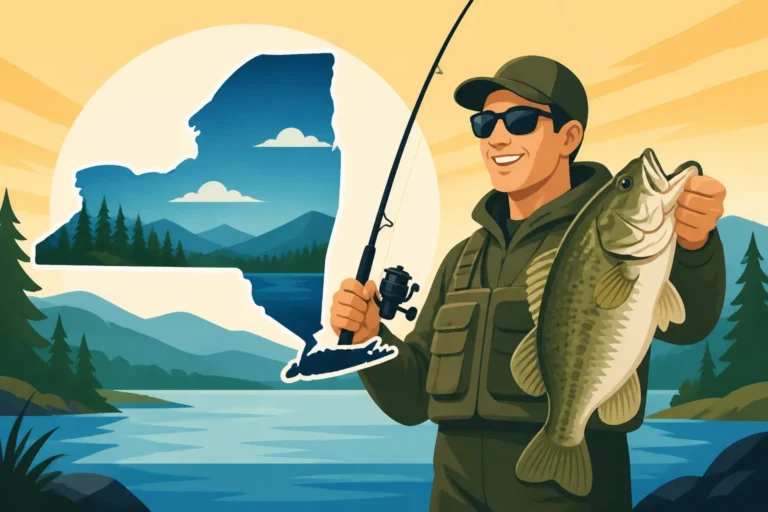
It's incredibly frustrating when you're geared up for a day of bass fishing, only to realize you're not entirely sure if the season is open or if the rules you remember still apply to the specific lake you're visiting. New York's fishing regulations can feel like a labyrinth, with statewide rules and a myriad of special exceptions for different waters. This comprehensive guide will help clear up the confusion, walking you through New York's bass season dates, catch limits, and the crucial distinctions you need to know to fish legally and successfully.
Understanding New York's Bass Species
Before we dive into the nitty-gritty of season dates, it's helpful to understand the primary bass species that anglers target in New York. While the regulations often lump them under a general "bass" category, knowing the difference can enhance your fishing strategy and appreciation for these fantastic gamefish.
Largemouth Bass: The Classic Green Machine
The largemouth bass ( Micropterus salmoides) is arguably the most recognized freshwater game fish in North America, and New York is home to some truly impressive specimens. You'll often find these "green machines" in warmer, shallower waters with abundant vegetation, submerged timber, and other forms of cover. They thrive in lakes, ponds, slow-moving rivers, and backwaters, making them a staple target across much of the state.
Their aggressive strikes and powerful fights make them incredibly popular, especially among anglers who enjoy throwing topwater lures, spinnerbaits, or soft plastics. They're opportunistic predators, eating everything from baitfish and crayfish to frogs and even small birds or mammals. Understanding their preference for cover and warmer water helps in locating them, especially during the post-spawn period when they are actively feeding. You can learn more about Largemouth Bass in New York.
Smallmouth Bass: River and Lake Fighters
On the other hand, the smallmouth bass (Micropterus dolomieu) is a different beast entirely. Often called "bronze backs" for their distinctive coloration, smallmouths prefer cooler, clearer waters with rocky bottoms, gravel, and ledges. You'll find them in abundance in New York's larger, deeper lakes like the Finger Lakes and the Great Lakes, as well as many of our faster-flowing rivers and streams, such as the St. Lawrence River.
Smallmouths are renowned for their incredible fighting ability, often making powerful runs and spectacular aerial jumps when hooked. They primarily feed on crayfish, minnows, and aquatic insects. Fishing for them typically involves using jigs, crankbaits, or drop-shot rigs, often targeting deeper structures or current breaks. Their habitat preferences mean they often inhabit different areas of the same body of water than their largemouth cousins. For an in-depth look at these feisty fish, check out our guide on Smallmouth Bass in New York.
Statewide Bass Season Dates and General Regulations
New York State has a foundational set of regulations that apply to most waters, but it's crucial to remember that these are just the starting point. Always consult the most current New York State Department of Environmental Conservation (DEC) Freshwater Fishing Regulations Guide for the specific body of water you intend to fish. This guide details New York Freshwater Fishing Rules comprehensively.
The Standard Open Season for Keeping Bass
For most of New York's freshwater lakes and rivers, the statewide open season for bass, meaning the period when you can legally harvest and keep bass, runs from June 15th through November 30th. This specific timeframe is designed to protect bass during their critical spawning period in the spring, ensuring the species can reproduce successfully without undue pressure from anglers.
During this primary open season, anglers can keep legal-sized bass within the daily creel limits. This is the time when the water temperatures are typically warm enough for bass to be highly active and feeding aggressively, offering fantastic fishing opportunities across the state. Whether you're casting topwaters on a quiet pond or jigging deep rocky points on a large lake, this period is prime for bass anglers.
Daily Limit and Minimum Size Requirements
The statewide daily creel limit for bass (both largemouth and smallmouth combined) is 5 fish per person. This means that no individual angler can possess more than five bass at any given time while on the water or in transit from fishing. This limit helps manage fish populations and ensures sustainable fishing for future generations.
In addition to the daily limit, there's a minimum size requirement. Any bass you intend to keep must be at least 12 inches long from the tip of the snout to the end of the tail. This size limit allows younger, smaller fish to mature and contribute to the breeding population before they become part of the harvest. If you catch a bass that is under 12 inches during the open season, or any bass outside of the catch-and-release season, it must be immediately released unharmed back into the water. Knowing these specific requirements is key to avoiding penalties, which can be significant, as highlighted in our guide on New York Fishing Regulations Explained.
Special Regulations for Bass in Specific Waters
While the statewide regulations provide a baseline, New York is vast and diverse, with numerous bodies of water having their own unique bass seasons and rules. It's truly a "know before you go" situation, as ignoring these special regulations can quickly lead to trouble.
Finger Lakes Bass Seasons
The Finger Lakes region is a prime example where special regulations frequently come into play. Many of these deep, clear lakes, like Cayuga, Seneca, and Keuka, are renowned for their smallmouth bass fisheries. To manage these valuable resources, the DEC has implemented extended seasons.
For instance, on some of the larger Finger Lakes, there might be an extended catch-and-release season for bass that runs from the first Saturday in May until June 14th. This allows anglers to enjoy early season fishing, but all bass caught during this period must be immediately released. This is a fantastic opportunity for anglers to target active bass without impacting their spawning success. For the main open season for harvest, these lakes generally follow the statewide June 15th to November 30th period, but always double-check the specific regulations for the particular Finger Lake you're fishing. The nuances can vary, so a quick check of the current DEC guide is always a good idea. Many passionate anglers even carry a physical copy, often available for purchase through retailers like Amazon, alongside their essential gear.
St. Lawrence River and Lake Champlain Regulations
Border waters present another layer of complexity. The St. Lawrence River, which forms part of the international boundary with Canada, and Lake Champlain, bordering Vermont, have specific regulations often agreed upon by multiple agencies to ensure consistent management across jurisdictions.
On the St. Lawrence River, for example, the bass season for harvest typically aligns with the statewide June 15th to November 30th period, but the minimum size limit might be 12 inches with a daily limit of 5 fish. However, on Lake Champlain, due to an interstate agreement with Vermont, the season for both smallmouth and largemouth bass for harvest usually runs from the third Saturday in June through November 30th, with a daily limit of 5 fish and a minimum length of 10 inches. Notice that small but significant difference in opening date and minimum length compared to the statewide rule. These slight variations are critical to observe and highlight why a detailed review of the local regulations is paramount. Anglers often discuss these specifics on forums and purchase specialized mapping apps, sometimes found on Amazon, that include regulation overlays.
Other Local Exceptions
Beyond the Finger Lakes and border waters, numerous other lakes and rivers across New York have their own unique bass regulations. These might include:
- Trophy Bass Management Waters: Some specific lakes are designated for trophy bass management, which could mean higher minimum size limits (e.g., 15 or 18 inches) or even more restrictive daily limits (e.g., 3 fish instead of 5) to foster the growth of larger specimens.
- Catch-and-Release Only Waters: A handful of waters might be designated as permanent catch-and-release for bass, meaning no bass can ever be harvested, regardless of size or season. This is less common but does exist for specific conservation goals.
- Earlier Opening Dates: Occasionally, a particular water body might have a slightly earlier opening date for catch-and-release or even harvest, often due to unique ecological factors or management objectives.
It's absolutely critical to consult the DEC's official regulations guide (which you can usually pick up for free at any bait shop or even view online) for the specific body of water you're fishing. Simply assuming the statewide rules apply everywhere is a recipe for a potential violation. This is why resources like the New York DEC Fishing Regulations Guide are indispensable.
Here's a simplified table illustrating the general differences, but remember to always confirm with the current DEC guide.
| Regulation Aspect | Statewide General Rules | Example: Finger Lakes (Catch & Release) | Example: St. Lawrence River (Harvest) | Example: Lake Champlain (Harvest) |
|---|---|---|---|---|
| Open Season (Harvest) | June 15th – November 30th | June 15th – November 30th | June 15th – November 30th | Third Saturday in June – Nov 30th |
| Catch & Release Only | May 1st – June 14th (Pre-Season) | First Saturday in May – June 14th | May 1st – June 14th (Pre-Season) | May 8th – Third Saturday in June |
| Daily Limit | 5 bass | N/A (Catch & Release) | 5 bass | 5 bass |
| Minimum Size | 12 inches | N/A (Catch & Release) | 12 inches | 10 inches |
Catch-and-Release Bass Fishing in New York
Even when the full harvest season isn't open, New York offers extensive opportunities for catch-and-release bass fishing. This extended season allows anglers to get out on the water, hone their skills, and enjoy the thrill of the fight while still protecting the bass population.
Extended Season Opportunities
For many waters in New York, there's a dedicated catch-and-release bass season that precedes the general open season for harvest. This period typically runs from May 1st through June 14th. During this time, you can legally fish for bass, but all bass caught must be immediately returned to the water unharmed. This is often referred to as the "pre-season" or "early season" for bass.
This extended catch-and-release window is especially popular among tournament anglers and those who simply love to fish for bass without the intent to keep them. It allows access to potentially pre-spawn or spawning bass, offering exciting fishing when these fish are often shallow and aggressive. However, it requires a strict adherence to catch-and-release ethics to ensure the long-term health of the fishery. Understanding this period is crucial for enjoying the full spectrum of New York's bass fishing calendar, as detailed in our guide on Bass Catch-and-Release Season Dates.
Best Practices for Healthy Release
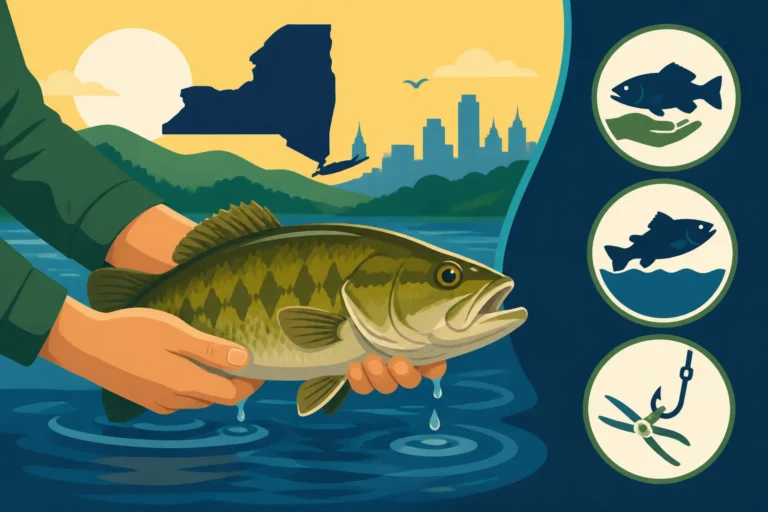
Catch-and-release fishing is only effective if the fish are released in good health. Mishandling a bass, especially during warmer water temperatures or when they are actively spawning, can lead to delayed mortality. Here are some best practices to ensure your released bass have the best chance of survival:
- Minimize Handling Time: The quicker you can unhook and release a fish, the better. Try to have your camera, pliers, or other tools ready before you even net the fish.
- Use Barbless Hooks: Barbless hooks, or hooks with pinched barbs, make unhooking much easier and quicker, reducing stress and injury to the fish. Many anglers dedicated to catch-and-release will crimp the barbs on all their hooks.
- Handle with Wet Hands: Always wet your hands before touching a fish. Dry hands can remove the fish's protective slime coat, making it vulnerable to disease.
- Support the Fish Properly: When holding a bass for a quick photo, support its body horizontally, especially larger fish. Avoid holding them vertically by the jaw alone, as this can damage their jaw and internal organs.
- Use Appropriate Gear: Don't "fight" a fish longer than necessary on ultralight tackle, especially if you intend to release it. An overly long fight can exhaust a fish to the point where it can't recover. Conversely, don't horse a fish in if you plan to release it. A proper balance of tackle and technique is key.
- Avoid Netting if Possible: If you're confident in your ability to land the fish quickly, avoid using a net unless absolutely necessary. Nets can sometimes remove slime and damage fins. If you do use a net, opt for a rubberized, knotless net which is gentler on fish.
- Revive the Fish: If a fish seems sluggish upon release, hold it gently in the water, facing into a mild current, and allow water to flow over its gills until it regains its strength and swims away on its own.
By following these simple guidelines, you contribute to a healthier, more robust bass fishery in New York, ensuring exciting fishing for years to come.
Common Misconceptions and FAQs About Bass Seasons
Navigating the world of fishing regulations can be tricky, and it's easy to fall into common traps or misunderstandings. Let's address some frequently asked questions and clear up a few persistent myths about New York's bass seasons.
Why Seasons Change and How to Stay Updated
One of the biggest frustrations for anglers is when regulations seem to change from year to year, or even within a season. The primary reason for these adjustments is fisheries management and conservation. The New York DEC continuously monitors fish populations, spawning success, habitat health, and angler pressure. If data suggests a particular species is declining, or if environmental factors like habitat loss or invasive species become a concern, regulations might be adjusted to protect the stock. Conversely, if a population is thriving, seasons or limits might be liberalized.
For bass, specific concerns often revolve around protecting spawning fish in the spring. Changing water temperatures due to climate variations can shift spawning timelines, prompting adjustments to season opening dates. To stay updated, the absolute best resource is the official New York State DEC Freshwater Fishing Regulations Guide. This guide is updated annually and published online on the DEC website. You can also pick up a physical copy for free at most bait shops, sporting goods stores like those found through an Amazon search, or DEC regional offices. Always check the current year's guide before your first fishing trip of the season, and certainly before visiting a new body of water.
What About Tournaments?
Bass fishing tournaments are incredibly popular across New York, drawing anglers from all over. The regulations for tournaments often align with the general bass seasons, but there are some special considerations:
- Permits: Tournament organizers often need to apply for specific permits from the DEC, especially if they involve large numbers of boats or specific weigh-in procedures.
- Livewells: Most tournaments require fish to be kept alive in aerated livewells and then released after weigh-in. This aligns with the emphasis on healthy catch-and-release practices.
- Catch-and-Release Only Periods: During the statewide catch-and-release bass season (May 1st – June 14th), tournaments are typically conducted as "catch, weigh, and immediate release" events. No bass can be transported from the water, even for a short period, if they are intended to be kept.
- Tournament Exemptions: In some very rare instances, the DEC might grant a specific tournament an exemption to certain rules (e.g., a slightly different slot limit for a specific management goal), but this is uncommon and would be clearly communicated by the tournament organizers.
If you're participating in a tournament, always make sure you're familiar with both the official DEC regulations and any specific rules implemented by the tournament director, as these will be designed to ensure compliance and fair play. This also includes understanding rules around New York Fishing License Costs and Options as tournament participation does not exempt you from standard licensing requirements.
Beyond the Regulations: Maximizing Your Bass Fishing Success
While understanding the season dates and limits is paramount, successful bass fishing in New York involves more than just legality. It's about knowing where and how to find these incredible fish throughout the year.
Locating Bass in Different Seasons
Bass behavior changes dramatically with the seasons, heavily influenced by water temperature and food availability.
- Spring (Pre-Spawn & Spawn): During the catch-and-release season (May 1st – June 14th), bass are often shallow, preparing to spawn or actively spawning. Look for them in protected bays, coves, and areas with submerged logs or thick vegetation. Largemouths will be in very shallow, soft-bottomed areas, while smallmouths prefer rocky banks, gravel flats, and hard bottom areas. This is when finesse techniques and slow presentations often shine.
- Summer (Post-Spawn & Feeding): From the June 15th opener through late summer, bass are typically in a post-spawn recovery and aggressive feeding mode. Largemouths might move to the edges of weed lines, lily pads, and deep cover, while smallmouths will often relate to offshore humps, rock piles, and cooler thermoclines in deeper lakes. Topwater, crankbaits, and jigs are excellent choices. Consider fishing early mornings or late evenings when the sun is less intense. Many anglers find great success targeting Best Bass Fishing on New York's St. Lawrence River during this time.
- Fall (Feeding Frenzy): As water temperatures drop in autumn, bass often enter a "feeding frenzy" phase, bulking up for winter. They can be found shallower again, chasing baitfish in open water or along the edges of declining vegetation. This is a fantastic time for throwing reaction baits like spinnerbaits, jerkbaits, and swimbaits. Look for schooling baitfish, as bass will likely be nearby. Many anglers specifically target Best Time to Fish for Bass in New York during the fall.
- Winter (Ice Fishing): While less common for dedicated bass anglers, some do target bass through the ice, especially in shallower lakes. Bass will be lethargic, often holding tight to structure or deep weed beds. Small jigs, grubs, or live minnows presented slowly are often effective.
Understanding these seasonal movements will significantly improve your catch rates, regardless of whether you're fishing for largemouth in a weed-choked pond or smallmouth on a clear, rocky lake.
Essential Gear for New York Bass Fishing
Having the right gear makes a huge difference in your bass fishing experience. While you don't need to break the bank, investing in some quality tackle will serve you well.
- Rods and Reels: A medium-heavy action casting or spinning rod (6'6" to 7'3") paired with a matching reel is a versatile setup for most bass techniques. Many anglers carry multiple setups, perhaps a lighter spinning rod for finesse presentations and a heavier casting rod for flipping jigs or throwing large swimbaits.
- Line: Monofilament, fluorocarbon, and braided line all have their place. Monofilament is forgiving and floats, good for topwater. Fluorocarbon is nearly invisible underwater and sinks, ideal for jigs and Texas rigs. Braid is strong, sensitive, and excellent for heavy cover or long casts. A good braided line, spooled onto a quality reel, can be found readily on Amazon.
- Lures: The array of bass lures is staggering, but a good starting kit might include:
- Soft Plastics: Senkos, creature baits, worms, flukes. These are incredibly versatile.
- Jigs: Casting jigs, football jigs, swim jigs.
- Crankbaits: Shallow, medium, and deep divers to cover different depths.
- Spinnerbaits & Chatterbaits: Great for covering water and fishing through vegetation.
- Topwater Lures: Poppers, walking baits, frogs for exciting surface strikes.
- Terminal Tackle: Hooks (various sizes and styles like worm hooks, EWG hooks, treble hooks), weights (bullet weights, drop shot weights), swivels, and leader material.
- Essentials: Pliers for unhooking, line cutters, a measuring tape (for legal limits), a landing net (rubberized for fish health), and a good tackle box or bag. A quality pair of polarized sunglasses is also invaluable for spotting fish and structure.
Remember, the best gear is the gear you're comfortable and confident using. And if you're looking to stock up on a wide variety of lures or tackle components, a quick browse on Amazon will present you with countless options and reviews from fellow anglers.
The Importance of a Valid Fishing License
Before you even think about bass season dates, you need to ensure you have a valid New York State fishing license. This is a non-negotiable requirement for nearly all anglers over the age of 16. Even during special catch-and-release periods, a license is necessary.
The only exceptions are specific free fishing days, which are announced annually by the DEC, or if you are fishing on certain private ponds where you are the owner, lessee, or member of the immediate family. Ignoring this fundamental rule can lead to significant fines and penalties. Our detailed guide on New York Fishing License Guide covers everything you need to know about purchasing and carrying your license. Don't let a simple oversight ruin your day on the water!
Final Thoughts on New York Bass Seasons
Fishing for bass in New York is a truly rewarding experience, offering diverse opportunities from tranquil ponds to vast Great Lakes tributaries. However, the key to a stress-free and successful outing always begins with understanding the regulations. The statewide bass season dates of June 15th to November 30th for harvest, with a 12-inch minimum and 5-fish daily limit, are your baseline. But never forget the crucial exceptions for specific waters like the Finger Lakes, St. Lawrence River, and Lake Champlain, which might have different opening dates or size limits.
Always consult the most current New York DEC Freshwater Fishing Regulations Guide for the specific body of water you plan to visit. It's your best friend out on the water, next to a good fishing rod and a well-stocked tackle box. By adhering to these rules and practicing responsible catch-and-release, you contribute to the conservation of New York's incredible bass fisheries, ensuring they thrive for future generations of anglers. Happy fishing!
Disclaimer
The information provided in this guide is for general informational purposes only and is subject to change. Fishing regulations in New York State are complex and can vary by water body and year. Always consult the official New York State Department of Environmental Conservation (DEC) Freshwater Fishing Regulations Guide for the most current and accurate information before engaging in any fishing activities. Failure to comply with regulations can result in fines and penalties.