Best Time to Fish for Bass in New York
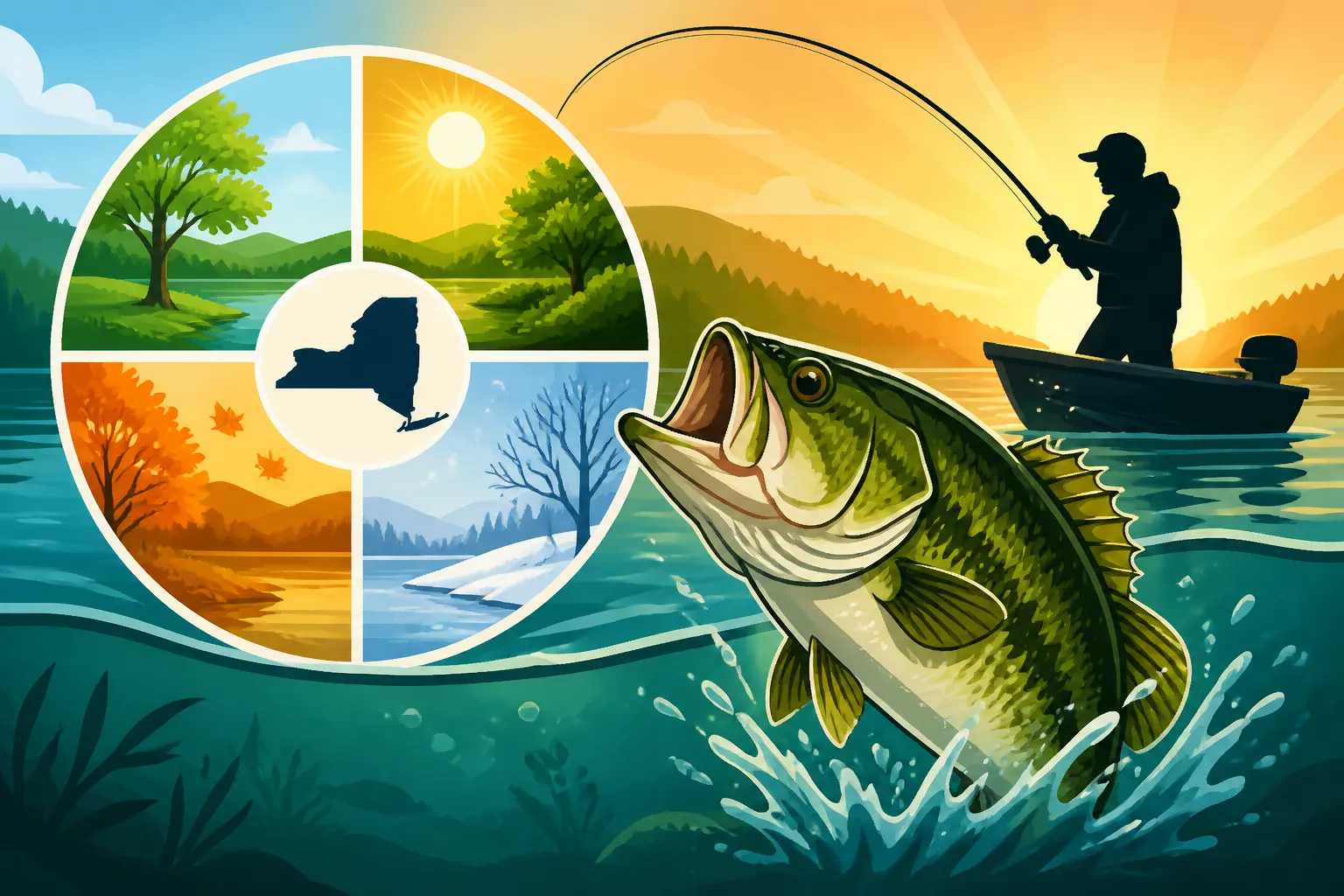
Figuring out the absolute best time to fish for bass in New York can often feel like you’re trying to solve a complex puzzle, especially with the state’s incredibly diverse waters and ever-changing weather patterns. You've probably experienced days where the bass just aren't biting, leaving you wondering if you picked the wrong time or even the wrong week. This comprehensive guide will peel back the layers of seasonal bass behavior, arming you with the knowledge to consistently be in the right place at the right time for both largemouth and smallmouth bass across New York State's fantastic fisheries.
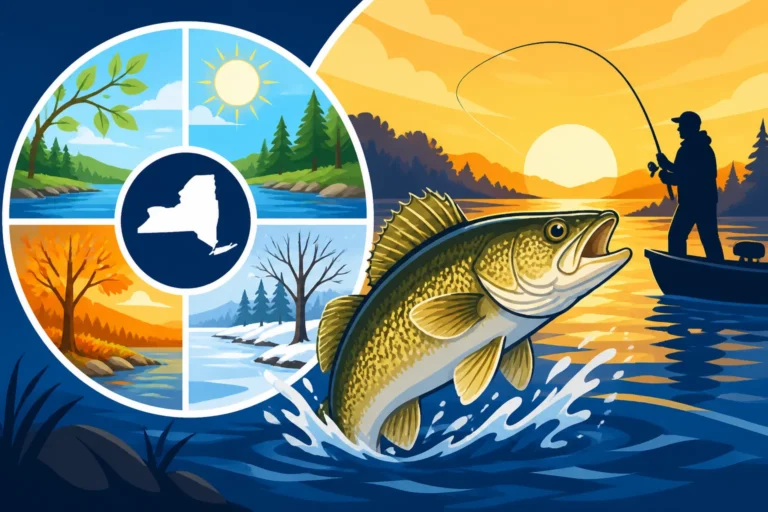
Understanding Bass Behavior Through the Seasons
Bass, whether we're talking about chunky largemouth or hard-fighting smallmouth, are incredibly sensitive to environmental changes, particularly water temperature and food availability. Their entire life cycle, from spawning to feeding to seeking refuge, revolves around these factors. What works like a charm in spring will likely fall flat in the heat of summer, and vice versa. That's why a deep understanding of their seasonal patterns is so crucial for success on any New York lake or river.
The Spring Awakening: Post-Spawn Feasting
Spring is a season of profound transition for bass in New York. As the ice melts and the sun begins to warm the shallower waters, bass start to shake off their winter lethargy. Initially, they're focused on finding food to regain energy lost during the cold months and to prepare for the arduous spawning process. This pre-spawn phase sees them congregating in staging areas, often just outside their future bedding grounds, voraciously feeding on anything they can get their mouths around. They're often aggressive and relatively easy to locate during this period.
After the spawn, which can happen at slightly different times for largemouth and smallmouth depending on local water temperatures, bass enter a post-spawn recovery phase. While some fish may be sluggish immediately after laying eggs, many quickly return to an aggressive feeding pattern. They're often depleted and hungry, making them prime targets. Knowing the general timing of the spawn in your target waters, such as the Finger Lakes or the bays of Lake Ontario, is key to capitalizing on these powerful feeding windows.
Summer's Heat: Early Mornings and Late Evenings
New York summers bring warmth and sunshine, but also challenges for bass anglers. As water temperatures climb, especially in shallower areas, bass often seek out cooler, more comfortable environments. This usually means moving deeper into the water column, finding dense cover like lily pads, submerged timber, or docks, or retreating to areas with cooler inflowing water. They become less active during the bright, hot parts of the day, conserving energy.
However, summer isn't without its incredible bass fishing opportunities. The low-light periods of early morning and late evening often trigger intense feeding frenzies. As the sun dips below the horizon or before it fully rises, bass will move into shallower water to hunt baitfish and other prey. This is prime time for exciting topwater action or targeting those shallower ambush points that were barren just hours before. Understanding this daily migration is fundamental to summer success.
Fall Frenzy: The Pre-Winter Feast
Many experienced New York anglers consider fall to be one of the absolute best times to fish for bass, and for good reason. As the days shorten and water temperatures gradually cool, bass go into overdrive, feeding heavily to pack on weight for the upcoming winter. This period is often referred to as the "fall turnover" where lakes mix, redistributing oxygen and nutrients, and baitfish begin to school up more tightly.
The bass become incredibly aggressive, chasing down schools of baitfish with an almost reckless abandon. This intense feeding behavior can lead to some of the most memorable days on the water, with multiple hook-ups and opportunities for truly trophy-sized fish. Whether you're targeting smallmouth in the St. Lawrence River or largemouth in a weed-choked pond, fall offers a unique window of opportunity that seasoned anglers rarely miss.
Spring Bass Fishing in New York: Navigating the Spawn
Spring is a time of renewal and excitement for bass anglers across New York. After months of cold water, or even ice, the promise of aggressive bass preparing for and recovering from the spawn is palpable. However, navigating this season successfully requires an understanding of the different phases of the bass spawn and how fish behave during each.
Pre-Spawn Aggression and Staging Areas
This is arguably one of the most exciting times to target bass in New York, often kicking off when water temperatures consistently reach the mid-40s to low 50s Fahrenheit. During the pre-spawn, bass are actively feeding to build energy reserves for the strenuous act of spawning. You'll find them congregating in "staging areas"—places that offer both deeper water access and proximity to shallow spawning flats. Think points, humps, submerged roadbeds, and the edges of weed lines or drop-offs adjacent to coves and bays.
These fish are often grouped up, meaning if you find one, you're likely to find more. They're also less picky, often hitting a wide array of lures with gusto. Crankbaits, spinnerbaits, and jerkbaits are excellent choices for covering water and triggering reaction strikes from these hungry fish. For instance, in many of the larger Finger Lakes, like Cayuga Lake, pre-spawn smallmouth will stack up on rocky points leading into shallower spawning areas. This is a fantastic time to use a fish finder to locate schools of bass before casting.
The Spawning Window: A Delicate Dance
As water temperatures continue to climb into the mid-50s and low 60s Fahrenheit, bass begin to move onto their beds to spawn. Largemouth bass typically prefer shallower, vegetated areas, while smallmouth often choose rocky or gravelly bottoms, frequently in slightly deeper water. During this period, bass are focused solely on reproduction, guarding their nests and fry. While they will strike lures, it's often a defensive reaction rather than a feeding one. It's crucial to be mindful of regulations during this time. For example, New York Bass Season Dates can vary by region, with some areas having catch-and-release only periods during the spawn to protect the fish.
Targeting actively spawning bass can be controversial among anglers due to potential harm to the fish or their offspring. Many ethical anglers choose to avoid directly targeting bedding bass, instead focusing on pre-spawn or post-spawn fish. If you do encounter a bedding bass, consider a quick photo and release, or simply move on to avoid disturbing them further. Remember, healthy bass populations are key to continued great fishing.
Post-Spawn Recovery and Feeding Patterns
Once the spawning ritual is complete, bass often go through a period of recovery. For a few days, they might be lethargic and less interested in feeding, focusing on regaining their strength. However, this phase quickly gives way to another aggressive feeding period. Depleted from spawning, these fish are often incredibly hungry and looking for easy meals. They'll typically move off the beds to slightly deeper structure, but remain in the general vicinity, setting up ambush points.
This post-spawn period sees bass often relating to submerged cover like brush piles, laydowns, or weed edges where they can hide and ambush passing baitfish. Soft plastics, jigs, and slower-moving crankbaits can be very effective as they mimic injured baitfish or crawfish. It's a great time to explore coves and transition areas where bass are recouping and replenishing. You'll also find that many of New York's Most Popular Freshwater Fish, including bass, are actively feeding during this time, making it a productive season overall.
Summer Bass Strategies: Beat the Heat and Find the Fish
Summer in New York can offer some truly fantastic bass fishing, but it often demands a shift in strategy compared to the cooler months. The long, hot days and warm water temperatures dictate bass behavior, pushing them to seek comfort and conserve energy during peak sunlight hours. Mastering summer bass fishing means understanding these behavioral changes and adapting your approach accordingly.
Early Morning and Evening Bites
As the sun begins to peek over the horizon or dips below it, a magical window opens for bass anglers. During these low-light periods of early morning and late evening, water temperatures are at their coolest, and bass often feel more comfortable moving into shallower water to hunt. This is prime time for exhilarating topwater action, one of the most exciting ways to catch bass. Imagine a largemouth exploding on a frog bait skipping across lily pads in a quiet Long Island pond, or a smallmouth smashing a walking bait on a clear, calm section of Lake George.
Using lures like poppers, prop baits, or buzzbaits can be incredibly effective during these times. The key is to be on the water before the sun is high and casting until it fully sets. Often, the bite can last for a couple of hours after sunrise and start an hour or two before sunset. This is also when bass are more likely to be found cruising shallow flats or around emergent vegetation, making it easier to cover water and locate active fish. You can find a wide variety of these effective topwater lures on Amazon.
Mid-Day Deep Water and Cover Tactics
Once the sun climbs high and warms the surface waters, bass tend to retreat. They'll seek out cooler, darker, and more oxygenated environments. This means moving to deeper water, often suspending over structure like humps, ledges, or deep weed lines. Or, they'll bury themselves in the thickest cover available in shallower areas, such as dense mats of hydrilla, fallen trees, or shaded dock pilings. It's a common frustration to see nothing biting in the midday sun, but the fish are still there; they've just changed their address.
Successfully targeting these mid-day bass requires precision and often a slower, more deliberate approach. Techniques like dropshotting, Carolina rigging, or fishing deep-diving crankbaits are excellent for reaching bass holding in deeper water. If they're tucked away in heavy cover, flipping and pitching jigs or soft plastics into the densest areas is your best bet. A heavy-action rod and strong braided line are essential for hauling bass out of such challenging environments. Learning How to Flip and Pitch for Bass in Heavy Cover can turn a slow summer afternoon into a memorable one.
Night Fishing for Bass
While less common, night fishing for bass during the New York summer can be incredibly productive, especially for larger fish. Many bass, particularly in heavily pressured waters or during extreme heat waves, become nocturnal hunters. The cooler water temperatures and reduced boat traffic after dark create a more comfortable and less threatening environment for them to feed.
When fishing at night, sound and silhouette become paramount. Dark-colored spinnerbaits with large thumping blades, noisy topwater lures, and large dark jigs are excellent choices. Bass rely heavily on their lateral lines to detect vibrations in the water, and these lures excel at creating that disturbance. Focus on familiar structures you fish during the day, as bass will often move shallower to patrol these areas under the cover of darkness. Make sure to have a reliable headlamp and be familiar with the water body for safety.
Fall Bass Blitz: Capitalizing on the Feed
Fall fishing in New York for bass is often touted as the "second spring," and for good reason. As the leaves begin to turn and the air gets crisp, a fundamental shift occurs in bass behavior. They enter an intense feeding period, driven by the instinct to gorge themselves and build up fat reserves for the long winter ahead. This makes them incredibly aggressive and often leads to some of the most consistent and exciting fishing of the year.
Following the Baitfish Migration
One of the defining characteristics of fall bass fishing is the intense focus of bass on baitfish. As water temperatures drop, shad, alewives, and other forage species begin to school up tightly and move from their widespread summer locations to more concentrated areas. Bass are right on their heels, actively chasing and corralling these schools. This is a time when you might witness incredible surface activity, with bass busting through baitfish schools, creating chaos on the water.
Knowing how to find these baitfish schools is paramount. Look for bird activity (gulls diving can be a dead giveaway), use your electronics to spot bait balls, or observe common migration routes like main lake points, channel swings, and large flats. Once you locate the bait, the bass are usually not far behind. Lures that mimic these schooling baitfish, such as crankbaits, jerkbaits, swimbaits, and even large spoons, become incredibly effective. A strong rod and reel combo, which you can find readily on Amazon, will be essential for slinging these larger baits and battling aggressive fall bass.
Prime Fall Water Temperatures
The sweet spot for fall bass fishing typically occurs when water temperatures range from the mid-60s down into the low 50s Fahrenheit. Within this temperature band, bass are at their most active and retain a high metabolism, meaning they need to eat a lot. As the water continues to cool slowly, the bite remains strong. They're trying to consume as much as possible before their metabolism slows down significantly with the onset of winter.
During these prime conditions, bass are often found shallower than they were in the peak of summer, but still relating to structure that provides easy access to deeper water. They might be patrolling rocky points, searching weed edges, or cruising along bluffs and steep banks. This aggressive behavior makes them highly susceptible to reaction strikes. Consider trying a variety of presentations until you dial in what the bass are keying on that particular day. For anglers looking to catch their biggest fish, the Best Time of Year to Catch Trophy Bass in New York often aligns with this fall feeding spree.
Late Fall Slow-Down
As fall progresses and water temperatures drop below the low 50s, eventually dipping into the 40s, a noticeable change occurs. While bass are still feeding, their metabolism starts to slow down significantly. They become less inclined to chase fast-moving lures over long distances and will often concentrate in deeper, more stable thermal zones. This late fall period can still be productive, but it demands a more patient and refined approach.
During this time, bass are often found tightly schooled on deep structure like rock piles, channel edges, or the deepest portions of main lake points. Finesse techniques become more effective. Jigs, dropshot rigs with small plastics, and slow-rolled spinnerbaits are excellent choices. You'll need to work your lures slowly, often letting them sit for extended periods to entice a strike from a less aggressive fish. It's a waiting game, but the reward can be big, healthy bass that are still trying to get those last few meals in before winter sets in fully.
Winter Bass Fishing: Cold Water Challenges and Rewards
Winter bass fishing in New York isn't for the faint of heart, but for those willing to brave the cold, it can offer some surprisingly good fishing and the chance at truly large bass. Most anglers put their boats away when the temperatures plummet, but dedicated bass enthusiasts know that the fish don't disappear; they just change their patterns drastically. It's a season of patience, precision, and understanding exactly where bass go when the water turns frigid.
Locating Deep Water Haunts
The golden rule of winter bass fishing is: find the deep water, find the bass. As surface temperatures drop into the 30s and low 40s, bass seek out the most stable and often deepest water available in their environment. This could be main lake basins, deep river channels, sharp breaks, or deep submerged structure like ledges, humps, or rock piles. They often suspend in these deeper zones, conserving energy and waiting for a meal to come to them.
Modern electronics, like a good fish finder, are absolutely indispensable for winter bass fishing. You'll need to meticulously scan these deeper areas to locate schools of bass, which often appear as distinct arches or blobs on your screen. Don't be afraid to idle around for extended periods, studying your graphs until you pinpoint their exact location. Once found, these fish tend to stay in the same general area, making them prime targets for a careful, vertical presentation. Consider exploring How to Read a Fish Finder for New York Lakes to enhance your winter success.
Finesse and Slow Presentations
Forget about fast-moving crankbaits or aggressive topwater lures in the winter. Bass metabolism slows dramatically in cold water, making them sluggish and less willing to expend energy chasing down prey. This means your approach must shift entirely to finesse and extremely slow presentations. The key is to present a small, subtle bait directly in front of their faces and allow them to take it without much effort.
Jigging spoons, blade baits, and small finesse jigs are winter staples. These lures can be dropped directly to the depth where fish are holding and worked with minimal movement. A slight quiver, a slow lift-and-drop, or just letting the lure sit on the bottom for extended periods can be what triggers a strike. Bites are often incredibly subtle—a slight "thump," a feeling of "weight," or just a line twitch. Using sensitive rods and light line is crucial for detecting these faint strikes. You can find excellent sensitive spinning rods for finesse presentations on Amazon.
Ice Fishing for Bass in New York
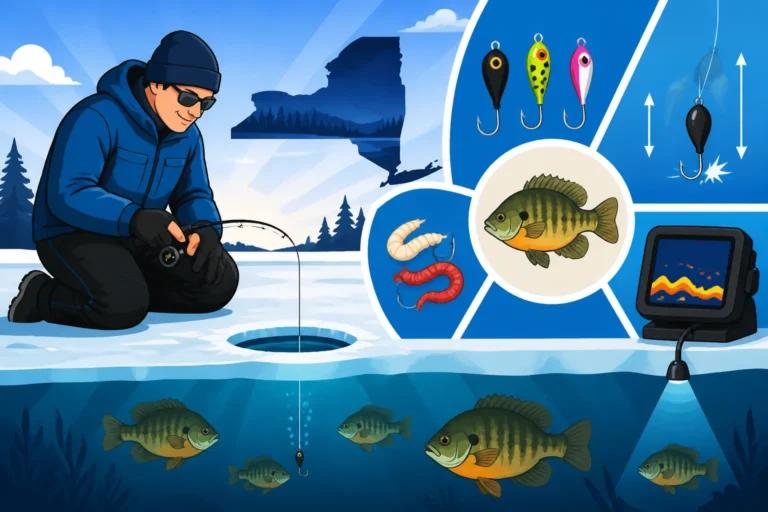
While perch and walleye often steal the spotlight for New York ice fishing, bass are certainly catchable through the hard water. Both largemouth and smallmouth will congregate in predictable areas under the ice, and a well-placed bait or jig can tempt them. Similar to open-water winter tactics, ice fishing for bass relies heavily on finding deep structure and presenting your lure slowly and precisely.
Tip-ups rigged with live shiners or small suckers are highly effective for dormant winter bass. The live bait's natural movement is often enough to entice a strike when other lures fail. Jigging with small spoons, soft plastic minnows on a jig head, or even blade baits can also provoke a reaction. Focus your efforts around deeper weed edges, rock piles, or transition zones where bass might ambush prey. Always be sure to check New York Ice Fishing Rules before heading out and prioritize safety on the ice.
Seasonal Bass Fishing Overview for New York
Understanding how bass react to the changing seasons is crucial for consistent success. Here's a quick overview of what to expect throughout the year in New York State:
| Season | Water Temperature Range (F) | Bass Activity | Preferred Habitat | Effective Lure Types |
|---|---|---|---|---|
| Early Spring (Pre-Spawn) | 45-55 | Moderate to Aggressive | Shallower flats, points, humps near spawning grounds | Crankbaits, spinnerbaits, jerkbaits, jigs |
| Late Spring (Spawn/Post-Spawn) | 55-68 | Defensive/Aggressive | Spawning beds, nearby cover, shallow ambush points | Jigs, soft plastics, wacky rigs |
| Summer (Peak Heat) | 68-80+ | Low during day, High during low light | Deep water, dense cover (mats, docks), shaded areas | Topwater (early/late), dropshot, jigs, Texas rigs |
| Fall (Turnover/Feed) | 65-50 | Highly Aggressive | Baitfish schools, main lake points, channel edges | Crankbaits, jerkbaits, swimbaits, spinnerbaits |
| Winter (Cold Water) | Below 50 | Low, Lethargic | Deepest basins, channels, steep breaks, tight to structure | Finesse jigs, spoons, blade baits, live bait |
This table provides a generalized guide. Local conditions, specific water bodies, and daily weather can all influence bass behavior. Always pay attention to what the fish are telling you on any given day.
Localized Insights for New York Bass Fisheries
New York State is a treasure trove of bass fishing opportunities, from the vast Great Lakes to the winding rivers and countless smaller lakes and ponds. Each region and water body can present its own unique challenges and rewards when it comes to timing your bass trips. Knowing these subtle differences can give you a significant edge.
Great Lakes and Major River Systems
New York's access to Lake Erie and Lake Ontario, along with the mighty St. Lawrence River and the Hudson River, offers world-class smallmouth and largemouth bass fishing. On the Great Lakes, smallmouth bass dominate, and their behavior is heavily influenced by deep, clear waters and abundant forage. Spring and fall are often phenomenal as smallmouth move into shallower rocky shoals and bays to spawn and feed aggressively. Summer sees them often retreating to deeper rock piles and ledges, making dropshotting and tube jigging highly effective.
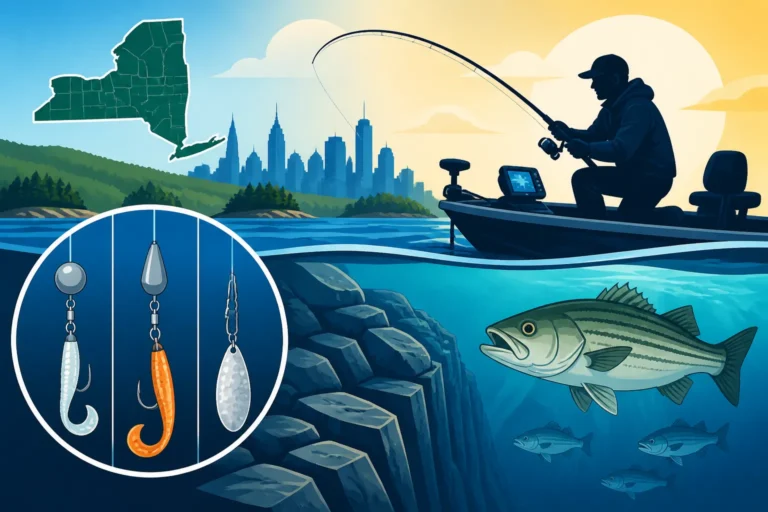
The St. Lawrence River, particularly the Thousand Islands region, is renowned for its trophy smallmouth and boasts fantastic largemouth fishing in its bays and backwaters. Here, knowing the current and structure is paramount. Bass will use current breaks and submerged shoals as ambush points. The Hudson River, a tidal estuary, provides incredible striped bass fishing, but also holds a robust population of largemouth and smallmouth, especially in its tidal creeks and tributaries. Understanding the Best Time of Day to Fish in New York on these tidal waters often means fishing the changing tides, which can concentrate bait and bass.
Finger Lakes and Inland Lakes
The Finger Lakes region is arguably New York's most famous inland fishing destination, offering fantastic opportunities for both smallmouth and largemouth bass. Lakes like Cayuga, Seneca, and Keuka have diverse habitats ranging from steep drop-offs to expansive shallow flats. For smallmouth, the rocky points and deep humps are often productive, especially during the spring and fall transitions. Largemouth thrive in the weedy bays and shallow arms of these lakes.
Smaller inland lakes and reservoirs across the state, such as Oneida Lake or Chautauqua Lake, also provide incredible bass action. Many of these waters are shallower and can warm up faster in the spring, triggering earlier spawns. Conversely, they can cool down quicker in the fall, making the fall bite intense but shorter-lived. Local knowledge or even talking to bait shop owners can provide invaluable insights into the specific timing of the bass bite on these waters. A dedicated guide to Best Lakes in New York for Largemouth Bass or Best Smallmouth Bass Lakes in New York can offer more specific insights.
Farm Ponds and Small Waters
Don't overlook the countless farm ponds, small lakes, and urban ponds scattered throughout New York. These smaller, often shallower waters can offer surprisingly good bass fishing, especially for largemouth. They tend to warm up much faster in the spring, meaning the pre-spawn and spawn can occur earlier than on larger, deeper lakes. During summer, vegetation growth can be intense, providing excellent cover for bass.
Fishing these smaller waters often requires a more stealthy approach. Kayaks, canoes, or even bank fishing can be highly effective. The bass in these waters might be less pressured than in larger bodies, making them more willing to strike. Fall can be a whirlwind of activity, but winter fishing might be limited if the ponds freeze solid. Knowing your local water body and its unique characteristics is key to unlocking its bass fishing potential throughout the year.
Essential Gear and Techniques for New York Bass Fishing
Having the right gear and knowing the most effective techniques for each season is just as important as understanding the best time to fish. New York's diverse bass fisheries demand a versatile tackle box and a willingness to adapt your approach.
Versatile Rod and Reel Combos
For most New York bass fishing, having a couple of versatile rod and reel setups will serve you well. A medium-heavy power, fast-action spinning rod (6'6" to 7'0") paired with a 2500-3000 size spinning reel spooled with 10-15 lb braided line (with a fluorocarbon leader) is excellent for finesse techniques, soft plastics, and smaller jigs. This setup is great for when bass are less aggressive or when fishing clear water.
Complement this with a medium-heavy or heavy power, fast-action casting rod (7'0" to 7'6") and a baitcasting reel spooled with 15-20 lb fluorocarbon or 30-50 lb braided line. This heavier setup is ideal for throwing larger crankbaits, spinnerbaits, jigs, and punching through heavy cover. You'll find a wide array of high-quality fishing rods and reels on Amazon, suitable for any budget and fishing style.
Seasonal Lure Selection
Your lure selection should always be dictated by the season and the bass's current mood.
- Spring: During pre-spawn, crankbaits (squarebills, lipless), spinnerbaits, and jerkbaits are excellent for covering water and triggering strikes. As bass move to spawn, jigs, Texas-rigged worms, and wacky rigs become more effective.
- Summer: Early and late in the day, topwater lures like frogs, poppers, and buzzbaits are king. During midday, switch to dropshots, Carolina rigs, jigs, and heavy Texas rigs for deep water or dense cover.
- Fall: This is a power fishing paradise. Crankbaits (deep-diving and shallow), jerkbaits, swimbaits, and spinnerbaits are all highly productive as bass chase baitfish. Don't forget jigs for slower presentations as water cools.
- Winter: Finesse is key. Small jigs, jigging spoons, blade baits, and dropshot rigs are your best friends. Live bait under a bobber or on a tip-up for ice fishing can also be deadly.
Learning How to Fish a Topwater Lure for Bass or How to Fish a Ned Rig for Bass, among other techniques, will greatly expand your capabilities through the different seasons.
The Importance of Electronics and Maps
In today's bass fishing world, electronics are no longer a luxury but a necessity, especially on larger New York waters. A good fish finder with down imaging and side imaging capabilities can help you quickly locate deep structure, identify baitfish schools, and even spot individual bass. This is particularly critical during the winter and summer months when bass are often holding deep or tight to submerged cover.
Pair your electronics with detailed lake maps, either physical or digital. These maps reveal contour lines, depths, drop-offs, humps, and other critical underwater features that hold bass. Pre-fishing by studying maps and using your electronics to confirm what's beneath the surface will dramatically improve your efficiency and put you on more fish, regardless of the season.
Disclaimer
Fishing regulations, season dates, and license requirements can change. Always consult the latest New York State Department of Environmental Conservation (NYS DEC) regulations before heading out on the water. This guide provides general information and recommendations, but it is the angler's responsibility to adhere to all current laws and safety guidelines.