How to Jig for Walleye
There’s nothing quite as frustrating as heading out to your favorite walleye spot, armed with what you think is the perfect setup, only to spend hours jigging without a single bite. You feel the lure hit the bottom, you give it that subtle twitch, that gentle lift, and then… nothing. It makes you wonder if you’re doing something fundamentally wrong, or if the walleye are just playing hard to get. This guide is here to unravel the mysteries of effective walleye jigging, helping you understand their behavior, choose the right gear, and master the techniques that put more of these prized fish in your boat or on the ice, especially across New York's incredible waters.
Understanding Walleye Behavior for Jigging Success
Before you even think about dropping a jig, you’ve got to get inside the head of a walleye. These aren't just random swimmers; they're creatures of habit, driven by instinct, light conditions, and the ever-present need to feed. Understanding their world is the first step to consistently catching them, particularly when you’re relying on jigging, which is all about presentation and triggering those predatory instincts.
Walleye Habitat and Structure Preference
Walleye are notoriously structure-oriented fish. They love edges, breaks, humps, and anything that offers them a strategic ambush point or a place to hide from bright light. Think of them like underwater snipers, waiting for an unsuspecting baitfish to swim by. This means your jigging efforts need to be focused precisely where they feel most comfortable and where their food sources congregate.
For instance, in massive bodies of water like Lake Erie or Oneida Lake, walleye will often relate to deep contours, rock piles, or sunken islands. These structures provide them with both cover and access to varying depths where they can find comfortable temperatures and abundant prey. You'll find them lurking on the deep side of a drop-off during the day, ready to dart up into shallower water to feed as light conditions change. Knowing the bottom topography of your fishing spot is absolutely crucial. Investing in a good map, whether it's a physical chart or a detailed electronic version for your fish finder, is non-negotiable. Look for those sudden depth changes, areas with mixed bottom content like gravel and mud, or submerged timber fields. These are prime walleye zones, and a jig can be incredibly effective when worked precisely through these areas.
Seasonal Movements and Feeding Patterns
Walleye are highly migratory, and their movements are largely dictated by water temperature, spawning cycles, and food availability. This means the jigging strategy that worked wonders in spring might fall flat in the middle of summer or during the frosty depths of winter. Adapting to these seasonal shifts is key.
In the spring, after the ice breaks up, walleye will often move into shallower areas, especially rocky points and river mouths, for their spawning ritual. Once they've done their business, they're often hungry and somewhat aggressive, making them vulnerable to jigs presented along these post-spawn staging areas. As summer progresses, and water temperatures climb, walleye tend to seek deeper, cooler water. You'll find them concentrating on deep structure, relating to thermoclines, and becoming more active during low-light periods like dawn, dusk, or even How to Fish for Walleye at Night. This is where vertical jigging over deep humps or channel edges really shines. Come fall, as water temperatures begin to drop again, walleye often go on a major feeding binge, bulking up for winter. They'll move shallower, chasing baitfish schools into bays and along main lake points, and they can be incredibly active. Then, when winter sets in and the lakes freeze over, they're often found suspended over deeper basins or relating to humps and points, making them prime targets for How to Ice Fish for Walleye in New York with a jig. Understanding these seasonal movements helps you narrow down where to focus your jigging efforts throughout the year.
The Impact of Light and Water Conditions
Walleye have large, sensitive eyes that are highly adapted for low-light conditions. This is why they are often most active during twilight hours, on overcast days, or in stained or turbulent water. Bright sunlight can drive them deep or into dense cover, making them harder to entice with a jig.
When the sun is high and bright, you'll want to target deeper water or areas with significant cover, like heavy weeds or submerged timber. Your jig presentation might need to be more subtle, resembling a sluggish baitfish. Conversely, on cloudy days or during those prime low-light periods, walleye might move shallower and become more aggressive. This is when a more active jigging retrieve, or even a larger, more flashy jig, can really get their attention. Water clarity also plays a significant role. In clear water, fish are warier, and your presentation needs to be impeccable. Lighter lines, natural colors, and a more finesse approach with your jig can be more effective. In stained or muddy water, walleye rely more on their lateral line and scent, making vibration and scent-infused soft plastics or brightly colored jigs, perhaps even considering Best Walleye Jig Colors for Stained Water, a better bet. The key is always to consider the light and water conditions and adjust your jig size, color, and retrieve accordingly.
Essential Gear for Walleye Jigging
You wouldn't try to build a house with a butter knife, and you shouldn't try to consistently catch walleye by jigging with the wrong equipment. Having the right rod, reel, line, and, of course, the perfect jig, can make all the difference between a frustrating day and a memorable haul. The nuances in your gear selection directly impact your ability to feel subtle bites and effectively work your chosen presentation.
Rods, Reels, and Line Choices
For walleye jigging, sensitivity is king. A fast-action, medium-light to medium power spinning rod, typically 6'6" to 7'6" in length, is often ideal. The fast action means the rod tip is very flexible, allowing you to feel even the slightest tap, but the backbone kicks in quickly, giving you the power to set the hook and fight a strong fish. Graphite rods are preferred over fiberglass for their superior sensitivity. Companies like St. Croix or Fenwick make excellent walleye-specific jigging rods that many seasoned anglers swear by.
Pair that rod with a smooth, lightweight spinning reel in the 2000-3000 size range. You want a reel with a good drag system, because walleye can make powerful runs, especially those larger ones. For line, braided line is a popular choice for its zero-stretch properties, which transmit bites incredibly well and offer excellent hook-setting power. A 6-10 lb test braid is usually sufficient. However, because braid is highly visible and doesn't stretch, many anglers will tie a 4-8 lb fluorocarbon leader (3-6 feet long) to the end of their braid using a strong knot like an Albright or FG knot. Fluorocarbon is nearly invisible underwater and offers a bit of abrasion resistance. Some prefer a straight fluorocarbon setup for certain finesse techniques, especially in clear water, but the sensitivity of braid for detecting light bites is hard to beat. You can find a fantastic selection of quality rods, reels, and lines on Amazon, making it easy to gear up for your next trip.
| Component | Recommendation | Why It Matters |
|---|---|---|
| Rod | 6'6" – 7'6" Medium-Light to Medium Power, Fast Action | Sensitivity for bite detection, power for hooksets & fighting. |
| Reel | 2000-3000 Series Spinning, Smooth Drag | Smooth operation, reliable drag for powerful runs. |
| Main Line | 6-10 lb Braided Line | Zero stretch for maximum sensitivity and hook-setting power. |
| Leader | 4-8 lb Fluorocarbon (3-6 ft) | Low visibility, abrasion resistance. |
The Right Jigs and Soft Plastics
This is where the real fun begins! The variety of jigs and soft plastics available for walleye is astounding, but it boils down to matching the hatch and conditions. Jig heads typically range from 1/16 oz for shallow, calm water to 1/2 oz or heavier for deep water or strong current. Lead jigs are common, but tungsten jigs are becoming increasingly popular for their smaller profile and increased sensitivity for their weight.
When it comes to soft plastics, minnow imitations like Berkley Gulp! Minnows, grub tails, paddletail swimbaits, and worm-style baits are all effective. The specific type you choose often depends on the fish's mood and the baitfish in the area. For example, if walleye are feeding on shiners, a shad-colored paddletail or minnow imitation will be deadly. If they're keying in on smaller invertebrates, a subtle grub tail might be better. Colors can vary wildly, but natural colors like green pumpkin, brown, and watermelon work well in clear water, while brighter colors like chartreuse, orange, and white often excel in stained water or low light. Don't be afraid to experiment with different sizes and shapes until you find what the walleye are responding to on a given day. Always have a variety in your tackle box – a few different weights, colors, and body styles.
Live Bait for Jigging
While soft plastics have their undeniable appeal, sometimes nothing beats the real thing. Live bait adds scent and natural movement that can be irresistible to a finicky walleye. The most common live baits for jigging walleye are minnows, shiners, leeches, and nightcrawlers.
When jigging with live bait, you'll typically thread a minnow or shiner onto a plain jig head, hooking it lightly through the lips or just behind the dorsal fin. This allows the bait to swim naturally and present a tempting target. Leeches are often hooked once through the "sucker" end, allowing them to wiggle and stretch enticingly. Nightcrawlers can be threaded onto a jig head or, for a more active presentation, "worm-wacked" by hooking them multiple times to create a squirming cluster. The key with live bait is to use enough weight to get it down to the fish but not so much that it restricts the bait's natural movements. Live bait jigging is particularly effective when walleye are lethargic or in tough bite conditions, as the natural scent and action can often trigger a strike when artificials fail. Remember to check local regulations for specific Rules on Using Live Bait in New York in various waters.
Master the Art of Walleye Jigging Techniques
Jigging for walleye isn't just about dropping a weight to the bottom and reeling it in. It's a nuanced dance of rod work, retrieve speed, and knowing when to present your lure aggressively versus subtly. Mastering these techniques will significantly increase your success rate, turning those "maybe" days into "definitely" days.
Vertical Jigging Strategies
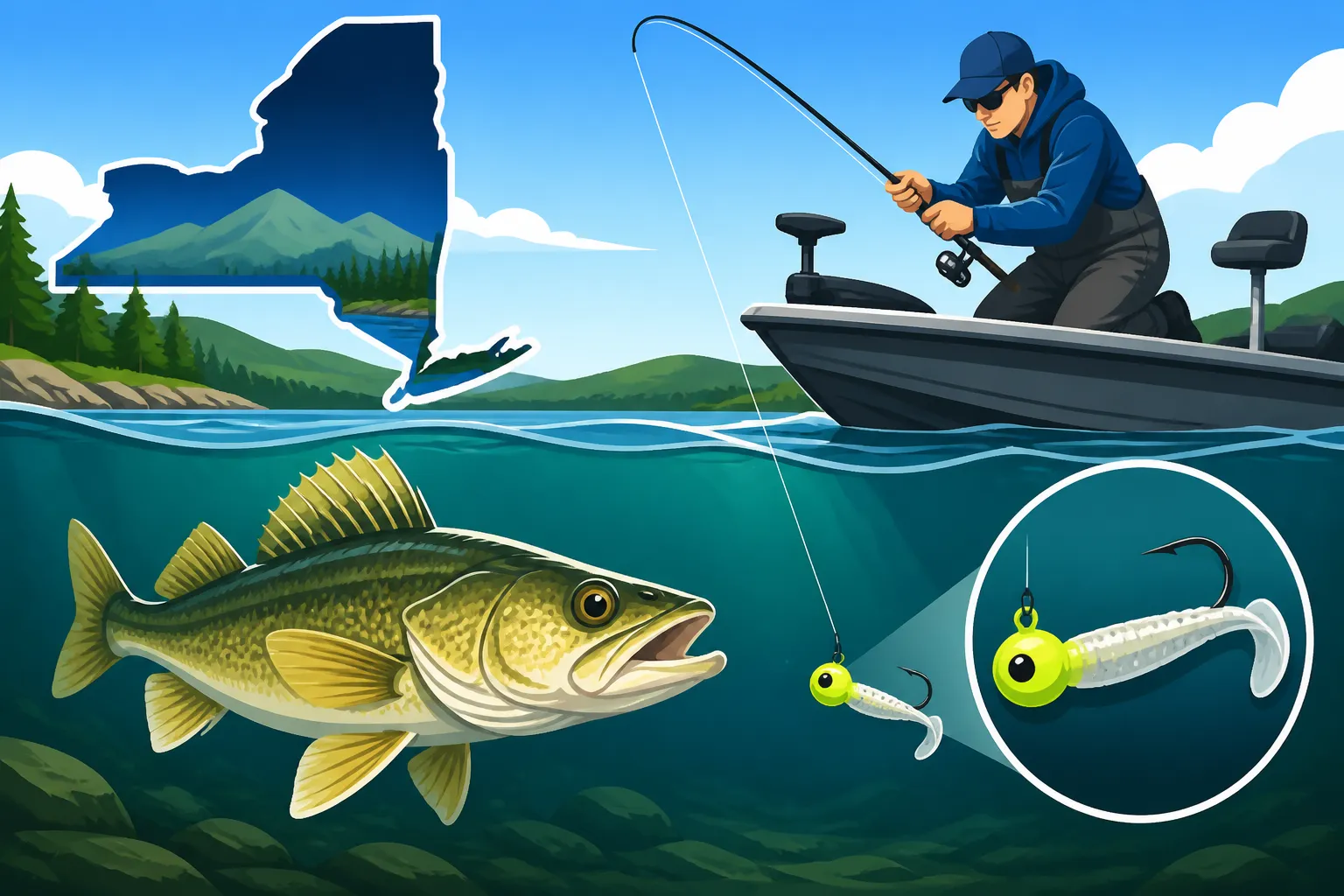
Vertical jigging is perhaps the most fundamental and effective method for targeting walleye, especially when they are concentrated on specific structures or holding in deeper water. This technique involves positioning your boat directly over the fish or structure you want to target, then dropping your jig straight down.
The most common vertical jigging motion is a lift-and-drop. You lift your rod tip sharply, perhaps 6 inches to a foot, then immediately drop it back down, allowing the jig to fall freely on a semi-slack line. The bite often occurs on the fall, so watching your line for any twitch or hesitation is critical. After the jig hits bottom, let it sit for a second or two, then repeat the lift. Sometimes a slight "snap" or "rip" is needed to trigger aggressive fish, while other times a more subtle "hover-and-pause" is more effective. The key is to experiment with the height of your lift, the speed of your drop, and the duration of your pause until you find what the walleye prefer. A good fish finder is invaluable for vertical jigging, as it allows you to see fish arches directly below your boat and precisely present your jig to them. This helps you identify where How to Read a Fish Finder for New York Lakes can truly enhance your efforts. You can even watch your jig on the screen as it approaches the fish, which is an incredible way to learn how fish react to your presentation.
Casting and Drifting Jigs
While vertical jigging is fantastic for precise presentations, casting and drifting jigs allow you to cover more water and target walleye that might be scattered or feeding over broader flats.
Casting Jigs: This technique is often used in shallower water, around weed lines, or when targeting structure from a distance. You cast your jig out, let it sink to the desired depth (often bottom), and then work it back with a series of lifts, hops, and pauses. It's similar to vertical jigging in terms of rod action, but you're working the bait horizontally through the water column. Vary your retrieve speed and the length of your pauses. Sometimes a steady retrieve with subtle twitches is all it takes, while other times a more erratic, stop-and-go presentation can trigger a strike. Pay close attention to where the bites occur; if they're happening near the boat, you might need to adjust your casting distance or retrieve.
Drifting Jigs: Drifting is a phenomenal way to present a jig over large areas of suspected walleye habitat, especially when wind or current is present. You simply let your boat drift with the wind or current, casting your jig either ahead of the boat or directly alongside it, allowing it to "walk" along the bottom. The motion of the drift imparts action to the jig, and you just need to maintain bottom contact with occasional lifts or pauses. A drift sock (also known as a drift anchor) can be incredibly useful to slow your drift, allowing your jig to stay in the strike zone longer and giving you better control. This method is particularly effective when searching for active fish over expansive flats or breaklines, such as those found on Lake Erie Walleye Fishing Near Buffalo, New York or Oneida Lake Walleye Fishing Guide.
Effective Jigging Cadences and Retrieves
The rhythm and pace of your jigging retrieve can be the deciding factor between a full livewell and an empty cooler. Walleye can be incredibly finicky, and what worked yesterday might not work today. This is why having a versatile arsenal of jigging cadences is so important.
- The "Standard Hop": This involves a sharp lift of the rod tip (6-12 inches), followed by a controlled fall back to the bottom. Let it hit, perhaps even bounce once or twice, then pause for 1-3 seconds. This mimics a baitfish trying to escape.
- The "Drag and Drop": This is a slower, more subtle retrieve. Instead of a sharp hop, you slowly lift the rod tip, dragging the jig a few inches along the bottom, then let it fall naturally. This is excellent for lethargic fish or when using live bait.
- The "Shake and Pause": A finesse technique where you impart subtle vibrations to the jig by gently shaking your rod tip while the jig is either on the bottom or suspended slightly above it. After a few shakes, pause for a moment. This often triggers finicky walleye that won't commit to an aggressive presentation.
- The "Rip and Fall": For aggressive fish, especially during a hot bite or in stained water, a more violent rip of the rod tip (1-2 feet) followed by a quick slack-line fall can provoke a reaction strike. The sudden, erratic movement can make the walleye instinctively lash out.
The key is to start with a standard retrieve and then systematically vary your cadence until you find what the fish want. Pay attention to every little bump, twitch, or feeling of weightlessness – these are often signs of a walleye inhaling your jig. Don't be afraid to change colors, sizes, or even entire jig styles if a certain retrieve isn't producing. Many anglers find it useful to have multiple rod setups rigged with different options to quickly switch and test various presentations. Remember, Best Time to Fish for Walleye in New York will dictate how aggressive or subtle you need to be.
Top New York Walleye Waters for Jigging
New York State is a phenomenal destination for walleye anglers, boasting a diverse array of waters that hold these highly sought-after fish. From sprawling Great Lakes to smaller inland reservoirs, there's a walleye jigging opportunity for everyone. Knowing where to go and what to expect from specific bodies of water will give you a significant advantage.
Lake Erie and Oneida Lake Tactics
When we talk about walleye jigging in New York, two names immediately spring to mind: Lake Erie and Oneida Lake. These are arguably the premier walleye fisheries in the state, each offering unique challenges and rewards.
Lake Erie: This is truly a world-class walleye fishery, known for producing massive numbers of fish, including true trophy-sized specimens. The western basin of Lake Erie, easily accessible from ports like Buffalo or Dunkirk, is renowned for its shallow, fertile waters which are prime walleye spawning grounds. In spring and early summer, walleye are often found relating to offshore reefs and shallow rock piles. Vertical jigging with heavier jigs (3/8 to 3/4 oz) tipped with a soft plastic or minnow is incredibly effective here, especially when targeting fish stacked up on structure. As the season progresses and the fish move deeper, you'll still find opportunities for jigging, particularly around the many deep humps and ledges. Using your sonar to locate schools of suspended fish or those tight to the bottom in deeper water is key. The sheer size of Lake Erie means you'll need to be mobile and use your electronics diligently to pinpoint concentrations of fish, but when you find them, the action can be non-stop.
Oneida Lake: Often called the "Walleye Capital of New York," Oneida Lake offers fantastic jigging action in a completely different setting. This large, relatively shallow lake (averaging 22 feet deep) is known for its extensive shoals, weed beds, and subtle depth changes. In spring, post-spawn walleye will relate to the edges of shoals and rocky points. Casting lighter jigs (1/8 to 1/4 oz) with soft plastics or small minnows is a go-to tactic here, especially around structures like the famous Shackelton Shoals or Messenger Shoal. As summer heat sets in, walleye might move to deeper channels or hold tight to dense weed beds. Vertical jigging along drop-offs or pitching jigs into pockets within the weeds can be highly productive. The lake's stained water often means brighter jig colors can be very effective. Many anglers swear by a chartreuse or orange jig on Oneida Lake. Regardless of the season, understanding the specific structure and baitfish presence on Oneida Lake is paramount for jigging success. Pay attention to the New York Walleye Season and Limits for both of these incredible bodies of water.
Lesser-Known Walleye Haunts
While Lake Erie and Oneida Lake get most of the glory, New York is home to many other excellent walleye jigging opportunities that often fly under the radar. These spots can offer a more intimate fishing experience and sometimes less pressure.
Finger Lakes: Several of the Finger Lakes, particularly Cayuga and Seneca, hold healthy populations of walleye. These deep, clear lakes present a different challenge. Walleye often suspend over deep water or relate to specific humps and points in these clear environments. Jigging here often requires a more subtle approach, using smaller, more natural-colored jigs and fluorocarbon leaders. Electronics are absolutely essential for finding fish in these vast, deep waters. Focus on main lake points, sunken islands, and abrupt depth changes, especially during low light or overcast conditions. Jigging spoons can also be very effective here when walleye are suspended.
Great Sacandaga Lake: Tucked away in the Adirondacks, Great Sacandaga Lake is another fantastic walleye destination. This large reservoir features diverse structure, including submerged timber, rock piles, and deep basins. In spring and fall, walleye will move shallower, making them accessible to casting jigs along rocky shorelines and points. During summer, they retreat to the cooler, deeper waters, where vertical jigging over sunken structure becomes the primary method. The lake also has a good population of baitfish, which means finding bait is often key to finding walleye.
Lake Champlain (New York side): While much of Lake Champlain is often associated with Vermont, the New York side also offers excellent walleye fishing. This large lake has varied habitats, from shallow bays to deep channels. Jigging can be productive along the numerous rocky points, ledges, and transition zones where different bottom types meet. Keep an eye out for submerged weed beds, which can hold feeding walleye, especially during the warmer months. These diverse locations across New York prove that when it comes to Walleye in New York, there's always a new adventure waiting.
Advanced Tips and Troubleshooting for Walleye Jigging
Even with the right gear and a good understanding of walleye behavior, there will be days when the fish seem to have lockjaw. That's when you need to dig into your bag of tricks and employ some advanced strategies and troubleshooting methods. The most successful walleye anglers are often the ones who can adapt quickly to changing conditions and try something new.
Reading Your Electronics for Walleye
Your fish finder is more than just a depth sounder; it's your eyes underwater, offering invaluable insights into what's happening beneath your boat. Learning to interpret the signals it sends is a critical advanced skill for walleye jigging.
First and foremost, learn to identify walleye arches. They typically appear as distinct, somewhat elongated arcs on your screen. Don't confuse them with baitfish schools, which usually show up as dense clouds. You'll want to differentiate between fish holding tight to the bottom and those suspended higher in the water column. If fish are hugging the bottom, a vertical jig dropped precisely to their depth is often the ticket. If they're suspended, you might need to drop your jig to that specific depth and then work it horizontally or vertically within their zone without letting it hit bottom. Pay attention to the "gain" or "sensitivity" setting on your sonar. Too low, and you'll miss subtle returns; too high, and you'll get too much clutter. Adjust it to get the clearest picture of the bottom and any fish present. Also, understand your chart speed: a faster chart speed will stretch out fish arches, making them easier to identify, but it will consume more memory. Finally, don't just look for fish; look for structure, bait balls, and sudden depth changes. Walleye will almost always be associated with something, and your electronics are key to finding those productive spots. For an even deeper dive, mastering How to Read a Fish Finder for New York Lakes is essential.
Adjusting to Tough Conditions
Walleye fishing isn't always easy. Cold fronts, high pressure, clear water, and heavy boat traffic can all make walleye incredibly lethargic and difficult to catch. When the bite is tough, it's time to adapt.
Downsize and Lighten Up: When walleye are finicky, often the first thing to do is go to smaller jigs and lighter line. A 1/16 oz jig with a tiny minnow or micro-soft plastic on 4 lb test fluorocarbon can sometimes entice bites when larger presentations are ignored. The lighter weight allows for a more natural, subtle fall that doesn't spook wary fish.
Slow Down Your Presentation: In tough conditions, aggressive jigging can actually turn fish off. Instead, try a much slower, more deliberate retrieve. A subtle drag-and-drop, letting the jig sit motionless on the bottom for extended periods (up to 10-15 seconds), or a gentle shake-and-pause can be incredibly effective. The goal is to make the bait look easy to catch, requiring minimal effort from the fish.
Experiment with Scent and Color: Scent is a powerful attractant for walleye, especially in stained water or when they're not actively feeding. Using scent-infused soft plastics (like Berkley Gulp!) or adding a commercial scent attractant to your jigs and live bait can make a huge difference. In terms of color, sometimes a complete departure from the norm is what's needed. If everyone is throwing chartreuse, try a natural brown or black, or vice-versa. Don't forget that even subtle variations in Best Walleye Jig Colors for Stained Water can sometimes be the key.
Look for New Spots: If your usual honey hole isn't producing, it might be time to move. Walleye can shift locations dramatically based on changing conditions. Use your electronics to scan new areas, paying attention to subtle changes in depth or bottom composition that might be holding a new school of fish. Sometimes a move of only a few hundred yards can make all the difference. Remember, fishing isn't about stubbornness; it's about adaptability. And don't forget to check out New York Freshwater Fishing Rules before heading out.
Disclaimer
The information provided in this guide is for general informational purposes only. Fishing regulations, seasons, and licensing requirements can change, and it is the angler's responsibility to consult the most current New York State Department of Environmental Conservation (DEC) regulations before fishing. Always prioritize safety on the water.