Best Tides for Striped Bass Fishing on New York’s Long Island Sound
Trying to pin down the perfect moment to cast your line for striped bass on New York's Long Island Sound often feels like you're wrestling with the ocean itself. The constant dance of the tides holds the key to success, and missing that critical window can lead to frustratingly empty nets. This comprehensive guide will pull back the curtain on tidal dynamics, revealing how these powerful water movements profoundly influence striped bass behavior and arming you with the knowledge to consistently find and hook these magnificent gamefish in our beautiful local waters.
The Rhythmic Dance of Tides: Understanding Tidal Movements
Before we can even think about catching stripers, we need to understand the fundamental forces that govern the water moving around us. Tides aren't just random occurrences; they're predictable, powerful, and utterly essential to marine life, including our beloved striped bass. Grasping the basics of high and low tides, and more importantly, the currents they create, is your first step to becoming a more effective angler on Long Island Sound.
High Tide, Low Tide, and Everything In Between
When we talk about tides, most people immediately think of high tide and low tide – the highest and lowest points the water reaches in a cycle. On Long Island Sound, we typically experience two high tides and two low tides each day, forming what's known as a semidiurnal tide pattern. The time it takes to go from one high tide to the next high tide is roughly 12 hours and 25 minutes. This means that if high tide is at 9 AM today, it will be around 9:25 PM tonight, and then approximately 9:50 AM tomorrow morning. This gradual shift is due to the moon's orbit around the Earth.
But it's not just about the peak high or the bottom low. The periods between these extremes are equally, if not more, crucial for fishing. As the water moves from low to high, it's called a flood tide. As it moves from high to low, it's called an ebb tide. The brief period when the water is neither rising nor falling, usually around the peak of high tide or the bottom of low tide, is known as slack water. Understanding these phases is critical because they each present different opportunities and challenges for the angler, influencing where fish will be and how they'll behave.
Decoding Tidal Currents and Their Impact
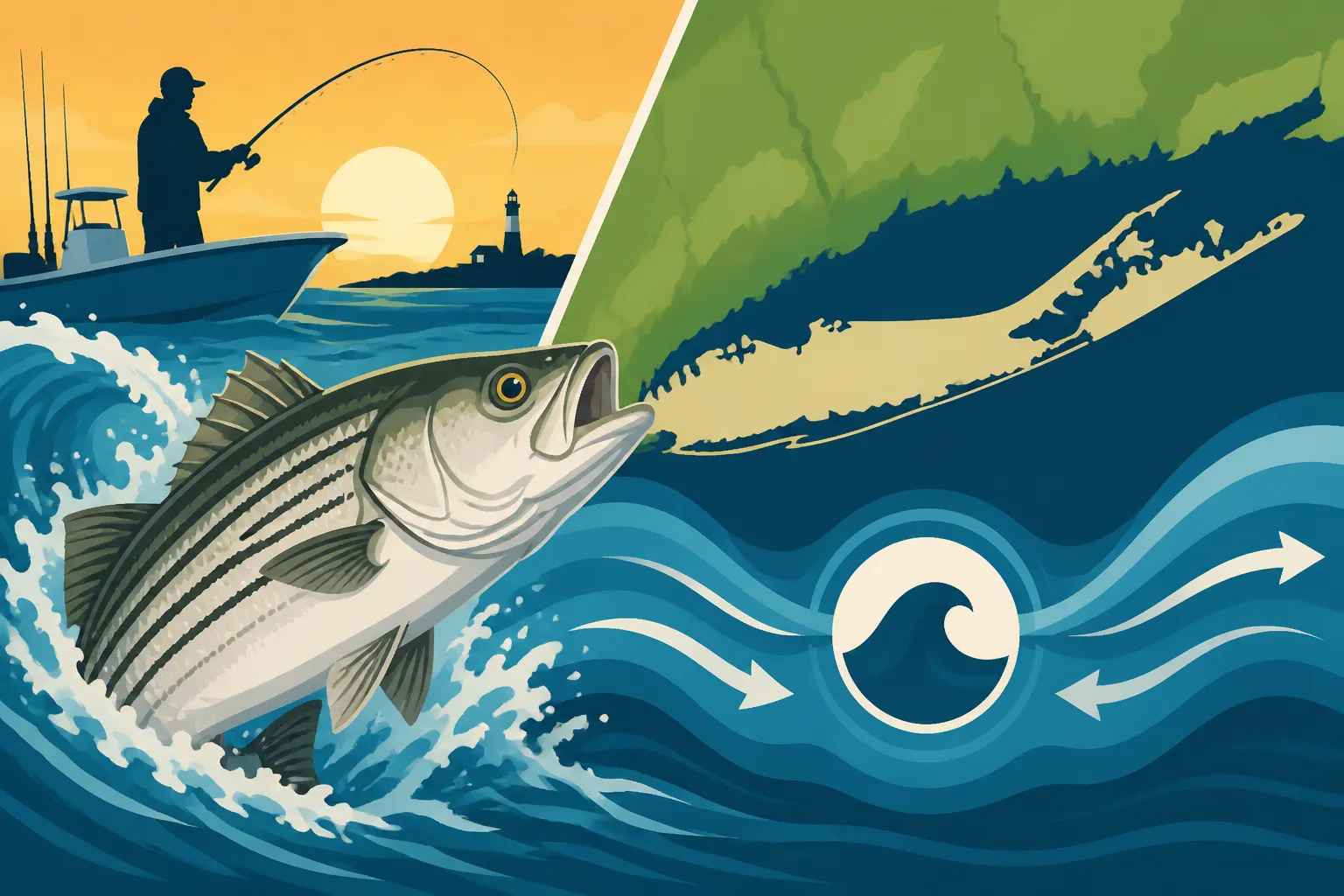
While the rise and fall of the water (the vertical tide) is noticeable, it's the horizontal movement of water—the tidal current—that truly dictates fishing success. Tidal currents are the real engine for fish activity, especially for predatory species like striped bass. As the water floods in or ebbs out of the Long Island Sound, it creates moving currents that can range from gentle flows to ripping torrents, depending on the geography of the area.
These currents are vital for several reasons. Firstly, they transport food. Imagine small baitfish, crustaceans, and other forage being swept along by the moving water, disoriented and vulnerable. This is like a conveyor belt of food for stripers. Secondly, currents oxygenate the water, which is important for active fish. Thirdly, currents provide structure. Fish, being energy-efficient predators, will often position themselves in current breaks—areas where they can expend minimal energy while waiting for food to be delivered to them. This might be behind a rock, a jetty, a channel marker, or even a subtle contour change on the bottom. The speed and direction of these currents are far more important than the actual water height for locating active fish.
Factors Influencing Local Tides on Long Island Sound
While the moon and sun are the primary drivers of tides, local geography and weather conditions significantly modify their impact on Long Island Sound. The Sound itself is a long, relatively narrow body of water, essentially a large estuary. The constricted entrances, like the infamous Race at the eastern end, funnel massive amounts of water, intensifying currents. The numerous bays, harbors, and river mouths that feed into the Sound also create complex localized tidal patterns.
For example, a strong outflow from a river during an ebb tide can create a supercharged current in that specific area, bringing nutrients and dislodged baitfish with it. Similarly, a rising tide pushing into a shallow bay might create a calm, warmer environment perfect for baitfish, drawing in predators. Wind, especially a strong, sustained wind blowing against the tide, can also alter local water levels and current speeds, making a predicted slack tide more dynamic or causing an otherwise mild current to become unexpectedly strong. Always consider these local nuances when planning your trip; a general tide chart is just the starting point.
Striped Bass Behavior and Tidal Predilections on Long Island Sound
Striped bass are highly attuned to tidal movements. They are opportunistic predators that use the currents to their advantage, conserving energy while maximizing their feeding opportunities. Understanding how they react to different tidal phases on Long Island Sound is paramount to putting more fish in the boat or on the shore.
The Feeding Frenzy: Best Tidal Stages for Stripers
Generally speaking, active water movement is almost always better for striped bass fishing than slack water. The moving currents disorient baitfish, wash food out of structure, and provide cover for stripers to ambush prey. This means the prime fishing times often occur during the strongest parts of the flood or ebb tide.
-
Moving Tides (Flood and Ebb): The periods when the water is really pushing, either in or out, are typically the most productive. For many anglers on Long Island Sound, the last two hours of an incoming (flood) tide and the first two hours of an outgoing (ebb) tide are considered prime windows. During these times, currents are building or reaching their peak, stirring up the bottom and funneling baitfish. However, don't discount the entire duration of the moving tide; productive fishing can happen throughout, especially if there are good current breaks or bait concentrations. For deep insights into their seasonal patterns, check out our guide on the Best Time to Fish for Striped Bass in New York.
-
Slack Water: While less productive for active feeding, slack water can sometimes offer unique opportunities, especially in areas with very strong currents. As the current slows, stripers might move out from their protected ambush points to hunt over flats or open bottom where they wouldn't normally linger. This can be a brief window, so be ready to capitalize on it, perhaps with slower presentations or bottom fishing techniques. However, for sheer consistent action, the moving water is usually where it's at.
Where Stripers Position Themselves During Different Tides
Striped bass are masters of using current breaks and ambush points to conserve energy. Their positioning changes significantly depending on the direction and strength of the tide.
-
Incoming (Flood) Tide: As the tide floods into Long Island Sound, stripers will often position themselves on the up-current side of structures that offer a current break. Think points of land, jetties, rock piles, bridge pilings, or even submerged humps. They'll face into the incoming current, waiting for baitfish to be swept past them. Areas like the mouths of harbors or bays that fill with the incoming tide can become hotspots, drawing bait and stripers in. You might find them tight to shorelines as water levels rise, accessing new feeding grounds.
-
Outgoing (Ebb) Tide: When the tide begins to ebb out of the Sound, stripers will switch their positions. They'll now be on the down-current side of structures, again facing into the flow, ambushing bait as it's flushed out of bays, estuaries, and shallower areas. River mouths and channels that drain into the Sound become particularly productive during the ebb, as they act like natural funnels for forage. Key areas on Long Island Sound, such as the mouths of the Norwalk or Housatonic Rivers, can be excellent during a strong outgoing tide. Remember, the fish are always looking for the easiest meal, so wherever the current is concentrating bait with minimal effort for them, that's where you want to be.
Specific Spots and Tidal Windows on Long Island Sound
Long Island Sound offers a vast array of fishing grounds, and while the general tidal principles apply everywhere, specific locations have their own optimal tidal windows. Understanding these localized nuances can truly elevate your fishing game.
Consider the western parts of Long Island Sound, closer to New York City. Here, the tidal ranges might be a bit less dramatic than in the eastern Sound, but the currents can still be significant, especially around bridge structures like the Throgs Neck or Whitestone Bridges, or major harbors. The outgoing tide from these harbors can be fantastic for flushing bait. Conversely, the eastern Long Island Sound, particularly areas closer to The Race or Plum Gut, experiences incredibly strong currents due to the funneling effect of Block Island Sound and the Atlantic Ocean. Here, the "slack water" might only last minutes, and the window for effective fishing can be very narrow as the currents quickly become too powerful to fish effectively with typical gear. For these areas, anglers often target the brief periods when the current is slowing down or just beginning to accelerate.
Shore-bound anglers along the Best Shore Fishing Spots on Long Island, New York might find that the rising tide allows stripers to push closer to the beach, offering opportunities to cast from sandy shores or rocky points. Boat anglers fishing deeper channels or around reefs and humps will constantly be adjusting their drift and boat positioning to stay over productive structure as the currents change. Familiarizing yourself with a few key spots and learning their specific tidal quirks through experience is invaluable.
Mastering Your Angling Strategy: Practical Application of Tidal Knowledge
Knowing about tides is one thing; putting that knowledge into practice is another. Planning your trip around the tides, selecting the right gear, and understanding safety are all crucial components of successful striped bass fishing on Long Island Sound.
Reading Tide Charts and Planning Your Trip
Gone are the days when you had to rely solely on paper tide tables. Today, a quick search on your phone or a dedicated fishing app can give you real-time tidal predictions. Many popular apps, like Navionics or Fishbrain, integrate tide charts directly into their mapping features. You can also find reliable tide charts online from NOAA (National Oceanic and Atmospheric Administration) or local marine weather sites. When you look at a tide chart, pay attention to:
- High and Low Water Times: These are your reference points.
- Tidal Range: The difference in height between high and low tide. A larger range usually means stronger currents.
- Current Predictions: Some advanced charts or apps will show current speed and direction for specific navigational points. This is incredibly useful.
It's a smart idea to consult these charts days in advance when planning your trip. Identify the strong current periods and aim to be on the water during these windows. If you're targeting a specific location, look for a tide station nearby that gives accurate local predictions. For instance, if you're planning to fish near the Port Jefferson area, you'd want to find a tide chart specific to Port Jefferson Harbor, not one for Montauk or New Haven. You can even find waterproof phone cases on Amazon to keep your tech safe while referencing these charts on the water.
| Tidal Stage | Striped Bass Behavior | Recommended Strategy |
|---|---|---|
| Early Incoming | Begin moving into feeding areas, exploring new water. Currents picking up. | Target channel edges, mouths of bays. Use jigs, live bait, or slow-trolled plugs. |
| Mid to Late Incoming | Active feeding, holding in current breaks, pushing into shallows. Strong currents. | Focus on points, jetties, rock piles. Live bait, bucktail jigs, casting swimmers. |
| High Tide (Slack) | Activity often slows, may move to deeper holding areas. Current minimal. | Slower presentations, bottom fishing, or target deeper structure. Brief window. |
| Early Outgoing | Begin moving out of shallows, positioning at current breaks. Currents picking up. | Similar to early incoming, but reversed. Target egress points from bays/rivers. |
| Mid to Late Outgoing | Strongest feeding, ambushing bait flushed out. Strong currents. | Focus on channel edges, river mouths, outflows. Live bait, large plastics, jigs. |
| Low Tide (Slack) | Activity often slows, congregating in deeper holes or channels. Current minimal. | Slower presentations, bottom fishing in channels. Brief window. |
Gear and Techniques for Different Tidal Conditions
Your tackle and approach need to adapt to the currents. Trying to fish a light jig in a ripping current is an exercise in futility; your lure will simply be swept away.
-
Heavy Currents: When the water is really moving, you'll need heavier jigs (bucktails are fantastic, and you can find a huge variety on Amazon), heavier sinkers for bait fishing, or plugs designed to dive and hold their depth in current. Braided line is almost a must, as its thinner diameter and lack of stretch allow you to cut through the current better and feel subtle bites. Consider using a three-way swivel rig with bait to keep your offering on the bottom. Fly anglers might need heavy sinking lines and larger, weighted flies. Drifting with the current, rather than trying to anchor and fight it, is often the most effective method, allowing your bait or lure to cover more ground naturally.
-
Moderate Currents: In more moderate flows, you have a wider range of options. Mid-weight jigs, soft plastics, and swimming plugs can all be very effective. This is often an excellent time for casting and retrieving, working areas that provide subtle current breaks. You might be able to effectively anchor and cast around structure.
-
Slack Water: When the current dies down, stripers can become a bit more wary. Slower presentations are key. Try slow-rolling soft plastics, dropping bait directly into deep holes, or using topwater lures if baitfish are visible on the surface. For shore anglers, this might be a good time to target shallower flats that become accessible. Remember, even in slack water, you're still looking for areas where bait might be concentrated or where stripers might be staging.
For a deeper dive into the essential components, take a look at our article on the Best Bait for Striped Bass and How to Use Circle Hooks for Striped Bass – two critical pieces of the puzzle for any striper angler.
Safety Considerations with Strong Currents
Fishing strong tidal currents on Long Island Sound isn't just about catching fish; it's about staying safe. Strong currents can be dangerous, especially for smaller boats or those unfamiliar with the area.
-
Boating Safety: If you're fishing from a boat, always be aware of the tide's direction and strength. Strong currents can quickly pull your anchor, make docking difficult, or even push you into navigational hazards. Always ensure your anchor system is robust enough for the conditions, and always wear your life jacket. If you're in a particularly strong current zone, such as near The Race or Plum Gut, consider fishing with experienced captains or guides first, or consult a Long Island Sound Fishing in New York: A Complete Guide for navigation specifics.
-
Shoreline Safety: For shore anglers, strong currents can create slick, unstable footing on rocks and jetties. They can also make wading treacherous. Always wear appropriate footwear with good grip, and never turn your back on the water. Be mindful of sudden waves, especially if boat wakes or heavy winds are adding to the tidal surge. A simple personal flotation device (PFD) isn't just for boats; it can be a lifesaver for shore anglers too, particularly when fishing alone in challenging conditions.
Beyond the Tides: Other Influences on Long Island Sound Striped Bass
While tides are undeniably crucial, they are just one piece of the complex puzzle that is striped bass fishing. Other environmental factors play significant roles, and a truly successful angler considers how these elements interact with the tidal flow.
Moon Phases and Their Magnifying Effect
The moon is the primary driver of tides, and its phases directly influence the strength of those tides. You've likely heard of Spring Tides and Neap Tides. Spring tides occur during the new moon and full moon phases, when the sun, moon, and Earth are aligned. This alignment creates a stronger gravitational pull, resulting in higher high tides and lower low tides, which in turn generate much stronger tidal currents. These supercharged currents often equate to more active feeding for striped bass, as the "bait conveyor belt" is moving at full speed.
Conversely, Neap Tides occur during the quarter moon phases, when the sun and moon are at right angles to each other relative to Earth. Their gravitational pulls partially cancel each other out, leading to weaker high and low tides and less intense tidal currents. While you can still catch fish during neap tides, the action might be slower, and stripers might not be as aggressively positioned in current breaks. Savvy anglers often prioritize fishing around the new and full moon cycles, knowing that the stronger currents increase their chances of encountering actively feeding fish. Keeping an eye on a lunar calendar can be as important as a tide chart, and many fishing planners sold on Amazon include both.
Weather Patterns and Water Temperature
Beyond the celestial influences, terrestrial weather plays a massive role in how striped bass react, often overriding or amplifying tidal effects.
-
Wind: We touched on this earlier, but it bears repeating: wind can directly impact water levels and current perception. A strong wind blowing with the tide can make currents even more pronounced, while a wind blowing against the tide can lessen its perceived strength or even create choppy, unfishable conditions. A persistent onshore wind can push baitfish closer to shore, regardless of the tide, while an offshore wind might pull them away.
-
Barometric Pressure: A stable, high-pressure system generally leads to more consistent fishing, while rapidly falling pressure (often associated with approaching storms) can sometimes trigger a pre-front feeding frenzy, followed by a slowdown post-front. Stripers, like many fish, can feel these changes.
-
Water Temperature: This is perhaps one of the most critical factors. Striped bass are cold-blooded and their metabolism is highly dependent on water temperature. They prefer specific temperature ranges, typically between 55 and 70 degrees Fahrenheit. If the water is too cold (early spring, late fall) or too warm (mid-summer), their activity levels will decrease, regardless of the tide. On Long Island Sound, areas with warmer water might hold fish longer in the fall, or attract them earlier in the spring. Rivers flowing into the Sound, for instance, often warm faster in spring, attracting early season stripers. Understanding New York's Fish Species Found in Long Island Sound and their temperature preferences helps fine-tune your approach.
Baitfish Presence and Forage Migration
Even the best tides won't yield results if there's no food for the stripers to eat. The presence and migration of baitfish are non-negotiable factors. On Long Island Sound, key forage species include bunker (Atlantic menhaden), spearing (silversides), sand eels, and various herring species.
-
Seasonal Migrations: These baitfish have their own seasonal migrations. Bunker typically arrive in large schools in the spring and stay through the fall, often congregating in harbors and along the coast, becoming a primary food source for larger stripers. Smaller baitfish like spearing are present throughout the warmer months. Where the bait goes, the stripers follow. Your tidal strategy needs to align with where these baitfish are likely to be found. For example, if large schools of bunker are holding in a bay, an outgoing tide flushing them out of the bay mouth will be incredibly productive.
-
Locating Bait: Using binoculars to spot nervous water, diving birds, or actual schools of baitfish breaking the surface is a direct way to locate stripers. Your fish finder can also be invaluable for identifying bait pods beneath the surface. Sometimes, the fish are simply not there because their food source isn't, no matter how perfect the tide. Successful anglers understand that finding the bait is often the first step to finding the fish. Consider how these dynamics play out in other key fishing areas by looking at our guide on Striped Bass Fishing on New York's Hudson River – you'll find common themes but also unique localized nuances regarding forage.
Ultimately, mastering striped bass fishing on Long Island Sound means becoming a student of the entire ecosystem. Tides are the rhythm, but baitfish are the melody, and weather is the conductor. Learning to interpret all these signals will make you a truly seasoned angler.
Disclaimer
Fishing involves inherent risks, and conditions on the water can change rapidly. Always prioritize safety, wear appropriate personal flotation devices, and be aware of local regulations, including those outlined in the New York Fishing Regulations Explained and the New York Saltwater Fishing Registration Guide. The information provided in this guide is for educational purposes and general guidance only; consult official sources and exercise your own judgment when fishing.