Chinook Salmon Run Peaks in Early October on Lake Ontario Tributaries
The crisp autumn air, the vibrant foliage along the riverbanks, and the undeniable hum of excitement – there's nothing quite like the anticipation of the fall salmon run in New York. For many anglers, figuring out the absolute sweet spot for catching these magnificent fish can feel like chasing a moving target. If you've ever found yourself wondering when exactly the best time is to hit the tributaries flowing into Lake Ontario for Chinook salmon, you're not alone. This guide is dedicated to helping you pinpoint that prime window, which consistently proves to be early October.
Understanding the Annual Chinook Salmon Migration
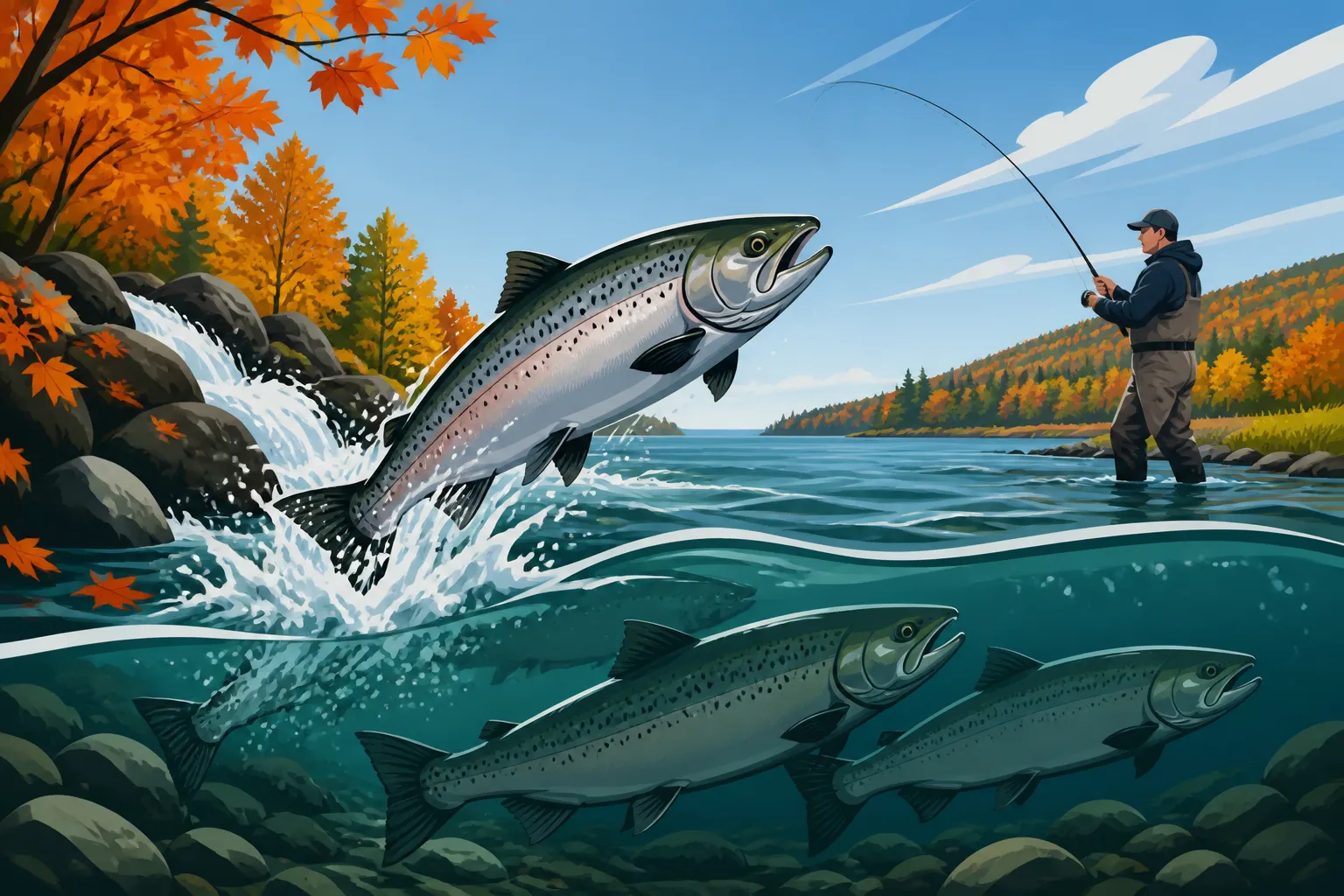
The Chinook salmon run is one of nature's most incredible spectacles, and for anglers in New York, it's a deeply ingrained tradition. These powerful fish, sometimes called "Kings," spend most of their lives growing to immense sizes in the vast, cold waters of Lake Ontario. But every autumn, an ancient instinct calls them back to the freshwater rivers and streams where they were born or stocked. This migration is all about spawning, ensuring the next generation of these incredible fish.
The Biological Imperative of the Run
The journey these salmon undertake from the deep waters of Lake Ontario up into its tributaries, like the Salmon River or the Oswego River, is driven by an unyielding biological clock. As the days shorten and the water temperatures in the lake begin to cool, the salmon undergo physiological changes that prepare them for their arduous upstream swim. They stop feeding aggressively, and their bodies focus all energy on reproduction. This is why you'll often hear about salmon not being "biters" once they're well into the rivers; they're not there to eat, they're there to spawn.
Their strong sense of smell, believed to be imprinted with the unique chemical signature of their natal stream, guides them with uncanny precision. They navigate against strong currents, leap over obstacles, and push tirelessly upstream, all to find suitable gravel beds for laying their eggs. This incredible journey is a testament to their resilience and offers an unparalleled fishing experience for those who understand their patterns.
Factors Initiating the Upstream Movement
While the biological clock is ticking, external environmental cues play a crucial role in triggering the mass exodus from the lake and into the rivers. The most significant factors are water temperature and flow. As tributary water levels rise due to rainfall or controlled releases from dams, and temperatures begin to drop into the ideal range (typically high 50s to low 60s Fahrenheit), salmon get the green light. A good rain event in late September or early October can be a game-changer, acting like a floodgate, drawing thousands of staging salmon into the rivers.
Conversely, a prolonged dry spell or unusually warm weather can delay the run. Anglers often find themselves glued to weather forecasts and flow reports, hoping for that perfect combination of cool temperatures and increased water levels to signal the start of the main event. It’s a dance between nature's timing and the angler’s patience, but when it all aligns, the results are unforgettable.
Why Early October Is Peak Time on Lake Ontario Tributaries
It's a question every passionate New York angler has pondered: when's the absolute best window to intercept those migrating Chinook salmon? While the run can stretch from late August into November, experience, data, and anecdotal evidence from seasoned guides consistently point to early October as the undeniable peak for Chinook salmon on the major Lake Ontario tributaries.
Optimal Water Conditions and Salmon Numbers
By early October, the water temperatures in the tributaries typically settle into that perfect range, often between 48-58°F. This temperature window is ideal for salmon, making them more active and comfortable in the river system. Crucially, a few good rain events have usually occurred by this time, increasing the water flow and providing enough depth for salmon to move freely upstream. This combination means that not only are the fish moving, but many of them are moving.
What you'll witness during this period is a massive influx of salmon pushing into the river systems. The tributaries become teeming with fish, from the lower stretches near the lake all the way up to prime spawning grounds further upstream. The sheer volume of fish increases your odds of encountering them significantly, even if they aren't actively feeding. This makes the early October window particularly exciting, as every bend in the river or deep pool could hold dozens of these chrome giants.
Salmon River and Oswego River: Prime Examples
When we talk about Lake Ontario tributaries, two rivers immediately come to mind as legendary salmon destinations: the Salmon River and the Oswego River.
The Salmon River, flowing through Pulaski, New York, is perhaps the most famous. Its consistent flow, thanks to the Lighthouse Hill Reservoir, and excellent habitat make it a magnet for Chinook salmon. In early October, the river from the estuary upstream to the major fishing zones like the Lower Fly Zone, Schoolhouse Pool, or Staircase is absolutely packed. Anglers flock to these areas, sometimes shoulder-to-shoulder, eager to get in on the action. You'll find a wide variety of fishing opportunities, from drift fishing with egg sacs to swinging flies in prime runs. For a deeper dive, check out our guide on New York's Salmon River Fishing Guide.
The Oswego River, another significant tributary, also experiences its peak Chinook run in early October. While it’s a much wider and more industrial river, the sheer volume of water it carries, along with its accessibility, draws in immense numbers of salmon. The areas around the Varick Dam in Oswego offer exceptional fishing, as salmon stack up below the dam, attempting to continue their journey upstream. Shore anglers and boaters alike find success here, often employing heavy gear to battle the powerful current and even more powerful fish.
Gearing Up for Peak Salmon Season
Hitting the rivers for Chinook salmon requires specialized gear that can handle these heavy-hitting fish. You don't want to show up with your ultralight trout setup and expect to land a 20-pound King! Proper preparation, especially with your tackle, is key to success and enjoyment during the peak run.
Essential Rods, Reels, and Line
For Chinook salmon in the tributaries, you'll want a rod with plenty of backbone. A medium-heavy to heavy power spinning or casting rod, typically 9 to 11 feet long, is ideal. The extra length helps with casting heavier setups, controlling drifts, and absorbing the shock of a powerful salmon run. Many anglers opt for a specialized float or "noodle" rod, which offers incredible sensitivity and fight absorption.
Pair this with a robust spinning reel in a 3000-5000 size range, or a baitcasting reel with a smooth drag system. A high-quality drag is non-negotiable, as Chinook salmon are notorious for blistering runs that can easily spool lesser reels. For mainline, 15-20 lb monofilament or fluorocarbon is a good starting point, but many prefer 20-30 lb braided line for its sensitivity and incredible strength. If you go with braid, remember to use a fluorocarbon leader, usually 12-17 lb test, for invisibility and abrasion resistance. Many anglers stock up on their braided line and fluorocarbon leaders in bulk, and you can often find great deals on these items on Amazon.
Top Baits and Lures for Chinook Salmon
During the peak run, Chinook salmon aren't actively feeding in the same way they would be in the lake. Instead, they strike out of aggression, territoriality, or curiosity. This means your bait and lure selection should focus on presentations that provoke a reaction.
- Egg Sacs: Hands down, egg sacs are one of the most effective baits. These are small mesh bags filled with cured salmon or trout eggs. The scent and natural appearance are incredibly enticing. You can buy pre-tied sacs or make your own. Different color mesh (orange, pink, chartreuse) can make a difference depending on water clarity and light conditions.
- Plastic Eggs/Beads: For those who prefer artificials or where natural bait is restricted, plastic egg imitations or "beads" are phenomenal. These look exactly like a single salmon egg drifting in the current and can be incredibly effective, especially when fished under a float. Brands like Berkley PowerBait offer scented versions that add another layer of attraction.
- Spoons: While more commonly used in the lake, smaller casting spoons (like those from Amazon, or popular brands such as Little Cleo or Krocodile) can entice salmon in the wider, deeper sections of the tributaries. Their wobbling action can trigger an aggressive strike.
- Plugs/Stickbaits: Larger plugs or stickbaits, often used for casting or back-trolling, can also be effective, especially in the deeper pools. Their erratic action can agitate a salmon into striking.
- Flies: For fly anglers, large egg patterns, flesh flies (imitating decaying salmon flesh), and attractor patterns in bright colors (pink, chartreuse, orange) are excellent choices. Understanding how to fish for salmon in New York effectively often means mastering these presentations.
Remember to rig your setups correctly. Using the appropriate weight (split shot or pencil lead) to get your bait down to the fish's level without snagging too often is an art form.
Navigating the Tributaries During the Peak Run
Fishing during the peak Chinook salmon run is an exhilarating experience, but it also comes with its unique challenges, from crowded access points to fast currents. Knowing how to navigate these conditions will significantly enhance your trip.
Popular Fishing Spots and Their Dynamics
During early October, virtually any public access point on major tributaries like the Salmon River, Oswego River, or Genesee River will be bustling.
- The Salmon River: As mentioned, areas like the Lower Fly Zone and Schoolhouse Pool near Pulaski are legendary. The Lower Fly Zone, specifically, is a designated area where only artificial flies are permitted, often attracting serious fly anglers. The main section of the Salmon River sees a lot of drift fishing with egg sacs. Expect competition for prime spots, especially on weekends. Anglers often line the banks, so courtesy and patience are paramount.
- The Oswego River: Below the Varick Dam is a hotspot. Here, salmon stack up in incredible numbers. Boat fishing is popular, allowing access to deeper pockets, but shore access below the dam and in various public parks along the river can also be incredibly productive.
- Smaller Tributaries: Don't overlook smaller, less famous tributaries. While they might not hold the sheer volume of fish as the Salmon River, they can offer a more peaceful experience and still see good numbers of migrating Chinook, particularly after a rain event. Many of these spots are detailed in guides like Lake Ontario Fishing in New York: Where to Go.
Safety and Etiquette on Crowded Waters
Safety is always first, especially when dealing with powerful rivers and potentially cold water. If wading, always wear a wading belt, and consider a personal flotation device (PFD), particularly in swift currents. The river bottoms can be rocky and slippery, so good wading boots with felt or stud soles are essential. You can often find highly-rated wading boots and other essential safety gear on Amazon at competitive prices.
When it comes to etiquette, patience and respect are your best allies.
- Give Space: Maintain a reasonable distance from other anglers. A good rule of thumb is to give enough space that your casts or drifts don't interfere with theirs.
- Rotate Through Runs: If a run is crowded, don't hog a single spot. Instead, join a "rotation" or "drift line," where anglers take turns fishing through a section, then move down to allow the next person in line to fish. This ensures everyone gets a fair shot.
- Respect Private Property: Pay attention to signage. Not all riverbanks are public access.
- Handle Fish Responsibly: If you plan to release a fish, do so quickly and carefully. Keep the fish in the water as much as possible, use a net with rubber mesh to protect its slime coat, and avoid squeezing it. Knowing proper catch-and-release handling rules is crucial for the health of the fishery.
- Clean Up: Pack out everything you pack in. Leave no trace of your presence behind.
Weather and Water Conditions: Adapting Your Approach
Early October weather in New York can be fickle. One day it might be sunny and mild, the next cold and rainy. Dress in layers, wear waterproof outerwear, and always have a hat and gloves. Water levels are constantly fluctuating. The New York State Department of Environmental Conservation (DEC) and various fishing forums provide real-time water flow data for popular rivers like the Salmon River. Always check these reports before heading out.
When water levels are high and murky, bright, contrasting colors in your baits and lures can be more effective. When water is low and clear, more natural colors and subtle presentations might be needed. The fish's behavior also changes with light conditions; early morning and late evening often see more active fish, though during the peak of the run, they can be encountered throughout the day. Flexibility and the willingness to adapt your techniques, from choosing the best lures for Chinook salmon to adjusting your drift, are hallmarks of a successful angler.
Chinook Salmon Run Characteristics by Stage
To really maximize your chances, it helps to understand the subtle shifts that occur throughout the salmon run. While early October is peak, recognizing what happens just before and just after can help you adjust your strategy.
| Run Stage | Timing (Approx.) | Water Temperature (F) | Fish Behavior | Angling Focus |
|---|---|---|---|---|
| Early Run | Late August – Mid-September | 60-70+ | Staging in lake/estuary, some early pushes upstream | Aggressive biters in lake, target first waves in river |
| Peak Run | Early-Mid October | 48-58 | Mass migration upstream, holding in pools/runs | Reaction strikes with egg sacs, beads, flies; high numbers of fish |
| Late Run/Post-Spawn | Late October – November | 40-50 | Spawning, deteriorating fish, some dying | Targeting fresh late-run fish; Steelhead begin to enter to feed on eggs |
Early Run: The First Wave
Even before early October, usually starting in late August and ramping up through September, you'll see the first waves of Chinook salmon attempting to move into the tributaries. These early fish are often the "freshest" and most aggressive biters, as they haven't been in the river long and may still retain some of their lake-feeding instincts.
During this stage, many fish are still staging in the cooler, deeper waters of Lake Ontario near the mouths of the rivers, waiting for the right conditions. Trolling for these staging fish in the lake can be incredibly productive. When they do make their way into the river, they're often strong and full of fight. This is a great time to target them with larger spoons or plugs, or to be among the first to present egg sacs in the river. Keep an eye on reports about When Do Chinook Salmon Start Running in Lake Ontario Tributaries?.
Post-Peak and Steelhead Transition
As the calendar turns towards late October and into November, the intense peak of the Chinook run starts to wane. Many salmon will have completed their spawning cycle and will begin to die off, a natural part of their lifecycle. While you can still find fresh Chinook, their numbers will gradually decrease.
However, this isn't the end of the action! As the Chinook salmon finish their business, another highly anticipated species begins its migration: the steelhead. These hard-fighting rainbow trout enter the tributaries to feast on the dropped salmon eggs and often remain in the rivers throughout the winter and into spring. So, while the Kings might be moving on, the Steelhead take center stage, offering a fantastic transition for dedicated anglers. Techniques will shift, often focusing on smaller egg patterns, beads, and nymphs, a skill detailed in our piece on How to Fish Egg Sacs for Steelhead. This overlapping period provides a unique opportunity for anglers to target both species, making the late fall still incredibly productive.
New York Fishing License Requirements and Regulations
Before you even think about stepping foot in a Lake Ontario tributary, it's absolutely crucial to ensure you have the correct New York fishing license. Fishing without one can lead to hefty fines and a ruined trip, something no one wants.
Securing Your New York Fishing License
Anyone aged 16 or older needs a valid New York State fishing license to fish in freshwater. For the vast majority of Lake Ontario's tributaries, you'll need a standard freshwater fishing license. The process for obtaining one is straightforward:
- Online: The quickest and easiest way is through the New York State DEC website. You can purchase and print your license from the comfort of your home.
- In Person: Licenses are also available at many sporting goods stores (like Amazon partners, or local shops such as DICK'S Sporting Goods or Bass Pro Shops), town and county clerk offices, and DEC offices.
- License Types: You can choose from annual, 7-day, or 1-day licenses, depending on the length of your trip. Non-residents will pay a higher fee than New York residents. For a comprehensive overview, check out our New York Fishing License Guide or delve into specific options like New York Nonresident Fishing License Cost.
Always carry your license with you while fishing, either a physical copy or a digital copy on your phone. Conservation Officers regularly patrol these popular salmon rivers during the peak run.
Understanding Special Regulations and Seasons
New York has specific regulations that vary by water body and species. For Chinook salmon, you'll need to be aware of:
- Season Dates: While the salmon run is generally open through the fall, specific dates and closures might apply to certain waters.
- Daily Catch Limits: There's a limit to how many salmon you can keep per day. Always consult the current DEC Fishing Regulations Guide.
- Minimum Size Limits: Any salmon you keep must meet a minimum length requirement.
- Gear Restrictions: Certain areas, like "fly-fishing-only" zones or "artificial lures only" sections, will have specific gear restrictions. The Salmon River's "Lower Fly Zone" is a prime example.
- Snagging Prohibition: Intentional snagging of salmon is strictly illegal. All fish must be caught fairly by mouth.
It’s your responsibility as an angler to know and follow these rules. The New York Fishing Regulations Explained article offers a detailed breakdown. Ignorance of the law is not an excuse, and penalties for violations can be severe, including fines and loss of fishing privileges. Taking the time to read the current regulations before your trip is an absolute must.
Disclaimer
The information provided in this guide is for general informational purposes only and is subject to change. Fishing regulations, season dates, and water conditions can vary. Always consult the most current New York State Department of Environmental Conservation (DEC) regulations and local advisories before engaging in any fishing activities. Adherence to all laws and responsible fishing practices is the sole responsibility of the individual angler.