When Do Coho Salmon Run in New York?
If you're an angler in New York, especially one drawn to the thrill of migratory salmon, you've probably heard a lot about the massive Chinook runs. But what about their often-overlooked, yet incredibly fun-to-catch, cousins, the Coho salmon? Knowing when these silver bullets show up can feel like cracking a secret code, and it's easy to get confused when discussing "salmon season" in general terms. This guide is here to untangle the timing of the Coho salmon run in New York, ensuring you’re on the water when the action heats up.
Understanding New York's Coho Salmon Fishery
New York State boasts a fantastic salmon fishery, primarily centered around Lake Ontario and its tributaries. While Chinook salmon often steal the spotlight due to their sheer size, Coho salmon offer an exhilarating fight on lighter tackle and are a prized catch for many anglers. Understanding their habits and preferred habitats is the first step to successfully targeting them during their migratory runs.
Distinguishing Coho from Chinook Salmon
It's a common point of confusion for many anglers, especially newer ones: how do you tell a Coho from a Chinook, and why does it matter for timing the runs? While both are Pacific salmon species introduced to the Great Lakes, they have distinct characteristics and, crucially, different migratory schedules. Chinook salmon, often called "Kings," are known for their larger size and aggressive, tackle-busting power. They typically have black spots on both lobes of their tail and black gum lines.
Coho salmon, sometimes called "Silvers," are generally smaller, averaging 5-10 pounds in New York, though some can push into the teens. Their tail usually has spots only on the upper lobe, and they often have a white or pale gum line. More importantly for our discussion, their life cycles differ. Chinook salmon spend 3-5 years in the lake before their spawning run, while Coho salmon typically spend 2-3 years, influencing when they mature and return to the rivers. This means their runs don't always perfectly overlap, and knowing the difference helps you prepare for the specific fish you're targeting. For a more detailed look at these incredible fish, check out our guide on Chinook Salmon in New York.
Key Waterways for Coho Salmon in New York
When it comes to Coho salmon, Lake Ontario and its numerous tributaries are the undisputed hotspots in New York. The lake itself provides the rich foraging grounds where these fish spend most of their lives growing large and strong. As their biological clock ticks towards spawning, they begin to stage near the mouths of rivers and eventually push upstream.
The Salmon River in Pulaski is arguably the most famous tributary and a consistent producer of Coho salmon. Its size and flow offer ideal conditions for large numbers of fish to congregate. However, don't overlook other significant tributaries like the Oswego River, Genesee River, and smaller streams such as Sandy Creek, Oak Orchard Creek, and Eighteenmile Creek. These smaller waterways, while sometimes more challenging to fish due to lower water levels or more limited access, can also hold excellent numbers of Coho, particularly after a good rain event. Many anglers find success by exploring these lesser-known spots, often finding less crowded conditions and equally strong fighting fish. Our comprehensive guide to Lake Ontario Fishing in New York Where to Go has more details on prime locations.
The Coho Salmon Run: Timing is Everything
Timing is absolutely critical when it comes to intercepting the Coho salmon run in New York. Unlike some resident fish species that are available year-round, these anadromous (or in this case, adfluvial) fish have a relatively short window when they are actively migrating up the rivers. Catching them requires a keen understanding of their migratory patterns and the environmental triggers that prompt their movement.
Peak Season for Coho Salmon in Lake Ontario Tributaries
Generally speaking, the peak season for Coho salmon to enter New York's Lake Ontario tributaries truly kicks off in October and extends strongly into early November. This is when you'll find the largest concentrations of fish pushing upstream with purpose. The cooler water temperatures in the lake, combined with significant rainfall that brings river levels up, act as powerful signals for Cohos to begin their spawning migration.
During this period, the rivers transform into highways for salmon. Anglers flock to prime locations, anticipating the next wave of fresh fish. While you might see some early arrivals, the full force of the run typically aligns with crisp autumn days and often, the first few real cold snaps of the season. Knowing the New York Fishing Season Dates and Catch Limits is crucial for planning your trips during this prime window.
Early Season: August and September Outlook
While October is prime time, the Coho salmon story actually begins much earlier, often as early as late August and throughout September. During this "early season," Cohos don't typically run far up the tributaries. Instead, they begin to stage in the colder, deeper waters of Lake Ontario near the mouths of the rivers they intend to ascend. This pre-spawn staging is a critical phase.
Anglers targeting these early fish will often find success by trolling in the lake, sometimes within a mile or two of the river mouths. These lake-run Cohos are often the brightest and hardest fighting, having not yet expended energy on the spawning journey. They are actively feeding and incredibly aggressive. As September progresses, especially after a substantial cold rain, a few brave Cohos might make initial probes into the lower stretches of the rivers, but these are often fleeting and localized movements, serving as a precursor to the main event. If you’re equipped for it, late summer lake fishing can be incredibly rewarding for these pre-spawn silvers.
Prime Time: October and Early November Action
This is it, the moment most Coho anglers eagerly await! From early October through mid-November, New York's Lake Ontario tributaries experience the most robust Coho salmon runs. This period is characterized by cooler air temperatures, typically falling water temperatures in the rivers, and often, increasing precipitation. The combination of these factors creates the perfect storm for Coho to leave the relative safety of the lake and embark on their upstream journey.
During this prime window, Cohos will actively swim upriver, holding in deeper pools, behind structure, and in areas of moderate current. You'll find them in the Salmon River, the Oswego River, and even smaller streams that might only have a trickle earlier in the year. The fish are still relatively fresh, incredibly strong, and very responsive to a variety of baits and lures. The activity usually peaks mid-month in October, but a strong push of fish can extend well into November, sometimes even overlapping with the early steelhead runs. It's an exciting time, and understanding How to Fish for Salmon in New York during this period will definitely increase your chances of success.
| Month | Coho Activity Level | Typical Location | Key Conditions |
|---|---|---|---|
| August | Low (Lake Staging) | Near river mouths in Lake Ontario | Cooler lake temps, no river entry yet |
| September | Moderate (Lake Trolling/Early Probes) | Lake near river mouths, very lower river | Cold rain may trigger brief lower river pushes |
| October | HIGH (Peak Run) | Lake Ontario tributaries (Salmon River, Oswego, etc.) | Falling river temps, significant rainfall |
| November | Moderate-High (Late Run/Post-Spawn) | Mid to upper tributaries | Cold temps, possible first ice |
| December+ | Very Low (Spent Fish) | Few remaining, mostly post-spawn | Coldest water, winter conditions |
Factors Influencing the Coho Salmon Run
While the general timing of the Coho salmon run is fairly predictable, Mother Nature always has the final say. Several environmental factors play a huge role in determining the exact start, intensity, and duration of the run each year. Understanding these variables can help you make informed decisions about when and where to fish, turning a good day into a fantastic one.
The Role of Water Temperature and Flow
Two of the most critical factors dictating Coho salmon movements are water temperature and flow. As lake temperatures begin their seasonal drop in late summer and early fall, it signals to the Coho that their spawning window is approaching. They'll start congregating near river mouths, feeling the cooler inflow from the rivers. The ideal temperature range for them to begin their upriver migration is typically in the low to mid-50s Fahrenheit (around 10-14 degrees Celsius) in the rivers.
However, temperature alone isn't always enough. River flow is equally, if not more, important. A significant rain event that raises river levels and increases current is often the trigger for a major push of Coho. These freshets provide easier passage over obstacles, dilute scent trails, and generally make the journey less taxing. Without adequate rainfall, fish might stack up in the lower river or just outside the mouth for days, sometimes even weeks, waiting for the right conditions. This is where staying updated on local weather and river gauges becomes your best friend. For a deeper dive into the dynamics of tributary fishing, check out How to Fish New York's Great Lakes Tributaries.
Weather Patterns and Their Impact
Beyond just rainfall, broader weather patterns have a profound impact on the Coho run. Cold fronts, while often making for chilly fishing days, are frequently associated with strong pushes of migratory fish. A sustained period of cooler weather helps drop the lake and river temperatures, bringing them into that optimal range for salmon. Conversely, unexpected warm spells in October can slow down the run, making the fish more lethargic or causing them to hold back in the lake.
Cloud cover and wind also play a role. Overcast days tend to be more productive, as Cohos, like many salmonids, can be wary in bright sunlight. Strong winds on Lake Ontario can create currents and turbidity near shore, which might either encourage fish to move into the rivers for shelter or make lake staging more challenging. Paying attention to the long-range forecast, not just for rain, but for overall temperature trends and wind, can give you a significant edge in planning your fishing outings.
Lake Ontario's Influence on Coho Movements
It's easy to focus solely on the rivers once the fish start running, but Lake Ontario itself plays an enormous, often underappreciated, role in the Coho salmon migration. The sheer size and depth of the lake allow Cohos to grow to impressive sizes by feeding on abundant baitfish like alewives and smelt. Their migratory journey technically begins with movements within the lake, as they start to cruise along the shoreline towards their natal (or stocked) rivers.
Currents, temperature breaks, and baitfish concentrations within Lake Ontario all influence where and when Cohos stage. For instance, if large schools of alewives are holding just outside a river mouth, the Cohos might linger there, actively feeding, before committing to the river. These lake dynamics make early season trolling for Cohos a unique and exciting fishery. Understanding these broader patterns helps you comprehend why some years see early, strong runs, while others might be delayed, reminding us that the entire ecosystem is interconnected.
Essential Gear and Techniques for Coho Salmon
Successfully targeting Coho salmon, particularly during their intense tributary runs, requires the right gear and a solid understanding of effective techniques. While they may not be as enormous as their Chinook cousins, Cohos are powerful, acrobatic fighters that demand respect and appropriately matched tackle. Don't underestimate their fighting spirit!
Recommended Rods, Reels, and Line
For tributary fishing, where you'll be casting or drifting in moving water, a medium-heavy power spinning or baitcasting rod, typically 8 to 10.5 feet in length, is ideal. The extra length provides better line control, easier mending, and increased leverage for fighting fish in current. Brands like Fenwick, Shimano, or St. Croix offer excellent options designed for salmon and steelhead. Match this with a quality spinning reel in the 2500-4000 series or a baitcasting reel with a smooth drag system. When you're fighting a surging Coho, a sticky drag can quickly lead to heartbreak.
When it comes to line, 10-15 pound monofilament or braided line is a good starting point for your main line. If using braid, a fluorocarbon leader of 8-12 pounds is highly recommended. Fluorocarbon is nearly invisible underwater, providing a stealth advantage, and its abrasion resistance is key when fishing around rocks and logs. Remember, strong knots are essential! You can find a vast selection of these items, from rods to various lines and leaders, on Amazon, often with detailed reviews from other anglers that can help guide your choice.
Effective Baits and Lures for Coho
Coho salmon are known for their aggressive strikes, and a variety of baits and lures can be incredibly effective. One of the most consistent producers, especially in the rivers, are egg sacs. These small mesh bags filled with cured salmon or trout eggs mimic the natural food source salmon are looking for as they move upstream. Bright, fluorescent colors for the netting, like chartreuse, orange, or pink, can be particularly enticing.
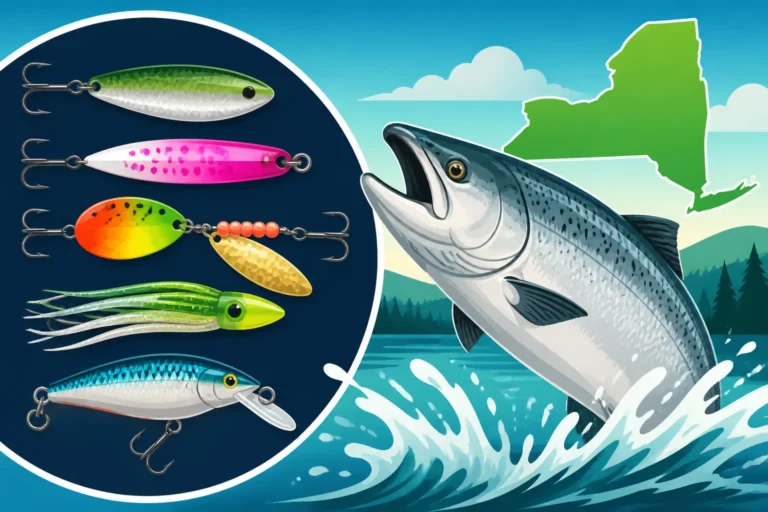
For artificial presentations, small spoons (like the Little Cleo or Koho spoon, often available on Amazon), spinners (Mepps, Blue Fox), and small crankbaits in patterns mimicking baitfish or vibrant "attractor" colors are excellent choices. Silver, gold, chartreuse, and orange are often go-to colors. In clear water, natural baitfish patterns can shine, while in stained water, brighter colors often get noticed. Fly anglers will find success with various egg patterns, flesh flies, and small streamers. Having a diverse selection in your tackle box will allow you to adapt to changing water conditions and fish preferences throughout the run. Our guide to Best Lures for Chinook Salmon will give you even more ideas, many of which cross over for Coho.
Strategic Approach: Drifting, Casting, and Trolling
The technique you employ will largely depend on where you're fishing. When Cohos are in the Lake Ontario tributaries, drifting is a primary method. This involves using a float (bobber) to present your bait (like an egg sac or bead) naturally with the current, allowing it to drift into pools, runs, and current seams where fish are holding. The key is to achieve a drag-free drift that looks completely natural.
Casting spoons, spinners, or small crankbaits is also highly effective, especially in wider runs or when targeting fish that are actively chasing. Cast upstream or across the current and allow your lure to swing and work its way down, varying your retrieve speed to find what triggers a strike. For the early season Cohos still staging in Lake Ontario, trolling with downriggers or planer boards is the go-to method. This allows you to cover vast amounts of water and present lures at precise depths where the fish are suspended. Experiment with different depths and speeds until you find the fish. Remember, patience and persistence are key, as is understanding the Best Fall Fishing Techniques in New York.
Disclaimer
Fishing regulations can change frequently. Always consult the latest New York State Department of Environmental Conservation (DEC) fishing regulations guide before heading out on the water. This article is for informational purposes only and does not supersede official regulations.