How to Fish for Steelhead in New York
The thrill of chasing steelhead in New York is unlike anything else, but for many anglers, especially those new to the game, it can feel like trying to crack a secret code. These elusive, hard-fighting fish demand dedication, the right gear, and a deep understanding of their behavior. This comprehensive guide will peel back the layers of mystery, walking you through everything you need to know to successfully hook into these incredible anadromous rainbow trout in the Empire State.
Understanding New York's Steelhead Phenomenon
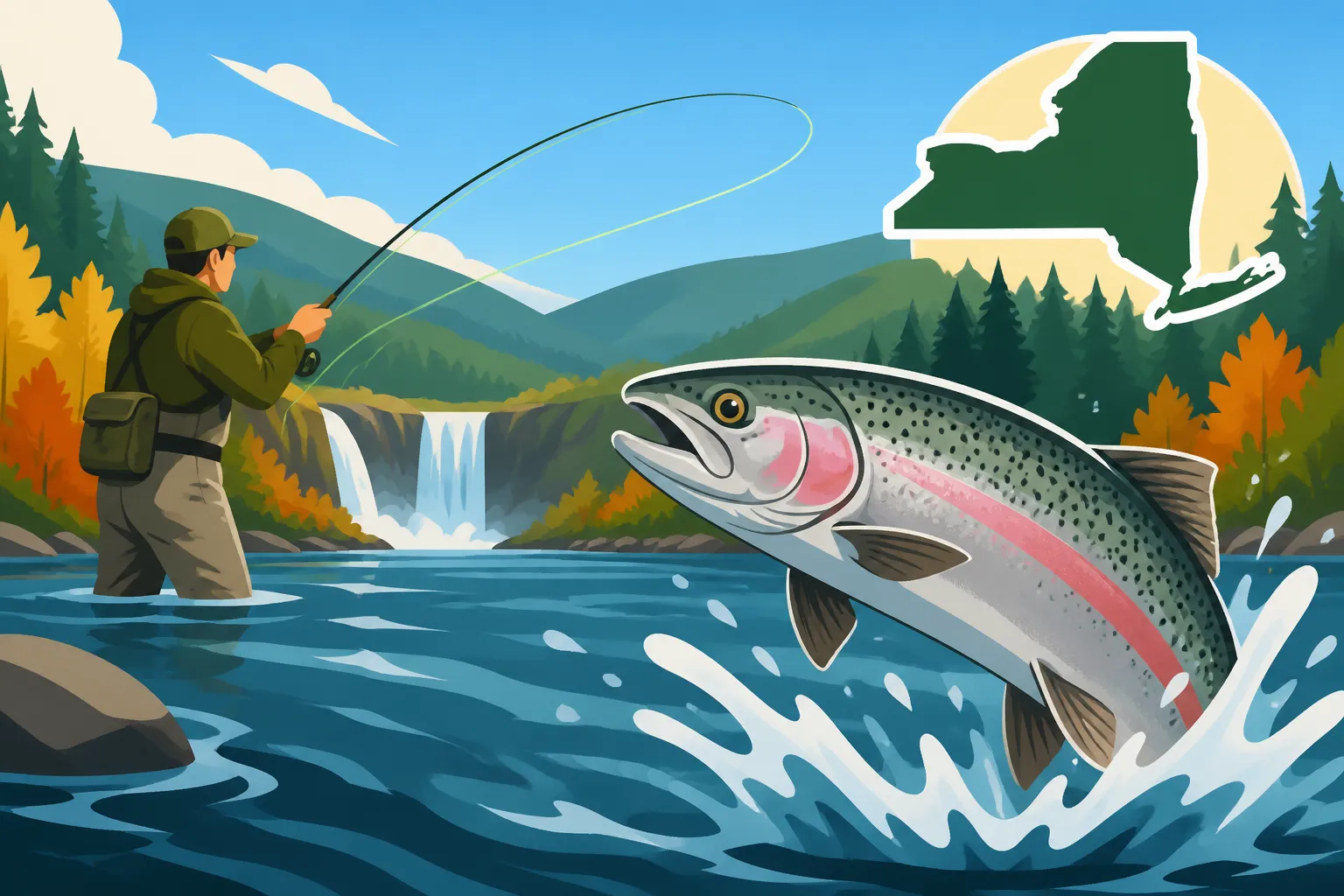
Steelhead fishing in New York isn't just a pastime; for many, it's a way of life, an annual pilgrimage to the cold, clear waters of our Great Lakes tributaries. These fish are essentially rainbow trout that migrate from Lake Ontario and Lake Erie into rivers and streams to spawn, much like salmon do. They are renowned for their incredible strength, acrobatic leaps, and fierce battles, making them a top target for anglers across the state.
The Allure of Steelhead Fishing in New York
There’s a certain magic to steelhead fishing that draws people back year after year. It's not just about the size of the fish, although a chrome-bright steelhead fresh from the lake is a sight to behold. It's the challenge, the beauty of the wild landscapes you find yourself in, and the sheer power of these creatures. Imagine standing in a pristine river, the air crisp, snow often dusting the banks, and then feeling that unmistakable tug – a jarring strike that quickly escalates into a screaming reel and a fish that seems to defy gravity. Many anglers spend years perfecting their techniques, learning to read the subtle nuances of the water and anticipate the steelhead's movements. This pursuit becomes a personal journey of skill development and connecting with nature.
The allure also stems from the dynamic nature of the fishery. Steelhead runs are influenced by everything from water temperature and flow to moon phases and precipitation. This constant variability means no two days on the river are ever exactly alike, keeping anglers on their toes and ensuring there’s always something new to learn. It's a game of patience, persistence, and problem-solving, all culminating in the potential reward of a truly memorable catch.
Identifying New York's Steelhead Runs
New York is primarily known for two distinct types of steelhead populations: those that run up tributaries flowing into Lake Ontario and those that utilize tributaries of Lake Erie. While both offer fantastic fishing opportunities, understanding the differences in their timing and typical characteristics can significantly improve your success. Generally, these fish begin their migration into the rivers as water temperatures drop in the fall, seeking suitable spawning grounds.
The fall run typically starts in September and continues strongly through November, often triggered by significant rain events that raise water levels and cool temperatures. These early fish are often aggressive and focused on finding deeper pools and runs where they can hold. As winter sets in, the runs slow, but fish remain in the rivers, often holding in slower, deeper sections to conserve energy. The spring run is arguably the most celebrated, beginning as ice thaws, usually from March through May. These fish are primarily focused on spawning and can be found actively moving upstream or staged in shallower, gravelly areas. Knowing these patterns, as detailed in our guide on the Best Time to Fish for Steelhead on New York's Lake Ontario Tributaries, is crucial for planning your trips.
For anglers on the western side of the state, Lake Erie tributaries like Cattaraugus Creek and Chautauqua Creek see similar patterns, with robust fall and spring runs. Lake Ontario tributaries, particularly the Salmon River, Oswego River, and Oak Orchard Creek, are legendary for their abundant steelhead populations. Understanding the timing and intensity of these runs, which can vary slightly year to year based on weather and water conditions, is fundamental to effectively targeting these fish.
Essential Gear for New York Steelhead Anglers
Approaching steelhead fishing without the right gear is like trying to climb a mountain in flip-flops – it's just not going to end well. These are powerful fish in often demanding environments, so your equipment needs to be up to the task. Investing in quality gear isn't just about comfort; it's about increasing your chances of success and ensuring a safe, enjoyable experience on the water.
Rods, Reels, and Line Selection
When it comes to steelhead, you need equipment that can handle both delicate presentations and brutal fights. For most New York tributary fishing, a spinning or baitcasting setup will consist of a medium-light to medium-heavy rod, typically 9 to 11 feet in length. The extra length is invaluable for mending line, controlling drifts, and absorbing the shock of a hard-charging fish. A longer rod allows you to keep more line off the water, reducing drag and making for a more natural drift of your bait or lure. Look for rods with a fast action, meaning the tip bends easily but the backbone is stiff enough to put pressure on a big fish.
For reels, a high-quality spinning reel in a 2500-4000 series or a baitcasting reel with a smooth drag system is essential. Steelhead make incredible runs, and a sticky or inconsistent drag can lead to snapped lines and lost fish. Spool your reel with 8-12 lb monofilament or fluorocarbon main line, or consider using 15-20 lb braided line with a 6-10 lb fluorocarbon leader. Braided line offers superior sensitivity and casting distance, while the fluorocarbon leader provides stealth and abrasion resistance. Many anglers find braided line particularly effective in cold conditions, as it's less prone to freezing on the spool. You can find excellent options for all these components on platforms like Amazon, making it convenient to acquire reliable gear.
Fly anglers targeting steelhead will typically opt for 8 to 10-weight rods, 9 to 10 feet long. A heavier rod helps cast large flies, manage heavy sink tips, and provides the backbone needed to subdue these strong fish. Pair this with a large arbor reel with a strong drag and plenty of backing, as steelhead will often peel off 100 yards of line or more in a single run. Weight-forward floating lines are common for indicator nymphing, while various sink-tip and full-sinking lines are used for swinging flies in deeper or faster water.
Terminal Tackle and Essential Accessories
Your terminal tackle is where the rubber meets the road, or rather, where your bait meets the fish. For drift fishing, you'll need an assortment of small, sharp hooks, usually sizes 6 to 12. Gamakatsu, Owner, and Mustad are popular choices known for their sharpness and strength. Split shot or pencil lead are crucial for getting your bait down to the strike zone, and a variety of weights will allow you to adapt to different current speeds and depths. Swivels are also handy to prevent line twist.
Beyond hooks and weights, consider adding a selection of small floats or strike indicators, especially for methods like float fishing or indicator nymphing. These help detect subtle bites and suspend your bait or fly at the perfect depth. A good pair of line nippers, forceps or pliers for hook removal, and a sturdy landing net with a rubberized mesh (kinder to the fish) are also non-negotiable. Don't forget a tackle box or vest to keep everything organized and easily accessible. Having a diverse array of terminal tackle is key to adapting to changing river conditions.
Waders and Cold-Weather Apparel
Steelhead fishing, especially in New York, often takes place in cold water and even colder air. High-quality chest waders are absolutely essential. Breathable waders made from Gore-Tex or similar materials are ideal, allowing moisture to escape while keeping you dry. Pair these with warm layering underneath, such as fleece pants or thermal leggings, and thick wool socks. Neoprene wading boots with felt or rubber soles (and often studs for extra grip) provide traction on slippery riverbeds and additional insulation.
Beyond waders, dressing in layers is paramount for comfort and safety. A good waterproof and windproof outer shell jacket is a must, along with a warm fleece or down jacket for insulation. Don't forget a warm hat, gloves (fingerless gloves can be great for dexterity), and a neck gaiter. Hand warmers can be a lifesaver on particularly frigid days. Staying warm and dry directly impacts your ability to concentrate and enjoy your time on the water. Being cold can quickly turn a potential epic day into a miserable retreat.
Prime Steelhead Fishing Locations in New York
New York is blessed with an abundance of waters that host incredible steelhead runs. While many streams receive annual stockings, the natural reproduction in some of our larger tributaries helps sustain these robust fisheries. Knowing where to focus your efforts can make all the difference, and it often means heading to the Great Lakes region.
Lake Ontario Tributaries: The Steelhead Mecca
Without a doubt, the tributaries feeding into Lake Ontario are the crown jewel of New York steelhead fishing. Rivers like the Salmon River, the Oswego River, and Oak Orchard Creek attract thousands of anglers annually, and for good reason. These rivers offer consistent runs of large, powerful steelhead, and their infrastructure often supports anglers with guide services, bait shops, and public access points.
The Salmon River, near Pulaski, is perhaps the most famous, with a diverse mix of public and private access. It's known for its incredibly strong runs of fish from September through May. This river features everything from deep, slow pools to fast, rocky runs and is suitable for various techniques. Fishing pressure can be intense, especially during peak runs, but the sheer number of fish makes it worth the effort. The Oswego River, flowing directly through the city of Oswego, offers excellent urban steelhead opportunities, particularly in its lower stretches, accessible from break walls and various parks. Oak Orchard Creek, a bit further west, is another legendary fishery, known for its strong fall and spring steelhead migrations. These systems are carefully managed by the New York State Department of Environmental Conservation (DEC), and keeping up-to-date with the New York Fishing Regulations Explained is crucial for responsible angling.
Lake Erie Tributaries: A Western New York Gem
While Lake Ontario often gets the lion's share of attention, the tributaries of Lake Erie in Western New York offer equally exciting steelhead opportunities. These smaller, often more intimate streams can provide a refreshing change of pace for anglers. Cattaraugus Creek, which forms part of the border between Erie and Chautauqua counties, is a powerhouse steelhead fishery. Its large size and diverse habitat make it ideal for drift fishing and swinging flies. Fish here can be exceptionally large, and the scenery is often stunning.
Other notable Lake Erie tributaries include Chautauqua Creek, Clear Creek, and Eighteenmile Creek. These streams tend to be smaller and more susceptible to fluctuating water levels, meaning timing your visit after a good rain can be key. However, when conditions are right, they can offer fantastic action. They tend to be less crowded than some of the larger Lake Ontario rivers, providing a more secluded angling experience. Always remember to check the stream conditions and gauge levels before heading out to these more temperamental waters.
Lesser-Known Steelhead Hotspots
Beyond the major rivers, New York has numerous smaller creeks and streams that feed into both Lake Ontario and Lake Erie. While these might not hold the same quantity of fish as the bigger names, they can offer incredible, uncrowded fishing experiences for those willing to do a bit of exploring. Streams like Sandy Creek, Irondequoit Creek, and Black River often have respectable steelhead runs, particularly after significant rain events.
These smaller waters require a more stealthy approach and often involve navigating through thick brush or private land (always secure permission if needed). The fish in these streams can be more skittish, but also less pressured, making them potentially more willing to bite. Local bait shops and fishing forums are excellent resources for uncovering these hidden gems. Always double-check local regulations for any special restrictions on these smaller waterways, as rules can vary. For those interested in expanding their horizons, exploring different stretches of the river systems covered in Lake Ontario Fishing in New York: Where to Go or Lake Erie Fishing in New York: Where to Go can reveal new hotspots.
Key Techniques for Targeting New York Steelhead
Steelhead are opportunistic feeders, but they can also be incredibly finicky. Successful steelhead fishing often requires a versatile approach, being ready to switch techniques based on water conditions, fish behavior, and even pressure from other anglers. Having a few different methods in your arsenal will make you a more adaptable and successful angler.
Drift Fishing with Egg Sacs and Bait
Drift fishing is arguably the most popular and effective technique for steelhead in New York's tributaries, particularly in the fall and spring. The basic idea is to present a natural bait, typically an egg sac, salmon roe, or a cluster of artificial eggs, in a free-drifting manner that mimics a dislodged food source. The key is to use just enough weight (split shot or pencil lead) to get your bait down to the bottom without dragging, allowing it to tumble naturally with the current. This method is particularly effective in runs, riffles, and transition zones where steelhead are actively feeding or staging.
Egg sacs are made by tying small clusters of salmon or trout eggs into a piece of colored netting or nylon stocking. Different colors of netting, like orange, pink, or chartreuse, can be effective depending on water clarity and conditions. When fishing egg sacs, a long, sensitive rod and a smooth drag are paramount. Bites can be subtle – a slight hesitation in your line, a bump, or simply the line stopping its natural drift. Setting the hook quickly and firmly is crucial. For a deep dive into this, check out our guide on How to Fish Egg Sacs for Steelhead.
Other effective baits include wax worms, minnows, or even a simple piece of corn. These can be presented in a similar drifting manner, often suspended under a float or fished directly on the bottom with minimal weight. The effectiveness of different baits can vary from day to day, so it's always wise to have a selection on hand.
Float Fishing and Indicator Nymphing
Float fishing, also known as "centerpinning" when using specialized reels, takes drift fishing to the next level of precision. This technique uses a highly visible float (or "bobber") to suspend your bait or fly at a precise depth and allows for incredibly long, natural drifts with minimal drag. Floats come in various sizes and shapes, designed to be sensitive to light bites and visible in varying water conditions. The weight system below the float, often an inline sinker or a series of small split shot, is carefully balanced to present the bait vertically in the water column.
This method is incredibly effective in deeper runs, pools, and seams where steelhead might be holding. The float provides a clear visual indicator of even the lightest bite, which is invaluable when fish are lethargic or "mouthing" the bait rather than aggressively striking. Many anglers consider float fishing to be one of the most exciting ways to catch steelhead, as the visual of the float disappearing is incredibly addictive. Our guide on How to Drift Fish for Steelhead offers more specific rigging details that apply to both bottom-bouncing and float fishing approaches.
Indicator nymphing in fly fishing is very similar in concept, utilizing a strike indicator (a small float or yarn indicator) to suspend nymphs, egg patterns, or small streamers at a precise depth. This allows fly anglers to fish effectively in deeper water where steelhead are often found. The key is to achieve a drag-free drift, ensuring your fly looks as natural as possible. Adjusting the depth of your indicator and the amount of weight on your leader is a constant process, adapting to changes in current speed and bottom contours.
Fly Fishing for Steelhead
Fly fishing for steelhead is a highly specialized and rewarding pursuit, offering a unique connection to the fish and the environment. There are several primary fly fishing techniques employed for New York steelhead, each suited to different conditions and fish behavior. Swinging flies, particularly large wet flies, spey flies, or streamers, is a classic method that involves casting across and downriver, allowing the current to "swing" the fly through likely holding water. This technique often elicits aggressive, territorial strikes from steelhead.
Nymphing, as mentioned, is another highly effective fly fishing method, using weighted nymphs or egg patterns under a strike indicator. This technique aims to present small, natural imitations of insects or eggs near the bottom where steelhead often feed. Dead-drifting these patterns with a perfect drag-free presentation is the key to success. Our dedicated guide on How to Fly Fish for Steelhead provides intricate details on rigging and presentation for this challenging yet rewarding method.
Finally, while less common for New York's migratory steelhead, throwing large streamer patterns can be deadly, especially for aggressive fish or in off-color water. These flies imitate baitfish and can provoke powerful strikes. Regardless of the chosen technique, proper line control, stealth, and a keen eye for subtle takes are crucial for fly fishing success. Many fly anglers find that purchasing quality leader and tippet material from a reliable source like Amazon ensures they have strong, clear line for those critical moments.
Mastering the Seasons: When and Where to Find Steelhead
New York's steelhead season is essentially year-round in its potential, but the intensity and location of fish migrations fluctuate dramatically with the seasons. Understanding these patterns is paramount to planning your trips and maximizing your chances of success. Each season presents unique opportunities and challenges.
Fall Steelhead Runs: The Initial Charge
The fall is when the steelhead party truly begins. As water temperatures begin to drop in late summer and early fall, usually around September, and with the first significant rains, steelhead start making their way from Lake Ontario and Lake Erie into the tributaries. These initial runs, often triggered by cooling water and increased flow, are composed of aggressive, chrome-bright fish fresh from the lake. They are hungry and eager to find holding water, making them excellent targets.
The early fall is often characterized by fish holding in faster runs and deeper pools, sometimes even stacked up behind salmon that are on their own spawning runs. They’re opportunistic feeders, keying in on salmon eggs that drift downstream. This period continues through November, with waves of new fish entering the rivers. According to Fall Steelhead Run Timing in New York, the timing can be variable but consistent after the first major cold fronts and rain. This is a prime time for drift fishing with egg sacs and artificial egg patterns. As the fall progresses and water temperatures continue to drop, steelhead will transition to deeper, slower pools, seeking refuge from the cold.
Winter Steelhead: Ice, Snow, and Persistence
Winter steelhead fishing in New York is not for the faint of heart, but it can be incredibly rewarding. From December through February, the rivers can be blanketed in snow, and ice can form along the banks. Fish activity slows down considerably as steelhead move into their winter holding patterns, typically in deep, slow pools, eddies, and even under ice shelves. They are metabolically sluggish and bites are often extremely subtle.
Success during winter demands patience, delicate presentations, and often, lighter lines and smaller baits. Focus on areas that offer refuge from strong currents and are less exposed to the elements. During warmer spells, often referred to as "thaws," fish may become more active and even push further upstream. This is a time when having insulated waders and excellent cold-weather gear, perhaps purchased conveniently from Amazon, is non-negotiable. While challenging, the reward of a powerful steelhead on a frigid winter day is unmatched. Always exercise extreme caution when fishing in icy conditions and prioritize safety above all else. Our guide to New York Ice Fishing Rules offers relevant safety tips.
Spring Steelhead: The Grand Finale
As winter's grip loosens and temperatures slowly begin to rise, usually from March through May, the spring steelhead run kicks into high gear. These are often the largest runs of the year, as both "dropback" fish (those that spawned in late winter or early spring and are now heading back to the lake) and fresh "pre-spawn" fish (entering the river to spawn) populate the tributaries. The rivers can swell with snowmelt and rain, creating powerful currents.
Spring steelhead are often aggressive, particularly the pre-spawn fish, which are actively looking for spawning gravel. They can be found in a variety of water types, from fast riffles to gravelly flats and deep holding pools. This is a fantastic time for both bait fishing and fly fishing with egg patterns, nymphs, and streamers. The weather can be highly unpredictable, swinging from mild and sunny to cold and snowy in a single day, so versatility in your fishing approach and clothing is key. The Spring Steelhead Run Timing in New York provides more detail on when to expect the peak action. Post-spawn fish, or "kelts," are often thin but still incredibly strong and will readily take a fly or bait as they try to regain their strength before returning to the lake.
Reading the Water and Understanding Steelhead Behavior
Being able to "read the water" is perhaps the most critical skill for any successful steelhead angler. Steelhead don't just hang out randomly; they position themselves in specific areas for very specific reasons: safety, comfort, and access to food. Understanding why they choose certain lies will drastically improve your efficiency and catch rates.
Identifying Holding Lies and Travel Lanes
Steelhead, like most migratory fish, will use the river's contours and structure to their advantage. They seek out areas that provide a break from strong currents, allowing them to conserve energy, yet still offer access to food or a quick escape from predators. These areas are known as "holding lies." Common holding lies include:
- Deep Pools: These are obvious spots, offering depth and often slower currents. Steelhead will stack up here, especially in winter or during low, clear water. Look for the deepest part of the pool, or the "tailout" where the current begins to accelerate.
- Seams: The transition zone where fast current meets slow current is a prime lie. Steelhead will sit in the slower water, waiting for food to drift by in the faster current. Look for these seams around large rocks, fallen trees, or bends in the river.
- Structure: Anything that breaks the current and offers cover – large boulders, submerged logs, undercut banks, bridge pilings – can hold steelhead. These spots provide both a current break and a sense of security.
- Riffles and Runs: In active feeding periods, particularly in fall and spring, steelhead will hold in the faster, oxygenated water of riffles and runs, especially where the bottom offers small depressions or current breaks. This is where food delivery is highest.
- Tailouts of Pools: As fish prepare to move upstream or stage for spawning, they often congregate in the shallower, gravelly tailouts of deeper pools. This is particularly true during the spring spawn.
Travel lanes are the pathways steelhead use to move up and down the river. These are typically deeper channels, troughs, or the edges of main current flows, offering a combination of cover and efficient travel. When the fish are "on the move," presenting your bait in these lanes can be highly productive.
Water Conditions: Temperature, Flow, and Clarity
Water conditions are perhaps the biggest factor influencing steelhead behavior and your fishing strategy. A successful angler constantly monitors these variables:
- Water Temperature: This dictates their metabolism and activity levels. Steelhead are cold-water fish, preferring temperatures between 40-55°F (4-13°C). In colder water (below 40°F), they become sluggish and hold in deep, slow water. In warmer water, they become more active and spread out. A slight rise in temperature in winter can trigger feeding, while overly warm water can send them back to the lake or make them very lethargic.
- Flow (Water Level): High water, often caused by heavy rain or snowmelt, can make fishing challenging but also bring fresh fish into the system. Steelhead will hug the banks to avoid strong currents. Low, clear water makes fish very spooky, requiring lighter lines and stealthier approaches. Moderate, stable flows are generally ideal, providing good cover and comfortable travel conditions for the fish. Always check stream gauges before heading out.
- Clarity: Clear water demands finesse. Lighter leaders, smaller baits/flies, and subtle presentations are key. Fish can see you, so stealth is paramount. In contrast, slightly off-color or "stained" water can be excellent, as it provides cover for both fish and angler. Fish become less wary and are more willing to bite. However, excessively muddy water can shut down the bite completely, as fish struggle to see and are less comfortable moving. You might notice that after a heavy rain, the river might be blown out, but as it drops and clears, the fishing can become epic.
Understanding these conditions and how they interact is crucial. For instance, cold, clear, low water will require a completely different approach than moderate, slightly stained, flowing water. Adaptability based on these factors is the mark of an experienced steelhead angler.
Responsible Steelhead Angling and Conservation
The continued health of New York's steelhead fisheries depends on the responsible actions of every angler. These magnificent fish are a precious resource, and practicing ethical angling, particularly catch and release, ensures that future generations can enjoy the same incredible experiences we do.
Catch and Release Best Practices
Many steelhead anglers practice catch and release, especially for wild or naturally reproduced fish, to help sustain the population. If you intend to release your catch, following best practices is paramount to ensure the fish's survival:
- Minimize Fight Time: Use appropriate tackle that allows you to land the fish as quickly as possible without overstressing it. Prolonged fights can exhaust a fish to the point where it cannot recover.
- Keep the Fish in Water: This is the golden rule. Whenever possible, keep the steelhead in the water. This protects its delicate slime coat, gills, and internal organs. If you must lift it for a quick photo, do so quickly and support its entire body weight horizontally.
- Wet Your Hands: Always wet your hands thoroughly before touching a fish. Dry hands can remove the fish's protective slime coat, making it vulnerable to disease.
- Use Barbless Hooks: Crushing the barb on your hooks or using barbless hooks makes removal much easier and reduces damage to the fish's mouth. This is a simple yet incredibly effective practice.
- Use Forceps or Pliers: Have a pair of long-nosed forceps or needle-nose pliers handy for quick hook removal. Remove the hook gently and swiftly.
- Avoid Excessive Handling: The less you handle the fish, the better. Avoid squeezing the fish, especially around the gills or belly.
- Revive Properly: If a fish seems sluggish, hold it gently in the current, facing upstream, allowing water to flow over its gills. Move it back and forth slightly until it swims away under its own power. Don't simply toss it back; ensure it's strong enough to survive.
Practicing these methods ensures that the fish you release has the best possible chance of survival, allowing it to spawn and contribute to the next generation of steelhead.
Adhering to New York's Fishing Regulations
Ignorance of the law is no excuse, and New York has specific and sometimes complex regulations governing steelhead fishing. These rules are in place to protect the fishery and ensure sustainability. Before every trip, it is your responsibility to review the current New York Fishing Regulations Explained for the specific waters you plan to fish.
Key regulations to pay attention to include:
- New York Fishing License Guide: You absolutely need a valid New York State fishing license. This is non-negotiable.
- New York Fishing Season Dates and Catch Limits: There are specific seasons for trout and salmon species, and often special regulations for tributaries. Pay close attention to these, especially for minimum size limits and daily creel limits.
- Special Regulations Waters: Many popular steelhead rivers, or specific sections of them, have "special regulations" that supersede the general statewide rules. These might include artificial lures only, fly fishing only, specific hook types (like circle hooks for certain species), or seasonal closures. For example, some sections may be closed to fishing during certain times to protect spawning fish.
- Bait Restrictions: Some waters prohibit the use of certain baits, or mandate only artificial lures. Always confirm what is allowed.
- Prohibited Methods: Using snagging, gaffs, or spears is illegal. All fish must be caught by hook and line in a conventional manner.
Failing to adhere to these regulations can result in hefty fines and penalties, and more importantly, can harm the fishery. The New York DEC provides detailed guides and online resources that are easily accessible. Do your homework, and when in doubt, err on the side of caution.
Overcoming Common Steelhead Fishing Challenges
Steelhead fishing is an endeavor that tests your patience, skill, and resilience. It's not always easy, and often the challenges are as much a part of the experience as the rewards. Knowing how to anticipate and overcome these common hurdles will make you a more successful and less frustrated angler.
Dealing with Cold Weather and Icy Conditions
New York steelhead season often aligns with some of the coldest months of the year. Frigid temperatures, biting winds, and icy conditions are par for the course. Your first line of defense is proper layering, as discussed earlier. Investing in high-quality, insulated waterproof gloves, a warm hat that covers your ears, and thermal base layers is crucial. Hand warmers, tucked into gloves or pockets, can make a world of difference. Consider bringing a thermos of hot coffee, tea, or soup to warm you from the inside out.
Beyond personal comfort, ice poses significant challenges. Ice accumulating in your rod guides can make casting difficult and eventually cut your line. Carry a small spray bottle of anti-freeze (like PAM cooking spray or a commercial de-icer) to keep guides clear. Ice forming on your line itself can also be an issue. Use line conditioner to prevent this, or opt for braided line, which tends to shed ice more easily than monofilament. Most importantly, always prioritize safety on slippery banks and icy wading conditions. A wading staff is invaluable for stability, and studded wading boots provide much-needed traction. Never fish alone in treacherous winter conditions.
Navigating Crowded Waters
Popular steelhead rivers, especially during peak runs, can become incredibly crowded. This can be frustrating, leading to tangles, diminished personal space, and perceived competition for prime spots. The best way to navigate crowded waters is with courtesy and respect.
- Arrive Early: Getting to your desired spot before dawn can often secure you a good piece of water.
- Be Patient: If your preferred spot is occupied, either wait your turn, move to another spot, or politely ask if you can fish a nearby section.
- Maintain Distance: Give other anglers ample space. The general rule of thumb is to allow enough room so that your casting or drifting doesn't interfere with theirs.
- Communicate: A friendly "Good morning" or a simple question about how the fishing has been can go a long way. Most anglers are happy to share information if approached respectfully.
- Mind Your Drift: When drift or float fishing, ensure your drift matches the current and doesn't cut across other anglers' lines. This is a common point of contention.
- Explore Lesser-Known Areas: Sometimes, the best antidote to crowds is to simply walk further, explore a less accessible section of river, or target a smaller tributary.
Remember, everyone is there to enjoy the sport. A positive attitude and a willingness to share the water can make the experience enjoyable for all.
The Persistence Game: When Fish Aren't Biting
There will be days – many of them – when the steelhead simply aren't biting, or you can't seem to find them. This is part of the challenge and allure of steelhead fishing. Don't get discouraged! Persistence and adaptability are your greatest assets.
- Change Techniques: If drift fishing isn't working, try swinging a fly, or switch to a different bait.
- Vary Your Presentation: Change the amount of weight, the depth of your float, or the speed of your retrieve. Subtle adjustments can make a big difference.
- Change Baits/Flies: Experiment with different colors of egg sacs, different artificial egg patterns, or various fly patterns. Sometimes a slight color change or a different size is all it takes.
- Move Around: If a spot isn't producing, don't be afraid to move to another. Steelhead can be very localized, and moving just a few hundred feet can put you on fish.
- Fish Different Water Types: If you're only fishing pools, try a riffle. If you're in fast water, try a slow eddy.
- Observe and Learn: Pay attention to what other successful anglers are doing (respectfully, of course). Look for clues in the water – subtle rises, fish jumping, or baitfish activity.
Ultimately, the most successful steelhead anglers are those who are resilient, observant, and willing to adapt. Even on tough days, the time spent on the water, learning and refining your skills, contributes to future success. Sometimes, the fish just aren't there or aren't willing to bite, and that's okay. Enjoy the scenery, the peace, and the challenge.
Comparative Look at Steelhead Techniques
| Technique | Best Water Conditions | Typical Depth Range | Primary Bait/Lure | Pros | Cons | Best For |
|---|---|---|---|---|---|---|
| Drift Fishing (Bottom) | Moderate to high flow, stained water | Bottom to mid-column | Egg sacs, worms, artificial eggs | Natural presentation, covers lots of water, very effective | Can be prone to snags, requires good feel for bottom | Active fish in runs, finding fish |
| Float Fishing (Suspended) | Moderate to low flow, varied clarity | Any depth, very precise | Egg sacs, nymphs, small jigs | Excellent bite detection, precise depth control, visual | Requires specific float rigging, can be affected by wind | Finicky fish, deep pools, slower runs |
| Fly Fishing (Nymphing) | Moderate to low flow, clear water | Bottom to mid-column | Nymphs, egg patterns | Highly natural presentation, delicate, rewarding | Steep learning curve, requires specific gear | Spooky fish, clear water, technical fishing |
| Fly Fishing (Swinging) | Moderate to high flow, varied clarity | Mid-column to surface | Streamers, spey flies | Provokes aggressive strikes, covers wide areas | Less effective for lethargic fish, requires active fish | Aggressive fish, larger rivers, covering water |
| Casting Lures/Spinners | Moderate to low flow, varied clarity | Variable | Spoons, spinners, stickbaits | Covers water quickly, triggers reaction strikes | Can spook fish in clear/low water, less natural drift | Aggressive fish, searching, covering water |
Disclaimer
Fishing regulations and conditions in New York State can change. Always consult the most current New York DEC fishing regulations guide before heading out on the water. This information is provided for general guidance and informational purposes only.