How to Find Fish Under the Ice
Oh, the crisp bite in the air, the dazzling sparkle of fresh snow on a frozen lake, and that quiet anticipation as you stare down an ice hole. There's nothing quite like ice fishing in New York, is there? But let's be real: it can be incredibly frustrating to sit out there, shivering, only to realize the fish are somewhere else entirely. This guide is all about equipping you with the knowledge and tools to confidently locate those elusive fish under the ice, turning those chilly outings into rewarding adventures.
Understanding Fish Behavior Under Ice
Finding fish under a blanket of ice isn't just about drilling holes randomly; it's about understanding how these creatures adapt to their winter environment. Their metabolism slows, their movements change, and their preferred habitats shift. You've got to think like a fish, which, let's face it, is a lot harder when your toes are numb!
Water Temperature and Oxygen Levels
Under the ice, the water column stratifies, but in a reverse way compared to summer. The coldest, densest water (around 39°F or 4°C) settles at the bottom, while colder, lighter water (closer to freezing) stays near the surface, right under the ice. Fish are cold-blooded, so their body temperature matches the water around them. They'll seek out their preferred temperature range, which often means finding pockets of slightly warmer water. Think about a cozy corner on a cold day; fish do something similar.
Beyond temperature, oxygen becomes a critical factor, especially in shallow, heavily vegetated lakes or those with poor circulation. As aquatic plants die off and decompose under the ice, they consume oxygen. Fish need oxygen to survive, so they'll move away from "dead zones" with low oxygen. This can push them towards areas with springs, inflows, or deeper water where oxygen levels might be more stable. Knowing the general characteristics of the body of water you're fishing can give you a huge leg up in anticipating these movements.
Forage and Predator Zones
Just like in open water, fish under the ice are constantly thinking about two things: eating and not being eaten. Their food sources, whether it's minnows, insect larvae, or other small aquatic life, will have their own winter habitats and activity patterns. Predators, in turn, will follow their prey. If you can locate schools of baitfish, you're often one step closer to finding the larger game fish that feed on them. This might mean drilling a series of holes to locate bait schools before committing to a prime fishing spot.
Consider a large lake like Oneida Lake, known for its incredible walleye fishing. In winter, walleye will often follow schools of perch or shiners. Finding those schools, whether they're suspended in the water column or hugging specific bottom features, is paramount. These feeding zones aren't always static; current, light penetration, and even fishing pressure can influence where fish decide to stage their meals.
Seasonal Movements Under Ice
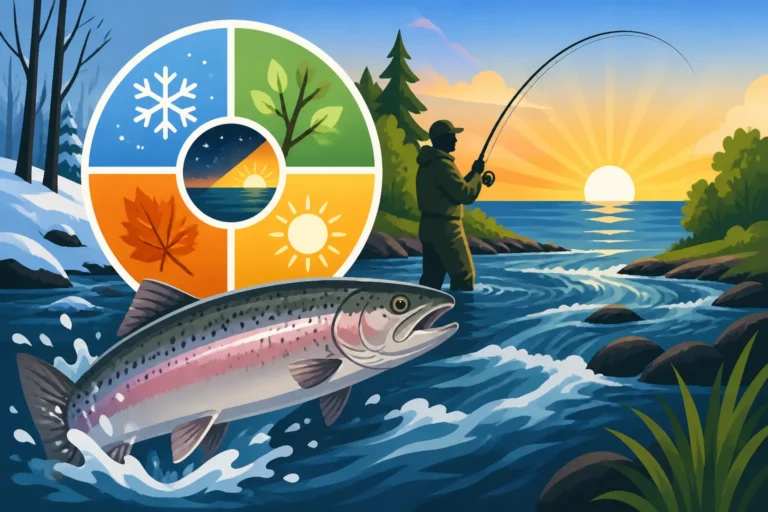
The ice fishing season isn't a monolith; fish behavior changes as the winter progresses. Early ice (first few weeks after freeze-up) often finds fish still active and near shallow structure, much like late fall. They haven't been pressured much, and oxygen levels are usually high. This can be a prime time for targeting species like perch, pike, and even some bass near shorelines or weed edges.
Mid-winter can be tougher. Deeper snow cover reduces light penetration, and thicker ice makes it harder for fish to move around. Fish often retreat to deeper basin areas or main lake structure, conserving energy. This is when patience and precise depth management become crucial. Finally, late ice (just before thaw) sees an increase in activity as longer days and rising water temperatures trigger pre-spawn movements. Fish might move back into shallower areas or river mouths, preparing for the spring spawn. Understanding these shifts is key to adapting your strategy throughout the season.
Essential Tools for Locating Fish
You wouldn't go hiking without a map, so why would you go ice fishing without a way to "see" under the ice? Modern technology has revolutionized the game, offering incredible insights into the underwater world.
Sonar/Fish Finders
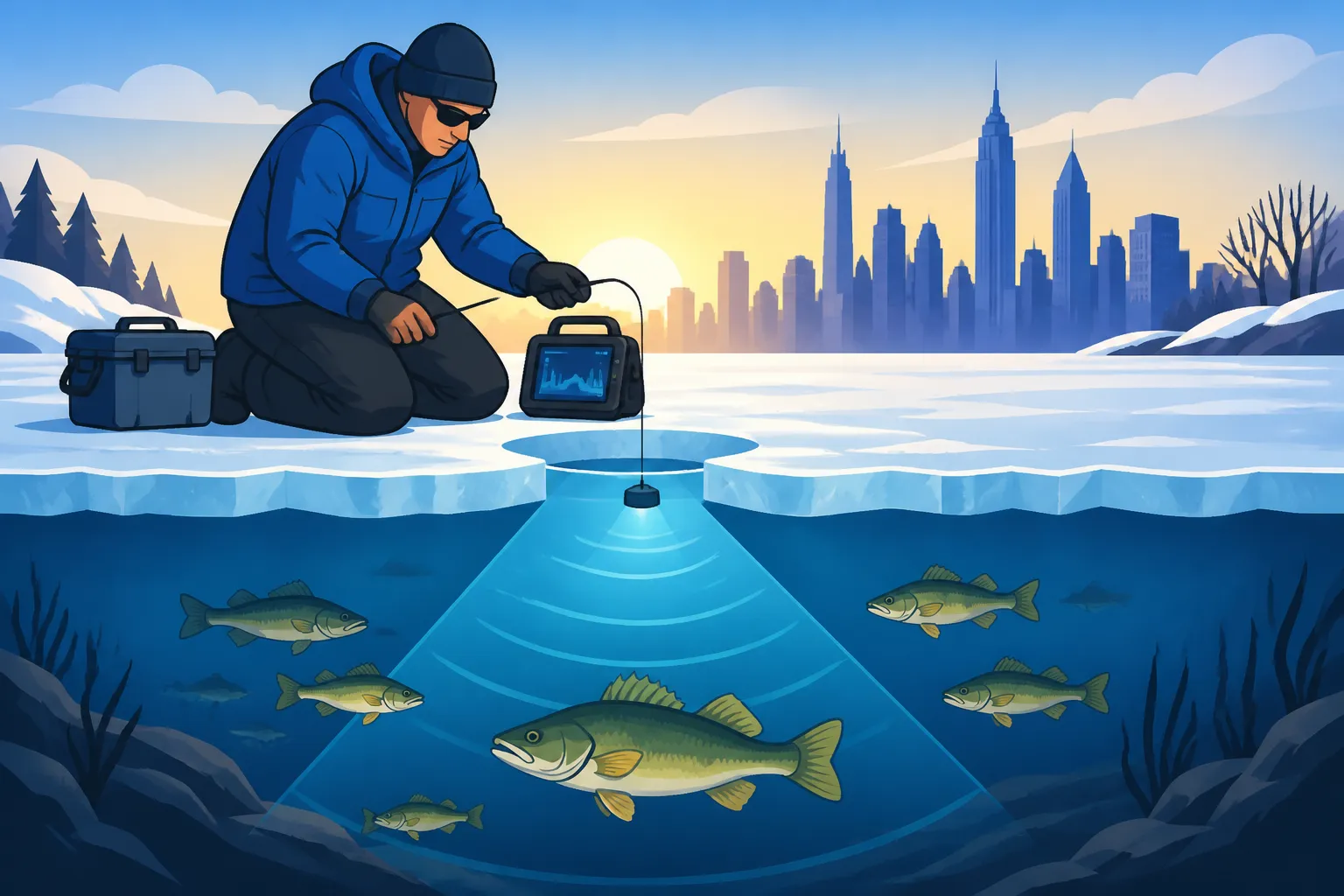
This is arguably the most important tool in an ice angler's arsenal. Sonar units, often called flasher units for ice fishing, send out sound waves that bounce off the bottom, fish, and your lure, displaying them on a screen. The beauty of a flasher is its real-time display, showing you exactly where fish are in relation to your bait, and even how they react to it. You can see fish approaching, darting away, or even hitting your jig. It’s like having an X-ray vision for your fishing hole.
When considering a flasher, think about what features matter most to you. Some popular brands offer different cone angles, battery life, and display options. If you're really serious about your ice fishing in New York, investing in a quality flasher is a game-changer. You can find a wide range of these on platforms like Amazon, from basic models to advanced units with GPS capabilities. A good unit will clearly show you the bottom composition, suspended bait, and individual fish, allowing you to present your bait precisely where the action is.
Underwater Cameras
While sonar tells you where fish are, an underwater camera shows you what they are and how they're behaving. It's an incredible tool for sight fishing and for learning about the underwater environment. Imagine lowering a camera down your hole and seeing a school of yellow perch darting around your jig, or a curious walleye eyeing your presentation. It offers visual confirmation that a fish finder cannot, helping you understand their mood and preferences.
Cameras are particularly useful in clear waters, such as some of the deeper Finger Lakes or Adirondack lakes. You can identify specific species, observe their reactions to different baits, and even spot structure that your sonar might miss. However, they can be less effective in murky water or low light conditions. Pairing a camera with a fish finder gives you the best of both worlds: the broad overview from sonar and the detailed visual from the camera.
Mapping and GPS
Gone are the days of guessing the contours of a lake bottom. Modern GPS units and mapping apps are invaluable for ice fishing. Pre-loaded with detailed bathymetric (underwater contour) maps, these devices show you drop-offs, humps, weed lines, and other key structures before you even drill a hole. This saves an immense amount of time and effort, allowing you to pinpoint potential hotspots.
Many dedicated fish finders come with integrated GPS and mapping, but you can also use handheld GPS devices or even smartphone apps with subscription mapping services. Before heading out, study the map of your chosen New York lake. Look for abrupt changes in depth, submerged islands, or creek channels – these are all fish magnets. Marking your successful holes with GPS waypoints throughout the season also helps you build a personal database of productive spots, year after year. Knowing exactly where that productive drop-off is on a sprawling lake like Lake George can make all the difference.
Augers and Spud Bars
While not directly for "finding" fish, having efficient tools to get to the fish is paramount. An auger is your primary tool for drilling holes, and choosing the right one is crucial for both efficiency and safety. Manual augers are great for early ice or if you're only drilling a few holes, but a good gas, propane, or electric auger will be your best friend when the ice gets thick or you're drilling many exploratory holes. Electric augers, available from various retailers including Amazon, have become incredibly popular for their quiet operation and lighter weight.
A spud bar, on the other hand, is a vital safety tool, especially during early or late ice when conditions can be unpredictable. You use it to test ice thickness as you walk, tapping it ahead of you to ensure the ice is solid enough. Remember, never step on ice you haven't tested. For more details on staying safe, check out our guide on how to read ice thickness for safe ice fishing. Always carry a spud bar, especially when exploring new areas or at the edges of known fishing spots.
Reading the Ice and Lake Structure
The ice itself, and the contours beneath it, hold clues about where fish might be hiding. Learning to read these environmental signals is a skill that develops with experience, but knowing what to look for will speed up your learning curve.
Identifying Drop-Offs and Contours
Fish love structure, and drop-offs are perhaps the most classic example. A drop-off is simply a sudden change in depth, a literal "edge" where shallower water plunges into deeper water. These areas serve as travel corridors, ambush points, and thermal breaks for fish. They can be subtle, like a gentle slope, or dramatic, like a steep cliff face. Using your GPS and mapping unit to identify these on a contour map before you even step on the ice is a huge advantage.
Once on the ice, drill a series of holes perpendicular to what you believe is the drop-off. Use your fish finder in each hole to confirm the depth and bottom transition. Fish will often stage at different depths along a drop-off depending on the time of day, light conditions, and feeding patterns. For instance, walleye might cruise the shallower lip of a drop-off during low light conditions, retreating to the deeper water during bright midday sun. Experiment with different depths along the contour until you find the active fish.
Weed Beds and Submerged Cover
Even under ice, healthy green weed beds are sanctuaries for many fish species. They provide cover from predators, a source of oxygen (if they're still photosynthesizing), and a buffet of insects and baitfish. These are prime locations for panfish like bluegill and crappie, as well as northern pike and largemouth bass. Look for areas where weeds grow to the underside of the ice or where submerged clumps offer a dense hideout.
Locating these can be tricky. Your sonar might pick up denser weed growth as a "fuzzy" bottom reading. An underwater camera is fantastic here, allowing you to visually confirm the presence and health of the weeds. Drill holes along the edges of these weed beds, or in pockets and lanes within them. Fish will often hold right where the weeds meet open water, darting out to ambush prey. Be aware that heavily decaying weed beds can also create low oxygen zones, so healthy, vibrant green weeds are what you're really after.
Points, Humps, and Islands
Any underwater topographical feature that breaks up an otherwise featureless bottom is a potential hotspot. Points that extend from shore, submerged humps (elevated areas on the lake bottom), and sunken islands all concentrate fish. These act as navigation aids, current breaks, and prime feeding grounds. They often feature a mix of soft and hard bottom, providing diverse habitat.
To effectively fish these, you need to understand their entire structure. Start by drilling holes around the perimeter and work your way across the top and down the sides. Your fish finder will reveal how fish are relating to the structure – are they on top, hugging a specific side, or suspended off an edge? Many ice anglers will focus on the "back" side of a point or hump, especially one protected from prevailing currents, as fish often seek refuge there. For aggressive predators like pike and walleye, these ambush points can be incredibly productive.
Inlets and Outlets
Areas where streams, rivers, or feeder creeks flow into or out of a frozen lake can be fantastic for ice fishing. Moving water introduces fresh oxygen, carries nutrients, and can even bring in slightly warmer water, all of which attract fish. These locations can also be natural funnels for baitfish, drawing in predators. However, moving water also means thinner, less stable ice, so extreme caution is absolutely necessary here. Always check your ice thickness diligently.
If you find a safe area near an inlet or outlet, focus your efforts there. Fish like trout and salmon, especially during late ice, might stage near these areas, anticipating their spring runs. Walleye and pike will often patrol the current seams, waiting for an easy meal to drift by. For instance, the outlets of some Finger Lakes can be prime locations for anglers targeting walleye.
Targeting Specific Species Under the Ice
Knowing what kind of fish you're after can significantly narrow down your search area and strategy. Different species have different preferences for depth, structure, and food sources during winter.
Walleye
Ah, the mighty walleye! These highly sought-after fish are often found near deeper structure like drop-offs, humps, and points. They tend to be more active during low light periods – dawn, dusk, and even after dark. When targeting walleye through the ice, look for areas with a mix of gravel, rock, or hard bottom. They often relate closely to the bottom but might suspend a few feet off it if chasing baitfish.
For techniques, jigging spoons, rattle baits, and live minnows on a tip-up are all excellent choices. If you're on a lake like Oneida Lake or Lake Erie, which are renowned for their walleye, you'll find them congregating in specific areas throughout the winter. Make sure to check out our guide on how to ice fish for walleye in New York for more in-depth tips. Using your flasher to identify fish holding tight to the bottom and adjusting your lure presentation to entice them is key to success.
Perch and Panfish
Yellow perch, bluegill, and crappie are often found in shallower to mid-depth areas, typically associated with weed beds, submerged brush, or structural elements that offer cover. These species tend to school up, so once you find one, you've often found many! They are usually more active during daylight hours.
Small jigs tipped with wax worms, spikes, or tiny plastic baits are incredibly effective. A sensitive rod is crucial for detecting their often subtle bites. When fishing for these, drill several holes in a grid pattern around a likely area, like a prominent weed line or an underwater point in a bay. If you get a bite in one hole, stay there! Remember to consult our comprehensive guide to best ice fishing techniques for New York panfish for more specialized advice. These species provide constant action and are a fantastic way to introduce kids to ice fishing.
Trout and Salmon
Trout (brook, brown, rainbow, lake) and landlocked salmon in New York's deeper lakes like the Finger Lakes or Lake Champlain require a different approach. These fish often suspend in the water column or relate to deep structure. Lake trout, for example, might be found anywhere from 30 to 100+ feet deep, often cruising along vast underwater ledges or suspended over the deepest parts of the lake.
For these cold-water predators, larger jigging spoons, flashy swimbaits, or live bait rigs (where legal) are effective. Trolling motor-equipped ice fishing machines can even slowly move over a grid to find suspended fish. Patience is often rewarded, as bites can be fewer but more aggressive. Understanding how to ice fish for trout requires specific knowledge of their preferred depths and feeding patterns, which can vary wildly by species and by lake. Your fish finder is absolutely indispensable for locating these elusive, deeper-dwelling fish.
Pike and Muskie
The toothy giants of the ice, northern pike and muskellunge, are ambush predators. They often lurk around the edges of weed beds, submerged timber, or distinct drop-offs, waiting to surprise unsuspecting baitfish. While catching a muskie through the ice is a rare and thrilling feat, pike are a more common target and provide excellent sport.
Large tip-ups rigged with big live minnows (suckers or shiners, where legal and regulated by size) are the go-to method for these species. Set your tip-ups along a weed line, near the mouth of a bay, or on a point where you suspect pike might be patrolling. Spread your tip-ups out to cover different depths and structural elements. Always use heavy leader material (fluorocarbon or steel) to prevent bite-offs from their razor-sharp teeth. Be prepared for a powerful fight if you hook into one of these freshwater titans!
| Fish Species | Preferred Winter Habitat | Common Depths | Ideal Conditions for Finding Them | Best Locating Tools |
|---|---|---|---|---|
| Walleye | Deep drop-offs, humps, rocky bottoms, current breaks | 15-45 ft | Low light (dawn/dusk/night), stable weather | Sonar, GPS Mapping |
| Yellow Perch | Weed beds, soft bottom transitions, shallow structures | 5-30 ft | Daylight hours, consistent feeding activity | Sonar, Underwater Camera |
| Bluegill/Crappie | Dense weed beds, submerged brush, dock structures | 5-20 ft | Daylight hours, sunny days | Sonar, Underwater Camera |
| Lake Trout | Deep open water, steep drop-offs, suspended baitfish | 30-100+ ft | Varying, often suspend, follow bait schools | Sonar, GPS Mapping |
| Brown/Rainbow Trout | Near shore drop-offs, tributary mouths, suspended | 10-40 ft | Early/late ice, moving water, varied light | Sonar, GPS Mapping |
| Northern Pike | Edges of weed beds, submerged timber, shallow flats | 5-25 ft | Overcast days, early/late ice | Sonar, Underwater Camera |
| Muskellunge | Large weed flats, deep structure, confluence points | 10-40 ft | Similar to Pike, but often in larger, deeper areas | Sonar, GPS Mapping |
Finding fish under the ice is a blend of science, technology, and old-fashioned angling intuition. By understanding fish behavior, leveraging modern tools, and meticulously reading the underwater landscape, you'll dramatically increase your chances of a successful and enjoyable day on the hard water. So bundle up, stay safe, and happy fishing!
Disclaimer
This article is for general informational purposes only and does not constitute professional advice. Laws, prices and regulations vary by location and change over time. Consult a qualified professional for guidance on your specific situation.