How to Fish a Jerkbait for Smallmouth Bass
Few things are as exhilarating as a smallmouth bass exploding on a jerkbait, but getting that technique just right can feel like cracking a secret code. Many anglers get frustrated because they're not seeing the results they expect, often due to subtle nuances in lure choice or retrieve style. This comprehensive guide is here to demystify jerkbait fishing for smallmouth bass, helping you understand how to select, present, and work these incredibly effective lures to entice even the most stubborn bronze backs in New York's diverse waters.
Understanding the Jerkbait Appeal for Smallmouth Bass
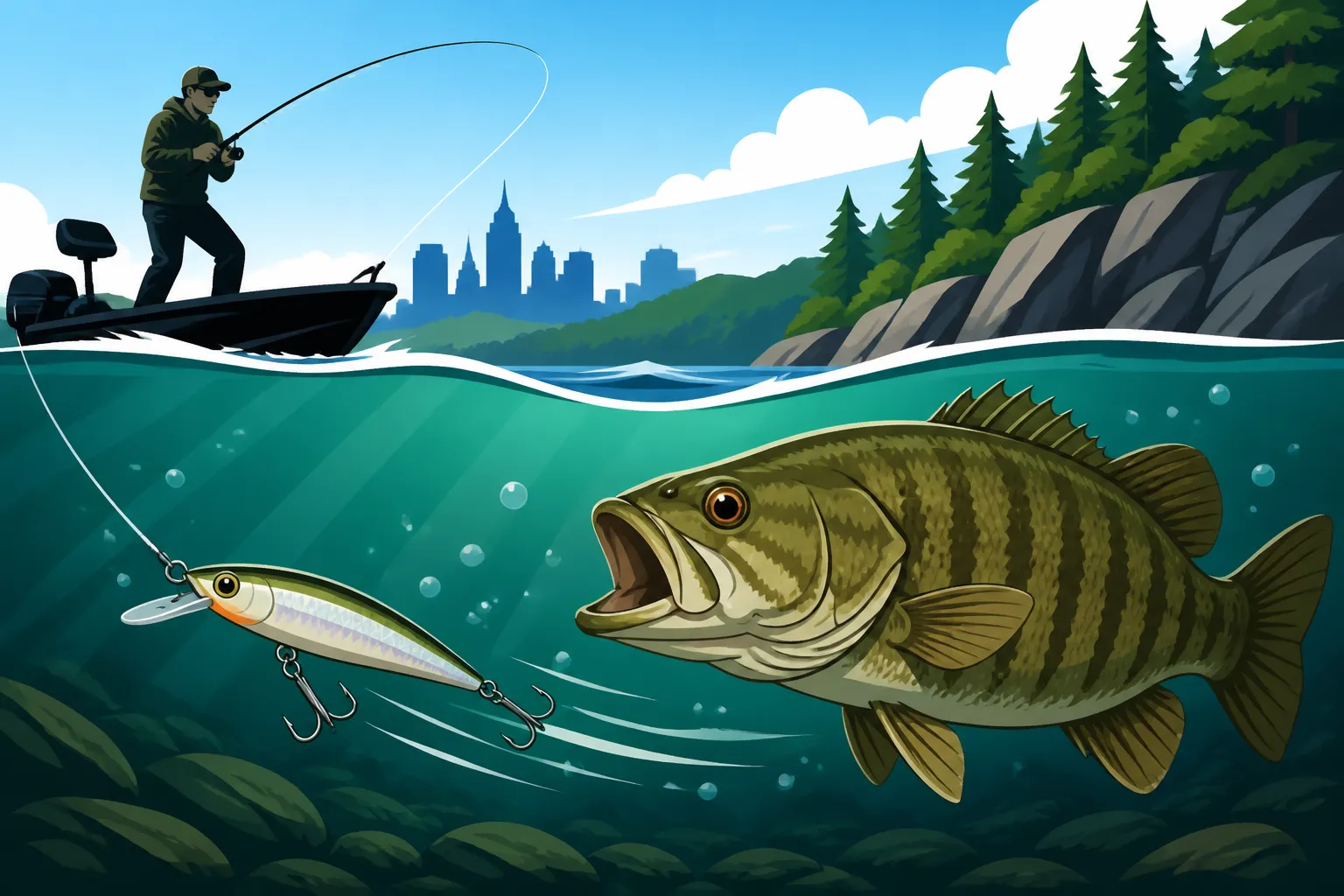
Smallmouth bass are incredibly visual predators, known for their aggressive strikes and acrobatic fights. They thrive in clear water, often orienting to structure like rocks, ledges, and drop-offs where they can ambush prey. This is precisely where a jerkbait shines, offering an irresistible presentation that mimics a wounded baitfish struggling in the water column. Unlike a crankbait that has a constant, predictable wobble, a jerkbait’s erratic, stop-and-go action is what triggers those fierce reaction strikes.
Think about it from a smallmouth's perspective. They're constantly on the lookout for an easy meal. A fast-moving bait might catch their attention, but a bait that darts, pauses, and then twitches again, looking injured or disoriented, screams "easy prey!" This vulnerability is a powerful trigger. Especially in clearer waters, where sight feeding is dominant, the flash, darting action, and subsequent stillness of a jerkbait can be too much for a curious smallmouth to resist. They'll often follow it for a long distance before deciding to strike during a pause.
The beauty of a jerkbait lies in its versatility. It can be fished shallow or deep, fast or slow, making it effective across different seasons and water conditions. It’s a tool that allows you to vary your presentation infinitely, adapting to the mood of the fish. When smallmouth are finicky or lethargic, a long pause can be the key to getting a strike. When they're aggressive, a more rapid series of jerks and twitches can elicit a violent reaction. Understanding this inherent appeal is the first step to confidently adding jerkbaits to your smallmouth arsenal.
Choosing the Right Jerkbait: Factors to Consider
Picking the perfect jerkbait isn't just about grabbing the prettiest one off the rack. Smallmouth bass can be particular, and matching your lure to the conditions, the baitfish, and the depth they're holding at makes all the difference. There's a wide world of jerkbaits out there, from short, stubby models to long, slender profiles, and each has its place.
Suspending, Floating, or Sinking: The Depth Dilemma
The first crucial decision is whether to use a suspending, floating, or sinking jerkbait, which dictates the depth your lure will maintain during the retrieve. Suspending jerkbaits are arguably the most popular for smallmouth. They sink to a certain depth on the retrieve and then stay there during the pause, often hanging enticingly right in a smallmouth's strike zone. This is absolutely critical for those colder water periods or when fish are neutral, as it gives them ample time to eye the lure and commit. For instance, if you're fishing a clear lake like Cayuga or Seneca in New York's Finger Lakes region, a suspending jerkbait can be deadly over rocky points.
Floating jerkbaits are great for working over shallow cover, around emergent weeds, or when fish are holding just below the surface. After a twitch, they'll slowly rise, making them perfect for "rip-and-pause" retrieves where you let the bait pop back up after a series of jerks. Sinking jerkbaits, while less common for general smallmouth fishing, have their niche. They're fantastic for deep-water scenarios, strong currents, or when you need to quickly get your bait down to fish holding on deep structures. In faster river systems like parts of the St. Lawrence, a sinking jerkbait can help you reach fish in deeper pockets or behind current breaks.
| Jerkbait Type | Action on Pause | Ideal Depth Range | Best Conditions |
|---|---|---|---|
| Suspending | Stays in place | Mid-depths (2-12 ft) | Cold/neutral water, clear lakes, targeting specific structure |
| Floating | Slowly rises | Shallow (0-4 ft) | Over weeds, near shore, topwater reactions, warm water |
| Sinking | Slowly falls | Deeper (5-20+ ft) | Strong current, deep structure, actively feeding fish |
Size and Color: Matching the Hatch and Mood
Size matters a lot. If you're targeting smallmouth on the St. Lawrence River Fishing Guide, where they often feed on larger baitfish like smelt or juvenile perch, a longer jerkbait (4-6 inches) might be more effective. Conversely, in waters with smaller forage, a more compact jerkbait (2.5-3.5 inches) will be a better choice. Always try to match the size of the predominant baitfish in the waters you're fishing. It's not an exact science, but a good rule of thumb is to err on the side of slightly smaller if you're unsure, as smallmouth are rarely intimidated by a smaller meal.
Color is another factor that can make or break your day. In the exceptionally clear waters found in many of New York's smallmouth haunts, natural baitfish patterns like silver, chrome, chartreuse, or perch imitations are often winners. If the water is a bit stained or cloudy, or on an overcast day, brighter colors or those with some flash might grab more attention. Sometimes a completely translucent ghost color can fool wary fish in gin-clear conditions. It's always a good idea to carry a variety of colors, and don't be afraid to experiment. Many anglers find that starting with a natural silver or chrome and then switching to something brighter or more muted based on fish response is a solid strategy. You can find a huge variety of options, from classic Rapala models to more exotic Japanese brands, easily available on platforms like Amazon.
Mastering the Jerkbait Retrieve: Techniques for Success
This is where the magic truly happens. A jerkbait isn't like a spinnerbait or a crankbait that you just cast and reel. It requires interaction, rhythm, and a feel for what the fish want. The retrieve is less about speed and more about cadence, imparting an erratic, lifelike action that mimics a struggling baitfish.
The Classic "Twitch, Twitch, Pause"
The fundamental jerkbait retrieve is often described as "twitch, twitch, pause." You cast your lure out, let it settle (especially a suspending model), then sharply twitch your rod tip downwards once or twice, reeling in the slack as you do so. The key is to keep your rod tip pointed at the water, which helps the lure dive and dart effectively. The length of your twitch should be short and sharp, not a long sweep. Each twitch should make the bait dart side to side.
After your twitches, pause. This pause is often the most critical part of the retrieve, especially when targeting smallmouth that might be following the bait or are a bit sluggish. The length of the pause can vary wildly – from a quick second to five, ten, or even twenty seconds in cold water. During this pause, the suspending jerkbait hangs motionless, giving the smallmouth all the time in the world to decide if it's going to strike. Often, the strike comes right as the bait hangs or just as you begin your next series of twitches. This technique is especially effective when fishing Best Smallmouth Bass Lures for Clear Water conditions where visual cues are paramount.
Varying Your Cadence and Pause Length
The biggest mistake anglers make is using the same retrieve speed and pause duration every time. Smallmouth bass, like all fish, have moods. What works one day might be ignored the next. It's crucial to experiment throughout the day to figure out what cadence the fish prefer. Start with a moderate "twitch, twitch, pause" with a 2-3 second pause. If that's not producing, try shorter, snappier twitches with quick 1-second pauses, mimicking a frantic baitfish. If the water is cold or the fish seem lethargic, slow everything down. Use longer, more subtle twitches and extend your pauses significantly.
Sometimes a single twitch followed by a long pause is all it takes. Other times, a rapid series of 3-4 twitches before a shorter pause can trigger an aggressive bite. Pay close attention to your line during the pause; any slight movement, tick, or slackening could indicate a strike. Being able to read your line and feel subtle bites is developed through practice, but a good quality rod and reel setup can certainly help. For serious anglers looking to fine-tune their approach, many specialized jerkbait rods are designed to make these retrieves more efficient, and you can explore options on sites like Amazon.
Where and When to Throw Jerkbaits for Smallmouth Bass in New York
New York offers some phenomenal smallmouth bass fishing, and knowing when and where to present a jerkbait can turn a good day into a great one. These bronze backs are structure-oriented fish that prefer clear, cool water, making jerkbaits a top choice in many of our state's iconic fisheries.
Prime Locations: Rivers, Lakes, and Deep Structure
When it comes to smallmouth, think clear water and rocky bottom. New York's vast freshwater resources provide countless opportunities.
The St. Lawrence River is a world-class smallmouth fishery, especially around the Thousand Islands region. Here, jerkbaits excel when cast around rocky shoals, current seams, island points, and submerged rock piles. The clear, flowing water and abundant forage make it a perfect jerkbait playground. Look for areas where current breaks or eddies form, as smallmouth will often stage there to ambush baitfish.
The Finger Lakes are another smallmouth haven. Lakes like Cayuga, Seneca, and Keuka, with their deep, clear waters and steep drop-offs, are ideal for working suspending jerkbaits. Target rocky points, submerged humps, ledges, and transition zones where hard bottom meets softer sediment. During certain times of the year, particularly in spring and fall, smallmouth will suspend over deeper water, and a jerkbait worked patiently can draw them up. New York's Finger Lakes Fishing Guide offers more specific insights into these incredible bodies of water.
Even smaller rivers and larger reservoirs across the state, if they have clear water and rocky habitat, can be fantastic for jerkbait fishing. Look for bridge pilings, rip-rap banks, current eddies behind boulders, and points where baitfish congregate. Don't be afraid to experiment in less-pressured waters; you might just find a new hotspot. Remember, How to Fish for Smallmouth Bass in Rivers often means adapting your retrieve to account for current.
Seasonal Strategies: Spring, Summer, and Fall Excellence
Jerkbaits are truly a year-round tool for smallmouth, but they absolutely shine in certain seasons.
Spring: As water temperatures begin to rise into the 40s and 50s, smallmouth start to become more active after their winter lethargy. This pre-spawn period is prime jerkbait time. Fish are hungry and moving shallow to feed. Suspending jerkbaits worked slowly with long pauses are incredibly effective. Target sunny northern banks, shallow rock flats, and the mouths of spawning bays. This is when a smallmouth is looking to bulk up, and an easy meal presented by a jerkbait can be too good to pass up.
Summer: While smallmouth move deeper in the heat of summer, jerkbaits still have their place, especially early and late in the day or on cloudy days. Focus on deeper rock piles, offshore humps, and steep drop-offs. A heavier suspending jerkbait or even a sinking model might be needed to reach fish holding in 10-20 feet of water. Speed up your retrieve slightly, but don't neglect the pause entirely, as a brief hesitation can still be the trigger. Mornings are often the Best Time of Day to Fish in New York during summer.
Fall: This is arguably the peak season for jerkbait fishing for smallmouth in New York. As water temperatures drop, smallmouth go on a feeding frenzy, packing on weight for the winter. They'll often move to secondary points, rock flats adjacent to deep water, and channel swings. The fish are aggressive, and you can often get away with a faster, more erratic retrieve. However, as water temperatures continue to plummet, extend those pauses. A suspending jerkbait is again your best friend during this period, bringing out those trophy-sized fish that are actively foraging for the winter ahead. Focusing on this "feeding window" can lead to Best Time of Year to Catch Trophy Bass in New York.
Essential Gear for Jerkbait Fishing
Having the right equipment can significantly enhance your jerkbait fishing experience, making it easier to cast, work the lure effectively, and detect those subtle smallmouth bites. While you don't need the most expensive gear, understanding what each component does is key.
Rod, Reel, and Line Selection
For jerkbait fishing, most anglers prefer a baitcasting setup, though spinning gear can also work, especially for lighter baits or in windy conditions. A medium-light to medium power rod, typically 6'6" to 7'2" in length, with a moderate or moderate-fast action, is ideal. The moderate action allows the rod to load up on the cast, giving you better distance with light lures, and it also provides a forgiving bend that helps prevent tearing the hooks out of a smallmouth's mouth during their vigorous head shakes. A shorter rod, around 6'6" to 6'8", is excellent for shorter, sharper twitches, making it easier to work the bait without hitting the water. Look for rods specifically labeled as "jerkbait rods" from reputable brands on Amazon.
Pair your rod with a baitcasting reel that has a gear ratio in the 6.2:1 to 7.1:1 range. This allows for quick line pickup, which is essential for reeling in slack quickly after each twitch and maintaining contact with your lure. For line, fluorocarbon is generally the top choice for jerkbait fishing. Its low stretch provides excellent feel for subtle bites and better control over the lure's action. More importantly, fluorocarbon sinks, helping your suspending jerkbait reach and stay at its target depth more effectively. A 8-12 lb test fluorocarbon line is a versatile choice for most smallmouth scenarios.
Hook Upgrades and Terminal Tackle
Many jerkbaits come with decent factory hooks, but experienced anglers often upgrade them, especially when targeting larger, hard-fighting smallmouth. Replacing treble hooks with sharper, stronger models can significantly improve your hook-up ratio and prevent fish from throwing the bait. Brands like Gamakatsu, Owner, and VMC offer excellent treble hooks that are often a direct replacement for factory hooks. Make sure to match the size and gauge of the new hooks to the original ones to maintain the lure's intended action and balance.
Beyond hooks, consider your connection to the lure. While some anglers tie directly, a small, high-quality snap can make changing lures much quicker, which is invaluable when you're experimenting with different colors and sizes. Avoid large, bulky snaps that can negatively impact the lure's action. A small, round bend snap or a "fastach" style clip is generally preferred. Swivels are typically not needed unless you're experiencing excessive line twist, which is rare with jerkbaits. Keep your tackle box stocked with these small but critical items, many of which are readily available through online retailers like Amazon.
Final Thoughts on Smallmouth Jerkbait Success
Fishing a jerkbait for smallmouth bass is an art form, a dance between angler and lure that can be incredibly rewarding. It’s not just about casting and cranking; it’s about rhythm, patience, and adapting to the conditions and the fish's mood. Remember the core principles: choose the right type of jerkbait for the depth, match its size and color to the local forage and water clarity, and, most importantly, master that erratic "twitch, twitch, pause" retrieve, varying your cadence until you unlock the bite.
New York's diverse waters offer some of the finest smallmouth fishing anywhere, from the vast expanses of the Great Lakes tributaries to the clear, rocky depths of the Finger Lakes. With a little practice and attention to detail, the jerkbait will quickly become one of your most productive lures for enticing those hard-hitting, acrobatic bronze backs. Don't get discouraged if it doesn't click immediately; keep experimenting, keep learning, and soon you'll be experiencing those heart-stopping strikes that make jerkbait fishing so addictive.
Disclaimer
This article is for general informational purposes only and does not constitute professional advice. Laws, prices and regulations vary by location and change over time. Consult a qualified professional for guidance on your specific situation.