Best Fall Patterns for Largemouth Bass
Oh, the fall! It's a truly beautiful time to be out on the water in New York, with the leaves turning vibrant colors and a crispness in the air that just feels right. But let's be honest, while the scenery is stunning, bass fishing can throw you for a loop this time of year. Those easy summer patterns vanish, and if you're not dialed into what largemouth bass are doing, you might find yourself scratching your head. This guide is all about demystifying fall bass fishing, helping you understand how these fish behave as the water cools, and giving you the go-to techniques and lures to keep those lines tight and your cooler full (or your camera clicking for catch-and-release pics!).
Understanding the Fall Transition for Largemouth Bass
The biggest challenge, and opportunity, in fall bass fishing lies in understanding the transition. It’s not a switch that flips overnight; it’s a gradual change that follows the cooling water temperatures. Those long, hot summer days give way to cooler nights and shorter days, and this signals a major shift in the aquatic world. Largemouth bass, being cold-blooded creatures, are acutely aware of these changes, and their behavior, metabolism, and location all adjust accordingly. Ignoring these shifts is a surefire way to have a slow day on the water.
In early fall, when water temperatures might still be in the 60s, bass can be incredibly active. They sense the coming winter and know they need to pack on the calories. This is often described as the "fall feed," and it can be some of the most exciting fishing of the year. Think of it like a last-minute buffet before a long fast. Baitfish are still abundant and often schooling up, and the bass are right there with them, chasing and gorging. You might find them in many of the same places they were in late summer, but with an added sense of urgency.
As mid-fall progresses and water temperatures drop further, perhaps into the 50s, things start to get a bit more nuanced. The baitfish, particularly shad and smaller panfish, begin to move towards deeper, more stable water, and the bass follow. They might not be as aggressively chasing as they were a few weeks prior, but they're still feeding. This is when understanding structure and subtle changes in depth become critical. They're looking for comfortable ambush points that allow them to conserve energy while still being able to strike passing prey.
By late fall, when the water dips into the 40s, largemouth bass become much more lethargic. Their metabolism slows down considerably, and their movements are minimal. They'll seek out the warmest, most stable water they can find, often deep near structures like rock piles, ledges, or main lake points. At this stage, you're not going to trigger a reaction strike with a fast-moving bait; instead, you need to present something slow, subtle, and right in front of their nose. It's a completely different game from the early fall frenzy, but still incredibly rewarding if you adapt your approach. This deep dive into their seasonal movements is key to consistent success.
Key Locations to Find Fall Largemouth Bass
Finding fall largemouth is all about following the food. As the season progresses and temperatures drop, baitfish often migrate from shallow bays and flats to deeper, more stable water. Your job as an angler is to intercept the bass along these migration routes or find them staged up in their preferred cooler-water haunts. This can mean covering a lot of water and being willing to adjust your game plan frequently.
Early in the fall, especially after a few cool nights but before a significant temperature drop, bass might still be using shallow cover. Think about the remaining green weed lines, isolated docks, or lily pad fields that haven't quite died off yet. They're often ambushing baitfish that are still hanging around these areas. If you find a patch of healthy vegetation, it’s always worth investigating, especially on a sunny day when the sun warms the shallower water a bit. Don't overlook these spots just because it's fall; bass can be incredibly opportunistic.
As the water cools, those main lake points and humps become increasingly important. These are classic transition areas where bass will hold as they move from shallow to deep, or vice versa, depending on the day. Points that drop off sharply into deeper water, especially those with some rock or wood cover, can be magnets for schooling bait and, consequently, schooling bass. Submerged humps, especially if they top out at a fishable depth like 10-20 feet, can also concentrate fish. These are places where you might find a whole school of bass grouped up, making for some exciting multiple hook-ups.
Later in the fall, when cold fronts have truly set in and the water is chilly, you’ll want to focus on deeper structures. Creek channels that wind through a lake, deep ledges, offshore rock piles, and even submerged timber in deeper water are prime real estate. Bass will hunker down here, often suspending slightly off the bottom or tucked tightly against cover. They're conserving energy, but they'll still eat if an easy meal presents itself. Looking for baitfish on your electronics in these deeper areas is crucial; if you mark bait, bass are almost certainly nearby. Understanding these deeper patterns is essential for How to Fish Cold Water in New York.
Best Lures and Techniques for Fall Bass
The beauty of fall bass fishing is the versatility it demands, and therefore, the variety of lures you can throw. It’s not a one-lure-fits-all season; instead, you need to match your presentation to the specific phase of fall and the mood of the fish. Having a diverse tackle box and being ready to switch things up quickly will put more fish in your boat. When you're stocking up for the season, remember that online retailers like Amazon offer a huge selection of fall bass lures, from deep-diving crankbaits to finesse jigs.
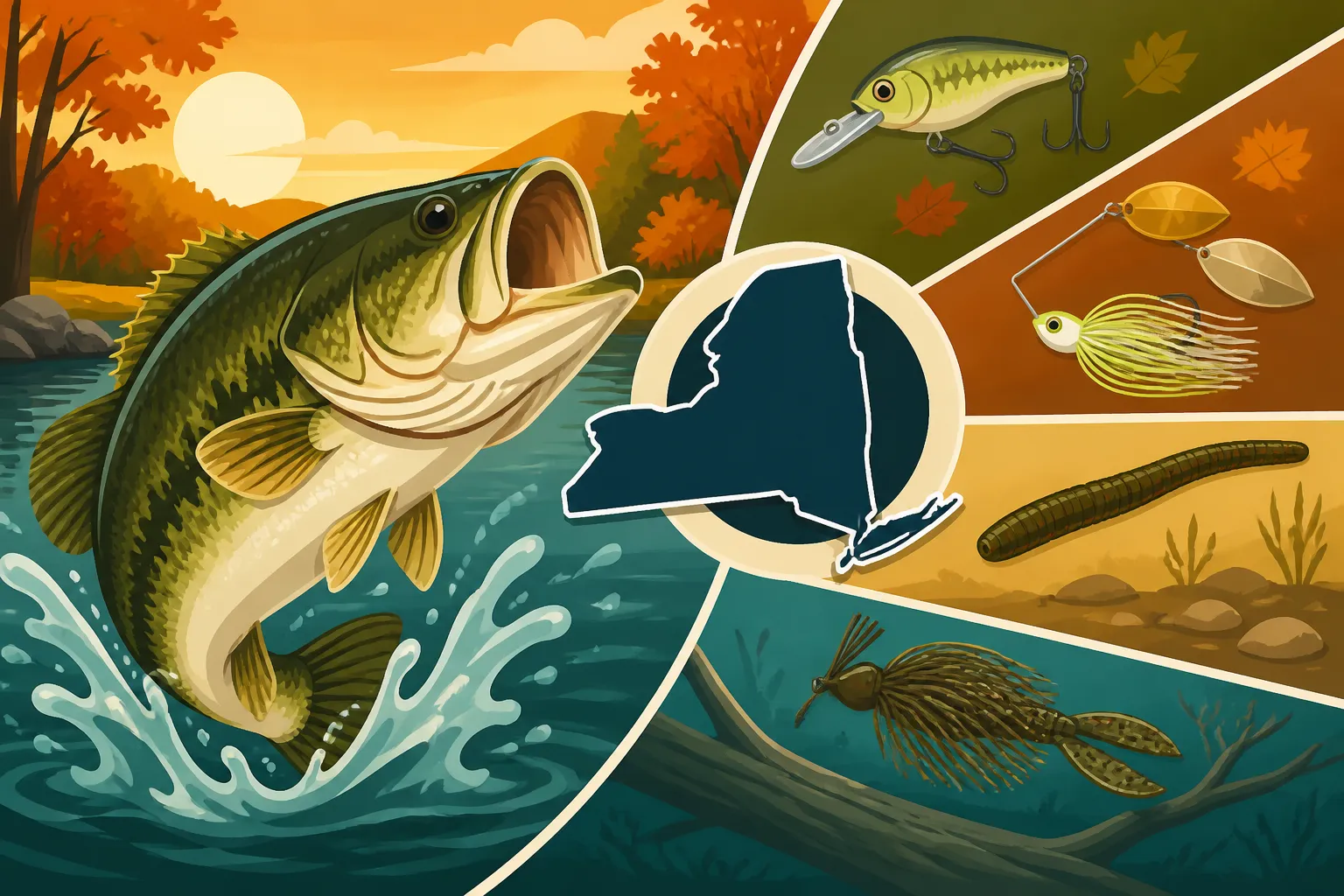
For those early fall days when bass are still aggressively chasing bait, moving baits are absolutely king. Deep-diving crankbaits are fantastic for covering water and targeting bass that might be suspended or holding on deeper points. Choose colors that mimic local baitfish, like shad or perch patterns. Lipless crankbaits are also incredibly effective, especially for ripping through dying grass beds or retrieving over submerged humps where bass are actively feeding. You can find excellent options on Amazon, and it's worth having a few different sizes and rattles. Spinnerbaits, with their flash and vibration, can also provoke fierce strikes, particularly around isolated cover or weed edges. Don't be afraid to experiment with blade combinations and skirt colors.
As bass start to slow down in mid-fall, jerkbaits become a phenomenal tool. Their erratic, stop-and-go action perfectly imitates a wounded baitfish, which is often too tempting for even a slightly lethargic bass to resist. Focus on suspending jerkbaits that can be paused at various depths. You'll want to experiment with the retrieve: sometimes a long pause is key, other times a quicker cadence with shorter pauses. These can be particularly effective when fishing around rocky points or transition areas. Don't forget that a good quality braided line and fluorocarbon leader, readily available on Amazon, can make a huge difference in how your jerkbait performs.
Later in the fall, when the water is truly cold and bass are deep and slow, finesse techniques come into their own. A jig and trailer, fished slowly along the bottom of a creek channel or deep ledge, can be deadly. Think about dark colors like black and blue, or natural crawfish patterns. Pitching and flipping jigs into deeper wood or rock cover is also incredibly effective. The dropshot rig is another finesse staple; it allows you to present a small plastic bait precisely at the depth where bass are holding, keeping it suspended right in their strike zone. A Ned rig, with its small mushroom head jig and buoyant plastic, is another phenomenal choice for cold, clear water, offering a subtle presentation that bass often can't refuse. For those days when the fish are incredibly finicky, don't underestimate the power of live bait, particularly shiners, if regulations allow. Check out this guide on Best Fall Fishing Techniques in New York for more specific tactics.
Here's a quick reference for matching your lure to the fall conditions:
| Fall Phase | Water Temperature (Approx.) | Bass Behavior | Go-To Lure Types | Retrieval Style | Prime Locations |
|---|---|---|---|---|---|
| Early Fall | 60s – 70s | Aggressive, chasing baitfish | Deep-diving crankbaits, lipless cranks, spinnerbaits, topwaters | Fast, erratic, covering water | Shallow weed lines, main lake points, schooling bait |
| Mid-Fall | 50s – 60s | Still active, following bait to deeper water | Jerkbaits, spinnerbaits, jigs, football jigs | Stop-and-go, medium speed, bumping bottom | Mid-depth points, humps, ledges, submerged cover |
| Late Fall | 40s – 50s | Slow, lethargic, conserving energy | Jigs, dropshots, Ned rigs, slow-rolled swimbaits | Slow, subtle, bottom-oriented, long pauses | Deep ledges, creek channels, rock piles, isolated timber |
Environmental Factors and Timing for Fall Bass
Even with the right lures and knowledge of typical fall locations, environmental factors can make or break your day. Bass fishing, particularly in New York, is heavily influenced by the weather, water conditions, and even the time of day. Paying attention to these subtle cues can give you a significant advantage. This is where understanding How Weather Affects Fishing in New York really pays off.
Cold fronts are perhaps the most impactful weather phenomenon in the fall. After a strong cold front passes through, bringing plummeting temperatures and often high pressure, bass can become extremely shut down. They often move deeper, cling tighter to cover, and become much less willing to chase. On these post-front days, you'll need to really slow down your presentation, focusing on finesse techniques like dropshots or jigs fished painstakingly slowly. Sometimes, waiting a day or two after the front to let conditions stabilize can lead to much better fishing. However, sometimes you have to fish when you can, and adapting to these tough conditions is part of the game.
Conversely, a stable period of mild, cloudy weather, especially after a cold snap, can really turn the bite on. These days can feel like a brief return to early fall, with bass becoming more active and willing to chase moving baits. Overcast skies often keep bass shallower for longer during the day, as they feel more comfortable without direct sunlight beating down on them. A light drizzle, as long as it’s not accompanied by a major temperature drop, can also stimulate a strong bite.
Water clarity also plays a crucial role. In clearer waters, bass rely heavily on sight, and you might want to opt for more natural-looking baits and lighter lines. In stained or murky water, bass will rely more on their lateral line system, so lures with strong vibration or noise, like lipless crankbaits or spinnerbaits, can be more effective. The fall rains can often muddy up tributaries, which in turn can affect clarity in main lake bodies.
Finally, don't forget about the time of day. As the days shorten and air temperatures drop, the warmest part of the day often becomes the most productive for fall bass. This usually means late morning through late afternoon. The sun, even on a cool day, can warm up shallow flats or rock formations enough to draw baitfish and, subsequently, bass, into these areas for a brief feeding window. So, while early mornings can be magical in summer, a slightly later start might be more beneficial for fall largemouth, giving the sun a chance to work its magic. Remember, even little details like checking the Best Time of Day to Fish in New York can stack the odds in your favor.
Disclaimer
This article is for general informational purposes only and does not constitute professional advice. Laws, prices and regulations vary by location and change over time. Consult a qualified professional for guidance on your specific situation.