Best Trolling Spreads for New York’s Lake Ontario Salmon
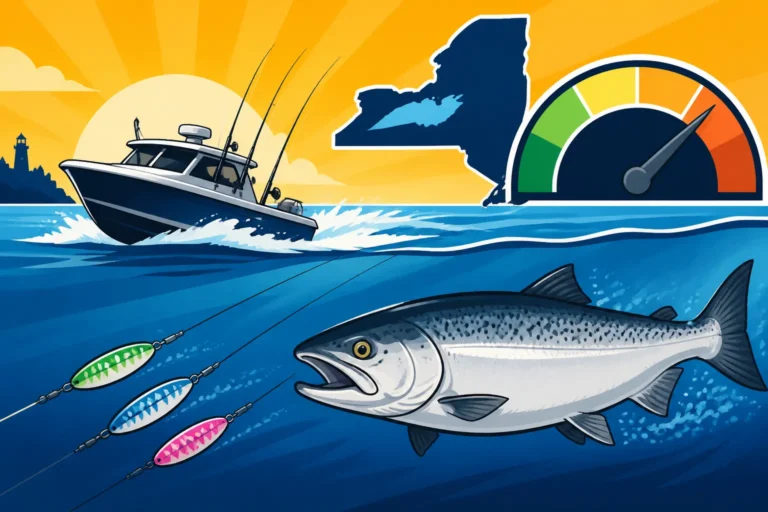
Getting out on Lake Ontario with the hope of hooking into a powerful Chinook salmon is an experience every angler dreams of. But let's be real, it can also be incredibly frustrating when you're dragging lines around and not getting any bites, while the boats around you are constantly reeling in fish. The secret often lies in understanding and deploying the best trolling spreads, and this comprehensive guide is here to unravel those mysteries, helping you dial in your presentation for consistent success.
Understanding the Salmon's World in Lake Ontario
Before you even think about dropping a line, it’s crucial to understand what makes Lake Ontario salmon tick. These aren't just any fish; they're apex predators that are constantly on the move, driven by instinct, water conditions, and the search for their next meal. Successfully catching them consistently means thinking like a salmon.
The Importance of Water Temperature and Thermocline
One of the absolute biggest factors influencing where salmon will be in Lake Ontario is water temperature. Salmon, especially Chinook, thrive in a specific temperature range, typically between 48 and 55 degrees Fahrenheit. This preferred temperature often creates what we call a "thermocline" – a distinct layer in the water column where the temperature changes rapidly. Imagine a sandwich where the top bun is warm surface water, the bottom bun is cold deep water, and the meat in the middle is that perfect cool zone.
Anglers spend countless hours trying to locate this thermocline because it’s a natural gathering point for both baitfish and the salmon that feed on them. If you’re trolling above or below this ideal zone, your chances of a strike plummet. Your electronics, like a good fish finder, become your best friend here, showing you exactly where those temperature breaks are. The depth of the thermocline can vary wildly from day to day and even hour to hour, depending on weather, wind, and currents, so constant monitoring and adjustment are key. Understanding where salmon are holding based on these temperature preferences is fundamental to figuring out how deep to troll for salmon on New York's Lake Ontario.
Baitfish Movement and Salmon Habits
Lake Ontario's salmon fishery thrives on an abundance of baitfish, primarily alewives. These small, silvery fish are the lifeblood of the salmon diet, and where the alewives go, the salmon will follow. Alewives are sensitive to light and temperature, often moving into deeper, cooler water during bright daylight hours and potentially rising higher in the water column during low-light conditions or overcast days. They also tend to congregate around underwater structures, drop-offs, or current seams.
Observing baitfish schools on your sonar isn't just a cool visual; it's a critical clue to salmon location. If you see dense schools of bait, it’s a strong indicator that salmon are likely nearby, waiting for an ambush. Your trolling spread needs to mimic these baitfish or cut through their schools in a way that triggers a predatory response from the salmon. Sometimes, salmon will be actively chasing bait, creating distinct "bait balls" on your sonar, while at other times, they might be suspended just below or within the baitfish, waiting for an easy meal.
Lake Ontario's Unique Depths and Structure
Lake Ontario isn't a uniform bathtub; it's a vast, dynamic body of water with incredible depths, underwater shoals, drop-offs, and varying bottom structures. While salmon often suspend in the open water column, especially during the peak summer months, understanding the underwater topography can give you a significant advantage. Structure provides cover for baitfish, creates current breaks, and can act as highways for migrating salmon.
For instance, areas with significant depth changes, like the edges of the Niagara Bar or the numerous offshore humps, are prime salmon territory. During the spring and fall, salmon might be found closer to shore, particularly around river mouths and tributaries as they prepare for or recover from spawning. The sheer size and depth of Lake Ontario mean that you need a diverse array of trolling gear to effectively cover different water columns, from the surface all the way down to 100 feet or more. Knowing when and where to deploy specific parts of your spread, whether it’s a downrigger for deep water or a planer board for surface action, is paramount. This deep understanding also helps in selecting the Best Fishing Spots on Lake Ontario when planning your trip.
The Foundation of a Successful Trolling Spread
A successful trolling spread isn't just about throwing a bunch of lures in the water. It's a carefully orchestrated system designed to present a variety of baits at different depths and distances from the boat, covering as much of the water column as possible. Each component plays a vital role, and understanding how they interact is crucial for maximizing your hook-up ratio.
Rods and Reels for Heavy-Duty Trolling
When it comes to salmon trolling on Lake Ontario, you can't skimp on your rods and reels. These are not finesse operations. You're dealing with powerful fish, heavy weights from downriggers and divers, and the stress of hours of trolling. Your gear needs to be robust, reliable, and capable of handling significant strain.
For downriggers, you'll typically want medium-heavy to heavy action rods, around 8 to 10 feet long. These longer rods help with spreading lines and absorbing the shock of a big salmon strike when the release clip pops. The parabolic bend is key; it acts like a shock absorber, protecting your line and preventing hooks from pulling out. Reels should be conventional star-drag or lever-drag models, capable of holding at least 300 yards of 20-30 pound monofilament or braid. Look for models with a good retrieve ratio and a smooth, consistent drag system. Brands like Daiwa and Shimano offer excellent options that are widely used by serious Lake Ontario anglers.
For Dipsy Divers or other directional divers, specialized diver rods are often preferred. These are generally shorter and stiffer, around 7 to 8.5 feet, with a fast action to handle the immense pressure these divers exert on the line. Paired with a sturdy line-counter reel, you'll have the power and precision needed to deploy divers effectively. When dealing with the formidable power of Chinook Salmon in New York, having the right gear is non-negotiable.
Line Choices: Braids, Monofilament, and Fluorocarbon Leaders
The lines you choose are just as important as your rods and reels. Each type of line has its own characteristics that make it suitable for different parts of your trolling spread.
- Monofilament (Mono): This is the classic choice for many downrigger applications. Its stretch acts as an additional shock absorber, which is great for protecting lighter leaders and preventing tear-outs. A 20-25 lb test monofilament main line is common, often paired with a fluorocarbon leader.
- Braided Line (Braid): Braid has minimal stretch, offering incredible sensitivity and strength in a thinner diameter. It's often preferred for Dipsy Divers and lead core setups because its lack of stretch allows divers to run deeper with less line out and provides instant feedback on strikes or fouled lures. However, its unforgiving nature means you'll almost always need a monofilament or fluorocarbon leader to provide some shock absorption.
- Fluorocarbon Leaders: Regardless of your main line, fluorocarbon leaders are almost universally recommended. They are nearly invisible underwater, making your presentation more natural, and they are incredibly abrasion-resistant, a huge advantage when fighting a toothy salmon. Leaders typically range from 15-30 lb test, depending on the clarity of the water and the size of the fish you're targeting. For situations where a stealthy approach is crucial, a good fluorocarbon leader can make all the difference, especially when you consider the optimal Best Trolling Speed for New York's Lake Ontario Salmon.
Core Trolling Devices: Downriggers, Dipsy Divers, and Planer Boards
These three types of devices are the workhorses of a Lake Ontario salmon trolling spread. Each serves a distinct purpose in presenting lures at specific depths and distances from the boat.
| Trolling Device | Primary Function | Key Advantages | Common Use Cases |
|---|---|---|---|
| Downrigger | Precisely controls lure depth vertically | Pinpoint depth control, minimal line resistance | Deep-water fishing, targeting specific thermocline layers |
| Dipsy Diver | Takes lures away from boat and down horizontally | Covers horizontal spread, no heavy weight on rod | Mid-depth to deep, spreading lines, targeting active fish |
| Planer Board | Takes lures out to the side of the boat (surface) | Maximum horizontal spread, covers vast amounts of water | Surface to mid-depth, targeting shy fish, covering wide areas |
Downriggers: These are essential for deep-water fishing. A heavy lead ball (typically 8-15 lbs) is lowered to a specific depth, and your fishing line is attached to the downrigger cable with a release clip. When a fish strikes, the line pops free, and you fight the fish directly on your rod and reel. This allows for incredibly precise depth control, letting you target the thermocline or suspended fish with accuracy.
Dipsy Divers (or similar directional divers like Tadpole Divers or Jet Divers): These devices clip directly onto your fishing line and use a directional plate to dive down and away from the boat as you troll. By adjusting the weight and angle, you can control both the depth and how far out to the side your lure runs. They are fantastic for adding horizontal spread and covering a wider swath of water than downriggers alone. They come in various sizes and colors, allowing for different dive depths and attracting properties. Many anglers will purchase different colors on Amazon to test what works best on a given day.
Planer Boards (Big Jon, Offshore Tackle, etc.): These are floating boards that are deployed on the surface and "plane" out to the sides of the boat, carrying your fishing lines with them. They are fantastic for getting lures far away from the boat's prop wash and engine noise, which can spook wary salmon. In-line planer boards attach directly to your fishing line, while mast-and-line release systems allow you to run multiple lines off a single, larger board. They are typically used for presenting lures in the top 30-50 feet of the water column but can be combined with lead core line or snap weights to achieve deeper presentations.
Building Your Trolling Arsenal: Key Components of a Spread
Now that you understand the fundamental tools, let's dive into how you actually construct and deploy your trolling spread. It's a blend of art and science, requiring careful planning and constant adaptation.
Downrigger Setup and Ball Placement
Your downrigger lines are often your most precise tools for targeting specific depths, especially those deeper thermocline zones. A typical setup involves multiple downriggers, usually two to four, staggered at different depths. For instance, if your thermocline is showing up at 60 feet, you might run one downrigger at 55 feet, another at 60 feet, and a third at 65 feet, effectively "bracketing" the desired depth.
The lure itself, whether it's a spoon, flasher/fly, or plug, is attached to a fluorocarbon leader (typically 6-10 feet) that's tied to your main line. The main line then clips into a release clip on the downrigger cable, allowing the heavy downrigger ball to pull your lure down. The distance between your lure and the release clip (known as the "lead length" or "setback") can be crucial. Shorter leads often mean more aggressive action for spoons, while longer leads can be better for spooky fish or for running larger flashers and flies. Many experienced anglers will run different types of Best Lures for Chinook Salmon at varying setbacks to see what the fish prefer.
Ball placement, or the exact depth of your downrigger weights, is continuously adjusted based on what your electronics are showing regarding baitfish, thermocline, and suspended salmon. A slight adjustment of 5-10 feet can sometimes make all the difference between an empty boat and a red-hot bite. Always ensure your downrigger cables are clean and your release clips are functioning correctly to prevent missed strikes.
Dipsy Diver and Wire Diver Strategies
Dipsy Divers, along with their close cousins like Tadpole Divers and Jet Divers, are incredible for adding depth and horizontal spread to your trolling array without the need for heavy lead balls or additional rod holders. These divers clip directly onto your main line and use an adjustable weight system to control their diving depth and sideways trajectory.
A common strategy is to run Dipsy Divers off the corners of the boat, set to run at different angles and depths. For example, you might have one Dipsy set to a "2" or "3" setting (meaning it runs slightly to the side) and another set to a "1" or "0" setting (meaning it runs closer to straight back), with varying amounts of line out to achieve different depths. Pair these with wire line for maximum depth or braided line for sensitivity. The amount of line you let out directly correlates to how deep the diver will run.
Different sized divers also achieve different depths; a #0 Dipsy runs shallower than a #1, which runs shallower than a #2. Color can also play a role, with some anglers swearing by white or green Dipsys. The key is to experiment to find the right combination that puts your lure in the strike zone, effectively filling in the gaps between your deep downrigger lines and your wider planer board lines. Don't forget to periodically check your Dipsy's action; if it's not diving correctly, it might be fouled or need a tuning adjustment. These divers are often part of successful Trolling Techniques for New York's Lakes.
Planer Board Systems for Wide Coverage
Planer boards are all about covering water and presenting lures in areas where the boat's presence might be less intimidating. They excel at spreading out lines to the sides, often 50-100 feet or more from your boat's centerline. This is particularly effective during early morning, late evening, or on cloudy days when salmon might be feeding higher in the water column or closer to the surface.
There are two main types: in-line planer boards and mast-and-line release systems.
- In-line Planer Boards: These are smaller, individual boards that attach directly to your fishing line. They’re great for running one or two lines per side, providing a simple yet effective way to get your lures out wide. You simply clip the board to your line, let it out to the desired distance, and then reel in your slack. When a fish hits, the board will often trip or dive, signaling a strike.
- Mast-and-Line Release Systems: For serious tournament anglers or those wanting to run a full "spread" of multiple lines, a mast system is often preferred. This involves a tall mast mounted on the boat, from which a main line runs to a large planer board on each side. Multiple fishing lines are then clipped to this main line using individual release clips, allowing you to run several lures off each board. This setup offers tremendous water coverage and allows for easy adjustment of lure depth by adding snap weights or even incorporating lead core lines.
Regardless of the system, planer boards allow you to present lures far from the boat, often in shallower water or above deeper baits, creating a diverse, multi-level attack on the salmon. They are incredibly effective for targeting shy fish or during periods when salmon are scattered across the top layers.
Mastering Different Trolling Spreads for Salmon
No single trolling spread is "the best" for Lake Ontario salmon; conditions change, and fish move. The true mastery comes from understanding various spread types and knowing when and how to deploy them. A truly effective angler knows how to adapt their spread to the day's conditions, creating a dynamic presentation that keeps lines in the strike zone.
The Standard "Stair-Step" Spread
The "stair-step" spread is a foundational concept in Great Lakes salmon trolling. It's designed to cover the water column from top to bottom, or at least across the most likely strike zones, by staggering your lines at different depths. Imagine your lures creating a series of steps down into the water.
A typical stair-step spread might look something like this:
- Surface Lines: Often run off planer boards, perhaps with light snap weights or small diving planers to get them down 10-20 feet. These target active fish feeding high or fish spooked by the boat. You might use long setbacks on these lines to keep lures far from the prop wash.
- Mid-Depth Lines: This is where Dipsy Divers and possibly shallow-set downriggers come into play. Dipsys can be set to run at depths from 20 to 60 feet, spreading out horizontally. Downriggers might target the top of the thermocline or just above bait schools.
- Deep Lines: Your primary downriggers are your workhorses here, targeting the heart of the thermocline and any suspended fish or baitfish schools you see on your sonar. These might be running anywhere from 50 to 120 feet deep, depending on the season and location.
The beauty of the stair-step is its versatility. You’re not guessing; you’re covering a wide range of depths, increasing your chances of finding where the salmon are holding. If one depth starts producing, you can then adjust other lines to match that productive depth, effectively collapsing your spread onto the fish. This approach perfectly aligns with the advice in New York Fishing Seasons Explained, as it allows for adjustments throughout the year.
Deep-Water Finesse Spreads
During the scorching summer months on Lake Ontario, Chinook salmon often retreat to the cooler, deeper waters. This requires a "deep-water finesse" approach, focusing on getting your lures down precisely to where these fish are suspended, sometimes 80, 100, or even 120 feet deep. This isn't about covering vast horizontal stretches at the surface; it's about surgical precision in the depths.
In a deep-water finesse spread, downriggers become your primary tools. You might run four or even six downriggers, all targeting within a 10-20 foot band of the water column. For example, if fish are consistently hitting at 90 feet, you might set downriggers at 80, 85, 90, 95, 100, and 105 feet.
Lead core line can also play a role here, especially for getting lures a bit deeper and farther back than downriggers alone, or for targeting fish that are shy of the downrigger cables. A "full core" (10 colors of lead core, approximately 100 yards) can get a spoon down around 50-60 feet, while a "20 color" (200 yards) can hit 100 feet or more, depending on lure choice and trolling speed.
The key to finesse is lighter leaders, perfectly tuned lures that run true, and often smaller, more subtle presentations. When fish are deep and lethargic, a slight wobble or a perfectly matching baitfish imitation can make all the difference. Always be on the lookout for How to Read a Fish Finder for New York Lakes to identify those deep suspended arches.
Adapting to Surface and Mid-Column Bites
While deep-water fishing gets a lot of attention, Lake Ontario salmon will frequently move up into the surface and mid-column, especially during low light, overcast conditions, or when baitfish are pushed up by currents or thermocline shifts. Being able to quickly adapt your spread to these conditions is a mark of an experienced angler.
For surface bites, planer boards become your best friend. Running unweighted spoons, stickbaits, or even shallow-diving plugs off your boards, sometimes 100 feet or more to the side and 200-300 feet back from the boat, can be incredibly effective. The stealth of getting your lure far from the boat is often key when fish are shallow and wary.
Mid-column bites often call for a combination of Dipsy Divers, Jet Divers, or even snap weights applied to your planer board lines. These allow you to push your lures down into the 20-60 foot range without the heavy hardware of downriggers. Sometimes, a single downrigger set shallower than your main deep spread can act as a "test line" for mid-column activity.
The best time of day to fish in New York often correlates with these surface and mid-column movements. Early morning and late evening typically see fish moving shallower. Monitoring your VHF radio for reports from other anglers can give you valuable clues, as can observing surface activity like jumping fish or baitfish boils. Having a versatile spread that can quickly shift from deep to shallow and wide to narrow is what separates good days from great days.
Seasonal Adjustments for Lake Ontario Salmon Trolling
Lake Ontario salmon fishing is a year-round pursuit, but the tactics, and therefore the trolling spreads, evolve dramatically with the seasons. What works in April won't necessarily work in August, and understanding these seasonal shifts is paramount to consistent success.
Springtime Nearshore Strategies
As Lake Ontario sheds its winter chill, the early spring brings a unique opportunity for salmon anglers. The cold water is still widespread, and baitfish, along with the salmon, often congregate in shallower, warmer nearshore waters. Think of areas where river outflows create current breaks or where warmer runoff can draw baitfish close to shore.
During this time, your trolling spread will typically be much shallower and wider than in mid-summer. Planer boards become incredibly effective, allowing you to cover vast stretches of water close to the shoreline or over shallow humps. Lures such as stickbaits (like Rapala or Smithwick) and smaller spoons are excellent choices, often run with minimal or no additional weight. You might run a few lines directly off the stern, but the majority of your spread will be off the sides.
Depths might range from 10 to 40 feet, targeting the entire water column as salmon are often cruising and actively feeding. Dipsy Divers set to run shallow (like a #0 or #00 Dipsy) can also be used to add some depth and spread. The key is to find that warmer water, even a few degrees can make a huge difference, and present your lures subtly and widely. This is also a good time to review the Best Time to Fish for Chinook Salmon on New York's Lake Ontario, as the spring bite can be explosive.
Summer Deep-Water Patterns
Mid-summer is when Lake Ontario truly lives up to its "deep water" reputation. As surface temperatures soar, salmon retreat to the cooler, more stable environment of the thermocline, which can settle anywhere from 50 to 120 feet deep, or even deeper. This is primarily a downrigger and deep diver game.
Your summer spread will focus heavily on getting lures precisely to the thermocline and the baitfish suspended within or just below it. Multiple downriggers, staggered in depth around the thermocline, are essential. Heavy Dipsy Divers, often run on wire line for maximum depth, will complement your downrigger program, providing additional deep lines and horizontal coverage. Lead core setups, especially long ones (5 to 10 colors or more), are also excellent for presenting lures in the deeper water column.
Lures will typically include larger spoons (such as Sutton, Northern King, or Michigan Stinger) that imitate alewives, or flashers paired with flies. The best trolling speed for New York's Lake Ontario salmon in summer often involves fine-tuning to find the speed that gives your deep lures the most enticing action. It's a game of precision, patience, and constant monitoring of your electronics to stay on the fish.
Fall Shoreline and Tributary Approaches
As the days shorten and water temperatures begin to drop in the fall, a dramatic shift occurs in Lake Ontario's salmon fishery. Chinook salmon, driven by their powerful spawning instincts, begin to stage near the mouths of their natal rivers and tributaries, like the Salmon River in New York. This transition sees fish move from offshore deep waters to shallower nearshore staging areas.
Your fall spread will once again feature a blend of tactics. While some deep downrigger lines may still pick up stragglers offshore, much of the action shifts closer to the lake's edge. Planer boards become highly effective again, especially for covering the shallower staging areas where salmon congregate before making their final push upstream. Long, slender stickbaits and spoons are still productive, but don't overlook natural baits like herring or alewives if local regulations allow.
As salmon begin to funnel into river mouths, trolling speeds might decrease, and presentations might become more focused on areas with current or significant depth changes. Knowing the specific regulations for fishing New York's Great Lakes Tributaries is vital during this period, as rules often change once fish enter river systems. For anglers who love the thrill of a powerful run, the fall offers some of the most exciting action of the year as these powerful Chinook Salmon in New York prepare for their final journey.
Troubleshooting Your Trolling Spread and Common Mistakes
Even with the best gear and intentions, there will be days when the fish just aren't biting, and frustration can set in. The mark of a truly good angler isn't just knowing how to set up a spread, but knowing how to diagnose problems and adapt. Troubleshooting is a constant process on Lake Ontario.
Reading Your Electronics for Optimal Placement
Your fish finder and GPS are your eyes and ears underwater. Failing to properly use and interpret them is one of the biggest mistakes an angler can make. It’s not enough to just turn them on; you need to actively monitor for baitfish, salmon arches, and the thermocline.
- Baitfish: Are you seeing dense schools of bait? Are they tightly packed or scattered? Salmon are often found on the edges or just below these schools. If you’re not seeing bait, you’re likely in a dead zone.
- Salmon Arches: Learn to distinguish between individual fish, small schools, and those distinct "streaks" that often indicate a fast-moving salmon. Are they high in the water, low, or within the bait? Adjust your downriggers and divers to place lures directly in their path.
- Thermocline: This is critical. Identify the precise depth of the thermocline and ensure a good portion of your spread is working within or just above it. If the thermocline moves, your spread needs to move with it.
- Speed and Direction: Your GPS unit will show your ground speed, but a paddlewheel transducer gives you water speed, which is often more relevant to lure action. Pay attention to how changes in boat speed and direction affect the presentation of your lures. A good understanding of How to Read a Fish Finder for New York Lakes will significantly enhance your ability to locate and target fish.
If you're not getting bites, start by checking your electronics. Are you even in the right neighborhood? If not, make a move. If you are, then it's time to refine your lure selection and depth.
Lure Selection and Tuning Issues
You can have the most perfectly deployed spread, but if your lures aren't enticing, you won't catch fish. Lure selection and proper tuning are critical.
- Color and Size: Salmon can be incredibly picky. What worked yesterday might not work today. Carry a wide variety of colors and sizes of spoons, flies, and plugs. Start with proven patterns for the conditions (e.g., bright colors on cloudy days, natural colors on sunny days) and experiment. Don’t be afraid to change out a non-producing lure. Sometimes, the fish key in on a very specific color combination, and having a diverse tackle box, easily stocked from retailers like Amazon, can save the day.
- Lure Action/Tuning: This is paramount for spoons and plugs. A spoon that spins or tumbles incorrectly, or a plug that runs off to the side, will rarely get bit. Before deploying, always check your lures right beside the boat to ensure they are running true and exhibiting their intended action. Spoons should have a nice "kick" or "wobble," and plugs should swim with a consistent, attractive motion. Bent split rings or a slightly bent spoon can ruin the action.
- Scent: Many anglers swear by adding scent to their lures, especially on flies or plugs. Scents like alewife, herring, or garlic can often provide that extra enticement, especially for finicky fish.
Avoiding Tangles and Fouled Lines
One of the most frustrating aspects of trolling, especially with a busy spread, is dealing with tangles and fouled lines. These can shut down your fishing quickly and waste valuable time.
- Line Discipline: Be meticulous when deploying and retrieving lines. Always make sure your lines are clear of each other before dropping them. When reeling in, ensure one line is fully out of the water before bringing another in close.
- Clean Turns: Wide, gradual turns are your friend. Sharp turns will cause inside lines to slow down and sink, while outside lines speed up and rise, often leading to tangles, especially with Dipsy Divers and lead core. Plan your turns carefully.
- Speed Control: Maintaining a consistent trolling speed is crucial. Sudden changes in speed can cause lures to foul or lines to cross. Monitor your boat speed closely.
- Check Your Lures: Periodically check your lines, especially your Dipsys and planer board lines, for weeds, debris, or small fish (like shiners) that might have been caught. A fouled lure will not catch salmon. If you're using flashers and flies, check to ensure the fly isn't wrapped around the flasher.
- Spacing: Ensure adequate spacing between your lines, both horizontally and vertically. The "stair-step" approach helps with vertical separation, while Dipsy Divers and planer boards provide horizontal distance. Running different lengths of lead for your downriggers can also minimize tangles.
By paying attention to these details and being proactive, you can minimize frustrating downtime and maximize your time with lures in the strike zone, increasing your chances of success on New York's Lake Ontario. For further reading on specific lure choices, check out our guide on Best Lures for Chinook Salmon.
Disclaimer
Fishing regulations, license requirements, and local conditions can change frequently. Always consult the latest New York State Department of Environmental Conservation (DEC) regulations before heading out on the water. The information provided in this guide is for general informational purposes only and should not be considered legal advice. Stay safe, be responsible, and enjoy your time fishing!