Best Walleye Jig Colors for Stained Water
There’s nothing quite like the excitement of targeting walleye, those elusive, delicious fish that truly test an angler’s skill. But let's be honest, fishing stained water can feel like you’re casting into a mystery, leaving you wondering if your lure is even visible. This guide is here to shed some light on that murky situation, helping you understand how walleye perceive their world in low-visibility conditions and, most importantly, which jig colors will give you the best chance of enticing a strike in New York’s stained lakes and rivers.
Understanding Stained Water and Walleye Vision
Fishing in clear water is one thing, but when the water takes on a tea-stained hue or a milky tint, it presents a whole new challenge. Many anglers get frustrated, thinking that if they can barely see, how can a fish? But walleye are incredibly adapted to these conditions, and understanding their unique vision and sensory abilities is the first step to choosing the right tackle.
What Makes Water Stained?
Stained water isn't just "dirty" water; it's a specific condition that can arise from a variety of natural factors. One common culprit in many New York lakes, especially those surrounded by forests or wetlands, is tannins. These organic compounds leach from decaying leaves and wood, giving the water a tea-like or root beer color. Think of the dark, rich waters you might find in some Adirondack ponds or the back bays of larger river systems.
Another source of stain can be glacial till or runoff, particularly in rivers like the Genesee after heavy rains, which can give the water a cloudy, milky appearance. Then there’s algae bloom, which can turn water a greenish or brownish tint, common in shallower, nutrient-rich lakes during warmer months. Each type of stain affects light penetration and clarity differently, influencing how a walleye might detect your jig. Recognizing the type of stain can sometimes give you clues about what colors might stand out best.
How Walleye See in Low Visibility
Walleye have often been called "low-light feeders," and there's a good reason for that: their eyes are incredibly specialized for dim conditions. They possess a reflective layer behind their retina called the tapetum lucidum, similar to what cats have. This layer allows them to gather and amplify available light, giving them superior vision in twilight, murky water, or deep conditions where other fish might struggle. It’s why you often find the best walleye fishing to be in the early mornings, late evenings, or even at night.
However, while this adaptation helps them see better than us in low light, it doesn't mean they see in full, vibrant color like humans do, especially in truly dark or turbid environments. Instead, their vision likely prioritizes contrast and light intensity. This means a jig that creates a strong silhouette or stands out sharply against the background light, rather than perfectly mimicking a baitfish's natural color, is often more effective. Their lateral line, which detects vibrations, also plays a huge role, allowing them to feel the movement of your jig even when they can't quite see it clearly.
Why Color Matters More Than You Think
Given their adaptations, it's easy to assume color might not be the be-all and end-all, but it actually becomes more critical in stained water. Think of it this way: in clear water, a fish has many cues – sight, smell, movement, subtle color variations. In stained water, these cues are limited. Your jig's color needs to scream "Eat me!" in a way that penetrates the murk and grabs their attention. It’s about creating a visual anomaly that triggers their predatory instinct, even if they're not seeing it in full, glorious technicolor.
The right color helps your jig differentiate itself from the background. It can either create a strong, easy-to-detect silhouette or it can emit a wavelength of light that penetrates the water column more effectively. What might look dull to your eyes above water can be a beacon to a walleye beneath the surface. This is why having a diverse selection of jig colors in your tackle box is paramount, especially when fishing various New York waters from Lake Erie to the Finger Lakes.
Top Walleye Jig Colors for Stained Water
When faced with stained water, the temptation might be to stick with your favorites. But this is precisely when you need to think outside the box and embrace colors that defy conventional wisdom for clear water. These are the hues that cut through the murk and get noticed.
The Power of Bright & Fluorescent Colors
When the water is heavily stained – think muddy, tannin-stained, or algae-choked – your primary goal is visibility. You want a color that screams "I'm here!" and these bright, fluorescent options do just that.
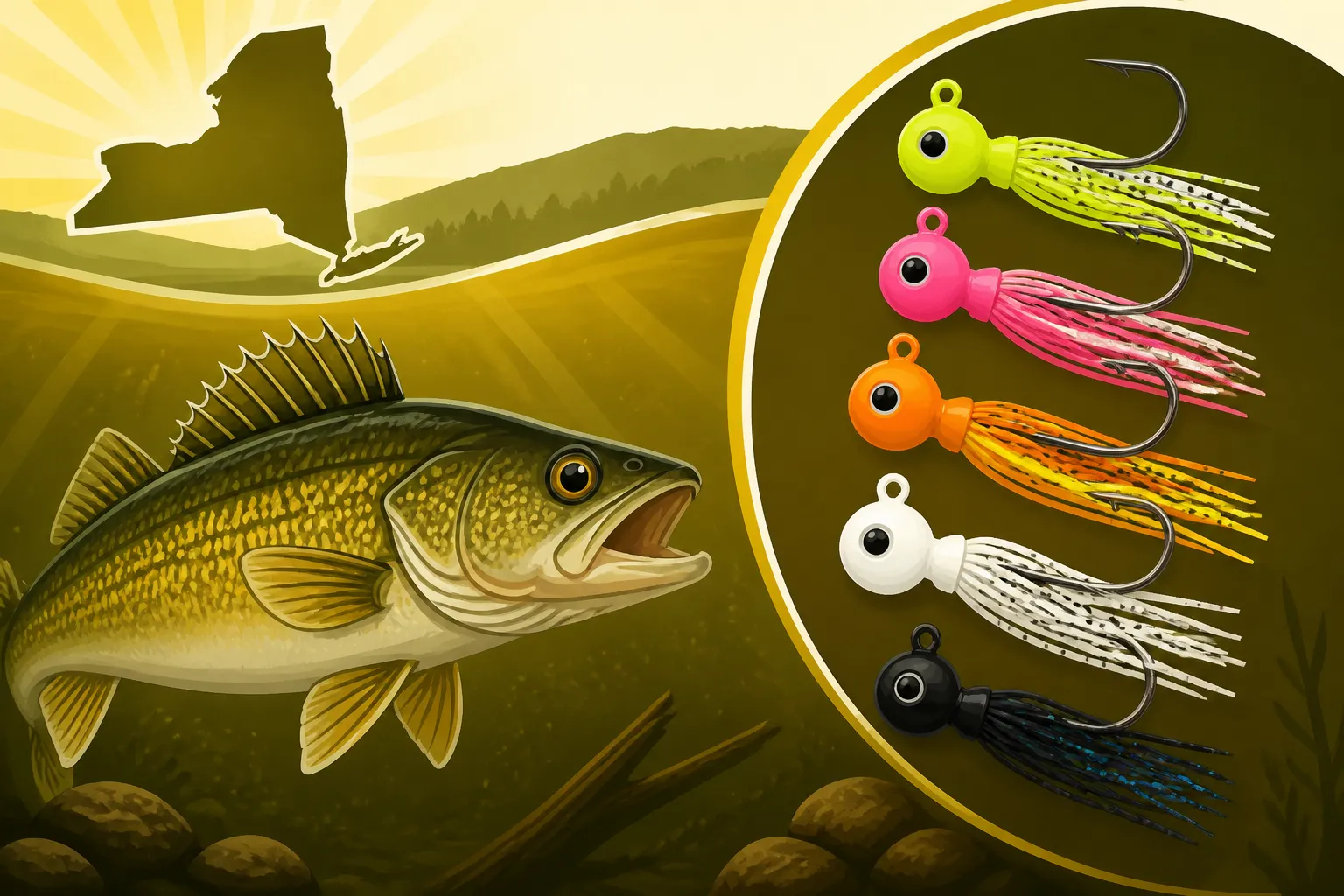
- Chartreuse: This vibrant yellowish-green is almost universally acclaimed as a top stained-water color. It has a remarkable ability to stand out and emit light, making it highly visible even in very murky conditions. When you're fishing a river like the Oswego after a good rain, or a heavily churned bay on Oneida Lake, a chartreuse jig with a soft plastic tail can be absolutely deadly. Many anglers will pair a chartreuse jig head with a white or even darker soft plastic body for added contrast, creating a dynamic visual target.
- Orange: A fiery, bold orange is another excellent choice. It has a strong presence in lower light and stained water, often mimicking distress signals or the coloration of certain forage. Consider a bright orange jig when targeting walleye in deep, stained pockets of the Hudson River, or during those cloudy, overcast days when natural light penetration is minimal. It provides a stark contrast against a dark bottom or a dull sky.
- Pink/Hot Pink: Don't underestimate the power of pink, especially hot pink! This color has a unique way of being perceived in some stained waters, often appearing as a strong, distinct hue that doesn't get absorbed as quickly as other colors. It's particularly effective in tannin-stained waters where other colors might blend in too much. If you're experimenting, definitely try a pink jig or a jig with pink accents. You might be surprised at the results, especially when walleye are lethargic and need something truly obnoxious to get their attention.
- Lime Green: A step brighter than standard green, lime green offers a vivid pop that can be very effective. It carries some of the visibility benefits of chartreuse but with a slightly different tone that can appeal to walleye when other bright colors aren't producing. These fluorescent colors are often easily found on popular online marketplaces like Amazon, making it convenient to stock up for your next trip.
The Effectiveness of Darker, Silhouetted Colors
While bright colors aim for maximum visibility, there's another school of thought for stained water: creating a clear, bold silhouette. This approach relies on contrast against the slightly brighter overhead light.
- Black: Counterintuitive as it might seem, black can be incredibly effective in stained water. Why? Because it creates the strongest possible silhouette against any ambient light filtering down from above. Imagine a walleye looking up from the murky depths: a black jig will stand out as a dark, distinct shape, much like a shadow. It doesn't rely on light reflection or color penetration; it simply presents a clear form. This is particularly good for deep water, very dark stained water, or when fishing at night. Pair a black jig head with a black or dark purple soft plastic for a cohesive, silhouette-focused presentation.
- Dark Purple/Plum: Similar to black, dark purple offers a strong silhouette but with a subtle hint of color that can be enticing. It’s often thought that purple maintains its color and visibility deeper than many other colors, and in stained conditions, this can be a real advantage. A dark purple jig can be excellent for those tannin-stained waters where a black might be too stark, offering a slightly more "natural" dark appeal while still creating excellent contrast.
- Brown/Motor Oil: These earthy, darker tones can be fantastic in stained water that has a brownish tint, especially if it's from tannins or runoff. They don't aim to be bright; instead, they blend subtly with the natural environment while still creating enough contrast to be seen. Sometimes, the walleye might be keying in on crawfish or other dark bottom-dwelling forage, and a brown jig can be a perfect match. You can find a good selection of these darker hues on fishing tackle websites or even Amazon if your local shop has a limited selection.
Gold, Silver, and Natural Shimmer
These metallic and natural colors often shine (pun intended!) in waters that are slightly stained, where there's still some light penetration to allow for reflection and shimmer. They might not be your first choice for truly opaque conditions, but don't count them out when the water is merely murky rather than muddy.
- Gold: Gold can be a fantastic option in waters with a brownish or greenish tint. It provides a warm, reflective flash that can catch the eye of a walleye. Think of how a spoon lure flashes; a gold jig head can do the same, especially when retrieved with a subtle jigging motion that allows it to catch and reflect what little light is present. It’s particularly good on sunny days where some light can still penetrate the stained water.
- Silver: In slightly clearer but still stained waters, silver offers a bright, natural baitfish flash. It’s a classic color for a reason and can be effective when the walleye are chasing shiners or other silvery baitfish. While less effective than gold in truly dark, brown-stained water, it can excel in water with a greyish or greenish tint, offering a sharp, quick glint that can trigger a strike.
- White/Pearl: While not always the brightest, white or pearl can be very effective in moderately stained water. White offers excellent contrast against a dark bottom or even a blue sky from below, creating a very visible target. Pearl often has a subtle luminescence that can be attractive, especially in those in-between conditions where water isn't totally opaque but isn't gin clear either. This is a versatile color that can often be enhanced with scent.
Factors Beyond Color for Stained Water Walleye
While jig color is incredibly important, it's only one piece of the puzzle. Walleye in stained water rely on more than just sight, and successful anglers understand how to combine the right color with other sensory triggers and presentation techniques.
Jig Size and Profile
In low visibility, a walleye might not get a clear picture of your jig, but it can certainly detect its presence. This is where size and profile come into play. A larger jig, or one with a bulkier soft plastic trailer, will displace more water, creating stronger vibrations that the walleye’s lateral line can pick up from a greater distance. Think about a larger grub, a paddle-tail swimbait, or even a twin-tail grub on your jig. These add bulk and movement, making your offering easier to detect without necessarily being perfectly "seen."
Furthermore, a bulkier profile often means a slower fall rate through the water column. In stained water, walleye might be less inclined to chase a fast-moving bait because they have less time to react visually. A slower fall gives them more opportunity to locate and commit to the strike. Experiment with jigs like the Berkley Gulp! Alive! or other scented soft plastics, which offer a substantial profile and a strong scent trail, enhancing their detectability in murky conditions. Many anglers swear by these bulkier soft plastics, easily found through retailers like Amazon, to get walleye to commit.
Scent and Noise
Since visibility is compromised, appealing to other senses becomes paramount. Walleye have an excellent sense of smell, and incorporating scent into your presentation can be a game-changer in stained water.
- Scent Additives: Apply a strong fish attractant to your jigs and soft plastics. Scents like anise, garlic, or those mimicking shad or minnows can create a scent trail that guides walleye directly to your lure, even if they can't see it clearly. Reapply frequently, as the scent will dissipate in the water.
- Scented Baits: Many soft plastics come pre-infused with scent. Brands like Gulp! by Berkley are famous for their potent scents and are specifically designed to appeal to fish's olfactory senses, making them perfect for low-visibility situations.
- Rattles: The walleye's lateral line is a sophisticated sensory system that detects pressure changes and vibrations in the water. Adding a rattle to your jig or inserting rattle chambers into your soft plastics creates noise and vibration that walleye can home in on. This is especially effective in very dark or heavily stained water where visual cues are minimal. A loud, clacking rattle can draw attention from a surprisingly long distance, giving the fish a sonic beacon to follow.
Presentation and Retrieval Speed
How you work your jig is just as critical as its color or scent in stained water.
- Slower Retrieval: In low visibility, fish generally have less time to react. A slower retrieve allows walleye more time to locate your lure, track it, and commit to a strike. They aren't going to dart quickly after something they can barely see.
- Erratic Action: While slow, don't make your retrieve monotonous. Incorporate pauses, sharp jigs, and subtle twitches. These erratic movements can mimic an injured or confused baitfish, triggering a predatory response. A sharp jig followed by a long pause, allowing the jig to slowly settle, can be incredibly effective. Consider the popular "snap jigging" technique, where you make a sharp upward snap of the rod to lift the jig quickly, then let it fall on a semi-slack line. The jig will flutter and dart, creating lots of vibration, before settling enticingly.
- Bottom Contact: Walleye in stained water often hug the bottom where light penetration is lowest and they feel most secure. Ensure your jig is regularly making contact with the bottom. Bouncing, dragging, or lightly hopping your jig along the lakebed kicks up puffs of sediment, simulating feeding activity and making your lure even more noticeable. This technique is particularly effective in spots like the deeper channels of the St. Lawrence River where walleye often relate closely to structure.
Tackle Considerations
Beyond the jig itself, your overall tackle setup can significantly impact your success in stained water.
- Line Choice: While fluorocarbon is popular for its invisibility in clear water, it's less critical in stained conditions. In fact, a slightly more visible line like monofilament can sometimes be advantageous as a visual cue for you to detect subtle bites. However, the most important aspect of line is its sensitivity. A low-stretch braided line, paired with a fluorocarbon leader (for abrasion resistance and stealth near the bait), will transmit those subtle stained-water bites far better than stretchy mono. You need to feel every tap when visibility is low.
- Rod Sensitivity: A sensitive rod is non-negotiable for stained water walleye fishing. You'll often be relying on feel alone to detect strikes. A fast-action, medium-light to medium power graphite rod will allow you to feel the most delicate takes, especially when walleye are just "mouthing" the jig. The difference between feeling a slight tick and missing a fish can come down to the quality of your rod.
- Reel Smoothness: A smooth-operating reel with a reliable drag is essential for controlled presentations and fighting larger fish. In stained water, you might be fishing around snags or structure, so having a reel that can handle the pressure and allow for precise line control is important.
Putting It All Together: On-the-Water Strategies
You've got your bright jigs, your scented plastics, and you understand the theory. Now, let's talk about how to apply this knowledge on the water and adjust your strategy to maximize your chances of success.
Experimentation is Key
No two stained water situations are exactly alike. The exact shade of the stain, the depth, the light conditions, and even the local forage can all influence what walleye respond to. This means that while guidelines are helpful, true success comes from relentless experimentation. Don't be afraid to switch it up!
Start with a few tried-and-true colors like chartreuse or bright orange. If you're not getting bites within a reasonable time, switch to a darker silhouette like black or dark purple. Pay attention to not just color, but also jig size, soft plastic profile, and retrieval speed. Sometimes, a subtle change can make all the difference. Keep detailed notes in a fishing log: what colors worked on what type of stained water, at what depth, and under what conditions. This will build your personal knowledge base for future trips to New York's fantastic walleye fisheries. Remember that even the best jig in the world won't work if it's not where the fish are; knowing Best Walleye Fishing Spots in New York can significantly improve your odds.
Reading the Water
Becoming adept at reading the water is an essential skill, especially when dealing with varying levels of stain.
- Identifying Degree of Stain: Is the water lightly stained, murky, or completely opaque? A simple test is to dip your trolling motor prop or paddle into the water. If you can still see the prop a foot or two down, it's moderately stained. If it disappears immediately, it's heavily stained. This will guide your initial color choice – brighter for heavier stain, or perhaps natural colors with more shimmer if it's lighter.
- Light Conditions: Overcast days or low-light periods (dawn/dusk) generally call for brighter or fluorescent colors, as there's less ambient light for dark silhouettes to contrast against. On sunny days, a metallic jig might catch more subtle flashes of light, or a dark silhouette might stand out boldly against the bright sky. Consider how the Best Time of Day to Fish in New York also influences light conditions under the water.
- Understanding the Source: Is the stain from recent rain runoff, turning the water a muddy brown? Or is it a tannin stain from decaying vegetation, giving it a tea color? Knowing the source can help you understand what kind of suspended particles are present and how light might interact with them, subtly informing your color choices. A natural brown or "motor oil" color might excel in tannin-rich water.
When to Switch Up Your Approach
The walleye bite can be finicky, and conditions can change throughout the day or even hour. Be prepared to adapt.
- Day vs. Night: Walleye are naturally more active at night. In stained water, this means their low-light vision gives them an even greater advantage. Darker, silhouetted jigs (black, dark purple) often excel during nocturnal outings, as they provide the clearest target against the moonlit or starlit sky. Lures that glow in the dark can also be highly effective for night fishing.
- Clear vs. Murky Changes: If a rainstorm blows through and turns a previously clear lake murky, you need to quickly adjust from natural baitfish patterns to the high-visibility or high-contrast options discussed. Conversely, if a storm passes and the water starts to clear, you might transition back to more natural tones, or even mix in some silver or gold.
- No Bites? Change! This is the golden rule of fishing, amplified in stained water. If you've been working a spot with one color and presentation for 15-20 minutes without a sniff, don't be stubborn. Change your jig color, alter your soft plastic, try a different retrieve speed, or add scent and rattles. Walleye are there to be caught, but sometimes you just need to crack the code on what they're looking for that particular day. Exploring How to Jig for Walleye in various conditions will enhance your technique greatly.
Stained water can be daunting, but with the right understanding of walleye biology and a well-stocked tackle box of specific jig colors, you can turn a challenging situation into a rewarding fishing experience. Remember, persistence and experimentation are your best friends out on the water.
Disclaimer
This article is for general informational purposes only and does not constitute professional advice. Laws, prices and regulations vary by location and change over time. Consult a qualified professional for guidance on your specific situation.