How to Fish a Tube Jig for Smallmouth Bass
Have you ever found yourself on the water, watching smallmouth bass follow your lures but refuse to commit, leaving you scratching your head? It’s a frustrating scenario many anglers face, especially when those bronzebacks are being picky. This comprehensive guide is going to strip away the mystery, diving deep into one of the most effective, yet sometimes misunderstood, lures for smallmouth: the tube jig. We'll explore how to master this subtle presentation to consistently entice those feisty fighters in New York's diverse waters.
The Undeniable Appeal of the Tube Jig for Smallmouth Bass
There’s a reason why seasoned anglers often have a box dedicated solely to tube jigs. It’s not just another soft plastic; it’s a chameleon, capable of mimicking a wide array of smallmouth forage and adapting to various fishing conditions. Its unique design allows for incredible versatility, making it a go-to choice when other baits fail.
Why Smallmouth Love Tube Jigs
Smallmouth bass are opportunistic predators, but they can be incredibly discerning. What makes a tube jig so irresistible to them? It boils down to a few key factors that tap into their primal instincts.
Firstly, the tube's hollow, cylindrical body with numerous tentacles at one end creates an incredibly lifelike action in the water. When twitched or dragged, these tentacles flare and undulate, mimicking crayfish, baitfish, or even insects fleeing danger. Crayfish, in particular, are a staple in the diet of smallmouth bass, especially in rocky, clear-water environments. A tube jig, slowly dragged or hopped along the bottom, perfectly replicates a crawdad scuttling or trying to escape. The way it spirals and darts on the fall is also a huge trigger, often drawing vicious strikes from bass that are otherwise hesitant.
Secondly, its soft plastic construction feels natural to a bass. Unlike hard baits, a bass is more likely to hold onto a soft plastic tube for a moment longer, giving you that precious extra second to set the hook. This natural feel is crucial, especially when fishing for pressured fish in clear waters where smallmouth have ample time to inspect your offering. The subtle, quiet presentation of a tube jig also makes it ideal for these conditions, as it doesn't create excessive commotion that might spook wary bass.
Anatomy of a Tube Jig
Before we get into rigging and presentation, let's quickly break down the components of a tube jig and what to look for. Understanding these elements will help you make informed choices on the water.
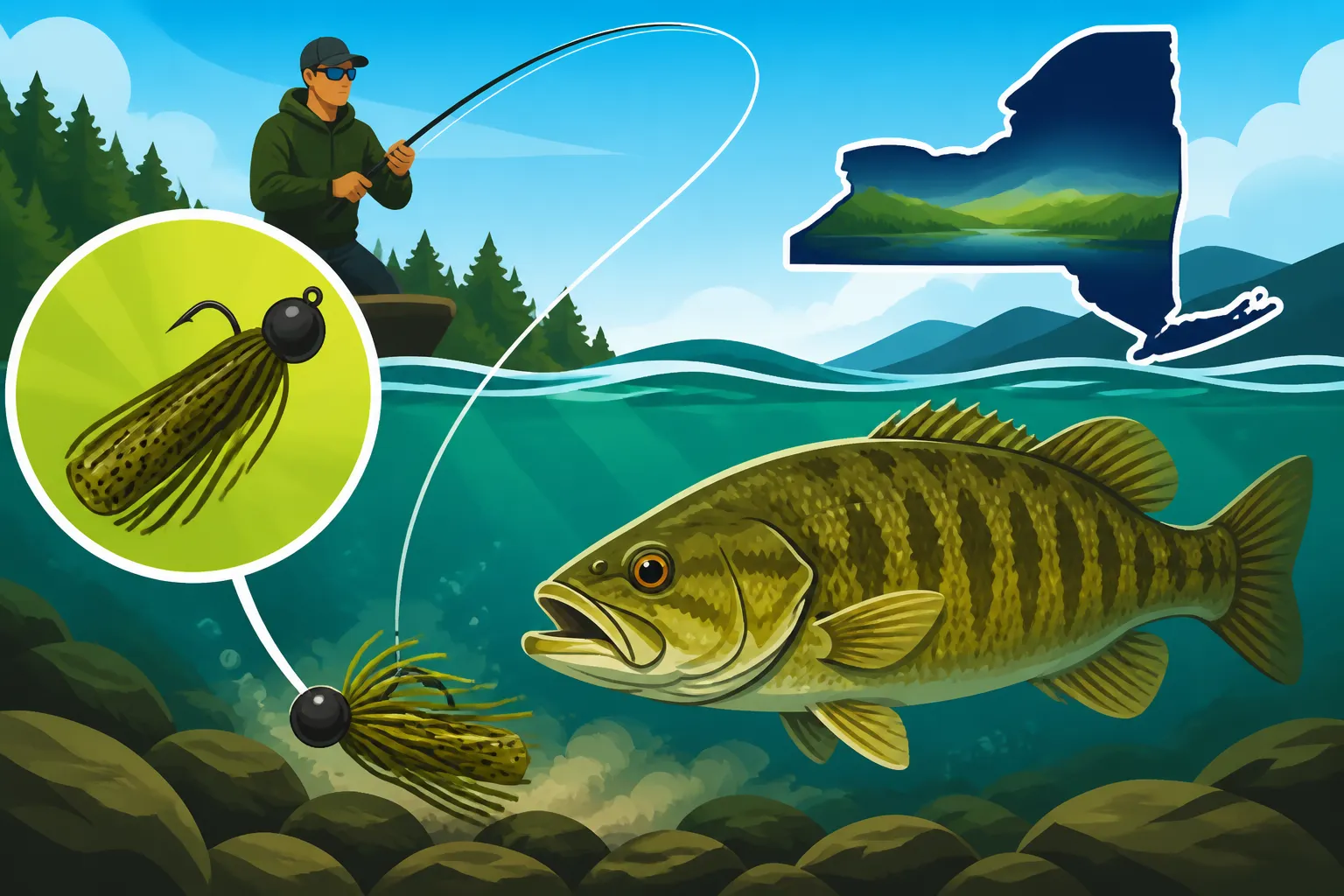
A tube jig essentially consists of two main parts: the soft plastic tube body and a lead jig head. The tube body is typically made from PVC plastic, and comes in various lengths, usually ranging from 2.5 to 4.5 inches for smallmouth. The "head" end is usually solid or semi-solid, designed to be inserted over a jig head, while the "tail" end features a fringe of tentacles that provide that irresistible action. Colors are critical, and we'll dive deeper into that, but common shades include greens, browns, pumpkins, and pearl whites, often with flecks of glitter to mimic scales. When selecting tubes, consider the water clarity and available forage. For example, if you're fishing in the clear waters of the St. Lawrence River, naturalistic colors like green pumpkin or watermelon are often superb choices to mimic the prevalent crayfish.
The jig head is equally important. It's usually a weighted lead head with a single hook. The weight of the jig head determines your tube's fall rate and how well it stays on the bottom. For tubes, you'll often encounter internal jig heads (which slide inside the tube body) and external jig heads (which are tied to the outside). The hook size should correspond to the size of your tube, ensuring good hook penetration without overpowering the bait. You can find a vast selection of both tube bodies and jig heads on platforms like Amazon, allowing you to stock up on different sizes and colors to match local conditions.
Rigging Your Tube Jig for Optimal Performance
Getting your tube jig rigged correctly is half the battle. A poorly rigged tube can spin, hang up, or simply not present naturally, costing you bites. There are a few tried-and-true methods, each with its own advantages, designed to maximize the tube's effectiveness for smallmouth.
Internal Jig Head Rigging (Texas Rig Style)
This is by far the most popular and versatile way to rig a tube jig, offering a weedless presentation that's perfect for fishing around rocks, weeds, and other snags—prime smallmouth habitat.
Here’s how you do it:
- Select your jig head: Choose a tube jig head designed for internal rigging. These typically have a 60-degree bend in the hook shank and a small barb or lead keeper to hold the tube in place. The weight depends on depth and current; 1/8 to 3/8 ounce are common starting points for many New York waters.
- Insert the jig head: Squeeze the tube body slightly and insert the lead head into the open end. Guide the hook eye out through the solid "head" section of the tube, aiming for the center. You want the jig head to sit snugly inside the tube, creating a seamless connection.
- Thread the hook: Now, measure where the hook point would naturally exit the side of the tube body to lay flat. Push the hook point through the side of the tube, ensuring it's straight and the plastic isn't bunched up.
- Skin-hook the point: For a truly weedless setup, lightly embed the hook point back into the skin of the plastic tube. This keeps it from snagging on cover while still allowing it to pop out easily on a strike.
The beauty of this setup is its stealth. The weight is concealed, and the hook is largely protected, allowing you to probe dense cover where smallmouth often hide. It's a fantastic choice when you're fishing rocky shorelines or drop-offs in places like the Finger Lakes or Lake Erie, where snags are inevitable.
Exposed Jig Head Rigging (Open Hook)
While less common for tubes specifically designed for internal rigging, sometimes an exposed jig head can be effective, especially when smallmouth are hitting short or in open water with minimal snags.
For this method, you'd typically use a standard mushroom or round-head jig. Simply push the hook through the top of the tube's "head" section, ensuring the jig head sits flush against the plastic. The hook remains exposed, offering immediate hook-up potential. This can be great for vertical jigging or swimming tubes in open water columns, but be prepared for more snags if you're working heavy cover. This style is often seen with smaller, finesse-oriented tubes.
Other Rigging Considerations: Scent and Color
Beyond the basic mechanics, two other factors play a huge role in tube jig effectiveness: scent and color.
- Scent: Many tube jigs come pre-impregnated with salt or fish attractants. If yours doesn't, consider adding a scent spray or gel. Smallmouth have a keen sense of smell, and an added attractant can make them hold on longer, or even draw them in from a distance, particularly in stained water.
- Color: Matching the hatch is key. For clear water and crayfish imitation, greens, browns, and pumpkinseed patterns are stellar. In waters with abundant baitfish like shad or shiners, pearl white, smoke, or silver flake tubes can be deadly. Cloudy days or stained water might call for brighter colors like chartreuse or junebug, offering better visibility. Always observe the local forage and water conditions to inform your color choice. Remember, sometimes a subtle change in hue, perhaps from green pumpkin to a darker watermelon, can make all the difference.
Mastering the Art of Presentation and Retrieval
Rigging your tube jig perfectly is only half the equation; knowing how to present it is where the magic truly happens. Tube jigs are incredibly versatile, allowing for a range of retrieve styles that can mimic various forage and trigger strikes from even the most lethargic smallmouth.
The Drag and Hop: Classic Bottom Presentation
This is arguably the most common and effective technique for tube jigs, especially when imitating crayfish on the bottom. Smallmouth bass spend a lot of time rooting around rocky bottoms for crayfish, and this retrieve nails that natural action.
- Cast it out: Make a long cast beyond your target area, allowing the tube to sink all the way to the bottom on a semi-slack line. Watch your line for any subtle twitches as it falls; a smallmouth might grab it on the descent!
- Maintain bottom contact: Once it hits bottom, take up any slack in your line. You want enough tension to feel the bait, but not so much that you're pulling it off the bottom constantly.
- The Drag: Slowly drag the tube across the bottom using your rod tip, typically by sweeping your rod from a 9 or 10 o'clock position to a 2 or 3 o'clock position. Don't reel during the drag; just use the rod. Then, drop your rod tip back down to the starting position, taking up slack with your reel. This allows the tube to "settle" or "tumble" naturally.
- The Hop: Intermittently, you can add a "hop" to your retrieve. After a drag or two, twitch your rod tip sharply upwards a few inches, then immediately let the tube fall back to the bottom on a semi-slack line. This darting action can simulate a crawdad trying to escape.
- Feel for the bite: Bites on a tube jig can be subtle. Sometimes it's a light tap, other times it feels like your line just went "mushy" or heavy. Any unnatural feeling warrants a hookset. Don't wait for a huge yank; smallmouth can just "mouth" the bait. This method is particularly effective when fishing break lines, rock piles, and submerged timber, which are often prime smallmouth territory in lakes like Oneida Lake.
The Swim: Mimicking Baitfish
While known for bottom fishing, tube jigs can also be incredibly effective when retrieved higher in the water column, mimicking a fleeing baitfish. This is particularly useful when smallmouth are suspended or actively chasing schools of minnows.
- Lighter Jig Head: Choose a lighter jig head (1/8 to 1/4 ounce) to allow for a slower, more natural swimming action.
- Steady Retrieve with Twitches: Cast your tube out and let it sink to your desired depth. Then, begin a slow, steady retrieve, occasionally adding a gentle twitch of the rod tip. This makes the tube dart and spiral, imitating a wounded baitfish.
- Pause and Fall: Don't be afraid to pause your retrieve, letting the tube flutter and spiral downwards. Many strikes occur on this pause, as the struggling action often triggers a predatory response.
This technique shines in open water or when fishing over submerged weed flats where smallmouth might be patrolling. You can use it effectively in rivers like the Genesee River, allowing your tube to drift with the current while adding occasional twitches.
Vertical Jigging: Targeting Deep Structure
When smallmouth are holding deep on structure, such as humps, ledges, or deep weed edges, vertical jigging a tube can be deadly, especially from a boat equipped with sonar.
- Locate the fish: Use your fish finder to pinpoint smallmouth on structure.
- Position your boat: Position your boat directly over or slightly upcurrent from the fish.
- Drop the tube: Drop your tube jig straight down to the depth of the fish.
- Work the water column: Gently lift and drop your rod tip, making the tube "dance" in place. You can vary the aggressiveness of your jigs, from subtle lifts to sharper snaps. Pay close attention to your line and feel for any resistance on the fall or lift. This is a very precise way to fish and can be incredibly effective when fish are concentrated.
Remember, the key to all these presentations is to vary your retrieve until you find what the fish want on a given day. Sometimes they want aggressive hops, other times a barely perceptible drag.
Where and When to Deploy Your Tube Jig for Smallmouth in New York
New York State boasts an incredible variety of waters, and understanding where and when to best deploy your tube jig for smallmouth bass can dramatically improve your success. Smallmouth are structure-oriented fish, and tubes excel at working that structure.
Prime Smallmouth Habitats in New York
Smallmouth bass thrive in clear, cool-to-moderate water with plenty of rocky structure, gravel beds, and current. New York offers an abundance of such environments.
- Great Lakes Tributaries and the Great Lakes Themselves: Lake Erie and Lake Ontario, along with their major tributaries like the Niagara River and St. Lawrence River, are legendary for their smallmouth populations. Here, tubes are indispensable for fishing rocky points, shoals, deep drop-offs, and river currents. The St. Lawrence River, in particular, is renowned for its trophy smallmouth, and tube jigs are a staple for anglers targeting them in the Thousand Islands region. You might find yourself fishing rock piles in 20-30 feet of water, where a 3/8 or 1/2 ounce tube jig is necessary to maintain bottom contact in the current.
- Finger Lakes: Lakes like Cayuga, Seneca, and Keuka are deep, clear, and rich in smallmouth. Tube jigs are excellent for working the steep rocky banks, gravel bottoms, and underwater humps. Look for transition areas where different types of bottom meet, such as sand to rock, as these are often productive. In these lakes, smallmouth will often relate to specific depths, moving deeper in summer. Understanding how to fish deep water Lake Trout in summer on New York's Finger Lakes often applies to smallmouth as well, just at different depths.
- Adirondack Lakes: While some Adirondack lakes are known for trout, many also hold fantastic smallmouth bass. Lakes with rocky shorelines, boulder fields, and underwater ledges are prime. The clear, pristine waters here make a natural-colored tube jig a top choice.
- Rivers and Streams: Many of New York's larger rivers that aren't exclusively trout fisheries, such as the upper Hudson or sections of the Mohawk River, offer great smallmouth action. In rivers, smallmouth will relate to current breaks, eddies, submerged rocks, and undercut banks. A tube jig drifted with the current and occasionally hopped can be incredibly effective when you learn How to Fish for Smallmouth Bass in Rivers.
Best Times to Fish Tube Jigs for Smallmouth
The effectiveness of a tube jig is fairly consistent throughout the open water seasons, but there are certain times when it really shines.
- Spring (Pre-Spawn and Spawn): As water temperatures rise into the 50s and 60s, smallmouth move shallower to feed aggressively before and during the spawn. This is a phenomenal time for tube jigs. Work them slowly on rocky points, shallow humps, and spawning flats. Smallmouth are often focused on crayfish and other bottom-dwelling prey during this period, making the tube's subtle crawdad imitation deadly. This is often considered the Best Time to Fish for Bass in New York.
- Summer: In summer, smallmouth often retreat to deeper, cooler water, relating to offshore humps, ledges, and deep-water points. This is where vertical jigging or dragging heavier tubes excel. Early mornings and late evenings can also see them push shallower to feed.
- Fall (Post-Spawn to Winter Prep): As water temperatures drop in the fall, smallmouth begin to feed heavily, packing on weight for winter. They can be found in a range of depths, often feeding on baitfish and crayfish. Tubes remain a top producer, whether dragged deep or slowly retrieved over schooling fish.
Remember, smallmouth can be found in varying sizes depending on the body of water. For instance, the Smallmouth Bass Average Size on New York's St. Lawrence River is often larger than in some smaller inland lakes, meaning you might opt for larger tubes and heavier tackle there. Always check local regulations for specific season dates and catch limits before heading out.
Troubleshooting Your Tube Jig Game
Even with the perfect rigging and presentation, there will be days when the smallmouth just aren't cooperating. Don't throw in the towel! There are always adjustments you can make to coax those bites.
When the Bite is Finicky: Finesse Adjustments
Smallmouth bass are known for their strong fighting spirit, but they can be incredibly cautious, especially in highly pressured or clear waters. If you're not getting bites, consider these finesse adjustments.
- Downsize Your Tube and Jig Head: If you're using a 4-inch tube with a 3/8-ounce jig head and getting no love, try dropping to a 3-inch tube with a 1/8 or 1/4-ounce head. A smaller, slower-falling bait can often trigger bites from hesitant fish. This is especially true when fishing in extremely clear water, where fish have a long time to inspect your lure.
- Slow Down, Even More: Sometimes, anglers retrieve too quickly without realizing it. Force yourself to slow down your drag-and-hop. Lengthen your pauses between hops. Let the tube sit motionless on the bottom for 5-10 seconds before moving it again. A subtle change in speed can make all the difference. Think about what a wary crayfish might do – not much fast movement, mostly subtle scuttling and long pauses.
- Experiment with Color and Scent: Have you tried every shade of green pumpkin? Time to switch gears. Go from a natural color to something brighter like chartreuse or junebug, or vice-versa. If you're using unscented tubes, add a generous amount of fish attractant. Sometimes the fish are keyed into a specific visual or olfactory cue you haven't hit yet. A quick check of what's available online, perhaps on Amazon, can show you the array of colors available.
- Change Presentation Angle: If you're casting perpendicular to a drop-off, try casting parallel, allowing the tube to work along the contour for a longer period. If you're dragging, try a more aggressive hop, or vice-versa. Sometimes the angle of approach and how the bait interacts with the structure is key.
Dealing with Snags and Lost Lures
Tubes are designed to be weedless when internally rigged, but snags are still part of the game when fishing rocky smallmouth habitat. It's frustrating, but there are ways to minimize losses.
- Line Choice: Using braided line with a fluorocarbon leader can help. Braid offers incredible sensitivity, allowing you to feel subtle bumps and snags before they become permanent. It also has no stretch, which can help pop a lure free from some snags. A fluorocarbon leader (6-10 lb test is common) provides invisibility in clear water and some abrasion resistance.
- Rod Angle: When dragging or hopping, keep your rod tip high. This changes the angle of your line, making the jig head less likely to wedge directly into rocks or crevices. When you feel a snag, don't yank. Point your rod directly at the snag, then try to jiggle the line or snap the rod tip upward. Often, the tube will dislodge itself.
- Jig Head Design: Some internal tube jig heads are designed with a slightly flatter, broader head that makes them more "snag resistant" by preventing them from easily wedging into rock crevices. Explore different brands and designs to find what works best in your local fishing spots.
Comparing Tube Jigs to Other Smallmouth Lures
While tube jigs are fantastic, they're not the only lure in a smallmouth angler's arsenal. Understanding their strengths and weaknesses relative to other popular baits can help you choose the right tool for the job.
| Lure Type | Best Conditions / Strengths | Weaknesses / When to Use a Tube Instead |
|---|---|---|
| Tube Jig | Finesse, clear water, rocky structure, imitating crayfish, subtle presentation, versatile. | Can be slow to fish, less effective for covering vast amounts of water quickly. |
| Jerkbait | Covering water, aggressive fish, suspended fish, erratic baitfish imitation. | Less effective on bottom, can spook wary fish in clear, shallow water. |
| Spinnerbait | Covering water, stained water, wind, reaction strikes, weedlines. | Less subtle, can be too noisy for finicky fish, not ideal for deep structure. |
| Swimbait | Imitating larger baitfish, targeting trophy fish, covering water. | Can be expensive, often requires heavier tackle, less subtle. |
| Drop Shot Rig | Ultra-finesse, deep water, vertical presentation, targeting suspended fish, finicky eaters. | Slower presentation, can be prone to tangles, not ideal for covering wide areas. |
For smallmouth bass, especially in clear water where fish can be visually selective, the tube jig often outperforms flashier baits due to its natural appearance and subtle action. This is particularly true when you're fishing environments like the Best Smallmouth Bass Lakes in New York, where clear water and rocky bottom are prevalent. A tube jig is a consistent producer that often catches fish when nothing else will.
Beyond the Basics: Advanced Tube Jig Tactics
Once you've mastered the fundamental rigging and presentation techniques, you can start to experiment with more advanced tactics that can truly elevate your tube jig game and unlock even more smallmouth bites.
The Dead Stick: When All Else Fails
Sometimes, smallmouth are so lethargic or wary that even a slow drag-and-hop is too much. This is when the "dead stick" technique comes into play. It's exactly what it sounds like: casting your tube jig out and letting it sit, completely motionless, on the bottom.
To execute this, cast your internally rigged tube jig to a likely smallmouth spot – a rock pile, a transition line, or the edge of a drop-off. Let it sink to the bottom. Take up the slack, and then do absolutely nothing. Don't twitch, don't drag, don't hop. Just let it sit there. The natural current (even subtle underwater currents) will cause the tube's tentacles to waft and breathe, providing just enough lifelike action to trigger a strike.
You'll need a lot of patience for this, but it can be incredibly effective on tough days, in cold water, or when fish are heavily pressured. Bites often feel like a gentle "tick" or simply a feeling of weight on your line when you finally decide to move it. This method requires extreme sensitivity, so a good quality graphite rod and braided line are highly recommended.
High-Speed Trolling for Suspended Smallmouth
While tube jigs are generally thought of as casting and jigging baits, a less common but effective tactic, especially on larger lakes like Lake Ontario or Lake Erie, is high-speed trolling them for suspended smallmouth. This technique is often more associated with trout or salmon, but adventurous anglers have adapted it for bass.
For this, you'd typically use heavier jig heads (1/2 ounce or more) or a tube rigged behind a small dodger or flasher, similar to how one might troll for salmon. Troll at speeds faster than you normally would for bass, perhaps 2.5 to 3.5 miles per hour. The rapid movement gives the tube an erratic, fleeing action that can trigger aggressive reaction strikes from smallmouth suspended over deep water. This is a tactic for covering a lot of water and targeting open-water roamers rather than structure-oriented fish. You would need specialized gear, including downriggers or planer boards, which is typically seen on salmon and trout boats. While specific to smallmouth here, understanding Trolling Techniques for New York's Lakes in general can open up new possibilities.
Rigging with an Exposed Hook: When to Go Aggressive
We mentioned exposed hook rigging earlier for specific situations, but it bears repeating for advanced tactics. While internal rigging is king for snag avoidance, an exposed jig head can provide a faster, more direct hookset, which is crucial when fish are slashing at the bait rather than inhaling it.
Consider using a mushroom head jig, or even a round ball head jig, with a tube when:
- Fish are schooling in open water: If you've located a school of smallmouth actively chasing bait in open water, and snags aren't a concern, an exposed hook ensures maximum hook-up ratio on aggressive strikes.
- Short strikes: If you're getting lots of bumps and nips but no solid hookups, sometimes exposing the hook entirely can help. The tube will still have its enticing action, but the hook point is immediately available.
- Vertical jigging in clean areas: When directly over deep structure that you know is relatively free of snags, an exposed hook can be fine, especially if you're using a sensitive rod to feel subtle takes.
Just remember that an exposed hook means increased risk of snagging, so choose your spots wisely.
The Carolina Rigged Tube: Dragging Vast Flats
While not a direct tube jig, integrating a tube bait into a Carolina Rig can be an incredibly effective way to cover large, flat areas for smallmouth bass. The Carolina Rig allows your tube to float above the bottom, trailing behind a lead weight, which is perfect for enticing smallmouth cruising sandy or gravel flats.
To rig this:
- Thread a sliding bullet weight (e.g., 1/2 to 1 ounce) onto your main line, followed by a plastic bead to protect your knot.
- Tie on a barrel swivel.
- Attach a fluorocarbon leader (2-4 feet) to the other end of the swivel.
- Tie your tube (usually internally rigged with a very light, unweighted hook, or no hook at all, just a weedless weightless hook for plastic) to the end of the leader.
The weight drags on the bottom, kicking up sediment and attracting attention, while the tube floats enticingly behind, mimicking a foraging crayfish or baitfish. This is a fantastic technique for exploring expansive areas that might not have obvious hard structure, or when smallmouth are spread out. If you're looking for more general strategies to cover water effectively, consider exploring How to Fish a Carolina Rig.
Experimentation is key when it comes to tube jigs. Don't be afraid to try different colors, sizes, weights, and presentations. The tube jig's versatility is its greatest strength, and the more you learn to adapt it to the conditions and the fish's mood, the more smallmouth you'll bring to the net.
Disclaimer
This article is for general informational purposes only and does not constitute professional advice. Laws, prices and regulations vary by location and change over time. Consult a qualified professional for guidance on your specific situation.