Best Techniques for Fishing Deep Structure
It's incredibly frustrating when you head out to your favorite fishing spot, expecting to find fish, only to discover the shallows are barren. Many anglers pack up, thinking the fish just aren't biting, but often, those elusive lunkers have simply retreated to deeper, cooler, and more stable waters. This comprehensive guide will equip you with the knowledge and best techniques to confidently target those often-overlooked fish hiding in deep structures across New York's vast lakes and rivers, turning slow days into remarkably successful ones.
Decoding Deep Structure: Why Fish Go Deep
Understanding what "deep structure" means and why fish gravitate towards it is the first step to unlocking a whole new dimension of angling success. It's not just about a flat, featureless bottom; it's about underwater topography that provides cover, ambush points, and access to food sources.
What Exactly is "Deep Structure"?
When we talk about deep structure, we're referring to any significant topographical change on the bottom of a lake or river that's submerged in deeper water. Think of it like an underwater landscape with hills, valleys, and forests, mirroring what you see above the surface. These can include submerged humps (underwater hills), ledges and drop-offs (sudden changes in depth), deep channels, and even man-made structures like bridge abutments or old roadbeds.
In New York, our diverse waterways, from the massive Lake Ontario Fishing in New York: Where to Go to the numerous Finger Lakes and expansive reservoirs, are riddled with such features. You might find ancient submerged timber in reservoirs like those in the Catskills, vast rock piles and boulder fields in the Great Lakes, or sharp, defined ledges in glacial lakes that plunge to incredible depths. These aren't just random spots; they are critical habitats that provide shelter and hunting grounds.
The Allure of the Depths: Why Fish Seek Cover
Fish don't just hang out in deep water for no reason; there's always an underlying survival instinct driving them there. The depths offer a sanctuary from numerous threats and environmental stressors. One of the primary reasons is temperature. During the warmer months, the shallow water heats up considerably, forcing many species, especially cold-water loving fish like trout and salmon, to seek the cooler, more stable temperatures found at the thermocline (the layer where water temperature changes rapidly with depth).
Beyond temperature, deep structure provides crucial cover from predators, strong currents, and intense sunlight. Imagine a school of baitfish huddling around a submerged rock pile, feeling relatively safe from overhead birds or larger predatory fish. For the predators themselves, these structures become prime ambush points. They can hide along a drop-off, waiting for an unsuspecting baitfish school to swim by, or patrol a deep channel, intercepting prey moving between different areas. Access to oxygenated water and abundant baitfish populations also plays a huge role in drawing fish to these deeper havens, making them active feeding grounds.
Essential Gear for Conquering Deep Waters
Successfully fishing deep structure isn't just about knowing where the fish are; it's also about having the right tools to reach them and detect those subtle bites. Without appropriate gear, you'll be fighting an uphill battle, often struggling to feel what's happening hundreds of feet below the surface.
Rods, Reels, and Line: Your Deep Water Arsenal
When selecting your deep water arsenal, sensitivity and power are key. For rods, look for medium-heavy to heavy power rods with a fast to extra-fast action. This combination provides the backbone needed to effectively work heavier lures and fight larger fish from the depths, while the fast tip ensures you can detect even the lightest tap. Rod lengths typically range from 6'6" to 7'6", offering a good balance of casting distance (if needed) and leverage.
Pair these rods with quality spinning or baitcasting reels that have a smooth drag system and sufficient line capacity. A high-quality drag is paramount when battling a fish that might make powerful runs far below the boat. As for line, braided line is a game-changer for deep water. Its minimal stretch transmits even the slightest bite or change in bottom composition directly to your rod tip. You'll typically want to use a fluorocarbon leader (6-15 lb test, depending on target species and water clarity) tied to your braid. Fluorocarbon is nearly invisible underwater and offers excellent abrasion resistance against rocks and timber, which is critical when fishing complex structures. Many anglers purchase bulk spools of fluorocarbon leader material from Amazon for cost-effectiveness.
The Eyes Below: Electronics are Your Best Friend
You simply cannot effectively fish deep structure without reliable marine electronics. Your fish finder isn't just for showing you pretty arches; it's your window into the underwater world, revealing contours, cover, baitfish, and the target species themselves. Modern units with side imaging, down imaging, and high-definition 2D sonar are incredibly powerful tools. They allow you to "see" submerged humps, fallen trees, rock piles, and even individual fish relating to that structure.
Learning to interpret your sonar readings is a skill developed over time, but it's essential. Look for sharp, distinct arches or strong returns indicating fish. Pay attention to the bottom composition display – hard bottoms (rock, gravel) will show up differently than soft bottoms (mud, silt). Using your GPS to mark waypoints on key structural features and active fish schools is also vital for returning to productive areas. Consider checking out brands like Humminbird or Lowrance; many entry-level to mid-range models can be found through retailers like Amazon and offer incredible value for deep water detection. Having this technology on board is truly like having X-ray vision into the water, and it dramatically increases your chances of success. It's so vital that many consider it the most important piece of gear after the rod and reel. For a deeper dive into this technology, check out How to Read a Fish Finder for New York Lakes.
Proven Techniques for Targeting Deep Structure
Once you've located the deep-water sweet spots and have your gear ready, it's time to put some proven techniques into practice. These methods are designed to effectively present your lure or bait at depth and entice those hard-to-reach fish.
Vertical Jigging: The Art of the Drop
Vertical jigging is one of the most effective techniques for targeting fish holding tight to deep structure, especially when they're congregated in a specific area. This method involves positioning your boat directly over the structure or fish you've marked on your sonar, then dropping a lure straight down to them. The key is to keep the lure as vertical as possible, minimizing line angle, which allows for maximum feel and control.
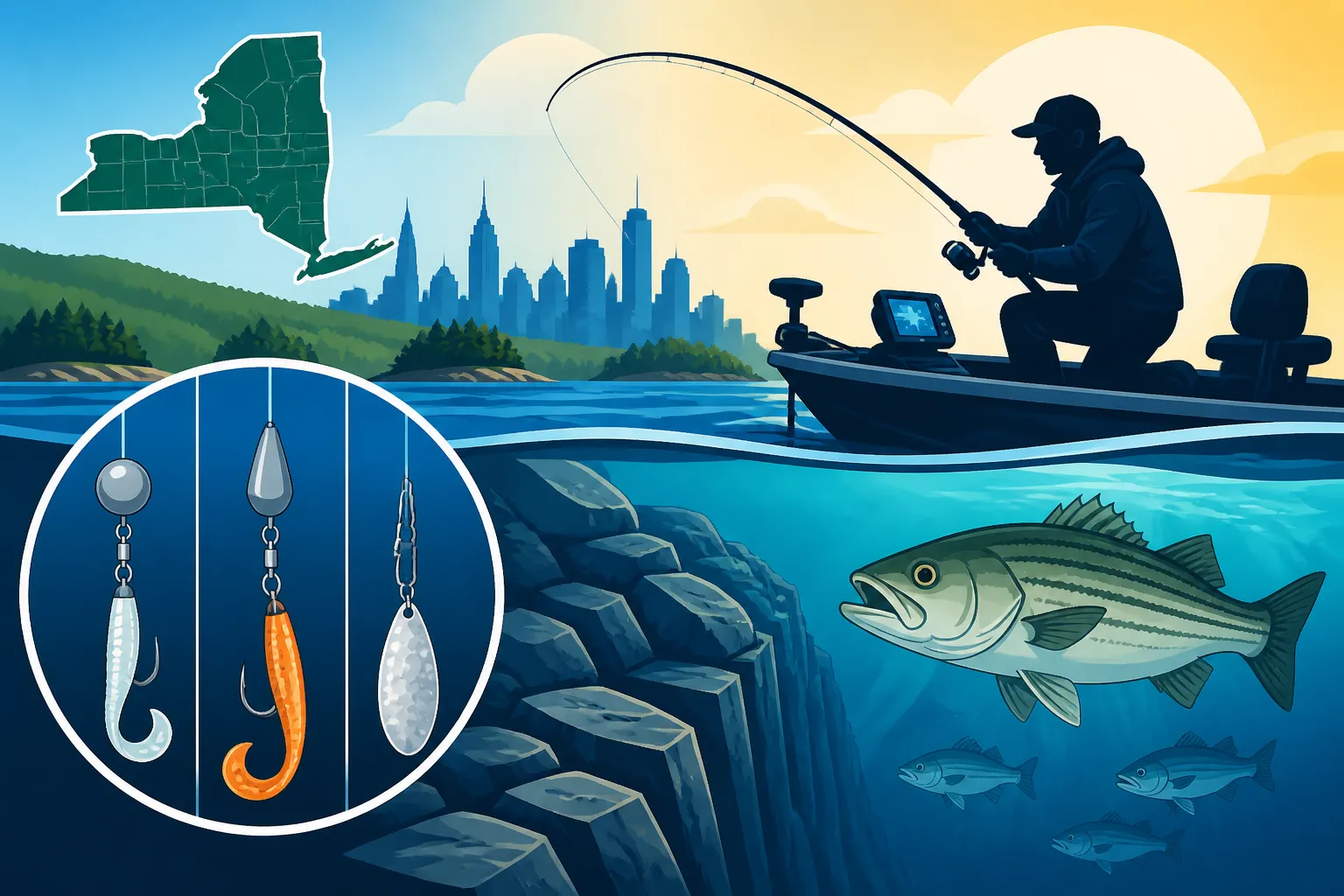
Popular lures for vertical jigging include jigging spoons, blade baits, and heavy soft plastic swimbaits rigged on stout jig heads. The retrieve typically involves a sharp lift of the rod tip, followed by allowing the lure to fall on a semi-slack line. Most bites occur on the fall, so paying close attention to any sudden slackening of the line or a subtle "tick" is crucial. Species like walleye, lake trout, and even smallmouth bass often respond aggressively to this presentation. It's a fantastic technique for exploring depths of 20 to 80 feet or more, perfectly presenting a meal right in front of a deep dweller's face. If you're targeting walleye, you'll want to read How to Jig for Walleye.
The Subtle Power of the Drop-Shot Rig
The drop-shot rig is a finesse technique that has revolutionized deep water fishing, especially for finicky fish. Its primary advantage is that it allows your bait to be suspended at a precise depth above the sinker, keeping it visible and active even when the weight is resting on the bottom amidst snags. This means your bait can hover enticingly in the strike zone, whether it's just above a rock pile or directly in a fish's face that's marked a few feet off the bottom.
To rig a drop-shot, tie a Palomar knot to a hook, leaving a long tag end. Thread the tag end back through the eye of the hook, and then tie your sinker (often a cylindrical or tear-drop shaped lead) to the very end of that tag line. Your soft plastic bait (worms, minnows, or creature baits are popular choices) is then nose-hooked or Texas-rigged onto the hook. The presentation involves dropping the rig to the bottom and then subtly shaking or quivering the rod tip, imparting action to the bait while the sinker maintains bottom contact. Bites are often very light, feeling like a slight pressure or a subtle tap, making sensitive rods and braided line all the more important.
Carolina Rig: Dragging for Deep Bass and Walleye
The Carolina rig is a powerful tool for covering deep, expansive areas and finding fish that might be scattered across subtle structural changes. Unlike the drop-shot which keeps the bait off the bottom, the Carolina rig is designed to drag along the bottom, presenting a soft plastic bait a few feet behind a heavy lead weight. This separation allows the bait to flutter and swim naturally, mimicking a fleeing or foraging creature.
A typical Carolina rig consists of a heavy bullet or egg sinker, followed by a glass or plastic bead (to protect the knot and add sound), a swivel, and then a leader (usually 2 to 4 feet long) tied to a hook with a soft plastic bait. The heavy weight helps you maintain bottom contact and feel changes in substrate, while the leader allows the bait to float or drift freely behind it. This rig is exceptional for targeting largemouth and smallmouth bass on deep humps, points, or submerged flats, as well as walleye that are cruising these same areas. The retrieve is usually a slow drag, sweep, or hop, allowing the rig to bump and grind along the bottom, creating commotion that draws attention to the trailing bait. It's a fantastic way to locate active fish over a wider area.
Deep Cranking and Trolling: Covering Water
While jigging and rigging are great for precise presentations, sometimes fish are scattered, or you need to cover a lot of water to find them. This is where deep cranking and trolling techniques shine, particularly in New York's larger lakes. Deep-diving crankbaits are designed with large bills that allow them to plunge to depths of 15-25 feet or more on a cast, making them effective for covering deep flats, points, and channel edges from a moving boat or even casting from shore into deeper zones.
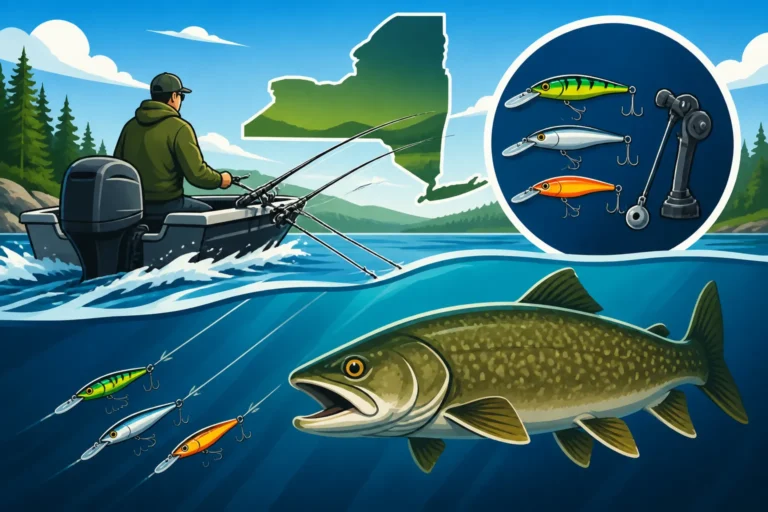
For truly deep water, trolling becomes the dominant strategy. This involves using planer boards, downriggers, or lead core line to get lures (like spoons, stickbaits, or deep-diving crankbaits) down to precise depths over offshore humps, along thermoclines, or through deep channels. This method is incredibly effective for species like lake trout, salmon, and suspended walleye in Lake Erie Fishing in New York: Where to Go or Lake Ontario Fishing in New York: Where to Go. By setting multiple lines at different depths and with various lures, you can quickly determine what fish are hitting and where they are located. For those pursuing walleye, learning How to Troll Crankbaits for Walleye can be a game-changer.
Here's a quick comparison of popular deep water fishing techniques:
| Technique | Target Species | Ideal Structure Type | Key Lures/Baits | Presentation Style |
|---|---|---|---|---|
| Vertical Jigging | Walleye, Lake Trout, Smallmouth | Humps, deep flats, rock piles, breaklines | Jigging spoons, blade baits, soft plastic swimbaits | Dropped directly below boat; sharp lifts, falls. |
| Drop-Shot Rig | Bass, Walleye, Perch, Trout | Ledges, deep points, isolated cover | Small soft plastics (worms, minnows) | Suspends bait off bottom; subtle rod tip quivers. |
| Carolina Rig | Bass, Walleye, Catfish | Flats, humps, gravel points | Soft plastic creature baits, lizards, worms | Dragged slowly along bottom; bait trails behind. |
| Deep Cranking | Bass, Walleye, Pike | Deep flats, points, channel edges | Deep-diving crankbaits | Cast and retrieved to maximum depth; erratic action. |
| Trolling | Walleye, Lake Trout, Salmon | Offshore humps, expansive flats, suspended fish | Crankbaits, spoons, stickbaits | Pulled behind boat at specific speeds/depths. |
Reading the Unseen: Interpreting Sonar and Topography
Your fish finder is more than just a gadget; it's an extension of your senses, allowing you to "see" the underwater world. Mastering its interpretation is fundamental to effectively fishing deep structure.
Mastering Your Fish Finder: Beyond the Arches
Many anglers make the mistake of only looking for "arches" on their fish finder, assuming those are the only fish worth catching. While arches do indicate fish, a truly skilled angler understands that their electronics provide a wealth of information beyond just fish symbols. Learning to distinguish between hard and soft bottoms is vital; hard bottoms (rock, gravel, shale) often hold more bait and cover, showing a thicker, more intense return on your sonar. Soft bottoms (mud, silt) will appear thinner and less defined.
You can also identify the thermocline, especially in summer, which will appear as a distinct line or band on your screen. Fish are often concentrated just above or within this layer, seeking comfortable temperatures and oxygen. Bait balls (dense schools of small fish) will show up as large, cloudy masses, and predatory fish are often found lurking right on the edges of these schools. Understanding these subtle cues helps you pinpoint not just where fish are, but why they're there, giving you a massive advantage. Don't just scan; study your screen.
GPS and Mapping: Pinpointing Your Hot Spots
Once you've identified a promising deep structure or marked a school of fish on your sonar, your GPS becomes your best friend. The ability to precisely mark waypoints is invaluable. This isn't just about getting back to the general area; it's about returning to the exact underwater rock pile, submerged tree, or specific contour line where you found success. Many modern fish finders integrate GPS with highly detailed mapping capabilities, often displaying contour lines that reveal underwater hills, valleys, and sharp drop-offs.
These detailed digital maps, which you can often purchase as chips or download from various sources (including online retailers like Amazon), allow you to scout potential deep structure before you even leave the dock. You can identify offshore humps, channel swings, and areas where creek beds enter the main lake, all of which are prime deep-water holding spots. By combining live sonar readings with these precise GPS waypoints and contour maps, you can efficiently work a piece of deep structure, knowing exactly where you are and where you need to be to stay in the strike zone. This synergy of technology transforms deep water fishing from a game of chance into a strategic hunt.
Species-Specific Strategies for Deep Structure
Different fish species relate to deep structure in unique ways, influenced by their biology, feeding habits, and environmental preferences. Tailoring your approach to your target species will significantly increase your success rate.
Walleye and Lake Trout: Deep Dwelling Predators
Walleye are notorious for preferring deeper, cooler waters, especially as the season progresses. They often relate to deep humps, points, gravel bars, and the breaklines where shallow water transitions quickly to deep water. These areas provide them with excellent ambush points to prey on baitfish. In lakes like Oneida Lake or Lake Erie, you'll find walleye stacked up on these deep structures during the day, moving shallower to feed at dawn and dusk. Understanding their seasonal movements, as outlined in Best Time to Fish for Walleye in New York, is critical.
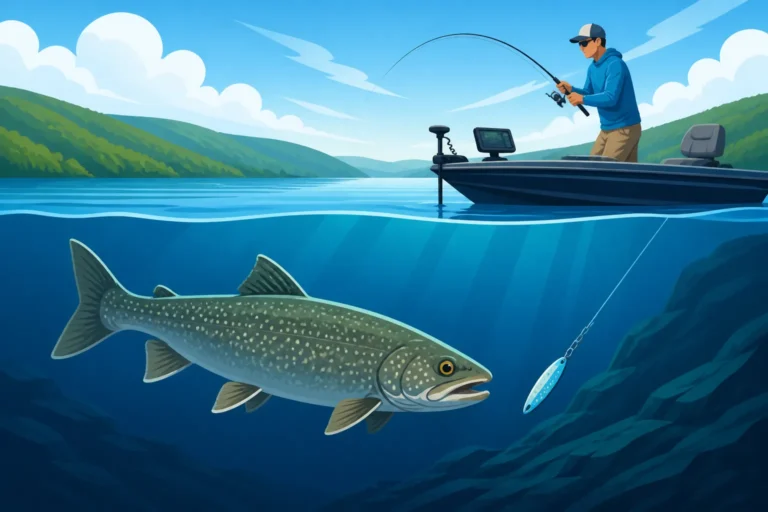
Lake trout, on the other hand, are true deep-water specialists. They thrive in the cold, oxygenated depths of our deepest glacial lakes, such as the Finger Lakes and Lake George. Look for them on the deepest points, rocky ledges, and vast offshore humps, often near the thermocline in summer. They'll also patrol deep main lake basins where baitfish congregate. Vertical jigging with heavy spoons or tubes, and deep trolling with downriggers, are the most effective methods for these powerful fish. For those venturing out in summer, learning How to Fish Deep Water Lake Trout in Summer on New York's Finger Lakes is essential knowledge.
Bass and Panfish: When They Head for Cover
While many think of bass as shallow water dwellers, both largemouth and smallmouth bass will retreat to deep structure, especially during the hot summer months or cold fronts. Largemouth bass will often seek out submerged brush piles, old timber, and deep weed lines where cooler water and dense cover are available. Smallmouth bass, particularly in clear water lakes and rivers like the St. Lawrence, are classic deep structure residents, relating to rocky humps, offshore shoals, and deep points. Finding Best Lakes in New York for Trophy Largemouth Bass or Best Smallmouth Bass Lakes in New York means finding excellent deep structure.
Even panfish like yellow perch and crappie will utilize deep structure, particularly large schools of them. During winter or mid-summer, perch will often school up on deep flats, humps, or channel edges, while crappie might suspend around deep brush piles or submerged timber. A common mistake is assuming these smaller fish are only in the shallows. When the sun is high and the air is hot, often the biggest panfish are lurking in cooler, deeper sanctuaries. Finesse techniques like drop-shotting small worms or jigging tiny spoons can be incredibly effective for these deep-holding panfish. Remember to check Panfish and Sunfish Limits in New York before you go.
Whether you're after trophy walleye in the Finger Lakes or a hefty smallmouth in the St. Lawrence River, mastering the art of deep structure fishing will undoubtedly elevate your angling game in New York. Don't be afraid to leave the obvious shallow cover behind and explore the unseen world beneath the waves; that's often where the biggest rewards lie.
Disclaimer
This article is for general informational purposes only and does not constitute professional advice. Laws, prices and regulations vary by location and change over time. Consult a qualified professional for guidance on your specific situation.