How to Read a Fish Finder for New York Lakes
There’s nothing quite as frustrating as pulling up to a promising spot on one of New York's incredible lakes, knowing there must be fish below, but feeling completely blind to what’s happening in the depths. That mystery can turn a potential trophy hunt into a guessing game, leaving you wondering if you're even casting in the right direction. This guide is here to unravel that mystery, helping you confidently read and interpret your fish finder so you can spend less time guessing and more time catching.
The Foundation: How Your Fish Finder Sees Beneath the Surface
Before you can truly "read" a fish finder display, it helps to understand the basic science behind how these amazing gadgets work. It’s not magic, but rather a clever application of sound waves that allows us to peek into the underwater world. Think of it as giving you X-ray vision for your fishing endeavors on waters like Lake Champlain, Lake George, or even the smaller Finger Lakes.
Sonar Technology Explained
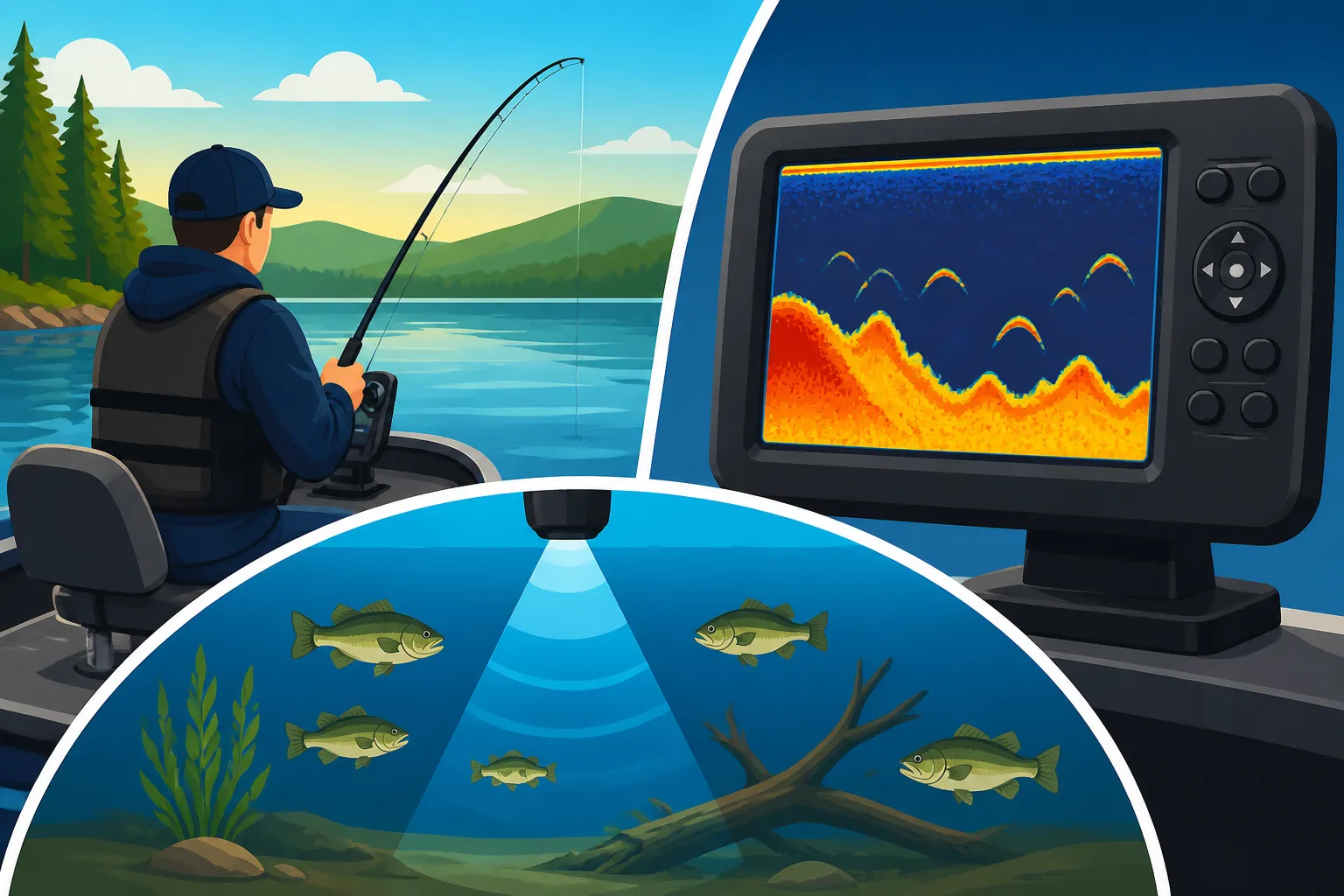
At its heart, a fish finder operates on the principle of sonar, which stands for SOund Navigation And Ranging. It's the same technology submarines use to navigate or ships use to map the ocean floor. Your fish finder sends out sound waves, typically at high frequencies, through the water. When these sound waves encounter an object—be it a fish, a submerged log, the lake bottom, or even a school of baitfish—they bounce back as an echo to the unit.
The fish finder then measures the time it takes for that sound wave to travel down, hit the object, and return. Since the speed of sound in water is known, the unit can precisely calculate the distance to that object. This continuous process of sending and receiving signals creates a real-time picture of what's directly beneath your boat, helping you locate structure and, most importantly, fish. The more frequently it pings, the more detailed and real-time the picture becomes, which is crucial when you're trying to track fast-moving schools or target wary predators.
Transducers and Their Role
The unsung hero of your fish finder system is the transducer. This is the part that actually generates and receives the sound waves. It’s usually mounted on the transom of your boat, on the trolling motor, or even inside the hull in some specialized setups. The quality and placement of your transducer are absolutely critical to getting clear, accurate readings on your display.
Different transducers operate at different frequencies, and understanding this can make a big difference in your fishing. Higher frequencies (like 200 kHz) provide a narrower, more detailed cone of coverage, excellent for identifying individual fish or subtle bottom contours directly below the boat. Lower frequencies (like 50 kHz), on the other hand, offer a wider cone, allowing you to see a larger area, albeit with less detail. Many modern fish finders come with dual-frequency transducers, letting you switch between modes or even view both simultaneously to get a comprehensive view. When buying, ensure your transducer is well-suited for the depth and type of fishing you plan to do, as picking up a cheap, incompatible one from a place like Amazon might lead to frustration if it doesn't meet your needs.
Understanding Display Types
Walking into a sporting goods store or browsing online, you'll quickly notice the variety of fish finder displays available. They range from older, simpler monochrome screens to vibrant, high-definition color units with advanced imaging technologies. Understanding these differences is key to knowing what information you're actually looking at.
Traditional 2D sonar displays show returns as arches for fish and lines for the bottom. Monochrome screens, while still effective for basic fish finding, use shades of gray to differentiate signal strength. Brighter shades usually indicate stronger returns. Color displays, however, really bring the underwater world to life, using a spectrum of colors to represent signal intensity, often with reds and oranges for strong returns (hard bottom, large fish) and blues and greens for weaker ones (soft bottom, baitfish). Beyond traditional 2D, many modern units offer Down Imaging (sometimes called DownScan or ClearVü) which provides a photographic-like view directly beneath the boat, and Side Imaging (SideScan or StructureScan), which extends your vision out to the sides, allowing you to scan vast areas for structure and fish without having to drive directly over them. This is particularly useful when exploring large bodies of water, say, on Lake Ontario for salmon or the St. Lawrence River for muskies.
Deciphering the Fish Finder Screen
Now that we've covered the basics of how a fish finder works, let's dive into the most important part: interpreting what you're seeing on that screen. It's like learning a new language, but once you get the hang of it, you'll be speaking "fish" in no time. The key is to look for patterns and understand what different shapes and colors truly represent.
Interpreting Arches and Marks
Perhaps the most iconic symbol on a fish finder is the fish arch. Many anglers mistakenly believe that every arch is a fish, but it’s a bit more nuanced than that. A perfect arch typically indicates a fish that has entered the sonar cone, swam through it, and exited, giving the transducer time to record its journey from one side of the cone to the other. The size and thickness of the arch can give you clues about the size of the fish. A thick, well-defined arch usually means a larger fish, while smaller, thinner arches or even just "hooks" or dashes often represent smaller fish or baitfish.
However, not all fish will show up as perfect arches. If a fish is stationary directly under your boat, it might just appear as a dot or a short line. If you're moving quickly, even a large fish might only produce a partial arch or a streak. It’s also important to differentiate between actual fish and other submerged objects. Submerged branches, leaves, or even air bubbles can sometimes create similar-looking marks. This is where experience and combining your 2D sonar with Down Imaging, if your unit has it, really pays off. Down Imaging will often show a clearer, more realistic image of actual fish versus structure. When you see what looks like an arch, consider its location relative to the bottom, the depth, and whether there's any visible structure nearby. Fish Species You Can Catch in New York will often congregate in predictable areas, making interpretation easier once you understand their habits.
Reading Bottom Structure and Depth
The bottom of any New York lake is a treasure trove of information, and your fish finder is your map to it. The bottom contour is displayed as a solid line across the screen. The depth reading, usually shown prominently on the display, tells you how deep the water is directly under your transducer. This is fundamental information, especially when you're navigating or targeting species that prefer specific depths.
Beyond just depth, the thickness and intensity of the bottom line can reveal a lot about the bottom composition. A thick, bright, or reddish-orange line (on color units) usually indicates a hard bottom, like rock, gravel, or packed clay. This is because the sound waves bounce off hard surfaces very strongly. A thinner, softer, or bluish-green line, on the other hand, suggests a soft bottom, such as mud, silt, or sand. These softer materials absorb more sound, resulting in a weaker return. Knowing the bottom type can be crucial, as different fish species prefer different substrates. Walleye, for instance, might favor gravelly bottoms, while largemouth bass often relate to weed beds in muddier areas. Observing how the bottom changes as you move can guide your fishing efforts significantly, helping you find those hidden drop-offs, humps, and ledges. Knowing Best Fishing Spots in New York often means knowing their unique bottom characteristics.
Identifying Thermoclines and Water Temperature Changes
One of the less obvious, but highly valuable, pieces of information your fish finder can show you is the thermocline. A thermocline is a distinct layer within a body of water where the temperature changes more rapidly with depth than it does in the layers above or below. In many New York lakes, especially during the warmer months, you'll find these layers forming. Why does this matter? Because a thermocline often creates a "comfort zone" for many fish species, providing cooler, more oxygenated water below for some, and warmer, nutrient-rich water above for others.
On your fish finder, a thermocline will typically appear as a hazy, often continuous, horizontal line or band across the screen. It's not as distinct as the bottom return, but it's usually visible as a change in density. Fish finders can sometimes also display water temperature at the surface, which is a good starting point. However, recognizing the thermocline helps you understand the true temperature stratification. For instance, cold-water species like lake trout might be found just below or within the thermocline during summer, seeking those cooler temperatures. Conversely, baitfish and warm-water species might be concentrated just above it. Understanding these thermal layers is a powerful tool for narrowing down where to target fish, especially when deep water fishing in the Finger Lakes.
Advanced Tips for Maximizing Your Fish Finder on New York Lakes
Getting the hang of the basics is a great start, but to truly unlock the full potential of your fish finder on New York's diverse waters, it pays to dive into some more advanced settings and strategies. These tips can help you fine-tune your unit to perform optimally in various conditions and integrate its data with other crucial fishing knowledge.
Adjusting Settings for Different Conditions
Think of your fish finder like a camera – it has a lot of adjustable settings that can dramatically change the picture you get. The "auto" mode is great for beginners, but manually tweaking parameters like gain, sensitivity, and frequency can give you a much clearer and more informative display.
- Gain/Sensitivity: This controls how sensitive the transducer is to echoes. Too low, and you'll miss faint returns from smaller fish or subtle structure. Too high, and your screen will be cluttered with noise, like suspended debris or air bubbles. The trick is to start low and gradually increase it until you start seeing a little bit of "noise" on the screen, then dial it back just a touch. This will ensure you're picking up as much detail as possible without oversaturating the display. For fishing shallower, weedy areas, you might want lower sensitivity to cut through the clutter, while in deep, clear lakes, higher sensitivity will help detect distant targets.
- Frequency: As mentioned earlier, different frequencies offer different views. If you're looking for extreme detail directly under the boat, especially when jigging for walleye on Oneida Lake or trying to pick out individual bass in a brush pile, a higher frequency is your friend. If you want to scan a wider area for schools of baitfish or locate larger structures in deep water, switch to a lower frequency. Many units allow you to run both frequencies simultaneously, displaying them side-by-side or overlaid, which can be incredibly useful. Experimenting with these settings will transform your understanding of what's beneath your boat.
- Scroll Speed: This dictates how quickly the screen updates. A faster scroll speed provides a more real-time view, which is great when you're moving quickly or trying to track fast-moving fish. A slower scroll speed compresses the history, making it easier to identify bottom contours and larger patterns over time. Find a balance that suits your boat speed and fishing style.
Utilizing GPS and Mapping Features
Modern fish finders are often much more than just sonar units; they are sophisticated navigation tools. Most come with built-in GPS and detailed mapping capabilities, which are indispensable for fishing New York lakes. Don't just use them to know where you are; use them to mark and revisit productive spots.
When you find a promising area – maybe a submerged hump with fish arches or a subtle drop-off where you caught a nice bass – immediately mark a waypoint. Over time, these waypoints become your personal treasure map, guiding you back to proven hotspots. You can also track your path, creating breadcrumbs that show you precisely where you've been. This is invaluable when you're trying to work a particular contour or grid a large flat. Moreover, many units come pre-loaded with highly detailed lake maps (often called "charts" or "Navionics" maps) that show contours, depths, navigation markers, and even areas of submerged structure. Integrating your sonar returns with these maps allows you to see the big picture – how the fish and structure you're detecting relate to the known underwater landscape. This synergy between real-time sonar and pre-loaded mapping is a game-changer for efficient and successful fishing. Best Fishing Spots in the Finger Lakes and other significant bodies of water benefit immensely from these detailed charts.
Combining Fish Finder Data with Environmental Cues
A fish finder is an amazing tool, but it's just one piece of the puzzle. The most successful anglers combine what their fish finder tells them with other environmental cues. This holistic approach helps build a comprehensive understanding of the fishing conditions.
Consider factors like the time of day, current weather conditions, recent rainfall, and water clarity. For example, if your fish finder shows fish suspended in the middle of the water column in a clear lake, and it’s a bright, sunny day, they might be avoiding the intense light by staying deeper. If you see baitfish schooled up tight against a weed line on your side imaging, and it’s overcast with a gentle breeze, that might be a prime spot for predatory fish to ambush. Pay attention to water temperature readings – not just surface temperature, but how it changes with depth, as this can influence fish behavior significantly. How Weather Affects Fishing in New York is a critical piece of the puzzle. Also, observe your surroundings: are there birds diving? Are baitfish jumping? These visual cues can confirm what your fish finder is suggesting, or even point you to areas you haven't scanned yet. Using your fish finder in conjunction with a deeper understanding of fish behavior, local conditions, and even the New York Fishing Season Dates and Catch Limits will turn you into a much more effective and knowledgeable angler.
To help you quickly reference what you might be seeing, here's a simple table summarizing common fish finder interpretations:
| On-Screen Appearance | Common Interpretation | What It Means for You |
|---|---|---|
| Thick, Bright Bottom Line | Hard bottom (rock, gravel, clay) | Good for walleye, smallmouth bass, lake trout; often holds baitfish. |
| Thin, Faint Bottom Line | Soft bottom (mud, silt, sand, weeds) | Good for largemouth bass, pike; can indicate deeper, stagnant areas. |
| Arches/Hooks | Individual fish or small schools of fish | Target with lures or bait, adjust depth to match the arches. |
| Dense Cloud/Bait Ball | Large school of baitfish (e.g., alewives, shiners) | Predators like bass, pike, or salmon are often nearby or within. |
| Distinct Horizontal Line | Thermocline or debris layer | Marks a comfort zone for fish; fish above/below this layer. |
| Jagged Vertical Lines | Standing timber, submerged trees, weed edges | Excellent cover for ambush predators; fish around edges and top. |
| Smooth Humps/Bumps | Submerged rock piles, natural contours, points | Structure that attracts bait and larger game fish. |
| "Noise" or Clutter | Too much gain, air bubbles, dense weeds, suspended debris | Reduce gain/sensitivity; try a different frequency. |
Reading a fish finder effectively is a skill that develops with practice and patience. The more time you spend on the water with your unit, interpreting its signals and cross-referencing them with your catches (or lack thereof), the better you'll become. So, get out there on New York's beautiful lakes, experiment with your settings, and start seeing the underwater world in a whole new light. Before you know it, you’ll be finding fish more consistently and enjoying your time on the water even more!
Disclaimer
This article is for general informational purposes only and does not constitute professional advice. Laws, prices and regulations vary by location and change over time. Consult a qualified professional for guidance on your specific situation.