How to Fish for Largemouth Bass in Early Summer
Early summer can be a puzzling time for even the most seasoned bass anglers in New York. One minute, largemouth bass are aggressively guarding their nests, and the next, they seem to vanish, leaving us scratching our heads and wondering where they went. This guide is all about cracking the code of how to fish for largemouth bass in early summer, helping you understand their post-spawn movements, preferred hangouts, and the most effective tactics to bring them to the net.
Understanding Early Summer Largemouth Bass Behavior
As the water temperatures steadily climb across New York's lakes and ponds, largemouth bass transition from their demanding spawning season into a period of recovery and renewed feeding. This shift in behavior is critical to understand because what worked in spring likely won't cut it now. The early summer period, typically from late May through June and into early July, is a dynamic time when bass start to disperse from shallow spawning grounds and begin migrating towards their deeper, more stable summer patterns.
Post-Spawn Recovery and Movement
Right after the spawn, both male and female bass are often exhausted. The females have expended immense energy laying eggs, and the males have spent days, even weeks, diligently guarding the nests and fry. This means their immediate priority isn't aggressive feeding, but rather recuperation. During this brief recovery phase, you'll often find them still relatively shallow, perhaps lingering near the edges of their spawning flats, but they'll be lethargic and less willing to chase a fast-moving bait. It’s a delicate window where they're not quite in full summer mode yet.
As they regain their strength, they'll begin their journey towards deeper water. This isn't a sudden exodus but a gradual movement. They might stop at intermediate depths, relating to whatever cover or structure they find along the way—think submerged points, old creek channels, or the deeper edges of weed lines. Their metabolism is picking up with the warming water, and they're starting to feel the urge to feed more consistently to replenish their fat reserves. This period is when you really need to be adaptable, as bass can be in a mix of depths and cover types, making them a bit harder to pinpoint. Knowing where the bass species you're targeting tend to hang out is half the battle.
Foraging Habits and Preferred Prey
With their energy levels returning, largemouth bass in early summer become opportunistic predators. While they might still pick off smaller baitfish, their diet often expands to include more substantial meals like bluegills, perch, crawfish, and even frogs or small rodents that fall into the water. This means your bait selection should reflect these larger forage options. Think about the size and profile of the prey available in the specific New York lake or river you're fishing. Are there abundant schools of alewives? Or is the bottom littered with crawfish? This local knowledge can dramatically increase your success rate.
Their feeding windows can still be a bit unpredictable, especially if the weather is changing rapidly. However, they'll often become more active during low-light periods – dawn, dusk, and even into the night – or on overcast days. On bright, sunny days, they tend to retreat to deep shade or dense cover, waiting for an easier ambush opportunity. This is a good time to consider how weather affects fishing in New York and adjust your strategy accordingly. The key is to match the hatch, so to speak, not just in terms of specific insects, but in terms of the predominant forage base for larger fish.
Top Techniques for Early Summer Largemouth Bass
Once you understand the bass's early summer mindset, it's time to choose the right tools and tactics. This period calls for a versatile approach, as bass might be spread out and transitioning. You'll need to cover water, present a variety of lures, and be prepared to adapt to their shifting locations and moods.
Topwater Excitement
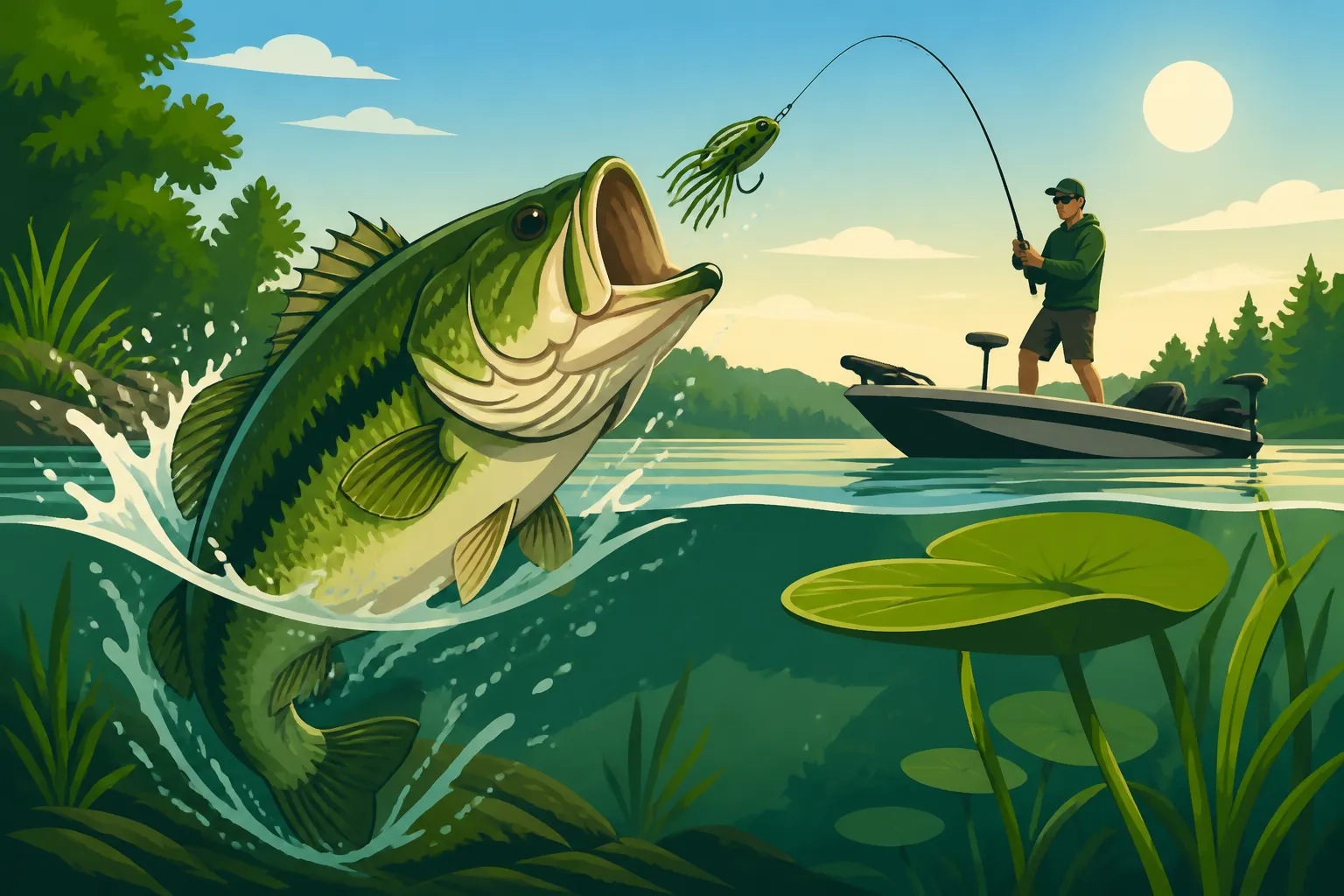
There’s nothing quite like a largemouth bass exploding on a topwater lure. In early summer, especially during those magical low-light hours of dawn and dusk, or on cloudy days, topwater fishing can be incredibly productive and exciting. Bass are often cruising the shallower edges of weed beds or hanging out under overhanging branches, looking for an easy meal on the surface. They've recuperated from the spawn and are now actively hunting.
Think about walking baits like Heddon Super Spooks or poppers that create a commotion on the surface. Cast these lures close to cover—lily pad fields, emergent weeds, fallen timber, or boat docks. Work them with a stop-and-go retrieve, letting them sit for a few seconds after the splashdown, then twitching them, and pausing again. This mimicry of a struggling baitfish or a frog often triggers aggressive strikes. For those looking for quality topwater lures, a quick search on Amazon reveals a vast selection, making it easy to find what you need. Experiment with different colors and sizes to see what the bass are responding to on a given day. If you're new to this, learning how to fish a topwater lure for bass can really open up a new dimension of angling enjoyment.
Cranking Shallow Cover
As the sun gets a little higher and bass might retreat slightly from the absolute shallows, shallow-diving crankbaits become a fantastic option. These lures are designed to run a few feet deep, making them perfect for bumping off stumps, rocks, or the tops of submerged grass beds. The deflections caused by hitting structure often trigger an instinctive strike from a curious or territorial bass. Early summer bass are still spending a lot of time near the edges of shallow cover, especially when there's an easy food source available.
Look for crankbaits with a tight wobble that imitate baitfish. Colors can vary, but natural baitfish patterns, crawfish hues, or bright chartreuse for stained water are always good starting points. Cast your crankbait parallel to weed lines, riprap shorelines, or across shallow points. Retrieve it at a steady pace, feeling for any contact with the bottom or cover. When you feel it hit something, pause for a split second, then continue your retrieve. That sudden change in action often seals the deal. This technique is excellent for covering a lot of water efficiently and locating active fish.
Flipping and Pitching for Hidden Giants
When bass really burrow into dense cover to escape the mid-day sun or heavy fishing pressure, flipping and pitching become your secret weapons. This technique is all about precision and stealth, delivering a bait into the tightest spots where big bass love to hide – think thick cattails, brush piles, dense lily pad fields, or under boat docks. These spots offer both shade and ambush points, making them prime real estate for larger, more elusive largemouths.
For flipping and pitching, you'll want heavier gear: a stout rod, strong braided line, and a tungsten weight paired with a compact soft plastic bait like a creature bait, beaver-style bait, or a jig. The goal is to make a quiet entry into the cover, letting the bait sink straight down into the bass's living room. Once it hits bottom, gently shake it a few times, then slowly lift and re-drop it. Many strikes will feel like a subtle "thump" or simply a "tightening" of your line. If you're interested in mastering this, "How to Flip and Pitch for Bass in Heavy Cover" can provide even more detailed guidance. Remember, patience and persistence are key when delving into the densest cover.
Jigging for Deep-Water Bass
While many bass are still in relatively shallow areas in early summer, some larger fish might have already transitioned to deeper offshore structures, especially in larger New York lakes with clear water. Here, vertical jigging can be incredibly effective. This technique allows you to present a bait directly to bass holding tight to deep points, humps, ledges, or submerged timber. They're looking for an easy meal without having to expend much energy chasing it down.
Typically, you'll use a football head jig or a casting jig dressed with a soft plastic trailer that mimics a crawfish or a small baitfish. Locate these deep structures using your electronics, then position your boat directly over them. Drop your jig down to the bottom and work it with short hops, drags, or shakes. The idea is to make the bait look like a crawfish scurrying along the bottom or a dying baitfish. The bite can be subtle, so pay close attention to your line for any unusual twitches or slack. This is a phenomenal technique for when you've exhausted the shallow bite and suspect the fish have moved deeper. Many anglers swear by particular jig brands, which are widely available, including on Amazon, for those looking to stock up.
Best Baits and Lures to Use
Choosing the right bait is paramount in early summer. You want offerings that appeal to recuperating, but increasingly hungry, bass, and that can be presented effectively in the cover and depths they frequent.
Soft Plastics for Versatility
Soft plastic baits are arguably the most versatile tools in an early summer bass angler's arsenal. From Texas-rigged worms to creature baits and senkos, they can imitate a wide range of forage and be fished in almost any type of cover. For bass that are still a bit sluggish or hiding in dense weeds, a slow-falling soft plastic can be irresistible.
- Texas-Rigged Worms and Creature Baits: These are your go-to for fishing heavy cover without snagging. Use a weedless Texas rig with a bullet weight to penetrate grass, brush, or lily pads. The slow, seductive fall of a worm or a creature bait often gets bites from bass that are reluctant to chase. Colors like green pumpkin, junebug, and black/blue are perennially popular in New York waters.
- Senkos and Stick Baits: The simple, yet incredibly effective, senko-style bait has a unique shimmy on the fall that drives bass wild. Wacky-rigged or Texas-rigged, these can be deadly around docks, sparse weed lines, or even pitched into open pockets in thick cover. Their subtle action makes them perfect for pressured fish or when the bite is tough.
- Swimbaits: Small paddle-tail swimbaits, either rigged on a weighted swimbait hook or a jig head, are excellent for imitating baitfish around the edges of weed beds or along open water points. They offer a realistic profile and a tantalizing tail kick that can draw strikes.
Topwater Temptations
As mentioned, topwater fishing can be explosive in early summer. The key is to select lures that mimic the surface-dwelling prey bass are likely to target.
- Poppers and Chuggers: These lures create a loud "chug" and splash when retrieved, attracting bass from a distance. They are fantastic for covering water around scattered cover or open pockets in pads.
- Walking Baits: Designed to "walk the dog" across the surface with a side-to-side cadence, these lures imitate a wounded baitfish or a snake. They offer a more subtle, yet highly enticing, presentation than poppers.
- Frogs: When bass are buried in dense lily pads, matted vegetation, or thick slop, a hollow-bodied frog is king. It's virtually weedless and can be retrieved directly over the thickest cover, tempting bass to smash through the vegetation to get it. Fishing the Best Fishing Spots in the Adirondacks, for example, often involves using frogs due to the prevalence of lily pads and dense shorelines.
Crankbaits for Covering Water
Crankbaits are indispensable for locating active bass and dissecting various depth ranges.
- Squarebills: These shallow-diving crankbaits are perfect for bumping off stumps, rocks, and shallow cover in depths from 1 to 5 feet. Their aggressive deflection action often triggers reaction strikes.
- Medium-Diving Crankbaits: For those bass hanging a bit deeper, perhaps along a 6-12 foot contour or over submerged timber, a medium-diving crankbait can be incredibly effective. Match the size and color to the local baitfish or crawfish.
Jigs for Structure Fishing
Flipping jigs and football jigs are essential for targeting bass that are holding tight to structure.
- Flipping Jigs: These jigs, paired with a crawfish or creature bait trailer, are designed for penetrating heavy cover. They offer a compact, weedless profile and can be slowly worked through thick vegetation or brush piles.
- Football Jigs: Ideal for fishing deep, hard-bottom areas like rocky points, ledges, and humps. The football head shape allows them to maintain contact with the bottom and prevent snagging in rocks. Pair them with a bulky creature bait for maximum appeal.
Here's a quick comparison of some popular early summer bass lures:
| Lure Type | Best Conditions | Target Depth | Key Action/Mimicry | Pros | Cons |
|---|---|---|---|---|---|
| Topwater Frog | Dense vegetation, low light | Surface | Frog, struggling rodent | Highly weedless, explosive strikes | Limited to thick cover, slower retrieve |
| Walking Bait | Open pockets, low light, calm water | Surface | Wounded baitfish, snake | Covers water, enticing side-to-side glide | Requires skill to work, can snag |
| Squarebill Crank | Shallow cover (wood, rock, grass) | 1-5 ft | Baitfish, crawfish | Great for deflections, covers water | Can get snagged easily in heavy cover |
| Texas-Rigged Worm | Heavy cover, sparse weeds, docks | All depths | Worm, lizard, crawfish | Extremely versatile, weedless | Slower presentation, subtle bites |
| Flipping Jig | Thick cover (brush, pads), docks | 3-15 ft | Crawfish, bluegill | Big fish bait, compact, weedless | Slower presentation, can be tiring |
Key Locations and Structure to Target
Understanding where largemouth bass are likely to congregate in early summer is just as important as knowing how to catch them. Their movements are often dictated by two primary factors: food and cover. As the sun gets stronger and water temperatures rise, they seek out areas that offer both.
Weed Lines and Matts
One of the most consistent places to find early summer largemouth bass is along weed lines and under dense weed matts. These aquatic vegetation patches provide vital cover, shade from the intense sun, and an abundant food source, harboring baitfish, crawfish, and insects. Bass will often position themselves on the deeper edges of weed lines, waiting to ambush prey moving in and out of the vegetation.
- Outer Edges: Focus on the transition zones where the weed line meets deeper, open water. Bass will patrol these highways, making them ideal ambush points. Casting parallel to the edge with a shallow crankbait or a swimbait can be deadly.
- Pockets and Holes: Within extensive weed beds, look for small openings or "holes" in the vegetation. These are prime targets for flipping a jig or a Texas-rigged soft plastic. Bass will often hide in these pockets, ready to dart out and grab a meal.
- Overhead Matts: If you encounter dense, matted vegetation that forms a canopy over the water, don't ignore it. This is prime frog country! Bass will get right up under that thick canopy for shade and cool water. Punching through these mats with a heavy jig or creature bait can yield some of the biggest fish of the day. Remember to check New York Freshwater Fishing Rules to ensure you're compliant with local regulations when fishing these areas.
Docks, Piers, and Marina Basins
Man-made structures like boat docks, piers, and even bridge pilings are absolute magnets for largemouth bass, especially in early summer. These structures offer crucial shade, which becomes increasingly important as the season progresses, and provide excellent ambush points. They often extend into deeper water, giving bass access to different depth zones throughout the day.
- Shady Sides: Always prioritize the shady side of a dock or pier. Bass will hug these shaded areas, particularly during bright sunny conditions. Pitching a senko, jig, or Texas-rigged soft plastic under and around these structures is a classic and effective strategy.
- Piling and Cables: The individual pilings and any submerged cables or crossbeams beneath docks create additional structure and hiding spots. Make multiple precise casts to each piling, letting your bait fall slowly beside it. You'd be surprised how many bass call these small pieces of structure home. If you're fishing in more urban areas, even the best fishing piers in New York City can hold some impressive bass.
- Boat Lifts and Moorings: Don't overlook the additional cover provided by boat lifts, moored boats, and their associated lines or chains. These can create small, isolated pieces of cover that a bass might claim as its territory.
Submerged Timber and Brush Piles
Fallen trees, submerged logs, and intentional brush piles are fantastic fish attractors and offer excellent habitat for early summer largemouth bass. These natural and man-made structures provide cover from predators, current breaks in rivers, and a place for baitfish to hide, which in turn attracts bass.
- Laydowns and Logs: Look for large trees that have fallen into the water, creating extensive submerged branches and root balls. Bass will often position themselves within the branches or along the main trunk. Flipping and pitching jigs or creature baits into the tightest parts of these laydowns can be incredibly productive.
- Stumps and Root Balls: Individual stumps or exposed root balls from old trees offer isolated pieces of cover that can hold a single, large bass. Approach quietly and make accurate casts.
- Brush Piles: Many anglers (and even some state agencies) strategically sink brush piles to create fish habitat. These can be found in a variety of depths. Use your fishfinder to locate them, then pick them apart with jigs, Texas-rigged plastics, or even crankbaits that can bounce off the wood without snagging too severely. Knowing "How to Fish Docks for Bass" is a transferable skill here, as the principle of targeting isolated cover remains the same.
Creek Channels and Points
In larger reservoirs and lakes, underwater creek channels and points that extend into deeper water become important migratory routes and feeding grounds for bass in early summer. As bass move from shallow spawning areas to deeper summer haunts, they often use these topographical features as highways.
- Channel Bends and Intersections: Where a creek channel makes a sharp bend or intersects with another channel, it creates a unique contour that bass will relate to. These areas often have harder bottoms and are prime spots for jigging or slow-rolling a deep crankbait.
- Points: Any point that extends out into the main lake or river channel, especially those with rock, gravel, or submerged timber, can be a fantastic ambush point. Bass will hold on the sides or ends of these points, waiting for baitfish to swim by. Fishing "How to Fish New York Lakes During a Cold Front" might involve targeting these deeper points as bass seek thermal stability.
- Depth Transitions: Focus on the depth changes along these channels and points. Bass will often suspend or cruise just off the drops, moving up to feed when conditions are right. Electronics become invaluable for identifying these subtle depth changes and the fish holding on them.
By focusing your efforts on these key types of cover and structure, and understanding the nuances of early summer bass behavior, you'll significantly increase your chances of having a successful and enjoyable fishing trip in New York. Remember, adaptability is your best friend during this transitional period.
Disclaimer
This article is for general informational purposes only and does not constitute professional advice. Laws, prices and regulations vary by location and change over time. Consult a qualified professional for guidance on your specific situation.