Walleye Minimum Size Limit
It's incredibly frustrating when you're out on the water, you hook into a beautiful walleye, and then that familiar knot forms in your stomach: "Is it big enough to keep?" New York's fishing regulations can feel like a labyrinth, especially when different lakes have different rules. This guide is here to untangle the confusion specifically around walleye minimum size limits, helping you fish legally and confidently across the Empire State.
Understanding New York's Walleye Regulations: Why Size Limits Matter
We've all been there: the excitement of a bite, the fight, and finally, a gorgeous fish in the net. Then comes the moment of truth, and for species like walleye, that often means reaching for the measuring tape. It can feel like an arbitrary rule, a bureaucratic hurdle between you and a delicious dinner. But trust me, these minimum size limits aren't there to annoy you; they're a cornerstone of sustainable fishing, designed to protect the very populations we love to pursue.
The Purpose Behind Minimum Size Limits
Imagine if everyone kept every fish they caught, regardless of size. Our lakes and rivers would be depleted in no time! The New York State Department of Environmental Conservation (DEC) implements minimum size limits for walleye, and many other species, for several crucial reasons. Primarily, it's about giving these fish a chance to reproduce at least once, and often multiple times, before they're harvested. Walleye typically reach sexual maturity around two to three years of age, and a minimum size limit ensures that most fish have spawned before they become legal to keep. This strategy directly contributes to healthy, self-sustaining populations, meaning more fish for everyone in the long run.
Beyond just reproduction, these limits also help maintain a balanced age structure within the fish population. By protecting the younger, smaller fish, we ensure there's a continuous supply of future breeders and larger, more robust individuals. This isn't just about conservation; it's about preserving the quality of our fishing experiences. Nobody wants to fish in a lake where all you catch are tiny, stunted fish. Minimum size limits encourage the growth of larger, more desirable "trophy" walleye, which makes for a much more exciting and rewarding day on the water. It's tough to let a legal-looking fish go, but knowing you're contributing to a healthier fishery often makes the decision easier.
General Statewide Walleye Minimum Size
For a lot of New York's vast network of lakes and rivers, the DEC has a straightforward, general rule that anglers can rely on. If you're fishing in a waterbody without specific, special regulations listed, the statewide walleye minimum size limit is 18 inches. That's nose to the tip of the tail, folks! This 18-inch rule is designed to provide a blanket level of protection for walleye across a wide range of habitats, ensuring that even in less intensely managed waters, the fish have a chance to grow and contribute to the population.
It's tempting to think this rule applies everywhere, and while it covers most areas, that word "most" is key. The confusion often creeps in when you venture to popular fishing destinations that have their own set of unique rules. Trying to keep track of every single exception can feel like a full-time job, especially when you're just trying to enjoy a peaceful day by the water. The general rule is a good starting point, but always be prepared to dig a little deeper depending on where you cast your line. Knowing the basic statewide requirement is like having a home base before you explore the more complex territories of New York's diverse fishing opportunities. You can always refer to our comprehensive guide on New York Fishing Regulations Explained for broader context.
How to Measure a Walleye Correctly
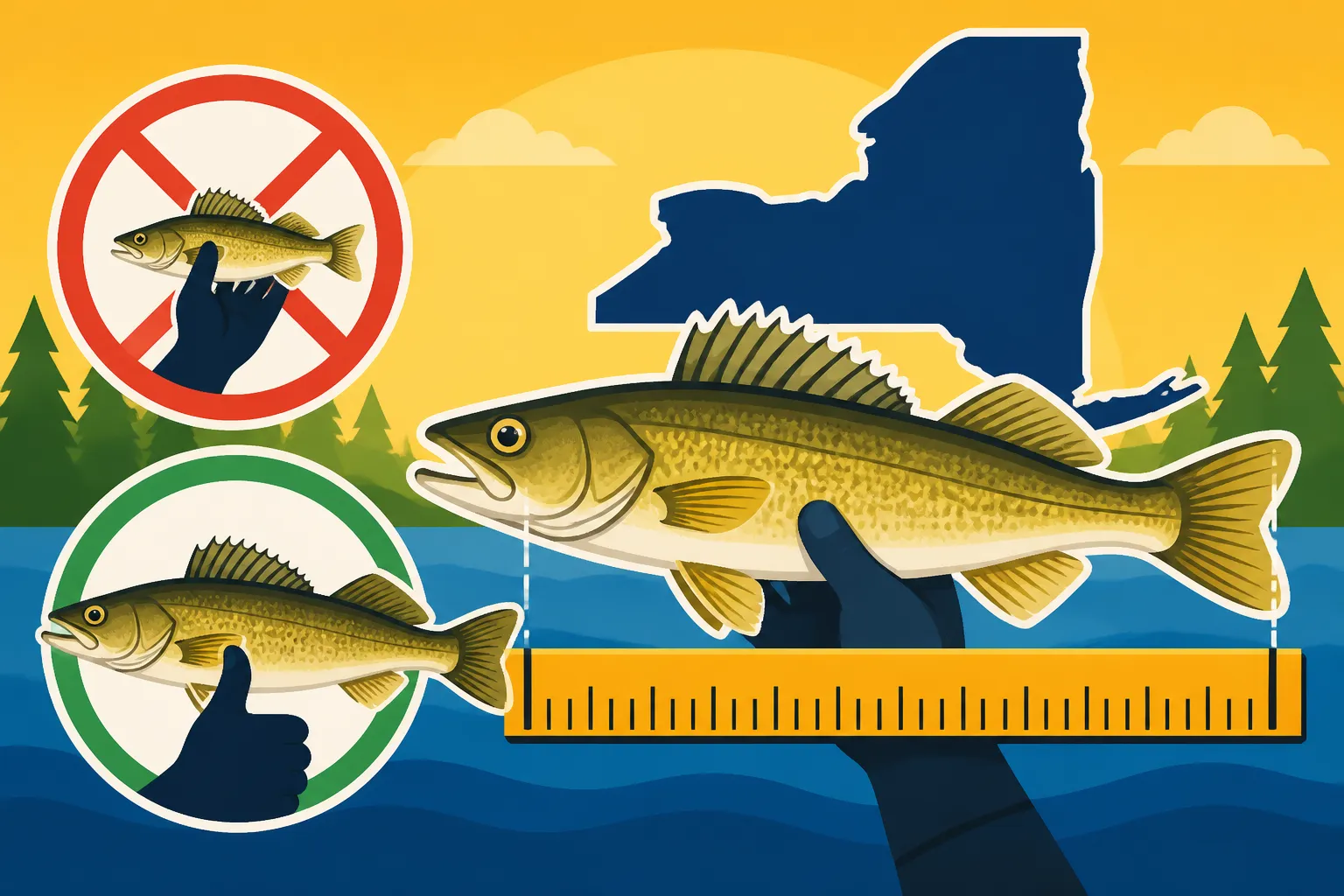
Getting an accurate measurement isn't just about following the rules; it's about protecting the fish you intend to release. A few seconds of fumbling can stress a fish unnecessarily. The correct way to measure a walleye in New York is from the tip of its snout (mouth closed, of course) to the very end of its tail, with the fish lying flat. This ensures you're getting the total length, which is the standard measurement for regulations.
Here's a quick rundown to make sure you're doing it right and keeping that fish healthy:
- Keep it Wet: Ideally, measure the fish while it's still in the water or quickly on a wet measuring board or mat. This protects its slime coat, which is vital for preventing disease.
- Lay it Flat: Gently lay the walleye on your measuring device. Make sure its body is straight, not curved, to get an accurate length.
- Close the Mouth: Ensure the fish's mouth is closed and pressed against the starting point (zero end) of your ruler or board.
- Pinch the Tail: Gently pinch the tail lobes together to get the maximum length. This is where the "total length" measurement comes from.
- Quick Release: Once you have your measurement, if the fish is undersized, get it back into the water as quickly and gently as possible. Minimize its time out of the water.
Having a good measuring board or a tape measure that's easy to read is essential. You can find sturdy, floating measuring boards that are perfect for boat or shore fishing on platforms like Amazon. These small investments make a big difference in both your compliance and the well-being of the fish.
Special Regulations: When Walleye Size Limits Change by Waterbody
Just when you think you've got the 18-inch statewide rule down, you venture to a famous walleye hotspot, and suddenly, the rules are different! This isn't a ploy to trick you; it's a reflection of the unique ecological needs and management goals for specific bodies of water. These special regulations are crucial for managing local fish populations effectively, especially in highly productive or heavily fished areas.
Key Waterbodies with Unique Walleye Regulations
New York is home to incredible walleye fisheries, and some of the most prominent ones have their own specific regulations to ensure their long-term health and productivity. For instance, if you're chasing walleye on Lake Erie, a renowned walleye factory, the minimum size limit drops to 15 inches. This particular regulation is often implemented because Lake Erie is such a vast and productive body of water, and managing its population might require different harvest strategies than a smaller inland lake.
Then there's the legendary Oneida Lake, another walleye paradise. While it largely aligns with the statewide 18-inch minimum size, Oneida Lake often has a reduced daily creel limit compared to other waters. Similarly, waters like Chautauqua Lake or sections of the St. Lawrence River might have specific nuances. The St. Lawrence, for example, shares borders with Canada and other states, leading to unique management zones where regulations can vary even within the same river system. These variations are usually the result of detailed biological studies and population assessments by the DEC, designed to optimize the fishery for that particular environment.
It really drives home the point: never assume! Always check the specific regulations for the waterbody you're fishing. It might seem like a hassle, but it's the only way to avoid potential fines and ensure you're fishing responsibly. Understanding the New York Walleye Season and Limits is critical, as these often go hand-in-hand with size restrictions.
Navigating the DEC Regulations Guide
Okay, so you know you need to check the regulations, but actually finding them can sometimes feel like a treasure hunt without a map. The good news is, the New York State Department of Environmental Conservation (DEC) provides incredibly detailed and accessible resources. The primary source for all fishing regulations is the official New York State Freshwater Fishing Regulations Guide. You can grab a physical copy wherever you purchase your fishing license, typically at bait and tackle shops, Walmart locations, or DEC offices. For those who prefer digital access, the entire guide is available as a PDF download on the DEC's website. They also often have interactive maps and searchable databases for specific waterbodies, which can be a lifesaver.
When you're looking for walleye regulations, specifically pay attention to the "Special Regulations by County" or "Specific Waters" sections within the guide. These are where you'll find any deviations from the general statewide rules. It's a bit tedious, I know, especially when you just want to focus on planning your trip. But taking a few minutes to review the rules for your chosen destination can save you a lot of headache (and money) later. I highly recommend downloading the PDF to your phone or printing out the relevant pages before you head out, especially since cell service can be spotty in some of our most beautiful fishing locations. This way, you have the most up-to-date information right at your fingertips. For a more detailed look, check out our guide on the New York DEC Fishing Regulations Guide.
The Importance of Local Knowledge and Resources
While the official DEC guide is your ultimate authority, there's an undeniable value in local knowledge. Think about it: who knows a specific body of water better than the folks who fish it every single day, year after year? This is where your local bait and tackle shops become invaluable resources. Owners and staff at places like Frank's Bait & Tackle in Pulaski or Thruway Sporting Goods near Syracuse often have their finger on the pulse of current regulations, recent changes, and even local enforcement trends. They can quickly tell you if there are any specific nuances for the lake or river you're planning to visit.
Don't be shy about asking questions! These local experts are usually passionate anglers themselves and are more than happy to share their insights. Similarly, if you're hiring a fishing guide or charter captain, they are legally obligated to know and abide by all current regulations. A good guide, especially on places like Oneida Lake or Lake Erie, will not only ensure you're compliant but can also explain why certain rules are in place. Sometimes, hearing it from someone who lives and breathes it just makes more sense. Plus, they might even share a tip or two about where the walleye are biting! You can often find reputable guides through online searches, and many list their services and contact information on platforms you might find on Amazon.
Here's a quick reference table for some common walleye regulations in New York. Remember, always consult the official DEC guide for the most current and complete information!
| Waterbody | Minimum Size Limit (Walleye) | Daily Creel Limit (Walleye) | Notes |
|---|---|---|---|
| Most Statewide Waters | 18 inches | 5 | General regulation |
| Lake Erie | 15 inches | 6 | Specific to this Great Lake |
| Chautauqua Lake | 18 inches | 5 | Important for local population management |
| Oneida Lake | 18 inches | 3 | Historically a lower limit for sustainability, check current year |
| St. Lawrence River | 15 or 18 inches | 6 | Varies by specific zone/section; always verify |
| Niagara River | 18 inches | 5 | Upper and Lower River often follow statewide or similar limits |
Please note: Regulations can change. This table is for illustrative purposes only. Always refer to the current official NYS DEC Fishing Regulations Guide.
Consequences of Not Adhering to Walleye Size Limits
Nobody wants to face a conservation officer with an undersized fish in their cooler. The sinking feeling in your stomach, the potential for a hefty fine, and the guilt of knowing you've acted irresponsibly can quickly ruin an otherwise perfect day on the water. Understanding the potential repercussions isn't about scaring you; it's about empowering you to make informed decisions and uphold the integrity of our fisheries.
Penalties and Fines for Violations
Getting caught with an undersized walleye isn't just a slap on the wrist. In New York, violations of fishing regulations, including minimum size limits, can result in significant penalties. The specific fine can vary depending on the severity of the offense, the number of fish involved, and whether it's a first-time or repeat offense. You could be looking at fines upwards of $250 or more for a single undersized fish, plus potential court surcharges and administrative fees. In more egregious cases, or for repeat offenders, penalties can escalate to include jail time, seizure of fishing equipment, and even the suspension or revocation of your New York fishing license.
Moreover, if you're also fishing without a valid license, that's another, often separate, violation with its own set of penalties. For a more detailed breakdown of what happens if you're caught, you can read our article on Fine for Fishing Without a License in New York. These aren't just theoretical possibilities; DEC law enforcement officers are actively patrolling our waterways and are well-versed in the regulations. They are there to protect the resource and ensure fair play for all anglers. It's a stark reminder that a few extra minutes checking the rule book or carefully measuring your catch is a far better option than dealing with the legal and financial fallout of a violation.
Ethical Considerations and Conservation
Beyond the legal and financial ramifications, there's a deeper, ethical responsibility we all share as anglers. Every undersized walleye kept directly undermines the conservation efforts put in place to ensure robust fish populations for future generations. When you keep a fish that hasn't had a chance to spawn, you're not just taking one fish; you're potentially impacting hundreds, even thousands, of future walleye. This kind of shortsighted behavior can lead to declining fish stocks, reduced fishing opportunities, and ultimately, a less vibrant ecosystem.
Responsible angling means more than just following the letter of the law; it means embracing the spirit of conservation. It means understanding that every fish released successfully contributes to the health of the fishery. When you encounter a walleye that doesn't meet the minimum size, practicing proper Catch-and-Release Handling Rules becomes paramount. This includes minimizing handling time, using wet hands, and supporting the fish gently until it swims away strongly. Our collective actions, both good and bad, have a profound impact on the natural resources we cherish.
Gear and Practices for Responsible Angling
Being prepared with the right gear can make all the difference in adhering to size limits and ensuring the health of released fish. A reliable measuring device is non-negotiable. Whether it's a floating measuring board, a flexible tape measure, or even decals on your boat, make sure it's accurate and easily accessible. You can find a wide array of durable measuring tools on Amazon, often designed specifically for kayak or boat use.
Beyond measurement, consider these practices:
- De-hooking Tools: Keep a pair of long-nose pliers or a specialized de-hooker handy. These tools allow you to quickly and safely remove hooks, especially if the fish has swallowed the bait deep, minimizing stress and injury.
- Landing Nets: Use a rubber-coated or knotless mesh landing net. These types of nets are much gentler on a fish's slime coat and fins compared to traditional knotted nylon nets, which can strip away protective mucus and damage delicate tissues.
- Photography: If you want a photo, get it quickly! Prepare your camera beforehand and keep the fish in the water as much as possible, only lifting it for a quick snapshot.
- Practice Makes Perfect: The more you practice quickly and gently measuring and releasing fish, the better you'll become. Each successful release is a win for the walleye population and a testament to your commitment as a responsible angler.
Remember, every time you head out fishing in New York, you're not just participating in a hobby; you're engaging with a vital ecosystem. Your actions have consequences, and by understanding and respecting walleye minimum size limits, you're playing a crucial role in safeguarding these fantastic fish for everyone, now and in the future. For more on targeting these fish responsibly, explore articles like How to Jig for Walleye or How to Fish for Walleye on New York's Lake Erie.
Disclaimer
The information provided in this guide is for general informational purposes only and is not a substitute for the official New York State Department of Environmental Conservation (DEC) fishing regulations. Regulations can change frequently. Always consult the current official DEC Freshwater Fishing Regulations Guide or the DEC website before fishing to ensure compliance with all applicable laws and rules. We are not responsible for any violations or penalties incurred due to reliance on this information.