Average Striped Bass Size in the Hudson River
One of the most common questions I get from anglers, especially those new to fishing New York's iconic Hudson River, is about the size of the striped bass they can expect to encounter. It's a completely fair question! You want to know if you're going to be pulling in "schoolies" all day or if there's a real chance at a true monster. This guide will dive deep into what determines the average size of striped bass in the Hudson, what you can realistically expect to catch, and how regulations and conservation play a huge role in the health of this incredible fishery.
Understanding the Hudson River's Striped Bass Population
The Hudson River isn't just a waterway; it's a vital artery for the entire Atlantic coast's striped bass population. Understanding its role and the factors influencing the fish within it is key to appreciating the sizes you'll encounter.
The Hudson River as a Spawning Ground
The Hudson River holds a special place in the hearts of many anglers because it's one of the most significant spawning grounds for striped bass along the entire Atlantic seaboard. Think about that for a moment – fish from Maine to North Carolina might actually originate right here in our New York waters! In late spring, massive numbers of adult striped bass, often referred to as "stripers" or "rockfish," migrate from their wintering grounds in the ocean and estuaries all the way up the Hudson. They travel upstream, sometimes as far north as Albany, to lay their eggs in the brackish waters where the river's freshwater meets the tidal saltwater influence.
This annual migration is a spectacular event, and it's why the Hudson bursts with fishing activity during the spring run. These are the fish that ensure the future of the species, and many of them are robust, mature individuals. The success of each spawning season dictates the strength of future year classes, which in turn influences the average size and abundance of fish available to anglers in subsequent years. Without a healthy spawning ground like the Hudson, the striped bass population coast-wide would be in serious trouble. Striped Bass Season on the Hudson Runs April Through November offers more insight into when these migrations typically occur.
Factors Influencing Striped Bass Size in the Hudson
The size a striped bass attains in the Hudson River is a complex equation influenced by a variety of environmental and biological factors. It's not just about how old a fish is; it's also about the hand nature deals it.
Firstly, food availability is paramount. The Hudson River is rich with forage species, particularly during the spring and fall migrations. Baitfish like river herring and Atlantic menhaden (bunker) are crucial for stripers to pack on weight and grow. If there's an abundance of these baitfish, the striped bass tend to be fatter and grow faster. Conversely, a poor baitfish year can lead to slower growth rates and skinnier fish. Water quality also plays a huge part; cleaner waters mean healthier bait populations and less stress on the stripers themselves.
Secondly, water quality and habitat are foundational. While the Hudson has made incredible strides in pollution reduction over the decades, ongoing efforts are vital. A healthy river ecosystem, with diverse habitats from shallow flats to deep channels and submerged structures, provides ample places for stripers to feed, rest, and mature. Environmental factors like water temperature and salinity levels also impact their metabolism and growth. Striped bass are anadromous, meaning they spend part of their lives in saltwater and part in freshwater, so maintaining a delicate balance in the estuarine environment is crucial for their well-being.
Finally, genetic factors and fishing pressure also play roles. Just like people, some fish are genetically predisposed to grow larger than others. However, heavy fishing pressure, especially on larger, older spawning fish, can potentially reduce the average size over time if not managed properly. Conservation efforts, which we'll discuss more, are designed to mitigate this and ensure the population remains robust with a healthy age structure. It's a delicate balance, and every angler plays a part in maintaining it.
What to Expect: Average Striped Bass Size and Age
So, what can you actually expect to pull out of the Hudson? It's exciting to dream of a giant, but it's also good to have realistic expectations based on the typical fish in the river.
Typical Length and Weight Ranges
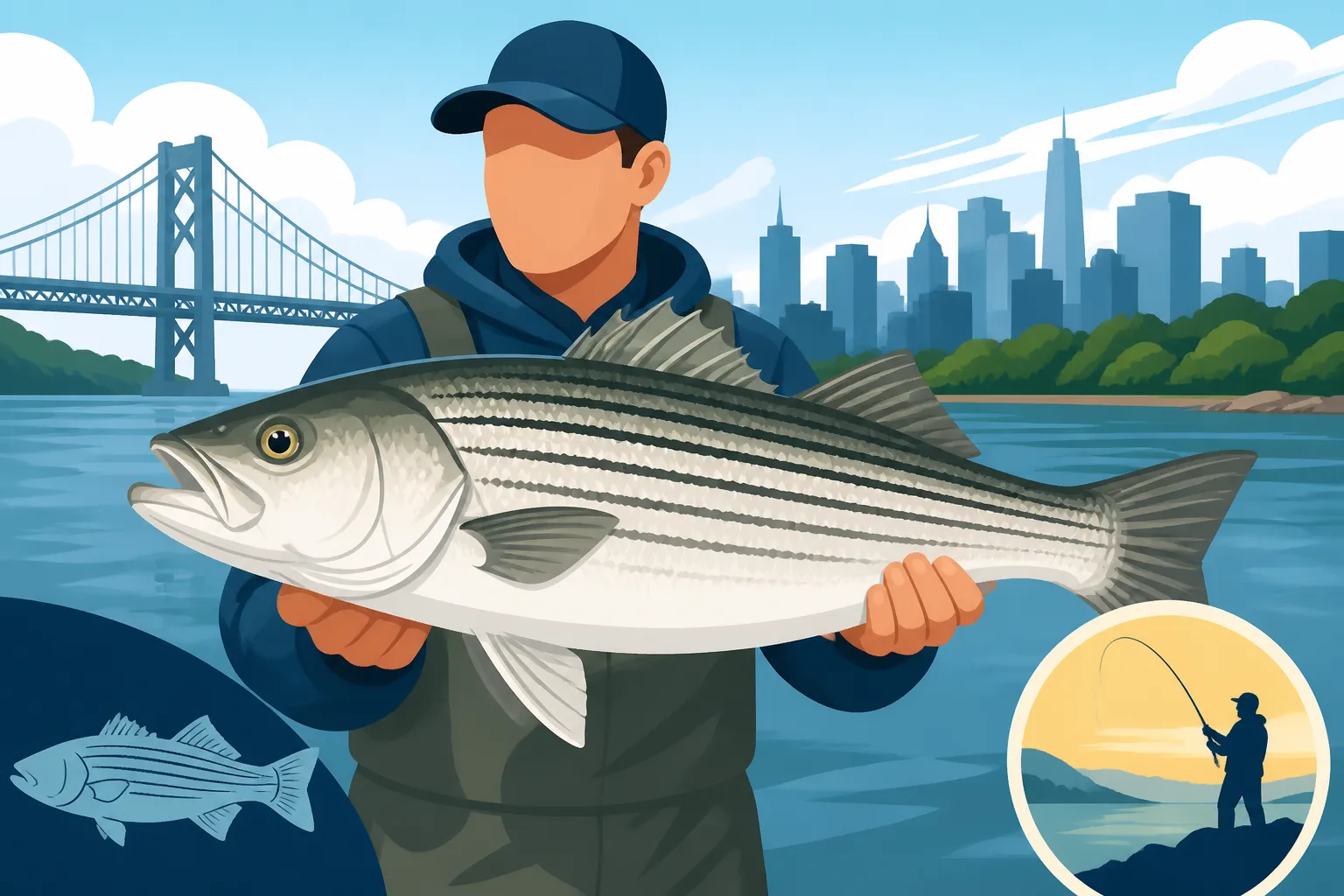
When you're out on the Hudson River, the term "average" for striped bass can span a pretty wide range, depending on the time of year and the specific stretch of river you're fishing. During the peak spring run, when those larger, ocean-migrating fish push upstream to spawn, you'll definitely see some impressive specimens. Many of these fish will fall into the 28-to-35-inch range, often weighing between 8 and 15 pounds. A striper pushing into the high 30s or even low 40-inch range, which could tip the scales at 20 pounds or more, is considered a fantastic catch and certainly within the realm of possibility, but these are less common than the slightly smaller "keeper" size fish.
You'll also frequently encounter what we lovingly call "schoolies" – younger, smaller striped bass that haven't yet reached their full size. These fish are typically under 20 inches and are incredibly fun to catch on lighter tackle, offering plenty of action. They might only weigh a couple of pounds, but they're feisty! During certain times, especially outside of the major spawning runs or in specific areas of the river, these schoolies can make up the majority of your catch. The "average" size you encounter on any given day can also shift depending on how successful recent spawning years have been; a strong year class means more fish of a similar age and size populating the river.
Age and Growth Rates of Hudson River Stripers
Striped bass are remarkable fish with impressive growth rates, particularly in their early years. Understanding their age and how quickly they grow helps explain the various sizes you'll encounter in the Hudson River. Generally, a "schoolie" striper of 15-20 inches might be anywhere from 2 to 4 years old. These are typically immature fish, full of energy and readily available. As they mature, their growth accelerates, and they quickly put on both length and weight.
A striped bass in the 28-35 inch "keeper" range, which is often the target for many anglers, is likely between 5 and 9 years old. These are generally sexually mature fish, actively participating in the spawning runs. Larger, trophy-sized stripers, those pushing 40 inches or more, are often older, perhaps 10 to 20 years old, sometimes even older. Striped Bass Lifespan Explained highlights just how long these incredible fish can live. Scientists determine the age of striped bass by examining their otoliths (ear bones) or scales, which have growth rings much like trees. This data helps biologists manage the fishery effectively.
It's important to remember that growth isn't always linear. Factors like food availability, water temperature, and the energy expended during spawning migrations can all affect how much a fish grows in a given year. A fish that successfully spawns might put on less weight that year compared to a non-spawning fish. However, the Hudson River's abundant resources generally support robust growth, allowing many stripers to reach impressive sizes. The fact that we have such a strong population of older, larger fish in the Hudson is a testament to the river's health and successful conservation efforts.
The Role of Regulations and Conservation in Striper Size
When we talk about the size of striped bass in the Hudson, we absolutely cannot overlook the critical role that fishing regulations and conservation practices play. These aren't just rules; they're the guardians of the fishery, ensuring that future generations can enjoy the same opportunities we have today.
New York's Striped Bass Length Requirements
New York, like other Atlantic coastal states, implements specific length requirements for striped bass, often in the form of a "slot limit." A slot limit means that anglers can only keep fish that fall within a particular size range, say, between a minimum and maximum length. For instance, if the regulation is 28 to 31 inches, you can keep a striper that's 29 inches long, but you must release anything shorter than 28 inches or longer than 31 inches. New York Striped Bass Length Requirements provides the current details, and it's absolutely crucial to check the latest regulations before you head out, as these numbers can and do change to adapt to the health of the stock.
The reason for slot limits is twofold and brilliant in its simplicity: it protects the small, juvenile fish, allowing them to grow and mature, and it protects the large, older spawning fish, ensuring they can reproduce multiple times throughout their long lives. These bigger fish are the backbone of the spawning population, and their continued existence is vital for the health of the entire stock. By preventing anglers from keeping the largest fish, regulators help ensure that the most prolific breeders remain in the water, contributing to the next generation of striped bass. It’s a conservation strategy designed to sustain the fishery, not just for a season, but for decades to come.
Catch-and-Release Practices and Their Impact
Beyond just regulations, the widespread adoption of responsible catch-and-release practices has had an undeniable positive impact on the striped bass population, particularly on the average size of fish in the Hudson. Many anglers, myself included, choose to release every striper, or at least the vast majority, recognizing the immense value in letting these fish fight another day. This is especially true for the larger, mature fish that are so critical for spawning.
Proper catch-and-release isn't just about letting the fish go; it's about doing it in a way that maximizes its survival chances. This includes using appropriate tackle to land the fish quickly, minimizing its time out of water, handling it gently with wet hands, and using de-hooking tools. Many anglers now specifically use circle hooks, particularly when bait fishing, because they significantly reduce gut-hooking, leading to much higher survival rates for released fish. In fact, Why Are Circle Hooks Required for Striped Bass Bait Fishing? explains this important regulation. If you're looking for quality tools like long-nose pliers or lip grippers to aid in safe release, a quick search on Amazon can reveal a wide range of options that make the process safer for both you and the fish. Every fish released healthily means more potential for future spawners and larger fish in the river.
Spotting and Targeting Larger Striped Bass
Now for the fun part: how do you actually find and catch those bigger striped bass in the Hudson? It takes a combination of knowledge, patience, and the right techniques.
Identifying Trophy-Sized Stripers
Spotting a trophy-sized striped bass isn't just about its length; it's about its overall presence. When you hook into a truly big striper, you'll know it. These fish aren't just long; they're deep-bodied, broad across the back, and thick-shouldered, indicating years of successful feeding and growth. A trophy in the Hudson River might be loosely defined as anything over 35 inches, but for many, a true trophy starts at 40 inches and certainly anything pushing the 50-pound mark is legendary. While New York's Biggest Striped Bass Ever Caught might set the bar incredibly high, seeing a 30 or 40-pound fish surface is an experience you won't soon forget.
These larger fish often display a different demeanor than their smaller counterparts. They fight with incredible power and stamina, making long, powerful runs that will test your tackle and your resolve. They tend to be more solitary or found in smaller groups than schoolies. When you're fishing and feel that distinct, heavy thud on your line, followed by a steady, irresistible pull, your heart will race. Observing the fight, the way the fish pulls, and the sheer volume of water it displaces can give you a strong indication that you're connected to something truly special. It's a moment of pure adrenaline, and the culmination of an angler's pursuit.
Techniques for Catching Bigger Striped Bass
Targeting larger striped bass in the Hudson River often requires a slightly different approach than simply casting for schoolies. These bigger fish didn't get big by being easy to fool! They are often more wary and prefer larger, more substantial meals. One highly effective technique is live-lining bait, especially Atlantic menhaden (bunker) or river herring, when they are available. These natural prey items are irresistible to large stripers. You can find specialized hooks and weights for this technique, easily available on platforms like Amazon, that will help you present your bait effectively. Best Live Bait for New York's Hudson River Striped Bass delves deeper into bait options.
Another excellent strategy involves using large artificial lures. Big swimbaits, heavy jigs, and oversized topwater plugs can effectively mimic the substantial meals big stripers are looking for. These lures are often fished around structure, like bridge pilings, channel edges, or submerged rock piles, where large stripers like to ambush prey. Fishing during peak tidal flows and low-light conditions (dawn, dusk, or even at night) can significantly increase your chances, as larger stripers are often more active and less cautious under these conditions. Knowing Best Tides for Striped Bass Fishing on New York's Long Island Sound (which has similar tidal influences to parts of the Hudson) can provide valuable insight.
Patience is also a virtue. You might not get as many bites when targeting big fish, but the one strike you do get could be the fish of a lifetime. Equipping yourself with a reliable medium-heavy to heavy action rod and a reel spooled with strong braided line (you can find excellent options on Amazon) is essential for battling these powerful fish. Consider exploring guides like How to Fish for Striped Bass on New York's Hudson River for more detailed strategies specific to the river.
Here's a quick look at typical Hudson River striped bass sizes:
| Category | Typical Length Range (inches) | Typical Weight Range (pounds) | Average Age Range (years) |
|---|---|---|---|
| Schoolie | 12-24 | 1-5 | 1-4 |
| Keeper/Mid-Size | 28-35 (Varies by Regulation) | 8-15 | 5-9 |
| Large/Trophy | 36+ | 16-30+ | 10-20+ |
Please note: These are general averages and individual fish can vary greatly based on genetics, food availability, and environmental conditions. Always check current regulations from the New York Fishing Regulations Explained for specific legal size limits.
Disclaimer
This article is for general informational purposes only and does not constitute professional advice. Laws, prices and regulations vary by location and change over time. Consult a qualified professional for guidance on your specific situation.