How to Tell a Largemouth Bass From a Smallmouth Bass
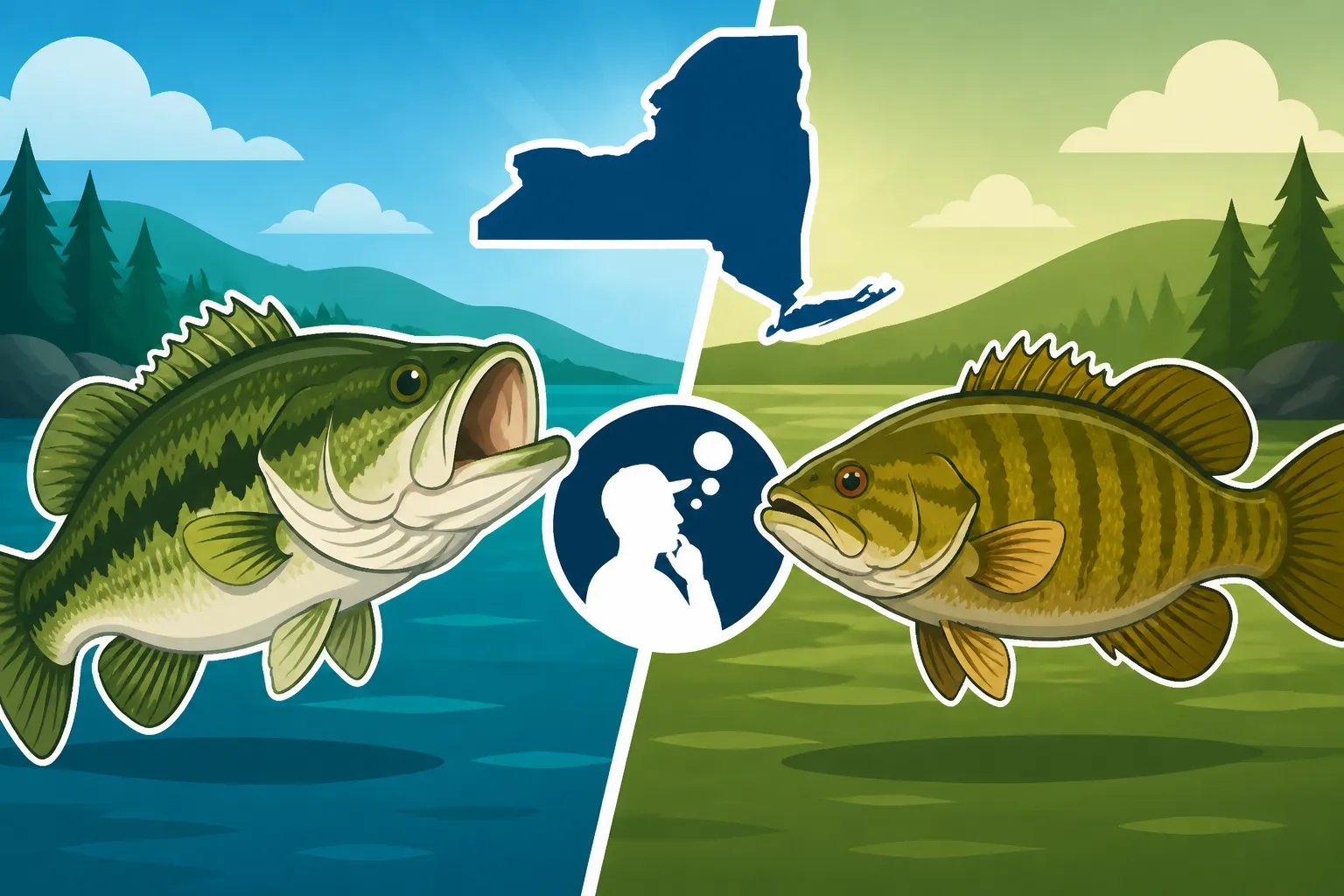
It’s a common scenario for many anglers in New York, especially those new to freshwater fishing: you reel in a beautiful bass, and immediately the question pops into your head – "Is this a largemouth or a smallmouth?" The two species, while both exciting to catch, have distinct characteristics that can sometimes be tricky to discern at first glance. This guide is here to help you confidently identify whether you've landed a bucketmouth or a bronzeback, delving into the nuances that separate these popular New York gamefish.
The Tale of Two Bass: Understanding Their Distinct Features
When you've got a bass in hand, knowing what to look for can make all the difference. These subtle, yet critical, distinctions go beyond just their names and are key to proper identification, which is important for understanding their behavior and adhering to specific regulations.
Mouth Size and Jawline Clue
Perhaps the most defining feature, and the one that gives the largemouth its "bucketmouth" nickname, is the size of its mouth. A largemouth bass has a significantly larger mouth, with its jaw extending well beyond the back of its eye. To check this, gently close the fish's mouth and see where the jaw hinge (the maxilla) ends in relation to the center or back of its eye. If it goes past the eye, you’ve almost certainly got a largemouth.
In contrast, the smallmouth bass has, as its name suggests, a noticeably smaller mouth. When its mouth is closed, the jaw typically extends only to the middle of its eye, or at most, directly beneath the back of the eye. It won't extend past it. This difference is usually quite pronounced once you know what to look for, and it’s often the first indicator experienced anglers use.
Dorsal Fin Separation
Another incredibly reliable identifier is the dorsal fin – that prominent fin on the fish's back. Both largemouth and smallmouth bass have two dorsal fins, but how they connect is crucial. The largemouth bass has a deeply notched dorsal fin, appearing almost like two separate fins. The spiny front dorsal fin and the soft-rayed rear dorsal fin are connected by only a very low membrane, creating a clear and distinct separation between the two sections. You can almost lay your finger into this dip.
On the other hand, a smallmouth bass has a dorsal fin that appears more continuous. While it still consists of a spiny and a soft-rayed section, the two parts are joined by a much higher membrane, making the fin look less separated and more uniformly curved along its back. It doesn't have that deep, almost severed appearance that a largemouth's dorsal fin exhibits. This is a characteristic that once you see it, it's hard to unsee. You might want to explore more about New York's Bass Species Explained.
Coloration and Pattern Variations
While color can be influenced by water clarity, diet, and habitat, there are general patterns that can help with identification. Largemouth bass typically sport a darker green back that fades into lighter green or yellowish-green flanks, often with a prominent, irregular horizontal stripe or band running along their sides. This stripe can sometimes look like a series of blotches, but it's usually quite distinct, especially in younger fish. Their bellies are usually white to yellowish.
Smallmouth bass, often called "bronzebacks," tend to have a more uniform bronze, brown, or golden-green hue on their backs and sides, which can sometimes appear mottled with vertical bars or blotches, rather than a single horizontal stripe. These vertical markings are often more pronounced than the horizontal stripe of a largemouth. Their eyes are frequently reddish, and their bellies are usually a creamy white. Think of them as looking a bit more rugged and rock-adapted in their coloration.
Habitat and Behavior: Where They Live and How They Act
Beyond their physical appearance, largemouth and smallmouth bass have distinct preferences for their environment and how they hunt. Understanding these behavioral patterns can often give you a clue about which bass you’re likely to encounter in a particular part of a New York waterway. It’s not just about what they look like, but also where they choose to hang out.
Largemouth Bass: The Lover of Weeds and Structure
Largemouth bass are the masters of ambush. They absolutely thrive in warm, shallow, vegetated waters. Think lily pads, dense weed beds, submerged timber, docks, fallen trees, and anything that provides ample cover for them to hide and surprise their prey. They prefer slower-moving water, or even stagnant areas, often found in ponds, lakes, and the quiet backwaters of rivers. If you're fishing a weedy cove in one of New York's Best Lakes for Fishing, chances are you're in largemouth territory. They use this cover to their advantage, lurking patiently before exploding on unsuspecting baitfish or frogs.
Their preference for these environments dictates fishing techniques. Anglers targeting largemouth often "flip and pitch" into heavy cover or throw topwater frogs over weed mats. The robust tackle needed to pull a fighting largemouth out of thick vegetation often includes heavier lines and powerful rods. You can find a vast array of suitable gear on retailers like Amazon, from weedless hooks to thick braided lines.
Smallmouth Bass: The Rocky Bottom Dweller
Smallmouth bass, in stark contrast, prefer cooler, clearer water with rocky bottoms. They are often found in deeper lakes, rivers with noticeable current, and areas with gravel, boulders, or rocky shoals. Unlike largemouth, smallmouth are less reliant on dense vegetation for cover, preferring the protection and ambush points offered by rock piles, ledges, and drop-offs. They are known for their strong fighting ability in open water, often making impressive aerial jumps.
If you’re out on a clear, breezy day fishing the expansive waters of Fishing New York's St. Lawrence River and Thousand Islands or the deeper sections of the Finger Lakes, you're likely to be targeting smallmouth. Their diet consists more of crayfish, minnows, and aquatic insects found in these rocky environments. Anglers often use techniques like dropshotting, tube jigs, or crankbaits to probe the rocky structures where smallmouth lurk. For more insights, check out Smallmouth Bass in New York.
Diet Differences and Fishing Implications
These habitat preferences directly influence their diets. Largemouth bass are opportunistic predators with a wide-ranging appetite. They'll eat just about anything that fits in their big mouths: baitfish, frogs, crawfish, snakes, mice, and even ducklings. Their diet is a reflection of the abundant life found in their shallow, weedy homes. This means lures mimicking these prey items, like soft plastic frogs, swimbaits, and spinnerbaits, are highly effective.
Smallmouth bass, living in clearer, rockier water, tend to have a diet heavily focused on crayfish, aquatic insects, and smaller baitfish like shiners. Their more streamlined bodies and powerful fins are adapted for chasing prey in current. Hence, lures that imitate crawfish, such as tube jigs and soft plastic creatures, or those that mimic baitfish, like small jerkbaits and crankbaits, are particularly productive for smallmouth. Knowing what they eat helps you choose the right presentation for Largemouth Bass in New York or smallmouth.
Geographic Distribution in New York Waters
New York State offers an incredible diversity of fishing environments, and both largemouth and smallmouth bass flourish here. However, their specific habitat preferences mean you'll find them concentrated in different regions or even different sections of the same body of water.
Largemouth Strongholds
Largemouth bass are widespread across New York, thriving in many of the state's warmer, shallower lakes, ponds, and slow-moving rivers. Some prime examples of largemouth strongholds include Lake Champlain, many of the smaller Finger Lakes (especially the shallower bays), Oneida Lake, and numerous impoundments and farm ponds throughout the state. The quiet coves of the Hudson River also hold impressive numbers of largemouth, particularly in its tidal sections where extensive weed beds can be found.
Anglers looking specifically for largemouth bass will often find success in the marshy areas, lily pad fields, and woody debris of these waters. For instance, New York Lakes Known for Largemouth Bass often feature ample shallow water cover perfect for these ambush predators.
Smallmouth Hotspots
Smallmouth bass are also abundant in New York, particularly in the clearer, cooler, and rockier waters. The Great Lakes system—Lake Erie and Lake Ontario—and their major tributaries are renowned for their world-class smallmouth fisheries. The St. Lawrence River, especially the Thousand Islands region, is legendary for its large, aggressive smallmouth. Many of the deeper, clearer Finger Lakes like Seneca, Cayuga, and Keuka also boast excellent smallmouth populations, often found along drop-offs and rocky shoals. The upper stretches of the Delaware River are another well-known spot for smallmouth in a riverine environment.
When planning a trip, if you're targeting smallmouth, focus your research on these rock-laden, clearer water systems. Knowing the best techniques for How to Fish a Tube Jig for Smallmouth Bass can be invaluable in these environments.
Overlapping Territories
It's important to remember that largemouth and smallmouth bass can, and often do, coexist in the same body of water, especially in larger, more diverse lakes or rivers. For example, a large lake might have shallow, weedy coves where largemouth dominate, while its deeper, rocky main lake basin or points will hold smallmouth. The key is to understand the micro-habitats within these larger systems. You might catch both in a single day, depending on where you are fishing and the structure you are targeting. This is why being able to identify them quickly is so helpful.
Here's a quick reference table to help visualize the main differences:
| Feature | Largemouth Bass | Smallmouth Bass |
|---|---|---|
| Jaw Extends | Well past the back of the eye | To the middle or just below the back of the eye |
| Dorsal Fin | Deeply notched, appears nearly separated | Connected by a higher membrane, more continuous |
| Coloration | Dark green back, lighter sides, distinct horizontal stripe/blotches | Bronze, brown, or golden-green, often with vertical bars/blotches |
| Preferred Habitat | Warm, shallow, weedy areas, submerged timber, docks | Cooler, clearer, rocky bottoms, current, drop-offs |
| Typical Diet | Baitfish, frogs, crawfish, large insects, snakes, mice | Crayfish, aquatic insects, smaller baitfish |
Why Knowing the Difference Matters
Beyond satisfying your curiosity, accurately identifying the bass you catch carries practical implications for every angler in New York. From legal obligations to improving your fishing success, these distinctions are more important than you might initially realize.
Regulatory Compliance and Catch Limits
This is perhaps the most critical reason to know your bass species. New York State's Department of Environmental Conservation (DEC) often has different regulations for largemouth and smallmouth bass, especially concerning New York Bass Season Dates, minimum size limits, and daily creel limits. For example, some waters might have a different minimum size for smallmouth than for largemouth, or a specific catch-and-release only season for one species while the other is open for harvest.
Accidentally keeping a bass that's under the legal size for its species, or keeping too many, can lead to fines and other penalties. It's every angler's responsibility to know the rules for the specific body of water they are fishing, and that knowledge starts with accurate fish identification. Always consult the current New York Fishing Regulations Explained before heading out.
Targeting and Tackle Selection
Knowing whether you're after largemouth or smallmouth can significantly impact your fishing strategy and the gear you choose. As we discussed, their habitat preferences are quite different. If you're planning a trip to a clear, rocky river and hoping to catch a feisty bronzeback, you'll gear up differently than if you're heading to a weedy, shallow lake for big bucketmouths.
For largemouth, you might focus on heavy cover penetration, using weedless jigs, Texas-rigged plastics, or topwater frogs over dense vegetation. For smallmouth, lighter lines, finesse techniques like dropshotting, or lures that imitate crayfish and minnows worked along rocky structures are often more effective. Having the right tools for the job, whether that's a specific lure or a heavier-action rod purchased from a reliable vendor like Amazon, can dramatically increase your chances of success. For example, knowing the Best Lures for Chinook Salmon is crucial, and the same principle applies to bass.
Conservation and Species Appreciation
Understanding the differences between largemouth and smallmouth bass also fosters a deeper appreciation for each species and contributes to responsible angling and conservation efforts. By identifying them correctly, you're more likely to follow best practices for catch and release, especially if one species is particularly vulnerable or regulated in a specific area.
Recognizing their unique characteristics helps anglers become better stewards of New York's diverse fisheries. It allows us to appreciate the subtle adaptations that enable each species to thrive in its preferred niche, making every catch not just a battle, but a learning experience. So, the next time you feel that familiar tug on your line, take a moment to observe your catch, use these tips, and truly get to know the magnificent bass you've brought to hand.
Disclaimer
This article is for general informational purposes only and does not constitute professional advice. Laws, prices and regulations vary by location and change over time. Consult a qualified professional for guidance on your specific situation.