Largemouth Bass vs Smallmouth Bass: Key Differences
It can be incredibly frustrating when you're out on a New York lake, you've landed a beautiful bass, and then you're left scratching your head, wondering if it's a largemouth or a smallmouth. Beyond just satisfying your curiosity, knowing the key differences between these two incredibly popular game fish is crucial for any angler. This guide will help you confidently identify whether you've got a largemouth or a smallmouth on your line, and why that distinction matters for your fishing success and adherence to regulations.
Understanding the New York Bass Landscape
New York State boasts an incredible diversity of fishing opportunities, and among the most sought-after freshwater species are the largemouth and smallmouth bass. While both are members of the sunfish family, Centrarchidae, and often found in similar regions, they have distinct characteristics, behaviors, and preferred habitats that make them unique angling targets. Understanding these nuances is the first step to becoming a more effective and informed bass angler.
The Iconic Largemouth Bass
The largemouth bass (Micropterus salmoides) is perhaps one of the most recognizable freshwater fish in North America, and certainly a favorite among anglers in New York. They are true ambush predators, often found lurking in dense cover, waiting for an unsuspecting meal to swim by. If you picture a classic bass fishing scene, chances are you're imagining a largemouth exploding on a topwater frog near lily pads. They thrive in warmer, weedier waters, making them a common sight in many of New York's sprawling lakes and ponds. Largemouth Bass in New York are renowned for their aggressive strikes and powerful fights, often leaping clear of the water in an attempt to shake the hook. Their prevalence across so many types of water bodies means that nearly every angler, from beginner to expert, has a chance to tangle with one.
The Feisty Smallmouth Bass
On the other side of the bass spectrum, we have the smallmouth bass (Micropterus dolomieu), a fish often celebrated for its tenacious fighting spirit and acrobatic displays. Unlike their largemouth cousins, smallmouths prefer cooler, clearer waters with rocky bottoms, gravel shoals, and strong currents. You'll often find them patrolling rocky points in the Finger Lakes, along the expansive shores of the Great Lakes, or in the swift flows of many New York rivers. Smallmouth Bass in New York are often described as "bronzebacks" due to their distinctive coloration, and their fight is less about explosive power and more about relentless, hard-pulling runs that test an angler's tackle and skill. They are highly attuned to their environment, and understanding their preferred structures is key to consistently finding them.
Physical Characteristics: Spotting the Differences
When you've got a bass in hand, knowing what to look for can help you identify it instantly. While they share a similar overall shape, there are several key physical indicators that clearly separate a largemouth from a smallmouth. It's not just about size, though that can be a factor. It's about subtle but consistent anatomical features.
Mouth Size and Jawline
This is arguably the most defining characteristic and the origin of their names!
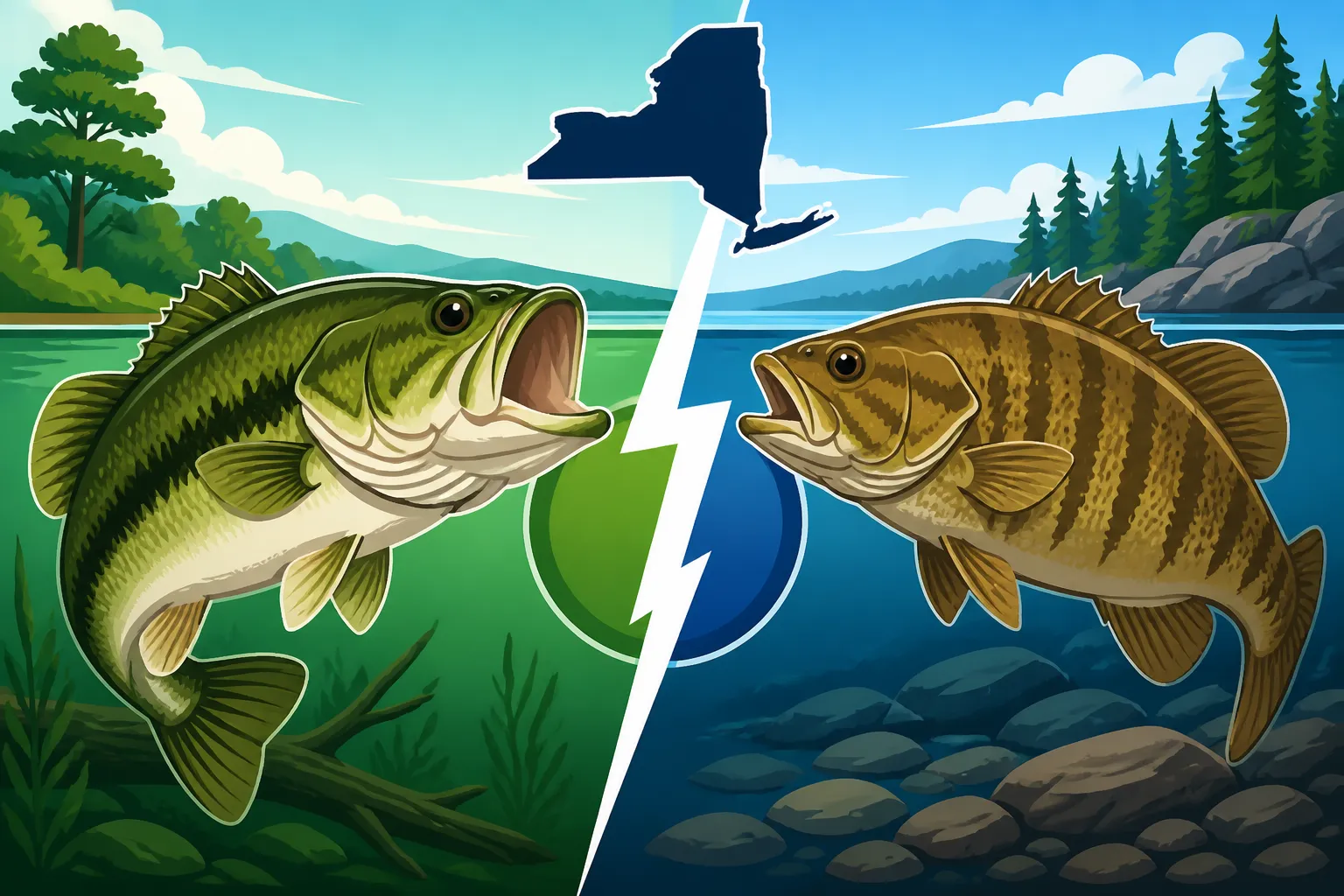
- Largemouth Bass: The mouth of a largemouth bass is, well, large! If you close its mouth, the corner of its jaw (the maxilla) will extend noticeably beyond the rear edge of its eye. Imagine drawing a vertical line down from the back of the eye; the largemouth's jawline will pass that line. This wide gape allows them to engulf larger prey items with ease, a trait that informs many of the baits and lures used to target them.
- Smallmouth Bass: In contrast, the smallmouth bass has a more modest mouth. When its mouth is closed, the corner of its jaw typically does not extend beyond the rear edge of its eye. It usually stops somewhere in line with the middle or front of the eye. This isn't to say their mouths are truly "small" – they're still impressive predators – but relative to the largemouth, it's a clear distinction. This difference in mouth size means they often prefer slightly smaller prey and, consequently, smaller lures.
Dorsal Fin Separation
Another reliable telltale sign lies in their dorsal fins. Fish have two dorsal fins, an anterior (front) and a posterior (back) one.
- Largemouth Bass: The largemouth bass has a deep, distinct notch or separation between its spiny anterior dorsal fin and its soft-rayed posterior dorsal fin. It looks almost like two completely separate fins connected by a very low membrane. This prominent separation is an easy visual cue once you know what to look for.
- Smallmouth Bass: The smallmouth bass, on the other hand, has dorsal fins that are only slightly notched, appearing much more continuous. The two sections blend together much more smoothly, with a less pronounced dip between the spiny and soft-rayed parts. It's a subtle difference, but once you've seen it on both species, it becomes quite obvious.
Coloration and Markings
While coloration can vary significantly depending on water clarity, diet, and habitat, there are some general patterns to observe.
- Largemouth Bass: Largemouths typically have a dark, horizontal stripe or series of blotches running along their lateral line, often extending from their gill plate to their tail. This stripe might be solid, broken, or sometimes faded in very clear or very dark water. Their overall body color can range from bright green to olive green or even a dark, almost black hue, often with a lighter belly. The eyes are typically a darker brown or gold.
- Smallmouth Bass: Smallmouths generally exhibit a more bronze, golden, or brownish coloration, leading to their "bronzeback" nickname. Instead of a single horizontal stripe, they often have vertical bars or tiger-like stripes along their sides, which can also vary in intensity. Their eyes are frequently red or reddish-orange, a striking feature that helps distinguish them. Their bellies are usually a creamy white or yellowish.
Body Shape and Overall Appearance
Beyond the distinct features, their overall body shape also gives clues.
- Largemouth Bass: Generally, largemouth bass tend to have a deeper, more laterally compressed body. They can appear somewhat chunkier or wider from top to bottom, especially as they grow larger. Their tail fin tends to be more rounded at the tips.
- Smallmouth Bass: Smallmouth bass usually possess a more streamlined, torpedo-like body shape. They are often described as being more "athletic" in appearance, with a slightly more slender profile. Their tail fin is typically squarer or slightly forked, with pointed tips, a characteristic that hints at their preference for current.
Here's a quick comparison table to help you keep these distinctions straight:
| Feature | Largemouth Bass | Smallmouth Bass |
|---|---|---|
| Mouth/Jawline | Jaw extends beyond the rear of the eye | Jaw does not extend beyond the rear of the eye |
| Dorsal Fin | Deep, distinct separation between two fins | Slightly notched, appearing more continuous |
| Coloration | Dark horizontal stripe/blotches; green/olive | Vertical bars/tiger stripes; bronze/brown |
| Eye Color | Dark brown/gold | Red/reddish-orange |
| Body Shape | Deeper, laterally compressed, chunkier | More streamlined, torpedo-like, athletic |
| Tail Fin | More rounded tips | Squarer or slightly forked, pointed tips |
Habitat Preferences and Behavior
Knowing the physical differences is one thing, but understanding where these fish live and how they behave is critical for successful angling. Their preferred environments dictate their foraging strategies, their typical depth, and ultimately, the best ways to target them.
Largemouth: The Cover Lover
Largemouth bass are creatures of cover. They thrive in warmer, often stained or murky waters with an abundance of aquatic vegetation, submerged timber, docks, and other structures that provide ambush points. Think slow-moving rivers, shallow bays of larger lakes, farm ponds, and reservoirs across New York. If you're fishing in a spot with lily pads, cattails, fallen trees, or thick weed beds, you're likely in largemouth territory. They use this cover to hide from predators and, more importantly, to launch surprise attacks on their prey. Their diet often consists of whatever swims by their hideout – smaller fish, frogs, crayfish, even ducklings. How to Fish for Largemouth Bass in Weeds is a common challenge for anglers, requiring specific techniques to pull them out of thick vegetation.
This preference for cover means they often hold relatively shallow, especially during feeding periods, or relate directly to the edge of deep cover. They're less concerned with current and more focused on having overhead protection and places to hide. When targeting largemouth, you're often casting right into or alongside this dense structure, trying to entice a strike from a hidden fish. Having a good supply of weedless lures, perhaps from a selection you found on Amazon, can be a game-changer here.
Smallmouth: The Rocky Realm Dweller
Smallmouth bass, by contrast, are more open-water oriented, preferring cooler, clearer water with hard bottom structures. You'll find them patrolling rocky shorelines, gravel shoals, current seams, and submerged rock piles in deeper lakes and rivers. Think of the clear, cool depths of the Finger Lakes like Cayuga or Seneca, the vast expanse of Lake Ontario, or the current-rich stretches of the St. Lawrence River. Fishing New York's St. Lawrence River and Thousand Islands is a prime example of exceptional smallmouth habitat. They are often found in deeper water than largemouths, especially during the brighter parts of the day, but will move shallower to feed during low-light conditions or when baitfish push to the shallows.
Smallmouths are active hunters, often chasing down their prey rather than ambushing it. Their diet is heavily reliant on crayfish, minnows, and insect larvae found among the rocks and gravel. They are also incredibly sensitive to water temperature and clarity, often moving with the changes in seasons to find their ideal conditions. How to Fish for Smallmouth Bass in Rivers often involves reading the current and targeting specific rock structures or drop-offs.
Diet and Foraging Habits
The differences in habitat lead to distinct dietary preferences, which in turn influences the most effective baits and lures.
- Largemouth Bass: Given their affinity for weedy, shallower water, largemouths feast on a wide array of prey. This includes smaller fish like minnows, sunfish, and shad, as well as frogs, crayfish, insects, and even small rodents or birds that fall into the water. Their large mouth is perfectly adapted for gulping down these varied meals. They are opportunistic feeders, often striking anything that invades their territory or looks like an easy meal.
- Smallmouth Bass: Smallmouths, living in clearer, rockier environments, primarily feed on crayfish, hellgrammites, and a variety of baitfish such as darters, sculpins, and shiners. Their more streamlined body and slightly smaller mouth are well-suited for darting through rocks and gravel to snatch these agile prey items. They tend to be more selective than largemouths, often requiring more nuanced presentations and baits that mimic their natural forage.
Fishing Techniques and Tackle
Knowing which bass you're after allows you to tailor your approach, making your fishing trips much more productive. Using the right techniques and tackle for each species is paramount.
Lures and Baits for Largemouth
When targeting largemouth bass, your tackle box should be stocked with offerings that excel in heavy cover or mimic larger, slower-moving prey. The goal is often to create a disturbance that draws them out of their hiding spots.
- Soft Plastics: Texas-rigged worms, creature baits, and jigs with plastic trailers are phenomenal for working through weeds and around wood. The weedless presentation allows you to penetrate heavy cover where largemouth love to hide. Brands like Strike King or Zoom offer a huge variety of soft plastics, readily available on Amazon.
- Spinnerbaits and Chatterbaits: These are excellent search baits that can be retrieved through sparse cover, emitting vibrations and flash that attract attention. They're great for covering water and finding active fish.
- Topwater Lures: Frogs, poppers, and walking baits are incredibly exciting to use in vegetated areas. Watching a largemouth explode on a topwater lure is an unforgettable experience. Use them early morning or late evening.
- Crankbaits and Swimbaits: Deeper diving crankbaits can be effective for targeting largemouth relating to submerged structure, while large swimbaits mimic bigger baitfish, appealing to trophy-sized bass.
Lures and Baits for Smallmouth
Smallmouth bass fishing often calls for finesse techniques or lures that mimic crayfish and baitfish in clear water. Accuracy and a natural presentation are often key.
- Tube Jigs: These soft plastic lures imitate crayfish perfectly and are incredibly effective when bounced along rocky bottoms. They're a staple for smallmouth anglers, especially in clear water. How to Fish a Tube Jig for Smallmouth Bass is a technique worth mastering.
- Drop Shot Rigs: For deep-water smallmouth, a drop shot rig allows you to present a soft plastic bait tantalizingly in front of fish suspended over structure without weighing down the bait itself. This is a classic finesse technique.
- Grubs and Swimbaits: Small swimbaits and single-tail grubs on jig heads are excellent for imitating minnows and can be retrieved effectively through current or over rocky flats.
- Jerkbaits and Crankbaits: Hard plastic jerkbaits can be incredibly productive for smallmouth, especially when fished with a stop-and-go retrieve to mimic a struggling baitfish. Small, subtle crankbaits also work well along rocky points.
- Blade Baits: In colder water, blade baits can be jigged vertically to entice lethargic smallmouth.
Rods, Reels, and Line Choices
While there's overlap, optimizing your gear for each species can enhance your experience.
- Largemouth Gear: For fishing heavy cover, you'll often want a medium-heavy to heavy power casting rod (6'6" to 7'6") with a fast action. This provides the backbone needed to pull fish out of thick weeds and make accurate casts with heavier lures. Pair it with a baitcasting reel spooled with 15-20 lb fluorocarbon or monofilament line, or even braided line (30-50 lb) for ultimate strength and sensitivity in heavy cover. A good quality braid, available from stores like Amazon, can cut through weeds like butter.
- Smallmouth Gear: Smallmouth fishing often leans towards lighter, more sensitive setups, especially for finesse techniques. A medium-light to medium power spinning rod (6'6" to 7'6") with a fast action is ideal for casting lighter lures and detecting subtle bites. Pair it with a sensitive spinning reel spooled with 6-10 lb fluorocarbon or monofilament. Braid (10-20 lb) with a fluorocarbon leader is also a popular choice for added sensitivity and casting distance with light baits. Best Line Weight for New York Freshwater Fishing often depends on the species and conditions.
Why Differentiating Matters for Anglers
Beyond the sheer joy of knowing your catch, accurately identifying largemouth and smallmouth bass holds practical importance for every angler in New York. This isn't just about showing off your knowledge; it's about fishing smarter and staying compliant.
Optimizing Your Fishing Strategy
Understanding the distinct characteristics of largemouth and smallmouth bass allows you to make informed decisions about where to fish, what tackle to use, and how to present your lures. If you're encountering a lot of smallmouth, you'll naturally gravitate towards rocky points, clearer water, and crayfish imitations. Conversely, if you're fishing a weedy backwater pond, you'll rig up a Texas-rigged worm or a frog, knowing that a largemouth is more likely to be hiding there.
By recognizing the subtle cues of the environment and the fish you're catching, you can quickly adapt your approach. This means less wasted time with ineffective lures and more time putting fish in the boat. Imagine you're on Lake George, New York and constantly hitting smallmouth on rocky ledges. If you suddenly find yourself in a shallow, weedy cove, knowing the difference between the bass species will prompt you to switch to largemouth tactics instantly, increasing your chances of success. It's about being a versatile and adaptive angler, rather than relying on a one-size-fits-all approach.
Understanding Regulations and Limits
Perhaps most importantly, differentiating between largemouth and smallmouth bass is crucial for adhering to New York State fishing regulations. While both are bass, they often have different season dates, minimum size limits, and daily creel limits in specific waters. The New York State Department of Environmental Conservation (DEC) publishes detailed regulations, and these distinctions are explicitly made.
For example, New York Bass Season Dates and Bass Daily Limit and Minimum Size in New York might vary for largemouth versus smallmouth in certain areas or during different times of the year. Keeping an undersized smallmouth because you mistook it for a legal largemouth, or vice-versa, could lead to a fine. It's every angler's responsibility to know the rules for the specific waters they are fishing and for the species they are targeting. Always check the latest New York DEC Fishing Regulations Guide before heading out. Being able to confidently identify your catch means you can quickly measure it, determine if it's legal to keep, or release it unharmed if it's not. This not only keeps you on the right side of the law but also contributes to the health and sustainability of New York's incredible bass fisheries for future generations.
Disclaimer
This article is for general informational purposes only and does not constitute professional advice. Laws, prices and regulations vary by location and change over time. Consult a qualified professional for guidance on your specific situation.