Which New York Fish Species Fight the Hardest
There's nothing quite like the adrenaline rush of a fish tugging hard on your line, making your drag scream, and testing every ounce of your skill. But let's be honest, not all fish are created equal when it comes to putting up a real fight. You're looking for that undeniable battle, that species that will make your arms ache and your heart pound. Well, you've come to the right place! This guide is all about diving deep into the exciting world of New York fishing to identify which fish species truly fight the hardest, giving you the ultimate angling challenge.
Understanding What Makes a Fish "Fight Hard"
Before we crown any champions, it's helpful to understand what exactly we mean when we talk about a "hard-fighting" fish. It's not just about raw size, although that certainly plays a role. A truly challenging fish combines several key attributes that test an angler's patience, strength, and skill. Imagine that moment when your line goes taut – what happens next is what defines the fight. Does it peel line off your reel at an alarming rate, or does it stubbornly resist with heavy, thumping headshakes? These are the nuances we're exploring.
Size and Weight: The Obvious Factors
Of course, a bigger, heavier fish generally means more mass to move, and thus, more effort on your part to bring it in. A 5-pound bass will put up a good struggle, but a 50-pound muskellunge is an entirely different beast, demanding respect and proper gear. The sheer power generated by a large tail beat against the water is immense, often making you feel like you've hooked into a submerged log that suddenly decided to become a freight train. You'll quickly learn that a fish's girth can be just as important as its length when it comes to the pulling power it exerts.
However, it's not simply about brute force. Sometimes, a fish that isn't the absolute largest can surprise you with its sheer determination, punching above its weight class. These are the fish that defy expectations and remind you that every catch is a unique experience.
Stamina and Endurance: The Long Haul
Some fish hit hard initially but tire quickly. Others might not have that explosive first run, but they possess incredible stamina, turning a quick tussle into a prolonged test of wills. These are the marathon runners of the underwater world, capable of multiple runs, dives, and sudden changes in direction, even after you think you've gained the upper hand.
A fish with high endurance will force you to manage your drag meticulously, keep constant pressure, and potentially chase it down with your boat if you're out on the open water. Losing a hard-fought fish because you let your guard down is a common and painful lesson for many anglers. The mental game becomes just as crucial as the physical effort when dealing with these tenacious fighters.
Agility and Aerobatics: The Thrill of the Jump
For many anglers, the most exciting part of a fight is when a fish leaps clear of the water, shaking its head violently to throw the hook. These acrobatic displays are not only thrilling to witness but also incredibly effective at testing your knots and lure connections. A jumping fish can create slack in the line, giving it the leverage it needs to dislodge the hook.
Species known for their aerial antics add another layer of challenge. You need quick reflexes to drop your rod tip and absorb the impact when they splash back down, or to maintain tension if they're trying to throw the hook mid-air. It's a true spectacle, and often the highlight reel moment of a fishing trip, etching the memory of that battle into your mind forever.
Top Freshwater Contenders for a Hard Fight in New York
New York's freshwater systems are incredibly diverse, offering up a fantastic array of species that promise a memorable fight. From the vast Great Lakes to intricate river systems and countless smaller ponds, you'll find plenty of opportunities to test your angling mettle against some truly formidable opponents. Knowing where to go and what to expect from each species can really enhance your strategy.
Muskellunge: The Freshwater Goliaths
If you're looking for a true freshwater heavyweight, the muskellunge, often simply called "muskie," is absolutely at the top of the list in New York. These apex predators are known for their massive size and incredible power. When a muskie hits your lure, it's rarely a gentle tap; it's often a jarring strike that feels like you've snagged a moving boulder. They can grow to enormous lengths, pushing beyond 50 inches and sometimes weighing over 50 pounds, making every encounter a potential battle for the record books.
The initial run of a muskie is typically explosive, peeling line off your reel at an alarming rate. They then often engage in heavy, thumping head shakes, trying to dislodge the lure with brutal force. Anglers frequently describe the experience as trying to reel in a log that's suddenly come to life and wants to tear your arms off. To successfully land one, you need heavy-duty gear, strong leaders, and a lot of patience. Muskellunge in New York are a true test of an angler's dedication and preparation, demanding attention to detail even when searching for robust equipment on platforms like Amazon.
Chinook Salmon: The Great Lakes Powerhouses
When it comes to sheer, unadulterated power and drag-screaming runs, the Chinook salmon in New York's Great Lakes system (particularly Lake Ontario and its tributaries) are truly legendary. These migratory fish, often called "Kings," are built for speed and strength. When you hook into a mature Chinook, especially one fresh from the lake and full of fight, be prepared for an epic battle. Their runs are notoriously long and fast, testing the capacity of your reel and the strength of your line to its absolute limits.
Chinook salmon don't just run; they often make powerful, deep dives and impressive aerial displays. They're relentless fighters, often making several blistering runs before you can even begin to gain line. Landing a large Chinook requires a combination of strong tackle, quick reflexes, and the ability to maintain constant pressure. Fishing for these giants is a prime reason why many anglers invest heavily in high-quality trolling setups, often researching the best options available on Amazon before their trip. If you're wondering How to Fish for Salmon in New York, you'll quickly learn that these fish are in a league of their own.
Steelhead Trout: River-Run Rainbows
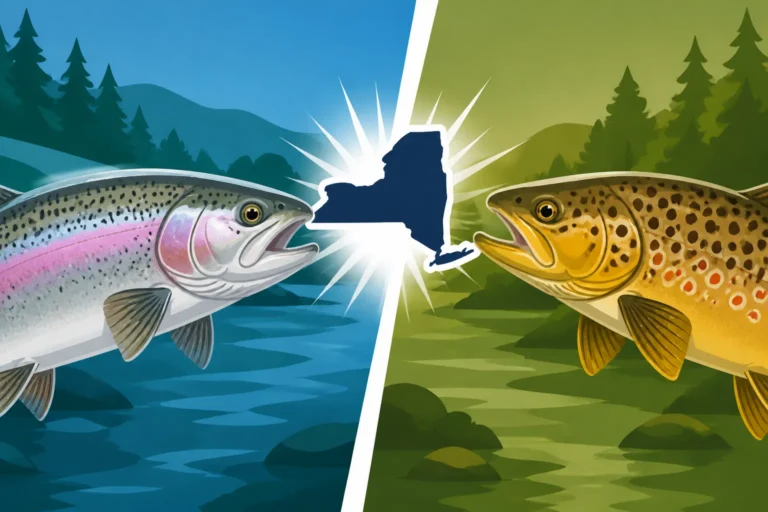
Steelhead, which are migratory rainbow trout, are arguably pound-for-pound some of the hardest-fighting freshwater fish in New York, especially in the tributaries of the Great Lakes. While they might not reach the sheer size of a muskie or Chinook, their athleticism and acrobatic tendencies make every catch an electrifying experience. A 10-pound steelhead can feel like a 20-pound fish due to its incredible energy and relentless fight.
When hooked, steelhead are famous for their explosive, high-flying jumps and blistering runs that can take them far downstream in a flash. They'll often clear the water multiple times, shaking their heads vigorously to dislodge the hook. It's a heart-stopping spectacle that demands immediate reactions from the angler, often requiring you to drop your rod tip to manage their jumps. These fish are true gladiators of the river, and mastering How to Fish for Steelhead in New York is a badge of honor for many anglers. Their powerful fights are why many anglers seek out flexible, responsive rods that can handle both the initial strike and the subsequent aerial show.
Smallmouth Bass: Pound-for-Pound Fighters
Don't let their size fool you; smallmouth bass are universally acclaimed as one of the best pound-for-pound fighters in freshwater. Found in many of New York's lakes and rivers, particularly the Great Lakes and St. Lawrence River, these feisty fish hit lures with incredible aggression and put on an immediate, powerful display. A 3-pound smallmouth can feel like a 6-pound largemouth due to its sheer intensity.
Smallmouth bass are known for their relentless, acrobatic fights. When hooked, they often make multiple jumps, tail-walking across the surface, and pulling with surprising strength. They are incredibly agile, making sudden changes in direction and strong dives, constantly trying to escape. Fishing for Smallmouth Bass in New York is an exhilarating experience that keeps your senses sharp from strike to net. They are a blast on light tackle, offering an incredible challenge that makes you appreciate the finesse of angling.
Saltwater Brawlers of New York's Coasts
Moving to New York's extensive coastline, from Long Island Sound to the Atlantic Ocean, opens up a whole new world of hard-fighting fish. The vastness of the ocean provides an environment for powerful, migratory species that can truly test the mettle of any angler. These saltwater titans bring a different kind of fight to the table, often characterized by immense strength and endurance.
Striped Bass: The Coastal Heavyweights
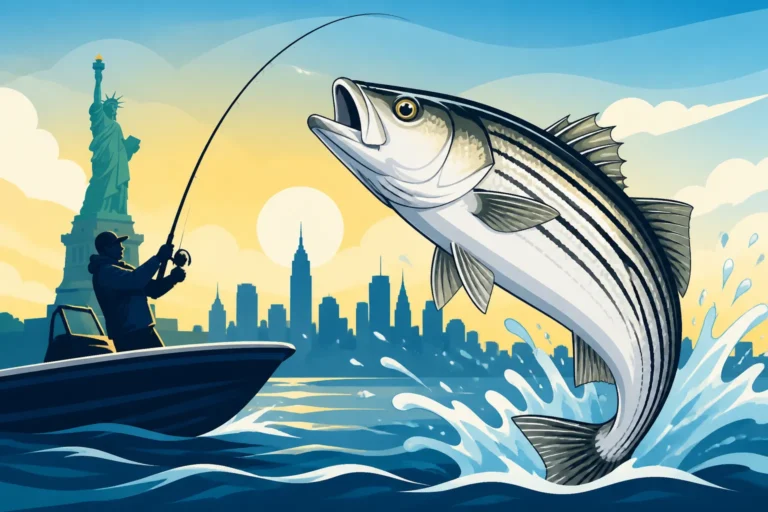
For anglers fishing New York's coastal waters, especially Long Island Sound and the Hudson River, the striped bass is the quintessential hard-fighting species. These robust fish can grow to impressive sizes, with large "cow" stripers often exceeding 30 pounds and capable of absolutely dominating a fight. They are highly sought after for both their delicious meat and their incredible battling abilities.
When a big striped bass takes your bait or lure, be ready for a powerful, determined fight. They make strong, bulldogging runs, pulling hard and deep, testing your reel's drag system to its limits. Stripers are also known for their strong head shakes, trying to dislodge the hook with sheer force. They might not jump as often as a steelhead, but their sustained power and refusal to give up make every fight a strenuous workout. Knowing How to Fish for Striped Bass in New York effectively is key to landing these formidable creatures, and good quality tackle, often purchased after careful research on sites like Amazon, is essential.
Bluefish: The Aggressive Choppers
Bluefish, commonly found throughout New York's coastal waters, are notorious for their aggressive nature and relentless fighting style. While they might not reach the same trophy sizes as striped bass or muskie, a medium-sized bluefish can provide an incredibly spirited fight, and their sharp teeth demand caution. They are often found in large schools, meaning once you find one, you're likely in for multiple battles.
When hooked, bluefish are absolutely manic. They hit lures with a vengeance and immediately launch into powerful, zigzagging runs and fierce head shakes. They are incredibly strong for their size and possess remarkable stamina, continuing to fight hard all the way to the boat. Their sheer ferocity and toothy grins make them an exciting, if sometimes challenging, catch. Bluefish in Long Island Sound are a fantastic species for anglers looking for consistent, hard-hitting action without needing exceptionally heavy gear.
Tuna Species: Offshore Thrill Seekers
While not as commonly targeted by inshore anglers, for those venturing into New York's offshore waters, various tuna species offer arguably the most brutal and sustained fights available. Fish like bluefin, yellowfin, and albacore tuna are built like torpedoes, designed for speed and endurance in the open ocean. These are not battles for the faint of heart or the unprepared.
Hooking into a tuna, especially a large bluefin, is an experience that can last for hours and push an angler to their physical limits. Their initial runs are absolutely blistering, stripping hundreds of yards of line off a heavy-duty reel in seconds. After the initial sprint, they settle into a deep, bulldogging fight, using their immense strength and broad tails to resist every inch of line gained. This is where specialized heavy tackle comes into play, often requiring stand-up harnesses and fighting chairs. These are the ultimate tests of endurance, and landing one is a true angling achievement that few forget.
Factors Influencing a Fish's Fight
It's not just the species itself that determines the intensity of the fight. There are several external factors that can significantly influence how hard a fish pulls, whether it jumps, and how long the battle lasts. Understanding these elements can help you anticipate the fight and adjust your approach accordingly, making you a more effective angler.
Water Temperature and Conditions
Just like us, fish are greatly affected by their environment. Water temperature plays a huge role in a fish's metabolism and energy levels. Generally, fish in cooler, well-oxygenated water tend to be more energetic and put up a harder fight. As water temperatures rise, fish often become more sluggish and tire more quickly. Think about how you feel on a hot, humid day versus a cool, crisp one – fish experience similar shifts in energy.
Additionally, factors like water clarity, current, and even barometric pressure can influence a fish's activity level. A fish fighting against a strong river current, for example, will already be using more energy, and when hooked, that resistance is compounded, often leading to a more intense struggle. Similarly, fish feeding aggressively in optimal conditions will be stronger and more vibrant. Understanding these environmental cues can help you predict when you're most likely to encounter a truly spirited fighter.
Gear and Technique: Making the Most of the Fight
Even the hardest-fighting fish can feel less impressive if you're over-geared, or conversely, be lost quickly if your tackle is too light. Matching your gear to the species and conditions is paramount to experiencing the full thrill of the fight. Using a light spinning rod for smallmouth bass allows them to shine, whereas trying to tame a large Chinook on similar gear is a recipe for heartbreak.
Your technique also plays a critical role. Maintaining constant pressure, knowing when to give line, and when to crank the reel can make all the difference. Pumping and reeling effectively conserves your energy while maximizing pressure on the fish. Moreover, the type of bait or lure, the hook size, and the strength of your line all contribute to how well you can withstand a fish's powerful runs and headshakes. Many anglers spend hours researching the latest advancements in line technology and reel drag systems, often finding a wealth of options and reviews on sites like Amazon, to ensure they are prepared for the toughest battles New York has to offer. A balanced setup ensures that both you and the fish are truly tested.
Comparing New York's Top Fighting Fish Species
To give you a clearer picture, here's a breakdown of some of New York's hardest-fighting fish, comparing their typical fight characteristics. This table can help you decide which species aligns best with the kind of angling challenge you're seeking, whether it's explosive runs, acrobatic jumps, or a long, drawn-out tug-of-war.
| Fish Species | Primary Fight Characteristic | Initial Run | Stamina | Acrobatics | Typical Size (New York) | Best Tackle Match |
|---|---|---|---|---|---|---|
| Muskellunge | Explosive power, heavy head shakes, bulldogging | Very Strong | High | Low | 30-50+ inches | Heavy Casting/Trolling |
| Chinook Salmon | Blistering long runs, deep dives, relentless | Extreme | Very High | Moderate | 15-30+ pounds | Heavy Trolling/Drift |
| Steelhead Trout | Acrobatic jumps, fast runs, athletic | Strong | Very High | Very High | 5-20 pounds | Medium-Heavy Spinning/Fly |
| Smallmouth Bass | Aggressive strikes, multiple jumps, agile | Moderate-Strong | Moderate-High | Very High | 1-6 pounds | Light-Medium Spinning/Baitcasting |
| Striped Bass | Powerful runs, bulldogging, deep dives, strong head shakes | Strong | High | Low | 5-50+ pounds | Medium-Heavy Spinning/Surf |
| Bluefish | Manic runs, aggressive head shakes, relentless | Strong | High | Moderate | 2-15 pounds | Medium Spinning/Casting |
| Tuna (offshore) | Unmatched speed, immense power, sustained, brutal runs | Extreme | Extreme | Low | 50-500+ pounds | Offshore Heavy Trolling |
This table highlights that while some fish excel in initial bursts of speed, others will simply grind you down with unwavering power. The best "fight" often comes down to personal preference and what kind of challenge you enjoy most. Whether you prefer the aerial show of a steelhead or the raw power of a Chinook, New York has a fish ready to test your abilities.
Maximizing Your Chances for a Thrilling Battle
So, you're ready to target these hard-fighting titans of New York's waters? Great! While much of it comes down to the fish itself, there are definitely steps you can take to increase your odds of not just hooking one, but successfully landing that memorable catch. It's about preparation, patience, and learning to read the water and the fish.
Research and Preparation Are Key
Never underestimate the power of knowledge. Before you even cast a line, spend some time understanding the specific habits of the species you're targeting. When are they most active? What are their preferred habitats? What kind of forage do they typically eat? Knowing these details will help you choose the right fishing spots, the appropriate lures, and the best times to fish. For instance, knowing the New York Fishing Season Dates and Catch Limits for your target species is crucial.
Proper gear is also non-negotiable for hard fighters. You wouldn't bring a knife to a gunfight, and you shouldn't bring ultralight tackle when chasing muskie. Ensure your reel's drag is smooth and properly set, your line is fresh and strong, and your knots are tied meticulously. Don't cheap out on hooks; a quality, sharp hook can make all the difference between a solid hookset and a frustrating lost fish. Many anglers find great deals and detailed product specifications for robust fishing lines and hooks by browsing popular online retailers like Amazon.
Learn to Read the Water
Fish don't just hang out anywhere; they have preferred structures, depths, and current breaks. Learning to "read the water" means understanding where fish are likely to hold or ambush prey. For river species like steelhead, this could mean understanding seam lines, current breaks, and deep pools. For lake species like salmon or muskie, it involves identifying drop-offs, submerged structure, or temperature breaks.
Observing your surroundings for signs of baitfish, bird activity, or even subtle changes in water color can give you clues. Sometimes, simply watching experienced anglers on the water can teach you invaluable lessons about finding productive spots. Remember, a fish that is actively feeding and in prime habitat is often a stronger, more aggressive fighter. Checking out resources like Best Fishing Spots in New York can be a great starting point for finding promising waters.
Embrace the Challenge
Ultimately, targeting hard-fighting fish is about embracing the challenge. There will be frustrating days when fish seem to ignore everything you throw at them, or when a monster breaks your line and disappears back into the depths. These are all part of the journey! Don't get discouraged.
Every lost fish is a lesson learned, and every successful landing is a triumph earned. Enjoy the process of learning, experimenting, and refining your techniques. The pursuit of that epic battle is what keeps us coming back, rod in hand, ready for the next adrenaline-pumping encounter. So, tie on your toughest leader, set your drag, and get ready to feel the fight in New York!
Disclaimer
This article is for general informational purposes only and does not constitute professional advice. Laws, prices and regulations vary by location and change over time. Consult a qualified professional for guidance on your specific situation.