Striped Bass in New York
Ask any angler in New York, and they'll likely tell you about the unparalleled thrill of hooking into a striped bass. These magnificent fish, with their distinctive dark stripes and powerful fight, are a cornerstone of New York's fishing scene. However, chasing stripers can sometimes feel like trying to solve a complex puzzle, with ever-changing regulations, shifting locations, and a dizzying array of techniques. This comprehensive guide is here to unravel the mysteries of striped bass fishing in New York, offering you a deep dive into everything you need to know to pursue these incredible creatures responsibly and successfully.
The Allure of Striped Bass in New York Waters
There's something truly captivating about striped bass that draws anglers back to the water year after year. Maybe it's their sheer power, the way they pull line with unrelenting force, or perhaps it's their stunning beauty. Whatever the reason, stripers hold a special place in the hearts of New York's fishing community.
What Makes Striped Bass So Special?
Striped bass, often affectionately called "stripers" or "rockfish," are truly remarkable game fish. They are anadromous, meaning they spend most of their lives in saltwater but migrate to freshwater rivers to spawn. This unique life cycle allows anglers to target them in a wide variety of environments, from the vast expanse of the Atlantic Ocean to the calmer stretches of inland rivers. Their impressive size, with some individuals growing to over 50 pounds, coupled with their aggressive feeding habits and powerful runs, makes them an incredibly exciting catch. When you feel that characteristic "thump" on your line and the rod doubles over, you know you're in for a battle.
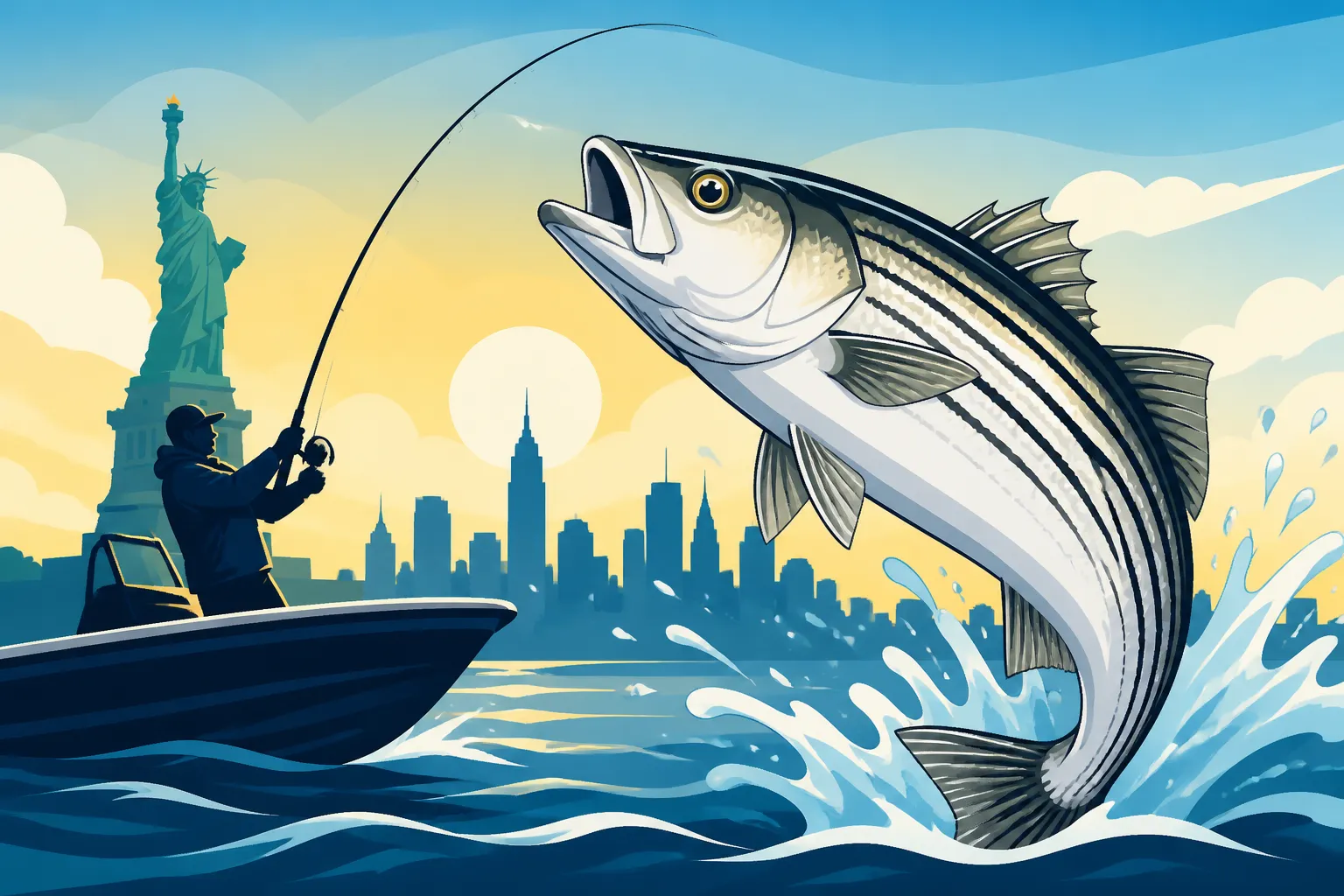
Beyond their fighting prowess, stripers are also visually striking. Their sleek, silver bodies are adorned with seven or eight prominent dark horizontal stripes, giving them their common name. They possess a powerful, forked tail perfectly adapted for bursts of speed, and their robust build speaks volumes about their endurance. Many anglers consider a trophy striper a lifetime achievement, a testament to the challenge and reward these fish offer.
A Legacy Fish: Historical Significance in New York
Striped bass have a long and storied history in New York, deeply intertwined with the state's fishing heritage. For centuries, they have been a vital resource, supporting both commercial and recreational fisheries. Native American tribes revered them, and early European settlers quickly recognized their abundance and value. Historically, New York's waters, particularly the Hudson River, have served as critical spawning grounds, sustaining vast populations that migrate up and down the Atlantic coast.
Over time, the importance of striped bass has shifted predominantly towards recreational angling. While commercial fishing for stripers still exists, strict regulations are in place to manage the stock. Recreational anglers eagerly anticipate the seasonal runs, turning out in droves to cast lines from shore, piers, and boats. This strong angler interest has also fueled a significant industry, from bait and tackle shops to charter services, all revolving around the pursuit of these iconic fish. The conservation efforts surrounding striped bass in New York reflect this deep-seated appreciation and the collective desire to ensure healthy populations for future generations of anglers.
Prime Striped Bass Fishing Locations in New York
New York offers an incredible diversity of habitats for striped bass, making it a premier destination for striper enthusiasts. From major rivers to the vast open ocean, knowing where to cast your line can make all the difference.
The Mighty Hudson River: A Spawning Sanctuary
When you talk about striped bass in New York, the Hudson River immediately comes to mind. It's not just a river; it's practically a striper superhighway and, more importantly, a vital spawning ground for a significant portion of the Atlantic coast's striped bass population. Every spring, mature stripers undertake an incredible migration up the Hudson, often traveling hundreds of miles from their ocean feeding grounds to deposit their eggs in the brackish waters of the river. Striped Bass Season Closure Dates on the Hudson helps protect these spawning fish.
During the spring run, from April through June, certain stretches of the Hudson become hotspots. Areas around the Tappan Zee Bridge (Mario M. Cuomo Bridge), the waters near Haverstraw Bay, and upstream towards Newburgh and Poughkeepsie can be incredibly productive. Anglers often target these areas from boats, but there are also excellent shore fishing opportunities, particularly at public access points. The challenge here is understanding the tides and currents, which dictate when and where the fish will be holding. Later in the year, after spawning, many stripers will move back downriver and eventually out into the ocean, but a resident population often remains in the lower Hudson throughout the warmer months. You can find more specific guidance in our guide on Best Fishing Spots on the Hudson River.
Long Island Sound and the Atlantic Coast
While the Hudson is a spawning mecca, Long Island Sound and New York's Atlantic coastline are where many anglers truly experience the power of ocean-run stripers. These areas are crucial migration routes and feeding grounds as stripers move north in spring and south in fall, following vast schools of baitfish like bunker (menhaden), spearing, and anchovies.
Surf fishing along the beaches of Long Island, particularly in areas like Montauk, Jones Beach, and Fire Island, can be phenomenal. Anglers wade out into the waves, casting large plugs, metal lures, or chunks of bait into the surf, hoping to intercept migrating schools. Montauk, especially, is legendary for its fall "blitz," where stripers actively feed on baitfish as they prepare for their southern migration. For those with boats, the possibilities expand significantly, allowing access to deeper channels, rips, and rocky structures where stripers ambush their prey. You'll find stripers along the entire south shore of Long Island, and throughout the entirety of Long Island Sound on the north side. The deeper channels and reefs of Long Island Sound provide excellent opportunities for trolling and drift fishing.
Other Notable New York Waters
Beyond the two major striper hubs, New York boasts several other excellent locations. Various bays and estuaries along the coast of Long Island, such as Shinnecock Bay, Peconic Bay, and Hempstead Bay, offer productive fishing, especially for schoolie stripers and during the earlier parts of the migration. These calmer, often shallower waters can be great places to start for beginners or to target smaller, more active fish.
Even some parts of New York Harbor and the waters around Staten Island can hold stripers, particularly during the spring and fall migrations. The key in these areas is often finding structure, like docks, bridges, and deeper channels, where stripers can find ambush points and shelter. Always remember that local knowledge and recent fishing reports are invaluable tools for pinpointing the exact hotspots as conditions change.
Understanding Striped Bass Seasons and Timing
Timing is everything when it comes to striped bass fishing in New York. These fish are highly migratory, and their presence in certain areas is dictated by water temperature, spawning cycles, and the availability of their primary food sources.
The Thrilling Spring Run: Spawning Migration
The spring run is arguably the most anticipated time for New York striper anglers. As water temperatures begin to rise in late March and April, mature striped bass from overwintering grounds in the ocean start their journey into the freshwater rivers of the Atlantic coast, most notably the Hudson River, to spawn. This migration creates incredible fishing opportunities as large numbers of fish concentrate in predictable areas.
During this period, the stripers are often very aggressive, feeding heavily to fuel their arduous journey and the energy demands of spawning. Anglers often find success using live bait like herring or bunker, or mimicking these baitfish with large soft plastics and swimming plugs. The peak of the Hudson River run typically occurs from mid-April through May, though it can vary slightly year to year based on weather and water conditions. Fishing during the spring run requires careful attention to New York Fishing Regulations Explained, as specific rules are often in place to protect the spawning stock. It's a time of immense excitement, with anglers eager to catch a trophy fish before they complete their reproductive cycle. Our guide How to Fish for Striped Bass in the Spring Run provides even more detail.
Summer Strategies: Adapting to Warmer Waters
Once the spring spawning run subsides and water temperatures continue to climb, striped bass in many shallower areas will either migrate further north, move out to deeper, cooler ocean waters, or become more nocturnal in their feeding habits. This doesn't mean summer fishing is off, but it often requires a shift in strategy.
During the dog days of summer, surf anglers on Long Island might find better success fishing at night or during the cooler hours of dawn and dusk. Stripers become more wary in bright sunlight and warm, shallow water, preferring to hunt under the cover of darkness. Boat anglers often target deeper channels, offshore reefs, and rocky structures where cooler water persists. Trolling with large swimming plugs or live eels can be very effective in these deeper zones. Look for areas with strong currents or rips, as these oxygen-rich environments often attract baitfish, and thus, hungry stripers. The challenge in summer is often finding the fish, but once located, they can still provide exhilarating action.
The Fall Blitz: Feeding Frenzy
If spring is about spawning, fall is unequivocally about feeding. As autumn arrives and water temperatures begin to drop, striped bass embark on their southern migration. This period is often characterized by the famous "fall blitz," particularly along the New York coast, especially in places like Montauk. Schools of striped bass, sometimes numbering in the thousands, aggressively chase massive schools of baitfish, creating spectacular surface feeding frenzies.
This is the time when anglers can experience incredible action, sometimes hooking into fish on nearly every cast. Casting poppers, darters, and metal jigs into the chaos of a blitz can be unbelievably productive. The stripers are gorging themselves, building up fat reserves for their long journey to warmer southern waters. The fall run typically kicks off in September and can last well into November, depending on how quickly the water cools. It's a dynamic season, with fish constantly on the move, and anglers often follow the baitfish to find the best action.
Effective Techniques and Tackle for New York Striped Bass
Successfully targeting striped bass in New York requires a blend of knowledge, skill, and the right gear. There are many ways to catch a striper, and the best method often depends on the location, time of year, and the fish's behavior.
Live Bait and Cut Bait: Tried and True Methods
For many seasoned striper anglers, nothing beats the effectiveness of live bait. Natural offerings are often irresistible to hungry striped bass. Live bunker (menhaden), eels, or herring are prime choices, especially when fishing from a boat or a pier. These baits are typically fished with a single hook, allowing the baitfish to swim naturally, or by slowly drifting them through known striper haunts. The key is to present the bait in a way that looks as natural and appealing as possible.
Cut bait, such as chunks of bunker, clam, or even mackerel, is also incredibly effective, particularly when fishing from shore or anchoring in a channel. The scent trail created by cut bait can draw stripers in from a distance. When using cut bait, anglers typically employ a "fish-finder rig" or a simple three-way swivel rig, allowing the bait to lie on the bottom or drift naturally with the current. Remember, when using live or cut bait for striped bass in New York, Striped Bass Circle Hook Requirement is a mandatory regulation to ensure higher survival rates for released fish. For more on what to use, consult Best Bait for Striped Bass.
Lure Fishing: From Topwater to Subsurface
Lure fishing for striped bass is an active and exciting way to target them, allowing anglers to cover a lot of water and mimic various baitfish. The type of lure you choose often depends on what the stripers are feeding on and where they are in the water column.
- Topwater Plugs: Poppers and walk-the-dog style lures are incredibly exciting when stripers are actively feeding on the surface, creating explosive strikes. These are particularly effective during the fall blitz or during low light conditions in summer.
- Swimming Plugs: Minnow-imitating plugs, like those from companies found on Amazon, are excellent for covering water and can be cast or trolled. They come in various sizes and diving depths, making them versatile for different conditions.
- Soft Plastics: Paddle tails, swim shads, and stick baits rigged on jig heads are highly effective, offering a natural swimming action. They can be bounced along the bottom, retrieved mid-water, or worked just below the surface.
- Jigs and Metal Lures: Bucktail jigs, lead jigs, and spoons are workhorses for stripers. They can be jigged vertically in deeper water, cast and retrieved with a jigging motion, or even trolled. Their versatility makes them a staple in any striper angler's tackle box.
Experimentation is key with lures. Have a variety on hand, in different sizes and colors, and don't be afraid to switch it up until you find what the fish are hitting.
Essential Gear: Rods, Reels, and Line
Having the right equipment is crucial for tackling the powerful striped bass. You'll want gear that can stand up to their strength and the demanding marine environment.
- Rods: For most New York striper fishing, you'll want a medium-heavy to heavy action rod, typically between 7 and 10 feet long for boat fishing, and even longer (10-12 feet) for surf casting. This length provides the leverage needed to cast heavy lures or baits and to fight large fish effectively. Look for rods with a strong backbone but a sensitive tip.
- Reels: A robust spinning reel (sizes 5000-8000) or a conventional (baitcasting) reel (sizes 15-30) is ideal. They need a strong drag system that can withstand powerful runs and be built to resist saltwater corrosion. Regular rinsing after use is essential.
- Line: Braided fishing line is a popular choice for stripers due to its strength, thin diameter, and lack of stretch, which provides excellent sensitivity. Typically, 30-65 lb test braid is used, depending on the fishing application. Always use a monofilament or fluorocarbon leader (30-60 lb test) attached to your main line. Fluorocarbon is less visible to fish and offers good abrasion resistance against sharp rocks or teeth. You can find many great options for line and leader on Amazon.
Don't forget the accessories! A good pair of pliers, a strong set of bolt cutters (in case you hook yourself or a fish deeply), a landing net or Boga Grip, and a measuring tape are all essential components of a successful striper outing.
Navigating New York's Striped Bass Regulations
Fishing for striped bass in New York isn't just about knowing where and how to fish; it's also about understanding and adhering to the regulations. These rules are put in place to ensure the sustainability of the striped bass population and are critical for their long-term health. New York Fishing Regulations Explained is a great resource.
Understanding Slot Limits and Bag Limits
New York, like many other states, employs a slot limit system for striped bass. A slot limit means you can only keep fish that fall within a specific size range, rather than simply having a minimum size. This regulation is designed to protect both the smaller, immature fish (allowing them to grow and reproduce) and the largest, most prolific breeding females (the "spawners").
For example, a common slot limit might be 28 to 31 inches. This means any striped bass you catch that measures under 28 inches must be immediately released unharmed, and any fish over 31 inches must also be immediately released unharmed. Only fish within that 28-31 inch slot can be kept. Additionally, there will be a bag limit, specifying how many fish you can keep per angler per day (often just one). These numbers can change, so it's absolutely vital to check the current New York Striped Bass Length Requirements and bag limits for both freshwater and marine waters before you head out. These regulations are updated frequently by the New York State Department of Environmental Conservation (DEC) and are paramount for conservation. You'll also want to make sure you have your New York Recreational Marine Fishing Registry if you're fishing in saltwater.
Circle Hooks: A Crucial Conservation Tool
One of the most significant advancements in striped bass conservation has been the widespread adoption of circle hook requirements, especially when fishing with bait. Striped Bass Circle Hook Requirement states that if you are using natural bait, whether live or cut, you are generally required to use a non-offset circle hook.
The reason for this is simple: circle hooks are designed to hook fish in the corner of the mouth, rather than deep in the gullet or stomach. When a fish takes a bait with a circle hook, the hook typically slides out of the gullet as the line is tightened and lodges firmly in the jaw. This significantly reduces instances of "gut hooking," which often leads to mortality, especially for released fish. By minimizing internal injuries, circle hooks dramatically increase the survival rate of released striped bass, a critical factor given the slot limits that necessitate releasing many fish. It's a simple change that makes a huge difference for the fish and is something every responsible angler should embrace.
Catch and Release Best Practices
Given the slot limits and the emphasis on conservation, many of the striped bass you catch will be released. Knowing how to properly handle and release a fish is just as important as knowing how to catch it. Poor handling can undo all the good intentions of regulations.
Always try to minimize the time the fish spends out of the water. If possible, unhook the fish while it's still in the water, or at least keep it over the water. Use wet hands or a wet towel to handle the fish, as dry hands can remove the protective slime layer, making the fish susceptible to disease. Avoid holding the fish by the gills or vertically by the jaw, as this can cause internal damage. Instead, support the fish horizontally with one hand under its belly and the other gently gripping the lower jaw or tail. If the fish is exhausted, revive it by gently holding it in the water, facing into the current, until it regains strength and swims away on its own. These Catch-and-Release Handling Rules are crucial for the health of the striped bass population and ensure that these magnificent fish can continue to thrive.
| Striper Fishing Location | Best Time to Fish | Primary Techniques | Target Size | Special Considerations |
|---|---|---|---|---|
| Hudson River | Spring (April-May) | Live bait (herring, bunker), large soft plastics | Mixed (spawners) | Tidal influence, check specific regulations for river |
| Long Island Sound | Spring, Summer, Fall | Trolling, chunking, artificial lures, eels | Mixed sizes, good for schoolies | Current rips, rocky structures, baitfish schools |
| Atlantic Coast (Montauk, Jones Beach) | Fall (Sept-Nov) | Surfcasting with plugs, metals, cut bait | Often larger, migrating fish | Strong currents, shifting sandbars, fall blitz |
| Coastal Bays & Estuaries | Spring, Summer | Light tackle, soft plastics, small plugs, cut bait | Schoolies, resident fish | Shallow water, docks, bridges, early season action |
Conservation and the Future of Striped Bass in New York
The striped bass population has faced its share of challenges over the decades, from overfishing to habitat degradation. While regulations have helped, ongoing conservation efforts are vital to ensure that this iconic species continues to thrive in New York's waters.
The Importance of Sustainable Fishing
Sustainable fishing practices are not just buzzwords; they are the bedrock of a healthy fishery. For striped bass, this means carefully managing harvest levels to ensure that enough fish survive to reproduce and replenish the stock. Overfishing, particularly of the larger, most fertile females, can have devastating long-term impacts on the population. The current slot and bag limits are a direct result of scientific assessments aimed at achieving this balance.
Beyond just the numbers, sustainable fishing also encompasses protecting critical habitats, such as the spawning grounds in the Hudson River and the vast network of estuaries and coastal areas that serve as nurseries and feeding grounds. Pollution, habitat destruction from development, and climate change all pose threats that extend beyond direct fishing pressure. The health of the striped bass population is a bellwether for the overall health of New York's marine and estuarine ecosystems, highlighting the interconnectedness of all species and habitats.
How Anglers Can Contribute to Conservation
As anglers, we are on the front lines of conservation, and our actions directly impact the future of striped bass fishing. Adhering to regulations is the bare minimum, but there's so much more we can do.
First and foremost, know and follow the rules. This means checking the latest DEC regulations before every outing, understanding slot limits, bag limits, and gear restrictions like circle hooks. Ignorance is not an excuse, and non-compliance undermines collective conservation efforts. Secondly, practice proper catch and release techniques. Many fish are released, and their survival depends on how gently and quickly they are handled. Invest in a de-hooker and avoid dragging fish onto dry sand or rough surfaces. Thirdly, report violations. If you witness illegal fishing activity, such as keeping oversized fish or exceeding bag limits, report it to the DEC. This helps protect the resource for everyone. Lastly, get involved. Support organizations dedicated to marine conservation and fisheries management. Educate fellow anglers, especially newer ones, on responsible fishing practices. By taking an active role, we ensure that New York's Most Popular Saltwater Fish remains a vibrant part of our state's natural heritage for generations to come.
Disclaimer
This article is for general informational purposes only and does not constitute professional advice. Laws, prices and regulations vary by location and change over time. Consult a qualified professional for guidance on your specific situation.