Art Lawton Caught New York’s Record Muskellunge in 1957
There's a certain magic in chasing that one fish, isn't there? The kind that makes you spend countless hours on the water, meticulously prepping your gear, and dreaming of that unforgettable fight. For New York anglers, the pursuit of a giant muskellunge is a deeply ingrained passion, a quest for the "fish of a thousand casts." This guide delves into one of the most legendary catches in New York's angling history: Art Lawton's monumental muskellunge, caught way back in 1957, a record that continues to inspire awe and serves as a benchmark for all who dream of landing a true freshwater giant.
The Unforgettable Day: Art Lawton's Record-Breaking Catch
Imagine a crisp autumn day on the majestic St. Lawrence River, the kind where the air hints at winter but the sun still warms your face. That's the backdrop to one of New York's most enduring fishing tales. Every angler dreams of that one moment, that one strike, that forever changes their fishing story. For Art Lawton, that day came in 1957, and it etched his name into the annals of fishing history.
The Man Behind the Legend: Who Was Art Lawton?
Art Lawton wasn't just some casual angler; he was a dedicated muskie fisherman, a true connoisseur of the hunt for these elusive giants. Back in the mid-20th century, muskie fishing was as much an art as it was a science, relying heavily on local knowledge, persistence, and a deep understanding of the fish's behavior. Anglers like Lawton spent countless hours on the water, learning the subtle nuances of their home waters, patiently casting and trolling for a fish that famously tests the patience of even the most seasoned individuals. His passion for fishing the St. Lawrence River, renowned for its trophy muskellunge, was evident in his consistent pursuit of these apex predators.
Lawton represented the heart of the angling community of his era – men and women who truly understood the wild, who respected the challenge, and who found profound satisfaction in the chase. His story is a testament to the dedication required to succeed in muskie fishing, a pursuit where success often feels like a lottery win after endless effort. He likely spent many a day discussing tactics with fellow anglers at local bait shops, perhaps even debating the merits of different lures he might have bought from a general store, or even ordered through a catalog which was the Amazon of its day.
Setting the Scene: The St. Lawrence River in 1957
The St. Lawrence River has always been a legendary muskie fishery, a place where these magnificent fish can grow to truly astonishing sizes. In 1957, the river was arguably even more pristine and teeming with life, offering ideal conditions for muskie to thrive. The vastness of the water, the intricate network of islands (the famous Thousand Islands), and the abundant forage fish created a perfect environment for muskie to become truly gargantuan. It was a time when the waters might have felt a bit wilder, less traveled, and full of untapped potential for record-breaking catches.
Anglers of that era primarily pursued muskie through casting large lures or trolling. This typically involved robust tackle, often handmade or custom-built for the brutal strength of a muskie. The anticipation of a muskie strike on the St. Lawrence is a feeling unlike any other, a sudden, violent jolt that signals the beginning of an epic battle. Lawton's day out on September 22, 1957, was surely filled with the usual hopes and expectations, little knowing he was about to make history. For more on this iconic waterway, check out Fishing New York's St. Lawrence River and Thousand Islands.
The Moment of Truth: Landing the Giant
On that fateful day, Art Lawton was trolling a large artificial lure when the unthinkable happened. The strike must have been absolutely ferocious, the kind that nearly tears the rod from your hands. What followed was a prolonged and grueling battle against a fish of unimaginable power and size. Muskies are notorious for their explosive runs, head shakes, and stubborn refusal to give up. Imagine the adrenaline pumping, the muscles aching, as Lawton fought this behemoth in an era before advanced fishing electronics or super lines.
Every moment of the fight would have been a test of skill, endurance, and nerve. Landing a muskie of any size is a challenge, but landing one that would shatter state records requires immense composure. The sheer weight and length of this fish, once it was finally brought boatside and secured, must have been an overwhelming sight. It was a true testament to Lawton's angling prowess and determination, turning a routine fishing trip into an historic event.
The Fish of a Lifetime: Details of New York's State Record Muskie
When we talk about Art Lawton's catch, we're not just talking about a big fish; we're talking about a genuine leviathan, a fish that defied expectations and set a standard that has remained unbroken for decades. It's the kind of catch that defines a fishery and inspires countless expeditions.
The Unbelievable Stats: Weight, Length, and Girth
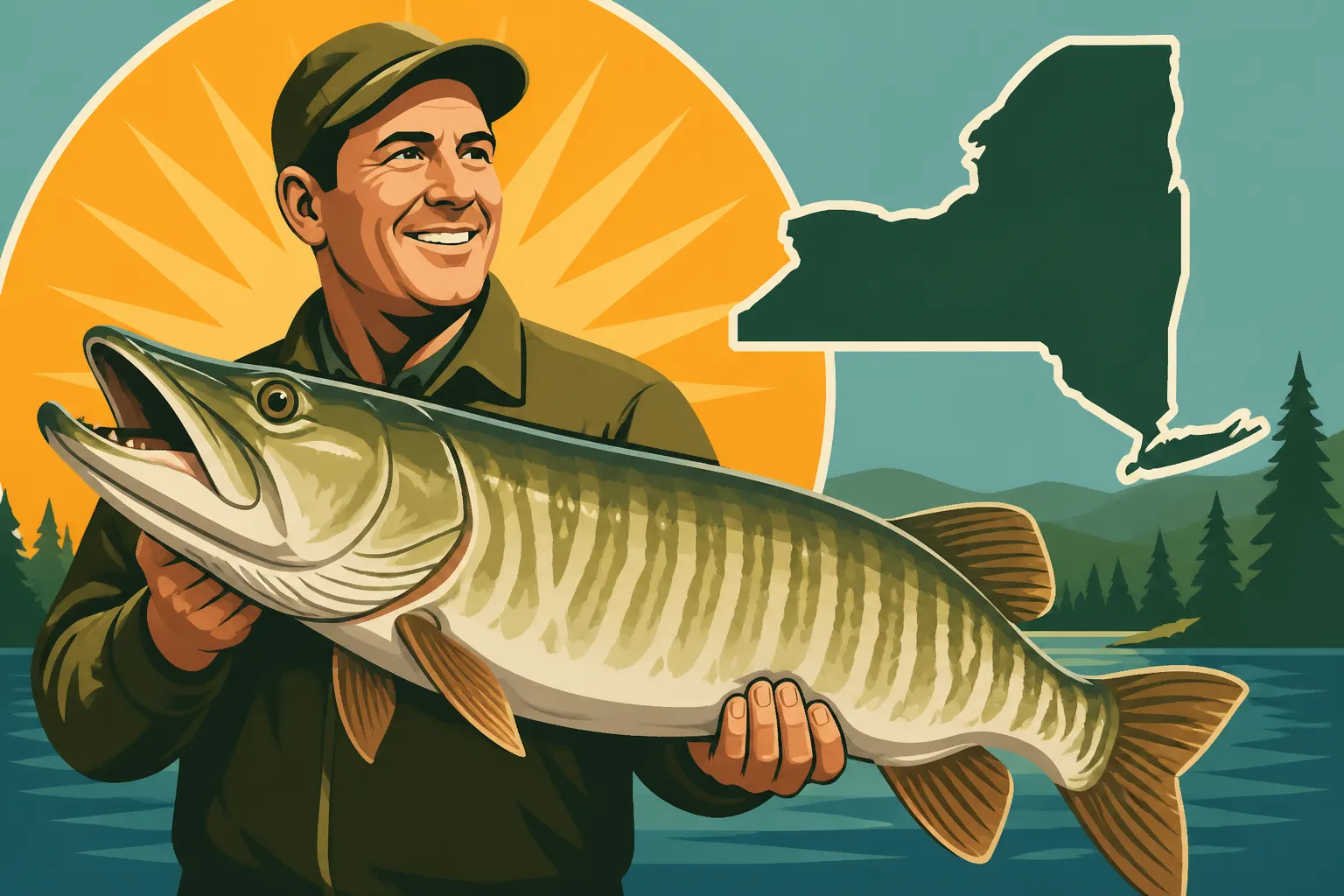
The numbers associated with Art Lawton's muskie are nothing short of incredible. This magnificent fish tipped the scales at a staggering 69 pounds, 15 ounces. To put that into perspective, imagine hoisting a fully grown German Shepherd out of the water! Its length stretched to an astounding 64.5 inches, or just under five and a half feet, a true freshwater monster. The girth measured a formidable 31 inches, indicating a fish that was not only long but incredibly thick and powerful. This record, the New York State Muskellunge Record: 69 Pounds, 15 Ounces, remains the benchmark for all muskie anglers in the state.
These dimensions speak volumes about the fish's age, its health, and the richness of its environment. It wasn't just a lucky catch; it was the culmination of years of growth in a prime habitat, testament to the St. Lawrence River's ability to produce truly exceptional fish. For context on other significant catches, you might want to read about New York's Biggest Muskellunge Ever Caught.
The Species: Exploring the Muskellunge
The muskellunge, or "muskie" as it's affectionately known, is truly the undisputed apex predator of many New York freshwater systems. Scientifically known as Esox masquinongy, these fish are characterized by their elongated, pike-like bodies, formidable toothy jaws, and often mottled or barred patterns that provide excellent camouflage in their varied habitats. They are incredibly elusive, intelligent, and known for their aggressive strikes and powerful fights, earning them the nickname "the fish of a thousand casts" for good reason.
In New York, muskellunge are primarily found in large, productive systems like the St. Lawrence River, Lake Ontario, Lake Erie, and the Finger Lakes. They prefer clear, cool waters with plenty of cover, such as weed beds, rock structures, and fallen timber, where they can ambush their prey. They are incredibly important to New York's freshwater ecosystems and are a prized game fish. Understanding more about this incredible species is key to appreciating Lawton's feat; dive deeper with Muskellunge in New York.
Where the Giants Roam: New York's Trophy Waters
While Art Lawton's record came from the St. Lawrence River, New York boasts several waters known for producing trophy-sized muskellunge. The St. Lawrence, with its vastness and confluence of diverse ecosystems, undoubtedly provides the ideal conditions for muskie to reach their Maximum Size of a Muskellunge in New York Waters. Its abundant forage base, including various baitfish, allows these predators to grow exceptionally large over many years.
Other notable muskie waters in New York include parts of Lake Ontario, Lake Erie, and some of the larger Finger Lakes like Chautauqua Lake. These bodies of water offer expansive territories, diverse aquatic structures, and a consistent food supply crucial for the development of giant muskellunge. Anglers looking to test their luck and skill often flock to these regions, hoping to write their own chapter in New York's trophy fish history. Whether you're heading out with a guide from St. Lawrence River Fishing Guides or just casting from shore, the dream of a giant muskie is always alive in these waters.
Why This Record Stands the Test of Time
In an era of advanced fishing technology, sophisticated lures, and comprehensive biological research, it's truly remarkable that a fishing record from 1957 continues to hold strong. This fact alone speaks volumes about the rarity and magnitude of Art Lawton's catch.
The Challenge of Catching a Record Muskie
Catching a muskie of any size is a significant achievement, but landing one approaching 70 pounds is an entirely different league. These fish are notoriously difficult to entice and even harder to land. Their fighting spirit is legendary, characterized by powerful runs, acrobatic leaps, and often a last-minute burst of energy right at the boat. Even with today's state-of-the-art fishing rods, reels, and lines, a muskie of Lawton's caliber would test the limits of any angler and their gear.
The term "fish of a thousand casts" isn't an exaggeration; it encapsulates the immense patience and persistence required for muskie fishing. Anglers often spend entire days, or even weeks, without a single muskie strike. When that strike finally comes, it's an explosion of power that demands immediate, precise action. Learning How to Fish for Muskellunge effectively is a lifelong endeavor, and even the most seasoned muskie hunters rarely encounter fish of this monumental size.
Factors Contributing to the Muskie's Size in the Past
It's natural to wonder why such a record has stood for so long. Several factors likely contributed to the growth of such massive muskellunge in the mid-20th century. In 1957, New York's major waterways, particularly the St. Lawrence River, might have experienced slightly different environmental conditions. Reduced human population density and industrialization meant less overall pressure on the fishery compared to later decades. This could have translated to healthier ecosystems, a more abundant and diverse forage base, and less angling pressure on older, larger fish.
Additionally, while fishing was popular, the sheer number of anglers and the intensity of fishing pressure were perhaps not at the levels seen today. This could have allowed muskie to live longer lives, giving them more years to grow into true giants. The relative lack of certain invasive species that compete for food or alter habitat might also have played a role. These factors, combined with perfect genetic conditions for a particular fish, created a recipe for the kind of record-breaking catch Art Lawton experienced. Understanding how these factors influence fish growth is crucial for appreciating New York's Trophy Fish Species.
The Endurance of a Legacy
The persistence of Art Lawton's record is a testament not only to the exceptional nature of his catch but also to the intrinsic difficulty of surpassing it. Every year, dedicated muskie anglers take to the waters of the St. Lawrence, Lake Ontario, and other prime locations, armed with the latest tackle and techniques, hoping to challenge this monumental achievement. Many scour historical fishing journals or even browse for specialized muskie gear on platforms like Amazon, seeking any edge or insight that might lead to their own record-breaking day.
The record acts as a powerful motivator, a symbol of what's possible in New York's rich waters. It reminds us that while fishing is about skill and strategy, there's also an element of pure luck and being in the right place at the right time. Art Lawton's muskie isn't just a number in a record book; it's a living legend that continues to fuel the dreams of every angler who casts a line in New York.
The Legacy of a Legend and the Muskie's Enduring Allure
Art Lawton's 1957 catch is far more than just a historical statistic; it's a foundational story in New York angling, a beacon for what is possible and a reminder of the incredible natural resources we have. His record has solidified the muskellunge's place as one of the most revered freshwater game fish.
Inspiring Generations of Anglers
The story of Art Lawton and his colossal muskie has been passed down through generations of anglers, becoming a campfire tale that sparks ambition and imagination. It teaches us that true monsters lurk in our waters and that with enough dedication and a bit of luck, anyone could potentially land the fish of a lifetime. This particular catch serves as a constant reminder for anglers to pursue their personal bests, whether it's the biggest bass, the most elusive trout, or, of course, a trophy muskie.
For many, the pursuit isn't solely about breaking a record, but about the challenge and the connection to nature. Anglers travel from far and wide, some hiring St. Lawrence River Fishing Guides hoping to learn the secrets of these legendary waters and perhaps, just perhaps, stumble upon another such giant. It's the ultimate aspiration for anyone looking to make a mark in the fishing world.
Preserving New York's Muskie Fisheries
The existence of such a long-standing record also highlights the importance of conservation efforts. To ensure that future generations of anglers have the opportunity to pursue trophy muskies, responsible management of New York's fisheries is paramount. This includes adhering to strict regulations regarding catch limits, minimum size requirements like the Muskellunge Minimum Size Limit, and promoting catch-and-release practices, especially for these large, mature breeding fish.
Protecting muskie habitat, managing water quality, and controlling invasive species are all crucial components of maintaining a healthy muskie population. Many passionate anglers are also conservationists, understanding that the health of the fishery directly impacts their chances of success. They invest in their passion not just through fishing gear, which they might find available on Amazon, but also through supporting efforts to preserve these vital ecosystems.
The Thrill of the Hunt: Beyond the Record
Ultimately, the allure of muskie fishing extends far beyond the pursuit of a record. It's about the pure thrill of the hunt, the cerebral challenge of outsmarting a cunning predator, and the intense satisfaction of a hard-earned catch. It's the preparation that goes into planning a trip, from researching the Best Season for Muskellunge Fishing in New York to selecting the perfect Best Lures for Muskellunge – many of which are readily available through online retailers like Amazon.
Every muskie caught, regardless of size, is a victory. These fish demand respect and offer unparalleled excitement. Art Lawton's 1957 record stands as a magnificent chapter in New York's fishing narrative, a timeless tale that continues to resonate with the heart of every angler who dreams of casting into the unknown and connecting with a true freshwater giant. It’s a powerful testament to the enduring magic of fishing in New York, proving that sometimes, the greatest stories are the ones that happened decades ago, still waiting for their next chapter.
| Detail | Description |
|---|---|
| Angler | Art Lawton |
| Date Caught | September 22, 1957 |
| Location | St. Lawrence River, New York |
| Weight | 69 pounds, 15 ounces |
| Length | 64.5 inches (5 feet, 4.5 inches) |
| Girth | 31 inches |
| Current Status | Stands as New York State Record Muskellunge |
Disclaimer
This article is for general informational purposes only and does not constitute professional advice. Laws, prices and regulations vary by location and change over time. Consult a qualified professional for guidance on your specific situation.