Is a Tiger Muskie a Hybrid Fish?
One of the most common questions I hear from fellow anglers, especially those new to pursuing larger predatory fish, is whether that distinctive tiger-striped fish they heard about—the Tiger Muskie—is truly a hybrid. It's a fantastic question because its unique appearance and sometimes elusive nature can certainly spark curiosity, and yes, the answer is a resounding "yes." This guide will clear up all the mystery surrounding the Tiger Muskie, delving into its fascinating origins, what makes it such a special catch, and why it's a beloved fish in New York's waters.
Understanding Hybrid Fish in General
Before we dive deep into the fascinating world of the Tiger Muskie, it helps to understand what we mean by a "hybrid fish" in the first place. The concept isn't unique to fish; hybrids exist across the animal kingdom, but in the aquatic world, they often bring some truly interesting characteristics to the table, both for nature and for us anglers.
What Makes a Fish a Hybrid?
At its core, a hybrid fish is the offspring of two different species or subspecies. Think of it like cross-breeding in other animals—a mule, for example, is a hybrid of a horse and a donkey. In fish, this means a mother from one species and a father from another successfully reproduce, leading to offspring that carry genetic traits from both parents. These hybrids might display a blend of physical characteristics, behaviors, and even growth patterns from their parental lines. Sometimes, these crosses happen naturally when two species' habitats overlap, but often, especially in fisheries management, they are intentionally created.
The reason for hybridization can vary greatly. Sometimes, it's simply a natural occurrence in areas where closely related species coexist and their spawning grounds or times overlap. However, in many cases, especially with popular game fish, hybrids are specifically developed in hatcheries. This intentional cross-breeding is often done to combine desirable traits from both parent species, such as faster growth rates, increased hardiness, or unique aesthetic qualities that appeal to anglers. The resulting hybrid can often be a truly robust and exciting fish to pursue.
Natural vs. Artificial Hybrids
When we talk about hybrid fish, it’s important to distinguish between those that occur naturally in the wild and those that are created through human intervention. Both exist, but for game fish like the Tiger Muskie, the story leans heavily towards the latter, particularly in how they are introduced into many fishing systems.
Natural hybrids are exactly what they sound like: they happen without human help. Imagine two closely related fish species, say two different types of trout, living in the same river system. Their spawning times might overlap, or perhaps one species might accidentally fertilize the eggs of another. This isn't super common, as nature tends to have built-in mechanisms to prevent too much cross-breeding between distinct species, but it certainly can and does happen. These natural hybrids are typically quite rare and often struggle with fertility themselves, making it difficult for a self-sustaining hybrid population to establish.
Artificial hybrids, on the other hand, are the result of deliberate efforts by fisheries biologists and hatchery staff. This is where human hands guide the process. Scientists identify two different fish species with desirable traits and intentionally cross them in controlled environments, like fish hatcheries. For instance, if one species is known for its incredible size but slow growth, and another for its rapid growth but smaller maximum size, a hybrid might combine the best of both worlds. The goal is often to create a superior sport fish or a species that can thrive in a particular environment where one parent species might struggle. This is the story of our beloved Tiger Muskie, which we'll explore more deeply next.
The Tiger Muskie: A True Hybrid Marvel
So, let's cut right to the chase about the fish that has that distinctive look and a reputation for being a fierce fighter. Yes, the Tiger Muskie is absolutely a hybrid fish, and it’s one of the most recognized and sought-after hybrids in freshwater fishing. Its very existence is a testament to both nature’s occasional serendipity and human ingenuity in fisheries management.
The Parents: Muskellunge and Northern Pike
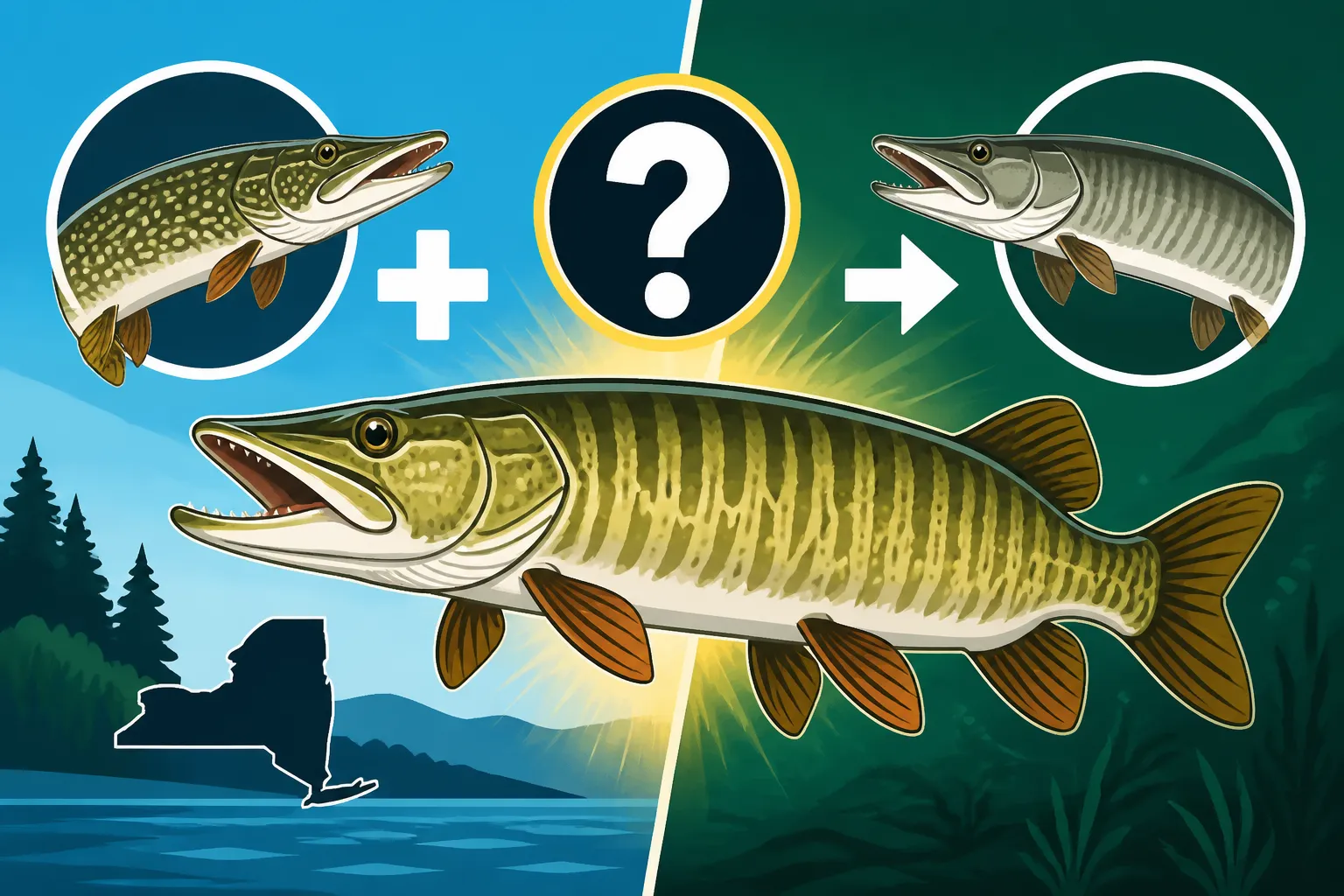
The Tiger Muskie is the fascinating result of a cross between two formidable freshwater predators: the Muskellunge (Esox masquinongy) and the Northern Pike (Esox lucius). These two species are both part of the Esox family, commonly known as the pike family, which is why they share enough genetic similarities to produce viable offspring. Knowing their parentage helps us understand why the Tiger Muskie looks and behaves the way it does.
The Muskellunge, often simply called a "Muskie," is the largest member of the pike family, renowned for its massive size, powerful strikes, and extremely challenging nature. Anglers often refer to them as "the fish of 10,000 casts" because they can be notoriously difficult to hook. They are native to parts of North America, including many waters in New York, and are a true trophy fish. Muskellunge in New York are known for their elongated bodies, duckbill-shaped snouts, and often barred or spotted patterns that help them camouflage in their ambush habitats. They are generally longer and leaner than a pike for their weight, with a more pronounced pattern.
The Northern Pike, while also a fierce predator, is generally smaller and more widespread than the Muskie. Northern Pike in New York are also elongated, ambush predators but typically have more distinct, bean-shaped spots or lighter markings on a darker body, giving them a distinct appearance from their Muskie cousins. Pikes are known for their aggressive nature and willingness to strike a variety of baits and lures, making them a popular catch for many anglers. If you've ever had trouble telling these two apart, checking out resources like Muskellunge vs Northern Pike: Key Differences or How to Tell a Muskie From a Pike can be incredibly helpful for your identification skills.
How Tiger Muskies Are Created
Given that Muskies and Northern Pike often inhabit similar waters, one might wonder if Tiger Muskies occur naturally with any regularity. While spontaneous hybridization can happen in the wild, it's quite rare. The reason is usually a combination of factors: differences in spawning times, preferred spawning habitats, and subtle behavioral cues that generally keep the two species from interbreeding frequently. When they do hybridize naturally, it's usually by chance in areas where their populations overlap significantly, or perhaps in a stressful environmental situation where mates are scarce.
However, the vast majority of Tiger Muskies found in New York and other states are the result of intentional, artificial propagation in fish hatcheries. Fisheries managers recognized the potential benefits of combining the traits of these two magnificent predators. The process involves carefully selecting adult Muskies and Northern Pike, extracting their eggs and milt (sperm), and then fertilizing the eggs in a controlled environment. The fertilized eggs are then incubated, and the fry are raised in tanks or ponds until they are large enough to be stocked into public waters. This controlled breeding ensures a higher survival rate for the fragile fry and allows for the consistent production of Tiger Muskies for stocking programs. This method ensures that the unique hybrid can be introduced to specific lakes and rivers to enhance fishing opportunities where they might not naturally occur.
Distinctive Characteristics of the Tiger Muskie
The Tiger Muskie isn't just a unique fish because of its hybrid origin; it's also a visually striking species that stands out from its parentage. Learning to identify them is part of the fun, and understanding their traits can help you become a more successful angler.
Identifying a Tiger Muskie
One of the most exciting moments for an angler is when you pull a fish out of the water and immediately recognize it as something special. With the Tiger Muskie, that "aha!" moment often comes from its unmistakable appearance. The name "Tiger" isn't just for show; it's a direct reference to its most prominent visual feature: a distinct, broken, vertical barring pattern on its sides, resembling the stripes of a tiger. These markings are usually dark on a lighter background, varying from a golden-olive to a light tan, which creates a stunning contrast.
This striking pattern is arguably the easiest way to differentiate a Tiger Muskie from a purebred Muskellunge or Northern Pike. While Muskies often have spots or solid bars, they rarely have the same wavy, tiger-like stripes. Northern Pike, on the other hand, typically have lighter, bean-shaped spots on a darker body. The Tiger Muskie's pattern is a clear blend, or perhaps a unique expression, of traits from both parents. Beyond the stripes, Tiger Muskies also tend to have a more uniform scale pattern on their cheek and gill covers compared to their parent species, which can sometimes have bare or partially scaled areas. Knowing What a Tiger Muskie Is visually is a crucial step in proper identification.
Size, Growth, and Behavior
Beyond their captivating looks, Tiger Muskies are also noted for their impressive growth rates and robust behavior, which makes them such a prized game fish. They often exhibit what's known as "hybrid vigor," meaning they grow faster and can be more resilient than either of their parent species under certain conditions. This accelerated growth is a major reason why fisheries managers choose to stock them. They can reach significant sizes, often rivaling purebred Muskies, though the absolute largest state records typically still belong to pure Muskies. Many anglers dream of catching a true trophy-sized fish, and the Tiger Muskie certainly offers that potential in New York waters.
In terms of behavior, Tiger Muskies inherit the predatory instincts of both their parents. They are aggressive ambush predators, lurking in weed beds, submerged timber, or along drop-offs, waiting to dart out and strike unsuspecting prey. They will readily consume a wide variety of forage fish, and their powerful jaws and sharp teeth make them incredibly efficient hunters. Their aggressive nature, combined with their strong fighting capabilities, makes them an exhilarating challenge for any angler. When hooked, they are known for powerful runs, head shakes, and often acrobatic jumps, making them a truly memorable catch.
Why Tiger Muskies Are Prized by Anglers and Biologists
The existence of the Tiger Muskie isn't just a biological curiosity; it's a deliberate and successful strategy by fisheries departments to enhance fishing opportunities and manage fish populations. There are several key reasons why these hybrid fish are so highly valued by both those who manage our waterways and those of us who love to cast a line.
The Angling Appeal: Fast Growth and Aggression
For anglers, the Tiger Muskie represents an exciting and often more accessible trophy fish option. As mentioned, their hybrid vigor means they tend to grow faster than purebred Muskies. This faster growth translates to more fish reaching impressive sizes in a shorter period, increasing the chances for anglers to hook into a substantial fish. While a purebred Muskie can truly test an angler's patience, Tiger Muskies often strike with a bit more aggression, inherited partly from their Northern Pike lineage, making them a fantastic target for those seeking a powerful fight without quite the legendary difficulty sometimes associated with their Muskie parent.
The combination of their striking appearance, significant size potential, and aggressive fighting style makes them a true game fish. Many anglers specifically seek them out, enjoying the challenge of targeting such a powerful predator. They respond well to a variety of large lures and baits, from oversized crankbaits and spinnerbaits to live suckers, requiring heavy-duty tackle that adds to the excitement of the pursuit. If you're looking to learn How to Fish for Muskellunge, many of the same techniques apply to their tiger-striped cousins. Finding the right gear, whether it's specialized rods, reels, or those massive lures, often leads anglers to browse comprehensive outdoor retailers like Amazon, where a vast selection of tackle is available.
Ecological Role and Stocking Programs in New York
From a fisheries management perspective, Tiger Muskies play a crucial role, especially in New York. Their most significant advantage is that they are almost universally sterile. This means that while they are produced in hatcheries, they generally cannot reproduce in the wild. This sterility is a double-edged sword: it means natural populations won't establish, requiring continuous stocking, but it also provides an invaluable management tool. Fisheries managers can introduce a large predatory fish into a system without fear of it overpopulating or disrupting the delicate balance of the native ecosystem through unchecked reproduction. They can precisely control their numbers and distribution.
New York's Department of Environmental Conservation (DEC) actively stocks Tiger Muskies into various lakes and rivers across the state. These stockings serve several purposes: to provide a unique and exciting trophy fishing opportunity, to help control populations of panfish or other smaller species, and to introduce a top-tier predator where purebred Muskies might not thrive or where managers want to avoid establishing a self-sustaining Esox population. They are often stocked in waters that can sustain large predators but may lack a robust native Muskie population. For example, knowing Where Tiger Muskies Are Stocked in New York can be a huge advantage for anglers looking to specifically target them. They can be found in a diverse array of waters, from smaller lakes to larger river systems, offering fantastic opportunities for anglers across the state.
Here's a quick look at how Tiger Muskies compare to their parents:
| Feature | Northern Pike | Muskellunge | Tiger Muskie (Hybrid) |
|---|---|---|---|
| Scientific Name | Esox lucius | Esox masquinongy | Esox masquinongy x lucius |
| Appearance | Light spots on dark body, less elongated | Dark bars or spots on light body, more elongated | Distinct dark, wavy, broken vertical bars on light body |
| Cheek/Gill Cover | Fully scaled | Upper half scaled, lower half bare (variable) | Typically fully scaled, often with uniform pattern |
| Typical Size | Medium (2-15 lbs, up to 20s) | Large (10-30 lbs, up to 50s+) | Large (10-30 lbs, up to 40s+) |
| Growth Rate | Moderate | Slower | Faster (hybrid vigor) |
| Aggression | High | Moderate to high | High |
| Reproduction | Reproduces naturally | Reproduces naturally | Generally sterile |
| Habitat | Widespread, diverse habitats | Larger, clearer lakes/rivers | Stocked in various suitable waters |
Understanding these differences, and particularly the hybrid nature of the Tiger Muskie, really deepens one's appreciation for this incredible fish. It's not just a fish; it's a testament to the intricate balance of nature and the careful stewardship of our fisheries. So next time you're gearing up, maybe checking out some new lures on Amazon for that next big catch, remember the unique story behind the powerful, striped predator you're hoping to encounter.
Disclaimer
This article is for general informational purposes only and does not constitute professional advice. Laws, prices and regulations vary by location and change over time. Consult a qualified professional for guidance on your specific situation.