Muskellunge vs Northern Pike: Key Differences
Many New York anglers, from seasoned veterans to excited beginners, have stood on the shore or in a boat, holding a long, toothy fish, wondering: "Is this a muskie or a northern pike?" The confusion is real. This guide aims to clear up that age-old mystery, giving you the critical details to confidently tell these formidable freshwater predators apart, especially important for adhering to local regulations.
Getting Past the Guesswork: Why Identification is Crucial for New York Anglers
It's a moment every angler has faced: you land a long, sleek, toothy fish, and your brain immediately starts running through the mental checklist. Is it a muskie? Is it a pike? For a moment, they can look remarkably similar, especially when the adrenaline is pumping and the fish is flopping around. This isn't just a trivial matter of identifying your catch; it's a critical skill for responsible angling in New York State. Misidentification can lead to inadvertently breaking regulations, harming fish populations, or missing out on the thrill of catching a truly magnificent trophy.
The Common Confusion: A Frustrating Reality
Let's be honest, it's easy to get these two confused. Both muskellunge (often just called "muskie") and northern pike are elongated, predatory fish with sharp teeth, similar body shapes, and a penchant for lurking in freshwater environments. They belong to the same family, Esocidae, which means they are cousins, sharing many characteristics. They both ambush their prey, often hiding in aquatic vegetation or along structure, and both put up a fantastic fight when hooked. Sometimes, even experienced anglers can pause, especially with juvenile fish where distinguishing markings might not be as pronounced. The subtle differences can be incredibly difficult to spot at a glance, leading to a lot of second-guessing on the water.
Imagine you're out on the St. Lawrence River, reeling in what you think is a massive pike, only to find out later it might have been a muskie with a completely different set of rules for keeping. Or perhaps you're telling a fish story, only to have a more seasoned friend gently correct your species identification. It's a common, if slightly embarrassing, experience. This guide will help you move beyond the guesswork and feel confident in your identification skills.
Why Knowing the Difference is More Than Just Bragging Rights
Beyond just being able to correctly identify your catch for personal satisfaction, knowing the distinct differences between muskellunge and northern pike is absolutely essential for ethical and legal fishing in New York. The New York State Department of Environmental Conservation (DEC) has very specific regulations for each species, covering everything from minimum size limits to daily creel limits and season dates. For instance, the New York Muskellunge Minimum Size Limit is often much more restrictive than those for pike, reflecting their slower growth rates and trophy status. Accidentally keeping a muskie when you thought it was a pike could lead to a fine or other penalties.
Furthermore, correct identification plays a vital role in conservation. Muskellunge populations, especially true muskellunge, are often more fragile and slower to recover than pike populations. Misidentifying them and failing to adhere to their specific regulations can unintentionally put pressure on these valuable fish. Understanding which species you're targeting or catching helps you make informed decisions about catch-and-release practices and contribute to sustainable fishing for future generations. It’s not just about what you caught; it’s about understanding the ecosystem and your role within it. You can learn more about general fishing regulations in New York Fishing Regulations Explained.
Decoding the Differences: Visual Identification Keys
When trying to tell a muskellunge from a northern pike, your eyes are your most important tool. While they share a family resemblance, there are several key visual characteristics that, once you know them, make identification much easier. It's like learning to tell apart different breeds of dogs – they're all canines, but a German Shepherd looks quite different from a Golden Retriever if you know what to look for. Keep these details in mind, and you'll soon be a pro at distinguishing these two impressive fish.
The Pattern Puzzle: Spots, Bars, and Background Colors
This is often the first and most obvious way to differentiate between a muskie and a northern pike, though it can still be tricky due to variations within species.
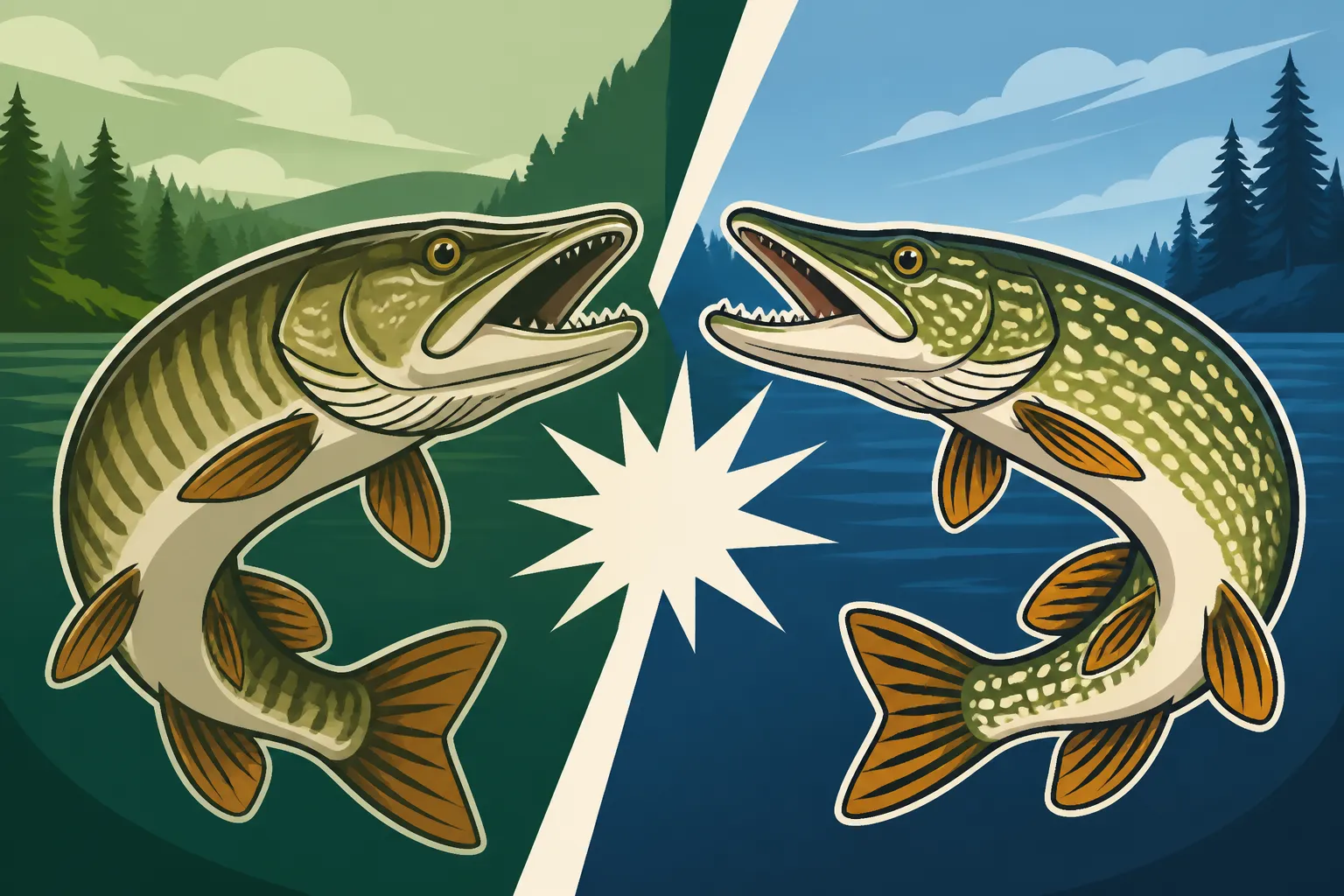
- Muskellunge: Generally, muskies have dark markings on a lighter background. These markings can appear as spots, blotches, or vertical bars. The pattern can be highly variable, leading to classifications like "spotted muskie" or "barred muskie." Sometimes, the markings are quite subtle, almost blending into the background, which can make identification difficult. Their overall color tends to be olive, brown, or greenish, often with silvery or yellowish flanks.
- Northern Pike: Northern pike, on the other hand, typically exhibit light markings on a darker background. These light markings are usually bean-shaped or irregular spots that stand out against their darker, often greenish-gray to olive background. Their belly is usually white or cream-colored. This "light on dark" pattern is a crucial differentiator.
When you're comparing them side-by-side, or even just looking at a photo, focusing on whether the pattern is dark on light or light on dark is your best first step. Remember, there can be exceptions and variations, but this is a strong general rule.
Fin and Tail Shape: Subtle Yet Significant Cues
Beyond the body patterns, pay close attention to the fins, especially the tail. These subtle differences are consistent and reliable.
- Muskellunge: The tail fin of a muskellunge is typically more deeply forked, almost like a "V" shape. The tips of the lobes are usually pointed. Their dorsal and anal fins are also relatively large and often positioned further back on the body.
- Northern Pike: Northern pike tend to have a less deeply forked, more rounded or squared-off tail fin. The tips of the lobes are generally more rounded compared to the muskie's sharper points. Their dorsal and anal fins, while still placed far back, might appear slightly smaller in proportion to the body than a muskie's.
It might seem like a small detail, but the shape of the caudal (tail) fin is a very dependable identifier. If you can get a good look at the tail, you'll often have your answer. You can research detailed descriptions of Muskellunge in New York to further appreciate these features.
The "Scaly Cheek" Rule and Other Head Markings
This is perhaps the most definitive and foolproof way to distinguish between a muskie and a northern pike, though it requires a close look at the fish's head, specifically its cheek and gill cover (operculum).
- Muskellunge: A key characteristic of muskies is that their cheeks and gill covers are scaled only on the upper half, with the lower half being bare or partially scaled. Imagine drawing a horizontal line across the middle of the cheek and gill cover – the area above the line is scaled, the area below is not (or only sparsely). Additionally, they often have more distinct sensory pores on the underside of their jaw, typically 6-9 pores on each side.
- Northern Pike: Northern pike have fully scaled cheeks. Their gill covers, however, are typically scaled only on the upper half, similar to the muskie. So, the key is the cheek: fully scaled for a pike. They generally have fewer sensory pores on the underside of their jaw, usually 5 or fewer on each side.
This "scaly cheek rule" is a golden nugget of identification. If you can safely and gently examine the fish's head, you'll have a definitive answer. Many seasoned anglers carry a small guide or have laminated diagrams with them for quick reference, and you can even find some excellent visual guides on Amazon to help you commit these details to memory.
Here's a quick comparison table of the key visual differences:
| Feature | Muskellunge | Northern Pike |
|---|---|---|
| Body Pattern | Dark spots/bars on a lighter background | Light spots/bean-shaped markings on a darker background |
| Tail Fin | More deeply forked, pointed lobes | Less deeply forked, more rounded/squared lobes |
| Cheeks | Scaled only on the upper half | Fully scaled |
| Gill Covers | Scaled only on the upper half (usually) | Scaled only on the upper half (usually) |
| Jaw Pores | Typically 6-9 large pores on each side | Typically 5 or fewer pores on each side |
| Overall Shape | Can appear more slender and elongated | Often appears a bit stockier |
Beyond the Look: Habitat, Behavior, and Fishing Approaches
While physical appearance is paramount for identification, understanding the typical habitat and behavior of muskellunge and northern pike can also offer clues and help you target one species over the other. They are both formidable predators, but their preferences can differ, influencing where and how you might encounter them. Knowledge of their habits, along with specific New York Freshwater Fishing Rules, can greatly enhance your fishing success and enjoyment.
Preferred Habitats and Water Conditions
Even though they share many waterways, muskellunge and northern pike often have slightly different habitat preferences.
- Muskellunge: Muskies tend to favor larger, clearer lakes and rivers, often with extensive open water but also strong structural elements like rock shoals, deep weed lines, points, and drop-offs. They are generally less tolerant of warm, stagnant water and prefer cooler, well-oxygenated environments. In New York, places like the St. Lawrence River and portions of the Finger Lakes are renowned muskie waters. They are often found cruising deeper edges, patiently waiting for a large meal. New York's St. Lawrence River and Thousand Islands is a prime example of muskie territory.
- Northern Pike: Pike are often more adaptable and can thrive in a wider range of habitats, including shallower, weedier bays, slower-moving rivers, and even smaller, warmer lakes. They are highly associated with dense aquatic vegetation where they can ambush prey. If you're fishing in a shallow, marshy area with lots of lily pads and submerged weeds, you're more likely to encounter a northern pike. They are quite prevalent across many of New York's water bodies, from smaller ponds to larger lakes.
This isn't a hard and fast rule, as both species can inhabit overlapping areas, but it can give you a hint based on the type of water you're fishing.
Their Dinner Plates: Hunting Styles and Diets
Both muskie and pike are apex predators, but their feeding habits and the size of their prey can vary.
- Muskellunge: True to their "fish of a thousand casts" reputation, muskies are often thought of as opportunistic but highly selective feeders, preferring larger prey items. They are primarily piscivores, meaning they eat other fish, and they're not shy about tackling impressive sizes. Their diet includes suckers, perch, trout, bass, and even ducks or muskrats if the opportunity arises. They are known for their explosive, often aggressive, ambush strikes. More on their diet can be found in What Muskellunge Eat.
- Northern Pike: Northern pike are also voracious predators, known for their aggressive strikes. Their diet is diverse and often includes a wider variety of prey than muskie, such as smaller fish (minnows, panfish, perch), frogs, insects, and even small mammals or ducklings. They are less particular about the size of their meal, often striking at anything that moves. You'll find many anglers use a broader range of lures for pike compared to the specialized tackle often associated with muskie. Learn more about their preferences in What Northern Pike Eat.
Understanding their hunting styles can help you select appropriate lures and retrieve techniques. If you're throwing massive, foot-long baits, you're likely aiming for a muskie!
Tailoring Your Attack: Lures and Techniques
Given their differences in size, aggression, and preferred habitat, fishing techniques for muskellunge and northern pike often diverge, even if there's some overlap.
- Muskellunge: Targeting muskies usually involves specialized, heavy-duty gear. Anglers use stout rods, heavy line, and often massive lures like bucktails, large crankbaits, jerkbaits, and soft plastics that can be 8-15 inches long. The retrieve is often fast and aggressive, trying to trigger a reaction strike. Muskie fishing is a patient game, often involving hours of casting. If you're getting serious about it, you might find some excellent muskie-specific tackle on Amazon. Discover more tactics in How to Fish for Muskellunge.
- Northern Pike: Pike can be caught on a wider array of tackle, from spin casting outfits to fly rods. They readily hit spoons, spinners, spinnerbaits, crankbaits, and even topwater lures. The lures used are generally smaller than muskie baits, though still substantial. Pike are often found in weed beds, so weedless presentations are frequently employed. While they can be challenging, they are generally more forgiving for anglers seeking a consistent bite. If you're targeting those weedy hideouts, check out How to Fish for Northern Pike in Weed Beds.
New York's Rules of Engagement: Protecting Pike and Muskie
Fishing in New York isn't just about casting a line; it's about understanding and respecting the rules put in place to protect our natural resources. For muskellunge and northern pike, these regulations are particularly important due to their predatory nature and varying population dynamics. Being a knowledgeable and compliant angler ensures these incredible fish continue to thrive in our waters for years to come.
Navigating New York's Specific Rules for Muskie and Pike
The New York State DEC is very clear about the regulations for each species. These rules can vary significantly depending on the body of water you're fishing, so always check the most current DEC fishing regulations guide before heading out.
- Muskellunge Regulations: Muskie typically have very conservative regulations. This often includes higher minimum size limits (sometimes 40-50 inches or more), very low daily creel limits (often just one fish per day), and specific open seasons. These strict rules are in place because muskellunge grow slowly, take longer to reach maturity, and are highly valued as a trophy species. Releasing a muskie unharmed is a common practice, even when legal to keep.
- Northern Pike Regulations: Northern pike usually have more liberal regulations compared to muskie. Their minimum size limits are generally lower, and daily creel limits are often higher. Pike are more abundant and reproduce more readily in many systems, allowing for more harvest opportunities. However, specific waters may still have unique rules, especially for larger specimens or in areas where pike populations need management. It's important to differentiate them quickly to ensure you're following the correct rules, especially for size and bag limits. For detailed information, consult the New York Fishing Season Dates and Catch Limits document.
Always remember that these regulations are subject to change, and specific waters may have "special regulations." It's your responsibility as an angler to know the rules for the exact location you plan to fish. Carrying a copy of the current regulations, either printed or on your phone, is always a good idea.
The Angler's Role in Conservation and Responsible Fishing
As anglers, we are the stewards of our fisheries. Our actions on the water directly impact the health and sustainability of fish populations. For species like muskie and pike, which hold such an important place in the food web and the angling community, responsible practices are paramount.
- Catch and Release: Many muskie anglers practice catch and release exclusively, recognizing the value of these fish as breeders and trophies. If you plan to release a muskie or pike, especially a larger one, be prepared. Have the right tools – long-nosed pliers or jaw spreaders, and bolt cutters for hooks if necessary – to unhook the fish quickly and safely while it's still in the water. Minimize handling time and avoid taking the fish out of the water for extended periods, particularly in warmer months when oxygen levels are lower. This helps ensure a successful release.
- Reporting Catches: Some anglers choose to participate in citizen science programs by reporting their muskie or pike catches (especially large ones) to the DEC or local fishing clubs. This data helps biologists monitor populations, track growth rates, and inform management decisions.
- Respecting the Resource: Whether you're targeting a New York's Biggest Muskellunge Ever Caught or just enjoying a day catching smaller pike, treat every fish with respect. Familiarize yourself with proper fish handling techniques, especially if you plan to keep a fish for the table. Knowing the differences between these two species is the first step in being a truly informed and responsible angler, contributing to the health of New York's incredible fisheries.
Disclaimer
This article is for general informational purposes only and does not constitute professional advice. Laws, prices and regulations vary by location and change over time. Consult a qualified professional for guidance on your specific situation.