Striped Bass Season Closure Dates on the Hudson
Ah, the mighty striped bass of the Hudson! If you've spent any time on the water chasing these magnificent fish, you know the thrill and the frustration. One minute you're celebrating a strong pull, the next you're wracking your brain trying to remember the exact season dates, slot limits, and, crucially, when you absolutely cannot fish for them. It’s a common headache for even the most seasoned anglers. This guide is here to clear up the confusion, specifically focusing on the essential striped bass season closure dates on the Hudson River, why they exist, and how you can stay on the right side of the law.
Understanding the Hudson River Striped Bass Fishery
The Hudson River is a lifeline for striped bass, serving as one of the most vital spawning grounds for the entire Atlantic Coast population. These aren't just any stripers; these are the fish that contribute significantly to the broader ecosystem, making their protection paramount.
The Unique Nature of Hudson River Stripers
What makes the Hudson River's striped bass so special? They're anadromous, which means they spend most of their adult lives in saltwater, like the Atlantic Ocean and Long Island Sound, but they return to freshwater to spawn. For many of these fish, that freshwater sanctuary is the Hudson River. Every spring, these powerful fish make an incredible migration, swimming upriver from coastal waters to lay their eggs. This makes them a truly unique and cherished resource for New York anglers. Imagine the journey—from the vastness of the ocean to the relatively narrow confines of the river, driven by an ancient instinct to reproduce. It's truly a marvel.
When they enter the river, especially during their spawning run, they're often more concentrated, making them a more accessible target for anglers. However, this accessibility also means they are more vulnerable, hence the stringent regulations designed to protect them during these critical periods. Understanding their life cycle is the first step to appreciating why the seasons are structured the way they are. If you're keen to learn more about these incredible creatures, our guide on Fish Species Found in the Hudson River delves deeper into their biology and behavior.
Seasonal Patterns and Spawning Migrations
The life cycle of a Hudson River striped bass dictates the fishing seasons. Typically, the adult fish begin their journey upstream as water temperatures rise in late spring, usually peaking in April and May. They'll swim hundreds of miles, sometimes as far north as the Troy Dam, to find suitable spawning grounds. After spawning, which often occurs from late April into June, they begin their slow descent back to the ocean, moving downstream as summer progresses. Younger, non-spawning fish might also move into the river to feed, but the big, mature fish are there for one primary purpose: to reproduce.
This intense spawning period is precisely when the fish are at their most susceptible. They are focused on procreation, often less cautious, and gathered in dense schools, making them easy targets. It’s during this crucial window that regulations become exceptionally important, shifting from simply managing catch to actively protecting the future of the species. Without careful management, overfishing during the spawn could have devastating long-term impacts on the entire Atlantic striped bass stock.
Current Striped Bass Season Closure Dates on the Hudson
Getting caught fishing for striped bass outside of the designated open season in the Hudson River is a serious offense. The New York State Department of Environmental Conservation (NYSDEC) sets these rules with the goal of protecting the striped bass population, particularly during their critical spawning period.
Official Open and Closed Periods
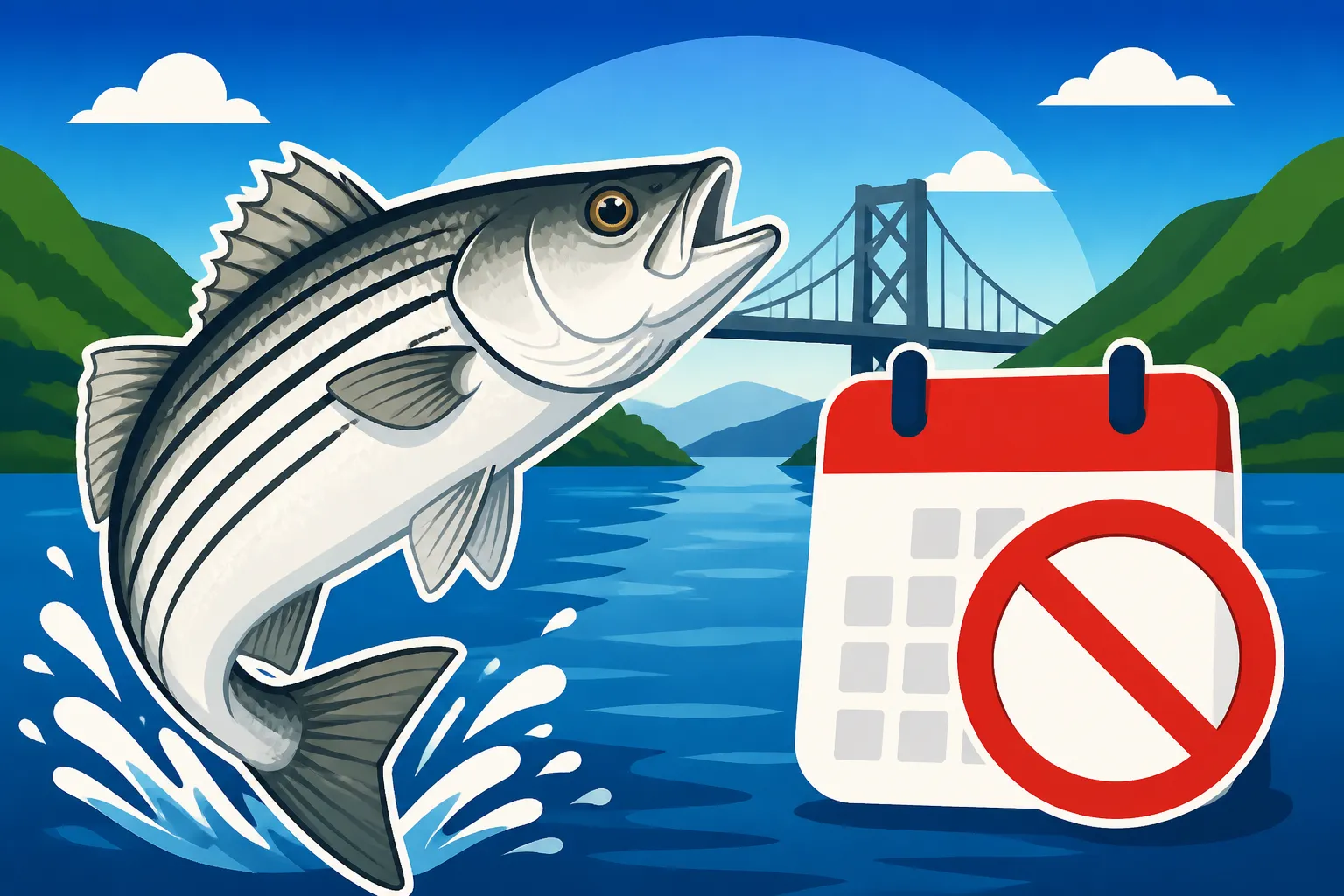
For the Hudson River and its tributaries south of the Troy Dam, the striped bass season is very specific. As of the most recent regulations, the open season for striped bass typically runs from May 16th through July 31st. This means that all other dates are considered closed season, effectively from August 1st through May 15th. During this closed period, it is illegal to target or possess striped bass in the Hudson River. This is a crucial detail that often trips up anglers who might be used to different regulations in marine waters or other states. Even if you're practicing catch-and-release, targeting striped bass during the closed season is against the rules.
It's vital to remember that these dates can, and sometimes do, change based on scientific assessments of the stock and conservation needs. Always double-check the current New York Fishing Regulations Explained directly from the NYSDEC website or their official guide before heading out. A quick search on Amazon for "New York Fishing Regulations Guide" can even help you find a physical copy to keep in your tackle box for easy reference.
Slot Limits and Daily Creel Limits During Open Season
When the season is open, it's not a free-for-all. There are strict rules on the size of fish you can keep, known as a slot limit, and how many you can take, called a daily creel limit. The current regulation for the Hudson River is a slot limit of 18 inches to less than 28 inches total length. This means any striped bass you keep must measure at least 18 inches but cannot be 28 inches or longer. Anything outside this range, whether too small or too large, must be immediately released unharmed.
Furthermore, the daily creel limit is one fish per angler. This means you can only keep one legal-sized striped bass per day. These limits are designed to protect both the younger, immature fish that haven't had a chance to spawn yet, and the larger, more prolific breeders that contribute the most to the gene pool. Understanding the New York Striped Bass Length Requirements and how slot limits function is key to ethical and legal fishing.
Here's a quick summary table for the Hudson River:
| Season Status | Dates | Size Limit (Total Length) | Daily Creel Limit |
|---|---|---|---|
| Open Season | May 16th – July 31st | 18 inches to < 28 inches | 1 fish |
| Closed Season | Aug 1st – May 15th | Zero possession allowed | 0 fish |
Note: These regulations are subject to change. Always consult the official NYSDEC website for the most current information.
Special Considerations for Catch-and-Release
Even during the open season, or if you happen to accidentally catch a striped bass outside the slot limit, proper catch-and-release techniques are absolutely paramount. The NYSDEC mandates specific gear requirements to minimize harm to these fish. For instance, when fishing for striped bass with bait, circle hooks are required in the Hudson River. This regulation, outlined in the Striped Bass Circle Hook Requirement, is a game-changer. Circle hooks are designed to hook fish in the corner of the mouth, significantly reducing gut-hooking and increasing the chances of survival for released fish.
Anglers should also be mindful of handling. Avoid using gaffs on fish you intend to release. Use a knotless, rubberized net to minimize scale and slime loss, and try to keep the fish in the water as much as possible. If you must bring it aboard for a quick measurement or photo, do so quickly and support its body horizontally to avoid internal damage. These best practices are not just suggestions; they are crucial for the long-term health of the fishery. Practicing careful handling, even for a fish you intend to release, shows respect for the resource and ensures the fish has the best chance to recover.
Why These Seasons and Closures Exist
It’s easy to get frustrated with fishing regulations, especially when they prevent you from targeting your favorite species. However, these rules aren't arbitrary; they are the result of extensive scientific research and collaborative conservation efforts designed to protect the future of the striped bass population.
Conservation Efforts and Stock Management
The Hudson River striped bass population doesn't exist in a vacuum. It's part of a much larger migratory stock that spans the entire Atlantic Coast. Because these fish travel so widely, their management requires coordination among multiple states, from Maine to North Carolina. This collaborative effort is largely led by the Atlantic States Marine Fisheries Commission (ASMFC), an interstate compact that develops fishery management plans for species like striped bass. The ASMFC assesses the health of the entire stock and recommends regulations that each state, including New York, then adopts and implements.
The closure dates and slot limits we see on the Hudson River are direct outcomes of these broader stock assessments. If the overall population is declining or showing signs of stress, regulations become more restrictive to allow the stock to rebuild. For instance, recent years have seen increased restrictions across the East Coast due to concerns about the health of the striped bass population. These decisions are often tough, impacting anglers and charter businesses, but they are made with the long-term sustainability of the fishery in mind. Protecting the Hudson River's spawning stock is a cornerstone of this coast-wide conservation strategy, ensuring that future generations of anglers will have the opportunity to chase these amazing fish.
Protecting Spawning Aggregations
The primary reason for the closed season on the Hudson River, specifically during the early spring and into May, is to protect the striped bass during their spawning period. As discussed earlier, mature striped bass migrate into the Hudson to reproduce. During this time, they gather in large, dense aggregations, making them incredibly vulnerable to overfishing. If anglers were allowed to freely target and keep fish during this critical window, it could significantly reduce the number of successful spawns and, consequently, the number of young fish entering the population.
Imagine thousands of fish, focused solely on reproducing, concentrated in specific areas of the river. Without a closed season, even catch-and-release fishing could cause undue stress and mortality, disrupting the spawning process. By closing the season, the NYSDEC provides a sanctuary for these fish, allowing them to complete their reproductive cycle with minimal human interference. This protection of spawning aggregations is perhaps the single most important factor in maintaining a healthy and robust striped bass population in the Hudson River and beyond. This is why you'll often hear about Why Is Hudson River Striped Bass Season Closed in Winter?, which is largely tied to this same conservation principle, extending protection before the spawn truly begins.
Navigating Regulations and Staying Compliant
It's a lot to keep track of, isn't it? Between changing dates, different slot limits for different areas, and specific gear requirements, it can feel like you need a law degree just to go fishing. But staying compliant is crucial, not just to avoid penalties but to contribute to the conservation efforts we all care about.
How to Stay Up-to-Date on Rule Changes
Regulations, especially for popular species like striped bass, are not set in stone. They can change annually, sometimes even mid-season, based on new scientific data or federal mandates. This fluid nature is probably the biggest headache for anglers. The absolute best way to stay current is to regularly check the official NYSDEC website. They have a dedicated section for fishing regulations, often updated with the latest information as soon as it's enacted. I also recommend signing up for their email newsletters or alerts; many state agencies offer these, and they'll send updates directly to your inbox.
Beyond the official website, many local tackle shops and bait stores are excellent resources. They often have printed copies of the current regulations, like the New York DEC Fishing Regulations Guide, and the staff are usually passionate anglers themselves who keep up with the latest rules. Don't be shy about asking questions! It’s far better to ask than to unknowingly break a rule. Before every trip, especially for species with complex regulations, a quick check of the NYSDEC site or a call to your local shop can save you a lot of grief. Remember, ignorance of the law is not an excuse.
Essential Gear for Compliant Striper Fishing
Beyond your rod, reel, and favorite lures, there are a few essential pieces of gear that will help you stay compliant and fish responsibly for striped bass on the Hudson. First and foremost, a reliable measuring device is a must. A simple tape measure will do, but there are also specialized fish rulers that are easy to use and clearly marked, which you can find easily on Amazon or at your local tackle shop. Ensure it's sturdy and long enough to handle a fish up to, say, 36 inches, just to be safe.
Secondly, if you're fishing with bait, you absolutely need circle hooks. They are required by law for striped bass fishing with bait in the Hudson River to reduce mortality from gut hooking. Make sure you have a good supply of appropriately sized circle hooks for the bait you're using. Finally, a knotless, rubberized landing net is a game-changer for catch-and-release. Unlike traditional nylon nets, rubberized nets are much gentler on a fish's delicate slime coat and fins, minimizing damage when you bring it aboard. They also prevent hooks from getting tangled, making the release process much smoother and quicker. Having these items on hand not only helps you follow the rules but also ensures you're doing your part to protect the fishery. If you're looking for Best Live Bait for New York's Hudson River Striped Bass, remember the circle hook requirement!
Disclaimer
Please note that fishing regulations, including season dates, size limits, and creel limits, are subject to change by the New York State Department of Environmental Conservation (NYSDEC). This article provides a general overview based on commonly known regulations. It is the angler's responsibility to consult the most current official NYSDEC fishing regulations guide or website before engaging in any fishing activity. Non-compliance with regulations can result in fines and penalties.