How to Fish for Largemouth Bass in Weeds
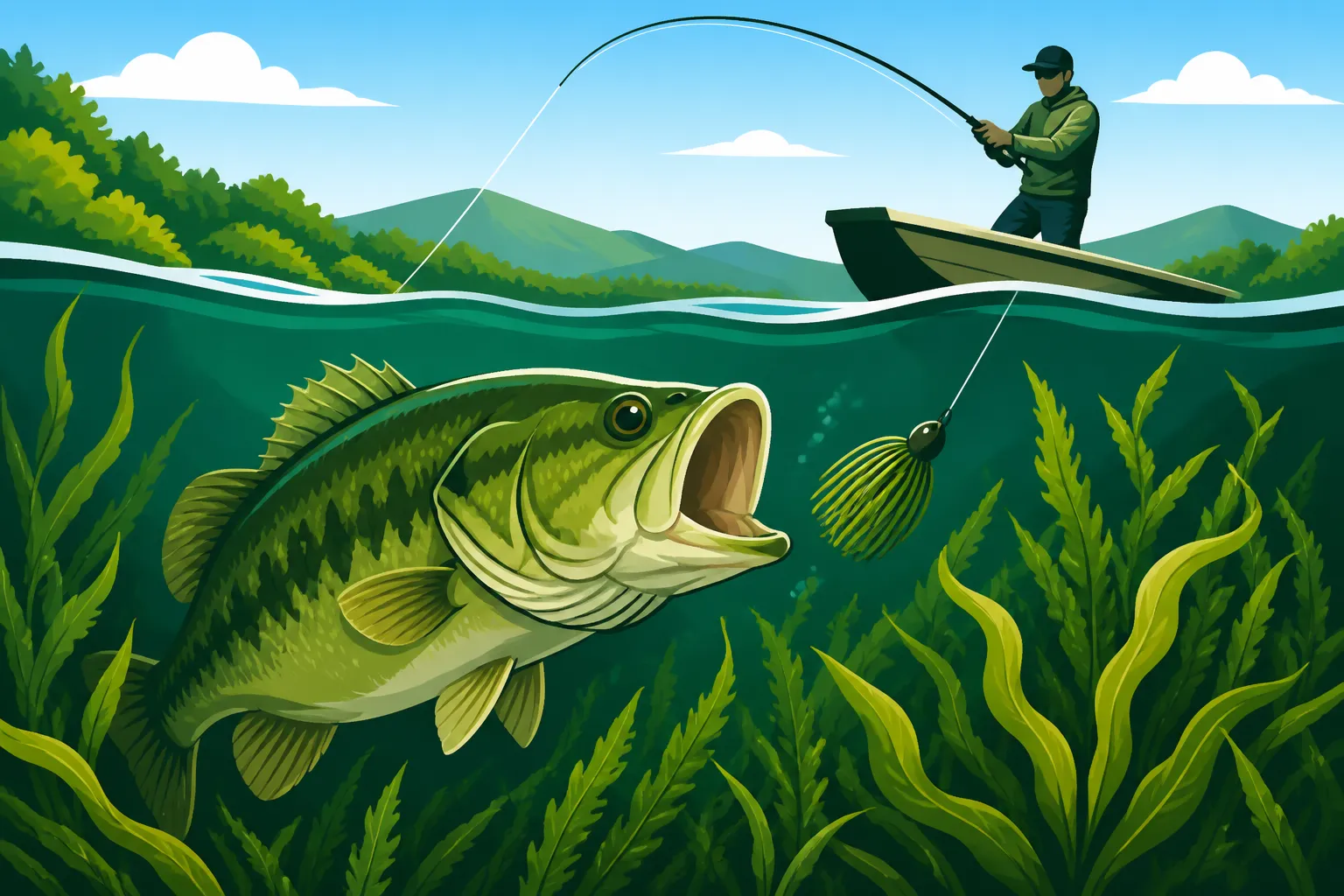
There are few things more frustrating in bass fishing than spotting what looks like prime largemouth habitat – a thick mat of lily pads or a sprawling bed of submerged hydrilla – only to cast your lure and immediately get tangled. It feels like you're fighting the weeds more than the fish, and it can quickly drain the fun right out of your day. But here's the secret: those frustrating weeds are exactly where the biggest, smartest largemouth bass are hiding, waiting to ambush their next meal. This guide will help you understand why bass love these dense havens and equip you with the right strategies, gear, and mindset to confidently pull trophy largemouth from the green stuff in New York waters.
Understanding Why Bass Love Weeds
It’s easy to look at a dense weed bed and think, "How could anything even swim in there?" But for a largemouth bass, it's less like a tangled mess and more like a five-star resort. Weeds offer a host of benefits that make them irresistible to these powerful predators, from safety to an all-you-can-eat buffet. If you can wrap your head around why bass are in there, you're already halfway to figuring out how to catch them.
Shelter and Ambush Points
Think about it from a bass's perspective. They're not at the top of the food chain in every situation, and larger predators like northern pike or even ospreys are always a threat. Dense vegetation provides an incredible amount of cover, a natural fortress where they can hide from danger. It's their safe space, especially for smaller or younger bass, but even the biggest, most cautious bucketmouths appreciate a good hiding spot. This cover is particularly crucial in clear water lakes common throughout New York, where visibility is high and bass need extra camouflage.
Beyond just safety, these weed beds are also prime ambush points. Largemouth bass are masters of surprise attacks. They'll position themselves just inside a thick mat, along a weed line, or in a small pocket within the vegetation, perfectly camouflaged. When an unsuspecting baitfish, frog, or even a smaller panfish swims by, the bass explodes from its hiding spot, making a quick, powerful strike. This predatory strategy is highly effective, and understanding it will influence your lure choices and presentation methods. The denser the cover, often the more secure a bass feels, and the more aggressive it might be when a meal presents itself right at its nose.
Forage and Oxygen Factories
Weeds aren't just for hiding; they're bustling ecosystems teeming with life, which means food, food, and more food for hungry bass. Insects, crawfish, frogs, and a variety of baitfish species all call weed beds home. This creates a natural pantry for largemouth, minimizing the energy they need to expend searching for a meal. Picture a bass tucked into a patch of lily pads, waiting for a dragonfly nymph to hatch or a small shiner to wander too close – it's a perfect hunting ground.
What's more, healthy green vegetation performs photosynthesis, which means it produces oxygen. In warmer months, especially during the dog days of summer, oxygen levels in open water can drop significantly. Weed beds, particularly those with actively growing, healthy plants, become oxygen-rich sanctuaries where bass can comfortably breathe and remain active, even when the rest of the lake feels sluggish. This is why you often find bass concentrated in these areas when the water temperature climbs, making them critical targets for anglers. Understanding these biological advantages helps you predict not just where bass might be, but where they need to be for survival and feeding.
Types of Weeds and How Bass Use Them
Not all weeds are created equal, and knowing the difference between a patch of hydrilla and a field of cattails can be the key to unlocking consistent bass catches. Each type of vegetation presents unique challenges and opportunities, and New York's diverse waterways offer a wide array of these aquatic plants. Adapting your approach to the specific type of cover you're fishing is crucial for success.
Submerged Vegetation (Hydrilla, Milfoil, Pondweed)
These are the unseen jungles beneath the surface, the dense, leafy forests that can rise from the bottom to just under the water's surface, or even top out in dense mats. Common examples in New York include hydrilla, Eurasian watermilfoil, and various species of pondweed. They can be incredibly frustrating to fish, as they grab lures and foul lines relentlessly. However, they are absolute magnets for largemouth bass.
Bass use submerged vegetation differently depending on its density and how it grows. In areas where the weeds grow to the surface and form a canopy, bass will often hold in the shaded pockets or tunnels within the mat, or right along the edges where the deep water meets the thick cover. These are prime ambush points. When the weeds are less dense, or form distinct "lanes" or "points" underwater, bass will cruise these pathways, hunting for baitfish that dart in and out of the cover. Fishing these areas requires lures that can either slide through the vegetation with minimal snagging or punch through thick mats to reach the fish below. Think about the clear waters of the Finger Lakes or the deeper sections of Oneida Lake where these submerged grasses can flourish, providing endless cover for bass.
Emergent Vegetation (Lily Pads, Reeds, Cattails)
Emergent vegetation includes plants that grow from the bottom but have leaves and stems that extend above the water's surface. Lily pads are iconic bass habitat, providing wide, shaded leaves on the surface and a tangled network of stems below. Reeds and cattails often grow in shallower, marshier areas, forming impenetrable walls along shorelines or in shallow flats. These types of weeds are often easier to read than their submerged counterparts because you can see their structure.
Bass absolutely adore lily pads for the shade they offer on bright, sunny days, and the myriad of insects and frogs that live on and around them. They'll often sit under the pads, waiting for a meal to drop in or swim by. Reeds and cattails, while often found in shallower water, provide fantastic cover and act as protective nurseries for baitfish, which in turn attracts bass. Fishing these areas often involves casting right into the thick stuff or along the outer edges. You might be targeting holes within a lily pad field, or pitching a lure right up against a reed line. These areas are very common in smaller, shallower lakes and ponds across New York, offering fantastic topwater action during the right conditions.
Floating Vegetation (Algae Mats, Duckweed)
Floating vegetation isn't rooted to the bottom but drifts on the surface, often forming thick, blanket-like mats. This can include dense blooms of algae (often called "moss" by anglers) or smaller plants like duckweed that spread rapidly across calm, nutrient-rich waters. While these can sometimes be a sign of poor water quality, they are undeniably effective at concentrating bass, especially during hot, sunny weather.
Bass utilize floating vegetation primarily for the deep shade it provides and the insulation from harsh sunlight. These mats also trap heat, creating a warmer micro-environment below the surface on cooler days, or a cool, shaded sanctuary on blazing hot ones. Just like with lily pads, these mats are also home to various insects and invertebrates. Fishing these can be incredibly challenging, as even weedless lures can get bogged down. However, the reward can be huge, as big bass will often position themselves directly underneath the thickest parts of these mats, feeling completely secure. Punching through these mats with heavy weights and strong lines is a go-to technique, as you’ll read more about later.
Essential Gear for Weed Fishing
Successfully extracting a big largemouth from a dense weed bed isn't just about technique; it's also about having the right tools for the job. Your everyday open-water finesse setup simply won't cut it when you're battling thick vegetation and powerful fish. You need gear that can handle the abuse, provide the necessary power, and allow your lures to penetrate and navigate the cover effectively. Investing in the proper rod, reel, and line will dramatically increase your hook-up ratio and, more importantly, your landing ratio when fishing the green stuff. You can find a lot of excellent options on platforms like Amazon, making it easy to assemble your ideal weed-fishing arsenal.
Rods, Reels, and Line
When it comes to weed fishing, power is paramount. You need a rod that can not only cast heavy, weed-penetrating lures but also has the backbone to rip a bass out of thick cover before it can wrap your line and escape. Look for a heavy or extra-heavy power baitcasting rod, typically 7 feet to 7 feet 6 inches in length, with a fast or extra-fast action. This combination provides the leverage and stiffness needed to drive hooks through thick bass jaws and strong weed stems. A good quality rod from brands like St. Croix or Ugly Stik, available on Amazon, can make all the difference.
Pair that powerful rod with a high-quality baitcasting reel with a robust drag system and a fast gear ratio (7.1:1 or higher is ideal). A fast retrieve allows you to quickly pick up slack and maintain control of the fish once it's hooked, preventing it from burying itself deeper into the weeds. Durability is key here, as you'll be putting a lot of strain on your reel.
Now, let's talk line. This is arguably the most critical component for weed fishing. Forget monofilament or fluorocarbon as your main line; you need braided line. Braided line has zero stretch, incredible abrasion resistance, and significantly higher breaking strength compared to other lines of the same diameter. For heavy punching or flipping, opt for 50-80 lb test braided line. For lighter weed applications, 30-50 lb test can work. The no-stretch property allows for instant hooksets, driving the hook home even when there's slack from a bass running. The strength helps you literally saw through weed stalks if a fish gets tangled, increasing your chances of landing it. Many anglers in New York fishing dense areas like the Mohawk River or certain parts of the Hudson River swear by stout braided line.
Lures and Baits Tailored for Weeds
The world of bass lures is vast, but for weed fishing, you need specific designs that are inherently weedless or can be rigged to be. The goal is to present an enticing meal without collecting a salad bowl of vegetation on every cast.
Topwater Frogs: These are arguably the most exciting weed lures. Hollow-bodied frogs are designed to glide over mats of lily pads, duckweed, or matted grass without snagging. When a bass blows up on a frog, it's an unforgettable experience. Brands like Spro and Livetarget make excellent weedless frogs that are widely available. When fishing for Largemouth Bass in New York, especially during the warmer months, a topwater frog retrieved over pads or emergent grass can be incredibly effective.
Jigs (Flipping and Punching Jigs): These are workhorses for getting into thick cover. Flipping jigs typically have a stout weedguard and a compact head designed to slip through sparse to medium cover. Punching jigs, often heavier (½ oz to 1 ½ oz), have a bullet-shaped head and a very robust weedguard, built specifically to "punch" through dense mats of floating vegetation. They are usually paired with a soft plastic trailer to add bulk and action.
Soft Plastics (Creature Baits, Worms, Toads): The versatility of soft plastics is unmatched.
- Creature baits and Texas-rigged worms (with a bullet weight and an EWG hook) are excellent for fishing through submerged weeds or pitching into pockets. The streamlined profile and weedless rigging make them relatively snag-free.
- Weightless Texas-rigged plastics like Senkos or soft jerkbaits can be deadly in less dense cover, slowly sinking into holes and enticing reluctant bass.
- Soft plastic toads are designed to be retrieved quickly across the surface, mimicking a frog, and are often rigged weedless on a wide gap hook, perfect for covering large areas of matted grass.
Spinnerbaits and Bladed Jigs: While not strictly weedless, specific designs can navigate weeds effectively. Spinnerbaits with single Colorado or willow leaf blades tend to deflect off cover better. Bladed jigs, like the ChatterBait, are fantastic for ripping through submerged grass. The vibration and flash can trigger aggressive reaction strikes as you pull them free from snags. Always opt for models with a strong hook, as bass tend to engulf these lures. You can easily stock up on these versatile lures through retailers like Amazon.
| Lure Type | Best Weed Type | Retrieve Style | Key Advantage |
|---|---|---|---|
| Hollow-Body Frog | Lily Pads, Duckweed, Algae Mats, Sparse Emergent | Walk-the-dog, Pop, Stop-and-Go | Totally weedless, high visual strike |
| Punching/Flipping Jig | Dense Mats, Heavy Cover, Reed Lines | Pitch/Flip, Drop, Subtle Jigging | Penetrates thickest cover, strong hooksets |
| Texas-Rigged Creature/Worm | Submerged Beds, Sparse Mats, Pockets | Cast/Pitch, Drag, Hop, Shake | Versatile, weedless, natural presentation |
| Bladed Jig (ChatterBait) | Submerged Grass, Weed Lines, Around Reeds | Rip, Steady Retrieve, Stop-and-Go | Vibration and flash, reaction strike, good in moderate weeds |
| Weedless Spoon | Any Weeds (especially sparse to medium dense) | Wobble & Drop, Steady Retrieve | Slides through cover, flashes, good for reactions |
Techniques for Successfully Fishing Weed Beds
Now that you're armed with the right gear, it's time to talk tactics. Fishing weeds isn't just about casting and reeling; it's a nuanced art that requires precision, patience, and sometimes, a bit of brute force. The goal is always to get your lure into the strike zone – that small pocket or edge where a bass is waiting – and then get that fish out as quickly as possible.
Flipping and Pitching
Flipping and pitching are essential techniques for presenting lures quietly and accurately into tight spaces within weed beds, such as small pockets, holes in the mat, or along the edges of emergent vegetation. These aren't long casts; they're short, controlled presentations designed for precision and stealth.
- Flipping: This technique is used for very close-range presentations, typically within 10-20 feet of the boat. You hold the lure in one hand, extend your rod, and use the momentum of the lure to swing it forward, feeding line out with your other hand. It's a quiet entry, minimizing splash, perfect for wary bass. The lure drops vertically into the target zone, allowing for a thorough presentation in a small area. Think about dropping a jig right next to a dock post obscured by lily pads, or into a tiny opening in a thick cattail stand. It’s a subtle approach that can pay huge dividends on heavily pressured waters.
- Pitching: Similar to flipping but for slightly longer distances, usually 20-40 feet. You use a pendulum-like motion, swinging the lure forward with a flick of the wrist and thumbing the spool to control the cast. The lure travels in a low arc, landing softly. Both techniques require practice to master the accuracy and quiet entry, but they are absolutely indispensable for reaching bass tucked deep into cover without spooking them. When fishing the dense shoreline weeds of places like Chautauqua Lake for trophy muskies, these precise presentations are key, and for bass, it’s no different.
Punching and Skipping
When the weeds are so thick they form an almost impenetrable canopy on the surface, traditional casting or even flipping won't get your lure to the bass below. This is where punching and skipping come into play, allowing you to effectively fish the densest cover.
- Punching: This technique is for those seemingly impossible mats of hydrilla, coontail, or floating algae. You take a heavy bullet weight (often 1 oz or more), rig it with a stout, weedless hook and a compact soft plastic creature bait, and literally punch it through the mat. The heavy weight tears through the vegetation, allowing your lure to fall into the dark, oxygen-rich pockets beneath where big bass are often holding. Once through, let the lure sit for a moment, then jiggle it gently. Often, the strike will come on the fall or shortly after it settles. The retrieve can be just as challenging, as you often have to rip the lure back through the mat. This is where your heavy braided line and powerful rod truly shine. On the larger bodies of water like Lake Champlain or the bays of Lake Ontario, where extensive mats can form, punching is a killer technique.
- Skipping: This technique is all about getting your lure into those extremely tight, low-hanging spots that are otherwise impossible to reach. Think under docks, overhanging trees, or deep under thick patches of emergent vegetation. You make a low, sidearm cast, causing the lure to literally skip across the surface of the water, much like skipping a stone. This allows it to penetrate far back into cover that conventional casts can't reach. It requires a specific casting motion and a reel with good casting control, but once mastered, it opens up a whole new world of untouched fishing spots. Imagine getting a jig or a weightless soft plastic under a low-slung willow tree where a big bass has never seen a lure!
Topwater and Subsurface Weedless Approaches
Not all weed fishing has to be about brute force. Sometimes, the most effective presentations are the ones that gracefully dance over the surface or glide through moderate cover.
- Topwater Weedless Approaches: This is where hollow-bodied frogs and soft plastic toads come into their own. For frogs, cast them onto lily pads, matted grass, or even sparse duckweed, and "walk the dog" or simply twitch them in place. The key is to keep them on top of the vegetation, calling bass up from below with their enticing action. When a bass strikes, resist the urge to set the hook immediately. Wait a second or two for the fish to fully engulf the lure before setting the hook hard, ensuring a solid connection. Soft plastic toads, rigged weedless on a wide gap hook, are designed for faster retrieves, creating a commotion on the surface as you buzz them over thinner mats or along weed edges. These are often best in low-light conditions or when bass are actively feeding near the surface. You can learn more about specific presentations in our guide on How to Fish a Topwater Lure for Bass.
- Subsurface Weedless Approaches: For fishing through submerged grass that isn't too dense, or along the edges of thicker mats, weedless jigs, Texas-rigged plastics, and bladed jigs are invaluable. A swim jig, which is essentially a jig with a paddle tail or grub trailer, can be steadily reeled through sparse to medium grass, deflecting off stalks and triggering reaction strikes. Similarly, a bladed jig like a ChatterBait can be ripped through submerged grass, the blade vibrating and thumping as it sheds weeds, drawing strikes from aggressive bass. The key here is to use a heavy enough line and a rod with enough power to rip the lure free from any snags you encounter, as well as to horse a fish out of its cover once hooked. For areas like Lake Champlain, known for its extensive submerged weed beds, these techniques are vital.
Reading the Weeds and Locating Bass
Successfully fishing weeds isn't just about having the right gear and techniques; it's also about understanding the nuances of the vegetation itself. Just like in a forest, not all areas are equally productive. The best anglers learn to "read" the weeds, identifying subtle clues that indicate where bass are most likely to be holding.
Identifying Productive Edges and Pockets
Bass, like most predators, are creatures of efficiency. They want to expend minimal energy for maximum reward. This means they often position themselves on structural elements within or adjacent to weed beds, rather than just randomly in the middle.
- Outside and Inside Edges: The perimeter of a weed bed is always a prime target. The outside edge, where the weeds meet open water, serves as a highway for baitfish and a perfect ambush point for bass. Bass will cruise this edge, darting in and out of cover to strike prey. The inside edge, where the weeds meet the shore or a shallower flat, can also be productive, especially in low-light conditions or when bass are pushing bait into tighter areas.
- Pockets and Holes: Within a large, uniform weed mat, any break in the vegetation – a small open pocket, a "hole," or a natural lane – becomes an instant focal point. These are transition areas, much like a point or a hump on the bottom, where bass will often stage. They offer bass easy access to open water for hunting while remaining protected by the surrounding cover. Flipping or pitching into these small openings can be incredibly effective. Sometimes, these holes are formed by underwater springs, debris, or even other anglers ripping through the weeds, and bass will quickly colonize them.
- Irregularities and Points: Look for any part of the weed bed that is different. A point where the weed line extends further out, a small bay or indentation in the weeds, or an area where the weeds change in density or type (e.g., lily pads transitioning to cattails) are all high-percentage spots. These irregularities concentrate baitfish and provide unique ambush points for bass. When you're driving through a boat lane or looking at maps of lakes like Oneida Lake, keep an eye out for these subtle shifts in the vegetation.
Seasonal Weed Patterns
The way bass use weeds isn't static; it changes throughout the year with water temperature and spawning cycles. Understanding these seasonal shifts can help you target the most productive areas at any given time.
- Spring: As water temperatures rise, bass move into shallower weed beds, especially emergent vegetation like lily pads and reeds, for spawning. These areas warm up faster and provide protection for nests. After the spawn, they'll often linger in these same areas, recovering and feeding aggressively. Fishing the shallow, sun-exposed weed lines with lighter, weedless presentations can be very effective. This period coincides with some of the best fishing according to the Best Time to Fish for Bass in New York.
- Summer: This is peak weed season. As temperatures soar, bass retreat to the densest, most oxygenated cover. They'll be deep in submerged mats, under thick floating vegetation, or tucked far back into shaded lily pad fields. Punching, flipping, and topwater frog fishing over heavy cover are prime techniques. Look for areas with deeper water access nearby, as bass will often move between the deep, cool sanctuary of the weeds and deeper points or humps.
- Fall: As water temperatures begin to drop, bass become highly active, feeding aggressively to build up fat reserves for winter. They might move out of the densest summer mats and congregate on healthier, still-green weed lines and deeper submerged weed beds that remain vibrant. Crankbaits and bladed jigs ripped through dying grass can be deadly as bass ambush baitfish moving out of the weeds. As the weeds start to decay, the bass may shift to the remaining green patches or transition to hard structure like rock piles or wood. You can find excellent insights into how bass respond during this period in our article on Best Fall Patterns for Largemouth Bass.
- Winter: In colder New York climates, weed fishing largely ceases as vegetation dies back and bass move to deeper, more stable water. However, in lakes where some healthy, deep weed growth persists, especially coontail or milfoil, bass can still be found holding tight to these remnants. This is typically a more subdued bite, requiring slower, more subtle presentations.
Troubleshooting Common Weed Fishing Challenges
Fishing weeds is rewarding, but let's be honest, it also comes with its fair share of headaches. Getting snagged, losing fish, or simply feeling overwhelmed by the dense cover are common frustrations. The good news is, with a little preparation and some specific tactics, you can mitigate many of these challenges and make your weed fishing experience much more enjoyable and productive.
Dealing with Snags and Fouls
The inevitable truth of weed fishing is that you will get snagged and your lures will foul with vegetation. It's part of the game. However, how you react to these situations can significantly impact your success and reduce your frustration.
- Prevention is Key: First, ensure your lures are properly rigged to be as weedless as possible. For soft plastics, use an EWG (Extra Wide Gap) hook, ensure the hook point is skin-hooked back into the plastic, and that the plastic is perfectly straight on the hook. For jigs, ensure the weed guard is robust and free of any bent or broken fibers.
- The Rip-and-Pause: When your weedless lure picks up a strand or two of grass, don't just reel it in. Instead, give your rod a sharp, upward rip. Often, this will tear the lure free from the obstruction. Immediately follow with a pause. Many times, a bass that was following the lure will strike as it falls after being ripped free, seeing it as a fleeing or injured baitfish. This "rip-and-pause" technique is highly effective for triggering reaction strikes in submerged grass.
- Rod Angles and Leverage: When reeling through vegetation, keep your rod tip high to help your lure ride over the top of cover. If you feel resistance, try to pull from different angles. With heavy braid, you can often "saw" through lighter vegetation. If a lure is deeply snagged, sometimes backing off and pulling from the opposite direction can free it. If all else fails, a lure retriever (which you can often find on Amazon) can be an invaluable tool for saving expensive baits.
Extracting Big Bass from Thick Cover
Hooking a bass in thick weeds is only half the battle; getting it out is the real challenge. Bass instinctively know how to use the cover to their advantage, often diving deep into the nearest mat or wrapping around submerged stems to throw the hook. This is where your heavy gear and quick thinking come into play.
- The Initial Hookset and Power Reel: The moment you feel a bite, set the hook with authority! A powerful, sweeping hookset with braided line is crucial for penetrating thick bass jaws and getting the fish moving. Immediately after setting the hook, engage your reel and crank as hard and fast as you can. The goal is to gain as much line as possible and pull the fish out of the densest cover before it has a chance to burrow in. This is often called "horsing" the fish, and it's not pretty, but it's effective.
- Maintain Pressure, Never Slack: Once the bass is hooked, keep constant, heavy pressure on it. Do not give it any slack line. If it dives into a mat, keep the rod bent and continue to pull steadily. Sometimes, the fish will eventually work its way out or you can slowly pull the entire mat towards you. If you give slack, the bass will shake its head, use the vegetation to leverage the hook out, or simply bury itself deeper.
- Boat Positioning: If possible, try to position your boat to approach the weed bed from an angle that gives you the best chance to pull a fish out into open water. After hooking a fish, use your trolling motor to quickly maneuver the boat towards the fish, shortening the distance and giving the bass less opportunity to dig into the weeds. This is where a quick, powerful trolling motor can be a game-changer.
- Landing the Fish: Once you get the bass to the boat, don't hesitate. A quick scoop with a sturdy net is ideal, especially for larger fish. If you're without a net, grab the fish by the lower jaw (lip-grip) firmly and lift it directly into the boat. Don't give it any last-second chances to throw the hook or break your line at the boat. Knowing how to land a fish quickly and safely is critical, especially when fishing for trophy-sized Largemouth Bass in New York, which are known for their powerful fights.
Disclaimer
Fishing regulations and licensing requirements can change. Always consult the latest New York State Department of Environmental Conservation (NYSDEC) regulations before heading out on the water. This guide is for informational purposes only and should not replace official sources.