How to Fish for Fluke on Long Island Sound
Anglers in New York often face a unique challenge when targeting fluke on Long Island Sound: these flatfish are masters of camouflage, hugging the bottom and waiting in ambush. Finding them and presenting your bait or lure effectively in the constantly shifting currents of the Sound can be incredibly frustrating. This comprehensive guide will equip you with the knowledge, gear, and techniques needed to consistently put fluke in your cooler, turning those frustrating trips into rewarding successes.
Understanding Fluke and Their Habitat in Long Island Sound
Before you even think about casting a line, it's vital to understand the fish you're after. Fluke, also widely known as summer flounder, are truly unique in their design and behavior, perfectly adapted to their environment. Their flat bodies and ability to change color make them nearly invisible against the sandy or muddy bottom, a trait that makes them formidable ambush predators.
Fluke Behavior and Characteristics
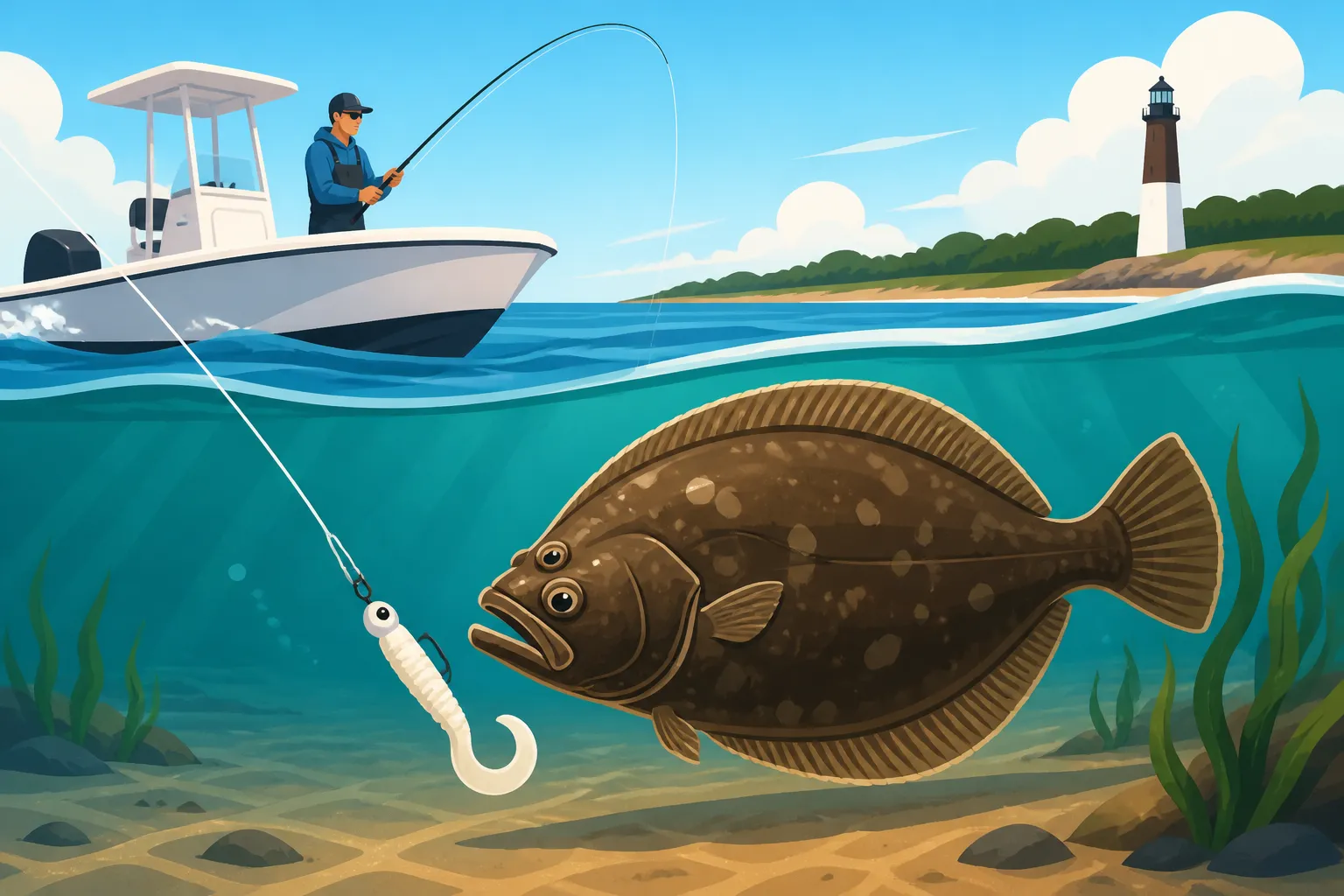
Fluke are masters of disguise, burying themselves in the substrate with only their eyes protruding, waiting for unsuspecting prey to swim by. They're opportunistic feeders, and their diet primarily consists of smaller fish like spearing, sand eels, and juvenile baitfish, as well as squid and crustaceans. If you're wondering "What a Fluke Fish Is" in more detail, they are characterized by having both eyes on one side of their head (typically the left side, though right-eyed fluke exist), a large mouth with sharp teeth, and a broad, flat body that allows them to blend seamlessly into the seafloor.
In Long Island Sound, fluke aren't static; they move with the seasons and water temperatures. In the cooler early spring, you'll often find them in deeper channels and offshore humps where water temperatures are more stable. As the water warms through summer, they push into shallower areas, flats, and even estuaries, often congregating around structures like mussel beds, rocky outcrops, or artificial reefs. When the water starts to cool again in the fall, they begin their migration back to deeper, warmer offshore waters. Knowing this migratory pattern is crucial for understanding where to focus your efforts throughout the year.
Key Long Island Sound Fluke Hotspots
Long Island Sound offers an incredible array of habitats for fluke. The key is to look for areas with current and structure, which provide both food and ambush points. Good starting points include:
- Channels and Rips: Areas where water flows rapidly, like The Race near Orient Point, Plum Gut, or the various channels around Fisher's Island, are prime fluke territory. These fast-moving currents bring food to the waiting fluke.
- Inlets and Estuaries: As the tide pushes in or out, inlets connecting the Sound to bays and estuaries become feeding grounds. Places like Shinnecock Inlet, Moriches Inlet, or even the mouths of major rivers that feed into the Sound can hold good numbers of fluke.
- Bottom Structure: Beyond just channels, look for subtle changes in the bottom contour. Humps, lumps, drop-offs, wrecks, and artificial reefs provide excellent ambush points. Your boat's fish finder will be your best friend here, helping you identify these key structures. Don't overlook the edges of mussel beds or even discarded debris on the bottom, as these too can concentrate baitfish and, consequently, fluke. Many anglers specifically seek out these varied bottom conditions to improve their chances of finding them, making the most of "Fluke in New York Waters".
- Shallow Flats: In mid-summer, when the Sound’s waters are at their warmest, fluke will often move onto shallower flats, especially those with eelgrass or scattered rock. These areas warm up quickly and are teeming with bait. Drifting these flats with lighter tackle can be incredibly productive.
Essential Gear for Fluke Fishing on Long Island Sound
Having the right gear isn't just about spending money; it's about being prepared for the conditions and ensuring you can effectively present your bait and fight these surprisingly strong flatfish. Long Island Sound's variable depths and currents demand versatility in your setup.
Rods, Reels, and Line
For fluke fishing, you'll want a setup that offers both sensitivity and backbone.
- Rods: A medium to medium-heavy action rod, typically between 6'6" and 7'6" in length, is ideal. This length provides good casting distance if you're shore fishing and excellent leverage from a boat. The tip should be sensitive enough to detect subtle bites, but the blank needs enough power to handle sinkers from 2 to 8 ounces (or more in strong currents) and to muscle a decent-sized fluke to the boat. Look for rods rated for 15-30 lb line. Brands like St. Croix or Penn offer excellent options that you can often find on Amazon.
- Reels: Both spinning and conventional reels have their place.
- Spinning Reels: A 4000-6000 series spinning reel is perfect for lighter setups, especially when drifting shallower water or casting bucktails. They're easy to use and great for beginners.
- Conventional Reels: For heavier weights, deeper water, or when you want more direct control and cranking power, a conventional reel (like a Penn Squall or a Shimano Tekota) is often preferred. These reels are fantastic for bottom-bouncing and maintaining contact with your rig.
- Line: Braided line is almost universally preferred for fluke fishing due to its zero-stretch properties, which provide incredible sensitivity to feel bites and maintain contact with the bottom. A 20-30 lb test braided line is a good starting point. You'll want to add a fluorocarbon leader of 15-25 lb test, approximately 3-6 feet long, connected to your braid with an Albright or FG knot. Fluorocarbon is nearly invisible underwater and more abrasion-resistant than braid, which is crucial around structure.
Terminal Tackle and Rigs
The right rig presentation is often the difference between a slow day and a banner day. Fluke are very particular about how their food is presented. Getting a feel for "How to Rig a Fluke Fishing Rod" properly is a game-changer.
- Hi-Lo Rig (Fluke Killer Rig): This is arguably the most popular and effective fluke rig. It typically consists of two dropper loops for hooks and a snap swivel at the bottom for a sinker. The top hook is often dressed with a teaser (like a Berkley Gulp! Swimming Mullet or a small skirt), while the bottom hook holds the main bait. This rig allows you to present two different baits at slightly different depths, increasing your chances.
- Sliding Sinker Rig (Fish-Finder Rig): A simpler rig that allows the fish to pick up the bait without feeling the weight of the sinker. A sinker slide is threaded onto your main line, followed by a bead, then tied to a barrel swivel. A 1-3 foot fluorocarbon leader with a single hook is then tied to the other end of the swivel. This is excellent for when fluke are finicky.
- Bucktail Jigs: These versatile lures are incredibly effective, especially when tipped with a strip of squid, a spearing, or a Gulp! bait. Weights can range from ½ oz in shallow, slow currents up to 4-6 oz (or more) in deeper, faster water. Common colors include white, chartreuse, pink, and glow. The jig provides action, and the natural bait provides scent and taste. When fishing with bucktails, the key is to keep them bouncing along the bottom, mimicking a fleeing baitfish.
Best Baits and Lures for Fluke
Fluke aren't overly picky, but certain baits and lures consistently outperform others.
- Natural Baits:
- Squid Strips: Fresh or frozen squid cut into 4-6 inch strips are a classic. The white color and tough texture make them highly visible and durable.
- Spearing (Silversides): These small baitfish are natural forage for fluke. They can be fished whole or in combination with squid.
- Killifish/Mummichogs: These hardy baitfish, often available at local bait shops, are fantastic when fished alive. Their frantic swimming action can be irresistible.
- Artificial Baits:
- Berkley Gulp!: The Gulp! series, particularly the Swimming Mullet, Grub, and Shrimp patterns, have revolutionized fluke fishing. Their scent dispersion is incredibly effective, and they come in a variety of sizes and colors. Many anglers use Gulp! as a primary bait, or as a trailer on bucktails. You can find a huge selection of these on Amazon.
- Bucktails: As mentioned, bucktail jigs are a lure and a presentation. Tipping them with natural bait or Gulp! increases their effectiveness exponentially.
- Soft Plastics: Various soft plastic swimbaits or grub tails can be effective when fished on jig heads, especially in clear water where a more realistic presentation is beneficial.
Mastering Techniques and Strategies for Catching Fluke
Catching fluke is rarely a static affair. These fish are ambush predators that rely on current to bring food to them. Your techniques need to reflect this, focusing on covering ground and presenting your bait in a natural, enticing way.
The Art of Drifting
Drifting is by far the most productive method for fluke fishing in Long Island Sound. It allows you to cover large areas of bottom, presenting your bait to numerous fish as you move.
- Understanding the Drift: Your drift speed and direction are dictated by a combination of current and wind. Ideally, you want a drift that's not too fast (where your bait lifts too high off the bottom) and not too slow (where you're not covering enough ground). A good drift speed for fluke fishing is often somewhere between 0.5 to 2 knots. To fine-tune this, consider consulting our guide on "Best Drift Speed for Fluke Fishing".
- Controlling Your Drift:
- Drift Socks/Sea Anchors: These are indispensable tools for slowing down your boat's drift when the wind or current is too strong. Deploying a drift sock off the bow can dramatically reduce your speed, keeping your bait in the strike zone longer.
- Engine Control: For experienced boaters, using your engine in reverse (if the wind is pushing you too fast) or forward (to slow a fast current-driven drift) can provide precise control.
- Weight Management: Adjusting the weight of your sinker is the most common way to keep your bait on the bottom. Start with a weight that allows you to feel the bottom every few seconds, then adjust heavier if you're not making contact, or lighter if you're snagging too often.
- Fan Casting and Spreading Out: If fishing with multiple people, have everyone cast in different directions as the boat drifts. This "fan casting" technique helps cover a wider swath of the bottom, increasing the chances of finding a hot zone. Make sure lines are staggered in terms of casting distance to prevent tangles.
Jigging and Bottom Bouncing
Once your boat is drifting, the presentation of your bait or lure becomes paramount.
- The Lift and Drop: Whether you're using a bucktail or a baited rig, the "lift and drop" technique is critical. As your sinker hits the bottom, lift your rod tip a foot or two, then gently lower it, letting the sinker tap the bottom again. This motion mimics a struggling baitfish or a natural piece of food being disturbed by the current. It also stirs up puffs of sand, which can attract the attention of nearby fluke.
- Maintaining Bottom Contact: This is the golden rule of fluke fishing. If you're not hitting the bottom, you're not catching fluke. Pay close attention to your line and rod tip. If you stop feeling the bottom, either increase your sinker weight or try to slow your drift. When the current is particularly strong, sometimes a heavier bucktail on a shorter leader is more effective than a traditional hi-lo rig, as it cuts through the water better.
- Sharp Hooksets: Fluke have surprisingly tough mouths. When you feel a bite, don't just gently lift. Execute a firm, quick hookset to ensure the hook penetrates their bony jaw. Sometimes, you'll feel several light taps before a solid pull – resist the urge to set the hook on the light taps and wait for that distinct heavy thud.
Reading the Water and Structure
A successful fluke angler isn't just mindlessly drifting; they're constantly observing and interpreting the water around them.
- Current Seams and Eddies: Look for areas where different currents meet, or where an eddy forms behind a piece of structure. These are often prime ambush points where fluke will lie in wait for food being swept by.
- Depth Changes: Your fish finder isn't just for finding fish; it's for finding habitat. Look for sudden drops, humps, or even subtle changes in depth from 20 feet to 25 feet. These transitions often hold concentrations of bait and, subsequently, fluke.
- Bottom Composition: Modern fish finders can often distinguish between soft mud, hard sand, or rocky bottom. Fluke prefer sandy or muddy areas, so focus your drifts over these types of bottoms. Rockier areas can hold fluke too, but come with a higher risk of snags. Paying attention to these subtle cues can help you find "Average Fluke Size on Long Island Sound" and bigger fish.
- Bait Presence: If you're marking schools of baitfish on your sonar, you're in the right area. Where there's bait, there are usually predators like fluke. Also keep an eye out for diving birds or surface activity, which often indicate bait schools.
Tides, Times, and Seasonal Considerations for Fluke
The Long Island Sound is a dynamic environment, and fluke fishing success is heavily influenced by the ebb and flow of its waters. Ignoring the tides and seasons is like trying to find a needle in a haystack blindfolded.
The Impact of Tides and Current
Tides are the lifeblood of fluke fishing. They drive the currents that bring food, activate baitfish, and position fluke for ambush.
- Moving Water is Key: Fluke are ambush predators, and they rely on moving water to bring their meals to them. Therefore, the periods of strong tidal current, both incoming and outgoing, are generally the most productive. These currents dislodge bait from the bottom and sweep it past waiting fluke.
- The Slack Tide Window: While moving water is great, the periods of "slack tide" (when the current momentarily pauses between changes) can also be productive. During slack tide, fluke might become more active, moving off their ambush points to hunt. This is a great time to switch to lighter bucktails or more active jigging techniques, as you won't need as much weight to stay on the bottom. It also gives you a window to target structure that might be too difficult to fish during peak current.
- Specific Tide Phases: Many seasoned anglers swear by either the beginning or end of an outgoing tide, or the peak of an incoming tide, depending on the specific location. Understanding the specific tidal flows in your chosen fishing spot on Long Island Sound will give you a significant advantage. For instance, in an inlet, an outgoing tide might flush bait out of the bay, while an incoming tide pushes bait into the bay. You can learn more about how to manage these dynamics by exploring resources on "Fluke vs Summer Flounder: Same Fish, Different Name".
Best Seasons and Times for Fluke
Fluke season in New York generally runs from May into the fall, but the peak varies. Knowing when to target them maximizes your efforts.
- Early Season (Late Spring/Early Summer): As water temperatures begin to rise in May and June, fluke migrate into Long Island Sound. During this time, you'll often find them in deeper channels and around offshore structure. Fish will typically be feeding aggressively after the winter lull.
- Mid-Season (Summer): July and August see fluke spread out more across the Sound, moving into shallower flats, bays, and around inshore structure as the water warms. This is when some of the biggest fluke are often caught, especially in cooler, deeper pockets during hot spells.
- Late Season (Fall): As fall approaches and water temperatures begin to drop in September and October, fluke start their migration back offshore. They often congregate in deeper channels and near major inlets as they move out of the Sound. This can be a fantastic time for trophy fluke, as they feed heavily in preparation for winter. If you're looking for broader seasonal insights, our guide on "New York Fishing Seasons Explained" can provide a more general overview.
- Best Time of Day: While fluke can be caught throughout the day, the periods around dawn and dusk, or when the tide is moving most strongly, are often the most productive. The low light conditions during dawn and dusk often make baitfish more active, and predators like fluke take advantage of this. For a deeper dive into daily timing, check out "Best Time of Day to Fish in New York".
Weather and Water Conditions
Weather isn't just about your comfort; it profoundly impacts fluke behavior and your ability to fish effectively.
- Water Temperature: This is perhaps the most critical factor. Fluke prefer water temperatures generally between 55 and 70 degrees Fahrenheit. If the water is too cold (early spring) or too hot (mid-summer in shallow, stagnant areas), fluke will move to find more comfortable conditions.
- Water Clarity: Fluke are sight feeders, so clearer water is often advantageous. However, slightly stained water can sometimes make them less wary. After a heavy rain, muddy runoff can shut down fishing in certain areas, pushing fluke to clearer zones.
- Wind: Wind can be a blessing or a curse. A light, consistent breeze can create a perfect drift. However, strong winds can make boat control difficult, speed up your drift excessively, and make it hard to feel subtle bites. Consider how to handle adverse conditions by reading up on "How to Fish Cold Water in New York", which often accompanies challenging weather.
- Barometric Pressure: While not as critical as tide or temperature, stable or rising barometric pressure often leads to more active fish, while rapidly falling pressure before a storm can make them sluggish.
| Fluke Rig Type | Best Use Case | Ideal Sinker Weight Range (oz) | Key Advantages |
|---|---|---|---|
| Hi-Lo Rig | General drifting, multiple bait presentations | 2-8 | Covers more water column, uses teasers and bait |
| Sliding Sinker Rig | Finicky fish, natural bait presentation, lighter current | 1-4 | Allows fish to run with bait, less resistance |
| Bucktail Jig | Active jigging, strong current, targeting structure | 1-6+ | Aggressive presentation, great scent dispersion (with Gulp!) |
| Simple Baited Hook | Still fishing, light tackle, calmer conditions | 1-3 | Simple, effective for bottom dwelling baitfish |
Disclaimer
Fishing regulations, seasons, and licensing requirements are subject to change by the New York State Department of Environmental Conservation (DEC). Always consult the most current official New York State fishing regulations guide before heading out on the water to ensure compliance. This guide is for informational purposes only and does not supersede official regulations.