Best Bucktail Colors for Muskellunge
There’s nothing quite like the thrill of chasing muskellunge in New York’s incredible waters, but let's be honest, these "fish of 10,000 casts" can be incredibly frustrating. One tiny detail can make all the difference between a follow and a strike, and often, that detail comes down to lure choice. This guide is all about honing in on one of the most debated aspects of muskie fishing: bucktail colors, helping you select the best hues to entice those elusive giants.
The Psychology of Muskellunge and Color Choices
Muskies are apex predators, and their world, much like ours, is governed by sight, sound, and vibration. When it comes to bucktails, color plays a huge role in how visible and enticing your offering appears. It’s not just about what we think looks good; it’s about what the muskie perceives in its specific environment. Understanding their sensory world, especially how they interpret color, is foundational to selecting the right bucktail.
Understanding Muskie Vision in Different Waters
Imagine trying to see a subtle pattern in a murky pond versus a crystal-clear Adirondack lake. That's precisely the challenge a muskie faces, and it directly impacts how they react to the colors on your bucktail. Water clarity is arguably the most critical factor influencing your color selection, as it dictates how light penetrates and how different hues are perceived.
In clear water, like some sections of Lake George or specific Finger Lakes, muskies have excellent visibility. Here, more natural and subdued colors often perform better because they closely mimic the local forage. Think about minnows or smaller game fish that blend into their surroundings. A bucktail that's too bright or unnatural in clear conditions can sometimes spook wary muskies, making them think something is amiss. On the other hand, a subtle combination of olive, black, or even a natural perch pattern can make your bucktail look like an easy meal. This is where the concept of "matching the hatch" really comes into play, as muskies here are more likely to inspect your lure closely.
Conversely, in stained or turbid waters, perhaps after a heavy rain on a river system or in certain areas of the St. Lawrence River, visibility drops significantly. Here, contrast and vibration become paramount. Colors that stand out and create a strong silhouette are far more effective. Bright fluorescent colors like chartreuse, hot orange, or even stark white provide that necessary contrast against the darker water, making your lure easier for the muskie to detect from a distance. These colors don't necessarily mimic a specific baitfish but rather trigger a reaction strike by being highly visible and aggravating. The muskie isn't scrutinizing details; it's reacting to a sudden, highly noticeable presence in its limited field of vision. When you're fishing these challenging conditions, a bucktail that pops visually can be the game-changer.
The Role of Light Conditions
Just as water clarity changes how colors are seen, so too does the ambient light, dictating your bucktail choices throughout the day and even into the night. Think about how a sunrise casts a golden glow on the water versus the deep shadows of dusk – these light changes directly influence color perception for both you and the muskie.
On bright, sunny days, especially over clear water, too much flash or overly vibrant colors can sometimes be overwhelming or look unnatural. In these conditions, many anglers find success with more muted, natural, or even metallic colors that offer a subtle glint, mimicking the scales of a baitfish reflecting sunlight. Silver blades or white and grey bucktails can be incredibly effective, providing just enough flash without being garish. Conversely, some anglers like to go completely opposite, using dark colors like black or deep purple, which create a strong silhouette against the bright surface light, making the lure easier to spot from below.
During low-light periods – dawn, dusk, or heavily overcast days – the rules shift. Here, light penetration is reduced, and colors that offer strong contrast and high visibility shine. This is where those fluorescent colors like chartreuse, bright orange, or even a stark white bucktail with a contrasting blade can really excel. The muskie isn't relying on detail but rather on a noticeable, silhouette-creating target. The same principle applies to night fishing, a popular technique for targeting muskies. At night, black bucktails are often kings because they create the most defined silhouette against the moonlight or any ambient light filtering into the water. The strong contrast makes the lure "disappear" and reappear in a way that can trigger aggressive strikes from these nocturnal hunters. It's about maximizing visibility when natural light is minimal, turning your bucktail into an irresistible, moving target.
Classic and Proven Bucktail Colors for New York Muskies
While muskie fishing can feel like a constant experiment, some bucktail colors have earned their stripes over generations of anglers. These aren't just random choices; they've consistently produced fish across various New York waters and conditions. Having a selection of these tried-and-true colors in your tackle box is essential for any serious muskie hunter.
Bright and Contrasting Colors
When the going gets tough, or you're looking to provoke a reaction, bright and contrasting bucktail colors are often your best friends. These aren't about subtlety; they're about making a statement and getting noticed in environments where a muskie might struggle to see anything else.
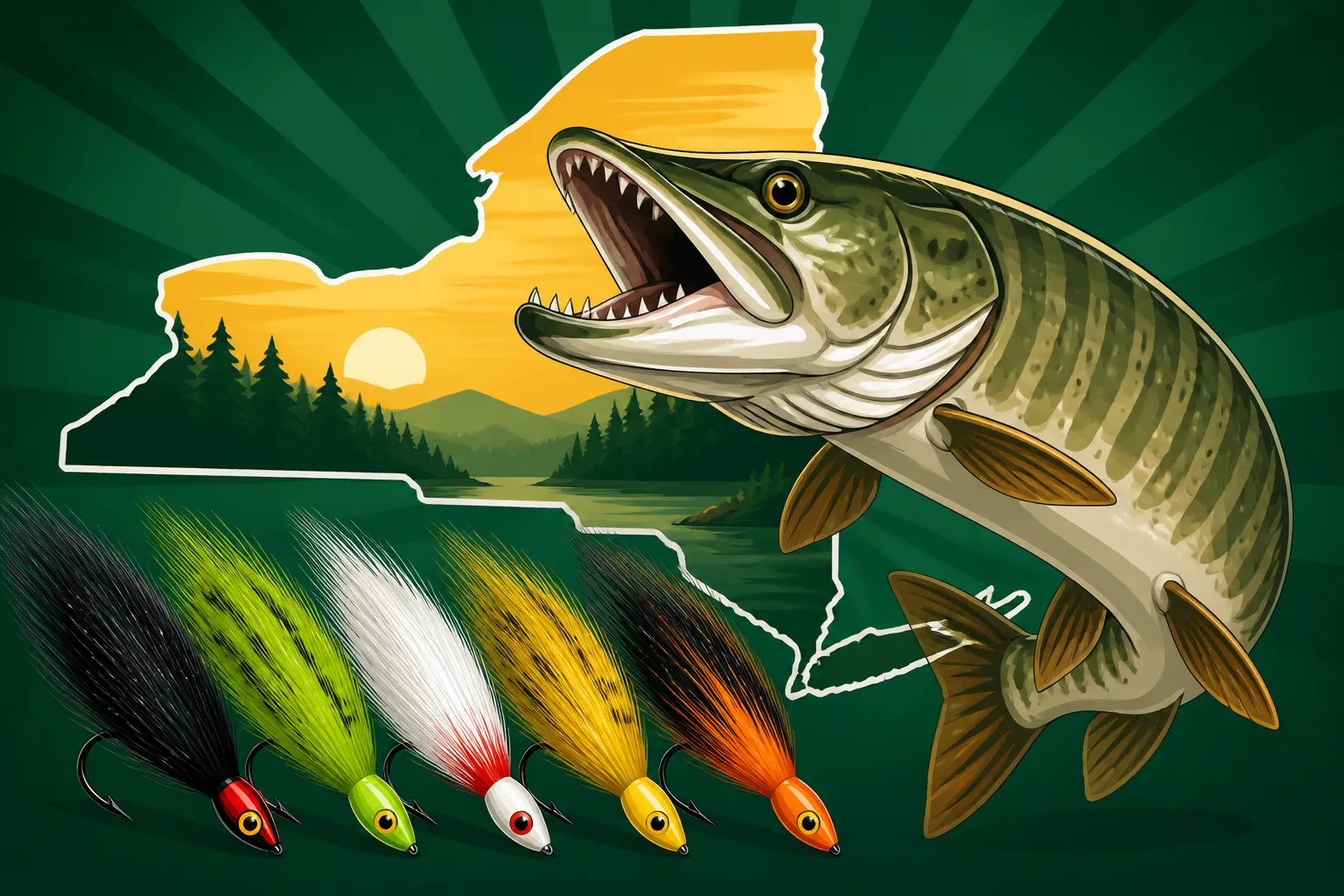
Consider conditions like stained or muddy water, which you might encounter on larger river systems or after significant rainfall. In these low-visibility scenarios, colors like chartreuse, hot orange, and stark white cut through the murk effectively. Chartreuse, with its vibrant yellow-green hue, reflects light exceptionally well and creates a strong visual presence. It’s a classic for a reason. Hot orange offers a similar high-visibility appeal, often triggering aggressive strikes from muskies that are simply reacting to a sudden, noticeable object invading their territory. White bucktails are also fantastic, especially in low light or stained conditions, as they provide maximum contrast against a dark background. They essentially become a glowing target. These bright colors don't necessarily mimic natural prey; instead, they act as an irritant or a highly visible anomaly that muskies can’t ignore. You'll find a wide selection of bucktails in these vibrant colors on retailers like Amazon, making it easy to stock up for challenging conditions. They are particularly effective when you're working a fast retrieve, trying to elicit a snap judgment strike.
Natural and Subtle Hues
While bright colors are great for grabbing attention, there are plenty of times when a more natural approach is warranted. Muskies are smart, and in clear water or under intense fishing pressure, they can become incredibly wary of anything that looks unnatural. This is where subtle hues come into their own, imitating the natural baitfish that muskies feed on every day.
Colors like black, brown, and green pumpkin are fantastic choices when you want your bucktail to blend in more, or to imitate common forage. Black, despite being dark, is incredibly versatile. In clear water on a sunny day, it creates a crisp, well-defined silhouette against the bright sky, making it surprisingly visible. At night, as mentioned earlier, it's often the most effective color for creating a strong, enticing silhouette. Brown and green pumpkin bucktails excel at mimicking bottom-dwelling baitfish, crayfish, or even smaller panfish, especially when fishing near weed beds or rocky structures. These colors tend to be less aggressive in their presentation, suggesting a slower, more deliberate retrieve that an interested muskie might follow and inspect. If you're fishing during bright daylight in very clear New York lakes, these subtle tones can often outperform flashier options by appearing more authentic to a cautious muskie. Always keep a few of these in your tackle box; they are critical for when muskies get finicky. You can easily find these natural bucktail options on online platforms like Amazon.
Metallic and Flashy Options
Sometimes, the perfect bucktail color isn't about natural mimicry or bright contrast, but about pure, unadulterated flash. Metallic and flashy options, typically incorporating silver or gold blades, are designed to catch and reflect light, creating a shimmering effect that often triggers a muskie's predatory instincts. These are fantastic for imitating the frantic movements of a fleeing baitfish.
Silver blades are arguably the most popular, mimicking the flash of common baitfish like shiners, alewives, or ciscoes. They perform exceptionally well on sunny days or in slightly stained water, where the sun can really hit the blade and send out those enticing reflections. A silver blade paired with a white, grey, or even a blue bucktail skirt can be deadly, providing both visual appeal and a strong vibration signature. Gold blades offer a different kind of flash, often preferred in slightly darker or tannic waters, where the warmer hue might be more visible or provide a different shimmer that muskies haven't seen as often. They can also be effective on overcast days when a more subtle, bronze-like flash is needed.
The key with metallic bucktails is to understand that the flash is a primary attractant. It simulates the natural glint of scales as a baitfish darts through the water, a classic trigger for any predator. When you’re fishing waters known for species like shad or smelt, these flashy bucktails can be incredibly effective. Consider them for those clear to moderately stained conditions, especially when muskies are actively feeding and responding to aggressive presentations.
Advanced Color Strategies and Local Considerations
Moving beyond the basic bright-for-dark, natural-for-clear philosophy, seasoned muskie anglers know that the true art lies in adaptation and observation. There's no magic bullet bucktail color, but by integrating advanced strategies with local knowledge, you can significantly increase your odds of success. Understanding what the fish are currently feeding on and how specific New York waterways influence muskie behavior are paramount.
Matching the Hatch (Forage Base Colors)
The phrase "matching the hatch" is commonly used in fly fishing, but it applies perfectly to muskie hunting as well. Muskies are opportunistic predators, and their diet primarily consists of the most abundant baitfish in their environment. If you can make your bucktail look like a common meal, you're halfway there.
This strategy requires a bit of detective work. Before you even tie on a bucktail, observe the water. Are there schools of suckers? Are perch abundant? Do you see shiners or alewives flickering near the surface? Each of these baitfish has distinct color patterns. For instance, if you're fishing a lake known for its healthy perch population, a bucktail with green, yellow, and orange accents, mimicking a perch, could be incredibly effective. If suckers are the primary forage, brown, black, and white patterns might be more appropriate. In systems like the St. Lawrence River, where cisco and larger minnows are common, bucktails with silver or grey bodies can be deadly. The trick is to not just imitate the color, but also the overall profile and movement that the muskie associates with its natural prey. Sometimes, this means combining natural colors in a tandem bucktail rig, creating a larger, more realistic presentation. The closer you can get your bucktail to resemble what the muskie is already eating, the higher the chances of a strike, especially from wary, experienced fish. This approach often works wonders in clear water where muskies have time to scrutinize your offering.
Experimentation and Pattern Recognition
If there's one universal truth in muskie fishing, it's that what worked yesterday might not work today. Conditions change, muskie moods shift, and sometimes, they just want something different. That's why constant experimentation and careful pattern recognition are absolutely crucial. Don't be afraid to deviate from the "tried and true" if it's not producing.
Start with a few go-to bucktail colors based on the conditions and local forage, but if you're not getting follows or strikes, change it up! This could mean switching from a bright chartreuse to a subtle black, or from a natural perch pattern to a flashy silver. Pay close attention to every detail: what color was working when you got that last follow? What was the water clarity, light condition, and time of day? Keeping a fishing log, even a simple one, can be incredibly valuable. Documenting successful bucktail colors, retrieve speeds, and environmental factors can help you identify patterns over time. You might discover that a specific color combination consistently performs well on overcast afternoons in a particular section of Lake Chautauqua, or that a flashy chrome bucktail is deadly during the fall bite on the St. Lawrence River when the sun is high. The key is to be adaptable, learn from every cast, and trust your instincts. There are countless variations of bucktails available on Amazon, encouraging easy experimentation.
Water Body Specifics in New York
New York is blessed with an incredibly diverse range of muskie waters, and what works in one lake or river might not be optimal in another. Understanding the unique characteristics of each water body is vital for selecting the best bucktail colors. The geology, water source, and primary forage base can all play a role.
For instance, the legendary waters of the St. Lawrence River and the Thousand Islands are known for clear to moderately stained conditions and a robust population of various baitfish, including ciscoes and shiners. Here, a mix of natural patterns, flashy silver, and classic black bucktails often performs exceptionally well. Many anglers targeting trophy muskies in this region will emphasize larger bucktails in natural hues to imitate the bigger forage available. If you're heading to the St. Lawrence, you might want to read up on our dedicated guide to Fishing New York's St. Lawrence River and Thousand Islands.
Conversely, smaller, perhaps shallower lakes like some in the central New York region might have more stained water due to vegetation and different forage, such as perch or panfish. In these environments, brighter colors like chartreuse or firetiger patterns could be more effective, especially during low light or when fishing heavy cover. For a deep dive into another famous muskie spot, checking out our article on Chautauqua Lake Muskellunge Fishing would be a great idea, as its unique characteristics often call for tailored approaches. Each muskie fishery in New York has its own personality, and the successful angler is the one who takes the time to learn its nuances.
Integrating Bucktail Colors with Other Factors
While color is a critical piece of the muskie puzzle, it's never the only piece. A bucktail's effectiveness is a symphony of factors, and the color you choose works in concert with its blades, retrieve, and overall presentation. Neglecting these other elements, even with the "perfect" color, can leave you with an empty net. Thinking holistically about your bucktail setup and how you work it is what separates consistent anglers from those who only get lucky.
Bucktail Blade Color and Skirt Combinations
A bucktail isn't just one color; it's a combination of the skirt (the hair or synthetic material) and the blades. How these two components interact visually can be just as important as the individual colors themselves. This is where you can create a truly customized presentation that stands out.
Consider the contrast between the blade and the skirt. A black skirt with a gold blade offers a very different look than a black skirt with a silver blade. Silver blades tend to be more universal, mimicking the flash of most baitfish and performing well in various light conditions, especially bright ones. Gold blades, on the other hand, often excel in stained or tannic waters, adding a warmer, deeper flash. Painted blades, like fluorescent orange or chartreuse, can amplify the visual impact even further, especially when paired with a contrasting skirt in murky conditions. Many anglers swear by tandem bucktails, which feature multiple blades and skirts, allowing for even more complex color combinations. For example, a common and effective setup is a black skirt with a nickel blade for its silhouette and flash, or a white skirt with a chartreuse blade for high visibility. Don't be afraid to mix and match. Sometimes, a subtle combination of natural skirt colors with a bright blade can trigger a strike from a muskie that's seen it all. The variety of bucktail components found on Amazon means endless possibilities for customization.
Speed, Retrieve, and Presentation
Even if you've got the ideal bucktail color tied on, it's only as good as how you present it to the muskie. The speed of your retrieve, the depth you're working, and the movements you impart to the lure are all crucial elements that dictate how a muskie perceives your offering. Color selection is only one part of the equation; execution is the other.
Muskies are often triggered by erratic movements and sudden changes in speed, mimicking an injured or fleeing baitfish. A common technique is to retrieve your bucktail at a moderate to fast pace, occasionally pausing or giving it a quick twitch to make it "dance." This often creates a "kill zone" where the muskie feels compelled to strike. The "figure-eight" maneuver at the side of the boat is a legendary muskie tactic and one you absolutely need to master. As your bucktail approaches the boat, instead of simply lifting it out of the water, quickly sweep your rod tip in a wide "figure-eight" pattern directly next to the boat. This keeps the lure in the water and moving, often provoking a follow-up strike from a muskie that has been trailing your lure but hesitated to commit. If you want to learn more about this vital technique, check out our guide on How to Figure-Eight a Muskie Boatside.
Different bucktail colors might be more effective with different retrieves. A bright, flashy bucktail might be best fished aggressively to maximize its reaction-strike potential, while a subtle, natural-colored bucktail might benefit from a slower, more deliberate retrieve, allowing the muskie more time to inspect it. Don't forget to vary your retrieve often until you find what the muskies are responding to on a given day. Sometimes, it’s not the color at all, but the way you’re making that color move through the water. For more information on techniques, our general guide on How to Fish for Muskellunge provides a great overview.
| Water Condition | Light Condition | Recommended Bucktail Colors | Rationale |
|---|---|---|---|
| Clear | Sunny | Natural (Black, Brown, Green Pumpkin) | Mimics natural forage, less likely to spook wary fish, subtle reflection. |
| Clear | Overcast | White, Silver, Natural | Good visibility, natural flash, strong silhouette. |
| Clear | Dawn/Dusk | Black, Dark Green, Purple | Strong silhouette against low light, effective for nocturnal feeders. |
| Stained/Murky | Sunny | Chartreuse, Hot Orange, White | High visibility, strong contrast to cut through murk. |
| Stained/Murky | Overcast | Chartreuse, Hot Orange, Firetiger | Maximum visibility in low light and poor clarity. |
| Stained/Murky | Dawn/Dusk | Black, Dark Blue, Dark Purple | Creates strong silhouette, visible even in very low light. |
Disclaimer
This article is for general informational purposes only and does not constitute professional advice. Laws, prices and regulations vary by location and change over time. Consult a qualified professional for guidance on your specific situation.