New York Recreational Marine Fishing Registry
Navigating the world of New York fishing regulations can feel like trying to untangle a particularly stubborn fishing line, especially when it comes to figuring out what you need for saltwater angling. Many folks get confused between a traditional fishing license and something called the New York Recreational Marine Fishing Registry. This guide is here to clear up that confusion, walk you through everything you need to know about the Marine Fishing Registry, and ensure your next salty adventure is completely above board.
What Exactly is the New York Recreational Marine Fishing Registry?
Let's cut right to the chase because this is where many anglers, both seasoned and new, often stumble. The New York Recreational Marine Fishing Registry isn't a traditional fishing license in the sense that you pay for it. Instead, it's a mandatory registration system for anyone 16 years of age and older who fishes in the marine and coastal district waters of New York State. Think of it as signing up for a free guest list rather than buying a ticket. Its primary purpose, as mandated by federal law, is to help collect vital information about saltwater angling effort and catch, which is crucial for managing our precious marine fisheries sustainably.
Understanding the "No Fee" Requirement
One of the biggest points of confusion, and frankly, relief for many, is that there is absolutely no fee associated with registering for the New York Recreational Marine Fishing Registry. You don't pay a dime to sign up, unlike the various costs associated with New York Fishing License Costs and Options. This "no fee" aspect often leads people to question if it's truly required, or if it's some kind of optional program. Let me assure you, it is 100% required by law for eligible anglers. The state covers the administrative costs, so you get to keep your hard-earned cash for tackle, bait, or maybe even that new fishing reel you've been eyeing on Amazon. It's a fantastic perk for anglers, but it doesn't diminish its legal standing.
The reason it's free, yet mandatory, stems from a federal mandate. The Magnuson-Stevens Fishery Conservation and Management Act, a cornerstone of federal fisheries law, originally required states to establish their own saltwater angler registries or opt into a federal one. New York decided to create its own program, partly to ensure state-specific data collection and to maintain control over its marine fisheries management. So, while it feels like a simple sign-up, it’s a critical component of a much larger scientific and management framework.
Distinguishing It from a Traditional Fishing License
It's absolutely essential to understand that the Marine Fishing Registry is not a substitute for a freshwater fishing license. These are two entirely separate requirements governed by different regulations and applying to different types of water. If you plan to fish for trout in a stream upstate, and then later hit the surf for striped bass on Long Island, you'll need both a valid freshwater license and to be registered with the Marine Fishing Registry. They are not interchangeable. This is a common pitfall that can lead to unexpected fines. I’ve seen many enthusiastic anglers, fresh from a successful day on Lake George, head to the coast only to find themselves in a bind because they didn't realize the marine waters had a separate, albeit free, requirement.
Think of it this way: your freshwater license gives you permission to actively fish in freshwater bodies, from the smallest Catskill creek to the largest Finger Lake. The Marine Fishing Registry, on the other hand, is specifically for documenting who is participating in saltwater recreational fishing activities. It tracks people, not necessarily their permission to harvest specific species (though that’s covered by other regulations, like New York Striped Bass Length Requirements). The federal registry, which New York is essentially fulfilling its obligation to by having its own state-run version, helps federal agencies track participation nationwide for conservation purposes.
The Federal Mandate Behind It
The history of the Marine Fishing Registry is rooted in the need for better data collection for marine fisheries. Prior to its implementation, federal fisheries managers struggled to get accurate, comprehensive data on recreational saltwater fishing effort and catch. This made it incredibly difficult to assess fish stocks and set appropriate harvest limits, leading to potential overfishing or overly restrictive regulations. To address this, the federal government required all coastal states to implement a recreational marine fishing registry or participate in the federal system. New York, like many states, opted to create its own system to better manage its unique coastal resources and avoid having its anglers fall under the federal registry which could have different rules or data collection methods.
This mandate is a big deal because it allows for more informed decision-making regarding marine species like striped bass, fluke, and bluefish, which migrate along the Atlantic coast. Without accurate recreational catch data, managing these migratory species is a shot in the dark. The information gathered helps agencies like the National Oceanic and Atmospheric Administration (NOAA) Fisheries, in conjunction with state agencies like the New York Department of Environmental Conservation (DEC), develop sustainable management plans. So, every time you register, you’re not just avoiding a fine; you're actively contributing to the science that keeps our marine fisheries healthy for generations to come.
Who Needs to Register and Why?
The rules around who needs to register for the New York Recreational Marine Fishing Registry can sometimes feel a little convoluted, but it’s actually quite straightforward once you break it down. Generally speaking, if you're 16 years of age or older and engaging in recreational marine fishing in New York's marine and coastal district waters, you need to register. This includes fishing from shore, a pier, a boat, a kayak, or even spearfishing. However, there are some important exceptions and nuances that are worth diving into.
Specific Angler Scenarios Requiring Registration
Let's look at some common situations where registration is definitely required:
- Shore Anglers: If you're casting lines from the beaches of Long Island, the rock jetties, or public fishing piers in New York City, you need to be registered. This applies whether you're targeting striped bass with chunks of bunker or fluke with squid strips.
- Boat Anglers (Private and Rental): Anyone fishing from a private boat or a rented vessel in New York's marine waters must be registered. This is true whether you're the boat owner, a passenger, or just borrowing a friend's craft for the day. This requirement stands regardless of where you put the boat in the water, as long as you're fishing in designated marine areas.
- Kayak and SUP Anglers: These increasingly popular fishing methods fall squarely under the registry's requirements. If you're paddling out into the bays or nearshore ocean to fish from your kayak or stand-up paddleboard, you need to be registered.
- Charter and Party Boat Passengers: This is a crucial one that often confuses people. Even if you're fishing on a licensed New York fishing charter or a head boat (party boat), you, as an individual angler, still need to be registered. While the boat itself has its own permits, your personal participation requires this individual registration. Don't assume the captain's license covers you personally. Always check with the charter company beforehand, but generally, they will remind you, or you can register quickly online before your trip. You can also explore specific charter information through our guide on Long Island Fishing Charters.
- Spearfishing and Hand-Gathering: If you're spearfishing or even just hand-gathering certain marine species (like crabs or mussels that require a fishing license or registration), you'll need to be registered. The act of "fishing" in the eyes of the law is broad.
The main takeaway here is: if you're actively trying to catch marine fish or shellfish in New York's marine district, and you're 16 or older, assume you need to register. It's free and easy, so there's really no good reason not to.
Exemptions You Might Not Know About
While the rule for registration is quite broad, there are some specific exemptions that apply, designed to prevent unnecessary bureaucratic hurdles:
- Children Under 16: Anglers under the age of 16 are not required to register. This is great news for families and encourages younger generations to get out and enjoy fishing. While they don't need the registry, it's still a perfect opportunity to teach them about New York Fishing Regulations Explained and ethical angling practices.
- Anglers with a Valid Marine Fishing License from a Reciprocal State: New York has reciprocity agreements with some neighboring states. If you hold a valid, non-expired recreational marine fishing license from a state that New York recognizes (and that state recognizes New York's registry in return), you may be exempt. However, these agreements can change, and the specifics vary by state and species, so it is always best practice to check the current DEC regulations or just get the free NY registration to be safe. It only takes a few minutes and ensures peace of mind. For example, some anglers fishing shared border waters might wonder, "Can a Vermont Angler Fish New York Border Waters Without a New York License?" and similar questions apply to marine environments.
- Anglers Who Hold a Valid New York Recreational Saltwater Fishing License: This is an important distinction from the registry. While the registry is free, New York also issues a for-fee recreational saltwater fishing license, which some anglers, particularly those from other states, may choose to purchase. If you hold one of these specific licenses, you are generally covered and do not need to additionally register for the free registry. This license serves the same data collection purpose but also acts as a formal permit. However, the vast majority of resident anglers opt for the free registry.
- Fishing on a State-Licensed Charter/Party Boat Where the Captain Pays an Enhanced Registry Fee: This is the only scenario where passengers on a charter or party boat might be exempt if the vessel's captain has paid a specific, enhanced registry fee that covers all passengers. This is less common, but some charter operators may choose this option. Again, always confirm with your specific charter captain beforehand. If they haven't paid this enhanced fee, you're responsible for your own free registration.
It's clear that the easiest way to avoid any potential hassle or confusion is simply to register. Since it's free and quick, there's little downside.
The Data-Driven Purpose of the Registry
Beyond simply being a rule, the Marine Fishing Registry serves a truly vital purpose: collecting comprehensive data on recreational fishing activity in New York's marine waters. The New York State Department of Environmental Conservation (DEC), working with federal partners, uses this data to:
- Assess Fish Stocks: Knowing how many people are fishing, and roughly how many fish they're catching (through angler surveys), helps biologists estimate the health and size of various fish populations. This is critical for species like striped bass, fluke, and black sea bass, which face intense fishing pressure.
- Set Catch Limits and Seasons: Accurate data allows regulators to set appropriate catch limits, size restrictions, and fishing seasons that balance conservation with recreational opportunities. Without this data, decisions would be arbitrary and less effective. Imagine trying to manage a restaurant without knowing how many customers you serve or how much food you're using – it's impossible to plan!
- Secure Federal Funding: States that demonstrate robust data collection programs through registries are often in a stronger position to receive federal grants and funding for fisheries research, habitat restoration, and public access projects. So, your registration actually helps bring money back to New York for initiatives that benefit all anglers.
- Understand Economic Impact: The registry helps quantify the number of recreational anglers, which in turn helps demonstrate the significant economic impact of marine fishing on local economies, from bait shops to tackle stores (like those you might find on Amazon), charter services, and coastal tourism. This information is vital when advocating for fishing-friendly policies and funding.
Essentially, every single registration contributes to a larger picture that helps protect our marine resources and ensures there will be fish to catch for generations to come. It’s a small, free step that has a massive positive ripple effect.
How to Get Registered: A Step-by-Step Guide
Getting registered for the New York Recreational Marine Fishing Registry is refreshingly simple and shouldn't take you more than a few minutes. Compared to the process for some other licenses, it's a breeze. The DEC has made it very accessible, primarily through their online licensing system.
The Online Registration Process
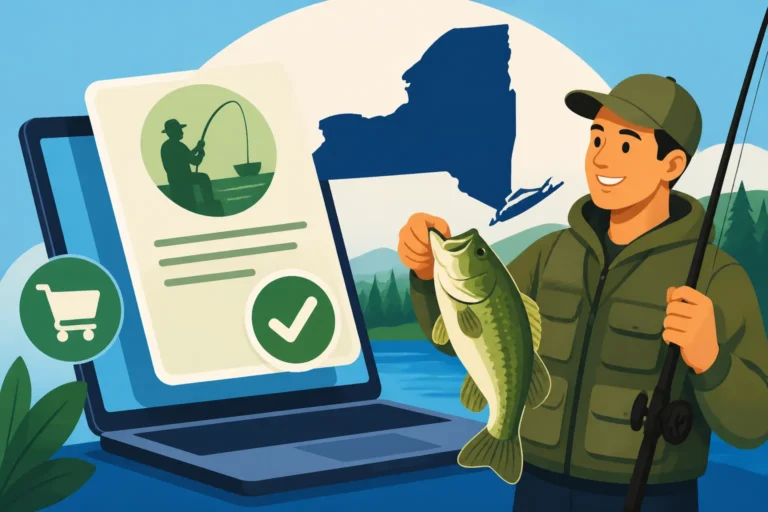
The quickest and easiest way to register is online through the New York State DEC's official Sportsman Licensing system. Here’s a general rundown of the steps you’ll follow:
- Visit the DEC's Online Licensing System: Head over to the official NYS DEC website. Look for the "Sportsman Education & Licenses" section. You'll want to navigate to the online licensing platform.
- Log In or Create an Account: If you've ever purchased a freshwater fishing license, hunting license, or enrolled in a hunter education course in New York, you likely already have an account. You'll need your DEC customer ID and date of birth to log in. If you're a first-time user, you'll need to create a new profile. This usually involves providing your personal details like name, address, date of birth, and contact information. They might ask for your driver's license number as well for verification.
- Select "Recreational Marine Fishing Registry": Once logged in, look for the option to purchase or register for licenses. You should find a clear option for the "Recreational Marine Fishing Registry." It's usually listed alongside the various freshwater fishing and hunting licenses.
- Confirm Information and Add to Cart: The system will display your personal information. Double-check that everything is accurate. You'll then add the registry to your "cart." Don't worry, even though it's in a cart, it will show a $0.00 fee.
- Complete the "Purchase" (It's Free!): Proceed through the checkout process. Since it's free, you won't need to enter any payment information. You'll typically confirm your order, and then you're all set.
- Print or Save Your Registration: After completion, you'll be given the option to print your Recreational Marine Fishing Registry. It's crucial to either print a physical copy to carry with you or save a digital copy to your phone. We'll talk more about carrying proof shortly, but having it readily accessible is key.
That's it! In a few clicks, you're legally registered and ready to hit the marine waters. The whole process is designed to be intuitive and quick, so you can get back to planning your next fishing trip.
Alternative Registration Methods
While online registration is by far the most convenient, the DEC understands that not everyone has easy internet access or prefers to do things in person. Therefore, they offer a couple of alternative methods:
- In-Person at a License Issuing Agent: You can register in person at any DEC license issuing agent. These include many town and county clerk offices, sporting goods stores, and some bait and tackle shops throughout New York State. Places like Dick's Sporting Goods or local bait shops often serve as issuing agents. Just walk in, tell them you want to sign up for the free Marine Fishing Registry, and they'll assist you. You'll need to provide your personal identification. This is a great option if you're already at a tackle shop picking up some new jigs or bait. You can even pick up a physical copy of the New York Fishing Regulations Explained pamphlet at the same time.
- Via Phone: In some cases, you might be able to register over the phone by calling the DEC's license sales unit. It's always a good idea to check the most current DEC guidelines for their phone registration availability, as service hours and options can sometimes vary. Have your personal information, including your DEC customer ID if you have one, ready when you call.
Regardless of the method you choose, the outcome is the same: you receive an official document confirming your registration. Just remember to keep that document accessible when you're fishing.
What Information You'll Need Ready
To ensure a smooth registration process, especially if you're doing it online for the first time, have the following information handy:
- Personal Identification: Your full legal name, date of birth, and current mailing address.
- Contact Information: A valid phone number and email address (for online registration, an email is essential for receiving confirmation and a digital copy).
- New York State Driver's License or Non-Driver ID (Optional but Recommended): While not always strictly required for the free registry, having this ready can help in identity verification, especially if you're a new user setting up an account for the first time.
- DEC Customer ID (if applicable): If you've ever had any New York State fishing or hunting license before, you'll have a unique DEC customer ID. This significantly speeds up the process, as your existing profile can be quickly accessed. If you don't have it, don't worry, the system can usually help you find it or create a new one.
Having these details ready prevents you from having to search for them mid-registration, making the process truly takes only a couple of minutes. Once you complete the steps, you'll be able to download and print your official registration document. Don't forget, you can quickly learn How to Sign Up for the Marine Fishing Registry through our dedicated guide.
Common Questions and Troubleshooting the Registry
Even a simple, free process like the Marine Fishing Registry can raise a few questions. It's always better to be fully informed than to face an unexpected situation out on the water. Let’s address some of the most frequently asked questions and potential troubleshooting scenarios.
Keeping Your Registration Current
Unlike annual freshwater fishing licenses that typically expire on a specific date (usually December 31st), the New York Recreational Marine Fishing Registry often has its own unique expiration schedule. Generally, it's valid for a calendar year, expiring on December 31st, regardless of when you registered during that year. This means if you register in August, it will still expire on December 31st of the same year.
- Renewal Reminders: The DEC usually sends out email reminders when your registry is nearing expiration. This is why providing a current email address during registration is so important. Make sure to check your spam folder, just in case!
- Easy Renewal: Renewing is just as simple as the initial registration. You'll go back to the online licensing system, log in, and select the option to renew your Marine Fishing Registry. Again, it’s a free process, so no payment required. It’s always best to renew it promptly at the start of the new year, or whenever you plan to do your first saltwater fishing trip of the season. Don’t wait until you’re already on the boat! We have a detailed post explaining Does the Marine Registry Expire Every Year? that can provide even more insights.
It's a quick, annual task that ensures you stay compliant and continues to contribute to vital fisheries data. Just set a reminder in your phone or calendar for January 1st to renew, and you'll be golden.
Proof of Registration: Digital vs. Physical
This is a very common question, especially in our digital age. What counts as acceptable proof that you're registered?
- Digital Copy on Your Phone: Yes, you absolutely can show a digital copy of your registration on your smartphone or other mobile device. The New York DEC officially accepts this as valid proof. So, if you've saved the PDF to your phone, taken a screenshot, or accessed it through a DEC app (if one is available), you're good to go. This is incredibly convenient and often preferred by anglers who don't want to carry extra paper. Just make sure your phone is charged! Losing access to your phone or battery dying could put you in a tough spot. Our article on Can I Show a Digital Fishing License on My Phone? delves deeper into this.
- Physical Printout: A printed copy of your registration is also perfectly acceptable. Many anglers prefer this as a backup, especially if they are concerned about phone battery life or signal issues in remote areas. A laminated copy or one stored in a waterproof bag in your tackle box is a smart move.
- Where to Keep It: Regardless of whether it's digital or physical, your proof of registration must be immediately available for inspection by a New York State Environmental Conservation Officer (ECO). Don't have it buried deep in a backpack or at home. Keep it easily accessible with your other fishing gear.
The key is "readily available." An ECO needs to be able to verify your registration quickly and efficiently. Having it on your phone or in your wallet makes that possible.
Navigating Non-Resident and Border Water Situations
If you're an out-of-state angler visiting New York, or if you fish in waters that border other states, the rules can sometimes get a little fuzzy.
- Non-Residents: If you are a non-resident of New York State and you plan to recreationally fish in New York's marine and coastal district waters, you must register for the New York Recreational Marine Fishing Registry. The "no fee" aspect applies to non-residents as well. So, whether you're coming from New Jersey, Connecticut, or even further afield, this free registration is required. You can check out our broader guide for Fishing License Requirements for Out-of-State Visitors to New York.
- Border Waters: This is where it gets tricky, especially with states like Connecticut or New Jersey that share marine boundaries. New York does have some reciprocity agreements. If you hold a valid marine fishing license (not just a free registry) from a reciprocal state, you might be covered when fishing in certain shared waters. However, it's absolutely crucial to verify the specific, current reciprocity agreements with both states' environmental agencies. These agreements can be complex and are subject to change. For example, specific bodies of water like Long Island Sound might have particular reciprocal rules. To be completely safe and avoid any potential fines, it is highly recommended that non-residents fishing New York's marine waters (even border waters) obtain the free New York Marine Fishing Registry. It costs nothing and removes all doubt. The penalty for Fishing Without a License in New York: What Happens can be steep, even for the free registry.
When in doubt, always err on the side of caution and get the New York Recreational Marine Fishing Registry. It's free, it's quick, and it ensures your fishing trip won't be interrupted by an avoidable legal issue. Remember, ignoring these requirements can lead to serious fines, so it's best to be proactive.
Benefits and Importance of the Marine Fishing Registry
At first glance, the New York Recreational Marine Fishing Registry might seem like just another piece of paperwork, a bureaucratic hurdle. But if you look deeper, you'll see that it offers significant benefits, not just for anglers but for the long-term health of our marine ecosystems. It's a testament to the idea that small, collective actions can lead to large, positive impacts.
Supporting Marine Conservation Efforts
The most significant benefit of the registry, though perhaps the least visible to the average angler, is its profound impact on marine conservation. Every single registration contributes directly to the data pool that conservationists and fisheries managers use to make informed decisions.
- Accurate Data for Stock Assessment: Think about it: without knowing how many people are fishing in New York's marine waters, and without tracking their general activity, how could anyone accurately assess the health of fish populations? The registry, combined with angler surveys (like the Marine Recreational Information Program, MRIP), provides crucial data on fishing effort. This effort data, when paired with catch data, allows scientists to understand if fish stocks are healthy, overfished, or recovering. This is particularly important for species that migrate along the coast, like striped bass and fluke. Knowing how many anglers are targeting these species helps allocate fishing quotas and adjust regulations.
- Justification for Habitat Protection: The more anglers registered, the more visible the recreational fishing community becomes. This visibility helps conservation groups and the DEC advocate for the protection and restoration of critical marine habitats, such as oyster beds, salt marshes, and seagrass meadows, which serve as nurseries and feeding grounds for countless species. When policymakers see a large, engaged group of registered anglers, they're more likely to support initiatives that benefit those anglers and the environment they cherish.
- Sustainable Fishery Management: Ultimately, the registry is a tool for sustainable management. It helps ensure that fishing opportunities exist for current and future generations. Without this foundational data, management decisions would be based on guesswork, leading to potential mismanagement, depleted stocks, and ultimately, fewer fish for everyone. It's a proactive step to keep our oceans teeming with life, much like how proper planning ensures freshwater rules, such as New York Freshwater Fishing Rules, protect inland fisheries.
So, while it's a "free" registration, its value to the health of our marine environment is truly priceless.
Ensuring Your Fishing Trips Remain Penalty-Free
Let's be realistic: nobody wants their relaxing day of fishing interrupted by an Environmental Conservation Officer (ECO) and a potential fine. The most immediate and tangible benefit for individual anglers is simply staying on the right side of the law.
- Avoiding Fines and Penalties: Fishing without being properly registered for the Marine Fishing Registry, if required, can lead to fines and legal consequences. While the exact penalty can vary, it's generally not something you want to deal with. These fines can quickly add up, easily costing you more than the price of a fancy lure you might buy from Amazon. Getting caught without it can turn a perfect day into a very expensive headache.
- Peace of Mind: Knowing you've done everything correctly provides invaluable peace of mind. You can focus on the fishing, the scenery, and the company, rather than worrying if an ECO will pull up and ask for your papers. It's a small administrative task that ensures a stress-free experience on the water.
- Supporting Law Enforcement: By being registered, you make an ECO's job easier. They can quickly verify your compliance and spend more time addressing serious violations like poaching or pollution, which ultimately benefits the entire fishing community. They're not just there to issue tickets; they're there to protect our natural resources, and your compliance helps them do that more effectively.
It's a small investment of your time to protect your wallet and your enjoyment of the sport.
Accessing Valuable Fisheries Information
Being part of the registered angling community also subtly connects you to a wealth of information and resources provided by the DEC.
- Direct Communication: The DEC often uses its registry database to send out important updates regarding regulations, season changes, or critical fisheries alerts. This ensures you're always in the loop about what's happening in New York's marine waters. You might receive emails about upcoming free fishing days or changes to specific species limits.
- Educational Opportunities: Sometimes, the DEC promotes educational events, workshops, or public forums related to marine fishing and conservation directly to registered anglers. This is a fantastic way to deepen your knowledge, learn new techniques, or even contribute to public discussions about fisheries management.
- Contribution to Research: The data collected through the registry forms the backbone of research initiatives aimed at understanding fish behavior, migration patterns, and ecosystem health. While you might not directly participate in a study, your registration contributes to the existence of these studies, which ultimately lead to better fishing and healthier waters. For example, if you wonder, "Do I Need Both a Freshwater License and a Marine Registry?" this platform is where the DEC communicates such important distinctions.
The New York Recreational Marine Fishing Registry is far more than just a formality; it’s a critical tool for ensuring the future of marine fishing in New York. It's free, easy, and essential for every marine angler.
New York Recreational Marine Fishing Registry vs. Freshwater Fishing License
To help clarify the differences between the Marine Fishing Registry and a traditional Freshwater Fishing License, here's a quick comparison. This table highlights the key distinctions that often confuse anglers.
| Feature | New York Recreational Marine Fishing Registry | New York Freshwater Fishing License |
|---|---|---|
| Purpose | Data collection for marine fisheries management | Permission to recreationally fish in freshwater |
| Cost | FREE (No fee) | Varies by residency, age, duration (e.g., annual) |
| Where Required | New York's marine & coastal district waters | New York's freshwater lakes, rivers, and streams |
| Age Requirement | Mandatory for anglers 16 years and older | Mandatory for anglers 16 years and older |
| Validity Period | Generally, valid for a calendar year (expires Dec 31) | Generally, valid for a calendar year (expires Dec 31) |
| Federal Mandate | Yes (to comply with federal marine data requirements) | No (state-level requirement) |
| Proof Required | Yes (digital or physical accepted) | Yes (digital or physical accepted) |
| Exemptions | Under 16, certain reciprocal state licenses | Under 16, certain special events/circumstances |
This table should make it clear that while both are required for anglers 16 and older, they serve different purposes and apply to different types of New York waters. You can find more specific details about freshwater regulations in our guide to the New York Fishing License Guide.
Disclaimer
Please note that fishing regulations, including those for the New York Recreational Marine Fishing Registry, can change. While every effort has been made to provide accurate and up-to-date information, it is your responsibility as an angler to always consult the official New York State Department of Environmental Conservation (DEC) website or the most current fishing regulations guide before heading out on the water. This article is intended for informational purposes only and does not constitute legal advice.