Is the Marine Fishing Registry Really Free?
There's a common bit of confusion that swirls around New York's fishing regulations, especially when it comes to saltwater. Many folks wonder if they need a special permit or if there's a hidden fee for casting a line in the marine waters. This guide is here to clear the air, tackling the pressing question: is the New York State Recreational Marine Fishing Registry truly free, or is there a catch? Let's dive deep into what you need to know to fish responsibly in New York's incredible saltwater environments without any unexpected surprises.
Navigating the Waters: Is the New York Marine Fishing Registry Really Free?
When you’re gearing up for a day of chasing stripers or fluke along the coast, the last thing you want is to be bogged down by complicated rules or, worse, to discover an unexpected fee at the last minute. This is especially true when it comes to the New York State Recreational Marine Fishing Registry. Many anglers, used to paying for their freshwater licenses, naturally assume there's a charge for saltwater, too.
The Straight Answer: Yes, But What Does That Mean?
Let's get right to it: the New York State Recreational Marine Fishing Registry is indeed free. You read that right – absolutely no cost involved for New York residents or non-residents who qualify. This often comes as a pleasant surprise, or even a point of confusion, for many anglers. After all, most fishing licenses across the country, including New York's own freshwater licenses, come with a price tag. So, why is the saltwater registry different?
The reason for its freeness traces back to federal requirements. Years ago, the National Oceanic and Atmospheric Administration (NOAA) mandated that states collect data on recreational saltwater fishing effort. Some states opted for a paid license system to cover the administrative costs and fund marine programs. New York, however, after considerable public input and discussions about equitable access, decided to implement a free registry system. This ensures the state meets federal data collection requirements without imposing an additional financial burden on recreational anglers. It’s a win-win, allowing for better management of marine resources while keeping the barrier to entry low for those who love to fish the ocean, bays, and estuaries. It helps validate the idea that not every regulatory step has to hit your wallet.
Who Needs to Register for Free?
Just because it’s free doesn't mean it’s optional for everyone. There are specific requirements for who needs to sign up for this registry. Generally speaking, if you are 16 years of age or older and you plan on fishing in New York's marine and coastal district waters, or if you're targeting marine species in the tidal waters of the Hudson River (which extends quite a ways inland!), you need to be registered. This includes angling from shore, from a private boat, or even from a pier.
Think about it this way: if you're casting a line into the Atlantic Ocean from a Jones Beach shore, fishing for bluefish in the Long Island Sound, or even dropping a line for striped bass in the lower reaches of the Hudson River, you're going to need to be on that registry. It's a fundamental step for participation in these rich fisheries. Even if you're just enjoying a casual day on a New York's Cayuga Lake Fishing Guide for example, if you decide to venture further east and fish the brackish waters, the registry would become necessary. For a more detailed look at the geographical specifics, you might want to check out the New York Saltwater Fishing Registration Guide.
Why the Registry Exists: It's Not Just Bureaucracy
It's easy to look at any government requirement and think, "Oh, here we go, more bureaucracy." And honestly, sometimes it feels that way. But the Marine Fishing Registry serves a genuinely critical purpose beyond just making you fill out a form. Its primary function is data collection. By registering, you're providing the New York State Department of Environmental Conservation (DEC) and, by extension, NOAA Fisheries, with vital information about the number of people participating in saltwater fishing.
This data is gold for fishery managers. It helps them understand fishing effort, which is a crucial component in assessing fish stocks. When they know how many anglers are out there, they can make more informed decisions about catch limits, season dates, and other management strategies designed to ensure healthy fish populations for generations to come. Without this information, it would be a lot harder to sustainably manage species like striped bass, fluke, and tautog. So, while it might seem like just another hoop to jump through, your free registration directly contributes to the conservation and future of New York's incredible marine fisheries. It's a small way for every angler to contribute to the big picture of environmental stewardship.
The Difference Between a Registry and a License: Clearing Up the Confusion
One of the biggest sources of misunderstanding for anglers in New York is the distinction between a fishing license and the Marine Fishing Registry. They sound similar, both involve paperwork, but they are fundamentally different in purpose, cost, and scope.
Freshwater vs. Saltwater: Two Different Worlds (and Rules)
In New York, freshwater fishing and saltwater fishing operate under largely separate regulatory frameworks. This means if you want to fish for trout in a Catskills stream and striped bass off the coast of Long Island, you'll need two different forms of authorization. The New York Freshwater Fishing License is a paid permit, required for anyone 16 years and older fishing in freshwater bodies across the state, from the tranquil ponds in the Adirondacks to the vast expanse of the Finger Lakes. This license supports freshwater conservation and stocking programs.
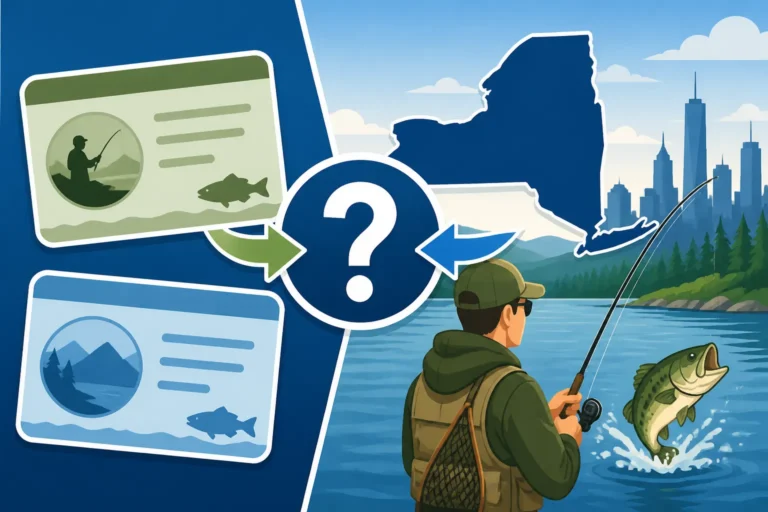
In contrast, the New York State Recreational Marine Fishing Registry is, as we've established, free. It's specifically for those 16 years and older engaging in recreational fishing in the state's marine and coastal waters, or targeting marine species in the tidal Hudson River. You can't use a freshwater license to fish in saltwater, and you can't use your marine registry to fish in freshwater (unless you're in the tidal Hudson specifically targeting marine species, which is a unique transitional zone). This clear separation ensures that resources collected from each type of fishery are directed to where they are needed most. For instance, funds from freshwater licenses might go towards trout stocking, while marine registry data helps manage ocean fisheries. If you're a diverse angler, the question of Do I Need Both a Freshwater License and a Marine Registry? becomes critically important to understand. The simple answer is, yes, if you fish in both environments.
When a Paid License Is Required in Saltwater
While the New York State Recreational Marine Fishing Registry itself is free for recreational anglers, it's crucial to understand that there are scenarios where other, paid permits or licenses might be necessary. These usually apply to commercial fishing operations or very specific, specialized recreational activities, not your typical day out with a rod and reel. For example, commercial fishermen targeting marine species would need a whole suite of state and federal permits, which are absolutely not free and involve significant costs and strict regulations.
For the vast majority of recreational anglers, however, fishing for common species like fluke, stripers, bluefish, or porgies will only require the free Marine Fishing Registry. You won't be asked to buy an additional state-level "saltwater fishing license." It’s worth noting that if you venture out on a commercial for-hire vessel, like a party boat or charter, the vessel itself holds specific licenses, and in some cases, your individual registry might still be required, or at least highly recommended for good measure. Always confirm with your captain! The key takeaway here is that for general recreational saltwater fishing, the free registry is your primary state-level requirement.
How to Get Your Free New York Marine Fishing Registry (and What to Expect)
Now that we've established the registry is free and why it's important, let's talk about the practical side of actually getting it. The process is designed to be straightforward, especially since it's an online system.
The Online Registration Process: A Step-by-Step Walkthrough
Getting your New York State Recreational Marine Fishing Registry is a fairly simple online process, typically handled through the New York State Department of Environmental Conservation (DEC) website. You won't be heading to a tackle shop or a sporting goods store like you might for a freshwater license, nor will you typically find it on platforms like Amazon, since it's a direct government registration.
Here's a general step-by-step guide to what you can expect:
- Visit the DEC Website: Your first step is to navigate to the official New York State DEC website. Look for sections related to fishing licenses and registries.
- Locate the Marine Fishing Registry: There will usually be a clear link or section for the "Recreational Marine Fishing Registry."
- Start the Application: You'll be prompted to provide some personal information. This typically includes your full name, mailing address, date of birth, and possibly some contact information like an email address. This is standard procedure for any official registration, ensuring proper identification and data collection.
- Confirm Information: Review all the details you've entered to ensure accuracy. Mistakes here can lead to issues down the line.
- Submit Your Application: Once you've confirmed everything, you'll hit the submit button. The good news is that registration is usually instant! You won't have to wait for it to be mailed.
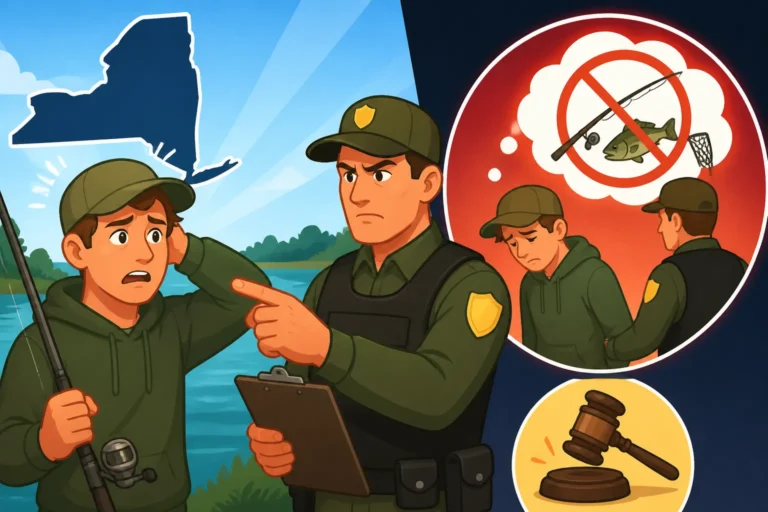
- Print or Save Your Proof: After successful registration, you'll be given the option to print a copy of your registry or save a digital version (e.g., as a PDF) to your phone or other device. It's highly recommended to do one or both, as you need to be able to show proof of registration if requested by an Environmental Conservation Officer (ECO).
The online system is designed for convenience, allowing you to complete this essential step from the comfort of your home. It’s a very similar interface to how you would buy a fishing license online in New York even though this particular step is free.
Important Details: Validity, Renewal, and Proof
Once you've successfully registered, it's important to understand a few key details about its validity and how to maintain it. This isn't a one-and-done forever kind of deal; it requires a bit of annual attention.
Your New York State Recreational Marine Fishing Registry is typically valid for one year from the date of issuance. This means if you register on June 15th, 2024, it will be valid until June 14th, 2025. It's not tied to a calendar year like some licenses, which can sometimes catch people off guard. When that year is up, you'll need to renew it. The good news? The renewal process is just as free and straightforward as the initial registration. You simply go back to the DEC website, log in with your credentials, and renew your existing registry. The system will prompt you for any updated information and then issue a new registration certificate. For more details on this, you can refer to the Marine Fishing Registry Renewal Reminder and understand that Does the Marine Registry Expire Every Year? – yes, it does!
As for proof of registration, you absolutely need to have it with you while fishing. An Environmental Conservation Officer can request to see it at any time. This can be a physical printout of your registration certificate or a digital copy displayed on your smartphone or tablet. Always make sure your device is charged! It's better to have both a physical and digital copy if possible, just in case. Don't assume an officer can look you up on the spot without you providing the necessary documentation. Having your proof readily available makes their job easier and ensures your day on the water continues uninterrupted.
Common Pitfalls and How to Avoid Them
Even with a free and seemingly simple process, there are a few common traps anglers can fall into regarding the Marine Fishing Registry. Being aware of these can save you a headache and potential fines.
- Forgetting to Renew: This is probably the most common oversight. Because it's free, it might not be top-of-mind like a paid license renewal. Many anglers register once, then forget about it until they're approached by an ECO or try to access other DEC services that require a current registration. Set a reminder on your phone or mark it on your calendar to check your registration status annually, perhaps a month before its expiration date.
- Not Carrying Proof: You've done the right thing and registered, but you left the printout at home or your phone battery died. Without proof, it's as if you're not registered at all in the eyes of an ECO. Always, always have a copy on your person. Keep a laminated copy in your tackle box or boat, and have a digital backup on your phone. Imagine you're out on the Long Island Sound fishing for fluke, reeling in a beauty, when an ECO pulls up. A quick show of your phone or paper is all it takes to keep enjoying your day.
- Confusing it with a Freshwater License: This is a big one, especially for anglers who participate in both freshwater and saltwater fishing. The free marine registry does not allow you to fish in freshwater, and your paid freshwater license does not cover saltwater. Each is specific to its domain. Make sure you understand the boundaries and requirements for each. You can find more clarity on these distinctions in the New York Fishing Regulations Explained guide.
- Misunderstanding Exceptions: While generally needed for anyone 16+, some specific situations, like being on certain charter boats, might have nuances. Always clarify. Better to be registered and not strictly need it than to need it and not have it.
By staying mindful of these points, you can ensure your marine fishing adventures in New York are always fully compliant and stress-free.
Exceptions, Reciprocity, and Other Considerations
While the New York State Recreational Marine Fishing Registry is a widely applicable requirement, there are specific circumstances and considerations that can sometimes lead to confusion. Understanding these nuances is key to being a fully informed angler.
Fishing on a Party or Charter Boat
This is a common question, and it has a slightly nuanced answer. If you are fishing on a licensed party boat or charter boat in New York's marine waters, the vessel itself holds specific DEC marine commercial licenses. In many cases, these vessels' licenses cover the individual anglers on board for the purpose of federal data collection, potentially exempting you from needing your own individual New York State Recreational Marine Fishing Registry.
However, this isn't always a hard and fast rule, and it can depend on the specific type of permit the vessel holds and the species being targeted. My best advice? Always confirm with the captain or booking agent of the charter boat before your trip. Some captains might still recommend or even require that you have your own registry for clarity and to avoid any potential confusion or issues with an Environmental Conservation Officer, especially if you plan to do any shore fishing on your own during the same trip. It's simply good practice to err on the side of caution. For more details specific to charter operations, you might want to look into Do I Need My Own Fishing License on a Charter Boat?
NOAA's National Registry and Reciprocity
The New York State Recreational Marine Fishing Registry was largely implemented to fulfill the federal data collection requirements set by NOAA Fisheries. For many years, there was a separate federal NOAA Fisheries National Saltwater Angler Registry. While that federal registry still exists, many states, including New York, now collect the necessary recreational fishing data directly through their own state-level programs (like our free registry), which then gets reported to NOAA. This means that having New York's free registry generally satisfies the federal reporting requirement for fishing in New York waters.
When it comes to reciprocity with other states, it's important to understand that saltwater fishing regulations are typically very state-specific. Unlike some freshwater border waters where agreements might exist (like those discussed in New York Fishing License Reciprocity with Other States, the New York State Recreational Marine Fishing Registry generally does not have direct reciprocity with other states' saltwater fishing licenses or registries. If you're planning to fish in the marine waters of New Jersey, Connecticut, or any other state, you'll need to check their specific regulations and likely obtain their required permits or licenses, even if you have your free New York registry. Each state manages its own marine resources and has its own way of tracking fishing effort and harvest.
The Role of Brands like Amazon in Your Saltwater Adventure
While the New York State Recreational Marine Fishing Registry is a direct governmental process and therefore not something you'd acquire through a retail giant, that doesn't mean brands like Amazon don't play a role in preparing for your saltwater fishing trips. In fact, for many anglers, online marketplaces have become a convenient way to stock up on gear.
Once you’ve got your free registry sorted, you'll still need equipment! Whether it's a new saltwater spinning reel, a selection of proven lures for striped bass, or essential safety items like a life vest, many anglers turn to online retailers. You might find a great deal on fishing line, leader material, or even a specialized tackle box on Amazon that complements the gear you already own. It's a convenient option for comparing prices and having items delivered right to your door, making sure you're fully prepared for your next trip without having to run all over town. So, while the registry itself is free, kitting yourself out for a successful day of saltwater fishing, especially if you're looking for specific brands or niche items, might involve a virtual shopping spree.
New York Fishing Requirements at a Glance
To help consolidate all this information, here's a quick overview of New York's primary recreational fishing requirements.
| Requirement | Cost | Who Needs It (Age 16+) | Where It's Needed | How to Get It |
|---|---|---|---|---|
| Freshwater Fishing License | Varies (Resident/Non-Res) | Yes, if fishing freshwater | All New York State freshwater bodies | DEC online or authorized vendors |
| Marine Fishing Registry | No, Free | Yes, if fishing saltwater | New York State marine/coastal district, tidal Hudson | DEC online |
| Trout Stamp (Freshwater) | Small fee (add-on) | Yes, if targeting trout | Required in addition to freshwater license | Purchased with freshwater license |
| Recreational Marine Fishing Registry Renewal | No, Free | Yes, annually | To maintain active marine fishing status | DEC online |
This table provides a concise summary, but remember that the full details in the sections above offer critical context and nuance.
Disclaimer
The information provided in this guide is for general informational purposes only and is subject to change. While we strive to keep the content accurate and up-to-date, fishing regulations, laws, and requirements can be modified by the New York State Department of Environmental Conservation (DEC) at any time. It is always the angler's responsibility to consult the official DEC website or their current fishing regulations guide before engaging in any fishing activity to ensure full compliance. Neither the author nor the publisher assumes any liability for errors or omissions in this information.