New York Fishing License Reciprocity with Other States
There’s nothing quite like the thrill of planning a fishing trip to a new spot, especially when you’re looking at those beautiful border waters that New York shares with neighboring states. But then a nagging question often pops into mind: "Do I need another fishing license?" This guide is here to untangle the often-confusing web of New York fishing license reciprocity, helping you understand where your existing license might be valid and when you absolutely need to buy another one to stay on the right side of the law.
Navigating the Murky Waters of Fishing License Reciprocity
The idea of fishing license reciprocity sounds simple enough, doesn't it? You buy one license in your home state, and it should magically cover you wherever you cast a line, especially if you're just dipping a toe across a state line on a shared body of water. Unfortunately, the reality is far more complicated, and many anglers find themselves inadvertently breaking the law or, worse, facing fines because they didn't fully understand the nuanced agreements between states.
The Basic Concept: Why it Exists (and Why it's Rare)
In its purest form, fishing license reciprocity means that two or more states agree to recognize each other's fishing licenses within specific, shared bodies of water. The intention behind these agreements is to make it easier for anglers who live near or fish frequently on interstate waters. Imagine living in a border town where half your favorite lake is in one state and half in another. Without reciprocity, you’d need two separate licenses just to fish a single body of water, which is a huge hassle and a deterrent to enjoying the outdoors.
These agreements are typically hammered out between state wildlife agencies, like the New York Department of Environmental Conservation (DEC) and their counterparts in neighboring states. They're designed to simplify things, allowing you to fish from either side of a designated border water with just one valid license from either of the participating states. It sounds wonderful, right? The problem is, such comprehensive agreements are surprisingly uncommon. Each state has its own unique licensing structure, fees, and revenue models, making it difficult to achieve universal reciprocity.
Challenges in Interstate Agreements: More Than Just a Line on a Map
You might wonder why states can't just agree to universal reciprocity for shared waters. The truth is, it's a complex dance involving legal frameworks, conservation efforts, and, perhaps most importantly, economics. Fishing license fees directly fund vital conservation programs, fish stocking efforts, habitat restoration, and enforcement in each state. When a state agrees to reciprocity, it essentially forfeits potential revenue from out-of-state anglers who might otherwise purchase a non-resident license.
Furthermore, managing shared fisheries requires coordinated efforts. Different states might have varying regulations regarding catch limits, season dates, and even permitted gear, which can make a single license confusing for enforcement officers if rules aren't perfectly aligned. Think about the intricacies of managing a species like walleye in Lake Erie, where New York, Pennsylvania, and Ohio all have a stake. Harmonizing regulations and ensuring fair revenue distribution is a monumental task, which is why true, broad reciprocity is often limited to very specific bodies of water where clear boundaries and coordinated management plans are in place.
New York's Approach to Reciprocity: The General Rule and Its Exceptions
New York State has a very clear stance on fishing licenses: generally, if you're fishing in New York waters, you need a New York fishing license. This applies whether you’re a resident or an out-of-state visitor. While this might seem strict, it's the standard practice for most states. However, like many things in life, there are specific exceptions, particularly when it comes to shared border waters.
General Rule: A New York License for New York Waters
Let's cut right to it: the default rule in New York is that you must possess a valid New York fishing license to fish in any body of water within the state's boundaries. This includes all of our incredible lakes, rivers, streams, and coastal waters. If you’re visiting from out of state and planning a trip to the Adirondacks or the Finger Lakes, you absolutely need a New York non-resident license, regardless of whether you have a license from your home state. It's really that simple for the vast majority of our waterways. For a complete overview of what's required, you'll find everything in our New York Fishing License Guide.
The DEC relies on these license sales to fund the management of New York's diverse fisheries. From stocking trout in streams to monitoring fish populations in the Great Lakes, your license dollars directly support the health and accessibility of our fishing resources. So, even if it feels like an extra step, consider it your contribution to keeping New York a premier fishing destination. This also covers the various New York Fishing License Costs and Options that cater to different needs, from annual to short-term licenses.
Designated Border Waters: Where the Rules Get Interesting
Now for the exceptions! New York does have specific reciprocity agreements, but they are limited to certain shared border waters with Pennsylvania and Vermont. These aren't blanket agreements; they apply only to the explicitly named bodies of water. You can't, for example, fish anywhere in Pennsylvania with your New York license, or vice versa, just because you’re near the border. The reciprocity is very precise, covering only those waters that literally straddle the state line.
These agreements are crucial for anglers who regularly fish these specific areas, as they allow for greater flexibility and convenience. However, it's paramount to understand exactly which waters are covered, as venturing even a few hundred feet outside the designated reciprocal zone without the proper license can lead to legal trouble. It’s always best to check the latest New York Fishing Regulations Explained or the DEC website, as these agreements can occasionally be updated or modified.
Specific Border Water Agreements: Where Reciprocity Truly Applies
When we talk about New York fishing license reciprocity, we're primarily talking about two neighboring states: Pennsylvania and Vermont. These states share significant water bodies with New York, and specific agreements are in place to allow anglers from either side to fish with their home state's license under certain conditions.
Pennsylvania Border Waters: Lake Erie and the Delaware River
New York has a long-standing reciprocity agreement with Pennsylvania for two major shared waterways:
-
Lake Erie: Anglers holding a valid New York fishing license or a valid Pennsylvania fishing license can fish the waters of Lake Erie that lie between the two states without needing to purchase an additional license. This means if you're a New Yorker fishing off the shores of Erie, Pennsylvania, or a Pennsylvanian fishing off Dunkirk, New York, your home state license is generally sufficient. This extends to the Niagara River up to the base of Niagara Falls, and the waters of the Allegheny Reservoir (Kinzua Dam). This is fantastic news for those who enjoy Lake Erie Fishing in New York: Where to Go, as it opens up a huge amount of fishing territory without extra hassle.
- However, a critical detail often overlooked is that while your license might be reciprocal, the regulations of the state you are physically fishing in still apply. So, if a New York angler is fishing on the Pennsylvania side of Lake Erie, they must abide by Pennsylvania's season dates, catch limits, and size restrictions for particular species. This is where many anglers get into trouble, assuming that "reciprocity" means "same rules." Always double-check the local regulations of the specific state's waters you are in. For example, New York Walleye Season and Limits might differ from Pennsylvania's.
-
Delaware River: The mainstem of the Delaware River, forming the border between New York and Pennsylvania, also falls under a reciprocity agreement. This means that a valid New York fishing license or a valid Pennsylvania fishing license will permit you to fish the shared waters of the Delaware. This is a huge benefit for those who love to fish for trout and smallmouth bass along this picturesque river. If you're planning to fish, check out our guide on Fishing the Delaware River in New York for some fantastic spots.
- Just like with Lake Erie, the individual state's regulations apply depending on which side of the river you are physically fishing from or if you are anchored closer to one shore. It's a common misconception that because your license is valid, you can ignore the specific rules. Always carry a copy of both states' regulations or have them accessible on your phone, so you're prepared for any scenario.
Vermont Border Waters: Lake Champlain
New York also shares a significant reciprocal fishing agreement with Vermont, specifically for Lake Champlain. This massive, beautiful lake forms a long portion of the New York-Vermont border, and the agreement allows anglers with a valid New York fishing license or a valid Vermont fishing license to fish the entire lake, including its bays and tributaries up to the first dam or falls. This is a huge boon for anglers pursuing lake trout, salmon, bass, and pike on Lake Champlain.
- This agreement truly simplifies things for anglers navigating such a large, shared body of water. However, the caveat about adhering to the regulations of the state you are currently in still applies. For example, a New York angler fishing off the Vermont side of Lake Champlain would need to follow Vermont's creel limits and season dates for particular species. If you're a Vermont angler, you might be asking, "Can a Vermont Angler Fish New York Border Waters Without a New York License?" The answer for Lake Champlain is generally yes, but always verify the latest information from both the NYSDEC and Vermont Fish & Wildlife Department.
Table of New York's Reciprocity Agreements
To make things clearer, here’s a quick overview of New York's primary border water reciprocity agreements:
| Bordering State | Shared Water Body | Reciprocity Status | Key Considerations |
|---|---|---|---|
| Pennsylvania | Lake Erie | Yes, valid NY or PA license recognized on shared waters. | Adhere to regulations (seasons, limits) of the state whose waters you are physically in. |
| Pennsylvania | Niagara River (to base of falls) | Yes, valid NY or PA license recognized. | Applies to shared mainstem. |
| Pennsylvania | Allegheny Reservoir | Yes, valid NY or PA license recognized on shared waters. | Applies to shared mainstem. |
| Pennsylvania | Delaware River (mainstem) | Yes, valid NY or PA license recognized on shared mainstem. | Adhere to regulations (seasons, limits) of the state whose side you are fishing from or closer to. |
| Vermont | Lake Champlain | Yes, valid NY or VT license recognized on entire lake (including bays/tributaries up to first dam/falls). | Adhere to regulations (seasons, limits) of the state whose waters you are physically in. |
| New Jersey | Delaware River (mainstem) | No general reciprocity with New York. NJ residents need a NJ license, NY residents need a NY license for their respective waters. | However, NY-PA reciprocity exists on its shared section. This means a NY license works on the NY-PA border, but not NY-NJ. |
| Connecticut | Long Island Sound | No reciprocity. | Anglers need NY marine registry/license for NY waters, CT license for CT waters. |
| Massachusetts | Shared inland waters | No reciprocity. | Separate licenses required for each state's waters. |
| Canada (Ontario/Quebec) | Great Lakes, St. Lawrence River | No reciprocity. | Canadian license for Canadian waters, NY license for NY waters. |
Beyond Border Waters: Other States and International Borders
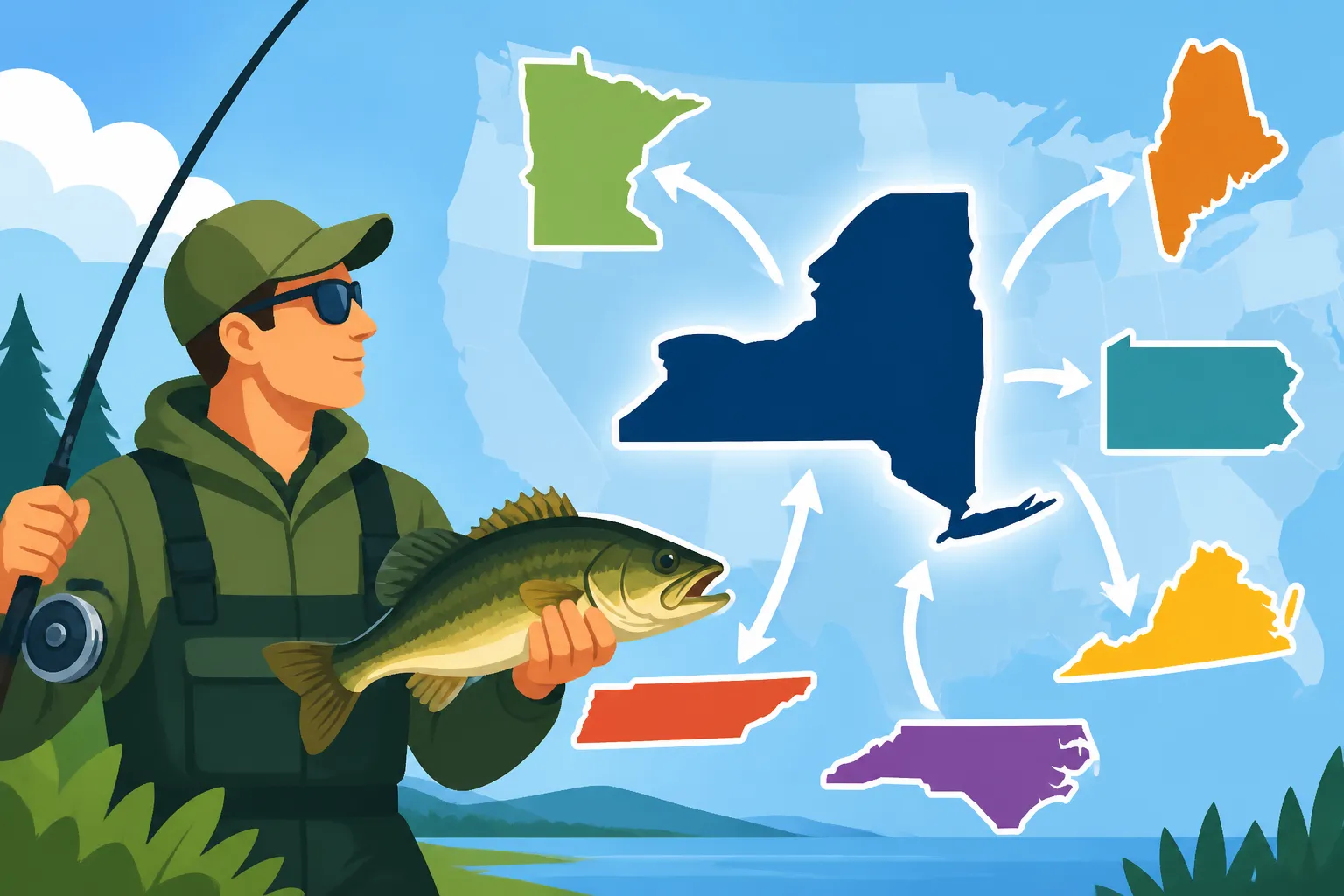
While New York has these specific, valuable reciprocity agreements with Pennsylvania and Vermont, it's crucial to understand that these are exceptions, not the rule. For all other bordering states and our international border with Canada, you should always assume no reciprocity exists.
New Jersey and Connecticut: No General Reciprocity
New York shares the mighty Hudson River with New Jersey (though mostly on the eastern bank) and Long Island Sound with Connecticut. Despite these close geographical relationships, there is no broad reciprocity agreement for fishing licenses with either New Jersey or Connecticut.
- New Jersey: If you’re fishing in New York waters that border New Jersey, you need a New York license. Conversely, if you're fishing in New Jersey waters, you need a New Jersey license. This includes the lower Hudson River and any other shared waterways. The Delaware River, while bordering New Jersey, only has the reciprocity agreement with Pennsylvania on its shared section with NY. So, if you're fishing the Delaware between NY and NJ, you still need separate licenses depending on which state's side you're on. This means if you're on the New Jersey side of the river, even if you just put in from New York, you need a New Jersey license.
- Connecticut: Similarly, for the vast expanses of Long Island Sound, you will need a New York fishing license (or Marine Recreational Fishing Registry, depending on species) to fish in New York state waters, and a Connecticut fishing license to fish in Connecticut waters. There is no agreement that allows one state's license to cover the other's marine waters. This is particularly important for boat anglers who might easily cross invisible state lines. The nuances of marine registration are covered in our New York Saltwater Fishing Registration Guide.
Massachusetts and Other Inland Neighbors: Always Assume Separate Licenses
New York also borders Massachusetts. For any shared inland waters, such as small lakes or rivers that might straddle the state line, you will need separate fishing licenses for each state. There are no general reciprocity agreements in place between New York and Massachusetts for fishing. The same holds true for any other non-reciprocal border. When in doubt, always err on the side of caution and obtain the necessary license for the specific state's waters you intend to fish.
The Canadian Border: A Completely Separate System
New York shares extensive borders with Canada (Ontario and Quebec) across Lake Ontario, Lake Erie, and the St. Lawrence River. While these waters are incredibly productive and offer world-class fishing, there is no reciprocity whatsoever between New York and Canada for fishing licenses.
- If you plan to fish in Canadian waters (Ontario or Quebec), you must obtain the appropriate Canadian fishing license. This is a separate legal jurisdiction with its own rules, regulations, and licensing requirements. Similarly, Canadian anglers wishing to fish in New York waters must purchase a New York non-resident fishing license.
- This is especially critical for anglers on large bodies of water like the St. Lawrence River or Lake Ontario. It's very easy to inadvertently drift or motor into Canadian waters. Always be aware of your location, especially if you don't have a Canadian license. Violating this can lead to significant fines and even confiscation of equipment. For those interested in the Canadian side, ensure you research their respective provincial regulations. And for the NY side, our Fishing New York's St. Lawrence River and Thousand Islands guide has plenty of information.
Common Misconceptions and Pitfalls: Don't Get Caught Off Guard
Fishing license reciprocity can be a confusing topic, and many anglers fall victim to common misunderstandings. These misconceptions often lead to unintended violations, which can result in hefty fines and a ruined day on the water.
"If I Can See the Other State, I'm Fine"
This is one of the most dangerous assumptions an angler can make. Just because you can visually see the opposing shoreline doesn't mean your license is valid on that side, nor does it mean the invisible boundary line is easy to discern. State lines on water bodies often don't follow easily identifiable markers. On large lakes like Lake Erie or Lake Champlain, these lines are purely geographical coordinates, impossible to see with the naked eye.
Imagine you're fishing near the New York-Pennsylvania line on Lake Erie. You might be trolling along, enjoying the day, and without realizing it, you've crossed into Pennsylvania waters. If you only have a New York license and it's not a reciprocal water, you're technically fishing without a license in Pennsylvania. The enforcement officers aren't going to accept "I didn't know" as an excuse. Always use GPS or a chart plotter if you're on shared waters to know your exact location relative to state boundaries.
"My Annual License is Good Everywhere"
This misconception often stems from the wishful thinking that a single annual investment should cover all fishing adventures. While a resident annual fishing license is a fantastic value for your home state, it rarely translates to universal coverage across state lines. As we've discussed, genuine reciprocity is the exception, not the rule, and it's typically limited to specific, designated shared waters.
Your annual New York freshwater fishing license is valid for most freshwater fishing within New York State, but it's not a passport to fish anywhere else. Similarly, if you purchased a special permit, like a trout stamp (you might wonder, "What Is a Trout Stamp?"), that stamp is only valid in conjunction with your New York license within New York waters, unless explicitly stated otherwise in a reciprocity agreement for a specific body of water.
"Everyone Else is Doing It"
This is perhaps the riskiest pitfall. You might see other boats or anglers on a shared waterway who appear to be operating under the assumption that their single license covers them, or perhaps they’re simply breaking the law and haven't been caught yet. Basing your legal compliance on the actions of others is a recipe for disaster. Conservation officers are highly trained and knowledgeable about state boundaries and regulations, and they are out there specifically to ensure compliance.
Getting caught fishing without a license, even due to a misunderstanding of reciprocity, can lead to significant penalties. These can include fines, seizure of fishing equipment, and even loss of fishing privileges. It's far better to invest a little time in research or a few dollars in an extra non-resident license than to face the legal repercussions of fishing illegally. The consequences can be severe, as detailed in our guide on Fishing Without a License in New York: What Happens and also Penalties for Fishing Without a License in New York.
Ensuring You're Legal: Practical Steps to Avoid Issues
Avoiding legal trouble when fishing border waters boils down to proactive research and preparation. Don't leave it to chance or rely on guesswork. Your enjoyable fishing trip can quickly turn sour if you're found in violation of licensing or regulation laws.
Checking Official Regulations: The Ultimate Source
The absolute best way to confirm reciprocity and understand specific regulations for any shared water body is to consult the official sources: the New York State Department of Environmental Conservation (DEC) website and the equivalent wildlife agency websites for the bordering states (e.g., Pennsylvania Fish and Boat Commission, Vermont Fish & Wildlife Department).
- Visit the websites: Look for sections specifically detailing fishing licenses, regulations, and interstate agreements. These sites are updated regularly and contain the most accurate and current information. The New York DEC Fishing Regulations Guide is always your primary reference for New York waters.
- Download regulation guides: Many states offer downloadable PDF versions of their regulation guides, which can be incredibly helpful to have on your phone or printed out, especially when out on the water where internet access might be spotty.
- Make a phone call: If you're still uncertain after checking online, don't hesitate to call the DEC or the neighboring state's agency directly. A quick phone call can save you a lot of headache and potential legal trouble. They are there to help clarify these complex issues.
Purchasing Necessary Licenses: When in Doubt, Buy It
If there's any ambiguity or if you plan to fish extensively in waters outside of New York's reciprocal agreements, the safest course of action is always to purchase the necessary non-resident license for the other state. Most states offer various license options, including annual, short-term (e.g., 1-day, 3-day, 7-day), or even specific permits for certain species or areas.
- Online Purchases: Both New York and most other states offer convenient online purchasing options. You can usually get your license digitally and print it at home or save it to your phone. Our guide on How to Buy a Fishing License Online in New York provides a step-by-step process.
- Local Vendors: Many bait shops, sporting goods stores (like some larger retailers), and town clerk offices are authorized vendors for fishing licenses. These local spots can also be a great source for current local fishing conditions and specific regulations, as they deal with anglers daily.
- Consider short-term options: If you're only making a day trip or a short weekend excursion to a non-reciprocal border water, a short-term non-resident license can be a cost-effective way to ensure you're legal without committing to a full annual license.
Keeping Proof on Hand: Digital vs. Physical
Once you have your license (or licenses, if you're covering multiple states), it’s vital to have proof of it readily available while you’re fishing. Enforcement officers can and do ask to see your license.
- Physical License: Many anglers prefer to carry a printed copy of their license. You can print it at home or pick up a physical copy from a vendor. Consider laminating it or keeping it in a waterproof case to protect it from the elements. There are many affordable, waterproof options available on Amazon for protecting your vital documents while out on the water.
- Digital License: New York State, like many others, allows you to carry proof of your fishing license on your smartphone. This can be a screenshot or a digital copy in an official app. While convenient, ensure your phone is charged and protected from water. You certainly don't want a dead battery to be the reason you can't prove your compliance. Our guide, Can I Show a Digital Fishing License on My Phone? offers more details on this.
- Carry Regulations: It’s also a good practice to carry a copy of the regulations for the specific waters you are fishing, especially if they are reciprocal waters with differing rules. This can quickly clarify any questions about catch limits, size restrictions, or season dates that might arise during your trip or in discussions with an officer. Having a small, laminated copy of the relevant pages or the PDF on your phone can be a lifesaver.
By taking these straightforward steps, you can focus on the joy of fishing, confident that you’re fully compliant with all state regulations, no matter which side of the invisible line you find yourself on.
Disclaimer
The information provided in this guide is for general informational purposes only and does not constitute legal advice. Fishing regulations and reciprocity agreements can change. Always consult the most current official regulations from the New York State Department of Environmental Conservation (DEC) and the relevant wildlife agencies of bordering states before you go fishing. Your adherence to all applicable laws is your sole responsibility.