Bass Daily Limit and Minimum Size in New York
Few things are as frustrating as heading out to your favorite New York fishing spot, landing a beautiful bass, and then realizing you're not entirely sure if it's legal to keep. The rules and regulations around bass daily limits and minimum sizes can feel like a labyrinth, changing not just by the year, but sometimes by the very body of water you're fishing. This guide is here to untangle that confusion, walking you through everything you need to know to stay compliant and enjoy your bass fishing adventures responsibly in the Empire State.
Navigating the General Statewide Bass Regulations in New York
Let's start with the basics, because for many anglers, the statewide general regulations are your first point of reference. However, and this is crucial, always remember that "statewide" doesn't mean "everywhere." New York is diverse, and so are its fish habitats, which means the rules often reflect that complexity.
Understanding the Standard Daily Limit and Minimum Size
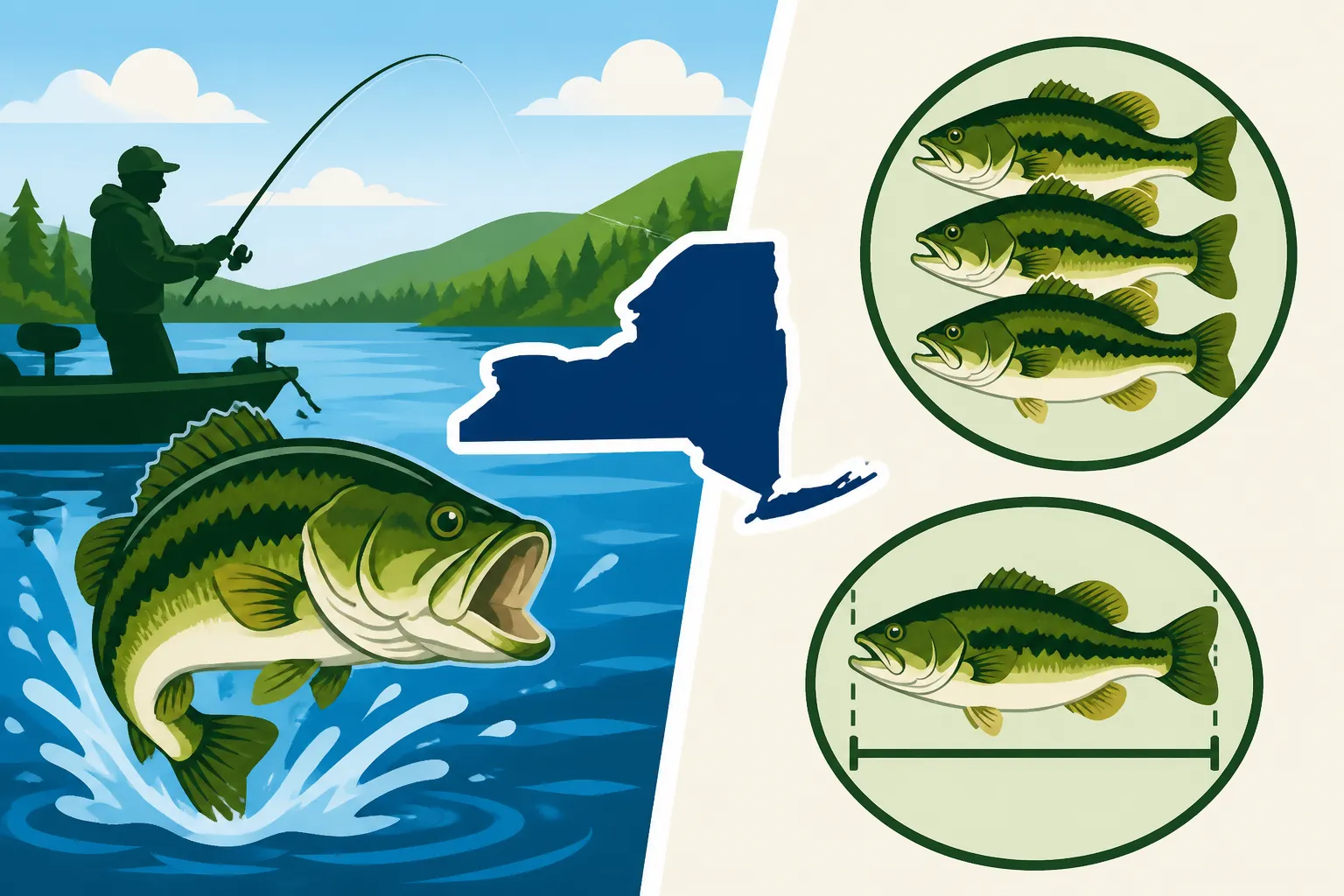
For the vast majority of freshwater bodies in New York State, if you're targeting largemouth or smallmouth bass, there's a pretty consistent set of rules to keep in mind once the season officially opens for harvest. You're generally allowed to keep a daily limit of five bass per angler. This means that, from the moment you start fishing until you stop for the day, you can only possess five bass that meet the legal size requirements.
Now, about that size requirement: the statewide minimum length is typically 12 inches. This measurement is taken from the tip of the fish's snout to the end of its tail, with the tail compressed. It's not uncommon to land a bass that's just shy of that mark, which can be a real bummer, but adhering to this rule is paramount for the health of our bass populations. A good, reliable measuring board or tape is an absolute must-have in your tackle box. You can find excellent options on Amazon that are durable and easy to use, ensuring you can quickly and accurately check your catch before making that important decision to keep or release.
This standard 12-inch minimum and five-fish daily limit applies to countless lakes, ponds, and rivers across the state. Think of smaller local ponds, many sections of major rivers outside of special regulation zones, and smaller Finger Lakes tributaries. It's the baseline, and if you don't know otherwise, this is often the rule to assume until you check. It's critical to understand the nuances of the New York Freshwater Fishing Rules to avoid any misunderstandings.
The Critical Catch-and-Release Season
Here's where things can get a little tricky and where many anglers get tripped up. New York State has a distinct season for bass where only catch-and-release fishing is permitted. Typically, this catch-and-release-only season runs from December 1st through the third Friday in June. During this period, you cannot keep any bass, regardless of its size. If you catch one, it must be immediately released back into the water unharmed.
Furthermore, during this specific catch-and-release season, there's an additional regulation: you are generally only allowed to use artificial lures or flies. This means no live bait, like worms or minnows, is permitted if you are specifically targeting bass during these months. The rationale behind this is to minimize harm to the fish, as artificial lures are often easier to remove cleanly without causing fatal injuries, increasing the bass's chances of survival after release. It's a crucial conservation effort designed to protect bass when they are most vulnerable, often before and during their spawning periods. Understanding these seasonal shifts is just as important as knowing the daily limit and minimum size for the harvest season. For more detailed information on specific dates, you should always consult the official New York Bass Season Dates.
Why These Regulations Exist: A Conservation Perspective
It might feel like a lot of rules to keep track of, but these bass daily limits and minimum size requirements aren't just arbitrary numbers. They are carefully crafted by the New York State Department of Environmental Conservation (DEC) based on extensive scientific research and data collection on fish populations. The primary goal is conservation – ensuring healthy, sustainable bass populations for current and future generations of anglers.
Minimum size limits, for instance, are designed to allow bass to reach sexual maturity and spawn at least once, if not multiple times, before they can be harvested. This helps to ensure that new generations of bass are produced, maintaining the species' numbers. If anglers were allowed to keep every small bass they caught, it could quickly deplete the breeding stock. The five-fish daily limit prevents overharvesting by individuals, distributing the catch more equitably and preventing localized depletion in popular fishing spots. The catch-and-release season, especially with the artificial lures restriction, protects bass during crucial periods like pre-spawn and spawn, when they are concentrated and highly vulnerable, ensuring they can reproduce successfully. It's all part of a larger plan to maintain the ecological balance and the vibrant fishing opportunities we all cherish.
Special Bass Regulations for Specific Waters
While the statewide general rules provide a good starting point, New York is a big state with incredibly diverse waterways. This diversity means that many specific lakes, rivers, and even stretches of water have their own unique bass regulations that can supersede the general statewide rules. Ignoring these can lead to fines and penalties, so it's absolutely vital to know when and where these special rules apply.
Great Lakes and Border Waters: Lake Erie, Lake Ontario, and the St. Lawrence River
When you venture to New York's magnificent Great Lakes region or the St. Lawrence River, the bass regulations often take a different turn. These vast waters are unique ecosystems, supporting robust fisheries that require tailored management.
For instance, on Lake Erie, Lake Ontario, and the St. Lawrence River, the minimum size limit for bass is often 15 inches, not the standard 12 inches. The daily limit might also be reduced, commonly to three bass per angler. This more restrictive approach acknowledges the specific biological dynamics of these large systems and the intense fishing pressure they often receive. These waters are renowned for producing trophy-sized smallmouth bass, and these regulations are designed to protect those larger, more mature fish that are essential for successful spawning and maintaining the genetic quality of the population. If you're planning a trip to the Thousand Islands, or fishing near Buffalo or Oswego, you'll need to pay close attention to these specific rules. Many anglers will consult the New York DEC Fishing Regulations Guide before heading out.
The tributaries of these Great Lakes, particularly those known for their anadromous fish runs, might also have specific rules. It's not just about the big lakes themselves; sometimes the rivers and streams that feed into them carry their own set of nuances. Always double-check the exact water you plan to fish.
Hudson River and its Unique Bass Management
The Hudson River, a jewel of New York's waterways, also falls under its own specific set of bass regulations, especially regarding its tidal sections. For many years, the Hudson has had specific rules to manage its diverse fishery, including its healthy population of both largemouth and smallmouth bass.
The daily limit on the Hudson River can sometimes be more generous than other special regulation waters, often allowing for five bass per day, but with a potentially different minimum size, like 12 inches. However, these regulations can be subject to change and always have specific opening and closing dates for the harvest season. Just like the general statewide rules, there will be a significant period dedicated to catch-and-release only, usually encompassing the spring spawning season. The Hudson is a dynamic environment, and its regulations sometimes reflect broader regional management plans, so staying informed about the current year's rules is crucial. Knowing the specific New York Striped Bass Length Requirements for this river also highlights the complexity of multi-species fisheries in one location.
Finger Lakes and Other Regional Exceptions
The beautiful Finger Lakes region is another area where general rules might not always apply. Each of the eleven Finger Lakes is a unique basin, and while many might adhere to the statewide bass limits, some may have specific variations.
For example, a particular Finger Lake or one of its bays might have an experimental regulation in place, or a history of unique management due to population studies or angler concerns. This could mean an increased minimum size limit, a reduced daily bag limit, or even different season dates. Some specific lakes might be managed for trophy bass, leading to stricter rules, while others might have regulations designed to reduce competition among species. The best way to know for sure is to look up the specific lake you're fishing in the official DEC regulations guide. It’s also important to be aware of the different types of bass, like the Largemouth Bass in New York and the Smallmouth Bass in New York, as some regulations might subtly favor one over the other in certain waters.
It bears repeating: always, always consult the current year's New York Fishing Regulations Explained for the specific body of water you intend to fish. These guides are readily available online from the DEC, at license vendors, and sometimes even as physical copies you can order on Amazon to keep in your tackle box for quick reference.
Essential Practices for Responsible Bass Angling
Knowing the bass daily limit and minimum size in New York is the first step, but being a responsible angler goes beyond just obeying the law. It involves ethical practices that contribute to the health of the fishery and ensure enjoyable experiences for everyone.
Measuring Your Catch Accurately
When you catch a bass and are deciding whether to keep it, accurate measurement is non-negotiable. An improperly measured fish could lead to a violation, even if it was an honest mistake. Here’s how to do it right:
- Use a Reliable Measuring Device: Don't rely on guesswork or approximations. Carry a dedicated fish measuring board or a flexible tape measure designed for fishing. Products like the Hawg Trough or other similar measuring boards are popular among bass anglers because they provide a stable surface and clear markings, making it easy to get an exact measurement.
- Lay the Fish Flat: Place the fish on its side on the measuring board or alongside your tape. Ensure its mouth is closed.
- Compress the Tail: Gently squeeze the tail fin together to make it as long as possible. The measurement should be taken from the tip of the snout to the furthest tip of the compressed tail fin.
- Quickly and Gently: Minimize the time the fish is out of the water. Handle the fish as little as possible, with wet hands if you must touch it, to protect its slime coat.
Mistakes happen, especially if you're excited or fishing in low light. But taking the extra moment to measure precisely can save you a lot of trouble and, more importantly, ensures that only legal-sized fish are harvested.
Practicing Proper Catch-and-Release Techniques
Even if you're within the legal limits, there will be many times you choose to release a bass, either because it's undersized, you've met your daily limit, or you simply prefer to practice catch-and-release. How you handle that fish determines its survival.
- Minimize Fight Time: Bring the fish in as quickly as possible to reduce exhaustion, especially in warmer water where oxygen levels are lower.
- Use Barbless Hooks (or Crimp Barbs): Barbless hooks are significantly easier to remove, causing less tissue damage. If your hooks have barbs, consider crimping them down with pliers.
- Handle with Wet Hands: If you need to touch the fish, wet your hands first. Dry hands can remove the fish's protective slime coat, leaving it vulnerable to infection.
- Support the Fish: Never hold a bass vertically by its jaw alone, especially larger fish. This can dislocate its jaw or damage its spine. Support the belly with one hand while gently holding the jaw with the other.
- Quick Hook Removal: Use needle-nose pliers or a hook remover tool to quickly and cleanly extract the hook. If the fish is deeply hooked, especially in the gills or throat, cut the line as close to the hook as possible. Attempting to force out a deeply embedded hook often causes more harm than leaving it in. This is a key part of responsible Catch-and-Release Handling Rules.
- Revive if Necessary: If the fish seems sluggish, hold it gently in the water, facing into a mild current, and move it back and forth to push water over its gills until it regains its strength and can swim away on its own.
By following these practices, you dramatically increase the chances that the bass you release will survive to be caught another day, contributing to a healthier fishery.
Always Check Local Regulations
I can't stress this enough: always check the most current regulations for the specific body of water you plan to fish. The information I'm providing is a general guide, but regulations can and do change. The New York DEC typically updates its official fishing regulations annually.
Here's how you can make sure you're always up-to-date:
- DEC Website: The New York State Department of Environmental Conservation (DEC) website is your absolute best and most official source. They publish the complete New York Fishing Regulations Explained document every year.
- DEC Mobile App: The DEC often has a mobile app that allows you to access regulations on your phone, even offline in some cases.
- License Vendors: When you purchase your fishing license, vendors usually have physical copies of the regulations guide available. You can also find out Where to Buy a New York Fishing License if you need one.
- Local Bait Shops: These are goldmines of local knowledge. The folks running your local bait shop in places like Clayton or Sackets Harbor often know the specific rules for their area inside and out, as well as any recent changes or advisories.
- Specific Regulation Waters List: The DEC maintains a list of "Special Regulations Waters." If your chosen spot is on this list, you must adhere to those specific rules, which will override the statewide general rules. This New York Special Regulations Waters List is a critical resource for anglers.
Never assume. A quick check before you head out can prevent a costly fine and ensure you're fishing legally and ethically. It's a small effort that makes a huge difference.
Quick Reference for New York Bass Regulations
To make things a little easier to digest, here's a table summarizing the general statewide regulations and some common special regulations for bass in New York. Remember, this is a general guide, and you should always verify the regulations for your specific fishing location.
| Location Type | Minimum Size Limit (Typically) | Daily Limit (Typically) | Harvest Season (Typically) | Catch-and-Release Season (Typically) | Special Notes |
|---|---|---|---|---|---|
| Statewide General Waters | 12 inches | 5 fish | 3rd Saturday in June – Nov 30 | Dec 1 – 3rd Friday in June | Artificial lures/flies only during C&R season. |
| Lake Erie | 15 inches | 3 fish | 3rd Saturday in June – Nov 30 | Dec 1 – 3rd Friday in June | More restrictive limits. |
| Lake Ontario | 15 inches | 3 fish | 3rd Saturday in June – Nov 30 | Dec 1 – 3rd Friday in June | Applies to main lake and specific areas. |
| St. Lawrence River | 15 inches | 3 fish | 3rd Saturday in June – Nov 30 | Dec 1 – 3rd Friday in June | Includes Thousand Islands region. |
| Hudson River (Tidal) | 12 inches | 5 fish | Varies (e.g., May 1 – Nov 30) | Varies (check specific dates) | Subject to specific seasonal openings. |
| Some Finger Lakes | Varies (e.g., 12", 15") | Varies (e.g., 3, 5) | Varies (check specific dates) | Varies | Always check individual lake rules. |
This table provides a snapshot of the most common regulations. The variability in the Finger Lakes section highlights just how important it is to check the specific regulations for that exact body of water. For example, some parts of Lake Erie and Lake Ontario also have slightly different dates or specific rules for their tributaries compared to the main lake. It's truly a detailed landscape, and being a well-informed angler means always doing your homework.
Disclaimer
The information provided in this guide is for general informational purposes only and is subject to change. While we strive to offer accurate and up-to-date content, fishing regulations are determined by the New York State Department of Environmental Conservation (DEC) and can be modified at any time. It is the responsibility of every angler to consult the official, current New York State Fishing Regulations Guide before fishing to ensure compliance with all laws and avoid penalties. Neither the author nor the publisher assumes any liability for consequences resulting from reliance on the information contained herein.