New York Walleye Season Dates
Trying to figure out when you can actually fish for walleye in New York can feel like deciphering a secret code, can't it? One minute you hear about a statewide season, the next someone's talking about special rules for a specific lake. It’s enough to make you just want to stay home! But don't worry, you’re not alone in feeling that confusion. This comprehensive guide is here to untangle all the overlapping rules and give you a clear understanding of New York's walleye season dates, so you can spend less time guessing and more time on the water chasing those toothy critters.
Navigating New York's Walleye Fishing Seasons
New York State, with its incredible diversity of waterways, has some fantastic walleye fishing opportunities. However, this also means the regulations can be a bit of a patchwork, with statewide rules serving as a baseline that often gets overridden by site-specific exceptions. It's truly a "know before you go" situation, and getting a handle on the general season is the first crucial step.
The Statewide Default: When Can You Fish for Walleye?
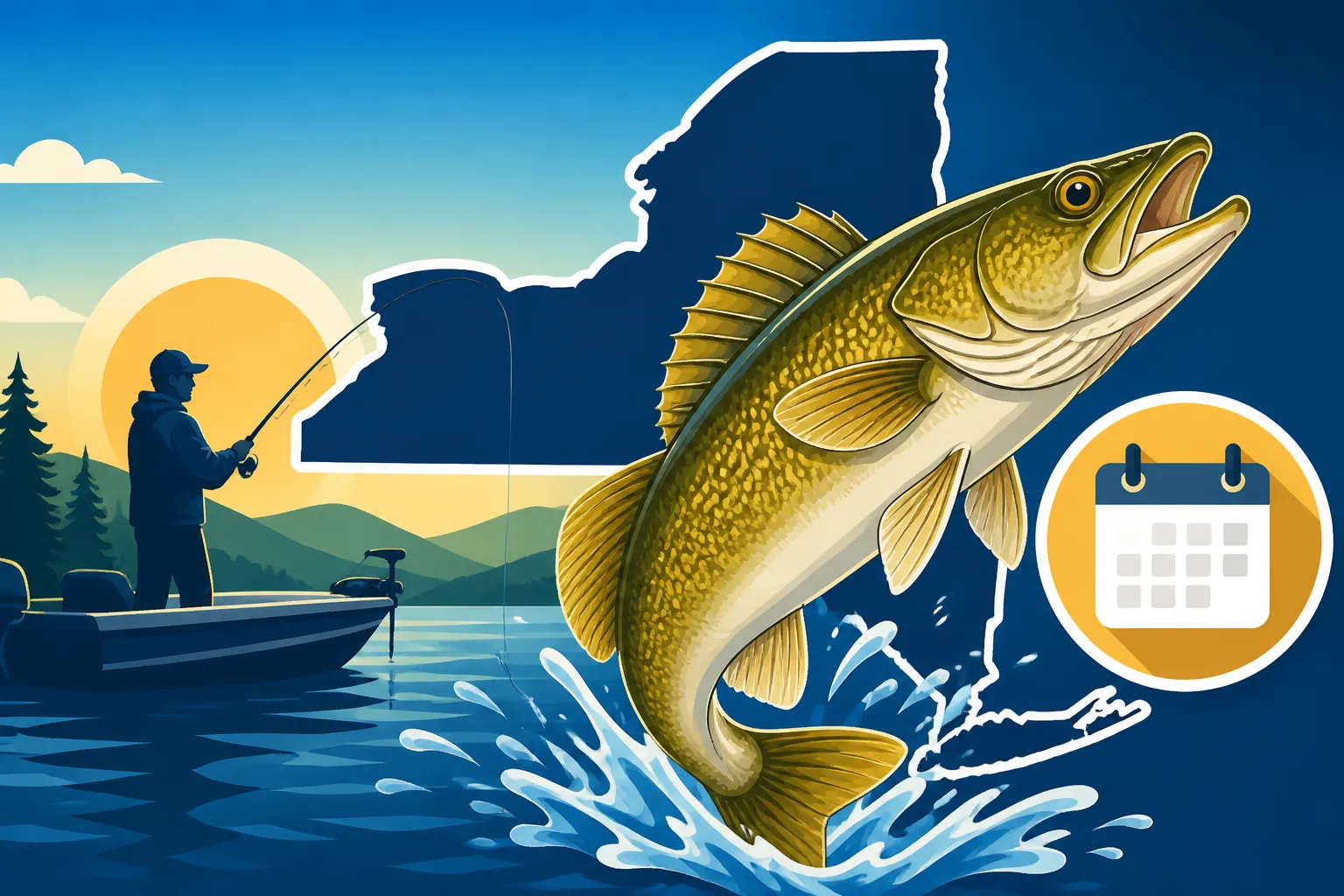
For the vast majority of New York's waters, the general statewide walleye season is surprisingly long, spanning from March 16 through March 15 of the following year. This might sound like a year-round open season, and technically, the act of fishing for walleye is indeed permitted during this entire period in many locations. However, here's where the nuance comes in, and it's a critical distinction that often trips up even seasoned anglers: being able to fish for walleye doesn't always mean you can keep them. This statewide season is the foundational rule, but it’s more about outlining the absolute longest possible timeframe.
This extended season allows anglers to pursue walleye during various parts of their annual cycle, from their pre-spawn staging in early spring to their deep winter haunts under the ice. It acknowledges the widespread distribution of walleye across different ecological zones in New York, where environmental factors can cause their behavior and vulnerability to vary. So, while you might be casting for walleye in a small reservoir in July, the same general season framework applies as to someone ice fishing for them in January, unless specific regional rules dictate otherwise. It really highlights the importance of going beyond just the open season and digging into the specific catch limits and sizes.
Understanding the Nuances of Walleye Harvest Seasons
While the statewide open season for fishing walleye is quite broad, the harvest season – meaning when you can actually keep a walleye you catch – is where most of the specific regulations come into play. Many popular walleye fisheries have special regulations designed to protect spawning fish, ensure sustainable populations, or manage trophy potential. This usually means either a delayed opening to the harvest season or different length and creel limits than the statewide default.
For example, a lake might technically be open for walleye fishing starting March 16th, but you might not be allowed to keep any walleye until the first Saturday in May. This type of regulation is specifically put in place to protect walleye during their crucial spawning period, typically in April when they are most vulnerable. During this time, they gather in shallower areas, often in rivers or rocky shoals, making them easier to catch. By delaying the harvest season, the New York State Department of Environmental Conservation (DEC) ensures that enough walleye successfully reproduce to maintain healthy populations for future generations of anglers. It’s a conservation measure that sometimes frustrates eager anglers, but it’s vital for the long-term health of the fishery. Before you even think about putting a fish in the cooler, you absolutely must verify the local harvest rules. A quick check of the latest New York Fishing Regulations Explained is always a good idea.
Decoding Regional Walleye Regulations: Lakes and Rivers with Special Rules
The real trick to understanding New York's walleye seasons is recognizing that many of our best walleye waters operate under their own distinct sets of rules. These aren't just minor adjustments; they can dramatically change when you can start keeping fish, how many you can keep, and what size they need to be. Ignoring these regional variations is a surefire way to find yourself on the wrong side of a DEC enforcement officer.
Key Water Bodies with Unique Walleye Seasons and Limits
Let's dive into some of New York's most renowned walleye fisheries and their specific regulations, as these are often the places anglers plan their trips around. These rules are put in place for a variety of reasons, from protecting specific spawning runs to managing populations unique to those water bodies.
- Lake Erie: This Great Lake is a walleye powerhouse, known for its incredible numbers. Here, the walleye season runs from May 1 through March 15. The minimum length is 15 inches, and the daily creel limit is 6 fish. This earlier opening than some other major lakes, combined with a slightly smaller minimum size, reflects the robust population and distinct management strategy for this world-class fishery.
- Oneida Lake: Often called New York's walleye factory, Oneida Lake is incredibly popular. Its walleye season opens on the first Saturday in May and runs through March 15. The minimum length here is 18 inches, and you can only keep 3 walleye per day. This later opening and stricter creel limit are critical for protecting Oneida's legendary walleye population, especially during their spring spawning aggregations.
- Chautauqua Lake: Another premier walleye destination in Western New York, Chautauqua Lake shares a similar season to Oneida. Its season also opens on the first Saturday in May and extends through March 15. Anglers must adhere to an 18-inch minimum length and a daily limit of 5 fish. The similar opening date aims to safeguard the lake's vital spawning activity.
- St. Lawrence River (some sections, including border waters): The St. Lawrence River offers incredible walleye fishing. The season here is May 1 through March 15, with a 15-inch minimum length and a daily limit of 6 fish. Being a border water with Canada, some reciprocal agreements exist, but it's always best to understand New York Fishing License Reciprocity with Other States and New York's specific rules.
- Lake Ontario and its Tributaries: While Lake Ontario itself isn't primarily known as a walleye fishery compared to Lake Erie, its tributaries can see some walleye movement. Generally, the statewide rules apply, but it’s always important to double-check. For a deeper dive into the overall regulations, you can reference the New York Fishing Regulations Explained.
These examples clearly show that a "statewide" season doesn't tell the whole story. Planning a trip to one of these hotspots without checking their specific regulations is a recipe for disappointment, or worse, a costly ticket.
The Importance of Checking Specific Regulations
I can't stress this enough: always, always, always check the current New York State Freshwater Fishing Regulations Guide before you head out. Regulations can change from year to year, and what was true last season might not be true this one. The DEC updates its guide annually, and it's your ultimate source of truth. You can find digital copies on the DEC website, or pick up a physical copy at most bait shops, sporting goods stores, or DEC offices. Seriously, don't rely on old advice or what a buddy told you five years ago.
Here’s a quick summary of some key walleye water regulations:
| Water Body | Season Dates | Minimum Length | Daily Limit | Notes |
|---|---|---|---|---|
| Statewide | March 16 – March 15 | 18 inches | 5 | General rule, many exceptions apply. |
| Lake Erie | May 1 – March 15 | 15 inches | 6 | Productive Great Lakes fishery. |
| Oneida Lake | First Saturday in May – March 15 | 18 inches | 3 | Famous for its walleye, stricter limits. |
| Chautauqua Lake | First Saturday in May – March 15 | 18 inches | 5 | Important Western NY walleye destination. |
| St. Lawrence River | May 1 – March 15 | 15 inches | 6 | Border waters often have specific rules. |
Keeping a digital copy of the regulations on your phone, perhaps in a waterproof case you picked up from Amazon, is always a smart move. And make sure your phone battery is charged, because looking up a rule on the water is much better than guessing! Remember, knowing the New York Freshwater Fishing Rules is part of being a responsible angler.
Optimizing Your Walleye Fishing Calendar: Beyond Just Open Dates
While knowing the exact season dates is non-negotiable for legality, smart walleye anglers also understand that "open season" doesn't necessarily mean "best fishing." There are specific periods within the calendar year when walleye are most active, predictable, and willing to bite, making your efforts much more fruitful. Understanding these prime times can significantly increase your success rate.
Prime Times to Target Active Walleye
Walleye behavior is heavily influenced by water temperature, spawning cycles, and forage availability. Knowing these patterns helps you predict when and where to find them.
- Early Spring (Pre-Spawn & Spawn): As ice thaws and water temperatures begin to climb (typically into the 40s Fahrenheit), walleye become incredibly active, staging in preparation for their spawn. This is usually from late March through April, depending on the waterway and specific weather patterns. They move into shallower areas, often gravelly bottoms in rivers or rocky points in lakes. While the harvest season might be closed in many places during the peak spawn, catch-and-release fishing can be phenomenal, offering a chance to target some of the biggest fish of the year. If the season is open, these pre-spawn periods can offer fantastic opportunities.
- Late Spring/Early Summer (Post-Spawn Recovery): Once the spawn is complete (late April to early June), walleye are often hungry and aggressive as they recover from the rigors of reproduction. They disperse from spawning grounds and begin to actively feed, often moving to slightly deeper structure or weed edges as water temperatures rise into the 50s and 60s. This period, coinciding with many lakes' harvest season openings like the New York Walleye Season and Limits on Oneida or Chautauqua, is a fantastic time for consistent action.
- Mid-Summer (Deep Water Patterns): During the warmest months (July and August), walleye typically move to deeper, cooler water. They'll often relate to thermoclines, offshore humps, rock piles, or deep weed lines. While they can be harder to locate, once you find a school, the fishing can be excellent, particularly around dawn, dusk, or at night. Trolling with crankbaits or jigging spoons are popular techniques.
- Fall (Feeding Frenzy): As water temperatures drop in September and October, walleye sense the approaching winter and embark on a serious feeding binge. They become incredibly active, often returning to shallower depths or river channels to gorge on baitfish. This can be one of the absolute best times to catch large numbers of walleye, and trophy-sized fish are frequently caught during this period. The cooler weather also means less boat traffic and a more comfortable fishing experience.
Seasonal Strategies for Successful Walleye Angling
Understanding the "when" also means adapting your "how." Your fishing techniques and gear should shift with the seasons to match walleye behavior.
- Spring: Focus on slow presentations near spawning grounds. Jigging with small plastics, hair jigs, or live bait (like minnows, if permitted) can be incredibly effective. Consider light to medium-light rods to feel those subtle bites. Stock up on your favorite walleye lures from Amazon before the season kicks into high gear.
- Summer: When walleye go deep, so should your lures. Trolling with crankbaits or spinner rigs at specific depths using planer boards or downriggers is a popular choice on larger lakes like Lake Erie. Jigging blade baits or spoons directly over deep structure also works well. For smaller lakes, focusing on early morning or late evening bites in transition zones can yield results.
- Fall: This is prime time for aggressive presentations. Casting crankbaits, swimbaits, or larger jigs along rocky points, break lines, and river bends can be highly productive. Walleye are often stacked up and very willing to chase down a meal. This is also a great time to experiment with different colors and retrieve speeds.
- Winter (Ice Fishing): For those brave enough to venture onto the ice, walleye fishing can be excellent. Jigging small spoons, blade baits, or soft plastics tipped with a minnow head are common. Tip-ups with live minnows are also very effective, especially for covering more area. Always remember to prioritize ice safety – "How Thick Does Ice Need to Be to Fish Safely?" is a question you should always know the answer to before heading out.
No matter the season, remember to check the Walleye Daily Limit in New York and the Walleye Minimum Size Limit for your specific body of water.
Essential Considerations for New York Walleye Anglers
Beyond just the dates and locations, there are several other critical factors every walleye angler in New York needs to keep in mind. These considerations not only ensure you're fishing legally but also contribute to a more enjoyable and responsible angling experience for everyone.
Licensing, Limits, and Responsible Practices
Before you even think about casting a line for walleye, you absolutely need a valid New York State fishing license. This isn't just a suggestion; it's a legal requirement for most anglers aged 16 and older. There are different types of licenses available, from annual to short-term, and residency status affects the cost. For all the details, make sure to read up on the New York Fishing License Guide or check out How to Get a Fishing License in New York.
- Fishing Licenses: Your license fees directly support the conservation efforts that keep our walleye populations healthy, including stocking programs, habitat restoration, and enforcement. Don't skip this step! It's easy to purchase one online, at a DEC office, or through many authorized vendors like bait shops or sporting goods stores.
- Size and Creel Limits: We've touched on these throughout, but it's worth reiterating their importance. The minimum length requirement isn't arbitrary; it ensures that walleye have a chance to spawn at least once, contributing to future generations. The daily creel limit helps distribute the harvest among anglers and prevents overfishing. Always have a reliable measuring device on hand (you can find various options on Amazon) and respect the limits. If you're unsure about the size of a fish, it's always best to release it.
- Catch and Release: Even if the harvest season is open and you're within your limits, practicing responsible catch and release, especially for fish you don't intend to keep or for larger trophy fish, is crucial. Walleye are a valuable resource, and proper handling ensures their survival. Use appropriate tackle, land fish quickly, keep them in the water as much as possible, and use a de-hooking tool to minimize stress. Learn about Catch-and-Release Handling Rules to protect your released fish.
- Bait Regulations: While live bait can be incredibly effective for walleye, New York has specific rules regarding its use, particularly concerning baitfish. There are restrictions on collecting bait from certain waters and using bait from one water body in another, primarily to prevent the spread of invasive species and diseases. Always check the regulations concerning Rules on Using Live Bait in New York for your specific fishing location.
Gear Up Smart for Walleye Success
Having the right gear makes a huge difference in your walleye fishing experience. It's not just about having a rod and reel; it's about having the right rod and reel, plus the necessary accessories to comply with regulations and ensure safety.
- Rods and Reels: A medium to medium-heavy spinning or baitcasting outfit is generally suitable for walleye. The exact setup will depend on your chosen technique (jigging, trolling, casting) and the size of the water you're fishing. Consider a sensitive rod to feel those subtle walleye bites.
- Line: Braided line with a fluorocarbon leader is a popular choice for walleye due to its sensitivity and strength. The main line's pound test might range from 8-20 lbs, with leaders typically 6-12 lbs, depending on water clarity and fish size.
- Lures and Baits: Walleye are opportunistic feeders, responding to a wide array of offerings. Jigs (tipped with soft plastics or live bait), crankbaits, spinner rigs, and blade baits are all highly effective. Having a selection of colors and sizes for different water conditions and depths is a good strategy. Many reputable brands offer excellent walleye lures that you can easily find on Amazon.
- Essential Accessories: Don't forget a sturdy landing net (with rubberized mesh to protect fish), a pair of pliers or a de-hooking tool, a measuring tape (to ensure legal size), and a cooler with ice for any legal keepers. A good headlamp is indispensable for night fishing or early morning starts. And, as mentioned, a waterproof container for your phone and regulations is a smart safety measure. Consider checking How Many Fishing Rods Can I Use at Once? as well, as regulations vary.
Being prepared with the right knowledge and gear ensures that your time chasing New York walleye is not only rewarding but also responsible and compliant with all the necessary rules.
Disclaimer
Fishing regulations, including season dates, minimum lengths, and daily creel limits, are subject to change by the New York State Department of Environmental Conservation (DEC). The information provided in this guide is intended for general informational purposes only and may not reflect the most current regulations. Always consult the official New York State Freshwater Fishing Regulations Guide, available on the DEC website or at authorized license vendors, before engaging in any fishing activity. It is the angler's responsibility to know and follow all applicable laws and regulations.