Bluefish Fishing on Long Island Sound, New York
Feeling the surge of an aggressive bluefish tearing line off your reel is an electrifying experience, but finding these fast-moving, toothy predators consistently in the vast waters of Long Island Sound can feel like chasing a ghost. This comprehensive guide is here to cut through the guesswork, helping you understand bluefish behavior, pinpoint their favorite haunts, and master the techniques to land more of these hard-fighting fish in New York's iconic coastal waters.
Understanding Bluefish in Long Island Sound
Bluefish, or "choppers" as many anglers affectionately call them, are one of the most exciting and accessible saltwater species available to New York anglers. Their aggressive nature and powerful fight make them a prime target, but to truly succeed, you need to understand their biology and how they interact with the dynamic environment of Long Island Sound.
Bluefish Characteristics and Habits
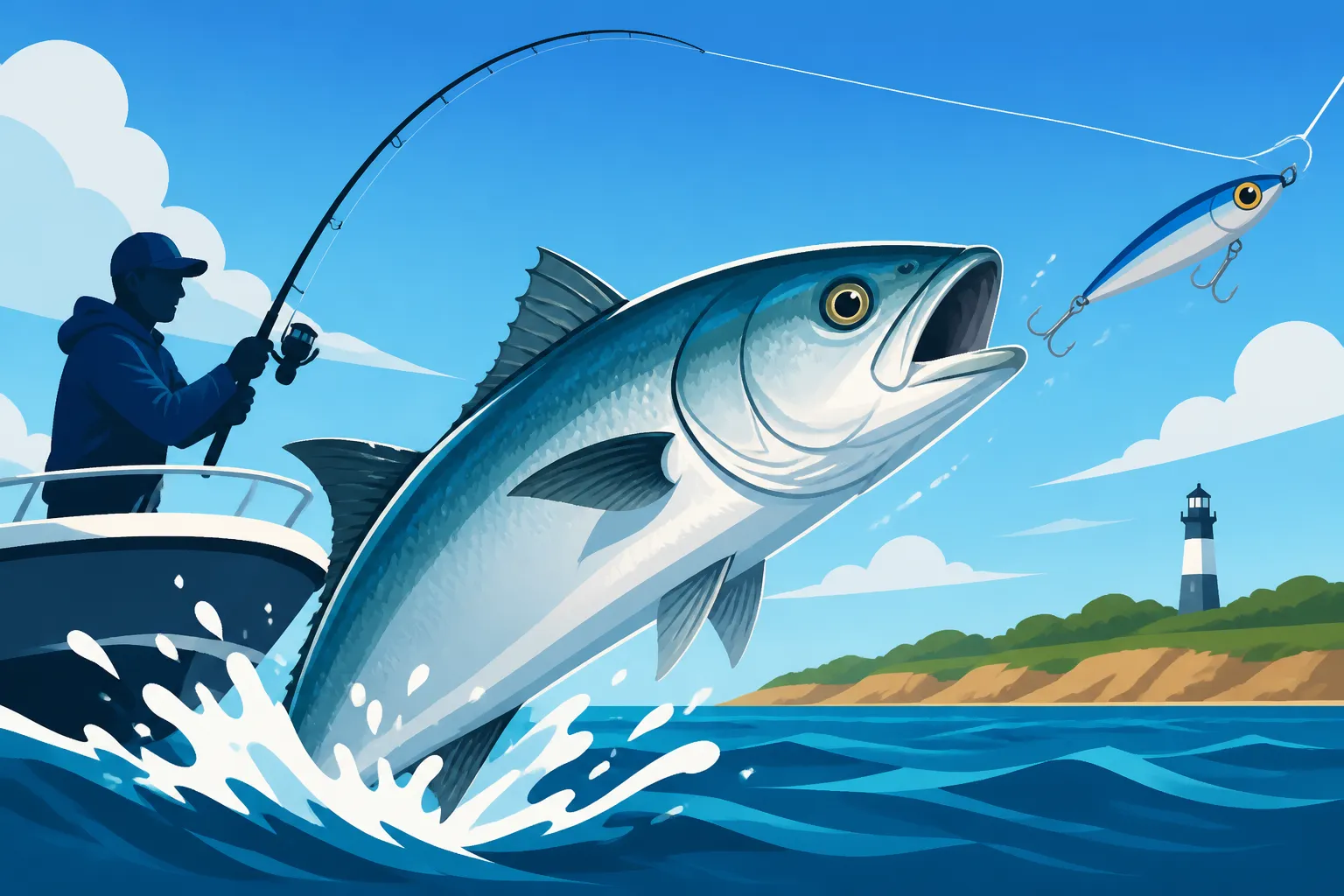
Bluefish ( Pomatomus saltatrix) are built for speed and predation. They have sleek, torpedo-shaped bodies, a distinctive greenish-blue back fading to silvery sides, and a deeply forked tail. What truly sets them apart, however, is their formidable set of razor-sharp teeth. These teeth are designed for slicing and dicing baitfish, and they make quick work of anything that gets in their way, including unsuspecting fingers or inadequate fishing tackle.
These fish are true opportunistic predators, often forming massive schools to corral and attack baitfish like bunker (Atlantic menhaden), spearing (silversides), and anchovies. When bluefish are actively feeding, it's often a chaotic scene with birds diving, baitfish scattering on the surface, and bluefish boiling, creating what's known as a "bluefish blitz." This feeding frenzy is a sight to behold and signals prime fishing conditions. They are relentless eaters, known for their "slash-and-burn" feeding style, often injuring more baitfish than they actually consume, leaving a tell-tale oil slick and floating bait in their wake. Their aggressive nature means they'll hit just about anything that moves, making them incredibly fun to target, but also necessitating durable gear.
Seasonal Movements and Presence
The presence of bluefish in Long Island Sound is highly seasonal, driven primarily by water temperature and the availability of their preferred baitfish. Typically, the first scouts of bluefish start to appear in the Sound around late April or early May, as water temperatures climb into the mid-50s Fahrenheit. These early arrivals are often smaller "snapper bluefish" or "cocktail blues," signaling that the warmer waters are attracting baitfish.
The peak season for bluefish fishing usually runs from June through October. During these months, the Sound is teeming with bait, and the bluefish populations are at their highest. You'll find them spread throughout the Sound, from shallow inshore areas to deeper channels, often in large, active schools. As the fall progresses, usually from late October into November, the bluefish begin their migration south, following the warmer water and baitfish out of the Sound and into the open Atlantic. While some stragglers might be caught into early December, the fishing generally tapers off significantly as temperatures drop. Understanding these seasonal patterns is key to planning your fishing excursions, as it dictates when and where you're most likely to encounter these aggressive fish.
Top Spots for Bluefish on Long Island Sound
Long Island Sound offers a vast and varied landscape for bluefish anglers, from bustling harbors to tranquil bays and dramatic offshore rips. Knowing where to focus your efforts can make all the difference, whether you're casting from shore or cruising in a boat.
Inshore Hotspots
For many anglers, especially those without a boat, inshore areas offer fantastic opportunities to tangle with bluefish. These spots typically provide easy access and concentrate baitfish, which in turn attracts the choppers.
- Inlets and Estuaries: The mouths of inlets and tidal rivers along Long Island's north shore and Connecticut's coastline are perennial bluefish favorites. Places like Shinnecock Inlet, Moriches Inlet, and the various smaller estuaries feeding into the Sound act as natural funnels for baitfish moving with the tides. Bluefish often stage just outside these mouths, waiting to ambush schools of bunker or spearing. Look for areas where moving water creates current seams and eddies, as these are prime ambush points. Early morning or late evening often provides the best action in these zones.
- Jetties and Piers: Prominent man-made structures like jetties, breakwaters, and fishing piers extending into the Sound are magnets for both bait and predators. The structures themselves provide cover for baitfish, and the current around them can concentrate food sources. Famous spots like Coney Island Pier or the jetties along the Hamptons are known for producing bluefish, especially during peak season. These locations are excellent for casting lures like metal jigs or poppers. If you're planning a trip to a pier or jetty, it's always a good idea to check the local regulations and any access restrictions beforehand. For more on accessing prime locations, you might find our guide on Best Shore Fishing Spots on Long Island, New York helpful.
- Shallow Bays and Flats: During strong tides or when large schools of bunker push into shallower areas, bluefish will readily follow. Bays like Peconic Bay and Gardiners Bay on the eastern end of Long Island are known for their strong currents and abundant bait. Flats and shallow weed beds bordering deeper channels can also hold surprisingly large numbers of bluefish, especially when targeting smaller "snapper blues." Keep an eye out for bird activity, as diving gulls are a dead giveaway that bluefish are pushing bait to the surface.
Offshore Structure and Drifting Lanes
For boat anglers, the deeper waters and prominent structural features of Long Island Sound offer access to larger, more mature bluefish and the opportunity to drift or troll through prime feeding grounds.
- Rips and Reefs: Where strong tidal currents meet underwater structure, significant "rips" are formed. These turbulent areas are phenomenal bluefish magnets. The most famous rip in Long Island Sound is undoubtedly The Race, located between Fisher's Island and Plum Island. Here, massive amounts of water are squeezed through a narrow passage, creating powerful currents that disorient and concentrate baitfish. Bluefish, along with striped bass, lie in wait in the calmer water adjacent to the rip or actively feed within the churn. Other productive rips include Plum Gut and Sluiceway. Drifting through these rips with chunk bait or trolling deep-diving plugs are highly effective strategies.
- Channel Edges and Drop-offs: The main shipping channels and their edges throughout Long Island Sound, such as the New Haven Channel or the deeper sections off Port Jefferson, act as highways for baitfish. Bluefish will patrol these edges, especially during tide changes, looking for an easy meal. Drop-offs where shallow water suddenly plunges into deeper troughs are also excellent ambush points. Using your boat's fishfinder to locate schools of bait or areas of significant bottom structure can give you a major advantage.
- Open Water Blitzes: Sometimes, bluefish schools will push bait to the surface in open water, far from any discernible structure. These "blitzes" are often identified by frantic bird activity—gulls, terns, and ospreys diving into the water. If you spot this commotion, motor safely upwind or upcurrent of the activity, shut down your engine, and drift into the feeding bluefish. Casting topwater poppers or metal jigs into the melee can result in instant hook-ups. Platforms like FishingBooker are excellent resources for finding local captains who know the subtle nuances of these prime locations and can put you right on the fish. For those seeking to venture out with a professional, our guide to Bluefish Charters on Long Island Sound can help you find the perfect trip.
Essential Gear for Bluefish Fishing
Bluefish are not subtle; they hit hard, fight fiercely, and have mouths full of sharp teeth. Your tackle needs to be robust enough to handle their aggressive nature and prevent equipment failure. Skimping on gear when targeting choppers usually leads to disappointment.
Rods, Reels, and Line
Choosing the right rod, reel, and line setup is paramount for successful bluefish fishing. You need a combination that can cast lures a good distance, handle powerful strikes, and withstand the abuse of a toothy battle.
- Rods: A medium-heavy to heavy action spinning rod, typically 7 to 9 feet long, is ideal. This length provides good casting distance from shore or a boat and enough leverage to fight a strong fish. Look for rods with a fast to moderate-fast tip action to help with casting accuracy and feel, but with plenty of backbone to muscle in a determined bluefish. Graphite or composite blanks offer a good balance of sensitivity and power. For boat anglers focusing on trolling or heavier jigging, a conventional rod of similar power might be preferred.
- Reels: A sturdy spinning reel in the 4000 to 6000 size range, capable of holding 200-300 yards of line, is generally suitable. Look for reels with a smooth, powerful drag system, as bluefish are known for making strong initial runs. Corrosion resistance is also a significant factor, given that you'll be fishing in saltwater. Brands like Penn, Shimano, and Daiwa offer many reliable options that stand up to the challenge. Ensure your reel is spooled tightly and evenly to prevent line issues.
- Line: Braided line is the go-to choice for most bluefish anglers. Its thin diameter, incredible strength, and minimal stretch provide excellent casting distance, sensitivity, and hook-setting power. A 20 to 40-pound test braided line is a good starting point. While braid is strong, it's also highly visible and can be easily cut by bluefish teeth. This necessitates a leader. A 30 to 50-pound test monofilament or fluorocarbon leader, typically 2 to 3 feet long, should be tied to your main line using a strong knot like an FG knot or an Albright knot. To combat those razor-sharp teeth directly, a short section (6-12 inches) of single-strand wire leader (around 40-80 lb test) is often essential, crimped or tied to your monofilament leader. For more on line choices, consider exploring tips on Best Line Weight for New York Freshwater Fishing, though much of the principle applies to saltwater, just upscaled in strength.
| Gear Component | Recommendation | Key Features for Bluefish |
|---|---|---|
| Rod | 7-9 ft, Med-Heavy to Heavy Spinning | Long casting, strong backbone, fast action tip |
| Reel | 4000-6000 Series Spinning | Smooth, powerful drag, saltwater resistance |
| Main Line | 20-40 lb Braided Line | Strength, low stretch, casting distance |
| Leader | 30-50 lb Mono/Fluoro + 6-12" Wire | Abrasion resistance, tooth protection |
Lures, Baits, and Rigs
Bluefish aren't particularly picky eaters, but certain lures and baits consistently outperform others. Their aggressive nature means they respond well to noisy, flashy, and fast-moving presentations.
- Topwater Lures (Poppers & Walk-the-Dogs): There's nothing quite like watching a bluefish explode on a topwater lure. Poppers, with their cupped faces that create a commotion on the surface, and "walk-the-dog" style lures that zig-zag tantalizingly, are incredibly effective. Their noisy, splashy action mimics a struggling baitfish, driving bluefish into a frenzy. Popular brands include Yo-Zuri and Heddon. Use a fast retrieve with plenty of pauses and twitches to make the lure dance.
- Metal Jigs and Spoons: When bluefish are feeding on deeper bait or you need to cast a long distance, metal jigs and spoons are invaluable. Hopkins Shorty, Kastmaster, and Crippled Herring jigs in sizes from 1 to 3 ounces are excellent choices. Their erratic, flashy action on the retrieve perfectly imitates fleeing baitfish. These are particularly good for casting into blitzes or jigging near bottom structure. The heavier weight allows for deep presentations and long casts, crucial when fish are out of reach.
- Plugs (Swimming & Diving): Both shallow and deep-diving plugs can be effective, especially when trolling or retrieving at a moderate speed. Shallow swimmers work well in calmer, shallower water, while deep divers help you reach fish holding further down in the water column. Choose plugs with strong hardware and durable finishes, as bluefish teeth will quickly destroy cheaper options. Bomber and Rapala are trusted names.
- Live and Chunk Bait: While lures are thrilling, live or fresh cut bait can be irresistible to bluefish, especially when they're less active or holding deeper. Live bunker (menhaden), spearing, or mackerel are prime choices. If using chunk bait, fresh bunker is king. Rig live bait with a single hook through the nose or back, allowing it to swim naturally. For chunk bait, use a simple fish-finder rig with an egg sinker or a slip sinker, allowing the bait to drift naturally with the current. Always remember to use a wire leader when fishing bait, as they will swallow the hook, cutting monofilament instantly. For bait collection rules, you might want to review Bait Fish Collection Rules.
- Rigs: Beyond just the leader, having a few simple rigs ready is key. A basic fish-finder rig with a heavy monofilament or fluorocarbon leader (and a wire bite leader) is perfect for bottom fishing with bait. For casting, a snap swivel connecting your main line (or mono leader) to your lure allows for quick changes and adds some rotational protection. Ensure all terminal tackle—swivels, snaps, and hooks—are heavy-duty and saltwater-grade to prevent break-offs.
Proven Techniques for Catching Bluefish
Catching bluefish on Long Island Sound is often about adapting your approach to their aggressive, sometimes unpredictable nature. Whether you're casting from shore or boat, or trolling through open water, having a few key techniques in your arsenal will significantly increase your success.
Casting and Retrieval Strategies
Casting for bluefish is a dynamic and exciting way to fish, offering direct engagement with these powerful predators. The key is to mimic their prey and provoke a strike.
- Reading the Water: Before making a cast, observe the water. Look for any signs of activity: diving birds, splashing baitfish, or the distinctive "boil" of feeding bluefish. Often, you'll see small schools of bunker or spearing skipping across the surface, desperately trying to escape. Cast your lure just beyond the visible activity and retrieve it through the commotion. If you see a bluefish blitz, approach carefully from upwind or upcurrent if possible, so your boat or presence doesn't spook the fish.
- Topwater Thrills: Poppers and "walk-the-dog" lures are incredibly effective, especially during low light conditions or when bluefish are actively feeding on the surface. For poppers, a retrieve that involves sharp rod jerks followed by pauses will make the lure "pop" and splash, imitating a distressed baitfish. Experiment with the rhythm – sometimes a fast, aggressive retrieve works best, other times a slower, more deliberate pop-pop-pause is the ticket. For walk-the-dog lures, a rhythmic twitching of the rod tip while reeling slowly creates a side-to-side gliding motion. Maintain a tight line to work the lure effectively.
- Subsurface Attacks: When bluefish are holding deeper or ignoring topwater presentations, metal jigs and swimming plugs come into play. For metal jigs, a fast, steady retrieve with occasional pauses or jigging motions can be highly effective. The flash and erratic movement of the jig often trigger a strike. Swimming plugs should be retrieved at a moderate, consistent speed, letting their built-in action do the work. Vary your retrieve speed until you find what the fish prefer on that particular day. Sometimes a stop-and-go retrieve can also entice a hesitant fish.
Trolling and Drifting Methods
When bluefish are scattered across large areas of open water or holding in deeper channels, trolling or drifting can be the most efficient way to cover ground and put your bait or lure in front of more fish.
- Effective Trolling: Trolling involves dragging lures or baits behind a moving boat. For bluefish, a relatively fast trolling speed (around 4-7 knots) often works best, mimicking fleeing baitfish. Use sturdy trolling rods and reels, and make sure your lures are running at the desired depth. Deep-diving plugs, spoons, and umbrella rigs are popular choices for trolling. Pay close attention to your fishfinder to identify bait schools or structure where bluefish might be holding. If fishing multiple lines, stagger your lure depths and distances behind the boat to avoid tangles and cover more of the water column. You can also deploy planer boards to spread your lines horizontally, covering an even wider path. Many anglers book with experienced captains found on platforms like FishingBooker who have mastered these techniques.
- Strategic Drifting: Drifting is an excellent technique when you've located schools of bait or bluefish on your fishfinder, or when fishing over prominent structure like rips or channel edges. Let the current carry your boat and your bait or lure through the suspected holding areas. Live bait, like bunker, or chunk bait on a fish-finder rig are highly effective when drifting. Pay attention to your line; a sudden slackening or a sharp pull can indicate a bite. Adjust your drift by occasionally bumping the engine into gear to slow down or reposition, or deploy a drift sock to control your speed. This allows your bait to stay in the strike zone longer. This method is particularly fruitful in areas known for Best Fishing Spots on Long Island Sound.
Handling and Safety
Bluefish are notorious for their aggressive bites and sharp teeth. Proper handling is not just for the fish's safety, but for yours as well. Mishandling a bluefish can lead to painful injuries.
- Safety First: Always use caution when handling bluefish. Their teeth can easily cut through skin and even bone. Never put your fingers near their mouth. Essential tools include a pair of long-nosed pliers or a dehooker, and a fish gripper or sturdy gloves. If you're planning to keep fish, a reliable club or "priest" can dispatch them quickly and humanely.
- Unhooking: If the fish is destined for release, try to unhook it while it's still in the water or, if necessary, bring it briefly onto a wet deck or into a net. Use your pliers to quickly remove the hook. If the hook is deeply swallowed and you intend to release the fish, it's often better to cut the line as close to the hook as possible rather than attempt a traumatic extraction.
- Landing and Storage: For larger bluefish, a sturdy net with rubberized mesh is helpful to minimize damage to the fish and prevent hooks from getting tangled. If you're keeping your catch, immediately place it on ice in a cooler. Bluefish meat can spoil quickly if not properly cared for, so prompt chilling is key to preserving its quality. Bleeding the fish immediately after landing can also improve the taste and texture of the meat. Remember, swift and efficient handling is beneficial for both the angler and the fish.
Regulations and Conservation
Fishing for bluefish in Long Island Sound means you're operating within the jurisdiction of New York State. Like all responsible anglers, it's crucial to understand and adhere to the current regulations, not only to avoid penalties but to ensure the long-term health of the fishery.
New York Bluefish Regulations
The New York State Department of Environmental Conservation (NYS DEC) sets specific rules for bluefish, covering aspects like minimum size, daily possession limits, and open seasons. These regulations can change, so it's always wise to consult the latest official DEC guide before heading out.
- Minimum Size: For recreational anglers targeting bluefish in New York waters, including Long Island Sound, there is a minimum size limit. As of my last check, this is typically 12 inches in total length. This means any bluefish caught that measures less than 12 inches must be immediately and carefully released. Measuring fish accurately is important; usually, total length is measured from the tip of the snout to the tip of the tail.
- Daily Possession Limit: Anglers are also restricted on how many bluefish they can keep in a single day. Currently, the recreational daily possession limit for bluefish is 10 fish per angler. This limit helps manage the population and prevent overfishing. It's important to note that this limit applies to each individual angler, not per boat, unless specified otherwise (e.g., party boat limits might differ slightly based on vessel-wide rules).
- Open Season: Bluefish are generally open to recreational fishing year-round in New York waters. However, their migratory nature means they are primarily present and actively biting during the warmer months, as discussed in the "Seasonal Movements" section. Even though the season is open, always check the current DEC fishing regulations for any updates, as rules can be adjusted based on stock assessments and management needs. You can find comprehensive details in the New York Fishing Regulations Explained guide or directly through the NYS DEC website. Don't forget, if you're fishing in saltwater, you may also need to register for the New York Recreational Marine Fishing Registry.
Responsible Angling Practices
Beyond simply following the rules, responsible angling involves a commitment to ethical practices that minimize your impact on the environment and the fish populations.
- Catch and Release: While bluefish are excellent table fare, sometimes you'll catch more than you need, or you might land a fish you simply want to release. When practicing catch-and-release, handle the fish as little as possible. Keep it in the water if you can, use barbless hooks to facilitate easy removal, and employ tools like dehookers or long-nosed pliers to quickly and gently remove the hook. If you must bring the fish out of the water, do so quickly, support its body horizontally, and get it back into the water promptly. Avoid dragging fish onto dry, hot surfaces.
- Waste Not, Want Not: Bluefish can be very abundant, and it's easy to get carried away during a blitz. However, catching more fish than you intend to keep or can responsibly consume is discouraged. Only keep what you can eat or process, adhering strictly to the daily possession limits. If you're targeting other species and bluefish become a nuisance, consider switching lures or locations to avoid them, or dedicate yourself to careful catch-and-release.
- Respect the Environment: Always practice "leave no trace" principles. Pack out all your trash, including discarded fishing line, bait containers, and any other litter. Be mindful of marine ecosystems, avoiding damage to sensitive habitats like seagrass beds or oyster reefs. When boating, observe safe boating practices and be aware of other anglers, boaters, and wildlife. Understanding the broader New York Fishing License Guide requirements, and obtaining the correct licenses or registrations, is the first step in being a responsible angler.
Disclaimer
The information provided in this guide is for general informational purposes only and is subject to change. Fishing regulations, seasons, and limits are set by the New York State Department of Environmental Conservation (NYS DEC) and can be updated at any time. While we strive to provide accurate and up-to-date information, it is always the angler's responsibility to consult the most current official NYS DEC fishing regulations guide or website before engaging in any fishing activity. Always prioritize safety and environmental stewardship.