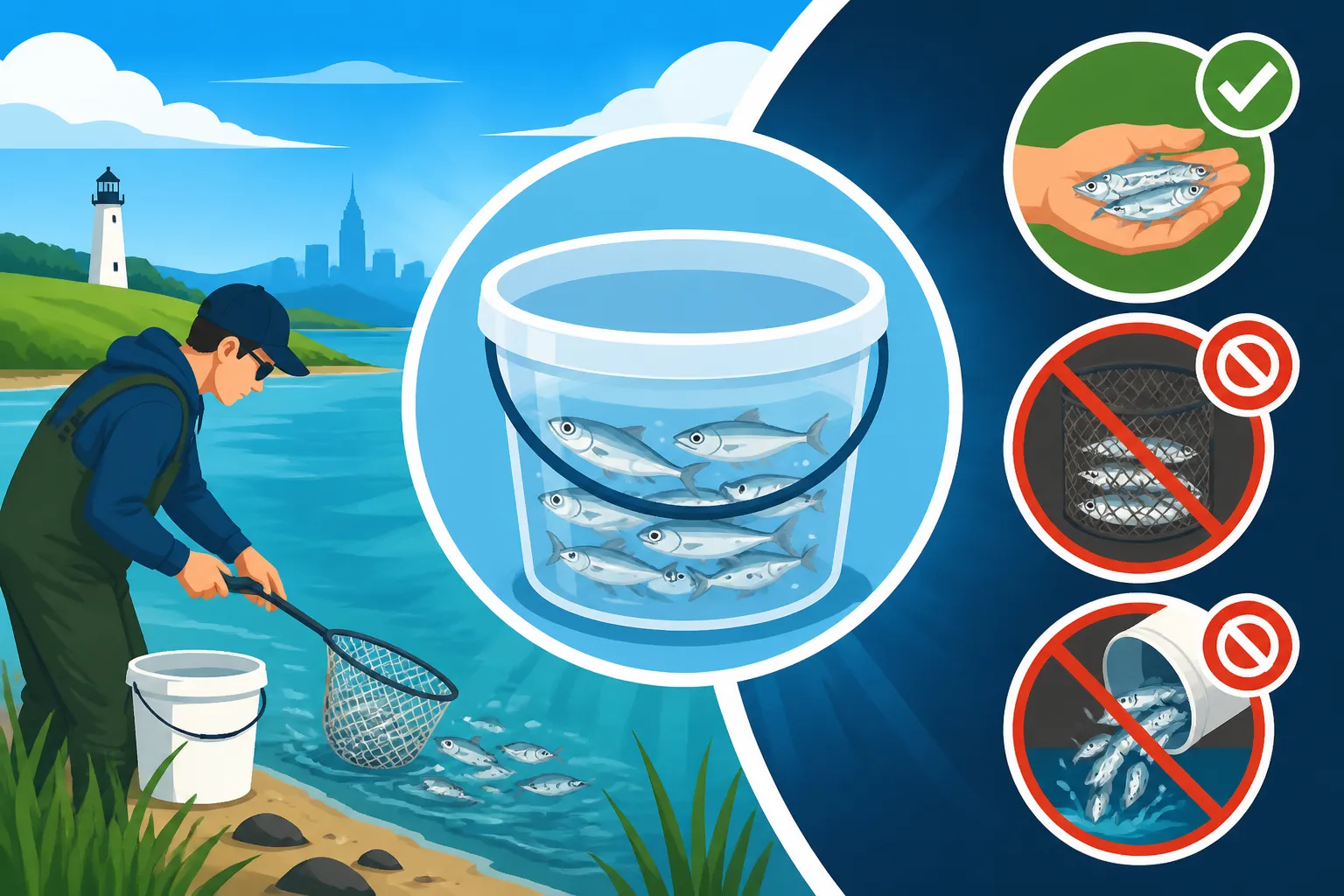
Bait Fish Collection Rules
Navigating the labyrinth of fishing regulations can feel like trying to untangle a hundred yards of monofilament line after a monster backlash, and when it comes to collecting bait fish in New York, it's no different. It’s easy to feel overwhelmed by all the rules, worried you might inadvertently break one and ruin a perfectly good day on the water. This comprehensive guide is here to cut through the confusion, clearly outlining New York's specific regulations for collecting and using bait fish so you can fish with confidence and peace of mind.
Understanding New York's Bait Fish Regulations
The world of bait fish in New York is surprisingly complex, far more than just scooping some minnows out of a ditch. The New York State Department of Environmental Conservation (DEC) has put a lot of thought into these rules, and for good reason. It’s not about making things difficult for us anglers, but about protecting the incredible aquatic ecosystems that make fishing in New York so special. Getting a handle on these foundational principles is the first step toward responsible bait collection.
Why Bait Fish Rules Exist
At its core, New York's strict bait fish regulations are a shield for our waterways. Imagine introducing a small, seemingly harmless bucket of minnows from one pond into another lake. What could go wrong? Plenty, unfortunately. The biggest concern is the accidental introduction of invasive species. These aren't just fish; they can be tiny aquatic organisms, plants, or even microscopic pathogens hitching a ride on the bait or in the water. Once established, invasive species like zebra mussels, round gobies, or hydrilla can outcompete native species, disrupt food chains, degrade water quality, and cost millions in management efforts. It's a silent threat that can utterly transform an ecosystem, often irreversibly. The rules exist to minimize these risks by controlling what bait can be moved and where it can come from.
Beyond invasives, there's also the very real threat of disease transmission. Fish, like any other animal, can carry diseases that might be relatively benign in one body of water but devastating if introduced to a naive fish population elsewhere. Viral Hemorrhagic Septicemia (VHS) is a prime example, a serious fish disease that has impacted multiple species in the Great Lakes region. The DEC's regulations aim to prevent the spread of such diseases by limiting the movement of live fish, especially between different watersheds. It's about maintaining the health and resilience of our native fish stocks, ensuring future generations of anglers have healthy populations to enjoy.
Key Definitions: What Counts as a Bait Fish?
When we talk about "bait fish" in New York, we're not just talking about any small fish. The DEC has a very specific definition. Generally, a bait fish refers to any fish that is not a game fish, typically small, and commonly used as bait. This includes species like minnows (emerald shiners, spottail shiners, golden shiners), killifish, suckers, and certain darters, among others. Crucially, the regulations distinguish between these species and the young of game fish. For instance, you absolutely cannot use juvenile trout, bass, walleye, or pike as bait, even if they're small enough to fit the bill. These are protected species, and intentionally catching or possessing them for bait is illegal.
Understanding this distinction is paramount. Before you even think about collecting, it's essential to know what you're targeting. If you're unsure about a particular species, it's always best to err on the side of caution or consult the official DEC fishing regulations guide. Misidentifying a fish and using a protected species as bait could lead to significant penalties. This foundational knowledge helps ensure that your bait collection efforts are both effective and fully compliant with the spirit and letter of the law. You can find more details on species identification in our guide on Fish Species You Can Catch in New York
/fish-species-you-can-catch-in-new-york).
General Statewide Rules for Collection
For most of New York's freshwater bodies, there are overarching rules for collecting bait fish that every angler needs to know. First and foremost, you must possess a valid New York State fishing license to collect bait fish, just as you would for any other type of fishing. This isn't a special permit for bait; it's part of the general requirement to fish in the state. If you're unsure about the requirements, check out our New York Fishing License Guide.
The general rule of thumb for where you can collect bait fish is straightforward: you can only collect them from the same body of water where you intend to use them. This is the single most critical regulation designed to prevent the spread of invasive species and diseases. For example, if you're fishing Cayuga Lake, you can collect minnows from Cayuga Lake to use only in Cayuga Lake. You cannot collect them from a small stream flowing into Cayuga Lake and then transport them to a completely different watershed like the Mohawk River. There are very few exceptions to this "same body of water" rule, and they typically involve commercially purchased bait that has been certified disease-free and is accompanied by a receipt.
Furthermore, there are limits on the number of bait fish you can possess. Currently, most anglers are allowed to possess up to 500 bait fish at any given time for personal use. This limit applies whether you've collected them yourself or purchased them. These rules are detailed in the New York Freshwater Fishing Rules and are in place to prevent over-harvesting of bait populations and to ensure that collection remains for recreational purposes, not commercial operations without proper licensing. Always double-check the current DEC regulations, as these numbers can change.
Specific Methods and Gear for Bait Fish Collection
Once you understand the "why" and the general "where" of bait fish collection, it’s time to delve into the "how." New York State regulations are quite specific about the legal methods and gear you can use to gather your bait. It’s not a free-for-all; rather, it’s a carefully structured approach to allow anglers to collect bait while minimizing impact on fish populations and habitats.
Legal Collection Methods in New York
New York offers several legal methods for recreational anglers to collect bait fish, each with its own set of guidelines. The most common and widely permitted methods include:
- Dip Nets: These are perhaps the simplest and most accessible tools. A dip net is essentially a net attached to a handle, designed for scooping fish from the water. You can use a dip net to capture minnows or other bait fish that are schooling near the shore or hiding in vegetation. The regulations typically specify a maximum diameter for dip nets, often around three feet. This limits their efficiency to ensure you're not clearing out entire schools of fish. Dip netting is particularly effective in shallow areas or around docks where bait fish often congregate.
- Seine Nets: A seine net is a long net with floats along the top and weights along the bottom, which is typically pulled through the water by two people to encircle and capture fish. These are highly effective for catching larger quantities of bait in open, shallow water. However, seine nets come with strict size limitations. The DEC generally allows seine nets up to 25 feet in length and 4 feet in depth. You must also ensure that the mesh size is small enough to capture bait fish but large enough to let smaller, non-target species escape. It's crucial to operate these nets responsibly, avoiding sensitive habitats and always releasing any non-target species immediately.
- Minnow Traps: These are passive traps designed to lure bait fish inside, usually with a small piece of bread or corn as bait. Minnow traps are often cylindrical or box-shaped, with funnel-like openings that allow fish to enter but make it difficult for them to exit. The regulations for minnow traps often dictate their maximum dimensions, for example, not exceeding 20 inches in length and 15 inches in diameter, and the size of the entrance holes. Minnow traps are excellent for hands-off collection, allowing you to set them and check them periodically. They are also relatively selective, often catching only smaller fish suitable for bait.
- Angling (Hook and Line): While less efficient for collecting large numbers, using a small hook and line is a perfectly legal way to catch bait fish. This method is often employed for catching larger bait such as suckers, which can then be used for species like pike or muskellunge. Small hooks with tiny pieces of bait like worms or bread are ideal. This method requires a bit more patience but offers the advantage of precise species selection and minimal environmental impact.
Regardless of the method, always remember to check the current New York Fishing Regulations Explained for any updates or regional variations before you head out.
Permitted Gear and Its Limitations
When gathering your gear for bait collection, size and type matter a great deal in New York. The DEC has specific dimensions and rules for the equipment you can use, designed to prevent over-harvesting and minimize harm to non-target species.
For dip nets, the typical maximum diameter allowed is 3 feet (36 inches). This keeps them manageable and ensures they're used for localized scooping rather than sweeping large areas. When you're looking for one, whether at a local sporting goods store or browsing online on platforms like Amazon, make sure it adheres to these dimensions. A longer handle can be a huge advantage, allowing you to reach further into shallow waters or off docks.
Seine nets, while effective, are subject to more stringent limitations due to their potential for broader impact. As mentioned, they generally cannot exceed 25 feet in length and 4 feet in depth. The mesh size is also critical – it must be small enough to effectively catch your target bait fish but large enough to allow smaller game fish or non-target species to escape unharmed. This usually means a mesh size of 1/8 inch to 1/4 inch, but always verify the exact requirements in the current regulations. You'll find a variety of options for these nets, from specialty fishing suppliers to general online retailers like Amazon, but always prioritize compliance with the legal dimensions.
Minnow traps also have size constraints, commonly limited to 20 inches in length and 15 inches in diameter, with entrance holes not exceeding 2 inches in diameter. These specifications ensure the traps are efficient for small bait fish but not large enough to inadvertently capture larger game fish. Look for traps made of sturdy mesh or plastic that can withstand being submerged for periods. Again, reputable fishing supply stores or online marketplaces like Amazon are good places to find compliant minnow traps.
Using a rod and reel for bait collection simply means adhering to general angling rules, which primarily means having a valid fishing license and following any specific gear rules for the water body you're on, such as number of lines. Our article on Rules on Number of Lines Allowed can provide further clarification. Always ensure your gear is in good working order to minimize stress on any fish you catch and intend to keep for bait.
Quantity and Possession Limits
Even if you're using legal methods and compliant gear, there are strict limits on how many bait fish you can collect and possess at any given time. The current statewide limit for personal use is 500 bait fish. This means the total number of live bait fish you have on your person, in your boat, or stored in your vehicle, cannot exceed this amount. This limit applies regardless of whether you caught them yourself or purchased them from a bait shop.
Why 500? It's a balance. The DEC wants to allow recreational anglers enough bait for a successful day or even a weekend of fishing, but it also wants to prevent individuals from operating de facto commercial bait operations without the proper permits and oversight. Exceeding this limit is a violation, and enforcement officers do check. It’s important to remember that these limits are in place to ensure sustainability and fair sharing of resources among all anglers.
For instance, if you and a buddy go out fishing, and you each collect 300 minnows, you would collectively be over the limit if those minnows are co-mingled or clearly intended for a single fishing effort. Each licensed angler can possess up to 500. So, it's generally best to keep separate bait containers if you're each collecting or planning to use bait that might push the group total above individual limits. Always be mindful of your possession, not just your daily catch. These regulations are designed to keep the bait fish populations healthy for everyone, now and in the future.
Navigating Special Regulations and Prohibited Practices
While there are general statewide rules for bait fish collection, New York State is a diverse place with equally diverse aquatic environments. This means that some areas have special regulations that override or add to the general rules, and there are definitely things you absolutely cannot do when it comes to bait. Knowing these exceptions and prohibitions is just as crucial as knowing the standard rules.
Waters with Special Bait Fish Rules
Not all water bodies in New York are created equal when it comes to bait fish collection. Certain areas, due to their unique ecological value, sensitivity to invasive species, or specific fishery management goals, have stricter or entirely different regulations. It's not enough to know the statewide rules; you absolutely must consult the Special Regulations by County section of the current DEC Fishing Regulations Guide before fishing any new body of water.
A prime example is the Adirondack Park. Many lakes and ponds within this vast, protected region have very specific rules, often prohibiting the use of bait fish entirely, or at least live bait fish, to protect pristine native trout populations from disease and invasive species. Imagine a remote brook trout pond; introducing bait from another waterbody could wipe out decades of conservation effort. Similarly, some Great Lakes tributaries, particularly those renowned for salmon and steelhead runs, might have special restrictions on bait fish movement, especially during certain seasons, to protect spawning fish or prevent disease transmission. Our comprehensive guide on New York Fishing Regulations Explained will always point you to the most current information.
Another common special regulation involves "no bait fish" waters, which are sometimes designated to protect unique populations or to manage specific fisheries. For example, some smallmouth bass lakes might have specific rules to prevent the introduction of competing bait species or diseases. Always check the DEC guide for the specific body of water you plan to fish. This vigilance is a cornerstone of responsible angling and ensures you're not inadvertently harming the very resources you cherish.
What You Cannot Do When Collecting Bait Fish
Just as important as knowing what you can do, is knowing what you cannot do. There are several practices and species that are strictly prohibited when it comes to bait fish collection in New York:
- Using Game Fish as Bait: This is a big one. You cannot use the young of any game fish species (like trout, salmon, bass, walleye, pike, muskellunge) as bait, regardless of how small they are. These fish are protected by season, size, and bag limits, and using them as bait undermines those conservation efforts. If you accidentally catch a juvenile game fish while seining or dip netting for bait, it must be immediately released unharmed.
- Using Prohibited Species: Certain fish species are considered invasive or are otherwise protected and cannot be used as bait. Common examples include round gobies, which are an invasive species, and rusty crayfish, which are also highly invasive. Using these as bait is not only illegal but also contributes to the problem of spreading invasive species. For more on this, check out our piece on Invasive Fish Species in New York Waters.
- Illegal Collection Methods: While dip nets, seines, traps, and angling are permitted, methods like electrofishing, dynamiting, or using chemicals to stun or kill fish are strictly illegal and carry severe penalties. These methods are destructive, indiscriminate, and can cause widespread harm to aquatic ecosystems.
- Collecting Bait from Prohibited Waters: As discussed, certain waters prohibit bait fish collection entirely. Attempting to collect bait from these areas is a violation. Always verify the specific regulations for your chosen fishing spot.
- Collecting More Than the Legal Limit: Exceeding the 500 bait fish possession limit for personal use is illegal and can result in fines.
Understanding these "don'ts" is crucial for staying on the right side of the law and protecting New York's fisheries. If you're ever in doubt, the safest bet is to purchase certified bait from a reputable local bait shop.
The Dangers of Releasing Unused Bait
This is a point that cannot be stressed enough: NEVER release unused live bait, or the water they were kept in, into any body of water other than the exact one you collected them from, and only if you collected them from there. This is perhaps the single most significant pathway for the introduction and spread of invasive species and diseases in New York's waterways.
Even if you purchased bait that was certified disease-free, the moment that bait comes into contact with the water of the lake or river you're fishing, it picks up native microorganisms, parasites, and potentially small invasive hitchhikers. If you then move that bait and water to a different lake and release it, you've just created a vector for transfer. This is why the rule about using bait from the same body of water is so critical. If you bought bait, you absolutely cannot release it back into the water, even if it's the same lake you fished all day. Once it's left its original, controlled environment (the bait shop), its status changes.
The consequences of releasing bait can be dire. A single release event could introduce a new invasive plant, an aggressive fish species like the round goby (if misidentified and used as bait), or a devastating pathogen. These introductions can throw entire ecosystems out of balance, outcompeting native species, altering habitats, and costing untold resources to manage, often unsuccessfully. It's a small act with potentially enormous, irreversible consequences. So, when your fishing day is done, if you have unused bait, you must dispose of it properly.
Proper Storage and Transport of Live Bait
Alright, you've successfully collected your bait fish legally and responsibly. Now the next challenge arises: how do you keep them alive and kicking until they're ready to be used, and how do you move them from your collection spot to your fishing spot without breaking any rules or harming the bait? This often overlooked aspect of bait fishing is just as critical for success and compliance.
Keeping Your Bait Fish Alive and Healthy
Keeping bait fish alive and vigorous is an art form, and it directly impacts their effectiveness on the hook. Happy, healthy bait fish are livelier and more attractive to game fish. The key factors are oxygen, temperature, and water quality.
Firstly, aeration is paramount. Bait fish need oxygen, just like us. A simple bait bucket with a battery-powered aerator is an absolute must. These devices constantly bubble air into the water, replenishing oxygen levels. You can find excellent, reliable aerators at any sporting goods store or easily online through retailers like Amazon. Without an aerator, especially in warmer temperatures or with a high density of fish, your bait will quickly become lethargic and eventually perish.
Secondly, temperature control is vital. Bait fish are highly sensitive to rapid temperature changes. Try to keep the water temperature in your bait bucket consistent with the water temperature of the lake or river you're fishing. In warmer weather, adding a small amount of ice (made from non-chlorinated water, like bottled water or lake water) to your bait bucket can help keep the water cool. Don't add too much too quickly, as a sudden drop in temperature can shock the fish. In colder weather, protect your bait bucket from freezing.
Finally, water quality is often overlooked. As bait fish respire, they release ammonia, which is toxic to them. Changing a portion of the water periodically, especially if you have a lot of fish in a small container, can significantly extend their lifespan. Use fresh water from the same body of water you collected them from. Avoid overcrowding your bait bucket; less fish per gallon of water means better oxygen levels and slower ammonia buildup. A little bit of planning and care can ensure your bait stays lively all day.
Transporting Bait Across Water Bodies
This is where many anglers unknowingly run afoul of the regulations, and it's perhaps the most critical rule to understand when it comes to preventing ecological disaster. In New York, the general rule is crystal clear: you may only transport live bait fish within the same body of water from which they were taken. This means if you caught minnows in Lake Ontario, you can transport them to another spot on Lake Ontario. But you absolutely cannot take those Lake Ontario minnows and transport them to, say, the Finger Lakes, or even a different tributary that flows into Lake Ontario but is considered a distinct body of water.
The only exception to this strict rule applies to commercially purchased bait. If you buy live bait from a licensed bait dealer, that bait must come with a receipt that clearly states where and when it was purchased. You can transport this commercially purchased bait to any other body of water, provided you retain that receipt. However, and this is crucial, you cannot release any unused commercially purchased bait, or the water it was kept in, into any body of water. You must dispose of it on land, far from the water's edge, to prevent the introduction of foreign organisms or diseases. This applies even if you purchased it locally. For specific details on this, our guide on Rules on Using Live Bait in New York provides additional context.
The intent here is to prevent the movement of potential invasive species or diseases. Each watershed is often a distinct ecological unit, and moving organisms between them can have devastating consequences. So, when you're done fishing, dispose of any unused bait responsibly. If you collected it yourself, and you're still on the same body of water, you can release it. If you bought it, or you're no longer on the same body of water you collected it from, it must be disposed of on land.
Disposing of Unused Bait Responsibly
Knowing how to properly dispose of unused bait is the final, essential step in responsible bait fish collection and usage. As touched upon earlier, simply dumping your bait bucket into the nearest water body at the end of the day can have serious, long-lasting negative impacts.
For live bait fish that you collected yourself from the same body of water you are currently fishing, and you are still at that same body of water, you can release them back. This is generally considered safe as they are already part of that specific ecosystem. However, if you have left that water body, or if you collected them from a different body of water (which should only be done if you are immediately using them there and not transporting), then you cannot release them.
For commercially purchased live bait, or any bait (live or dead) that you collected from one water body and used in another (after proper disposal of the transport water), you must not release it into any water body. The proper disposal method is to kill the bait and dispose of it on land, far from the water's edge. You can simply put them in a sealed plastic bag and dispose of them in a trash receptacle, or bury them. This ensures that any potential diseases, parasites, or invasive species that might have been in the bait or the water it was transported in, do not enter a new aquatic environment. This responsibility falls to every angler and is a critical part of protecting New York's precious waterways.
| Collection Method | Maximum Size/Limit | Key Restrictions | Bait Type |
|---|---|---|---|
| Dip Net | 36 inches diameter | Must be actively attended | Minnows, shiners, small suckers |
| Seine Net | 25 feet long, 4 feet deep | Mesh size must allow non-target escape | Minnows, shiners, suckers, killifish |
| Minnow Trap | 20 inches long, 15 inches diameter | Entrance holes max 2 inches diameter | Minnows, shiners, small suckers |
| Angling | Standard rod & reel limits (e.g. 2 lines) | Requires valid fishing license | Variety of small fish (e.g. suckers, perch) |
| Possession Limit | 500 bait fish per angler | Applies to self-collected and commercially purchased | All legal bait fish |
| Transport | Within same body of water (self-collected) | Commercial bait w/ receipt, no release of unused bait | Live bait fish |
Disclaimer
The information provided in this guide is for general informational purposes only and is not a substitute for the official regulations published by the New York State Department of Environmental Conservation (DEC). Fishing regulations can change frequently, and it is the angler's responsibility to consult the most current DEC fishing regulations guide before engaging in any fishing activities. Compliance with all state and local laws is mandatory.