Best Kayak Fishing Spots in New York
There’s nothing quite like the feeling of paddling silently across the water, the gentle dip of your paddle, the subtle ripple of the current against your hull, and the anticipation of a tug on your line. But let's be honest, finding those truly prime kayak fishing spots in a state as vast and diverse as New York can feel like searching for a needle in a haystack. Many of us have spent countless hours poring over maps, driving endless roads, and still coming up short. This guide is here to cut through that frustration, offering up some of the best, most accessible, and most rewarding kayak fishing locations across the Empire State, from the quietest freshwater ponds to the bustling saltwater bays.
Why Kayak Fishing in New York is an Absolute Game-Changer
Kayak fishing isn't just a trend; for many, it's become the way to fish, offering a blend of intimacy with nature and incredible angling success that simply can't be matched by larger boats or shore fishing. New York State, with its incredible variety of waterways, is practically custom-made for this dynamic style of fishing.
The Unmatched Access and Stealth
One of the biggest frustrations for many anglers is crowded boat launches or being confined to popular, heavily fished areas. With a kayak, those limitations often disappear. You can launch from undeveloped shorelines, small hand-carry access points, or even just pull over on the side of a quiet road and put in. This means you can reach those tucked-away coves, shallow backwaters, and tight river bends that bigger boats can't, giving you access to fish that rarely see a lure.
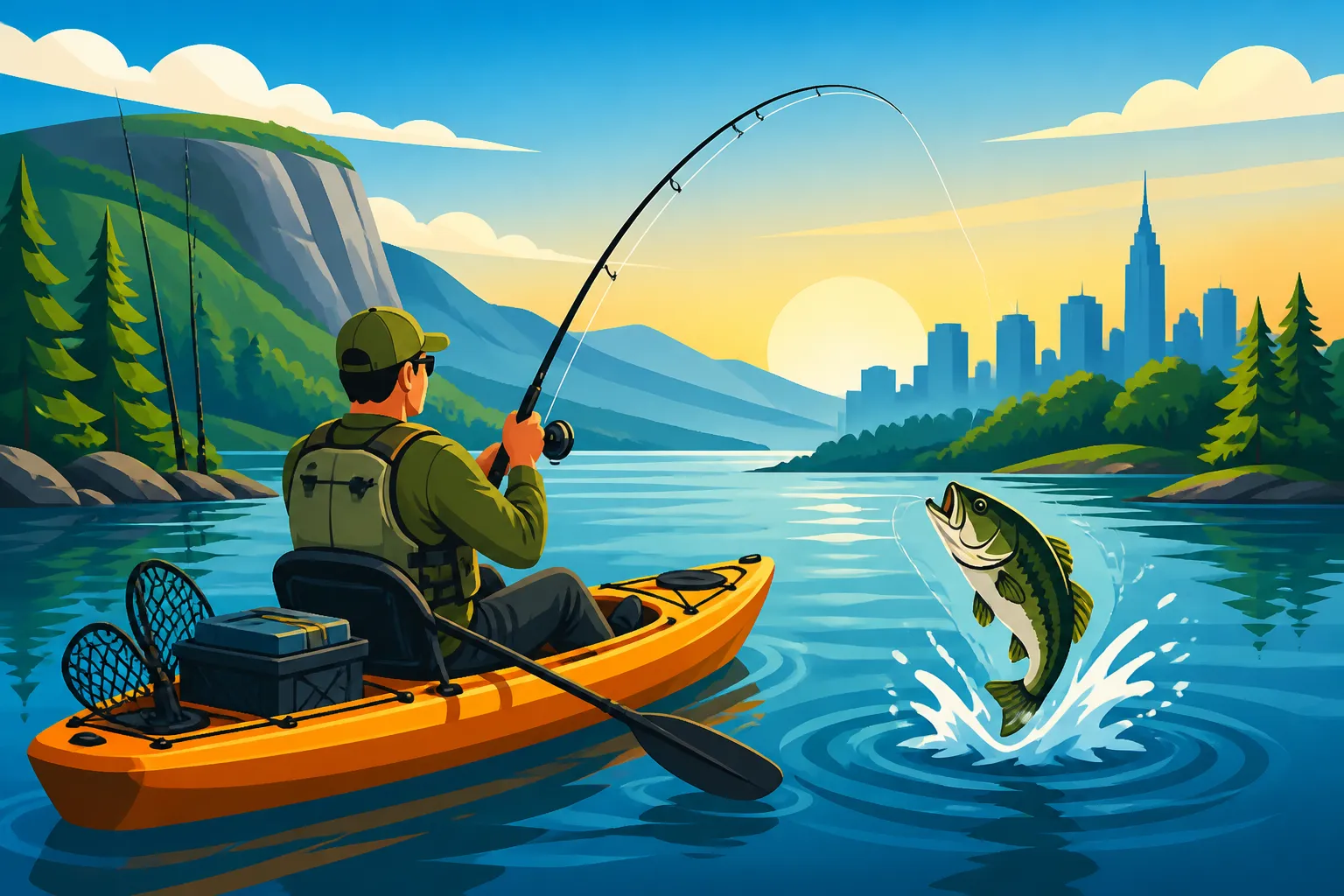
Beyond access, the stealth of a kayak is truly a superpower. There's no noisy outboard engine to spook fish, no thrashing anchor chain. You glide silently, allowing you to get incredibly close to wary fish without alerting them to your presence. Imagine drifting over a shallow weed bed, spotting a lunker largemouth, and being able to make a perfectly placed cast without a sound – that's the kayak advantage in action. This quiet approach is particularly effective in clear waters or during periods of high fishing pressure, making all the difference between a frustrating day and a memorable catch.
A Different Kind of Connection to the Water
Let's talk about the experience itself. In a kayak, you're not just on the water; you're truly in it. The low profile puts you eye-level with the surface, connecting you to the environment in a way a motorboat never can. You feel every ripple, hear every splash, and become acutely aware of the wildlife around you. It's a much more immersive and peaceful experience, which for many of us, is just as important as catching fish.
This intimate connection also means you're more engaged in the entire process. Paddling to your spot, maneuvering silently, and then feeling the direct pull of a fish through your rod, all while sitting inches from the water, amplifies every sensation. It transforms fishing from just a sport into a deeply personal, almost meditative, outdoor adventure. For those seeking solitude and a genuine escape, the kayak delivers an experience that's hard to beat.
Versatility Across Diverse Waters
New York is a state of incredible aquatic diversity, boasting everything from tiny mountain ponds and winding rivers to massive Great Lakes and tidal saltwater bays. The beauty of kayak fishing is its unparalleled versatility across all these different environments. A single kayak can effectively fish a small, sheltered pond for panfish in the morning and then be rigged for a larger lake in the afternoon, targeting bass or even walleye.
Even in saltwater, where conditions can be more challenging, kayaks shine in their ability to navigate shallow marsh creeks for striped bass or pick apart rocky shorelines for fluke. Whether you're exploring the Finger Lakes, drifting down the Hudson, or bouncing jigs in Long Island Sound, your kayak can adapt. This versatility means you don't need a fleet of boats; one well-chosen fishing kayak can open up almost every angling opportunity New York has to offer.
Prime Freshwater Kayak Fishing Destinations
New York's freshwater offerings for kayak anglers are simply incredible, ranging from glacial lakes to pristine rivers. The sheer variety ensures there's always a new adventure waiting, no matter what species you're chasing.
The Finger Lakes Region: Deep Water Secrets and Shallow Stalking
When you think of New York's freshwater fishing, the Finger Lakes inevitably come to mind, and for good reason. These long, deep, clear lakes offer fantastic kayak fishing opportunities, especially if you're targeting a variety of species. Lakes like Cayuga, Seneca, and Owasco are prime examples. While these lakes are large, kayaking allows you to explore the shallower northern and southern ends, the tributary mouths, and the abundant weed lines that larger boats often overlook or struggle to access.
For instance, on Cayuga Lake, kayak anglers can find excellent smallmouth and largemouth bass fishing around the numerous docks and rocky points, especially in the northern end near Montezuma National Wildlife Refuge. You can also venture out to target northern pike in the shallower bays. Seneca Lake, being the deepest of the Finger Lakes, offers incredible lake trout opportunities if you have the right gear for deep water trolling, but its extensive shoreline and numerous small feeder creeks also provide great spots for bass, perch, and even brown trout closer to shore. Paddling along the shorelines, you can often pick apart structure with precision that a bigger boat just can't manage, making these giants feel much more intimate.
Adirondack Park: Remote Ponds and Wild Trout Streams
If solitude and wild fish are what you crave, the Adirondack Park is your ultimate kayak fishing playground. This vast wilderness area is dotted with thousands of ponds, lakes, and streams, many of which are only accessible by paddle or foot. While some of the larger lakes like Lake George and Lake Placid offer excellent smallmouth bass and lake trout fishing where a kayak provides a quiet advantage along shorelines and rocky humps, it's the smaller, more remote waters that truly define the Adirondack kayak experience.
Imagine a crystal-clear pond, completely surrounded by towering pines, accessible only by a short carry from a designated parking area. These are often teeming with native brook trout, or occasionally splake (a brook trout/lake trout hybrid) and landlocked salmon in larger, remote lakes. The peace and quiet are unparalleled, and the reward of catching a beautifully colored wild brook trout in such a pristine setting is unforgettable. While you might need to carry your kayak a bit to reach some of these gems, the effort is always worth it for the chance to fish in truly wild, untouched waters. Always be sure to check specific regulations for these unique waters, as some have special rules regarding bait and lures to protect the wild trout populations.
Major Rivers: Hudson and St. Lawrence for Diverse Species
New York's major rivers, the Hudson and the St. Lawrence, offer a completely different, yet equally rewarding, kayak fishing experience. These powerful waterways are teeming with a wide array of species, and a kayak allows you to navigate their currents and structure with precision.
The Hudson River, particularly its tidal sections, is world-renowned for its striped bass fishery. Kayak anglers can effectively target these powerful fish during their spring and fall runs, especially in the shallower bays, creek mouths, and current eddies that bigger boats might struggle to hold position in. You can drift live bait, cast soft plastics, or troll small crankbaits effectively from a kayak, feeling every head shake directly through your boat. Further north, the Hudson also offers excellent smallmouth and largemouth bass fishing, as well as northern pike, particularly in the sections with more structure and slower currents. Understanding the tides is crucial here; a rising tide might push baitfish into shallow areas, making them prime for kayak exploration. For more on the Hudson, check out this guide on fishing the Hudson River in New York.
Up north, the St. Lawrence River is a mecca for trophy smallmouth bass, northern pike, and especially muskellunge. The Thousand Islands region, with its countless islands, shoals, and deep channels, is phenomenal for kayak fishing. Imagine stalking monster muskies in relatively shallow weed beds or casting for bronzebacks around rocky points and sunken islands. Kayaks are perfect for this, allowing you to quietly approach prime fishing areas without disturbing the fish. The strong currents can be challenging, but they also create prime feeding lanes for big fish. A sit-on-top kayak with good stability and perhaps even pedal drive is highly recommended here to navigate the expansive waters and fight strong fish. For more on this majestic river, explore our guide to New York's St. Lawrence River.
Top-Tier Saltwater Kayak Fishing Havens
While freshwater often gets the spotlight, New York’s coastline, especially around Long Island and its surrounding waters, offers absolutely stellar saltwater kayak fishing opportunities. The thrill of hooking into a powerful saltwater species from a kayak is an experience every angler should have.
Long Island Sound: Stripers, Blues, and Fluke Galore
Long Island Sound is a truly incredible fishery, and for kayak anglers, it’s a goldmine. The Sound’s diverse bottom structure—from rocky reefs and mussel beds to sandy flats and deep channels—holds a fantastic variety of popular game fish. Your kayak gives you the ability to pick apart these structures with surgical precision, often reaching spots that shore anglers can’t touch and larger boats might struggle to anchor or maneuver in without spooking the fish.
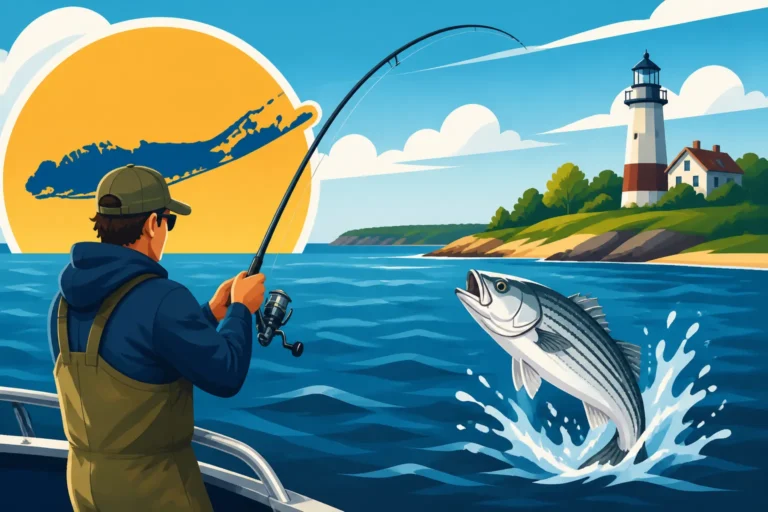
Striped bass are undoubtedly the kings of the Sound, and kayak fishing for them is hugely popular. You can effectively target stripers by drifting live bait like bunker or eels around current rips and rocky points, or by casting artificials like soft plastics and topwater plugs at dawn and dusk. The stealth of a kayak means you can often sneak right up on busting schools of baitfish and the stripers feeding beneath them. Beyond stripers, bluefish offer an incredible fight, and you'll find them in similar areas, especially during the summer months. For those who love bottom fishing, fluke (summer flounder) are abundant. Kayak fishing allows you to drift over sandy patches and channel edges with bucktails and Gulp! baits, presenting your offering perfectly. Just be mindful of the often-strong tidal currents in the Sound; planning your trip around favorable tides is key to a safe and successful outing. Learn more about best tides for striped bass fishing to improve your chances.
Peconic Bay and Gardiners Bay: Calm Waters, Abundant Life
If the stronger currents and open waters of the main Long Island Sound feel a bit daunting, or if you're looking for calmer, more sheltered options, the Peconic Bay and Gardiners Bay areas on the eastern end of Long Island are absolutely fantastic. These bays offer a mosaic of shallow flats, eelgrass beds, and slightly deeper channels, creating a rich environment for a variety of inshore species. The generally calmer conditions here make for a very enjoyable and often less physically demanding kayak fishing experience.
In the Peconics, you'll find excellent opportunities for fluke and porgies (scup), especially around the many channels and points. The shallower areas are also ideal for targeting smaller striped bass and weakfish, particularly during the spring and fall runs. Gardiners Bay, with its slightly more exposed but still manageable waters, can hold larger striped bass, bluefish, and even false albacore in the late summer and early fall. The clarity of the water in these bays also makes sight fishing a real possibility on calm days, adding another exciting dimension to your kayak adventures. Look for areas with visible baitfish activity or structure, and let your kayak take you to where the action is.
Estuaries and Back Bays: Sneaky Spots for Inshore Action
Beyond the main bays, Long Island's numerous estuaries and back bay systems are true hidden gems for kayak anglers. These sheltered, often shallower waters are perfect for those who want to escape the crowds and explore intricate networks of creeks, marshes, and coves. The protected nature of these areas means you can often fish effectively even when winds make the larger bays too choppy.
These backwaters are nurseries for many species, and you'll often find excellent fishing for juvenile striped bass, fluke, and bluefish throughout the warmer months. Areas like Jamaica Bay in Queens, or the expansive marsh systems around Fire Island and Jones Beach, offer miles of kayak-accessible water. The key here is stealth and patience. Paddle quietly, cast accurately into marsh grass edges, around docks, and through tidal creeks, and you're bound to encounter some feisty inshore action. These spots are also fantastic for crabbing and clamming from a kayak, adding another layer to your outdoor experience. Remember that baitfish schools are often found in these areas, so pay attention to diving birds or ripples on the surface.
| Location Category | Example Spot | Primary Species Targeted | Key Features for Kayak Anglers | Best Kayak Type |
|---|---|---|---|---|
| Freshwater Lake | Cayuga Lake (North End) | Largemouth/Smallmouth Bass, Pike | Shallow bays, weed lines, docks, tributaries, calmer sections | Sit-on-top |
| Freshwater River | St. Lawrence River (Thousand Islands) | Smallmouth Bass, Muskie, Pike | Numerous islands, rocky shoals, current breaks, diverse structure | Sit-on-top (pedal drive for efficiency) |
| Freshwater Pond | Remote Adirondack Pond | Brook Trout, Splake | Secluded, wild feel, often require portaging, pristine water | Sit-in (lightweight) |
| Saltwater Bay | Peconic Bay | Fluke, Porgies, Striped Bass | Calmer waters, eelgrass beds, sandy flats, channels | Sit-on-top |
| Saltwater Estuary | Jamaica Bay | Striped Bass (juvenile), Fluke, Bluefish | Marsh creeks, sheltered coves, docks, extensive shallow areas | Sit-on-top |
Gear and Safety Essentials for New York Kayak Anglers
Getting out on the water in a kayak is an amazing experience, but it’s crucial to have the right gear for both fishing success and, more importantly, your safety. Don't let the simplicity of a kayak fool you; preparation is key, especially on New York's diverse and sometimes challenging waters.
Choosing the Right Kayak for New York Waters
The market for fishing kayaks has exploded, and picking the right one depends heavily on where and how you plan to fish in New York. The most common choice for anglers is a sit-on-top kayak. These are incredibly stable, easy to get on and off, and allow you to move around more freely. They also have scupper holes that drain water, so you won't sit in a puddle. For dedicated fishing, look for models that are at least 10-12 feet long for better tracking and stability, with a wider beam. Many come with built-in features like rod holders, gear tracks, and storage.
Then you have the choice between paddle-driven and pedal-driven kayaks. Pedal kayaks, like those from Hobie or Old Town, use a propulsion system that you operate with your feet, freeing your hands for fishing. This is a game-changer for covering long distances, fighting fish, or holding position in current, making them incredibly popular for the Finger Lakes, the St. Lawrence River, or Long Island Sound. Paddle kayaks are generally lighter and less expensive, perfect for accessing remote ponds in the Adirondacks or smaller, calmer bays. If you plan to carry your kayak often, a lighter sit-in recreational kayak might even be considered, though stability for fishing can be a trade-off.
Essential Safety Equipment and Navigation
Safety should always be your top priority, especially when kayak fishing. It's not just about compliance with regulations; it's about staying alive. First and foremost, a properly fitted Personal Flotation Device (PFD), or life jacket, is non-negotiable and legally required to be on board for every person. Even if you're a strong swimmer, a PFD can save your life if you capsize or become incapacitated.
Beyond the PFD, you need a sound-producing device like a whistle, easily accessible. If you're out during low light or after sunset (check local regulations!), navigation lights are mandatory. An anchor is invaluable for holding position in current or wind, allowing you to fish a spot effectively. A VHF radio or a fully charged cell phone in a waterproof bag is critical for communication, especially on larger bodies of water. Don't forget a first-aid kit, a paddle leash (so you don't lose your paddle!), and a bailer or bilge pump for sit-in kayaks. For navigation, a GPS (either a dedicated unit or a robust app on your phone) is essential for marking waypoints, tracking your route, and staying oriented, particularly on complex waterways or when fog rolls in. Being prepared can turn a potential disaster into a minor inconvenience.
Must-Have Fishing Gear for Kayak Anglers
Outfitting your kayak for fishing efficiently is about maximizing space and accessibility. You want everything within easy reach but securely stowed. Start with rod holders. Most fishing kayaks come with flush-mount holders, but adjustable RAM Mount or Scotty holders are excellent additions for trolling or holding a rod while you're paddling or re-tying. Keep your tackle minimal but versatile. A small tackle box or bag that fits under your seat or in a hatch is ideal, stocked with a few go-to lures, hooks, and weights.
A fishing cooler or soft-sided insulated bag is essential for keeping your drinks and snacks cold, and for storing your catch if you plan to keep fish. A large landing net with a rubberized mesh is also highly recommended; it makes landing fish much easier and is kinder to the fish if you plan to release them. Pliers, line cutters, and a measuring tape should be attached to your PFD or kayak with lanyards so they don't go overboard. Consider a fish finder for more advanced tactics; many compact units are designed specifically for kayak mounting and can greatly enhance your ability to locate fish and structure. Brands like Lowrance and Humminbird offer excellent compact options.
Navigating Regulations and Best Practices
New York State has a robust set of fishing regulations designed to protect its diverse fish populations and ensure sustainable angling for everyone. As a kayak angler, understanding and adhering to these rules is not just a legal obligation but a cornerstone of responsible fishing.
Understanding New York's Fishing License Requirements
Before you even think about putting a line in the water, the first and most critical step is to ensure you have the appropriate New York fishing license. This isn't just a suggestion; it's the law. For freshwater fishing, you'll need a New York State Freshwater Fishing License, which varies for residents and non-residents, and comes in different durations (annual, 7-day, 1-day). If you plan to fish for trout in designated trout waters, you might also need a specific trout stamp. For saltwater adventures in Long Island Sound, the Peconic Bays, or the ocean, you'll need to register with the New York State Recreational Marine Fishing Registry. This registry is typically free, but it is mandatory.
It's common for new anglers to be confused by the distinction between freshwater and saltwater licensing, or to overlook the nuances of special stamps. Make sure to check the New York State Department of Environmental Conservation (DEC) website for the most current information, as regulations can change. You can usually purchase your license online, at a DEC office, or through various license issuing agents like sporting goods stores. Always carry proof of your license while fishing, whether it's a physical copy or a digital version on your phone. For a deep dive into what you need, refer to our comprehensive New York Fishing License Guide.
Respecting Catch Limits and Protected Areas
Beyond simply having a license, it’s imperative to understand and respect the specific catch limits, minimum size requirements, and open seasons for the species you are targeting. These regulations are in place for a reason: to conserve fish populations and ensure healthy fisheries for future generations. For example, striped bass in New York have specific slot limits, meaning you can only keep fish within a certain size range, while some species might have a catch-and-release only season for a portion of the year.
Kayaks, due to their stealth and access, can often reach less pressured fishing spots. This privilege comes with an added responsibility to be exemplary stewards of the resource. Always identify your catch before deciding to keep it, and if you're unsure, it’s best to release it unharmed. Be aware of any special regulations for particular bodies of water, such as no-wake zones, restricted fishing areas, or catch-and-release only sections. These "special regulations waters" are often clearly marked by signage or detailed in the annual DEC fishing guide. Familiarize yourself with the statewide guidelines, including New York Fishing Regulations Explained, which outlines season dates and specific catch limits.
Minimizing Your Impact and Practicing Leave No Trace
As kayak anglers, we have a unique opportunity to immerse ourselves in nature. With that opportunity comes a responsibility to minimize our environmental footprint. The core principle of "Leave No Trace" is especially relevant for kayakers who often access remote and pristine areas. This means packing out everything you pack in, including all trash, broken fishing lines, and discarded bait containers. Floating trash not only detracts from the beauty of the environment but can also be harmful to wildlife.
Beyond trash, consider your physical impact. Avoid disturbing sensitive vegetation along shorelines, especially in marshy areas or where birds might be nesting. When launching or landing, try to do so in designated areas or on durable surfaces. If you’re practicing catch-and-release, learn proper fish handling techniques to ensure the fish’s survival. This includes minimizing air exposure, using wet hands, and using de-hooking tools. By taking these simple steps, we ensure that the beautiful kayak fishing spots we cherish remain healthy and accessible for everyone, long into the future.
Planning Your Kayak Fishing Trip in New York
A successful kayak fishing trip isn't just about showing up with a rod and reel. It's about careful planning, understanding your environment, and knowing where to find reliable information. New York's diverse waterways demand a thoughtful approach.
Researching Launch Points and Access
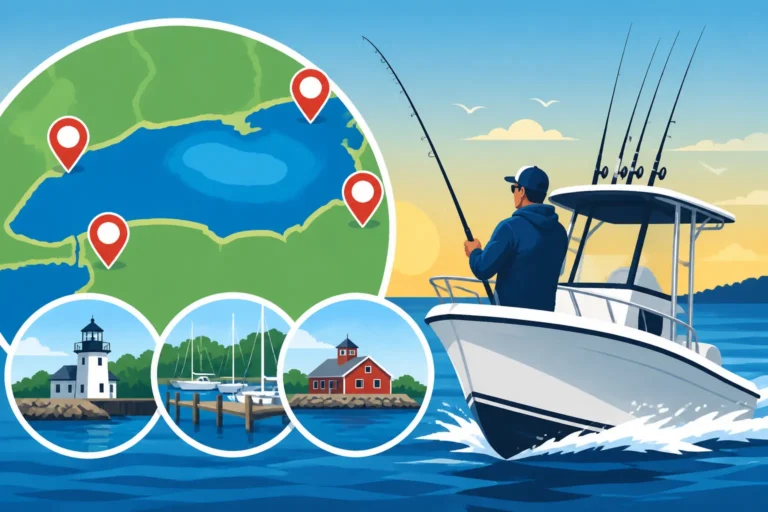
Finding a good launch point is often the first and most critical step in planning your kayak fishing adventure. Unlike larger motorboats that require full marinas and concrete ramps, kayaks have far more flexibility. Look for public boat launches, many of which are designated for hand-carry boats and often have ample parking. State parks, county parks, and town recreation areas frequently offer excellent kayak launch facilities, sometimes even with specific spots away from powerboat traffic. The New York DEC website is an invaluable resource, often listing public fishing access sites, including those suitable for kayaks.
Beyond official launches, don't be afraid to scout out informal access points. Sometimes a quiet roadside pull-off or a small beach allows for easy, discreet kayak entry. However, always be respectful of private property; trespassing is never acceptable. Check satellite maps (like Google Maps or imagery on fishing apps) to identify potential put-in spots and parking areas. Factor in the distance you’ll have to carry your kayak – a lighter boat makes those longer carries to remote Adirondack ponds much more manageable. Thinking ahead about where you'll launch can save you a lot of frustration and wasted time, especially when trying to fish early morning or late evening.
Consulting Weather and Water Conditions
Weather and water conditions are paramount for kayak fishing safety and success, particularly in New York where conditions can change rapidly. Before every trip, check the detailed weather forecast. Pay close attention to wind speed and direction, as even a light breeze can make paddling challenging and dangerous on larger lakes and bays. Gusty winds can create choppy water, making stability an issue and potentially forcing you to paddle harder than anticipated. Always consider how the wind might affect your return trip.
For saltwater fishing, understanding the tide charts is absolutely crucial. Tides dictate current strength, water depth, and often fish behavior. Fishing a strong outgoing tide in a narrow channel can be exhilarating but also incredibly demanding. Conversely, a slack tide can make for calm, easy paddling. For all waters, consider water temperature – cold water presents hypothermia risks if you capsize. Apps and websites like NOAA provide marine forecasts and detailed tide information. Knowing what to expect before you launch will help you prepare accordingly, or decide if it's best to fish another day. A smart angler knows when to stay off the water.
Tapping into Local Knowledge and Guides
Even with all the maps and online resources in the world, nothing beats local knowledge. Connecting with experienced local anglers can provide invaluable insights into the best spots, current hot baits, and specific conditions you might encounter. Visit local bait and tackle shops – they are often hubs of information and their staff are usually more than happy to share tips, especially if you're buying some gear. Online fishing forums and local social media groups dedicated to New York fishing are also excellent places to ask questions and learn from the community.
If you're new to kayak fishing or want to explore a particularly challenging or productive area without the upfront investment of gear, consider booking a trip with a local fishing guide who specializes in kayak fishing. They can provide all the necessary equipment, show you the ropes, and put you on fish. Platforms like FishingBooker make it easy to find and book experienced guides for various New York destinations, from the Finger Lakes to Long Island Sound. A guided trip can be a fantastic way to accelerate your learning curve and discover hidden gems you might never find on your own, setting you up for future successful solo adventures.
Disclaimer
The information provided in this guide is for general informational purposes only and is subject to change. Fishing regulations, license requirements, and local access rules can vary and are updated periodically by the New York State Department of Environmental Conservation (DEC) and other governing bodies. Always consult the most current official regulations and local authorities before planning any fishing trip to ensure compliance and safety. Kayak fishing involves inherent risks; always prioritize safety, wear a PFD, and be aware of weather and water conditions.