Keuka Lake Smallmouth Bass Spots in New York
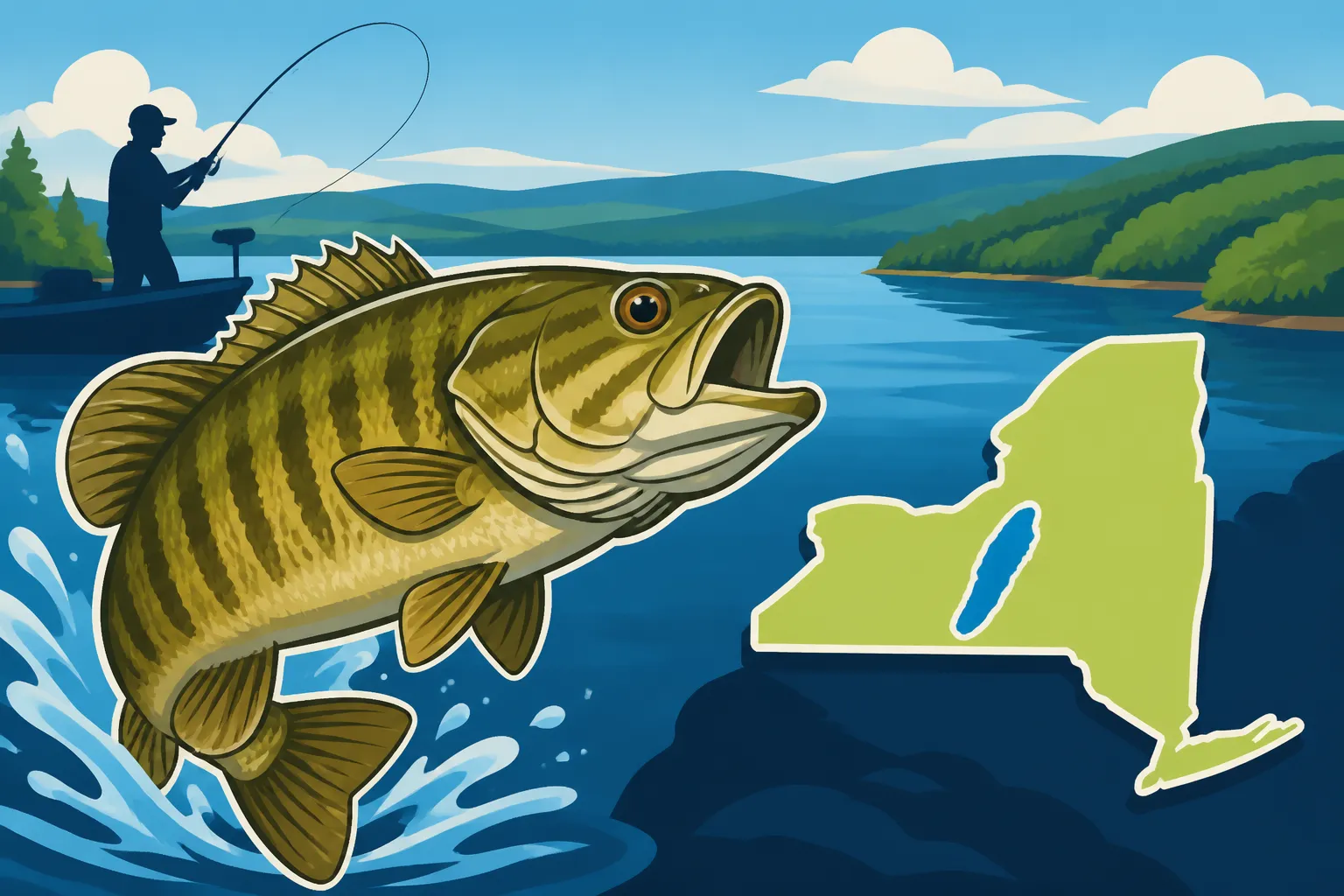
Fishing for smallmouth bass on Keuka Lake can feel like a puzzle, especially with its unique "Y" shape, crystal-clear waters, and varied depths that range from shallow rocky shoals to incredible drops. It's easy to get overwhelmed trying to pinpoint where these feisty fighters are hiding. This comprehensive guide will unravel the mysteries of Keuka Lake, taking you through the prime spots and effective strategies to help you consistently find and hook impressive smallmouth bass in one of New York's most distinctive Finger Lakes.
Understanding Keuka Lake's Unique Smallmouth Habitat
Keuka Lake isn't just another pretty body of water; its distinctive shape and geological history have created a perfect, albeit challenging, environment for smallmouth bass. Unlike most of the other Finger Lakes, Keuka's "Y" bifurcation means there's an abundance of shoreline, points, and varied structure that smallmouth love. Understanding this unique habitat is the first step to unlocking its smallmouth potential.
The Unique Geography of the "Y" Lake
Keuka Lake, often affectionately called the "Y" lake, is a true geological marvel. This inverted Y-shape creates two distinct southern arms that merge into a single northern basin. What does this mean for smallmouth bass? It means a vastly increased amount of diverse shoreline compared to a single, linear lake. You'll find countless points, coves, and varying depths along these shores. Each arm and the main body of the lake offer slightly different fishing conditions and structures, from shallow flats that warm up quickly in spring to dramatic drop-offs that provide cool, oxygenated water in the summer heat. This complexity means you can spend days exploring and still discover new promising areas.
The lake itself is quite deep, reaching depths of over 180 feet in some areas, but it's the steep transitions from shallow to deep that truly define smallmouth habitat here. These fish are masters of using depth changes and structure to ambush prey. The unique shape also creates interesting current patterns, especially when wind pushes water, which can concentrate baitfish and, consequently, hungry smallmouth. Many anglers, myself included, have found that just when you think you've figured out one arm, the other presents a completely different challenge. For a broader overview of the region, you might find our article on Fishing New York's Finger Lakes: A Complete Guide helpful.
Key Structural Elements Smallmouth Prefer
Smallmouth bass are structure-oriented fish, meaning they relate strongly to underwater features. In Keuka Lake's clear waters, these structures become even more critical. You'll want to focus on rocky points, steep ledges, humps, and submerged rock piles.
-
Rocky Points and Shoals: The numerous points jutting into Keuka Lake are absolute magnets for smallmouth. These areas often feature a mix of chunk rock, gravel, and sometimes even small boulders. Smallmouth will cruise these points, especially during low-light conditions, looking for crawfish or baitfish. Pay close attention to the "nose" of the point where it drops into deeper water, as well as the transition zones along its sides. Shoals, which are shallow areas surrounded by deeper water, also offer prime feeding opportunities and ambush points. These can be difficult to spot without good electronics, but once found, they are worth their weight in gold.
-
Steep Ledges and Drop-Offs: Keuka Lake is known for its dramatic underwater topography. The shoreline often drops off quickly into significant depths. Smallmouth use these ledges as highways, moving up and down the water column to feed or seek comfort from changing light and temperature. Vertical jigging or drop-shotting along these sheer walls can be incredibly effective, especially when you mark baitfish or suspended bass on your fish finder. These ledges provide immediate access to deep water, which is crucial for smallmouth during colder periods or when they're avoiding bright sunlight.
-
Submerged Humps and Rock Piles: These offshore structures are often overlooked by casual anglers but can hold some of the biggest smallmouth in the lake. Humps are underwater hills that rise from the bottom, while rock piles are accumulations of boulders. Both provide essential cover and feeding stations away from the busy shoreline. Locating these on a contour map or with a good sonar unit is key. Smallmouth will stage on the edges or tops of these structures, waiting to ambush unsuspecting prey. They can be particularly productive during the summer months when fish move deeper. If you're wondering which Finger Lake offers the best overall bass fishing, our guide on the Best Finger Lake for Bass Fishing provides a comparison.
Forage Base and Water Clarity
Keuka Lake boasts incredibly clear water, which is both a blessing and a curse for anglers. While it makes it easier to spot underwater structure, it also means the bass are more wary and prone to spooking. Long casts and subtle presentations are often the keys to success.
The primary forage for smallmouth bass in Keuka Lake includes various species of baitfish like alewives and smelt, as well as an abundance of crayfish. Alewives, in particular, play a significant role. These silvery baitfish suspend in the water column and are a favorite meal for larger smallmouth, especially during the colder months when they school up. Crawfish, on the other hand, are bottom dwellers and a staple of the smallmouth diet year-round. Understanding these food sources helps you choose the right baits and techniques. When the water is clear, it's often beneficial to use more natural colors and smaller profiles that mimic the forage without alarming the keen-sighted bass.
Prime Smallmouth Bass Hotspots on Keuka Lake
Now that we understand what makes Keuka Lake tick, let's dive into some specific areas that consistently produce smallmouth bass. Remember, these are starting points; always be ready to explore nearby structures and adapt to conditions.
The Northern Arm's Rocky Points and Shoals
The northern end of Keuka Lake, above the "Y" split, is characterized by numerous rocky points, ledges, and shallow shoals that extend far from shore. These areas are smallmouth heaven, especially during the spring and fall.
-
Hammondsport Bay Entrance: Where Hammondsport Bay meets the main lake, you'll find a mix of rocky points and transitions. The areas just outside the bay, particularly those with steeper drops, can hold excellent smallmouth. As the water warms in spring, fish will move into the shallower parts of the bay to stage before spawning, and then utilize the deeper access points as summer progresses. Look for submerged rock piles and boulders here.
-
Pleasant Valley Point to Bluff Point: This stretch on the eastern side of the northern arm is renowned for its series of rocky points and abrupt drop-offs. Anglers often find success working these points with jigs, tubes, or drop-shot rigs, allowing the bait to tumble down the ledges. Bluff Point, in particular, is a prominent feature that attracts and holds smallmouth due to its significant structural components and immediate access to deep water. This area can be particularly good during the Best Time to Fish for Bass in New York.
-
Lakeside Park to Gibson Gully (West Side): On the western shore of the northern arm, the area around Lakeside Park and extending towards Gibson Gully also offers excellent opportunities. Here, you'll find a more gradual sloping bottom with numerous boulders and gravel patches interspersed with deeper contours. This makes it ideal for casting crankbaits or spinnerbaits in the mornings and evenings, covering water until you locate active fish. Don't forget to check the specific New York Bass Season Dates and Bass Daily Limit and Minimum Size in New York before heading out.
The Southern Arms: Deep Water Access and Structure
The two southern arms of Keuka Lake each have their own character and offer prime smallmouth opportunities, often with more emphasis on deeper water access.
-
East Branch (Branchport Arm): This arm is generally narrower and features steep banks with quick access to deeper water. The points and rocky bluffs along this arm are crucial. Areas around the Branchport Bridge and further south towards Wayne can be very productive. Smallmouth here often relate to the thermocline in summer, suspended over deeper water near significant structure. Focus on using your electronics to find baitfish and bass arches. The transitions from relatively shallow points into the abyssal depths are key ambush points.
-
West Branch (Pulteney Arm): The Pulteney arm is somewhat wider in places and also features excellent deep-water structure. Look for rocky ledges and submerged humps, especially towards the middle and southern end of this arm. Some of the biggest smallmouth often hold in these less-pressured offshore areas. The water in this arm can be incredibly clear, demanding stealthy approaches and longer casting distances. Many local guides, some of whom can be found via platforms like FishingBooker, specialize in these deeper, offshore techniques.
Mid-Lake Humps and Ledges
Beyond the obvious shoreline points, Keuka Lake holds a treasure trove of mid-lake humps, ledges, and hidden structures that can be absolute goldmines for trophy smallmouth. These spots are often less fished and can produce incredible results once located.
-
Offshore Humps: Scattered throughout the main body of the lake, particularly in the wider sections of the northern arm and where the two southern arms converge, are subtle humps that rise from the lake bed. These can be tiny rises of just a few feet or more pronounced underwater hills. Smallmouth use these as congregating points and feeding grounds. A good contour map and reliable sonar are indispensable for finding them. Once you've marked a hump, meticulously work its entire perimeter and especially the top with vertical presentations.
-
Deep Ledges and Transitions: In the central part of the lake, particularly where depths plunge quickly, there are often subtle ledges and depth transitions that aren't immediately apparent from shore. These could be old creek beds, submerged roadbeds, or natural geological formations. These deep water "highways" are excellent for targeting larger, more elusive smallmouth, especially during the warmer months when they seek refuge in cooler, deeper water. Learning How to Read a Fish Finder for New York Lakes will drastically improve your success in locating these hidden gems.
Effective Techniques for Keuka Lake Smallmouth
The clear waters and varied depths of Keuka Lake require a diverse arsenal of techniques. Being versatile and willing to switch up your approach based on what the fish are telling you is crucial for consistent success.
Targeting Depths with Drop-Shotting and Jigs
When smallmouth are holding deep or are particularly finicky, vertical presentations like drop-shotting and various jigging techniques truly shine in Keuka's clear waters.
-
Drop-Shotting: This technique is a smallmouth killer in Keuka. It allows you to present a soft plastic bait tantalizingly off the bottom, directly in the fish's strike zone, while maintaining excellent feel. Use light line, fluorocarbon leaders, and small finesse worms, minnow imitations, or creature baits. The clear water often dictates more natural colors like green pumpkin, smoke, or watermelon. Rigging it correctly ensures the bait hovers, mimicking a natural forage item. This method is incredibly effective when fish are suspended on ledges, humps, or deep points. Even though the article How to Fish a Drop Shot for Steelhead is about steelhead, the technique principles for precise depth targeting are very similar and can be adapted for smallmouth.
-
Tube Jigs and Ned Rigs: These finesse jigs are exceptional for imitating crayfish, a staple of Keuka's smallmouth diet. A tube jig, especially one in a brown, green, or black hue, skipped along the bottom of rocky points and ledges, can be irresistible. The subtle action of a tube as it falls or is dragged mimics a retreating crawfish. Similarly, a Ned rig, with its mushroom-shaped head and buoyant plastic, stands upright on the bottom, presenting a small, enticing target. These are fantastic for pressured fish or when the bite is tough. For a deep dive into tube jigging, check out our guide on How to Fish a Tube Jig for Smallmouth Bass.
-
Blade Baits and Hair Jigs: When smallmouth are aggressive, or you're trying to cover water in deeper zones, blade baits and hair jigs can be excellent choices. Blade baits, like the Berkley Steelhead Worm or similar, create strong vibrations and flash, attracting fish from a distance. Hair jigs, particularly those designed for smallmouth, offer a subtle, pulsating action that can entice strikes even from wary fish. Work these with a lift-and-drop retrieve, allowing them to fall on a semi-slack line to maximize their action.
Topwater and Jerkbaits for Active Fish
When smallmouth are actively feeding near the surface or patrolling shallower structures, topwater lures and jerkbaits provide exciting and effective presentations.
-
Topwater Baits: Nothing beats the thrill of a smallmouth blowing up on a topwater lure. Early mornings, late evenings, or overcast days are prime times for walking baits (like a Zara Spook or Heddon Super Spook) or poppers (like a Rebel Pop-R or Rapala Skitter Pop) over rocky shoals, shallow points, and weed edges. The clear water allows fish to track these lures from a distance. Experiment with retrieve speeds and pauses; sometimes a long, agonizing pause is what triggers the strike. In Keuka, using clear or natural color topwaters can often be more productive than bright, garish ones due to the water clarity.
-
Jerkbaits: Suspended jerkbaits are another potent weapon, especially when smallmouth are chasing baitfish in the mid-water column or lurking just off shallow breaks. Lures like the Rapala X-Rap, Lucky Craft Pointer, or Megabass Vision 110 can be deadly. Cast them out, twitch them aggressively, then pause, allowing the bait to suspend motionless in the water, mimicking a stunned or dying baitfish. The length of the pause is often critical, varying from a few seconds to a full 10-15 seconds on tougher days. These lures are particularly effective along the steep ledges and points of Keuka. For ideas on color, our article on Best Smallmouth Bass Lures for Clear Water has some great suggestions.
Using Electronics to Locate Schools
In a deep, clear lake like Keuka, modern fishing electronics are not just a luxury; they're almost a necessity for consistently finding smallmouth bass, especially offshore.
-
Sonar and Down Imaging: A good sonar unit allows you to read the bottom contours, identify humps, rock piles, and ledges. Down imaging provides a photo-like view directly beneath your boat, helping to distinguish between different types of bottom structure and even individual fish. Look for arches or distinct marks that indicate fish. Smallmouth often suspend in schools or sit tightly to structure, so sharp, clear returns are key. Pay attention to bait balls, as smallmouth are never far from their food source.
-
Side Imaging/Side Scan: This technology allows you to scan wide areas to the left and right of your boat, revealing structure and fish that might be off to the side. This is invaluable for locating offshore humps, rock piles, or isolated boulders that might be missed by traditional sonar. Once you spot something interesting with side imaging, you can then maneuver your boat directly over it for a closer look with down imaging or traditional sonar. Investing time in learning How to Read a Fish Finder for New York Lakes will pay dividends on Keuka Lake.
Seasonal Considerations for Smallmouth Success
Keuka Lake's smallmouth bass patterns change significantly throughout the year. Understanding these seasonal movements and behaviors is key to being in the right place at the right time.
Springtime Spawning and Pre-Spawn Patterns
Spring is a highly anticipated time for smallmouth anglers on Keuka Lake, as fish move shallower for spawning.
-
Pre-Spawn Staging: As ice recedes and water temperatures begin to rise (typically into the 40s Fahrenheit), smallmouth will start to migrate from their deep wintering grounds to shallower staging areas. These are often rocky points, secondary humps, and shallower ledges adjacent to deeper water. They're looking for areas that warm up quickly but still offer a quick escape to safety. During this time, they are often aggressive feeders, trying to pack on calories before the rigors of spawning. Crankbaits, jerkbaits, and blade baits worked along these staging areas can be very effective.
-
Spawning Season: Once water temperatures reach the mid-50s to low 60s Fahrenheit, smallmouth will move onto traditional spawning flats. These are typically hard-bottomed areas, often gravel or small rock, in 5 to 20 feet of water. Look for "beds" – circular, cleaned-out depressions on the bottom. While it can be tempting to target bedding fish directly, many anglers prefer to fish the surrounding staging areas to avoid stressing spawning fish unnecessarily. Post-spawn fish will often remain somewhat shallow, recovering and feeding heavily on newly hatched baitfish or crawfish. This period around late May to early June, depending on water temps, is often when you can achieve your Best Time of Year to Catch Trophy Bass in New York.
Summer Deepwater and Thermocline Tactics
When summer heat pushes water temperatures into the 70s, smallmouth move to deeper, cooler, and more oxygenated water. This is when deep-water tactics truly shine.
-
Relating to the Thermocline: Keuka Lake develops a distinct thermocline in summer – a layer where the water temperature changes rapidly. Smallmouth will often suspend just above, in, or sometimes just below this layer, where baitfish are concentrated and oxygen levels are optimal. Your fish finder is crucial for identifying the thermocline depth, which can vary from 20 to 40 feet or more. Vertical presentations like drop-shotting, jigging spoons, or even slow-trolling deep crankbaits can be highly effective.
-
Offshore Structures: In summer, many of the biggest smallmouth will abandon the immediate shoreline and relate to offshore humps, rock piles, and deep ledges mentioned earlier. These structures provide excellent ambush points in cooler water. This is when patience and meticulous mapping of these offshore features pay off. When the sun is high and bright, smallmouth will often hug the bottom or position themselves on the deeper side of structures. Techniques like How to Fish Deep Water Lake Trout in Summer on New York's Finger Lakes can inspire your smallmouth strategy for deep-water presentations. Consider booking a guided trip through a service like FishingBooker to learn the nuances of these deep-water summer patterns from an experienced local.
Fall Feeding Frenzy
As water temperatures cool down in the autumn, Keuka Lake's smallmouth enter a fantastic feeding frenzy, trying to fatten up for the winter ahead.
-
Aggressive Shallow Feeds: In early fall, smallmouth will often move back to shallower rocky points, humps, and shoals, becoming very aggressive feeders. This is a prime time for throwing larger jerkbaits, swimbaits, and even topwater lures on warmer days. They are actively chasing baitfish, which are often schooling up in preparation for winter. Look for surface activity or signs of baitfish on your electronics. The fish are often more forgiving in fall and will strike a wider variety of presentations.
-
Migration to Deeper Wintering Holes: As fall progresses and water temperatures continue to drop into the 50s and then 40s, smallmouth will gradually transition to their deeper wintering holes. These are typically the deepest parts of the lake, often near significant offshore structure or steep drop-offs. While they will still feed, their metabolism slows down, requiring slower, more subtle presentations like drop-shotting or subtle jigging. Focus on locating large schools of baitfish, as smallmouth will hold nearby. Remember to always be aware of the New York Fishing Regulations Explained for any seasonal adjustments.
| Spot Type | Primary Depths (feet) | Recommended Lures | Key Features to Look For | Best Seasons |
|---|---|---|---|---|
| Rocky Points | 10-30 | Tube Jigs, Jerkbaits, Drop-Shot | Boulder fields, transition zones, current breaks | Spring, Fall |
| Steep Ledges/Drop-offs | 20-60+ | Drop-Shot, Blade Baits, Hair Jigs | Abrupt depth changes, suspended baitfish, thermal layers | All |
| Offshore Humps | 25-50 | Jigging Spoons, Drop-Shot | Isolated rises, rocky tops, baitfish schools | Summer, Fall |
| Shallow Shoals | 5-20 | Topwater, Crankbaits | Gravel/rock bottom, proximity to deep water | Spring, Fall |
| Deep Bluffs | 30-70 | Drop-Shot, Vertical Jigs | Sheer rock faces, deep structure, crayfish habitat | Summer, Fall |
Navigating Keuka Lake for smallmouth bass is an incredibly rewarding experience. Its unique geography and pristine waters offer some of the best smallmouth fishing in New York State. By understanding the lake's structure, adapting your techniques to the season, and making good use of modern electronics, you'll be well on your way to consistent success and perhaps even a trophy smallmouth. Before you cast your line, ensure you have the correct New York Fishing License Guide in hand. And if you're looking to enhance your experience or learn from the pros, don't hesitate to consult resources like FishingBooker to connect with experienced local guides who can share their deep knowledge of Keuka Lake. Tight lines!
Disclaimer
The information provided in this guide is for general informational purposes only and is subject to change. Fishing regulations, season dates, and limits can vary and are determined by the New York State Department of Environmental Conservation (DEC). Always consult the official DEC fishing regulations guide before heading out on the water. We are not responsible for any incidents, accidents, or regulatory violations that may occur. Fish responsibly and safely.